


 Скачать презентацию PROTEIN PHYSICS LECTURES 17 -18 Protein Structures Thermodynamic
F_L_17-18.ppt
- Количество слайдов: 15
 PROTEIN PHYSICS LECTURES 17 -18 Protein Structures: Thermodynamic aspects - Unfolded proteins in vivo and in vitro - Cooperative transitions of protein structures - Thermodynamic states of protein molecules - Why protein denaturation is an “all-or-none” phase transition? - “Energy gap” and “all-or-none” melting
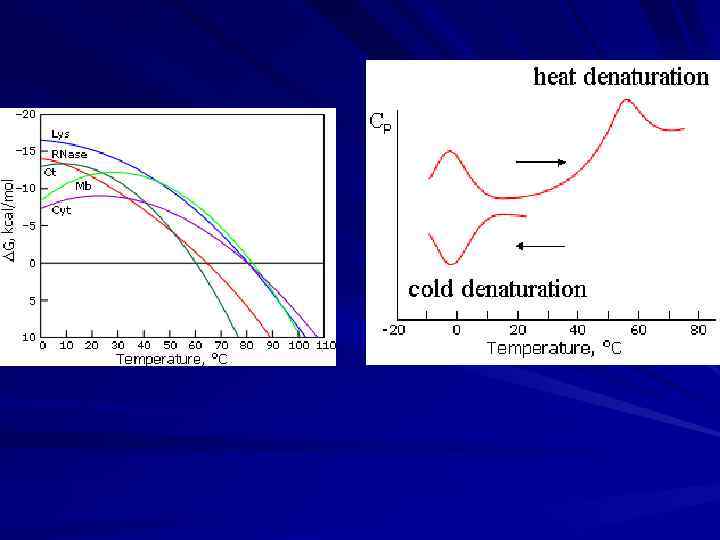
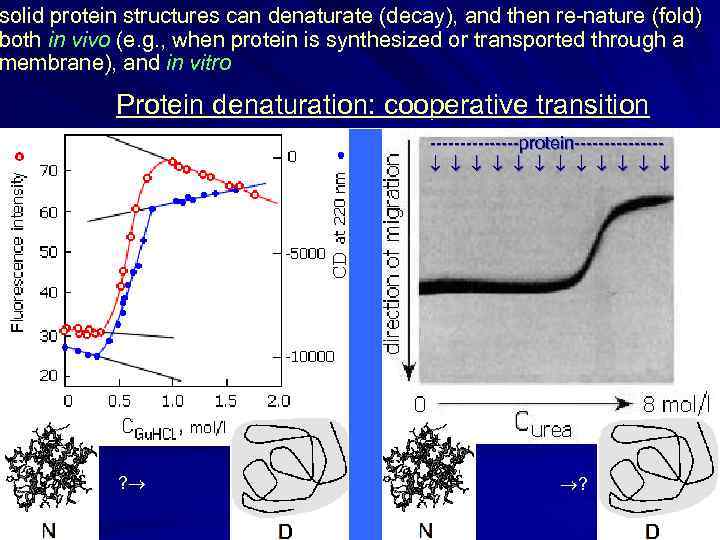 solid protein structures can denaturate (decay), and then re-nature (fold) both in vivo (e. g. , when protein is synthesized or transported through a membrane), and in vitro Protein denaturation: cooperative transition --------protein------- ? ?
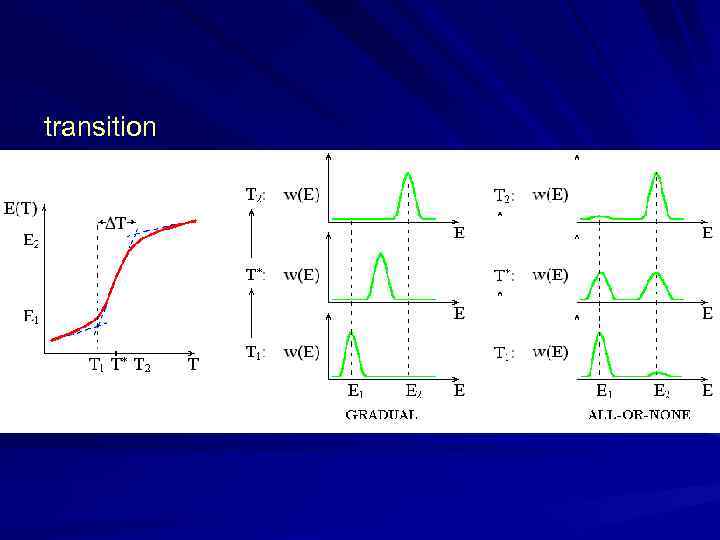 transition
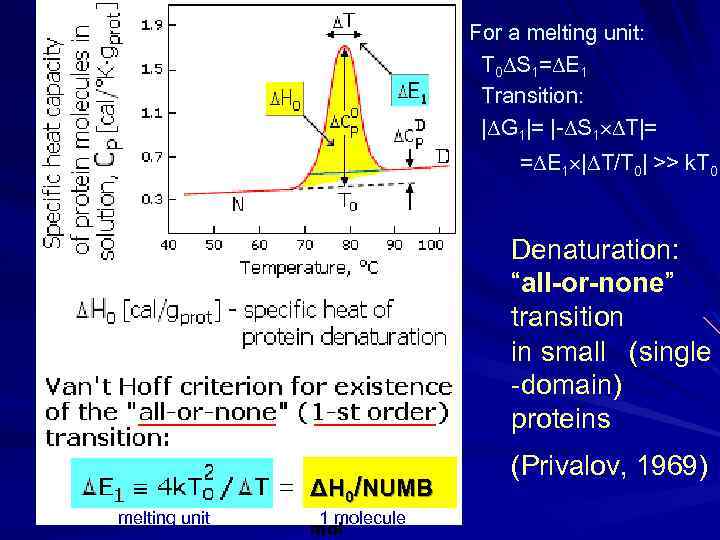 For a melting unit: T 0 S 1= E 1 Transition: | G 1|= |- S 1 T|= = E 1 | T/T 0| >> k. T 0 Denaturation: “all-or-none” transition in small (single -domain) proteins ΔH 0/NUMB melting unit 1 molecule mol (Privalov, 1969)
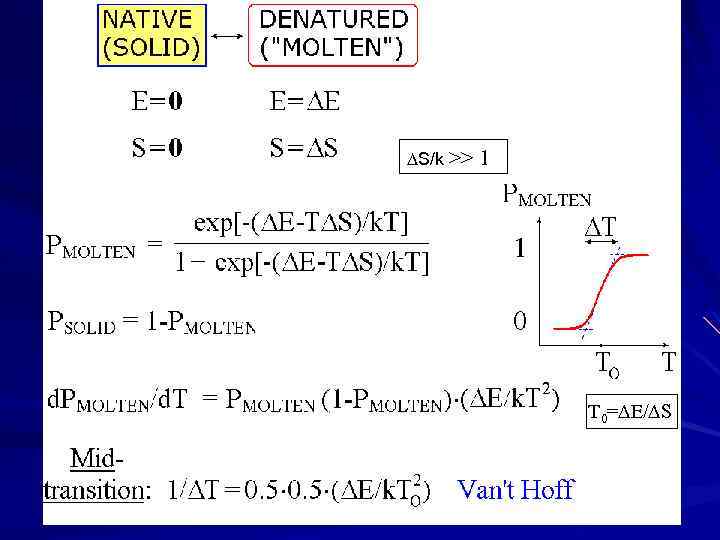 S/k >> 1 T 0= E/ S
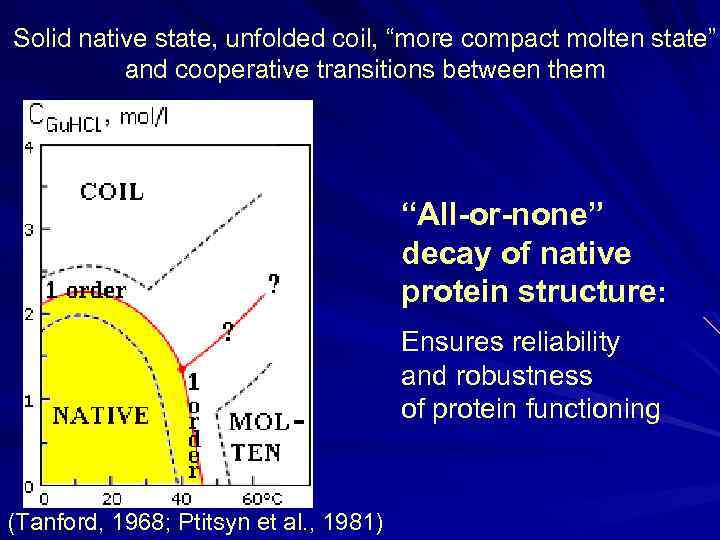 Solid native state, unfolded coil, “more compact molten state” and cooperative transitions between them “All-or-none” decay of native protein structure: Ensures reliability and robustness of protein functioning (Tanford, 1968; Ptitsyn et al. , 1981)
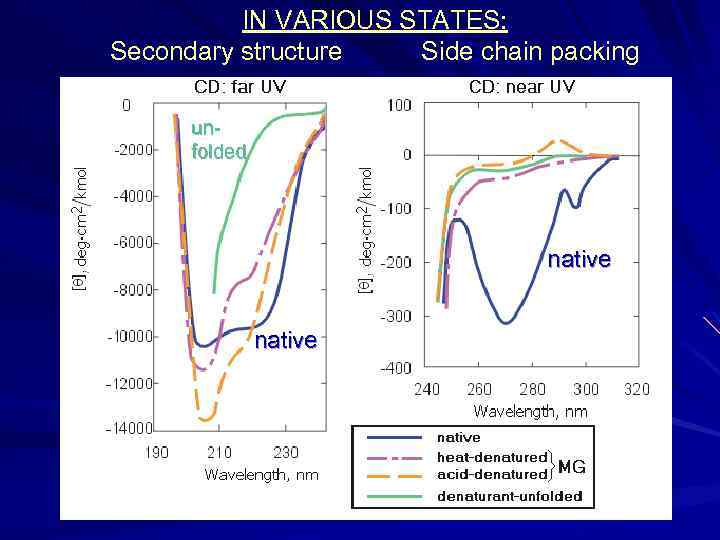 IN VARIOUS STATES: Secondary structure Side chain packing unfolded native
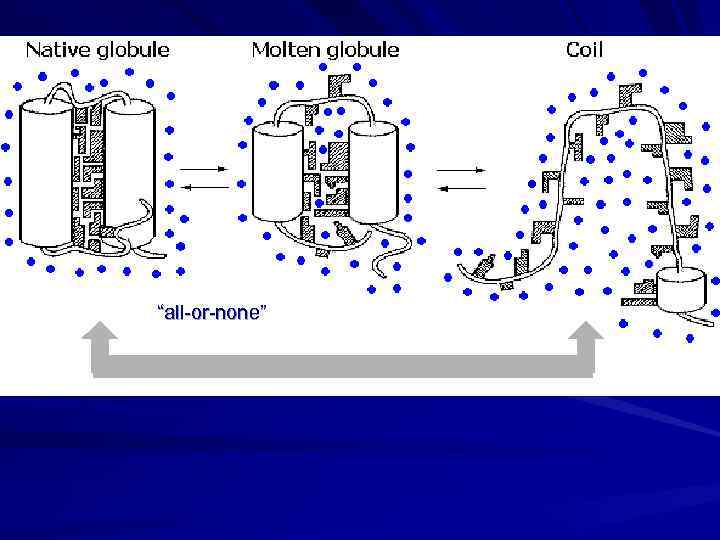 “all-or-none”
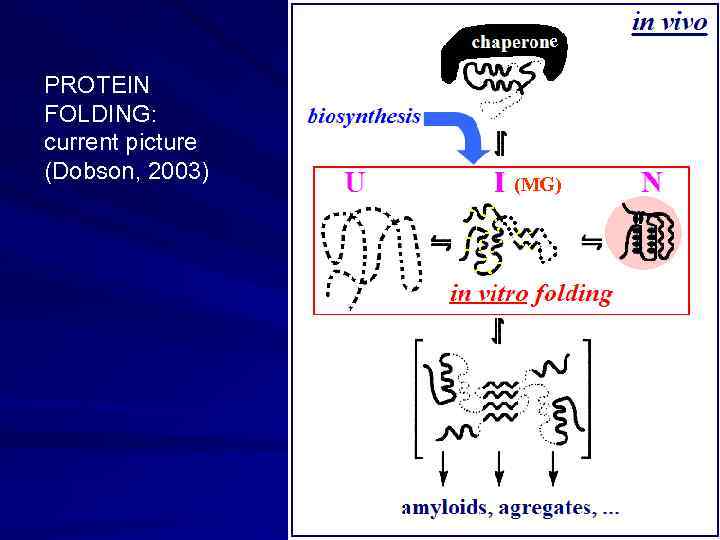 e PROTEIN FOLDING: current picture (Dobson, 2003) (MG)
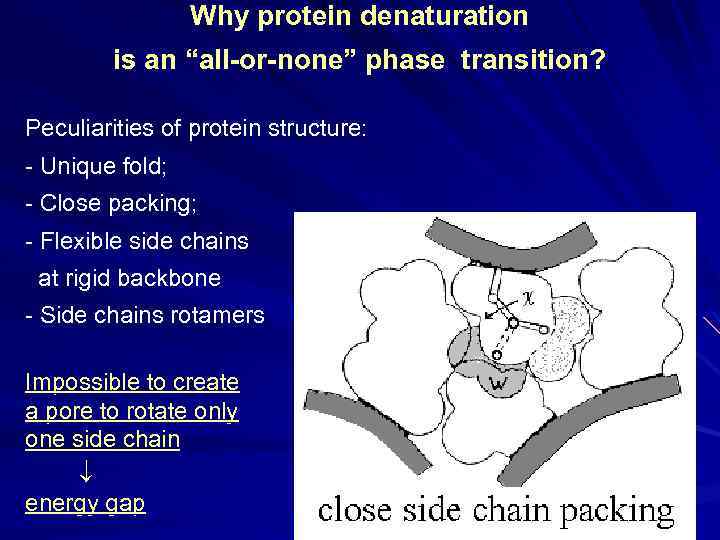 Why protein denaturation is an “all-or-none” phase transition? Peculiarities of protein structure: - Unique fold; - Close packing; - Flexible side chains at rigid backbone - Side chains rotamers Impossible to create a pore to rotate only one side chain energy gap
![“All-or-none” melting: a result of the “ENERGY GAP” ~ ln[M(E)] Start of the side](https://present5.com/presentation/16429770_241876312/image-12.jpg "“All-or-none” melting: a result of the “ENERGY GAP” ~ ln[M(E)] Start of the side") “All-or-none” melting: a result of the “ENERGY GAP” ~ ln[M(E)] Start of the side chain liberation ←[small M(E)] | ___ ||||||||| IS THE GAP “NATURAL”?
“All-or-none” melting: a result of the “ENERGY GAP” ~ ln[M(E)] Start of the side chain liberation ←[small M(E)] | ___ ||||||||| IS THE GAP “NATURAL”?
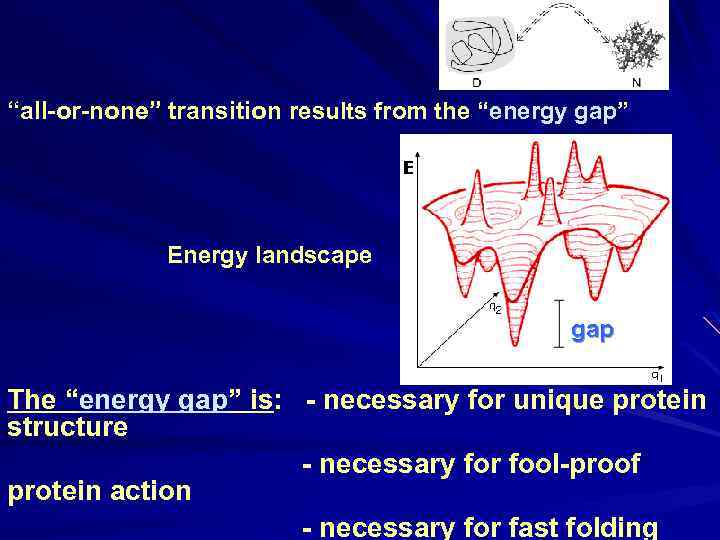 “all-or-none” transition results from the “energy gap” Energy landscape gap The “energy gap” is: - necessary for unique protein structure - necessary for fool-proof protein action - necessary for fast folding
 GAP WIDTH: MAIN PROBLEM OF EXPERIMENTAL PROTEIN PHYSICS PHYSICAL ESTIMATE: =? ? ? BIOLOGICAL ESTIMATE: 1 0 F ~1010 (NOT 1 0 F ~10100!) RANDOM SEQUENCES MAKES A “PROTEIN-LIKE” STRUCTURE (SOLID, WITH A SPECIFIC BINDING: PHAGE DISPLAY). THIS IMPLIES THAT E ~ 20 k. T 0 E is small relatively to the meting energy H 100 k. T 0: narrow energy gap
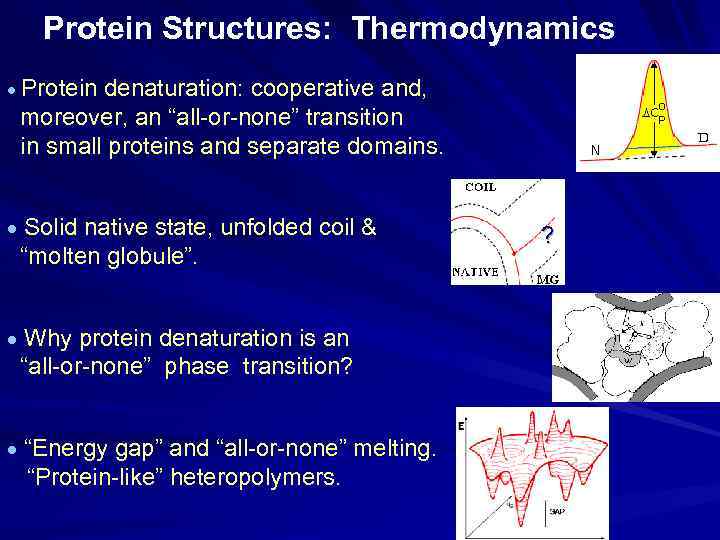 Protein Structures: Thermodynamics · Protein denaturation: cooperative and, moreover, an “all-or-none” transition in small proteins and separate domains. · Solid native state, unfolded coil & “molten globule”. · Why protein denaturation is an “all-or-none” phase transition? · “Energy gap” and “all-or-none” melting. “Protein-like” heteropolymers. ?