Скачать презентацию Protecting the Peruvians that need it most
872a3e695d17b84db67fc93509884988.ppt
- Количество слайдов: 36
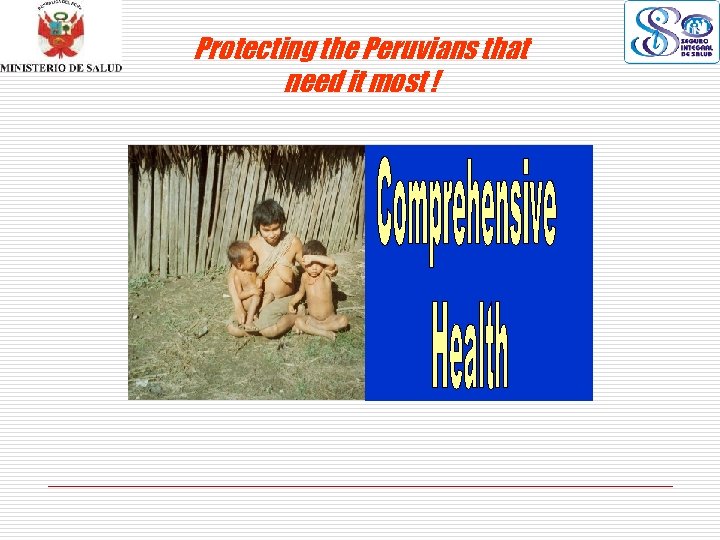 Protecting the Peruvians that need it most !
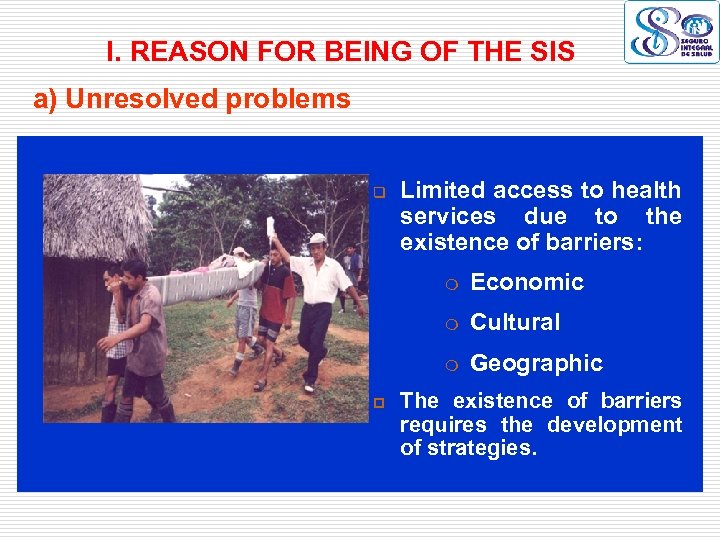 I. REASON FOR BEING OF THE SIS a) Unresolved problems q Limited access to health services due to the existence of barriers: m m Cultural m p Economic Geographic The existence of barriers requires the development of strategies.
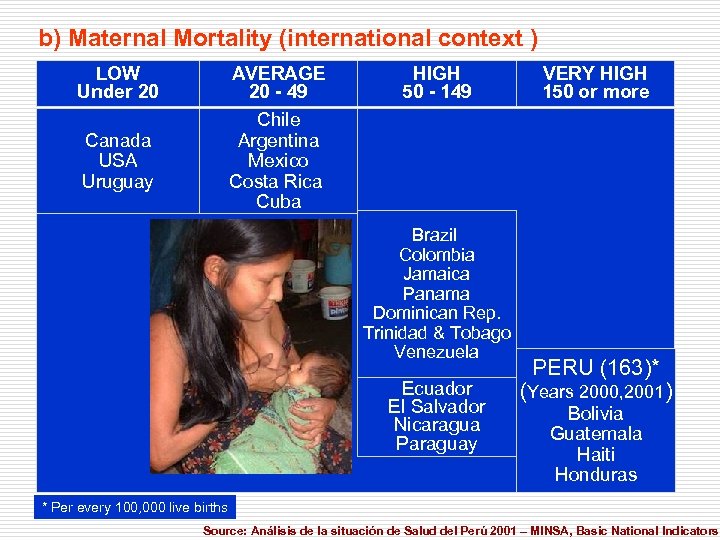 b) Maternal Mortality (international context ) LOW Under 20 AVERAGE 20 - 49 Chile Argentina Mexico Costa Rica Cuba Canada USA Uruguay HIGH 50 - 149 Brazil Colombia Jamaica Panama Dominican Rep. Trinidad & Tobago Venezuela Ecuador El Salvador Nicaragua Paraguay VERY HIGH 150 or more PERU (163)* (Years 2000, 2001) Bolivia Guatemala Haiti Honduras * Per every 100, 000 live births Source: Análisis de la situación de Salud del Perú 2001 – MINSA, Basic National Indicators
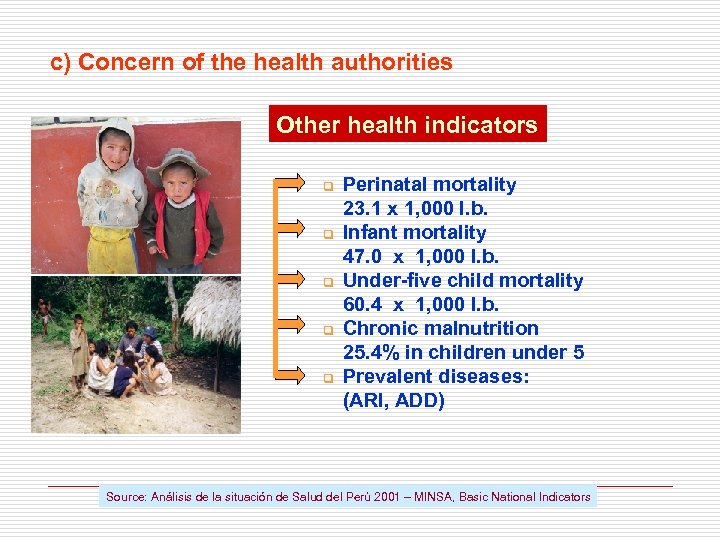 c) Concern of the health authorities Other health indicators q q q Perinatal mortality 23. 1 x 1, 000 l. b. Infant mortality 47. 0 x 1, 000 l. b. Under-five child mortality 60. 4 x 1, 000 l. b. Chronic malnutrition 25. 4% in children under 5 Prevalent diseases: (ARI, ADD) Source: Análisis de la situación de Salud del Perú 2001 – MINSA, Basic National Indicators
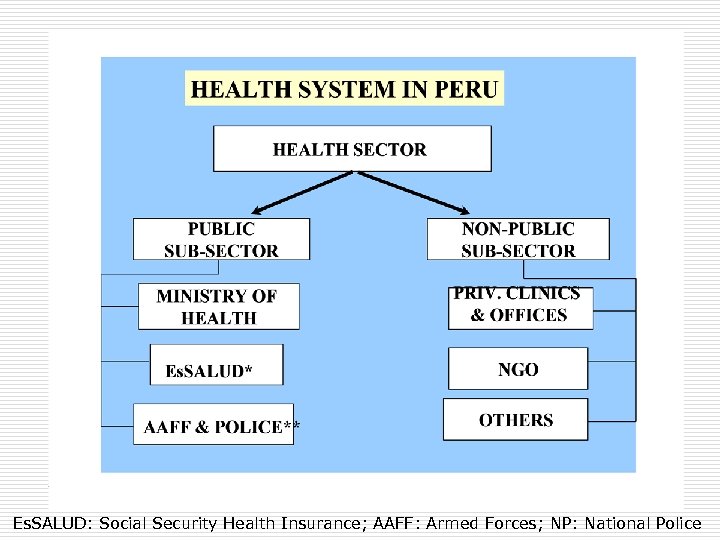 Es. SALUD: Social Security Health Insurance; AAFF: Armed Forces; NP: National Police
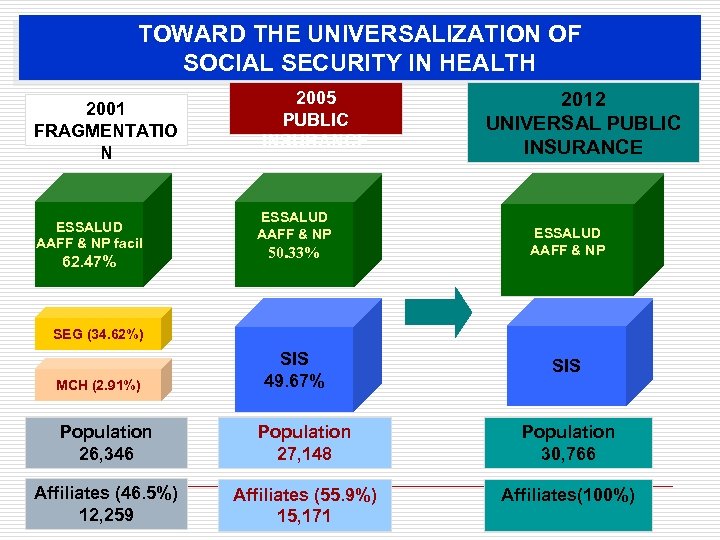 TOWARD THE UNIVERSALIZATION OF SOCIAL SECURITY IN HEALTH 2001 FRAGMENTATIO N ESSALUD AAFF & NP facil 62. 47% 2005 PUBLIC INSURANCE ESSALUD AAFF & NP 50. 33% 2012 UNIVERSAL PUBLIC INSURANCE ESSALUD AAFF & NP SEG (34. 62%) MCH (2. 91%) SIS 49. 67% SIS Population 26, 346 Population 27, 148 Population 30, 766 Affiliates (46. 5%) 12, 259 Affiliates (55. 9%) 15, 171 Affiliates(100%)
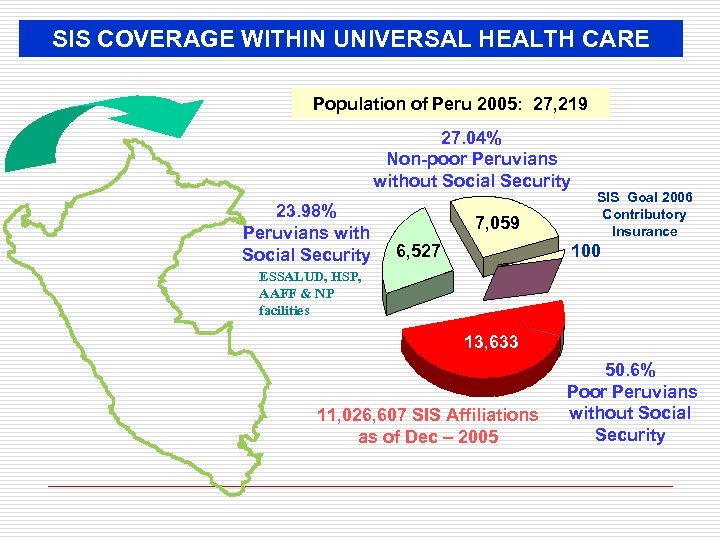 SIS COVERAGE WITHIN UNIVERSAL HEALTH CARE Population of Peru 2005: 27, 219 27. 04% Non-poor Peruvians without Social Security 23. 98% Peruvians with Social Security 7, 059 6, 527 SIS Goal 2006 Contributory Insurance 100 ESSALUD, HSP, AAFF & NP facilities 13, 633 11, 026, 607 SIS Affiliations as of Dec – 2005 50. 6% Poor Peruvians without Social Security
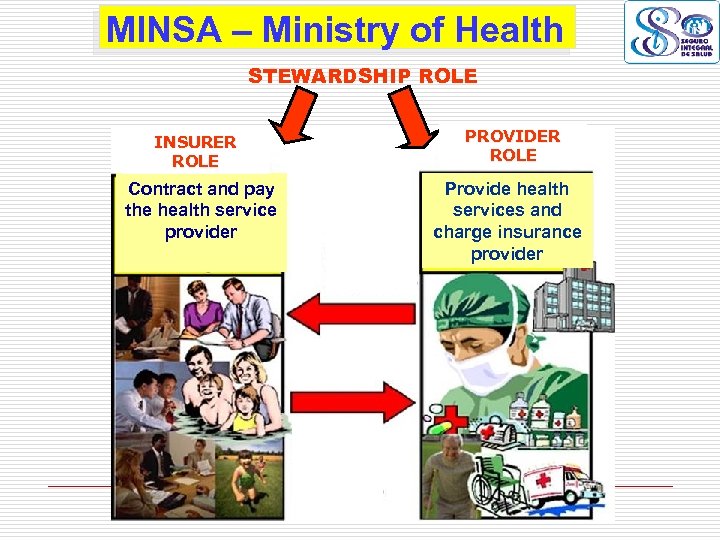 MINSA – Ministry of Health STEWARDSHIP ROLE INSURER ROLE Contract and pay the health service provider PROVIDER ROLE Provide health services and charge insurance provider
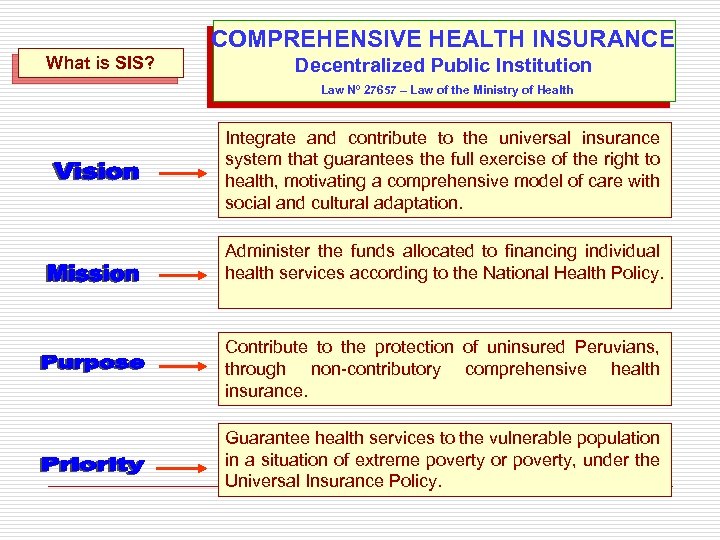 COMPREHENSIVE HEALTH INSURANCE What is SIS? Decentralized Public Institution Law Nº 27657 – Law of the Ministry of Health Integrate and contribute to the universal insurance system that guarantees the full exercise of the right to health, motivating a comprehensive model of care with social and cultural adaptation. Administer the funds allocated to financing individual health services according to the National Health Policy. Contribute to the protection of uninsured Peruvians, through non-contributory comprehensive health insurance. Guarantee health services to the vulnerable population in a situation of extreme poverty or poverty, under the Universal Insurance Policy.
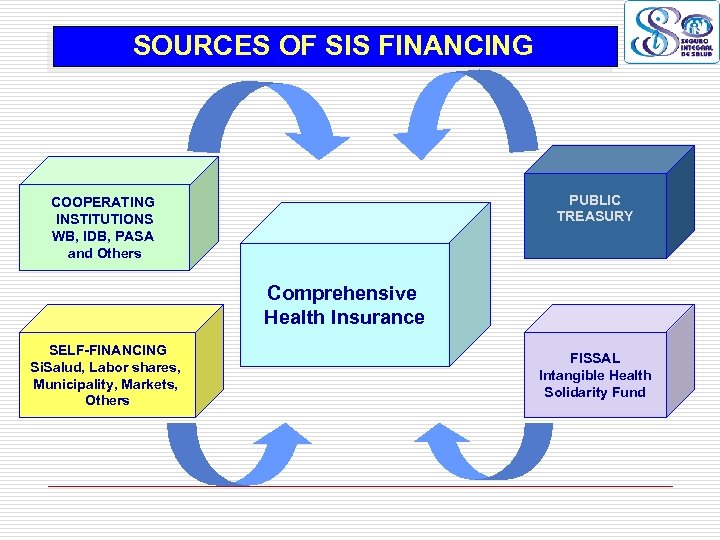 SOURCES OF SIS FINANCING PUBLIC TREASURY COOPERATING INSTITUTIONS WB, IDB, PASA and Others Comprehensive Health Insurance SELF-FINANCING Si. Salud, Labor shares, Municipality, Markets, Others FISSAL Intangible Health Solidarity Fund
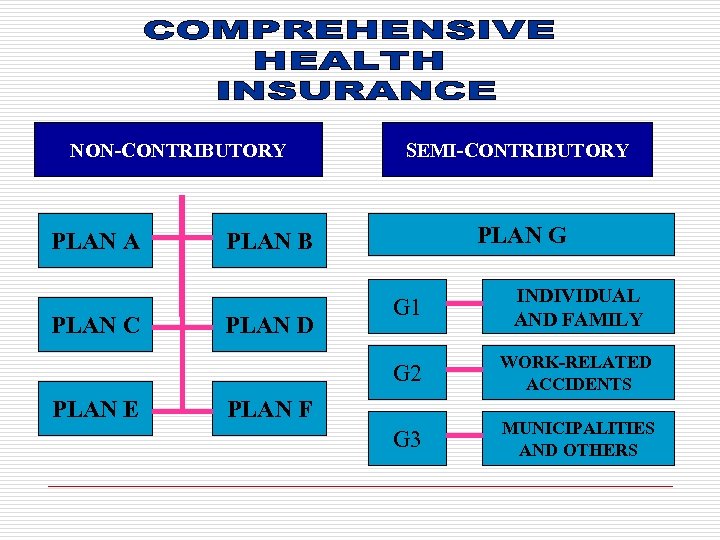 NON-CONTRIBUTORY PLAN A SEMI-CONTRIBUTORY PLAN G PLAN B PLAN E PLAN D INDIVIDUAL AND FAMILY G 2 PLAN C G 1 WORK-RELATED ACCIDENTS G 3 MUNICIPALITIES AND OTHERS PLAN F
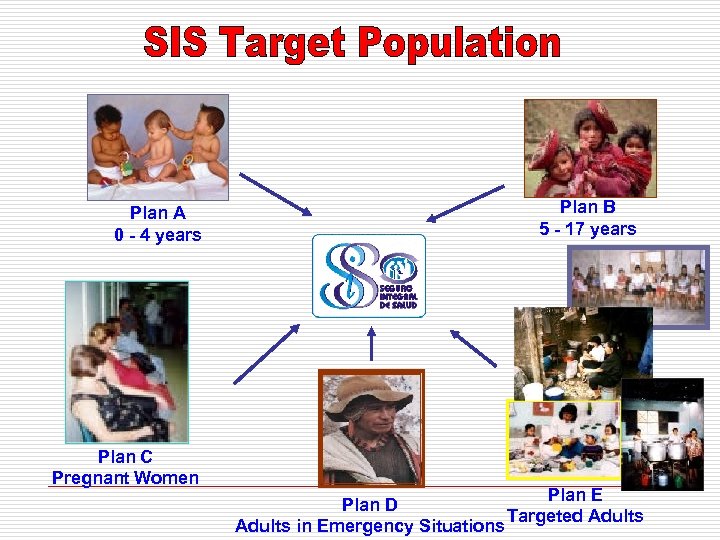 Plan A 0 - 4 years Plan C Pregnant Women Plan B 5 - 17 years Plan E Plan D Targeted Adults in Emergency Situations
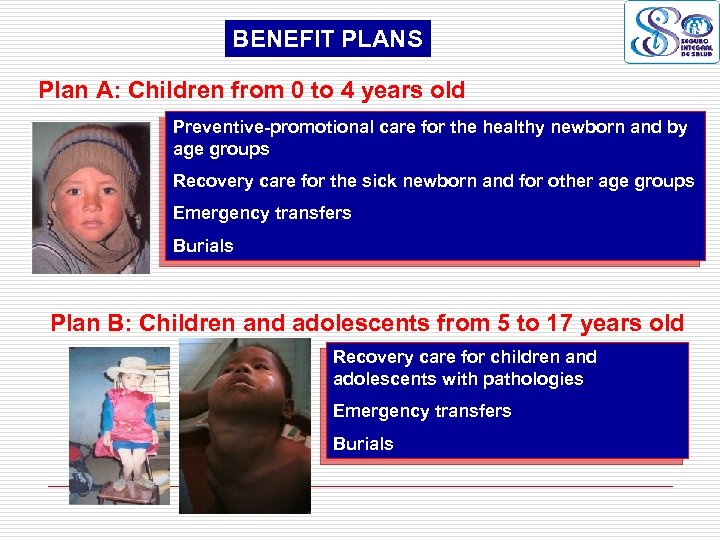 BENEFIT PLANS Plan A: Children from 0 to 4 years old Preventive-promotional care for the healthy newborn and by age groups Recovery care for the sick newborn and for other age groups Emergency transfers Burials Plan B: Children and adolescents from 5 to 17 years old Recovery care for children and adolescents with pathologies Emergency transfers Burials
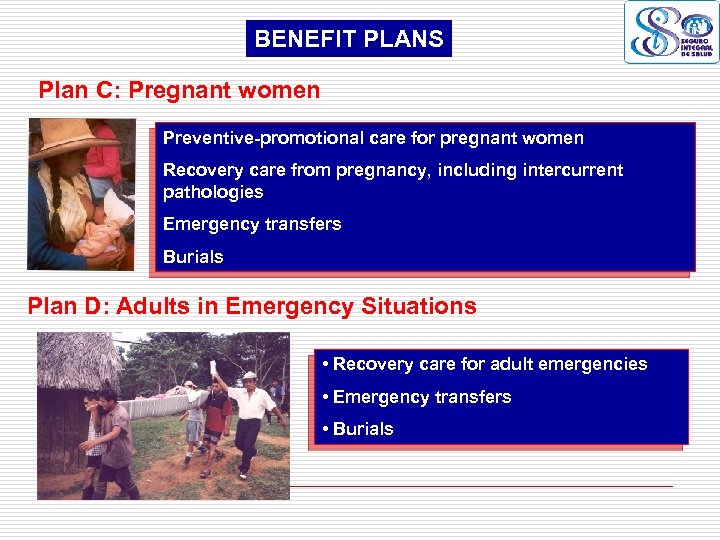 BENEFIT PLANS Plan C: Pregnant women Preventive-promotional care for pregnant women Recovery care from pregnancy, including intercurrent pathologies Emergency transfers Burials Plan D: Adults in Emergency Situations • Recovery care for adult emergencies • Emergency transfers • Burials
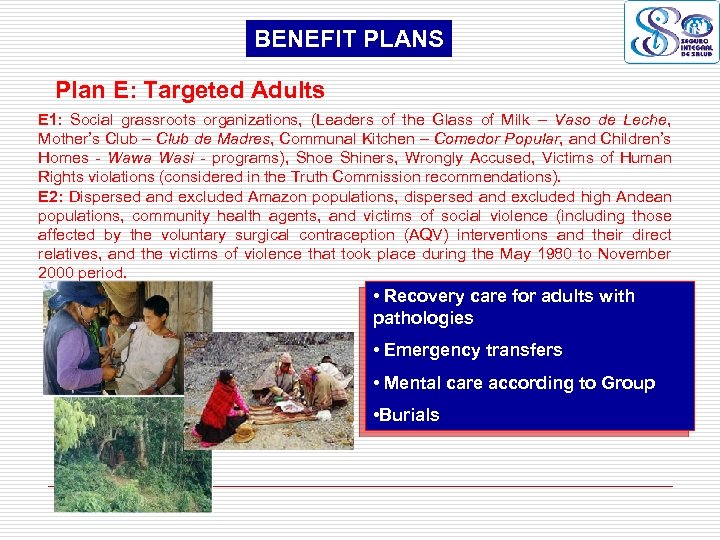 BENEFIT PLANS Plan E: Targeted Adults E 1: Social grassroots organizations, (Leaders of the Glass of Milk – Vaso de Leche, Mother’s Club – Club de Madres, Communal Kitchen – Comedor Popular, and Children’s Homes - Wawa Wasi - programs), Shoe Shiners, Wrongly Accused, Victims of Human Rights violations (considered in the Truth Commission recommendations). E 2: Dispersed and excluded Amazon populations, dispersed and excluded high Andean populations, community health agents, and victims of social violence (including those affected by the voluntary surgical contraception (AQV) interventions and their direct relatives, and the victims of violence that took place during the May 1980 to November 2000 period. • Recovery care for adults with pathologies • Emergency transfers • Mental care according to Group • Burials
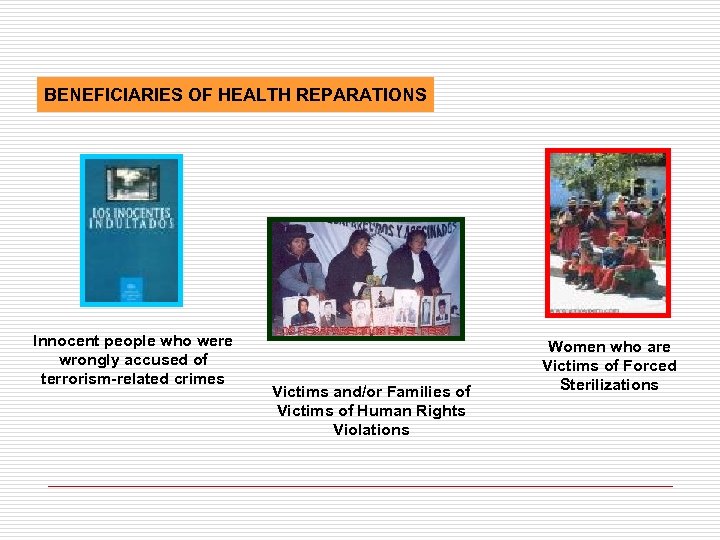 BENEFICIARIES OF HEALTH REPARATIONS Innocent people who were wrongly accused of terrorism-related crimes Victims and/or Families of Victims of Human Rights Violations Women who are Victims of Forced Sterilizations
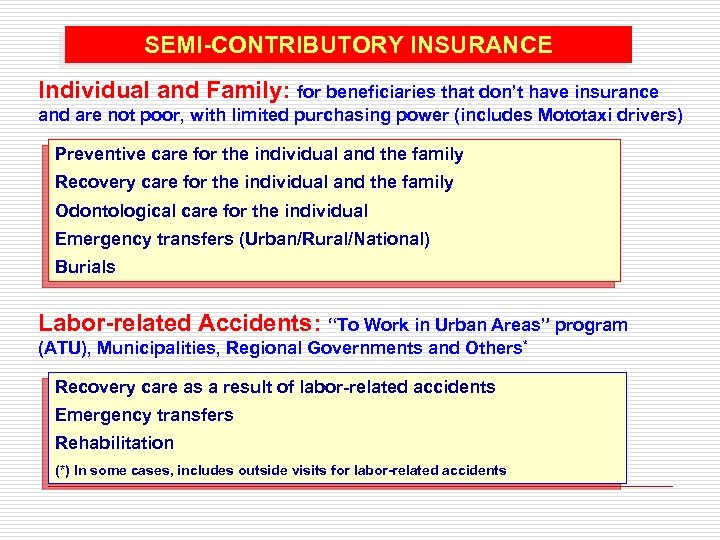 SEMI-CONTRIBUTORY INSURANCE Individual and Family: for beneficiaries that don’t have insurance and are not poor, with limited purchasing power (includes Mototaxi drivers) Preventive care for the individual and the family Recovery care for the individual and the family Odontological care for the individual Emergency transfers (Urban/Rural/National) Burials Labor-related Accidents: “To Work in Urban Areas” program (ATU), Municipalities, Regional Governments and Others* Recovery care as a result of labor-related accidents Emergency transfers Rehabilitation (*) In some cases, includes outside visits for labor-related accidents
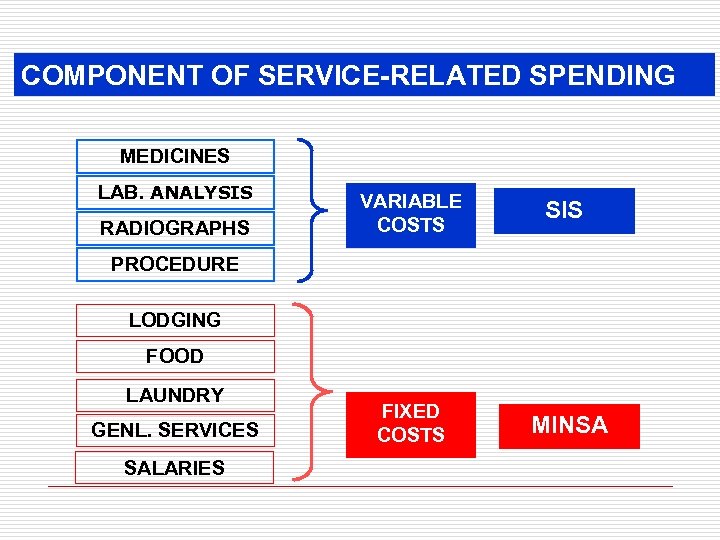 COMPONENT OF SERVICE-RELATED SPENDING MEDICINES LAB. ANALYSIS RADIOGRAPHS VARIABLE COSTS SIS FIXED COSTS MINSA PROCEDURE LODGING FOOD LAUNDRY GENL. SERVICES SALARIES
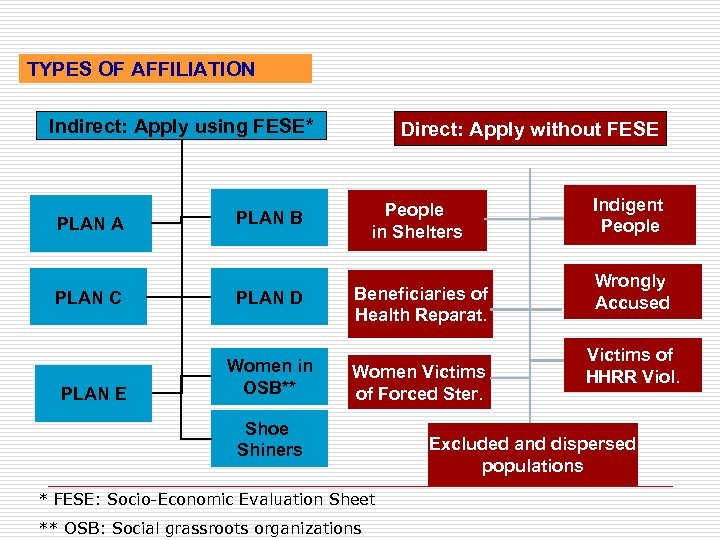 TYPES OF AFFILIATION Indirect: Apply using FESE* PLAN A PLAN C PLAN E Direct: Apply without FESE PLAN B People in Shelters PLAN D Beneficiaries of Health Reparat. Women in OSB** Women Victims of Forced Ster. Shoe Shiners * FESE: Socio-Economic Evaluation Sheet ** OSB: Social grassroots organizations Indigent People Wrongly Accused Victims of HHRR Viol. Excluded and dispersed populations
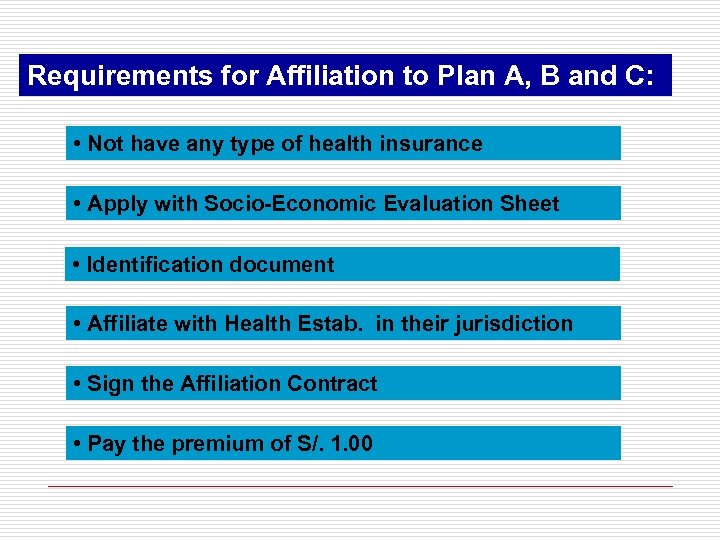 Requirements for Affiliation to Plan A, B and C: • Not have any type of health insurance • Apply with Socio-Economic Evaluation Sheet • Identification document • Affiliate with Health Estab. in their jurisdiction • Sign the Affiliation Contract • Pay the premium of S/. 1. 00
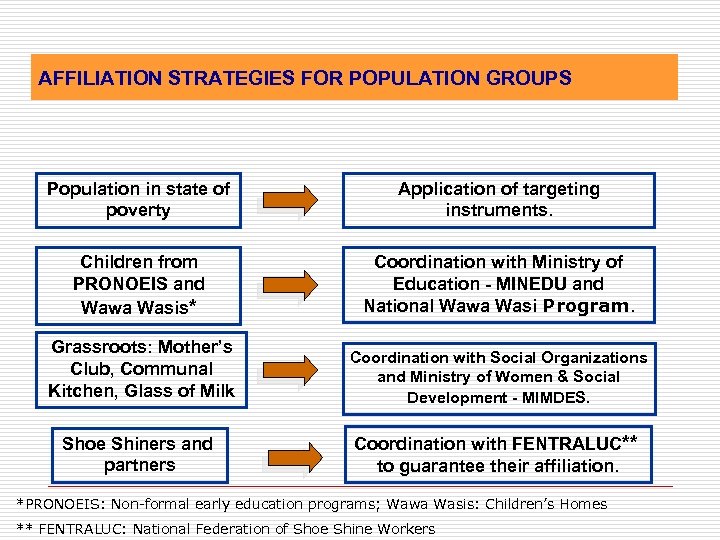 AFFILIATION STRATEGIES FOR POPULATION GROUPS Population in state of poverty Application of targeting instruments. Children from PRONOEIS and Wawa Wasis* Coordination with Ministry of Education - MINEDU and National Wawa Wasi Program. Grassroots: Mother’s Club, Communal Kitchen, Glass of Milk Coordination with Social Organizations and Ministry of Women & Social Development - MIMDES. Shoe Shiners and partners Coordination with FENTRALUC** to guarantee their affiliation. *PRONOEIS: Non-formal early education programs; Wawa Wasis: Children’s Homes ** FENTRALUC: National Federation of Shoe Shine Workers
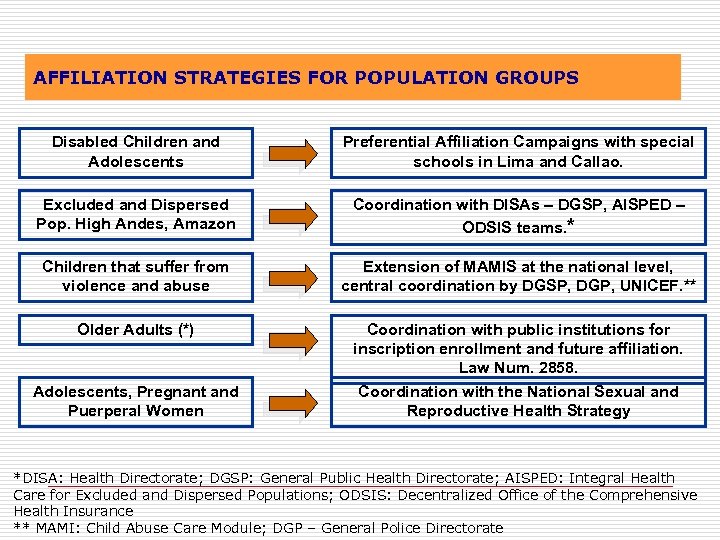 AFFILIATION STRATEGIES FOR POPULATION GROUPS Disabled Children and Adolescents Preferential Affiliation Campaigns with special schools in Lima and Callao. Excluded and Dispersed Pop. High Andes, Amazon Coordination with DISAs – DGSP, AISPED – ODSIS teams. * Children that suffer from violence and abuse Extension of MAMIS at the national level, central coordination by DGSP, DGP, UNICEF. ** Older Adults (*) Coordination with public institutions for inscription enrollment and future affiliation. Law Num. 2858. Coordination with the National Sexual and Reproductive Health Strategy Adolescents, Pregnant and Puerperal Women *DISA: Health Directorate; DGSP: General Public Health Directorate; AISPED: Integral Health Care for Excluded and Dispersed Populations; ODSIS: Decentralized Office of the Comprehensive Health Insurance ** MAMI: Child Abuse Care Module; DGP – General Police Directorate
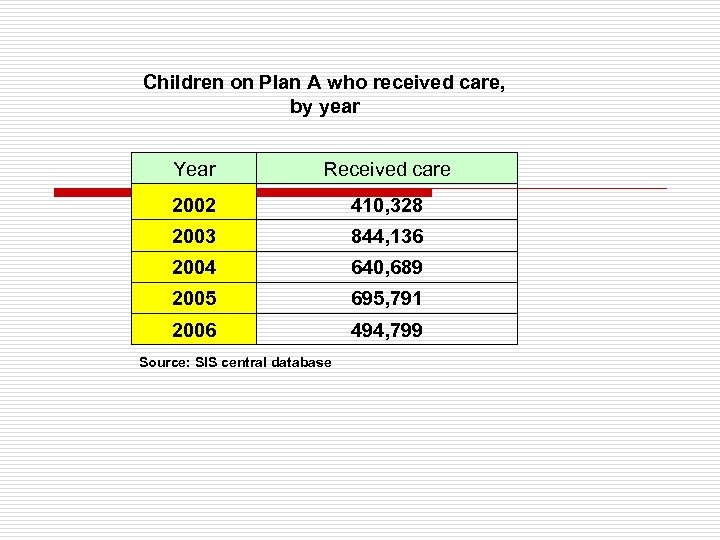 Children on Plan A who received care, by year Year Received care 2002 410, 328 2003 844, 136 2004 640, 689 2005 695, 791 2006 494, 799 Source: SIS central database
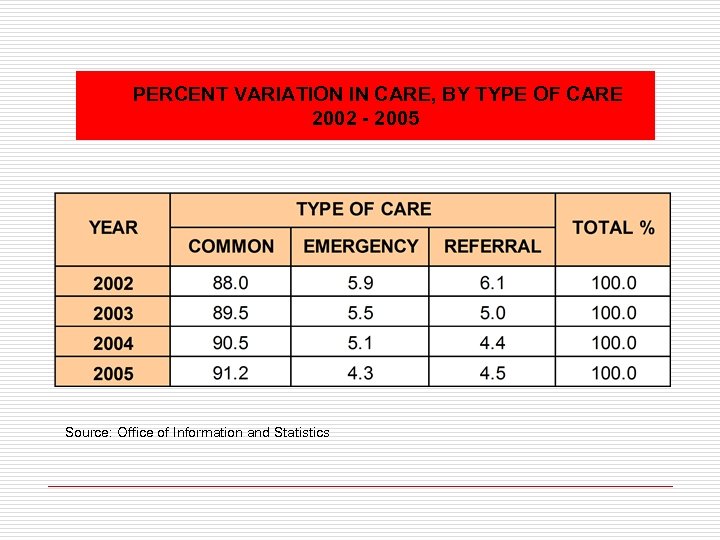 PERCENT VARIATION IN CARE, BY TYPE OF CARE 2002 - 2005 Source: Office of Information and Statistics
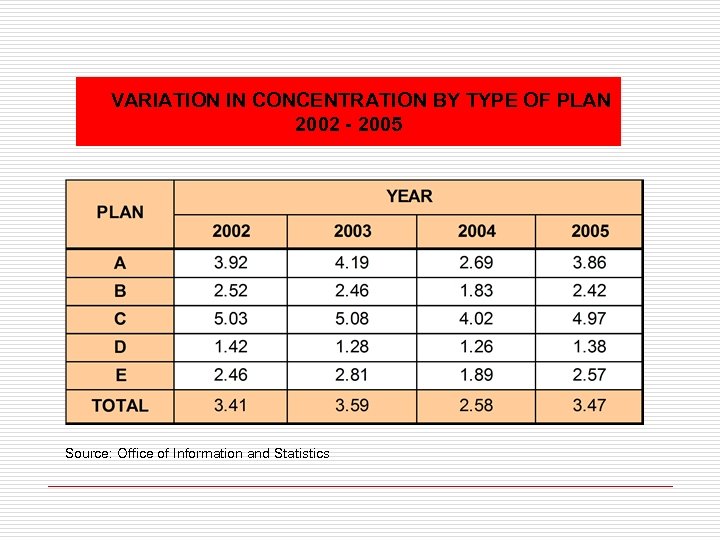 VARIATION IN CONCENTRATION BY TYPE OF PLAN 2002 - 2005 Source: Office of Information and Statistics
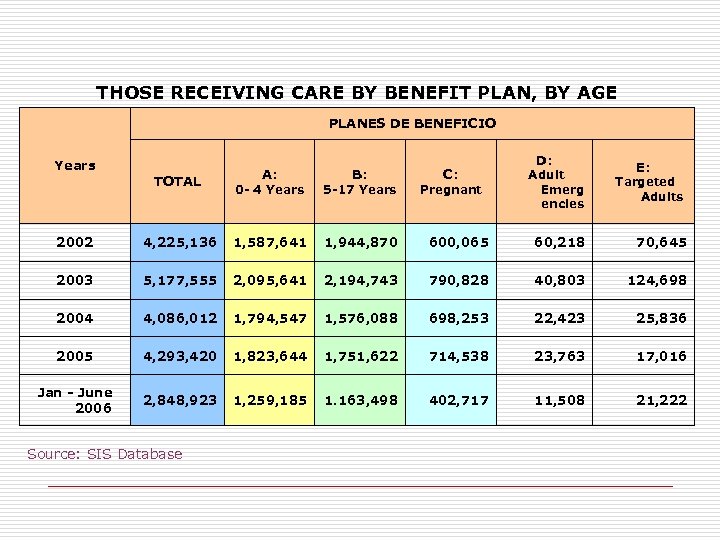 THOSE RECEIVING CARE BY BENEFIT PLAN, BY AGE PLANES DE BENEFICIO Years TOTAL A: B: 0 - 4 Years 5 -17 Years C: Pregnant D: Adult Emerg encies E: Targeted Adults 2002 4, 225, 136 1, 587, 641 1, 944, 870 600, 065 60, 218 70, 645 2003 5, 177, 555 2, 095, 641 2, 194, 743 790, 828 40, 803 124, 698 2004 4, 086, 012 1, 794, 547 1, 576, 088 698, 253 22, 423 25, 836 2005 4, 293, 420 1, 823, 644 1, 751, 622 714, 538 23, 763 17, 016 Jan - June 2006 2, 848, 923 1, 259, 185 1. 163, 498 402, 717 11, 508 21, 222 Source: SIS Database
 Maternal Mortality
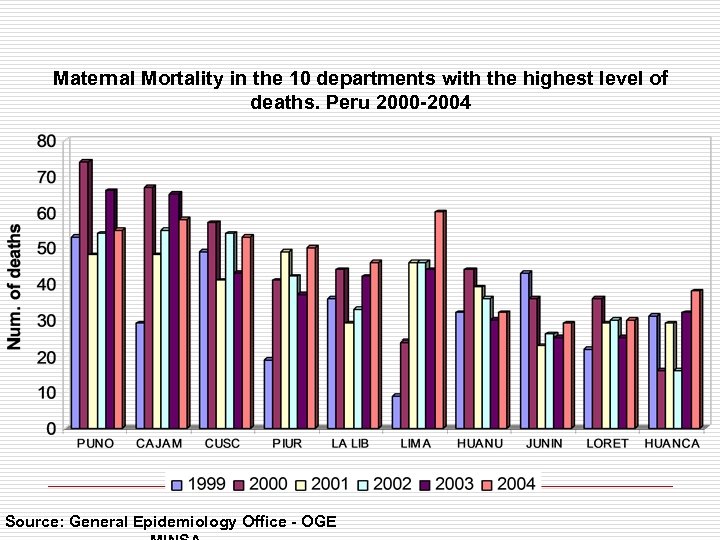 Maternal Mortality in the 10 departments with the highest level of deaths. Peru 2000 -2004 Source: General Epidemiology Office - OGE
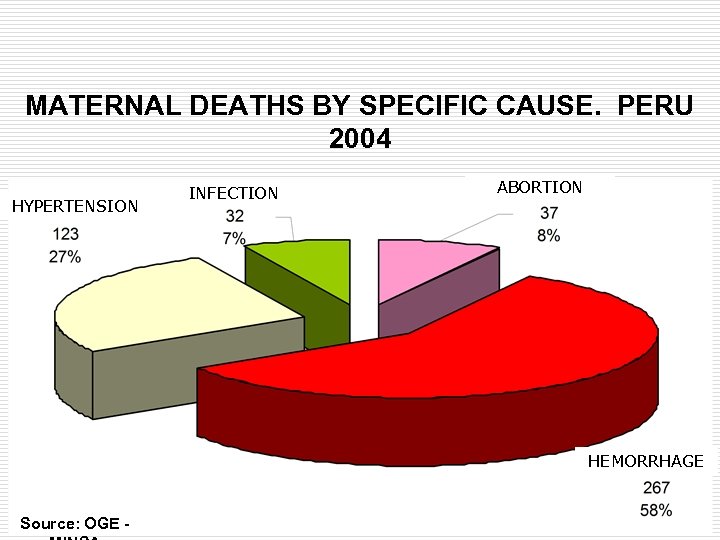 MATERNAL DEATHS BY SPECIFIC CAUSE. PERU 2004 HYPERTENSION INFECTION ABORTION HEMORRHAGE Source: OGE -
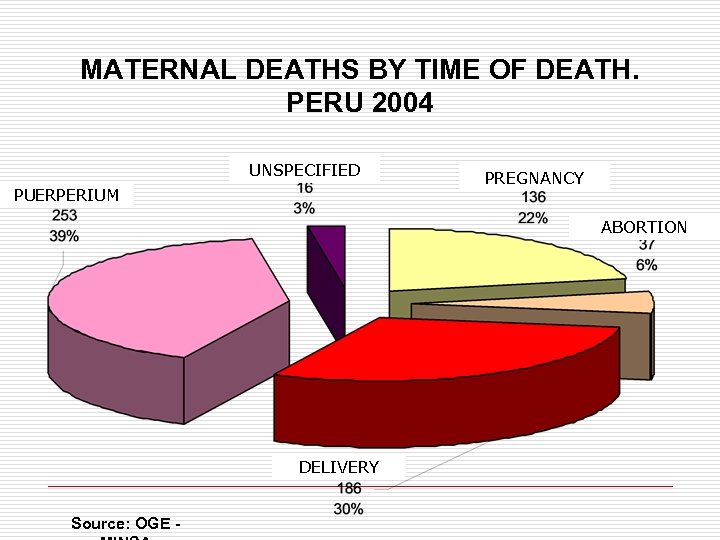 MATERNAL DEATHS BY TIME OF DEATH. PERU 2004 UNSPECIFIED PUERPERIUM PREGNANCY ABORTION DELIVERY Source: OGE -
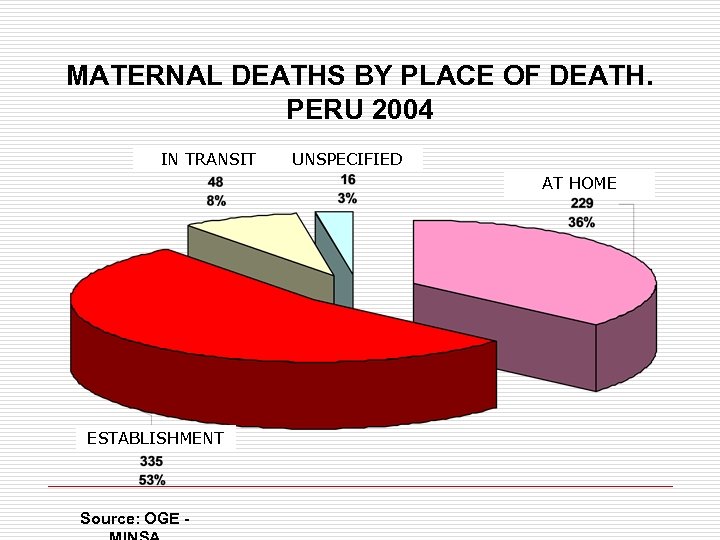 MATERNAL DEATHS BY PLACE OF DEATH. PERU 2004 IN TRANSIT UNSPECIFIED AT HOME ESTABLISHMENT Source: OGE -
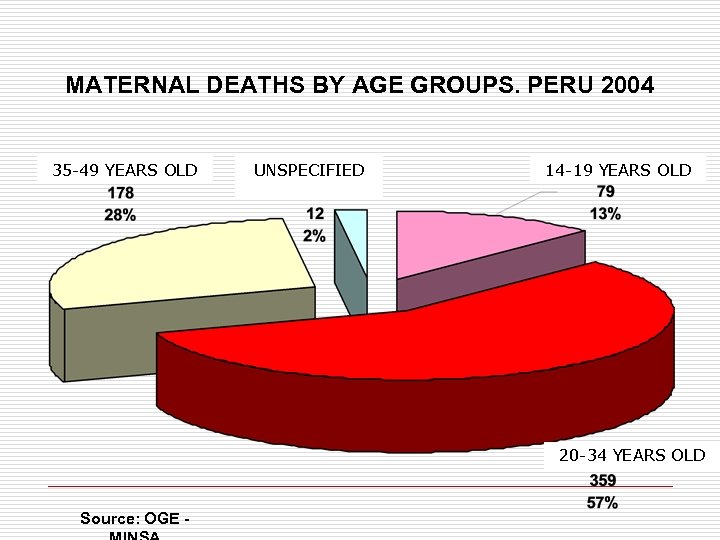 MATERNAL DEATHS BY AGE GROUPS. PERU 2004 35 -49 YEARS OLD UNSPECIFIED 14 -19 YEARS OLD 20 -34 YEARS OLD Source: OGE -
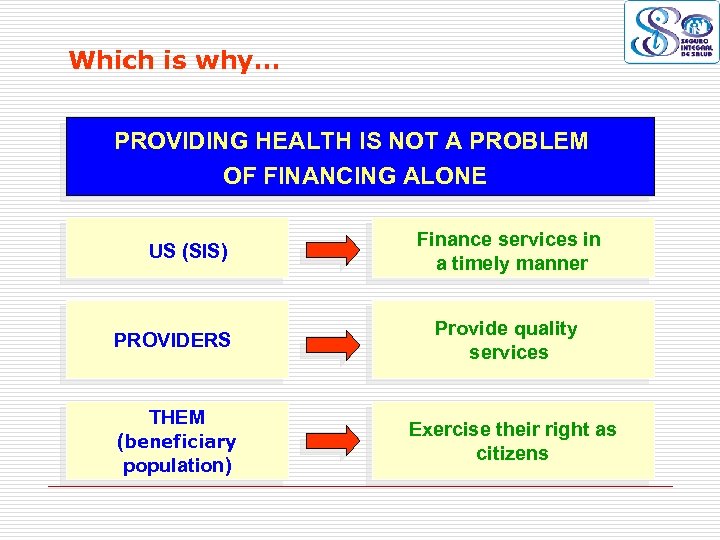 Which is why… PROVIDING HEALTH IS NOT A PROBLEM OF FINANCING ALONE US (SIS) PROVIDERS THEM (beneficiary population) Finance services in a timely manner Provide quality services Exercise their right as citizens