


 Скачать презентацию Prospective Risk Assessment in a Mental Heath Trust
abed86290e5ced703cad1df7825fa406.ppt
- Количество слайдов: 12
 Prospective Risk Assessment in a Mental Heath Trust A Study About Ways to Improve the Quality of Care in Mental Health Services
 This research is a CLAHRC fellows project and the fellow is Dr Jenny Spencer. The Project PI is Dr Terry Dickerson, Assistant Director of the University of Cambridge Engineering Design Centre. The project Sponsor is Cambridgeshire and Peterborough NHS Foundation Trust (CPFT) through the NIHR CLAHRC for Cambridgeshire and Peterborough.
 What We Did Aim Test whether two methods for prospectively identifying risk could be efficaciously adapted to a mental health environment. Goal 1. Verify and validate the use of these tools in a mental health setting. 2. Ideally, improve patient safety and the quality of clinical care in mental health settings. Outcome measures Primary – Comparison of managerial Prospective Hazards Analysis and clinical staff Quality Assurance Data Collection results. Secondary – Change in Patient Safety Culture using MAPSAF. Change in the number and severity of reported near misses and SUIs.
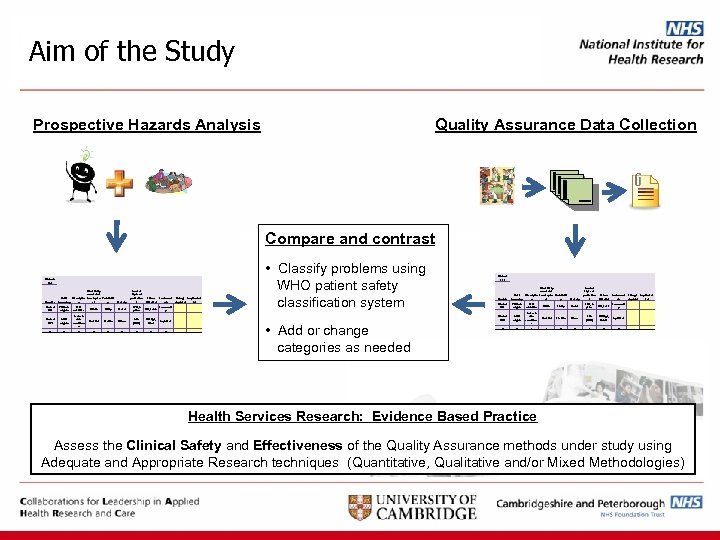 Aim of the Study Prospective Hazards Analysis Quality Assurance Data Collection Compare and contrast Hazards List Number Most likely worst case Brief Descriptio Consequen Probabilit Summary n ce y Hazard 001 Patients might. . Hazard 002 Staff might. . . Feel suicidal. . assess a skin condition. . Death Likely Severity Severe Current Layer of protection l CPN, 6 years Teams affected First aid Certain Minor Jr Dr (SHO) Old Age, Adult Inpatient . . . Hazards List • Add or change categories as needed Number Most likely worst case Brief Descriptio Consequen Probabilit Summary n ce y Hazard 001 Patients might. . Hazard 002 Environme Change Implement nts required ed Communit AO, Crisis y • Classify problems using WHO patient safety classification system Staff might. . . Feel suicidal. . assess a skin condition. . Current Layer of protection l Teams affected Environme Change Implement nts required ed Death Likely Severe CPN, 6 years AO, Crisis Communit y First aid Certain Minor Jr Dr (SHO) Old Age, Adult Inpatient . . . Severity Health Services Research: Evidence Based Practice Assess the Clinical Safety and Effectiveness of the Quality Assurance methods under study using Adequate and Appropriate Research techniques (Quantitative, Qualitative and/or Mixed Methodologies)
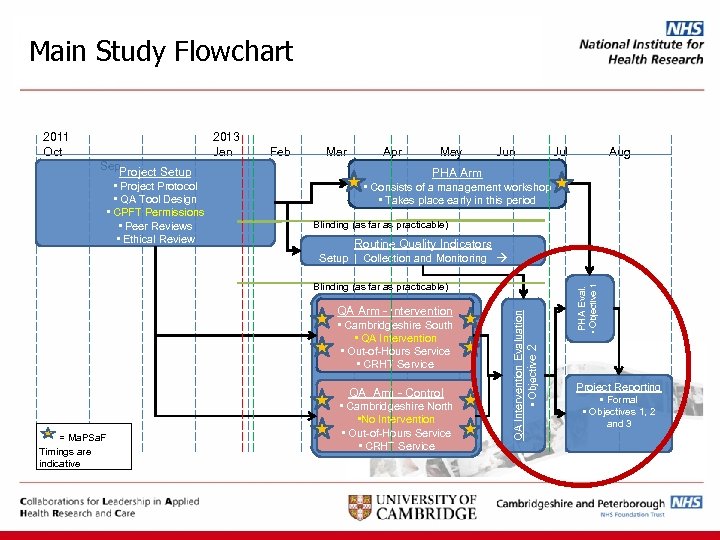 Main Study Flowchart 2011 Oct 2013 Jan Sep Project Setup • Project Protocol • QA Tool Design • CPFT Permissions • Peer Reviews • Ethical Review Feb Mar Apr May Jun Jul Aug PHA Arm • Consists of a management workshop • Takes place early in this period Blinding (as far as practicable) Routine Quality Indicators QA Arm - Control = Ma. PSa. F Timings are indicative • Cambridgeshire North • No Intervention • Out-of-Hours Service • CRHT Service PHA Eval. QA Arm - Control QA Arm - Intervention Cambridgeshire North • • Cambridgeshire. South • No Intervention QA Intervention • Out-of-Hours Service • CRHT Service • • CR&HTService QA Intervention Evaluation • Objective 2 Blinding (as far as practicable) • Objective 1 Setup | Collection and Monitoring Project Reporting • Formal • Objectives 1, 2 and 3
 The Challenges We Faced Project size and goals (? too big) Project Set up (1 year) • Ethics approval, Sponsorship, Peer review, Indemnity/Insurance, Grant Contracts, Feasibility, Commercial charges, Service Support Costs, Identification of PI, Letters of access/Honorary Research contracts Service provider buy-in Staff engagement Changes initiated by other people
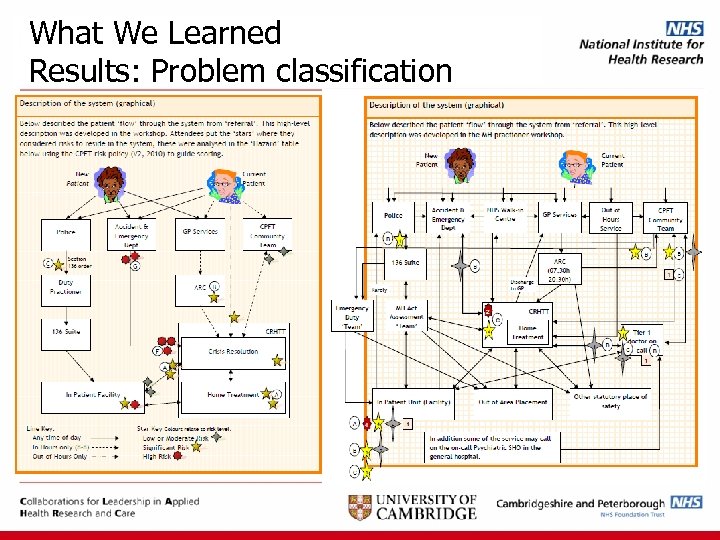 What We Learned Results: Problem classification
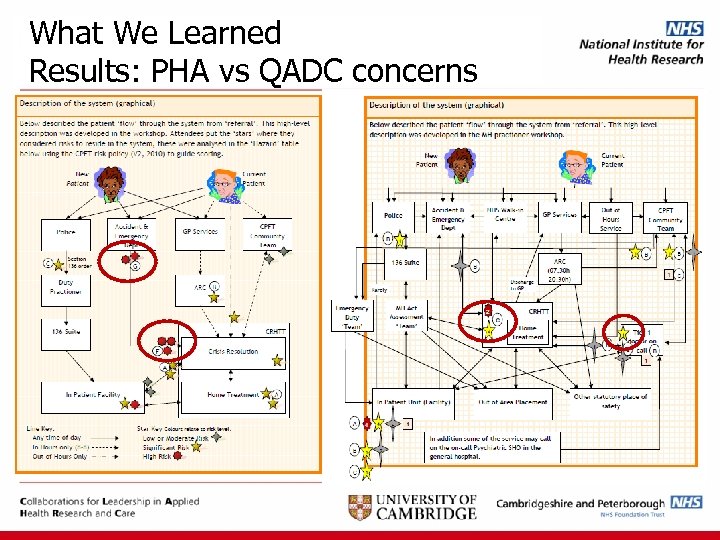 What We Learned Results: PHA vs QADC concerns
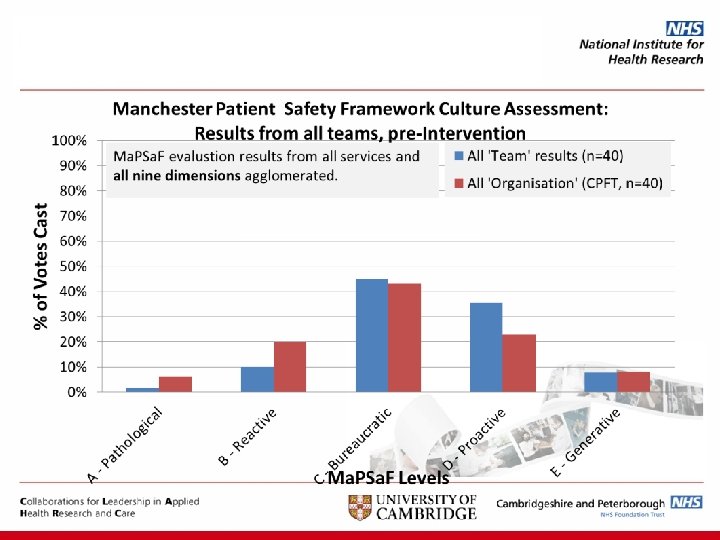
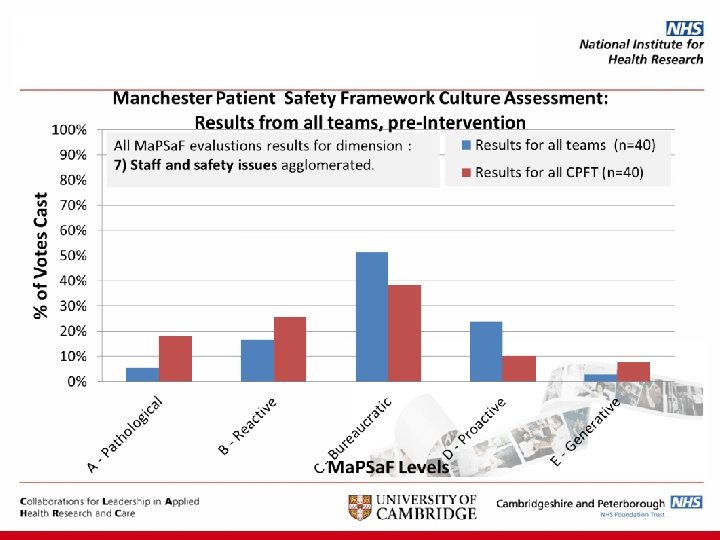
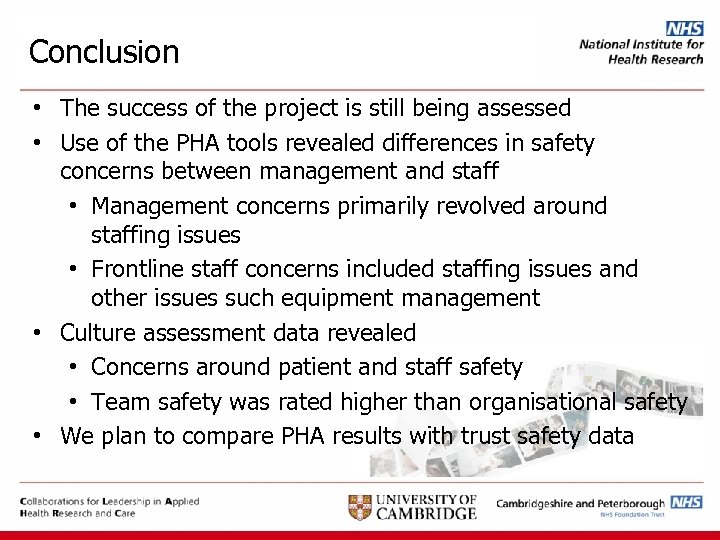 Conclusion • The success of the project is still being assessed • Use of the PHA tools revealed differences in safety concerns between management and staff • Management concerns primarily revolved around staffing issues • Frontline staff concerns included staffing issues and other issues such equipment management • Culture assessment data revealed • Concerns around patient and staff safety • Team safety was rated higher than organisational safety • We plan to compare PHA results with trust safety data
 Thank you for listening. “Design for Patient Safety” Department of Health 2003