


 Скачать презентацию Proposed Diffserv Evaluation for Emerge Sites Volker Sander
4648bc223afe8375ad4b771132920a92.ppt
- Количество слайдов: 44
 Proposed Diffserv Evaluation for Emerge Sites Volker Sander sander@mcs. anl. gov Argonne National Laboratory 1/20/2000
 Outline l Basic GARA overview l New GARA-features l Basic set of experiments l Installation of GARA l Running the experiments using GARA l Timeline 2
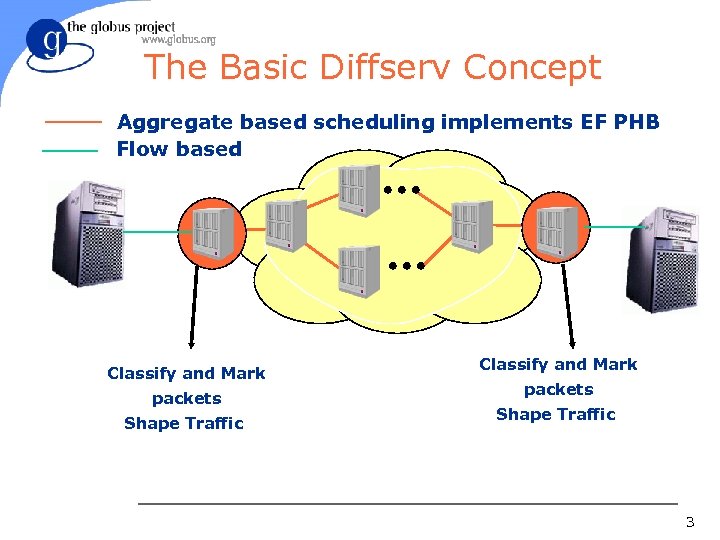 The Basic Diffserv Concept Aggregate based scheduling implements EF PHB Flow based Classify and Mark packets Shape Traffic 3
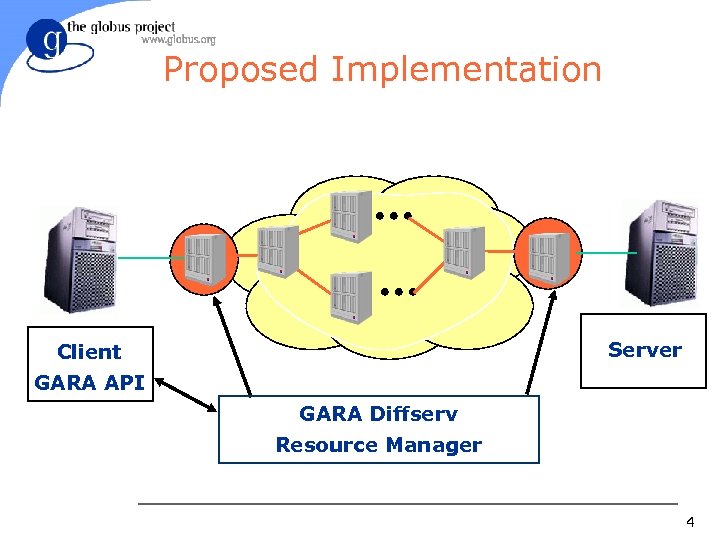 Proposed Implementation Server Client GARA API GARA Diffserv Resource Manager 4
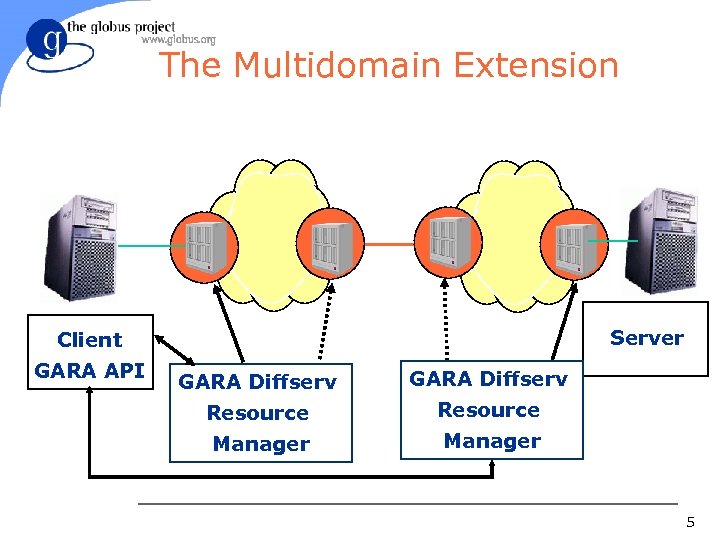 The Multidomain Extension Server Client GARA API GARA Diffserv Resource Manager 5
 GARA Globus Architecture for Reservation and Allocation l Three important contributions: – Support for Advance Reservations (AG) – Uniform treatment of underlying resources > Network, disk, CPU etc… > Currently supported: Differentiated Services, DPSS, and DSRT – Layered architecture enables generic coreservation agents > User is able to select API best suitable for his need 6
 GARA Basics—Reservations l There is a generic “reservation”, which has several properties: – Start Time (“now” or future) and Duration – Resource type/Underlying resource identifier – Resource-specific (bandwidth, % CPU…) l All reservations are treated uniformly: – Create/Modify (Given properties) => Returns Reservation Handle – Destroy – Monitor (Callbacks or Polling) 7
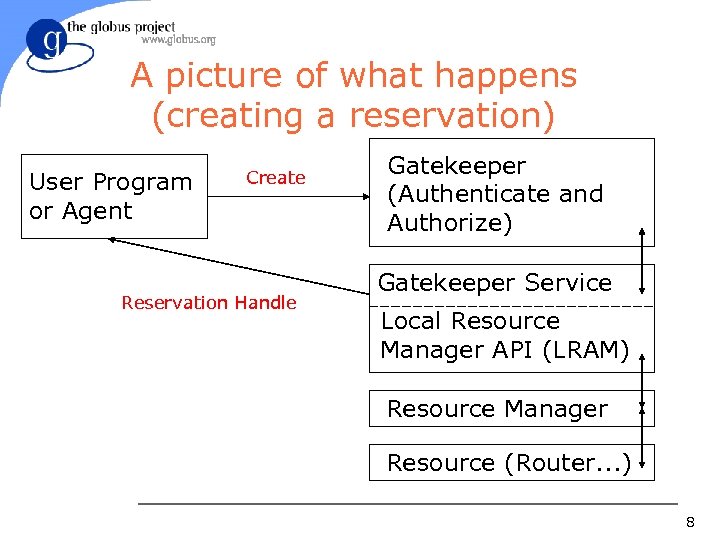 A picture of what happens (creating a reservation) User Program or Agent Create Reservation Handle Gatekeeper (Authenticate and Authorize) Gatekeeper Service Local Resource Manager API (LRAM) Resource Manager Resource (Router. . . ) 8
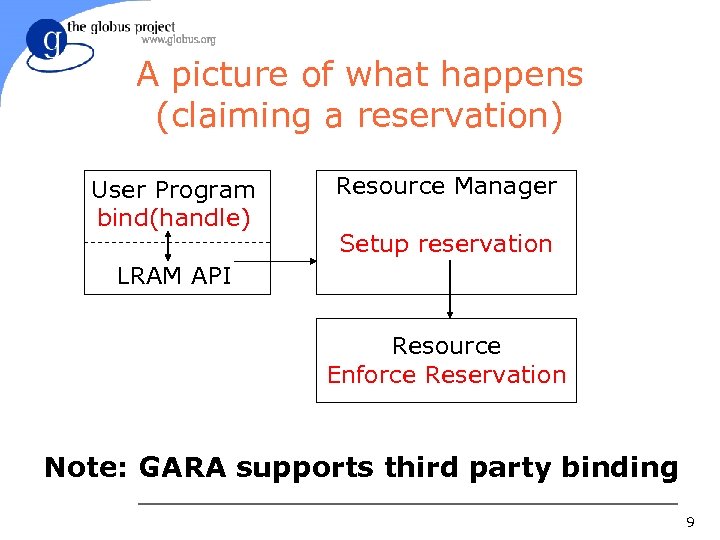 A picture of what happens (claiming a reservation) User Program bind(handle) Resource Manager Setup reservation LRAM API Resource Enforce Reservation Note: GARA supports third party binding 9
 10
10
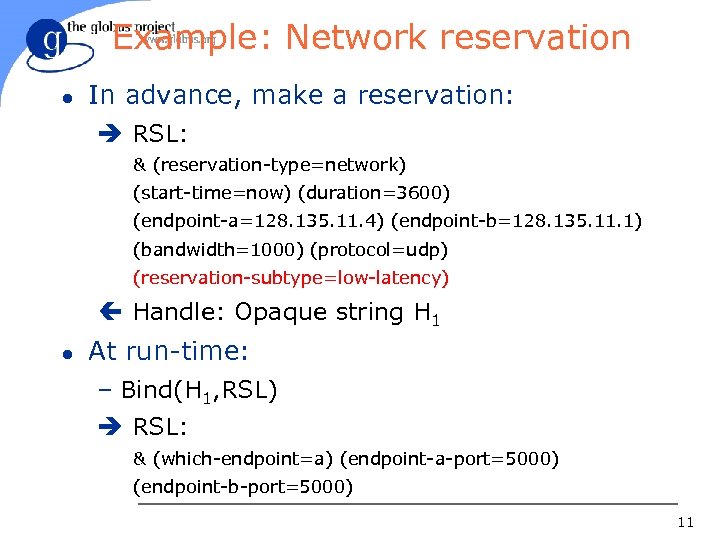 Example: Network reservation l In advance, make a reservation: è RSL: & (reservation-type=network) (start-time=now) (duration=3600) (endpoint-a=128. 135. 11. 4) (endpoint-b=128. 135. 11. 1) (bandwidth=1000) (protocol=udp) (reservation-subtype=low-latency) ç Handle: Opaque string H 1 l At run-time: – Bind(H 1, RSL) è RSL: & (which-endpoint=a) (endpoint-a-port=5000) (endpoint-b-port=5000) 11
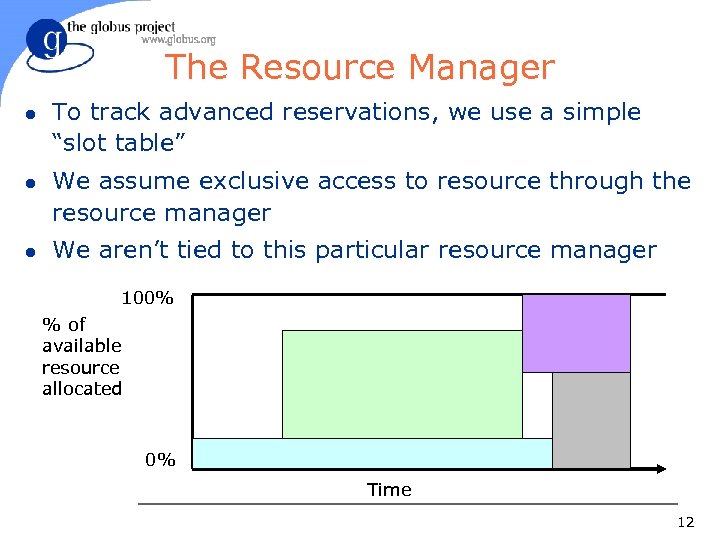 The Resource Manager l l l To track advanced reservations, we use a simple “slot table” We assume exclusive access to resource through the resource manager We aren’t tied to this particular resource manager 100% % of available resource allocated 0% Time 12
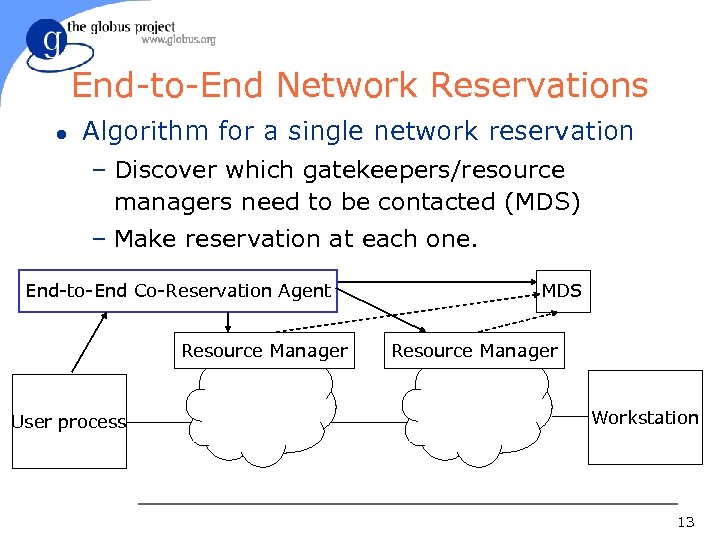 End-to-End Network Reservations l Algorithm for a single network reservation – Discover which gatekeepers/resource managers need to be contacted (MDS) – Make reservation at each one. End-to-End Co-Reservation Agent Resource Manager User process MDS Resource Manager Workstation 13
 The GARA API l globus_gara_reservation_create() è Gatekeeper contact è RSL reservation specification ç Reservation Handle or Error l globus_gara_reservation_modify() è Old Reservation Handle è RSL reservation specification ç New Reservation Handle or Error 14
 The GARA API (continued) l globus_gara_reservation_cancel() è Reservation Handle ç Error l globus_gara_reservation_status() è Reservation Handle ç Status/Error l globus_gara_reservation_callback_register() è Reservation Handle è Callback Function/User Parameter ç Error 15
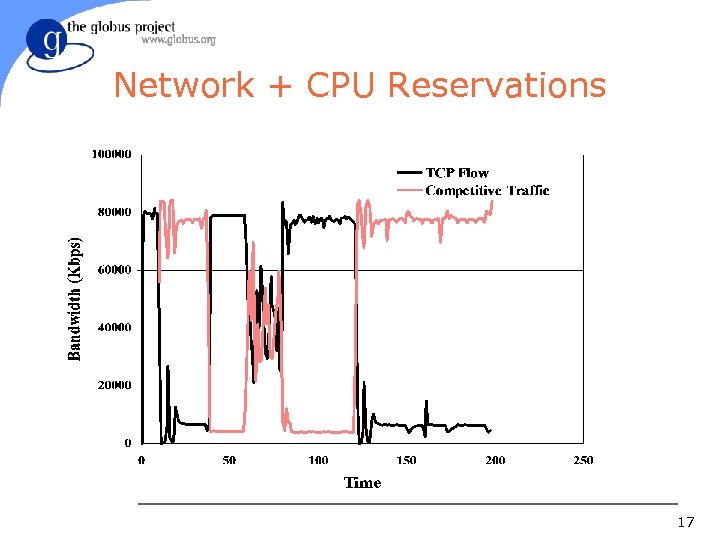
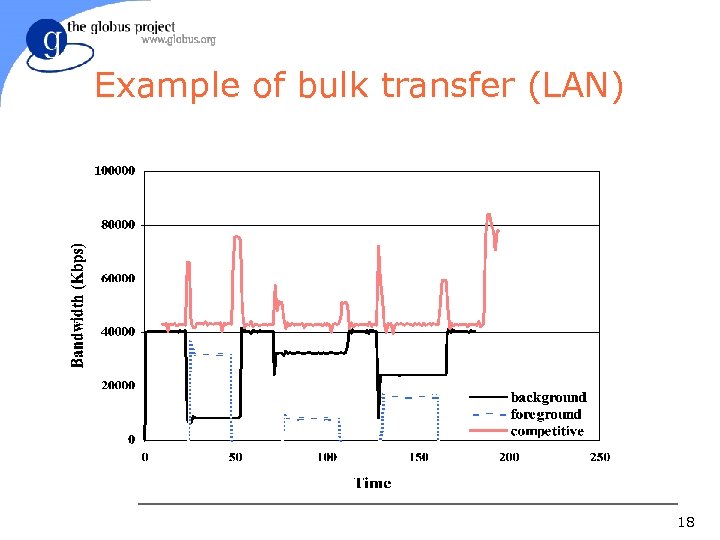
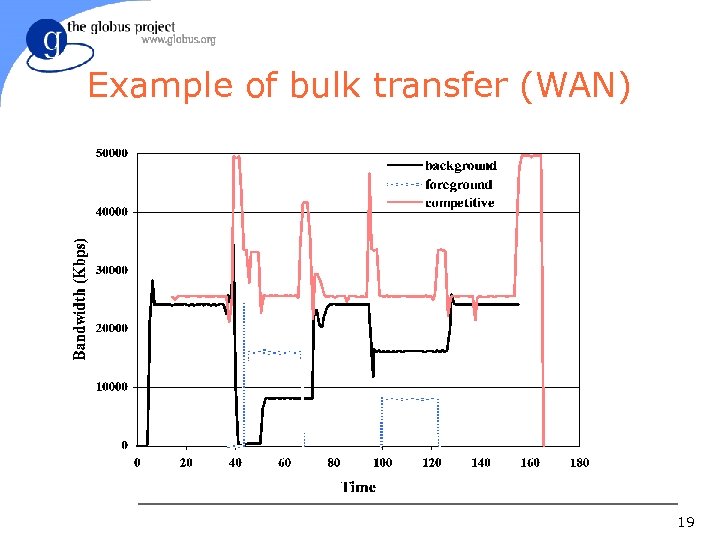
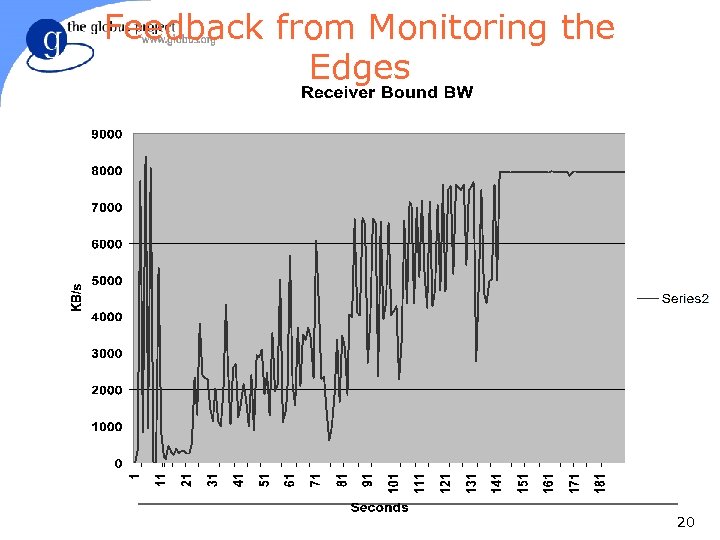
 New GARA features l New Reservation-Subtypes – low-latency > Used to support jitter sensitive applications using the same EF aggregate behavior as high-throughput TCP applications > Based on traffic shaping and Priority-Queuing > Currently being evaluated – background > Used to support bulk transfers, including deadline support. Takes at least the amount of premium traffic required to fulfill the deadline; more if not used actively l Monitoring of the network edges – Provides feedback to applications when they send too fast 16
 Network + CPU Reservations 17
 Example of bulk transfer (LAN) 18
 Example of bulk transfer (WAN) 19
 Feedback from Monitoring the Edges 20
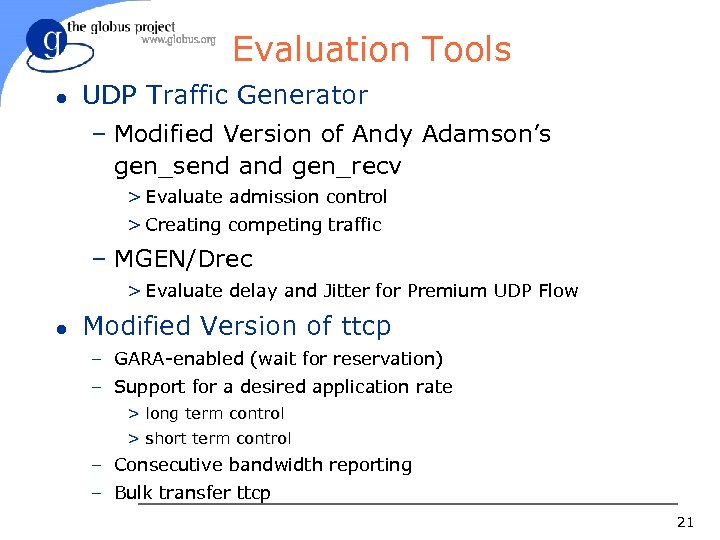 Evaluation Tools l UDP Traffic Generator – Modified Version of Andy Adamson’s gen_send and gen_recv > Evaluate admission control > Creating competing traffic – MGEN/Drec > Evaluate delay and Jitter for Premium UDP Flow l Modified Version of ttcp – GARA-enabled (wait for reservation) – Support for a desired application rate > long term control > short term control – Consecutive bandwidth reporting – Bulk transfer ttcp 21
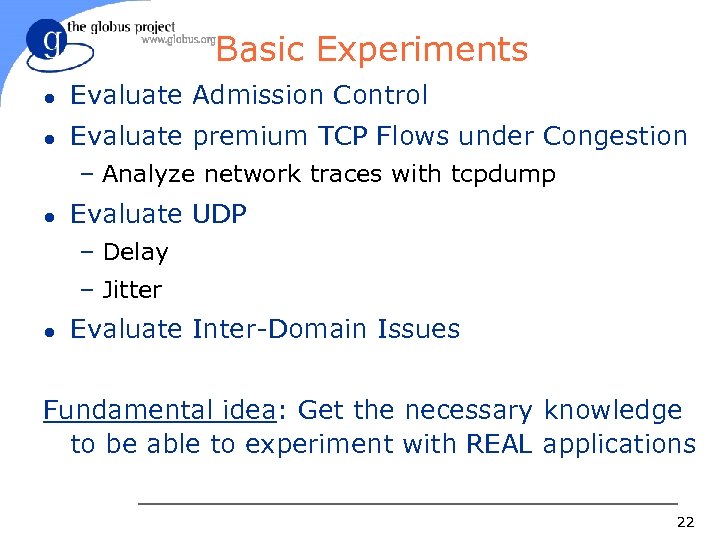 Basic Experiments l Evaluate Admission Control l Evaluate premium TCP Flows under Congestion – Analyze network traces with tcpdump l Evaluate UDP – Delay – Jitter l Evaluate Inter-Domain Issues Fundamental idea: Get the necessary knowledge to be able to experiment with REAL applications 22
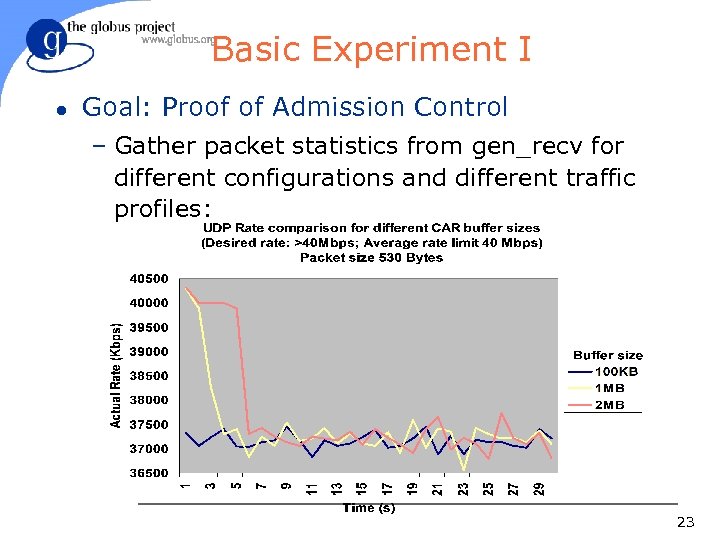 Basic Experiment I l Goal: Proof of Admission Control – Gather packet statistics from gen_recv for different configurations and different traffic profiles: 23
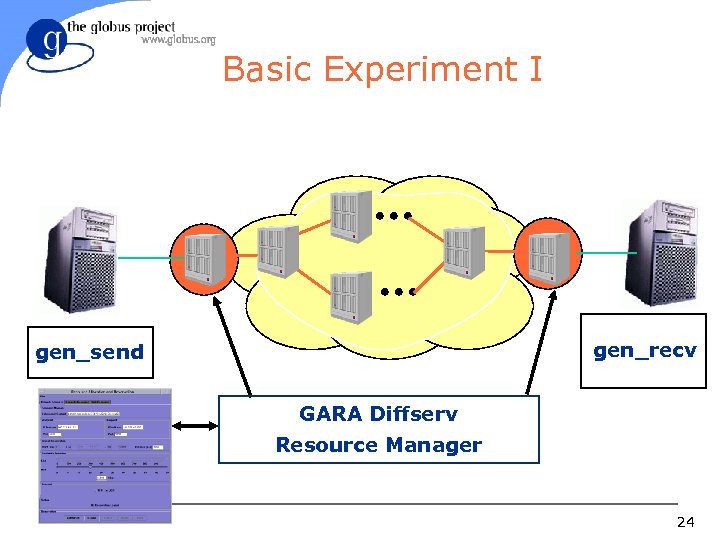 Basic Experiment I gen_recv gen_send GARA Diffserv Resource Manager 24
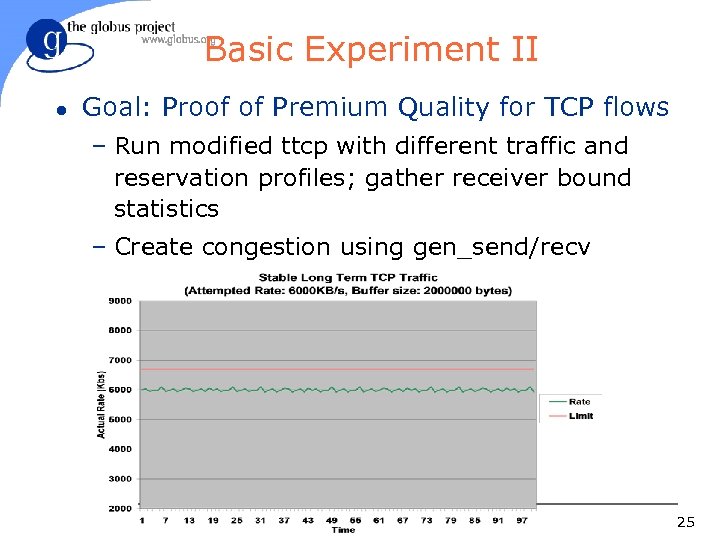 Basic Experiment II l Goal: Proof of Premium Quality for TCP flows – Run modified ttcp with different traffic and reservation profiles; gather receiver bound statistics – Create congestion using gen_send/recv 25
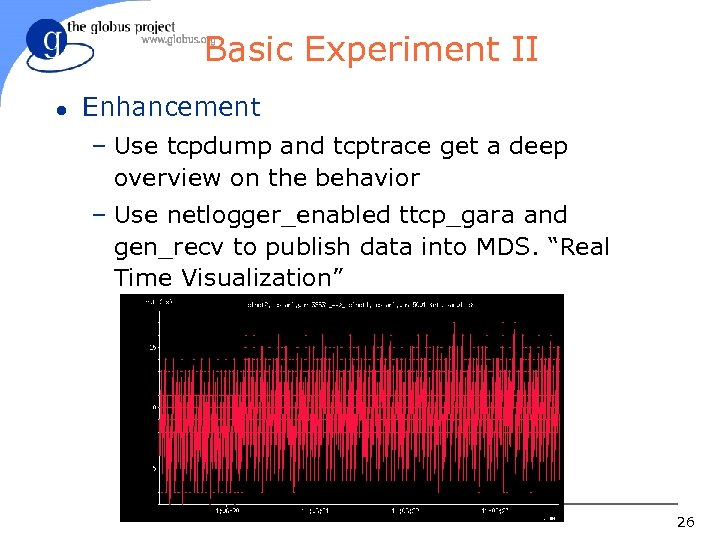 Basic Experiment II l Enhancement – Use tcpdump and tcptrace get a deep overview on the behavior – Use netlogger_enabled ttcp_gara and gen_recv to publish data into MDS. “Real Time Visualization” 26
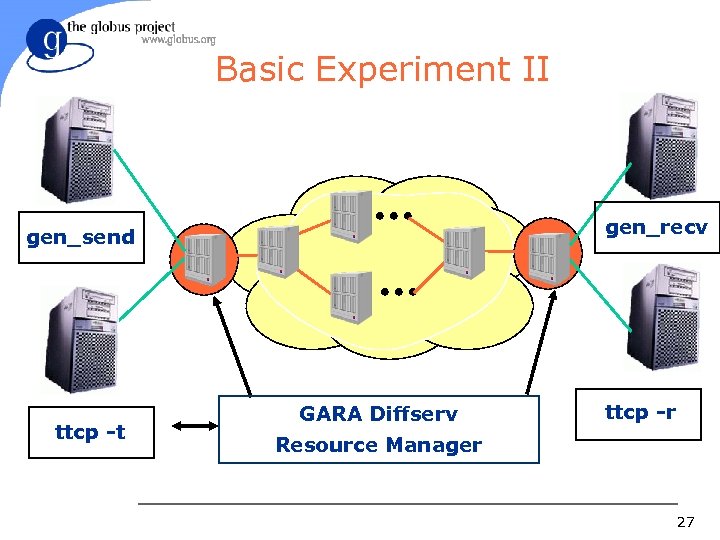 Basic Experiment II gen_recv gen_send ttcp -t GARA Diffserv ttcp -r Resource Manager 27
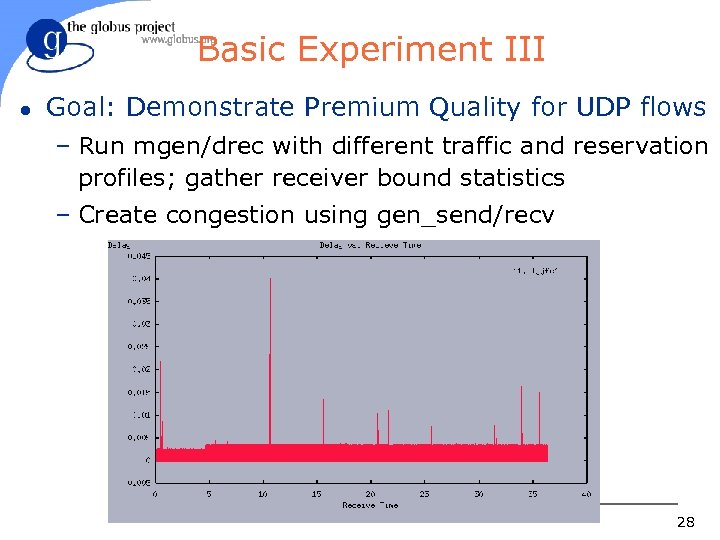 Basic Experiment III l Goal: Demonstrate Premium Quality for UDP flows – Run mgen/drec with different traffic and reservation profiles; gather receiver bound statistics – Create congestion using gen_send/recv 28
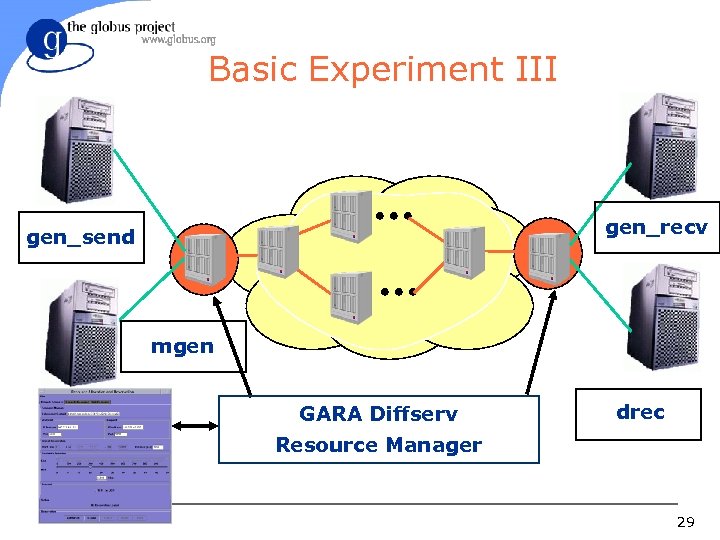 Basic Experiment III gen_recv gen_send mgen GARA Diffserv drec Resource Manager 29
 Basic Experiment IV l Goal: Proof Premium Quality for UDP flows sharing one EF aggregate – Run mgen/drec with different traffic and reservation profiles; gather receiver bound statistics – Run high-throughput ttcp using a correct reservation – Create congestion using gen_send/recv 30
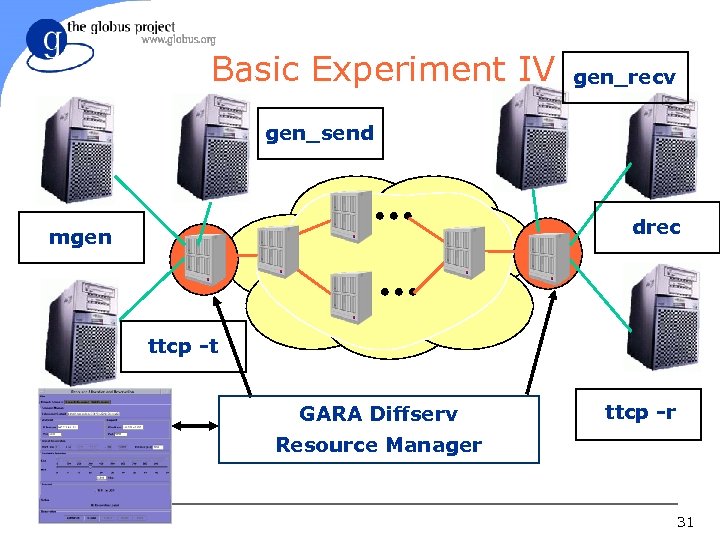 Basic Experiment IV gen_recv gen_send drec mgen ttcp -t GARA Diffserv ttcp -r Resource Manager 31
 Additional Experiments l Bulk-Transfer l Reevaluate inter-domain behavior – Add Traffic-Shaping between domains l Test Inter-Domain Admission control l Prepare the Instrumentation l Go with real applications 32
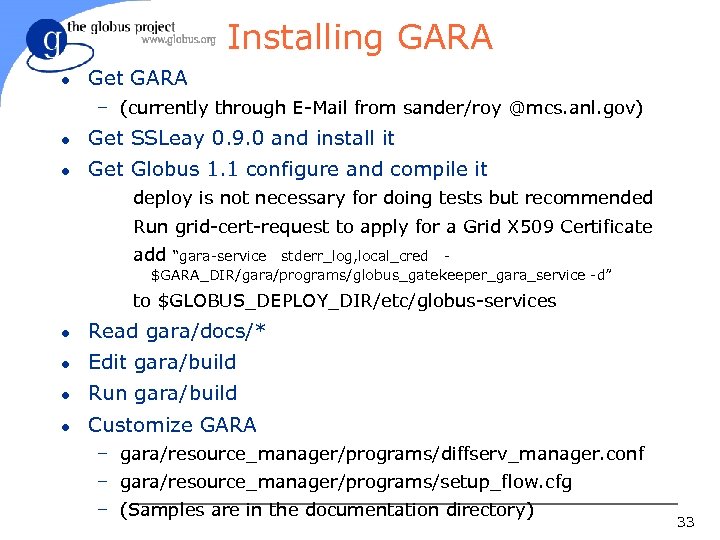 Installing GARA l Get GARA – (currently through E-Mail from sander/roy @mcs. anl. gov) l Get SSLeay 0. 9. 0 and install it l Get Globus 1. 1 configure and compile it deploy is not necessary for doing tests but recommended Run grid-cert-request to apply for a Grid X 509 Certificate add “gara-service stderr_log, local_cred $GARA_DIR/gara/programs/globus_gatekeeper_gara_service -d” to $GLOBUS_DEPLOY_DIR/etc/globus-services l Read gara/docs/* l Edit gara/build l Run gara/build l Customize GARA – gara/resource_manager/programs/diffserv_manager. conf – gara/resource_manager/programs/setup_flow. cfg – (Samples are in the documentation directory) 33
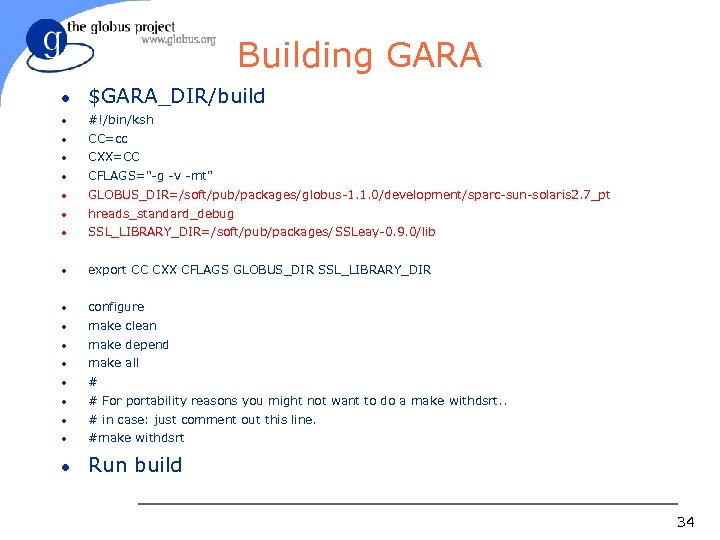 Building GARA l $GARA_DIR/build l #!/bin/ksh l CC=cc l CXX=CC l CFLAGS="-g -v -mt" l GLOBUS_DIR=/soft/pub/packages/globus-1. 1. 0/development/sparc-sun-solaris 2. 7_pt l hreads_standard_debug l SSL_LIBRARY_DIR=/soft/pub/packages/SSLeay-0. 9. 0/lib l export CC CXX CFLAGS GLOBUS_DIR SSL_LIBRARY_DIR l configure l make clean l make depend l make all l # For portability reasons you might not want to do a make withdsrt. . l # in case: just comment out this line. l #make withdsrt l Run build 34
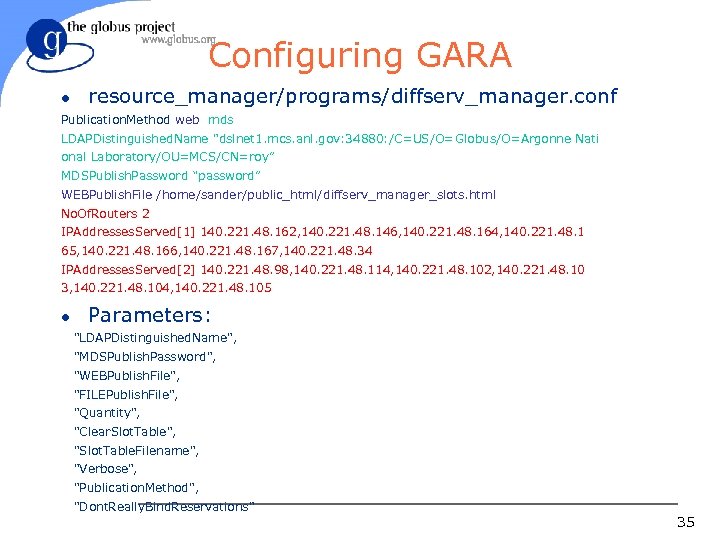 Configuring GARA l resource_manager/programs/diffserv_manager. conf Publication. Method web mds LDAPDistinguished. Name "dslnet 1. mcs. anl. gov: 34880: /C=US/O=Globus/O=Argonne Nati onal Laboratory/OU=MCS/CN=roy” MDSPublish. Password “password” WEBPublish. File /home/sander/public_html/diffserv_manager_slots. html No. Of. Routers 2 IPAddresses. Served[1] 140. 221. 48. 162, 140. 221. 48. 146, 140. 221. 48. 164, 140. 221. 48. 1 65, 140. 221. 48. 166, 140. 221. 48. 167, 140. 221. 48. 34 IPAddresses. Served[2] 140. 221. 48. 98, 140. 221. 48. 114, 140. 221. 48. 102, 140. 221. 48. 10 3, 140. 221. 48. 104, 140. 221. 48. 105 l Parameters: "LDAPDistinguished. Name", "MDSPublish. Password", "WEBPublish. File", "FILEPublish. File", "Quantity", "Clear. Slot. Table", "Slot. Table. Filename", "Verbose", "Publication. Method", "Dont. Really. Bind. Reservations" 35
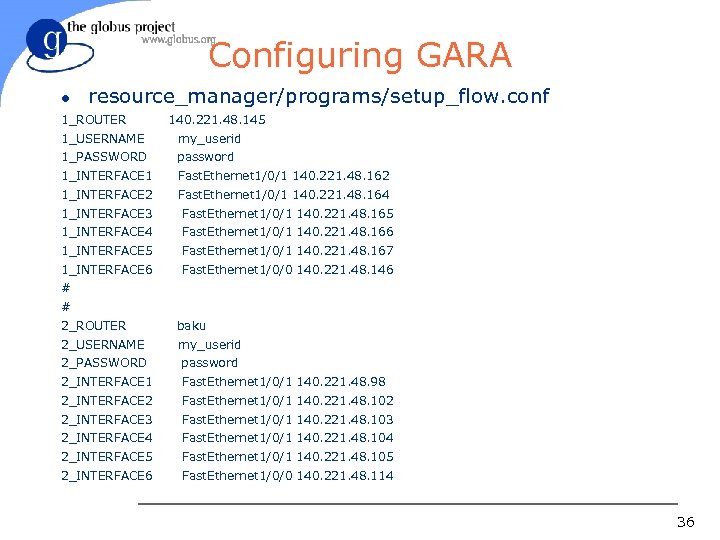 Configuring GARA l resource_manager/programs/setup_flow. conf 1_ROUTER 140. 221. 48. 145 1_USERNAME my_userid 1_PASSWORD password 1_INTERFACE 1 Fast. Ethernet 1/0/1 140. 221. 48. 162 1_INTERFACE 2 Fast. Ethernet 1/0/1 140. 221. 48. 164 1_INTERFACE 3 Fast. Ethernet 1/0/1 140. 221. 48. 165 1_INTERFACE 4 Fast. Ethernet 1/0/1 140. 221. 48. 166 1_INTERFACE 5 Fast. Ethernet 1/0/1 140. 221. 48. 167 1_INTERFACE 6 Fast. Ethernet 1/0/0 140. 221. 48. 146 # # 2_ROUTER baku 2_USERNAME my_userid 2_PASSWORD password 2_INTERFACE 1 Fast. Ethernet 1/0/1 140. 221. 48. 98 2_INTERFACE 2 Fast. Ethernet 1/0/1 140. 221. 48. 102 2_INTERFACE 3 Fast. Ethernet 1/0/1 140. 221. 48. 103 2_INTERFACE 4 Fast. Ethernet 1/0/1 140. 221. 48. 104 2_INTERFACE 5 Fast. Ethernet 1/0/1 140. 221. 48. 105 2_INTERFACE 6 Fast. Ethernet 1/0/0 140. 221. 48. 114 36
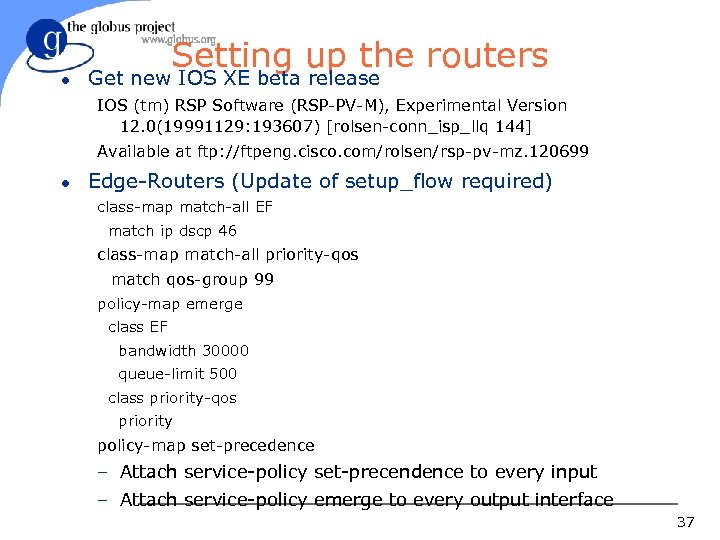 l Setting up the routers Get new IOS XE beta release IOS (tm) RSP Software (RSP-PV-M), Experimental Version 12. 0(19991129: 193607) [rolsen-conn_isp_llq 144] Available at ftp: //ftpeng. cisco. com/rolsen/rsp-pv-mz. 120699 l Edge-Routers (Update of setup_flow required) class-map match-all EF match ip dscp 46 class-map match-all priority-qos match qos-group 99 policy-map emerge class EF bandwidth 30000 queue-limit 500 class priority-qos priority policy-map set-precedence – Attach service-policy set-precendence to every input – Attach service-policy emerge to every output interface 37
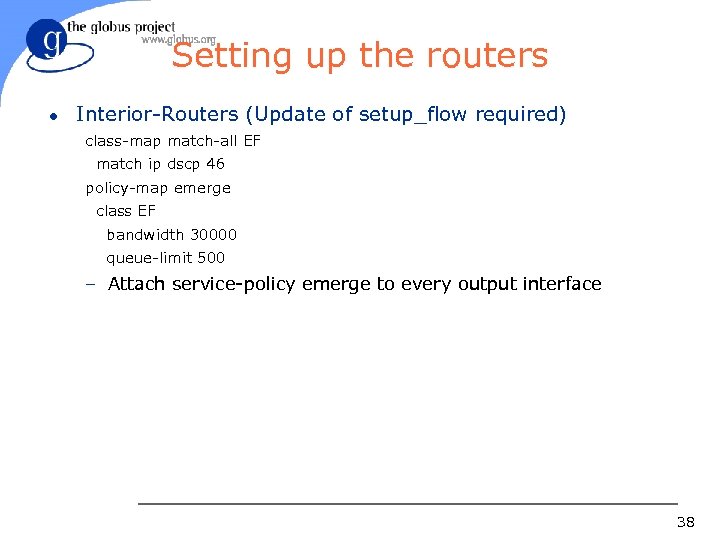 Setting up the routers l Interior-Routers (Update of setup_flow required) class-map match-all EF match ip dscp 46 policy-map emerge class EF bandwidth 30000 queue-limit 500 – Attach service-policy emerge to every output interface 38
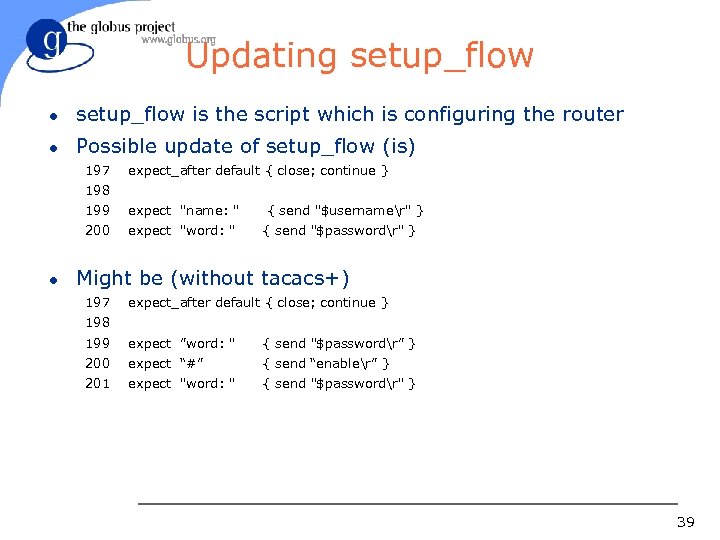 Updating setup_flow l setup_flow is the script which is configuring the router l Possible update of setup_flow (is) 197 expect_after default { close; continue } 198 199 200 l expect "name: " expect "word: " { send "$usernamer" } { send "$passwordr" } Might be (without tacacs+) 197 expect_after default { close; continue } 198 199 expect ”word: " { send "$passwordr” } 200 expect “#” { send “enabler” } 201 expect "word: " { send "$passwordr" } 39
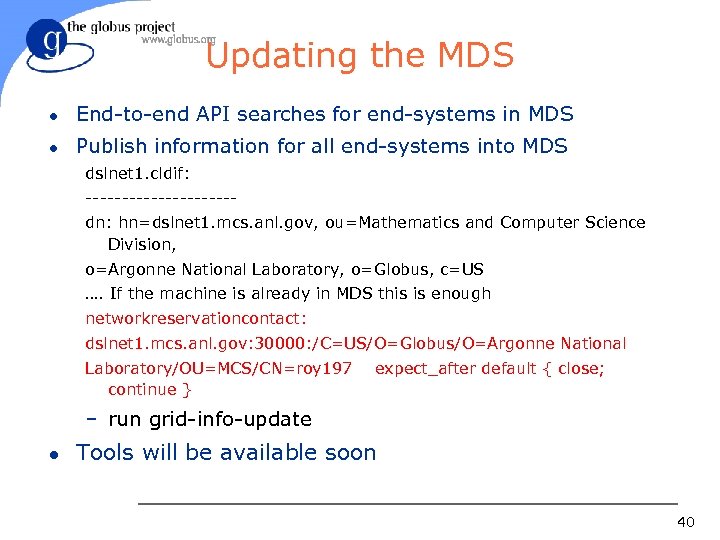 Updating the MDS l End-to-end API searches for end-systems in MDS l Publish information for all end-systems into MDS dslnet 1. cldif: ----------dn: hn=dslnet 1. mcs. anl. gov, ou=Mathematics and Computer Science Division, o=Argonne National Laboratory, o=Globus, c=US …. If the machine is already in MDS this is enough networkreservationcontact: dslnet 1. mcs. anl. gov: 30000: /C=US/O=Globus/O=Argonne National Laboratory/OU=MCS/CN=roy 197 continue } expect_after default { close; – run grid-info-update l Tools will be available soon 40
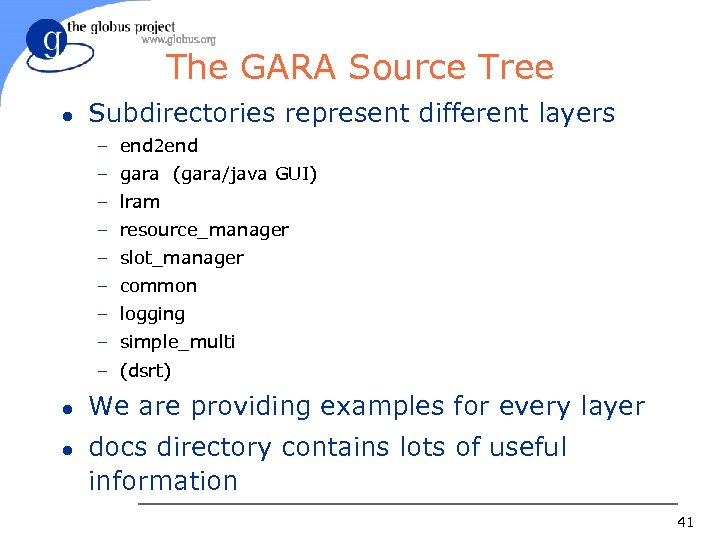 The GARA Source Tree l Subdirectories represent different layers – end 2 end – gara (gara/java GUI) – lram – resource_manager – slot_manager – common – logging – simple_multi – (dsrt) l l We are providing examples for every layer docs directory contains lots of useful information 41
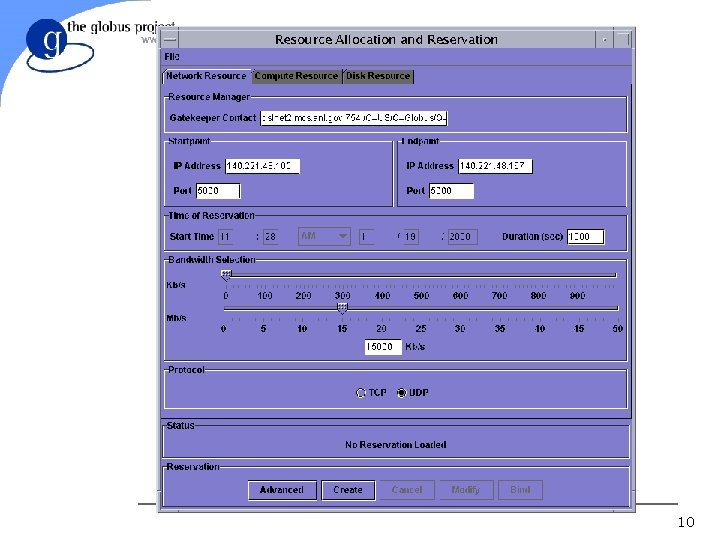
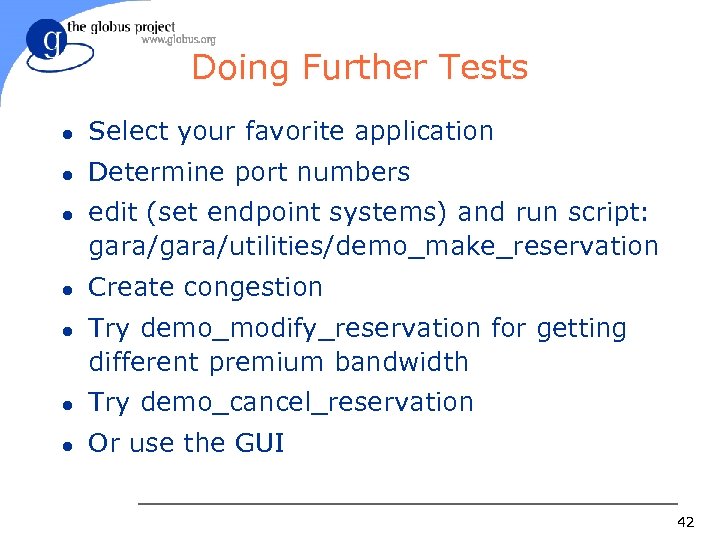 Doing Further Tests l Select your favorite application l Determine port numbers l l l edit (set endpoint systems) and run script: gara/utilities/demo_make_reservation Create congestion Try demo_modify_reservation for getting different premium bandwidth l Try demo_cancel_reservation l Or use the GUI 42
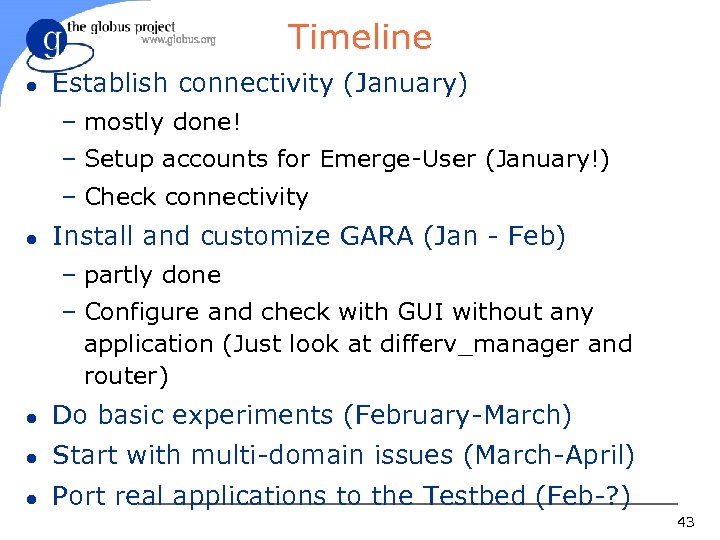 Timeline l Establish connectivity (January) – mostly done! – Setup accounts for Emerge-User (January!) – Check connectivity l Install and customize GARA (Jan - Feb) – partly done – Configure and check with GUI without any application (Just look at differv_manager and router) l Do basic experiments (February-March) l Start with multi-domain issues (March-April) l Port real applications to the Testbed (Feb-? ) 43
 Questions. . . l Now or later… (sander/roy @ mcs. anl. gov) 44