Скачать презентацию Proposed architecture for IMD Integrating GIS in
db3b0242be6c105f7bac0309b3450fc9.ppt
- Количество слайдов: 36
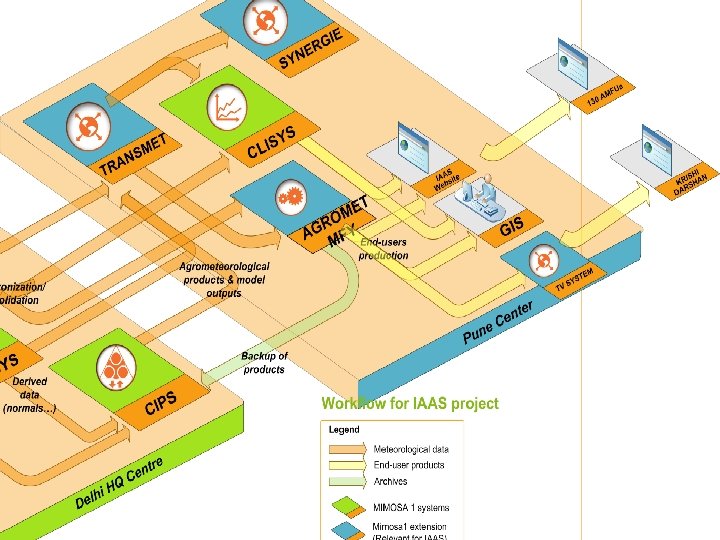 Proposed architecture for IMD
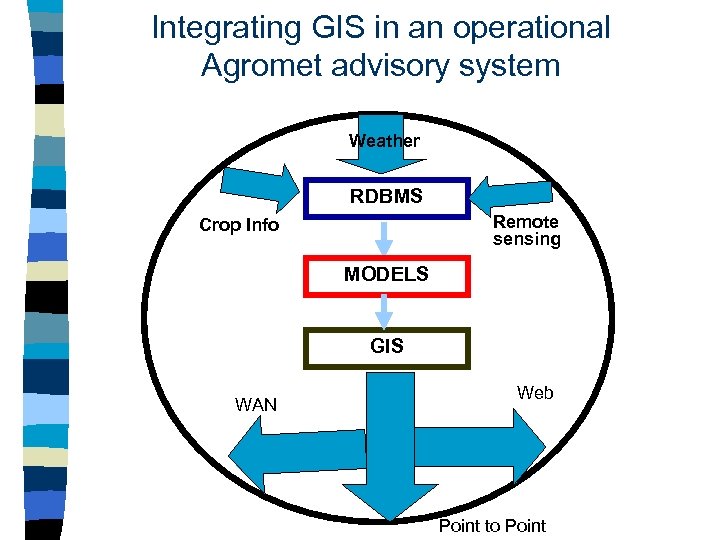 Integrating GIS in an operational Agromet advisory system Weather RDBMS Remote sensing Crop Info MODELS GIS WAN Web Point to Point
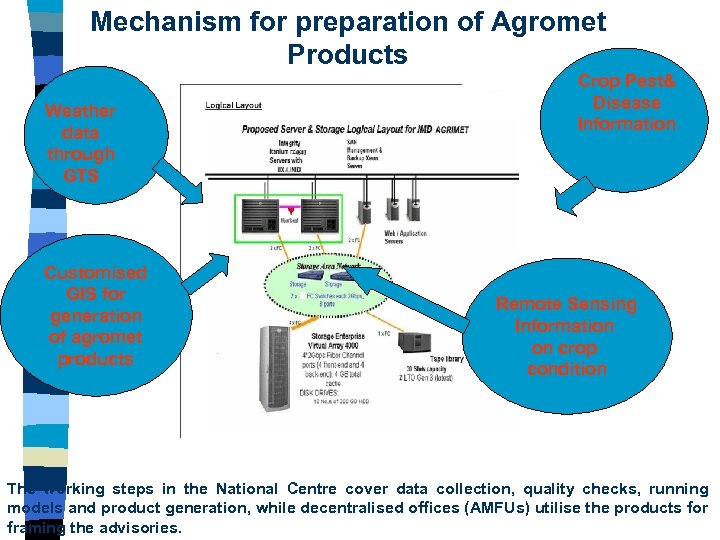 Mechanism for preparation of Agromet Products Weather data through GTS Customised GIS for generation of agromet products Crop Pest& Disease Information Remote Sensing Information on crop condition The working steps in the National Centre cover data collection, quality checks, running models and product generation, while decentralised offices (AMFUs) utilise the products for framing the advisories.
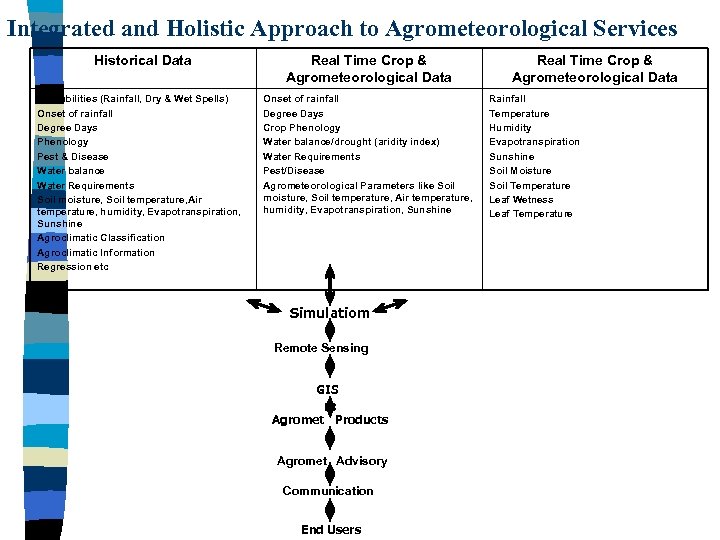 Integrated and Holistic Approach to Agrometeorological Services Historical Data Probabilities (Rainfall, Dry & Wet Spells) Onset of rainfall Degree Days Phenology Pest & Disease Water balance Water Requirements Soil moisture, Soil temperature, Air temperature, humidity, Evapotranspiration, Sunshine Agroclimatic Classification Agroclimatic Information Regression etc Real Time Crop & Agrometeorological Data Onset of rainfall Degree Days Crop Phenology Water balance/drought (aridity index) Water Requirements Pest/Disease Agrometeorological Parameters like Soil moisture, Soil temperature, Air temperature, humidity, Evapotranspiration, Sunshine Simulatiom Remote Sensing GIS Agromet Products Agromet Advisory Communication End Users Real Time Crop & Agrometeorological Data Rainfall Temperature Humidity Evapotranspiration Sunshine Soil Moisture Soil Temperature Leaf Wetness Leaf Temperature
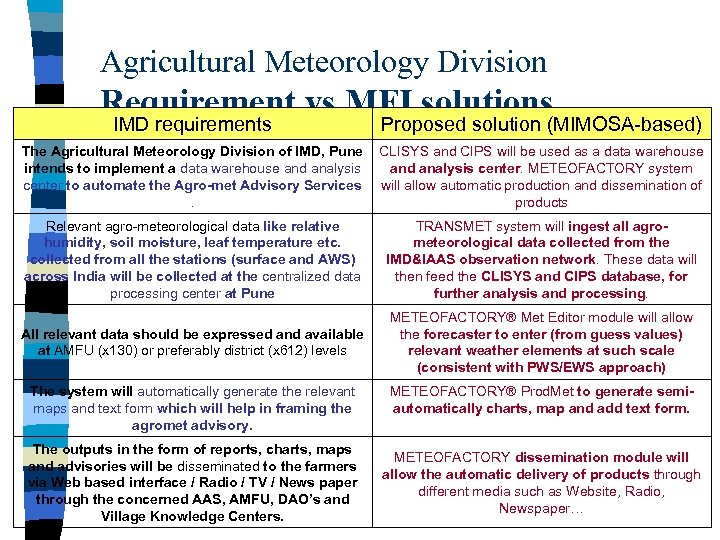 Agricultural Meteorology Division Requirement vs MFI solutions IMD requirements Proposed solution (MIMOSA-based) The Agricultural Meteorology Division of IMD, Pune intends to implement a data warehouse and analysis center to automate the Agro-met Advisory Services. CLISYS and CIPS will be used as a data warehouse and analysis center. METEOFACTORY system will allow automatic production and dissemination of products Relevant agro-meteorological data like relative humidity, soil moisture, leaf temperature etc. collected from all the stations (surface and AWS) across India will be collected at the centralized data processing center at Pune TRANSMET system will ingest all agrometeorological data collected from the IMD&IAAS observation network. These data will then feed the CLISYS and CIPS database, for further analysis and processing. All relevant data should be expressed and available at AMFU (x 130) or preferably district (x 612) levels METEOFACTORY® Met Editor module will allow the forecaster to enter (from guess values) relevant weather elements at such scale (consistent with PWS/EWS approach) The system will automatically generate the relevant maps and text form which will help in framing the agromet advisory. The outputs in the form of reports, charts, maps and advisories will be disseminated to the farmers via Web based interface / Radio / TV / News paper through the concerned AAS, AMFU, DAO’s and Village Knowledge Centers. METEOFACTORY® Prod. Met to generate semiautomatically charts, map and add text form. METEOFACTORY dissemination module will allow the automatic delivery of products through different media such as Website, Radio, Newspaper…
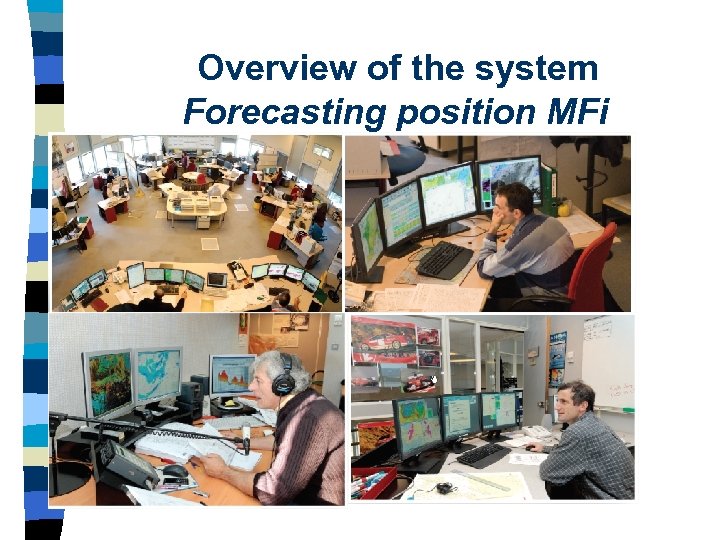 Overview of the system Forecasting position MFi
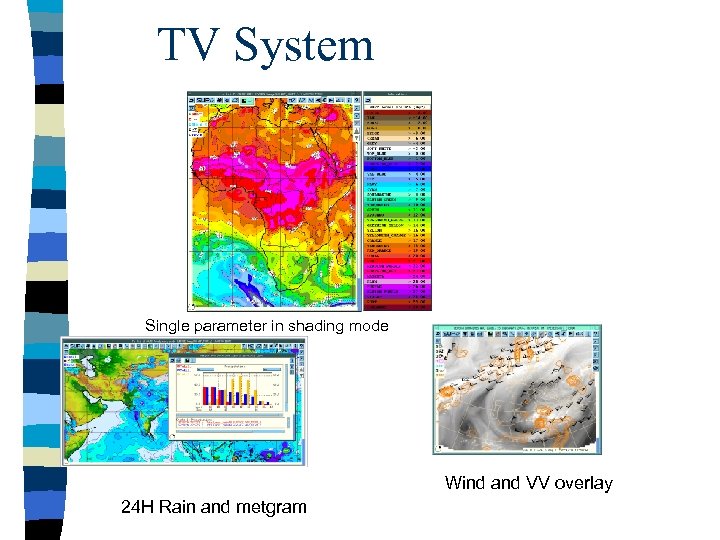 TV System Single parameter in shading mode Wind and VV overlay 24 H Rain and metgram
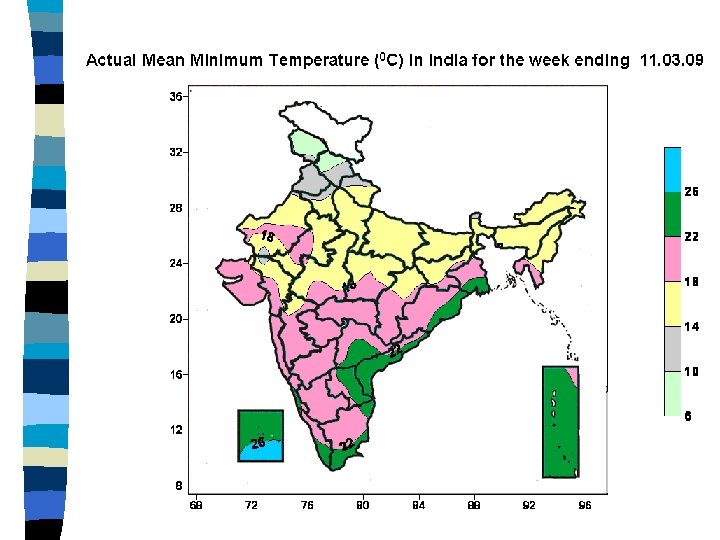
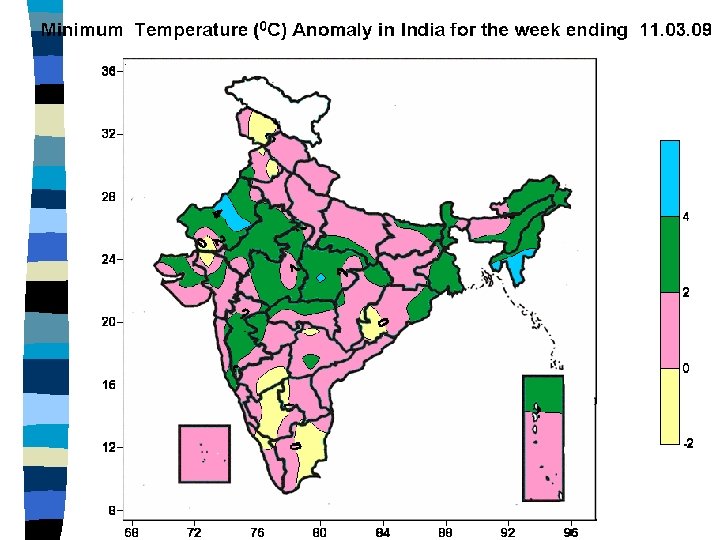
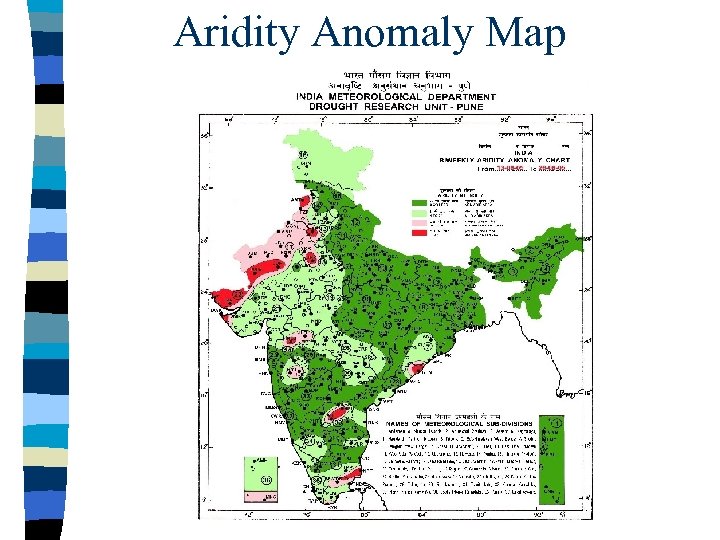 Aridity Anomaly Map
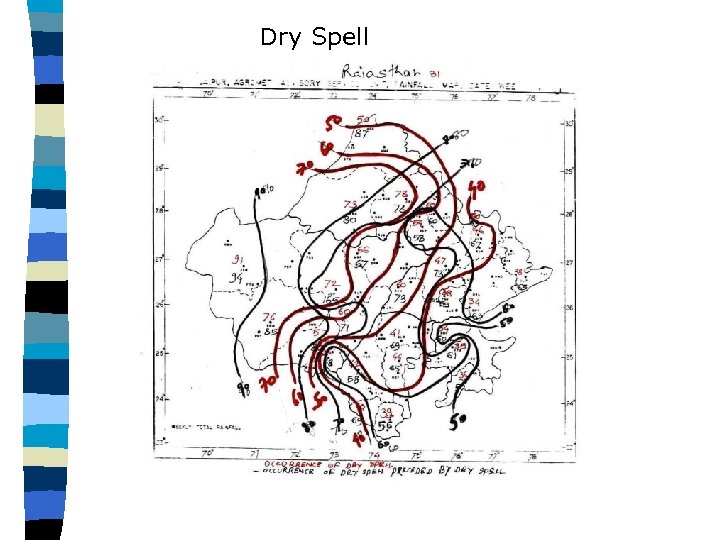 Dry Spell
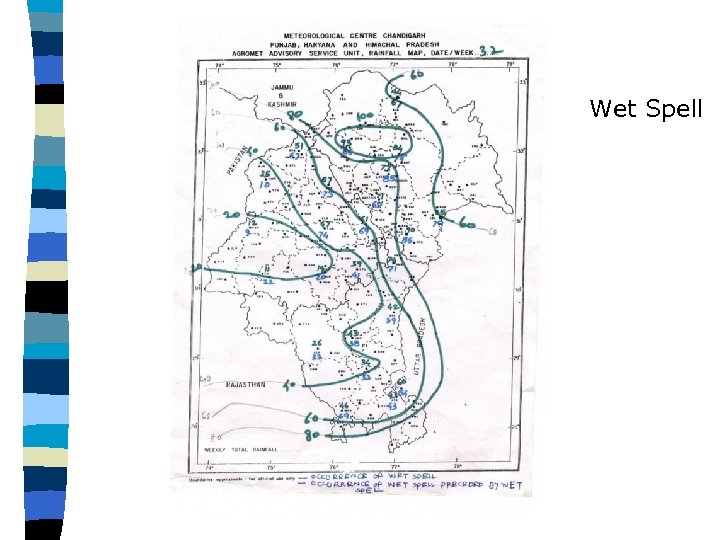 Wet Spell
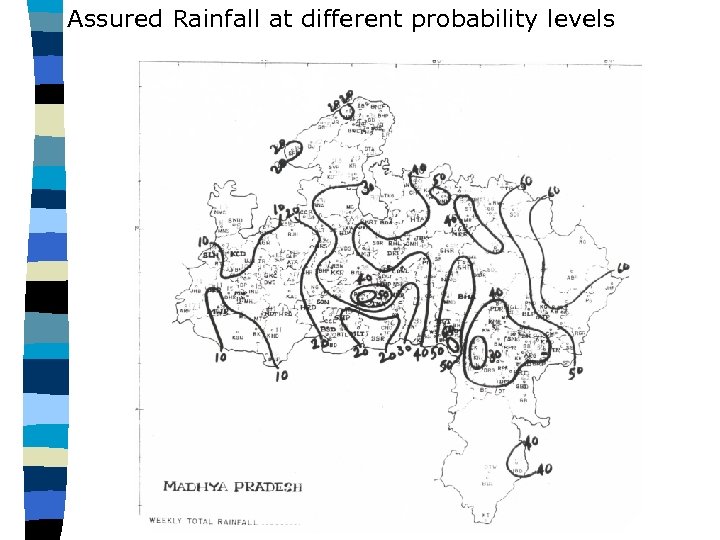 Assured Rainfall at different probability levels
 n Provide NDVI Data from INSAT 3 D
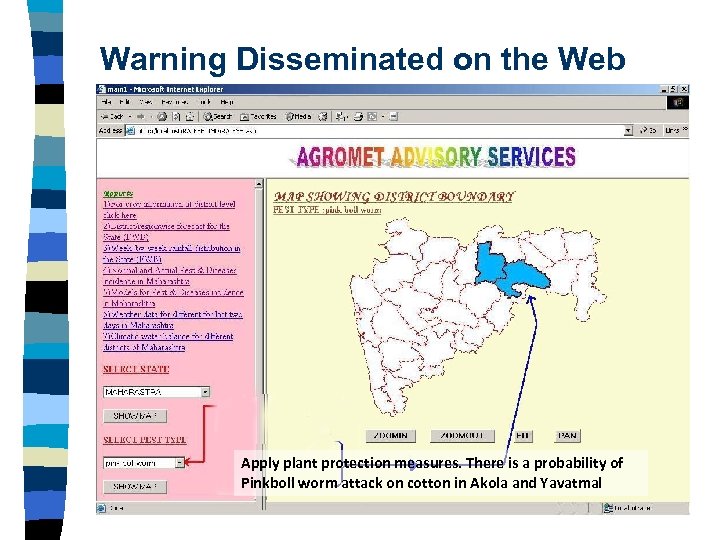 Warning Disseminated on the Web Apply plant protection measures. There is a probability of Pinkboll worm attack on cotton in Akola and Yavatmal
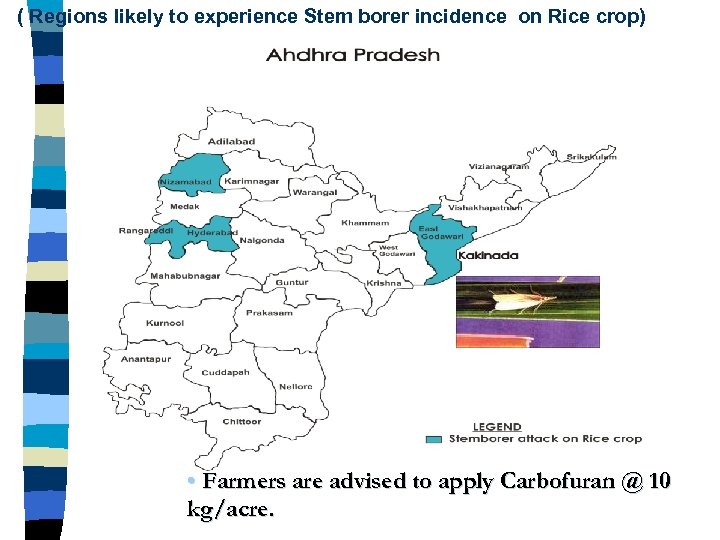 ( Regions likely to experience Stem borer incidence on Rice crop) • Farmers are advised to apply Carbofuran @ 10 kg/acre.
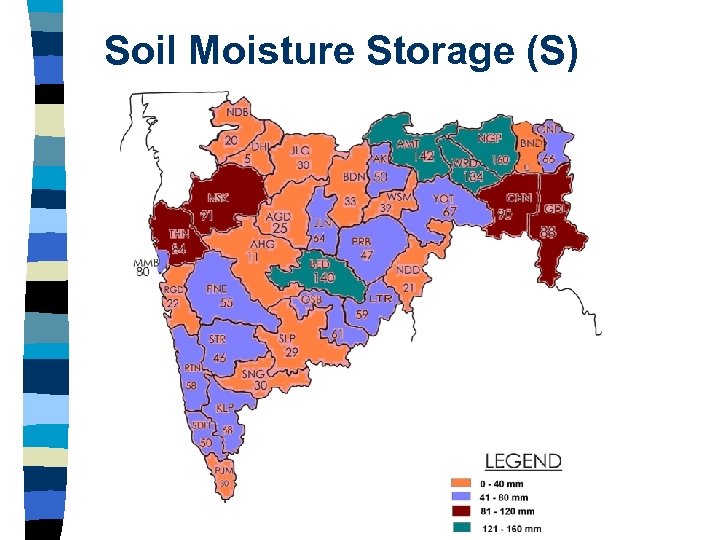 Soil Moisture Storage (S)
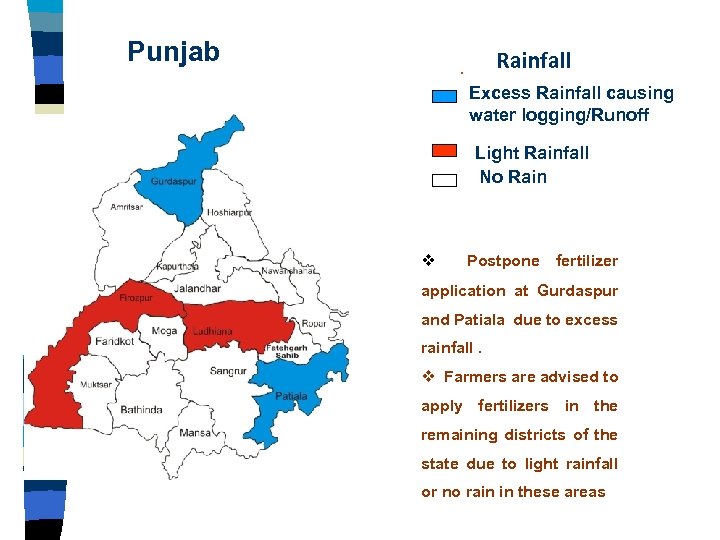 Punjab Rainfall . Excess Rainfall causing water logging/Runoff Light Rainfall No Rain v Postpone fertilizer application at Gurdaspur and Patiala due to excess rainfall. v Farmers are advised to apply fertilizers in the remaining districts of the state due to light rainfall or no rain in these areas
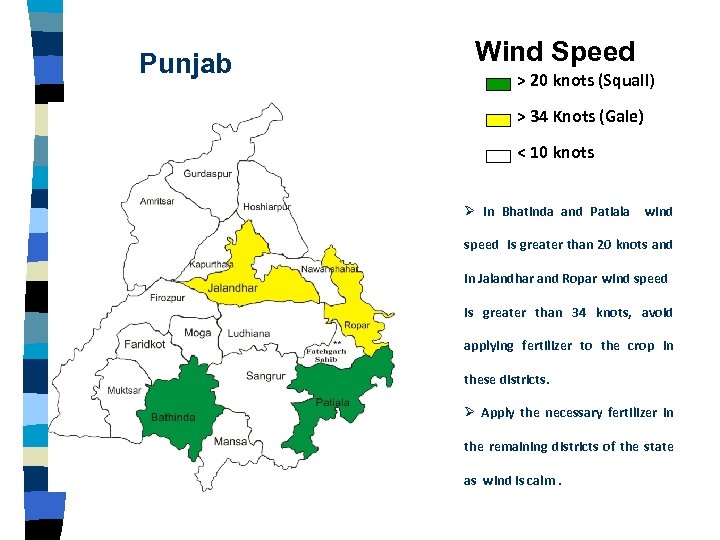 Punjab Wind Speed > 20 knots (Squall) > 34 Knots (Gale) < 10 knots Ø In Bhatinda and Patiala wind speed is greater than 20 knots and in Jalandhar and Ropar wind speed is greater than 34 knots, avoid applying fertilizer to the crop in these districts. Ø Apply the necessary fertilizer in the remaining districts of the state as wind is calm.
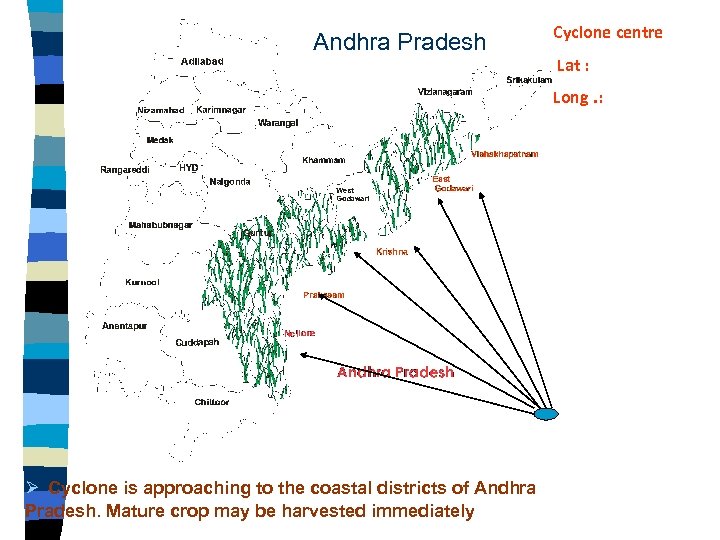 Andhra Pradesh Cyclone centre Lat : Long. : Ø Cyclone is approaching to the coastal districts of Andhra Pradesh. Mature crop may be harvested immediately
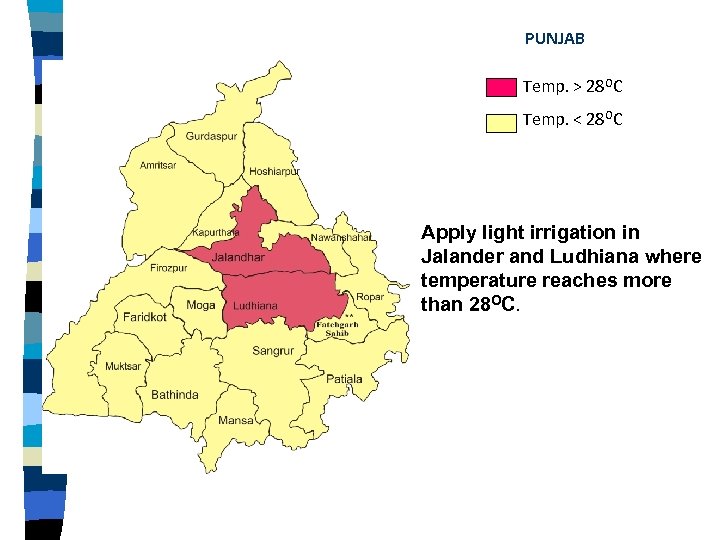 PUNJAB Temp. > 28 OC Temp. < 28 OC Apply light irrigation in Jalander and Ludhiana where temperature reaches more than 28 OC.
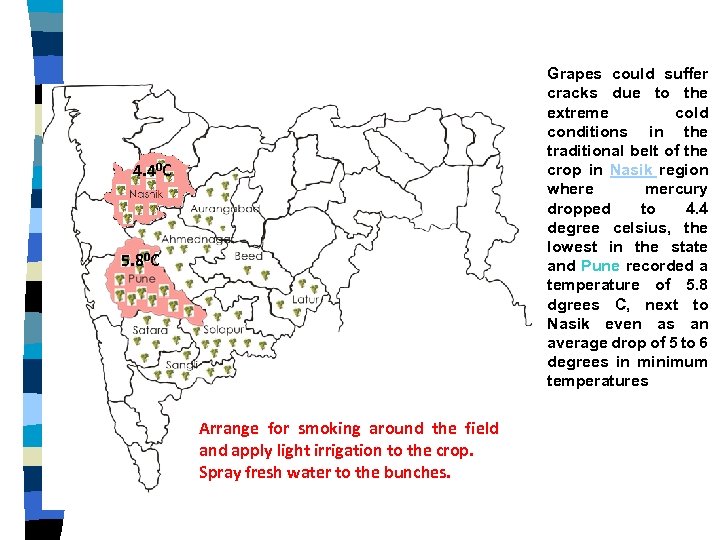 Grapes could suffer cracks due to the extreme cold conditions in the traditional belt of the crop in Nasik region where mercury dropped to 4. 4 degree celsius, the lowest in the state and Pune recorded a temperature of 5. 8 dgrees C, next to Nasik even as an average drop of 5 to 6 degrees in minimum temperatures 4. 40 C 5. 80 C Arrange for smoking around the field and apply light irrigation to the crop. Spray fresh water to the bunches.
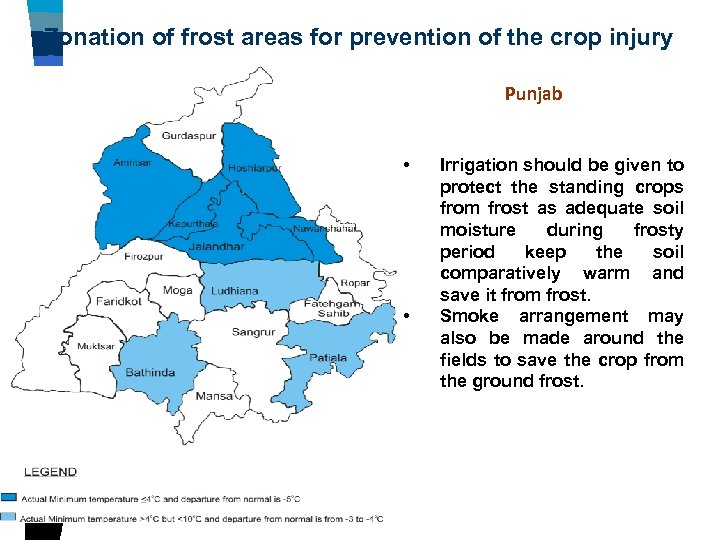 Zonation of frost areas for prevention of the crop injury Punjab • • Irrigation should be given to protect the standing crops from frost as adequate soil moisture during frosty period keep the soil comparatively warm and save it from frost. Smoke arrangement may also be made around the fields to save the crop from the ground frost.
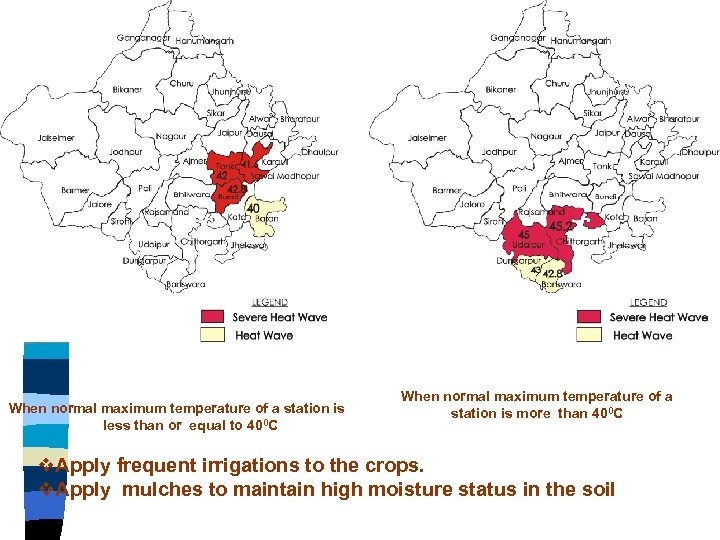 When normal maximum temperature of a station is less than or equal to 400 C When normal maximum temperature of a station is more than 400 C v. Apply frequent irrigations to the crops. v. Apply mulches to maintain high moisture status in the soil
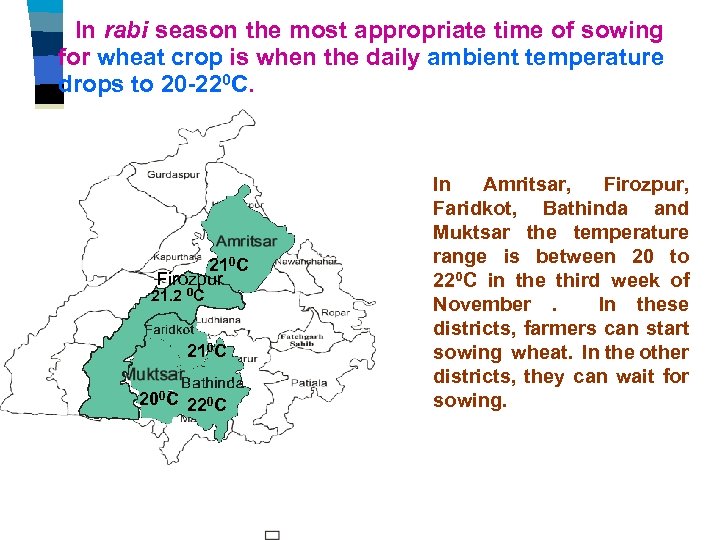 In rabi season the most appropriate time of sowing for wheat crop is when the daily ambient temperature drops to 20 -220 C. 210 C Firozpur 21. 2 0 C 210 C 200 C 220 C In Amritsar, Firozpur, Faridkot, Bathinda and Muktsar the temperature range is between 20 to 220 C in the third week of November. In these districts, farmers can start sowing wheat. In the other districts, they can wait for sowing.
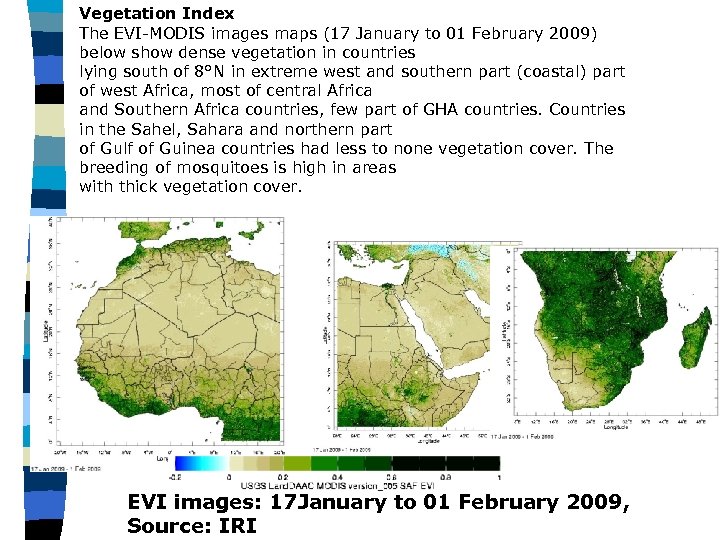 Vegetation Index The EVI-MODIS images maps (17 January to 01 February 2009) below show dense vegetation in countries lying south of 8°N in extreme west and southern part (coastal) part of west Africa, most of central Africa and Southern Africa countries, few part of GHA countries. Countries in the Sahel, Sahara and northern part of Gulf of Guinea countries had less to none vegetation cover. The breeding of mosquitoes is high in areas with thick vegetation cover. EVI images: 17 January to 01 February 2009, Source: IRI
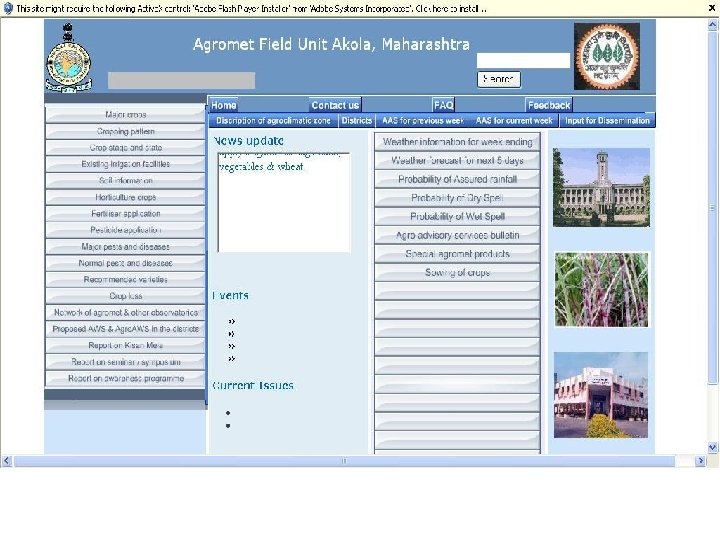
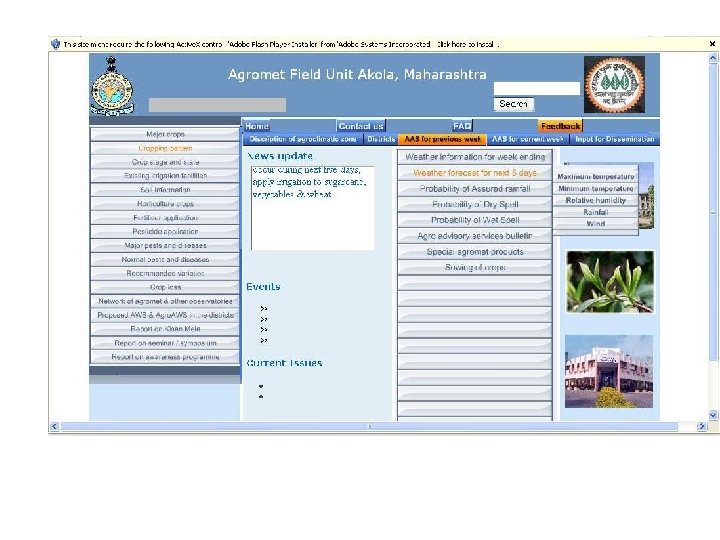
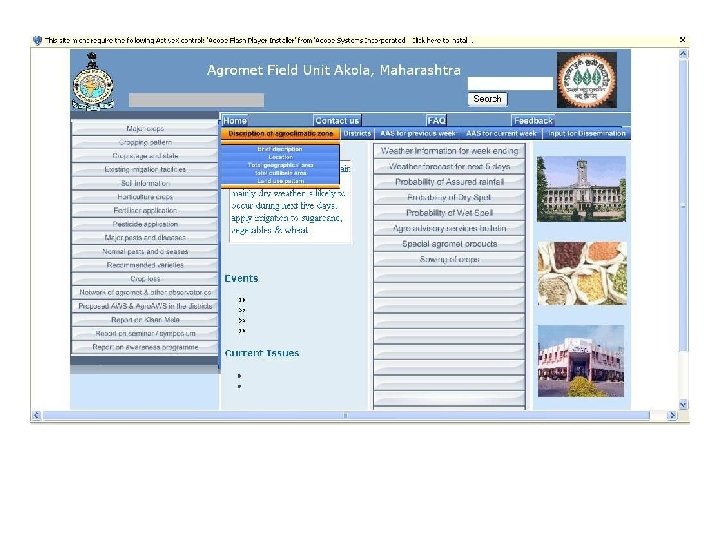
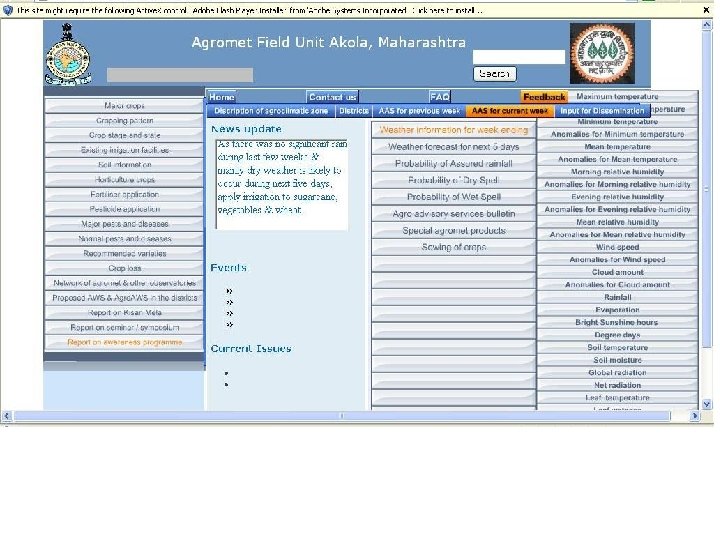
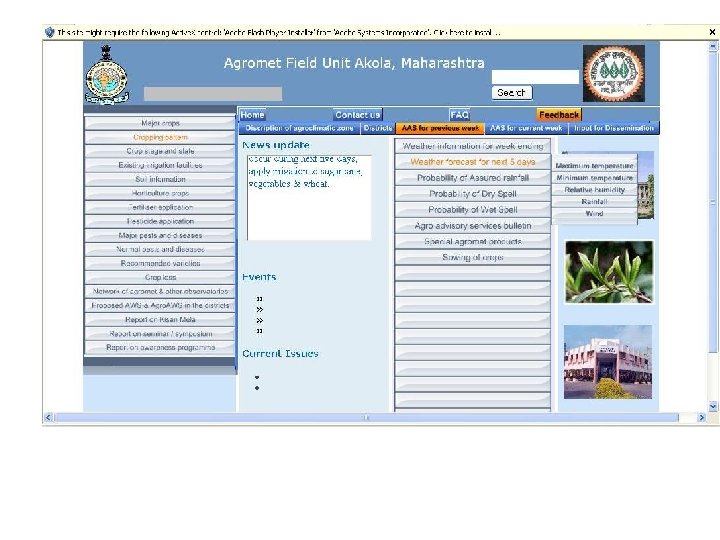
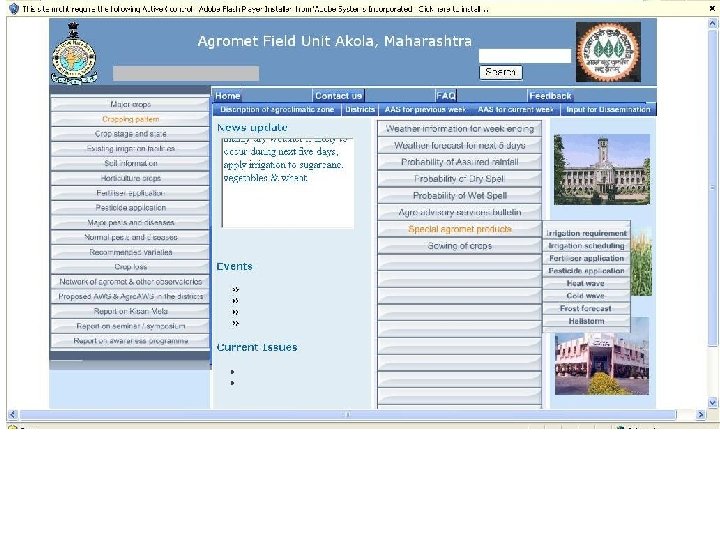
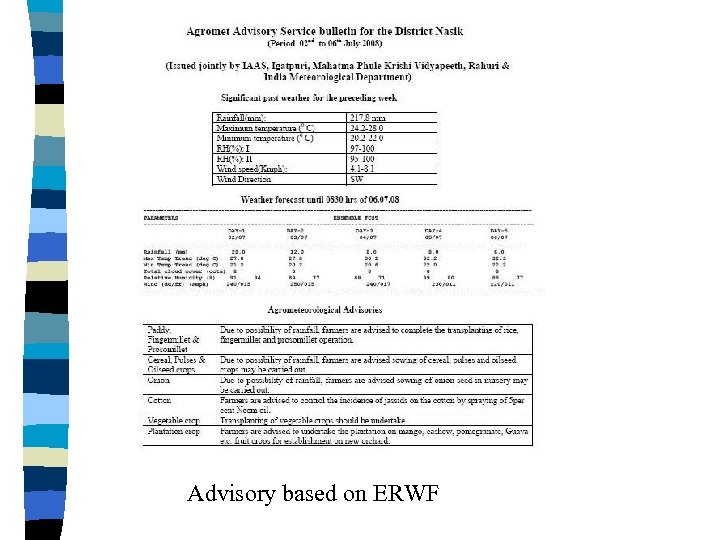 Advisory based on ERWF