 Скачать презентацию Property Rights to Carbon in the Context of
08f251a4d1ec51822da110f705d5f29f.ppt
- Количество слайдов: 28



Property Rights to Carbon in the Context of Climate Change Grenville Barnes and Sheryl Quail School of Forest Resources and Conservation Geomatics Program University of Florida March 2009
Structure of Presentation • Introduction • Understanding Carbon pools and dynamics • Climate Change Mitigation Strategies • Who controls the major forest Carbon Pools • Conceptualizing Property Rights • Defining Property Rights to Carbon • Conclusion
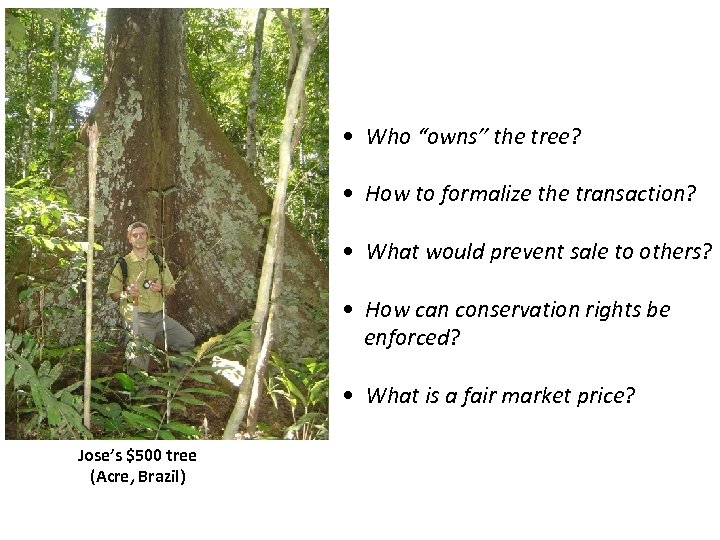
• Who “owns” the tree? • How to formalize the transaction? • What would prevent sale to others? • How can conservation rights be enforced? • What is a fair market price? Jose’s $500 tree (Acre, Brazil)
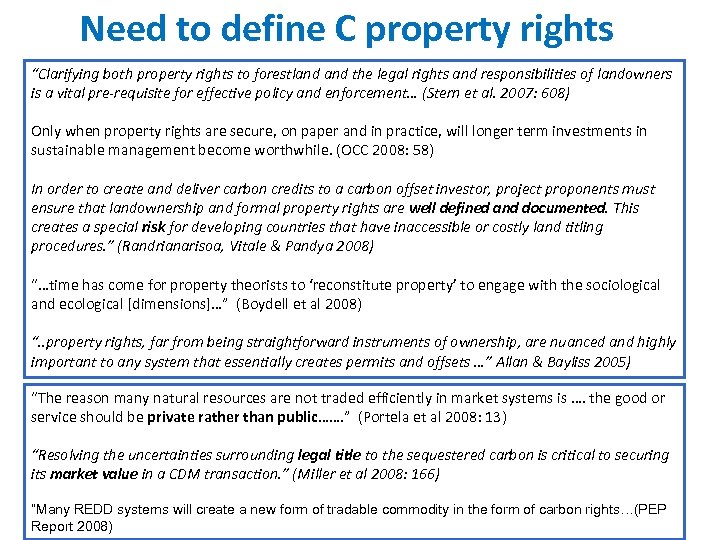
Need to define C property rights “Clarifying both property rights to forestland the legal rights and responsibilities of landowners is a vital pre-requisite for effective policy and enforcement… (Stern et al. 2007: 608) Only when property rights are secure, on paper and in practice, will longer term investments in sustainable management become worthwhile. (OCC 2008: 58) In order to create and deliver carbon credits to a carbon offset investor, project proponents must ensure that landownership and formal property rights are well defined and documented. This creates a special risk for developing countries that have inaccessible or costly land titling procedures. ” (Randrianarisoa, Vitale & Pandya 2008) “…time has come for property theorists to ‘reconstitute property’ to engage with the sociological and ecological [dimensions]…” (Boydell et al 2008) “. . property rights, far from being straightforward instruments of ownership, are nuanced and highly important to any system that essentially creates permits and offsets …” Allan & Bayliss 2005) “The reason many natural resources are not traded efficiently in market systems is …. the good or service should be private rather than public……. ” (Portela et al 2008: 13) “Resolving the uncertainties surrounding legal title to the sequestered carbon is critical to securing its market value in a CDM transaction. ” (Miller et al 2008: 166) “Many REDD systems will create a new form of tradable commodity in the form of carbon rights…(PEP Report 2008)
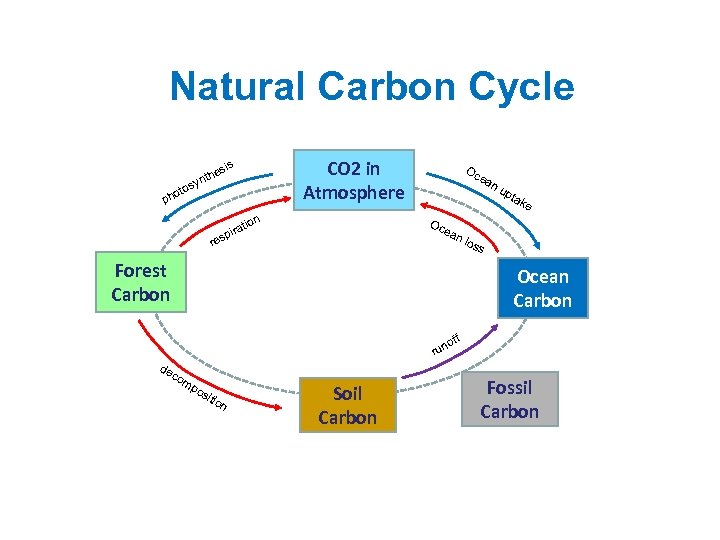
Natural Carbon Cycle he ynt CO 2 in Atmosphere sis s to ho p a pir res tion Oc e an Oc ea up tak e n lo Forest Carbon ss Ocean Carbon ff o run de co mp o sit ion Soil Carbon Fossil Carbon
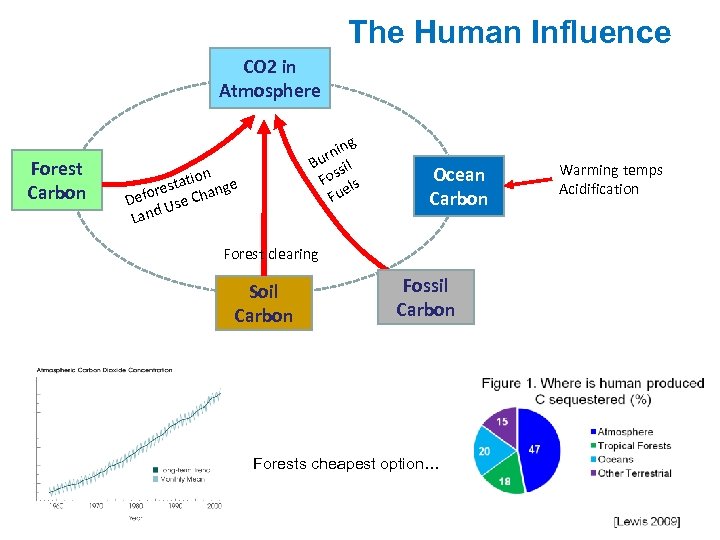
The Human Influence CO 2 in Atmosphere Forest Carbon g nin r Bu sil Fos ls Fue ion stat ange re Defo Use Ch Land Ocean Carbon Forest clearing Soil Carbon Fossil Carbon Forests cheapest option… Warming temps Acidification
![[http: //www. globe. gov/fsl/html/templ. cgi? carboncycle. Dia&lang=es&nav=1]](https://present5.com/presentation/08f251a4d1ec51822da110f705d5f29f/image-7.jpg "[http: //www. globe. gov/fsl/html/templ. cgi? carboncycle. Dia&lang=es&nav=1]")
[http: //www. globe. gov/fsl/html/templ. cgi? carboncycle. Dia&lang=es&nav=1]
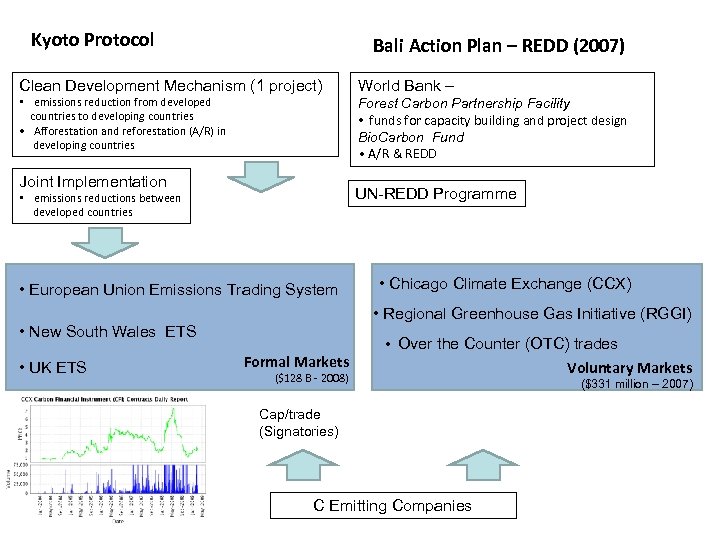
Kyoto Protocol Bali Action Plan – REDD (2007) Clean Development Mechanism (1 project) World Bank – • emissions reduction from developed countries to developing countries • Afforestation and reforestation (A/R) in developing countries Forest Carbon Partnership Facility • funds for capacity building and project design Bio. Carbon Fund • A/R & REDD Joint Implementation UN-REDD Programme • emissions reductions between developed countries • European Union Emissions Trading System • Regional Greenhouse Gas Initiative (RGGI) • New South Wales ETS • UK ETS • Chicago Climate Exchange (CCX) Formal Markets • Over the Counter (OTC) trades ($128 B - 2008) Cap/trade (Signatories) C Emitting Companies Voluntary Markets ($331 million – 2007)
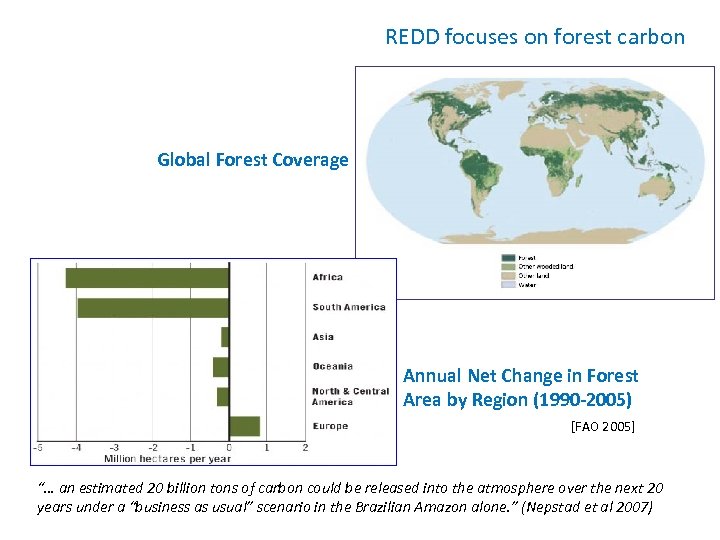
REDD focuses on forest carbon Global Forest Coverage Annual Net Change in Forest Area by Region (1990 -2005) [FAO 2005] “… an estimated 20 billion tons of carbon could be released into the atmosphere over the next 20 years under a “business as usual” scenario in the Brazilian Amazon alone. ” (Nepstad et al 2007)
![Who Owns the world’s Forests (and Forest C)? [White and Martin 2002] 22% of](https://present5.com/presentation/08f251a4d1ec51822da110f705d5f29f/image-10.jpg "Who Owns the world’s Forests (and Forest C)? [White and Martin 2002] 22% of")
Who Owns the world’s Forests (and Forest C)? [White and Martin 2002] 22% of Forests in Developing Countries is reserved for or privately owned by communities – 2008 study shows trend continues…
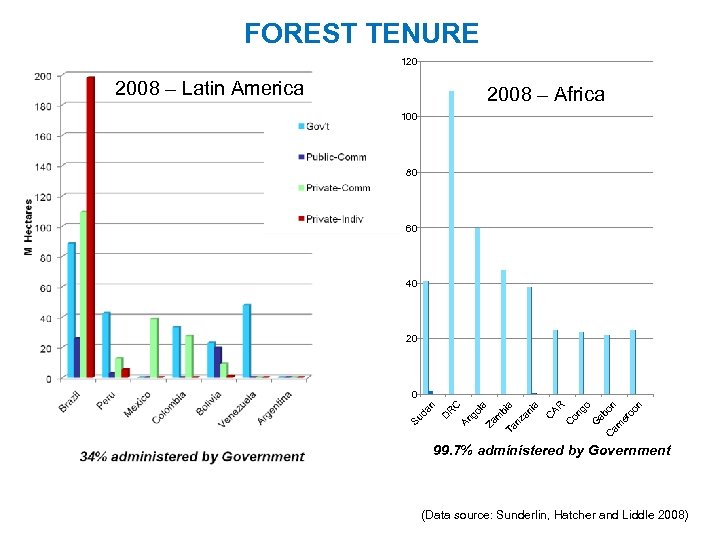
FOREST TENURE 120 2008 – Latin America 2008 – Africa 100 80 60 40 20 n oo er C am ab on o G on g C AR C ni a a nz a m bi Ta la Za go An R C D Su da n 0 99. 7% administered by Government (Data source: Sunderlin, Hatcher and Liddle 2008)
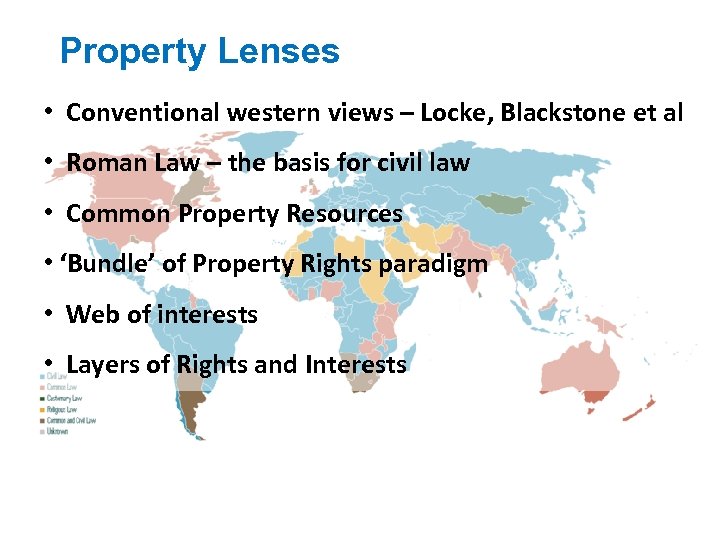
Property Lenses • Conventional western views – Locke, Blackstone et al • Roman Law – the basis for civil law • Common Property Resources • ‘Bundle’ of Property Rights paradigm • Web of interests • Layers of Rights and Interests
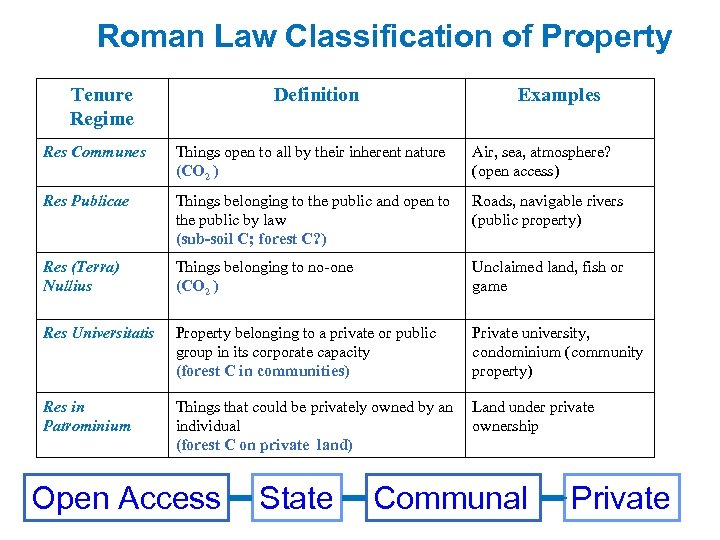
Roman Law Classification of Property Tenure Regime Definition Examples Res Communes Things open to all by their inherent nature (CO 2 ) Air, sea, atmosphere? (open access) Res Publicae Things belonging to the public and open to the public by law (sub-soil C; forest C? ) Roads, navigable rivers (public property) Res (Terra) Nullius Things belonging to no-one (CO 2 ) Unclaimed land, fish or game Res Universitatis Property belonging to a private or public group in its corporate capacity (forest C in communities) Private university, condominium (community property) Res in Patrominium Things that could be privately owned by an individual (forest C on private land) Land under private ownership Open Access State Communal Private
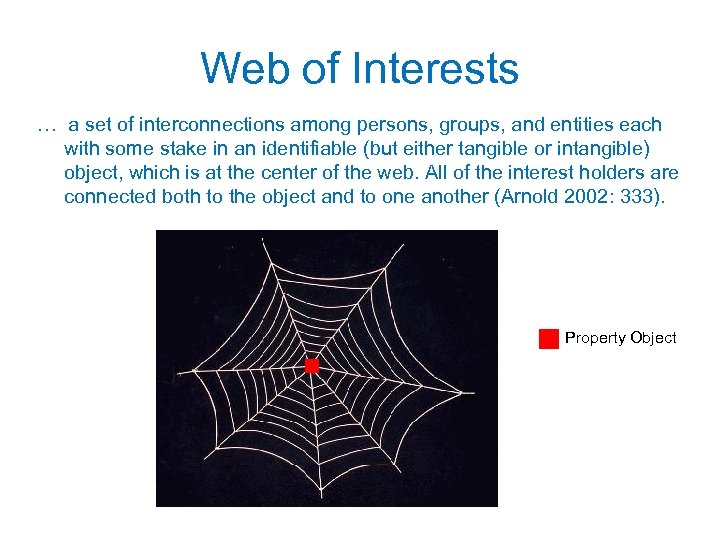
Web of Interests … a set of interconnections among persons, groups, and entities each with some stake in an identifiable (but either tangible or intangible) object, which is at the center of the web. All of the interest holders are connected both to the object and to one another (Arnold 2002: 333). Property Object
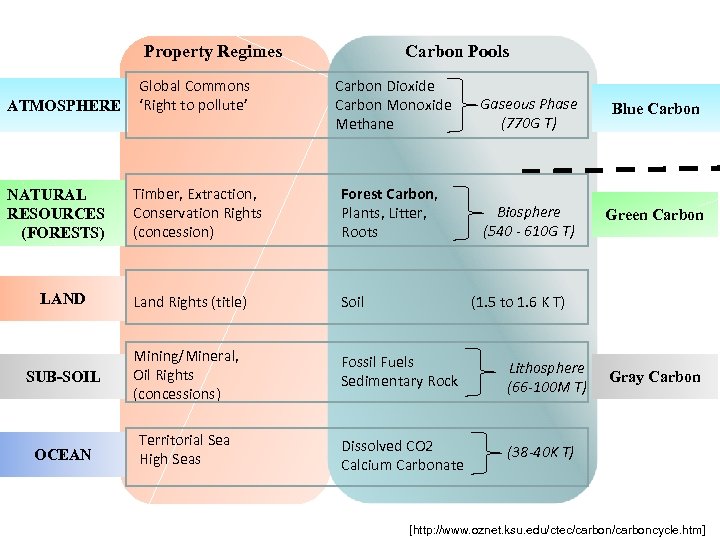
Property Regimes Carbon Pools Global Commons ‘Right to pollute’ Carbon Dioxide Carbon Monoxide Methane Gaseous Phase (770 G T) Blue Carbon Timber, Extraction, Conservation Rights (concession) Forest Carbon, Plants, Litter, Roots Biosphere (540 - 610 G T) Green Carbon LAND Land Rights (title) Soil SUB-SOIL Mining/Mineral, Oil Rights (concessions) Fossil Fuels Sedimentary Rock Lithosphere (66 -100 M T) OCEAN Territorial Sea High Seas Dissolved CO 2 Calcium Carbonate (38 -40 K T) ATMOSPHERE NATURAL RESOURCES (FORESTS) (1. 5 to 1. 6 K T) Gray Carbon [http: //www. oznet. ksu. edu/ctec/carboncycle. htm]
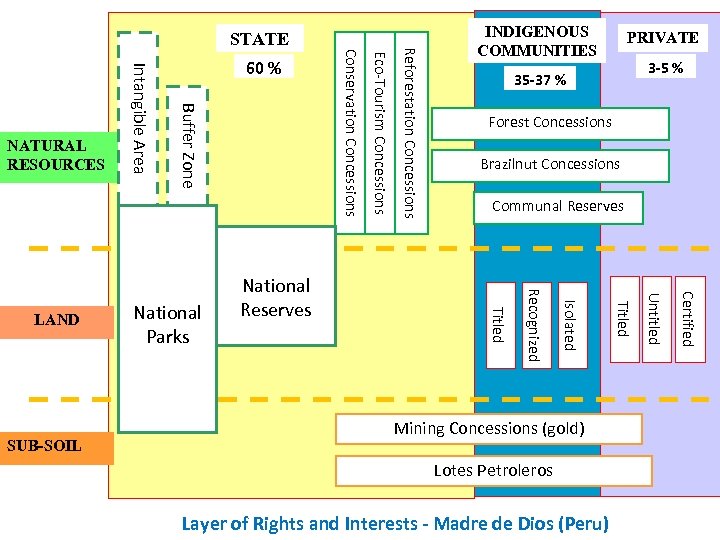
Reforestation Concessions INDIGENOUS COMMUNITIES PRIVATE 3 -5 % 35 -37 % Forest Concessions Brazilnut Concessions Communal Reserves Layer of Rights and Interests - Madre de Dios (Peru) Certified Lotes Petroleros Untitled Mining Concessions (gold) Titled Isolated Recognized Titled National Parks National Reserves Eco-Tourism Concessions SUB-SOIL Buffer Zone LAND Intangible Area NATURAL RESOURCES 60 % Conservation Concessions STATE
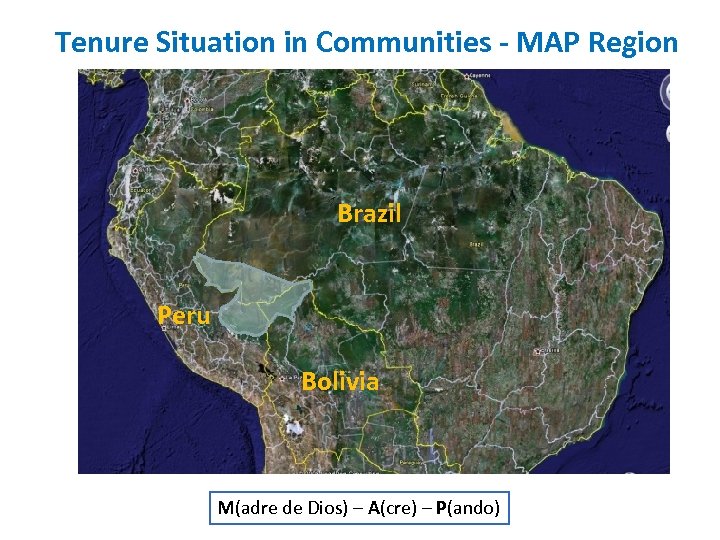
Tenure Situation in Communities - MAP Region Pando - Bolivia N Brazil Peru Bolivia M(adre de Dios) – A(cre) – P(ando)
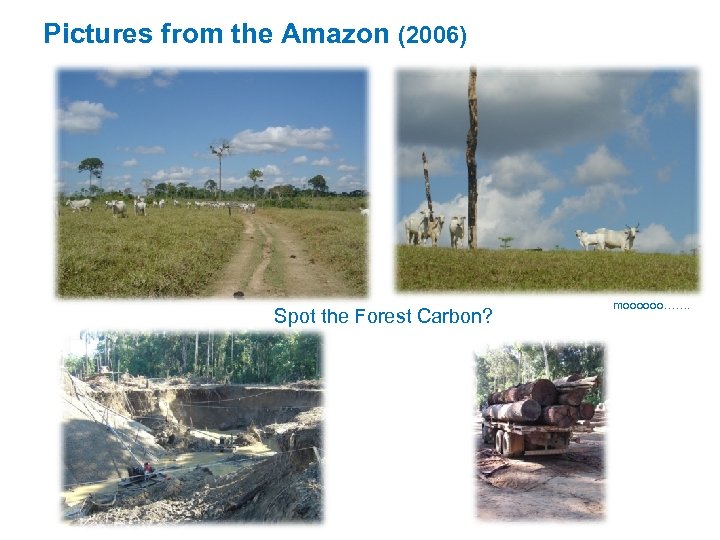
Pictures from the Amazon (2006) Spot the Forest Carbon? moooooo…….
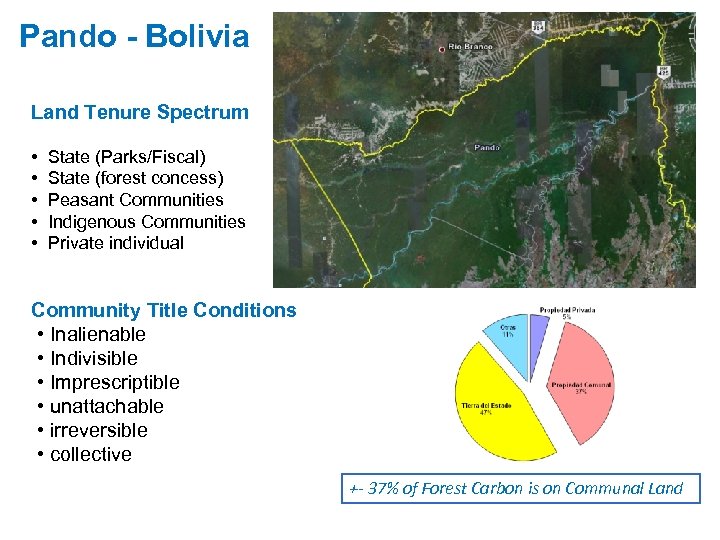
Pando - Bolivia Land Tenure Spectrum • State (Parks/Fiscal) • State (forest concess) • Peasant Communities • Indigenous Communities • Private individual Community Title Conditions • Inalienable • Indivisible • Imprescriptible • unattachable • irreversible • collective +- 37% of Forest Carbon is on Communal Land
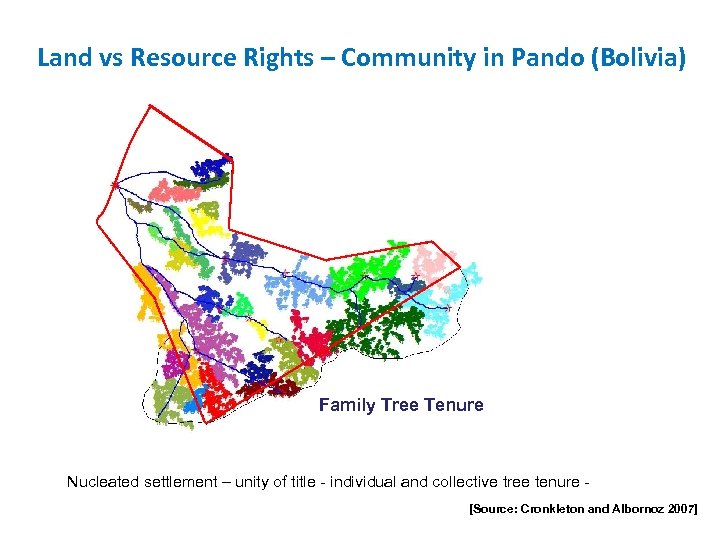
Land vs Resource Rights – Community in Pando (Bolivia) Family Tree Tenure Nucleated settlement – unity of title - individual and collective tree tenure - [Source: Cronkleton and Albornoz 2007]
New Constitution – Bolivia (ratified in Jan 09) Art. 348: “natural resources” = “minerals in any form, hydrocarbons, water, air, soil and sub-soil, forests, biodiversity, the electromagnetic spectrum and all of those elements and physical forces susceptible to use (aprovechamiento). ” These natural resources are regarded as “strategic in character and of public interest for the development of the country. ” Art. 349 further qualifies these natural resources as the “indivisible, imprescriptible, direct property and dominion of the Bolivian people, with the administration of the collective interest being the responsibility of the state. ” The state “will recognize, respect and authorize individual and collective property rights to the land, as well as use and improvement rights to other natural resources. ” Art. 386. Natural forests and forest soils have a strategic character for the development of the Bolivian people. The state will recognize use rights to the forest in favor of communities and private operators. It will also promote conservation and sustainable use, the generation of gross value to its products, and the rehabilitation and reforestation of degraded areas. Public interest - state ownership on behalf of the nation C changes the scale as Public Interest could apply to international community [http: //www. geocities. com/cpbolivia/texto 2. htm]
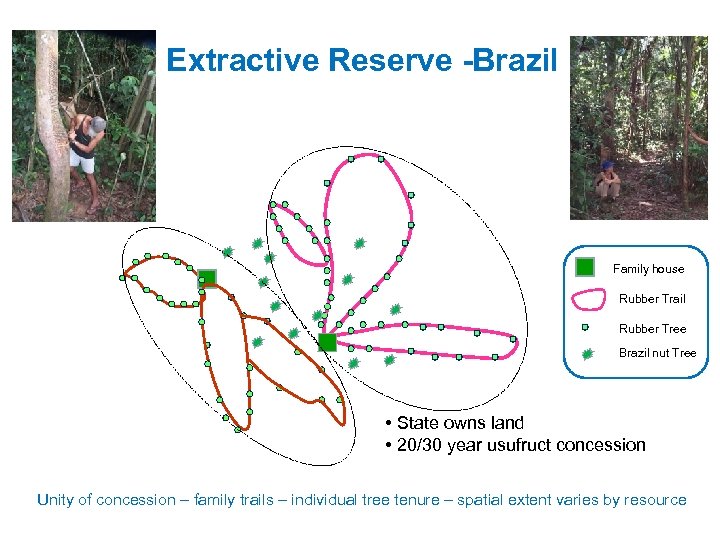
Extractive Reserve -Brazil Family house Rubber Trail Rubber Tree Brazil nut Tree • State owns land • 20/30 year usufruct concession Unity of concession – family trails – individual tree tenure – spatial extent varies by resource
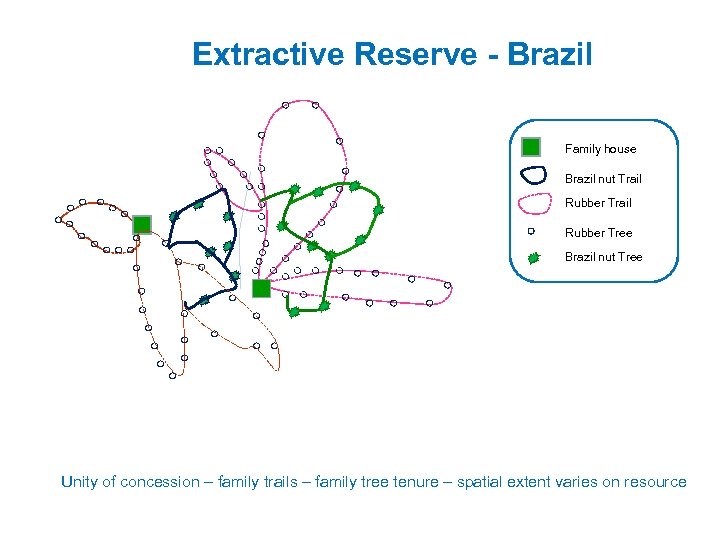
Extractive Reserve - Brazil Family house Brazil nut Trail Rubber Tree Brazil nut Tree Unity of concession – family trails – family tree tenure – spatial extent varies on resource
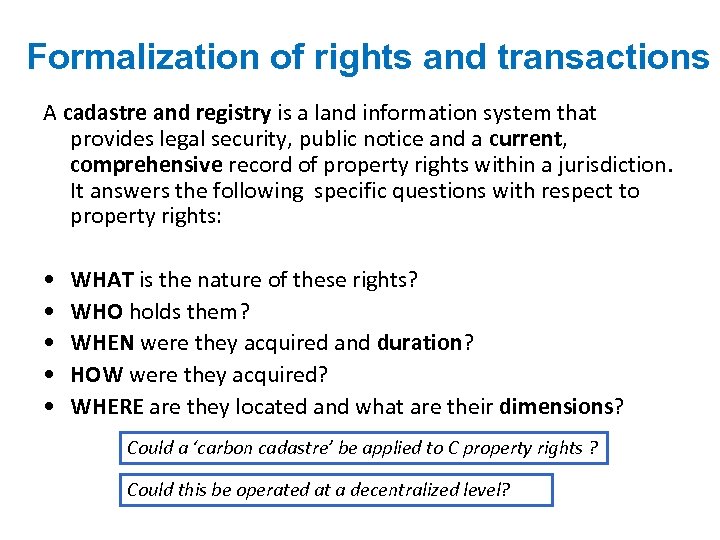
Formalization of rights and transactions A cadastre and registry is a land information system that provides legal security, public notice and a current, comprehensive record of property rights within a jurisdiction. It answers the following specific questions with respect to property rights: • • • WHAT is the nature of these rights? WHO holds them? WHEN were they acquired and duration? HOW were they acquired? WHERE are they located and what are their dimensions? Could a ‘carbon cadastre’ be applied to C property rights ? Could this be operated at a decentralized level?
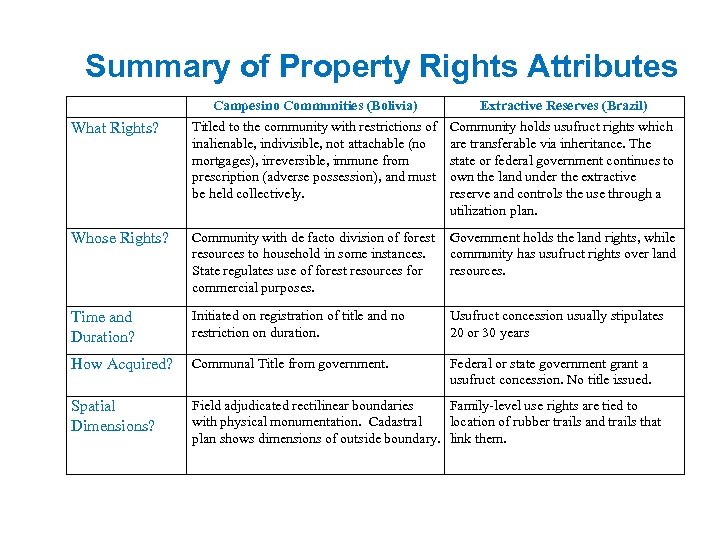
Summary of Property Rights Attributes Campesino Communities (Bolivia) Extractive Reserves (Brazil) What Rights? Titled to the community with restrictions of inalienable, indivisible, not attachable (no mortgages), irreversible, immune from prescription (adverse possession), and must be held collectively. Community holds usufruct rights which are transferable via inheritance. The state or federal government continues to own the land under the extractive reserve and controls the use through a utilization plan. Whose Rights? Community with de facto division of forest resources to household in some instances. State regulates use of forest resources for commercial purposes. Government holds the land rights, while community has usufruct rights over land resources. Time and Duration? Initiated on registration of title and no restriction on duration. Usufruct concession usually stipulates 20 or 30 years How Acquired? Communal Title from government. Federal or state government grant a usufruct concession. No title issued. Spatial Dimensions? Field adjudicated rectilinear boundaries Family-level use rights are tied to with physical monumentation. Cadastral location of rubber trails and trails that plan shows dimensions of outside boundary. link them.
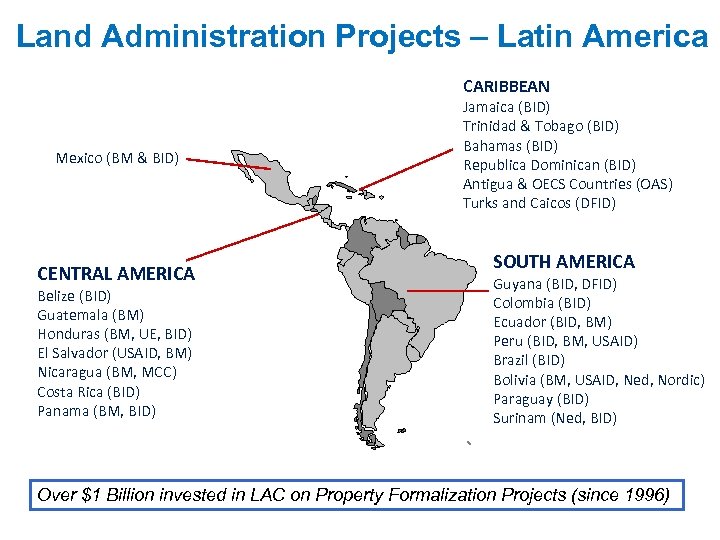
Land Administration Projects – Latin America CARIBBEAN Mexico (BM & BID) CENTRAL AMERICA Belize (BID) Guatemala (BM) Honduras (BM, UE, BID) El Salvador (USAID, BM) Nicaragua (BM, MCC) Costa Rica (BID) Panama (BM, BID) Jamaica (BID) Trinidad & Tobago (BID) Bahamas (BID) Republica Dominican (BID) Antigua & OECS Countries (OAS) Turks and Caicos (DFID) SOUTH AMERICA Guyana (BID, DFID) Colombia (BID) Ecuador (BID, BM) Peru (BID, BM, USAID) Brazil (BID) Bolivia (BM, USAID, Ned, Nordic) Paraguay (BID) Surinam (Ned, BID) Over $1 Billion invested in LAC on Property Formalization Projects (since 1996)
Lessons from Land Cadastre Initiatives • Tenure dynamics • inheritances • sales • rentals • subdivisions • Rapid De-formalization following titling (no buy in) • Narrow focus on individual, marketable property • Poor baseline data • Too much focus on land as opposed to key resources • “Ladder” of formal rights not just ‘title’ • Tenure pluralism (indigenous vs colonial) Conventional cadastres treat community-based tenure as a homogeneous polygon that assumes all internal rights are shared equally … (Ankersen & Barnes 2004)
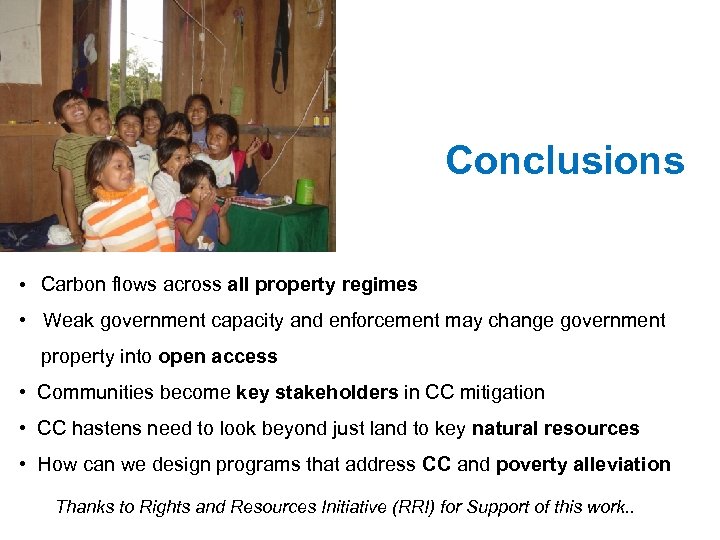
Conclusions • Carbon flows across all property regimes • Weak government capacity and enforcement may change government property into open access • Communities become key stakeholders in CC mitigation • CC hastens need to look beyond just land to key natural resources • How can we design programs that address CC and poverty alleviation Thanks to Rights and Resources Initiative (RRI) for Support of this work. .
Скачать презентацию Property Rights to Carbon in the Context of
08f251a4d1ec51822da110f705d5f29f.ppt