


 Скачать презентацию PRONUNCIATION LISTENING If you can t hear it
PRONUNCIATION.ppt
- Количество слайдов: 13
 PRONUNCIATION & LISTENING “If you can’t hear it, you can’t say it. ”
 SUCCESSFUL COMMUNICATION § 68% of misunderstanding is because of pronunciation or listening § 80% of English speakers are not natives, but they use English for international communication
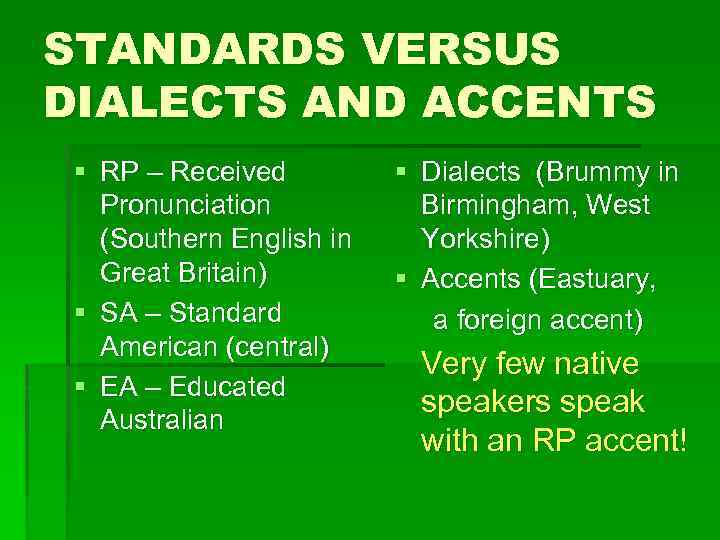 STANDARDS VERSUS DIALECTS AND ACCENTS § RP – Received Pronunciation (Southern English in Great Britain) § SA – Standard American (central) § EA – Educated Australian § Dialects (Brummy in Birmingham, West Yorkshire) § Accents (Eastuary, a foreign accent) Very few native speakers speak with an RP accent!
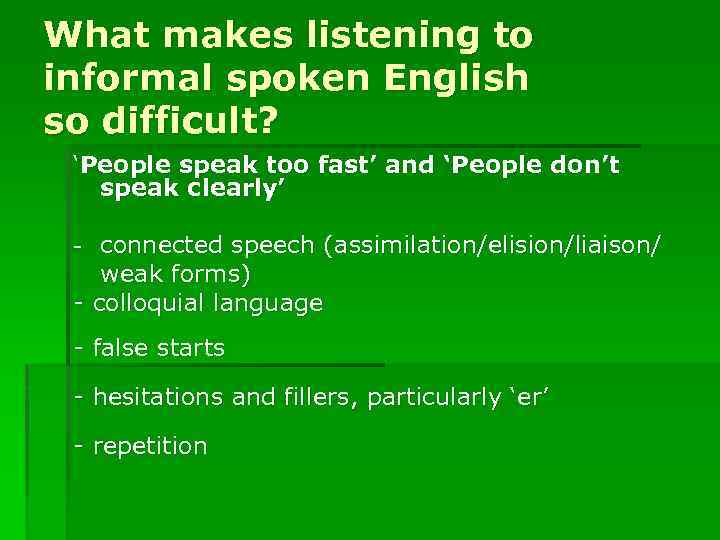 What makes listening to informal spoken English so difficult? ‘People speak too fast’ and ‘People don’t speak clearly’ connected speech (assimilation/elision/liaison/ weak forms) - colloquial language - - false starts - hesitations and fillers, particularly ‘er’ - repetition
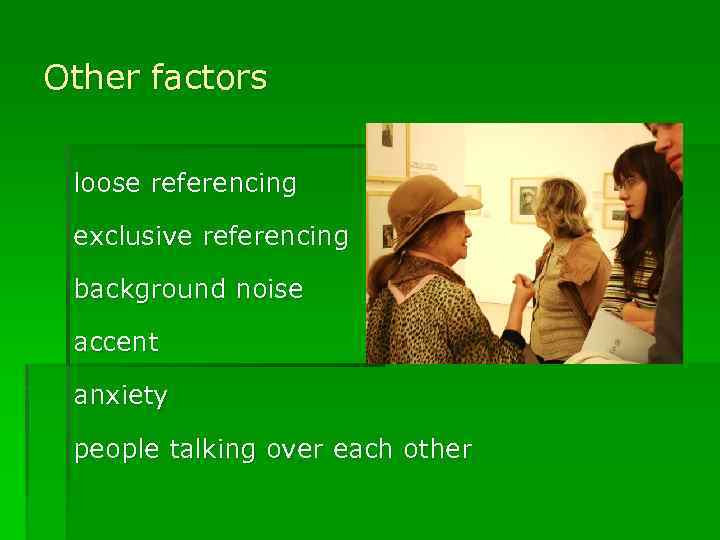 Other factors loose referencing exclusive referencing background noise accent anxiety people talking over each other
 Speak Proper – or how native speakers refuse to cooperate. An Italian man on Malta Long and short sounds (fork, two, piece, sheet) Logical stress and tonic
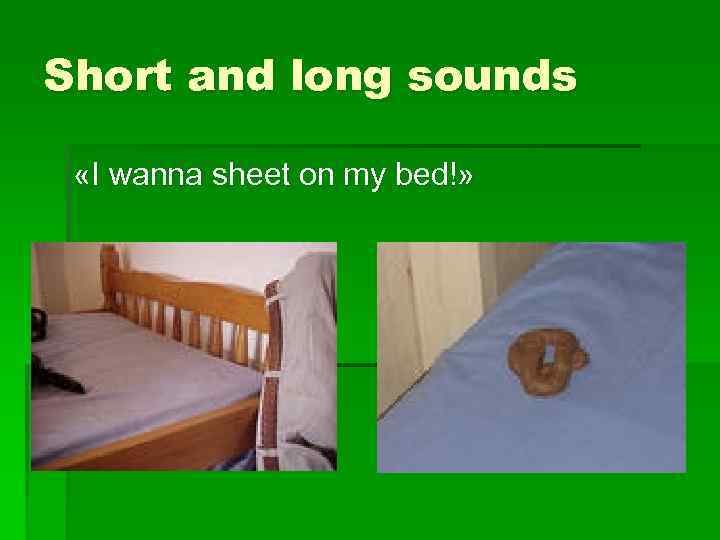 Short and long sounds «I wanna sheet on my bed!»
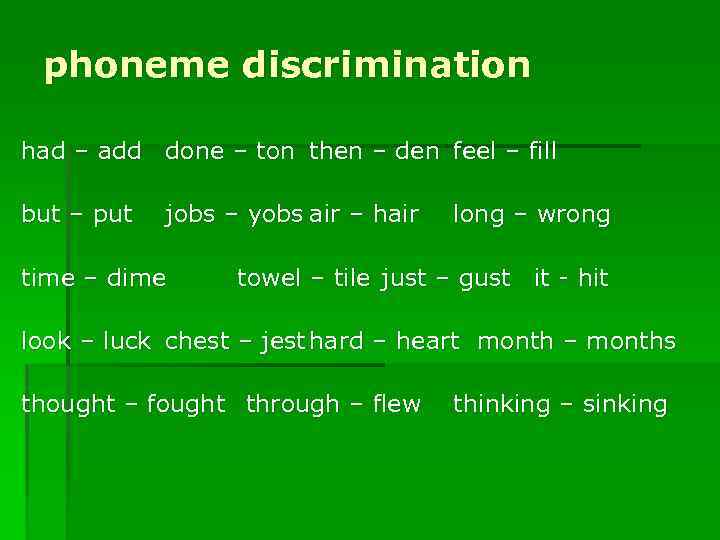 phoneme discrimination had – add done – ton then – den feel – fill but – put jobs – yobs air – hair time – dime long – wrong towel – tile just – gust it - hit look – luck chest – jest hard – heart month – months thought – fought through – flew thinking – sinking
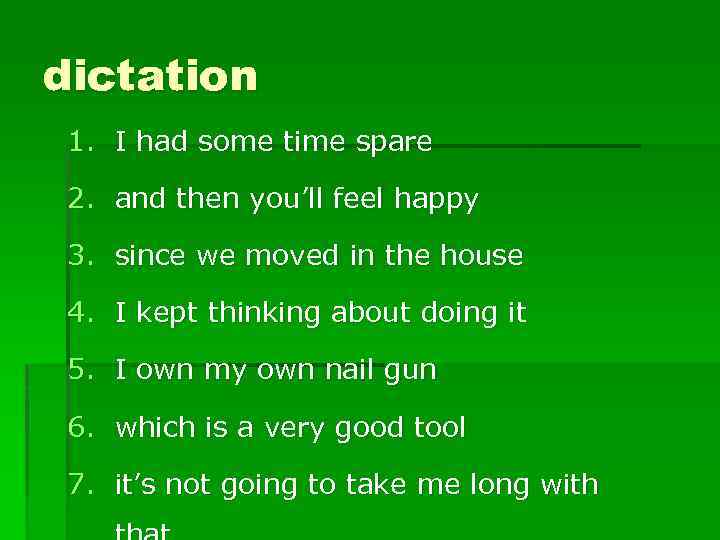 dictation 1. I had some time spare 2. and then you’ll feel happy 3. since we moved in the house 4. I kept thinking about doing it 5. I own my own nail gun 6. which is a very good tool 7. it’s not going to take me long with
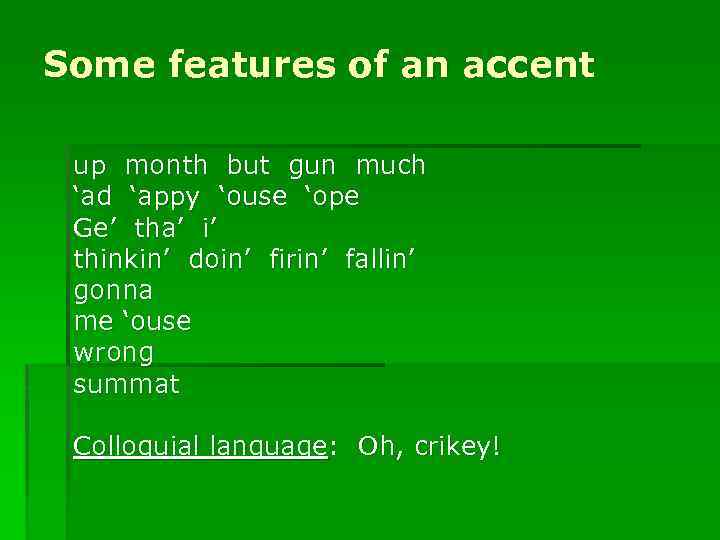 Some features of an accent up month but gun much ‘ad ‘appy ‘ouse ‘ope Ge’ tha’ i’ thinkin’ doin’ firin’ fallin’ gonna me ‘ouse wrong summat Colloquial language: Oh, crikey!
 What we should do a) help students to notice varieties of pronunciation b) identify difficult features of native speaker English c) increase students’ confidence in their listening skills!!! d) increase students’ confidence in their pronunciation
 WHAT WE SHOULD ACHIEVE § Speak – Standard (RP, SA) § Understand – all varieties of English (RP, SA, dialects, accents) § The ideal result – adjust in the situation and speak the same language that native speaker speaks to you
 Where to find the varieties of English § Face to face conversations with natives and users of English § Documentaries and feature films § Interviews, TV programs § Internet (www. bbc. co. uk/voices) Onestopenglish. com, macmillan. com And much, much more…