 Скачать презентацию Pronombres de objeto directo e indirecto Direct and
b6a906dfb62b9b9217f171b3914fa634.ppt
- Количество слайдов: 20



Pronombres de objeto directo e indirecto Direct and Indirect Object Pronouns
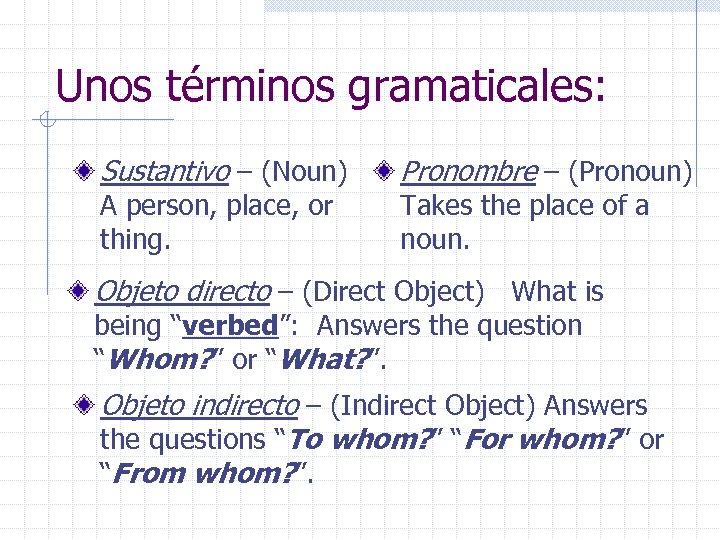
Unos términos gramaticales: Sustantivo – (Noun) A person, place, or thing. Pronombre – (Pronoun) Takes the place of a noun. Objeto directo – (Direct Object) What is being “verbed”: Answers the question “Whom? ” or “What? ”. Objeto indirecto – (Indirect Object) Answers the questions “To whom? ” “For whom? ” or “From whom? ”.
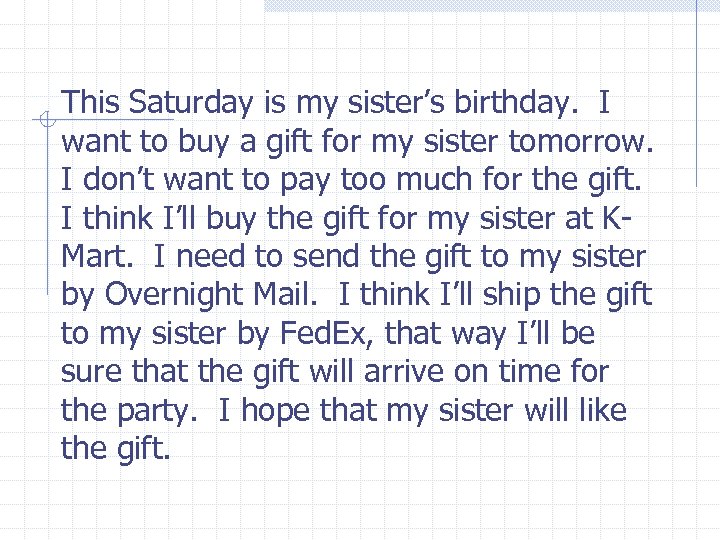
This Saturday is my sister’s birthday. I want to buy a gift for my sister tomorrow. I don’t want to pay too much for the gift. I think I’ll buy the gift for my sister at KMart. I need to send the gift to my sister by Overnight Mail. I think I’ll ship the gift to my sister by Fed. Ex, that way I’ll be sure that the gift will arrive on time for the party. I hope that my sister will like the gift.
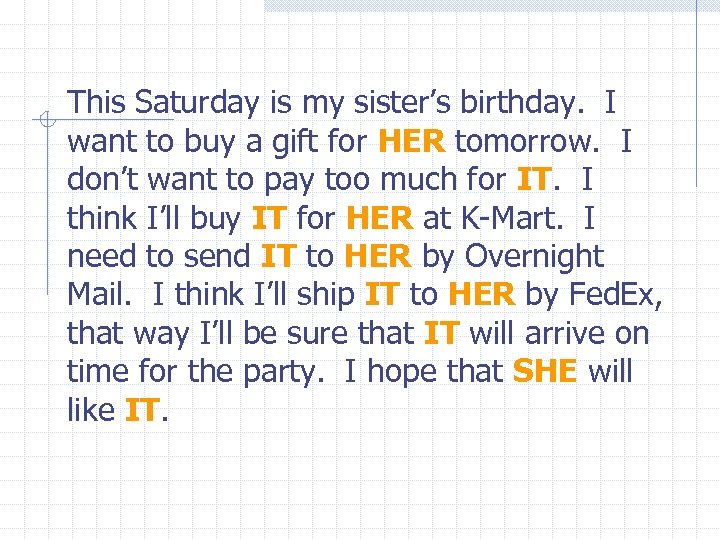
This Saturday is my sister’s birthday. I want to buy a gift for HER tomorrow. I don’t want to pay too much for IT. I think I’ll buy IT for HER at K-Mart. I need to send IT to HER by Overnight Mail. I think I’ll ship IT to HER by Fed. Ex, that way I’ll be sure that IT will arrive on time for the party. I hope that SHE will like IT.
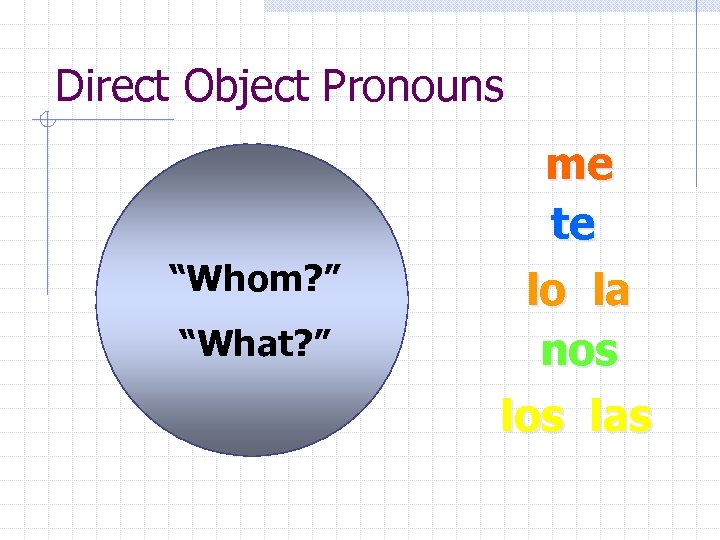
Direct Object Pronouns “Whom? ” “What? ” me te lo la nos las
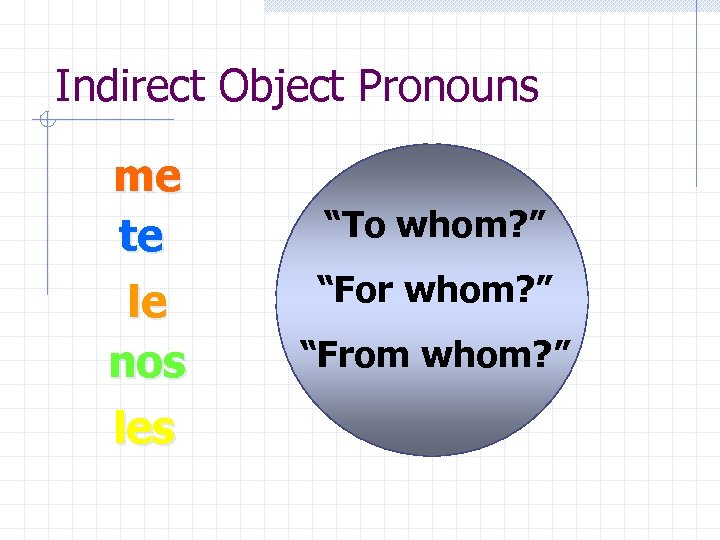
Indirect Object Pronouns me te le nos les “To whom? ” “For whom? ” “From whom? ”
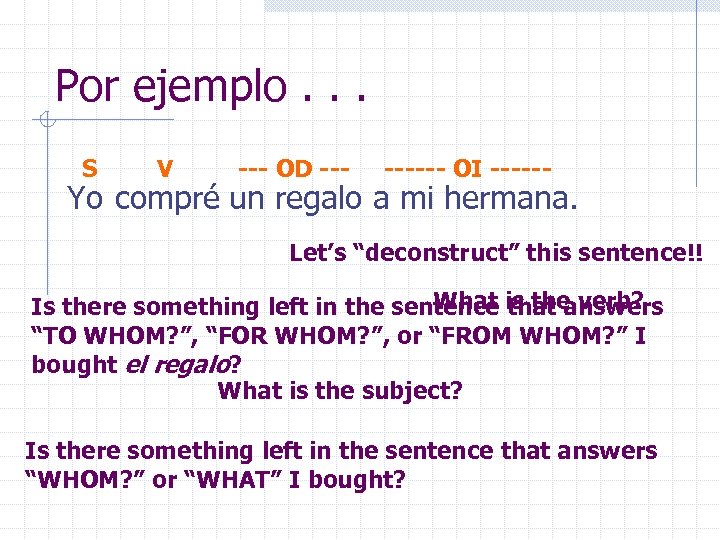
Por ejemplo. . . S V --- OD ------ OI ------ Yo compré un regalo a mi hermana. Let’s “deconstruct” this sentence!! What that answers Is there something left in the sentence is the verb? “TO WHOM? ”, “FOR WHOM? ”, or “FROM WHOM? ” I bought el regalo? What is the subject? Is there something left in the sentence that answers “WHOM? ” or “WHAT” I bought?
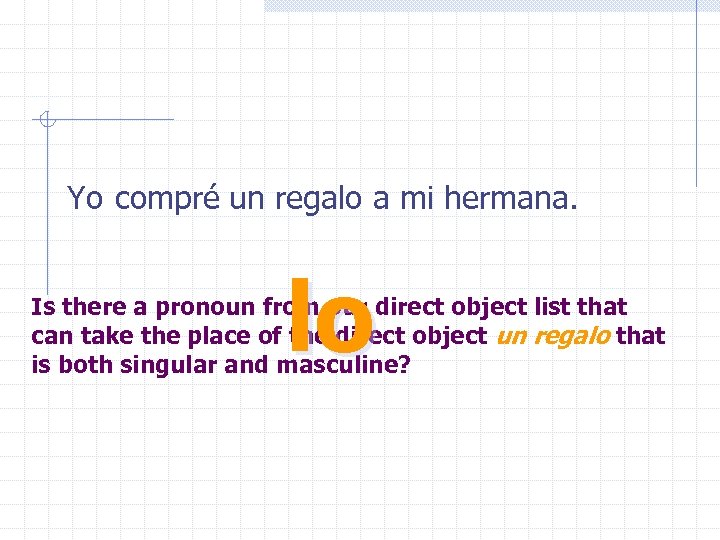
Yo compré un regalo a mi hermana. lo Is there a pronoun from our direct object list that can take the place of the direct object un regalo that is both singular and masculine?
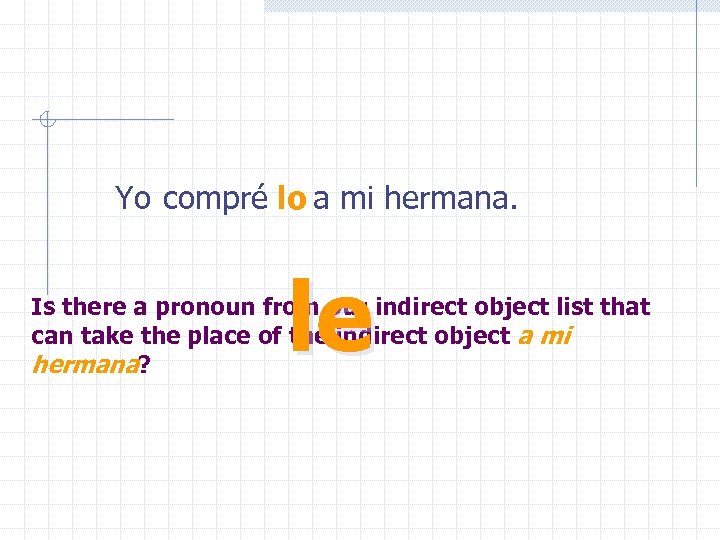
Yo compré lo a mi hermana. le Is there a pronoun from our indirect object list that can take the place of the indirect object a mi hermana?

Yo compré lo le.
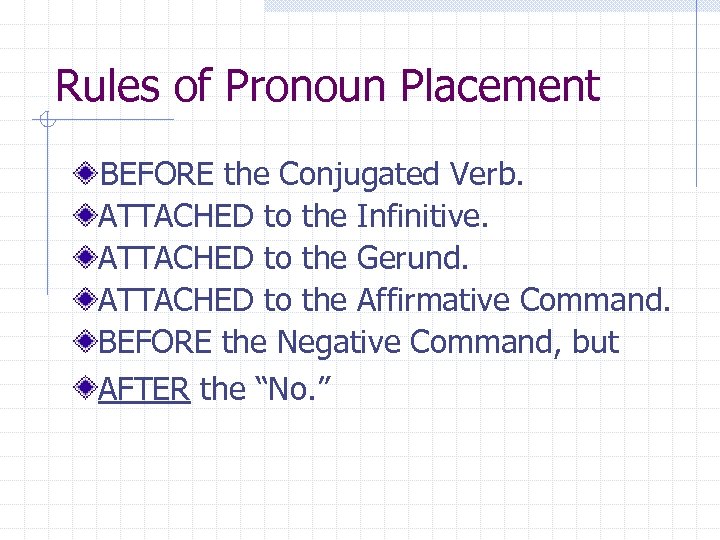
Rules of Pronoun Placement BEFORE the Conjugated Verb. ATTACHED to the Infinitive. ATTACHED to the Gerund. ATTACHED to the Affirmative Command. BEFORE the Negative Command, but AFTER the “No. ”
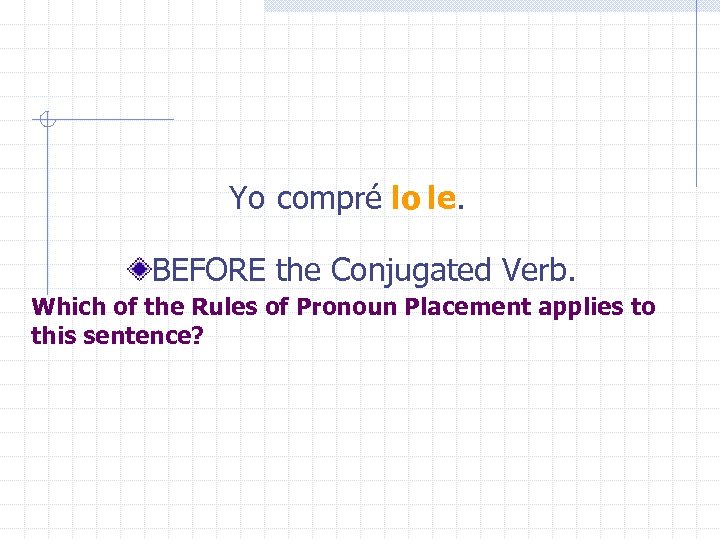
Yo compré lo le. BEFORE the Conjugated Verb. Which of the Rules of Pronoun Placement applies to this sentence?

Yo lo le compré. Yo compré lo le.
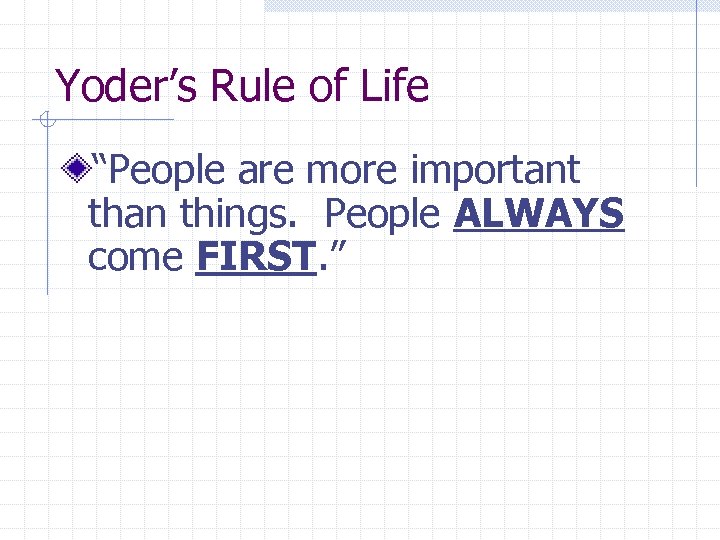
Yoder’s Rule of Life “People are more important than things. People ALWAYS come FIRST. ”

Yo le lo compré.

se lo le se la le se los le se las le
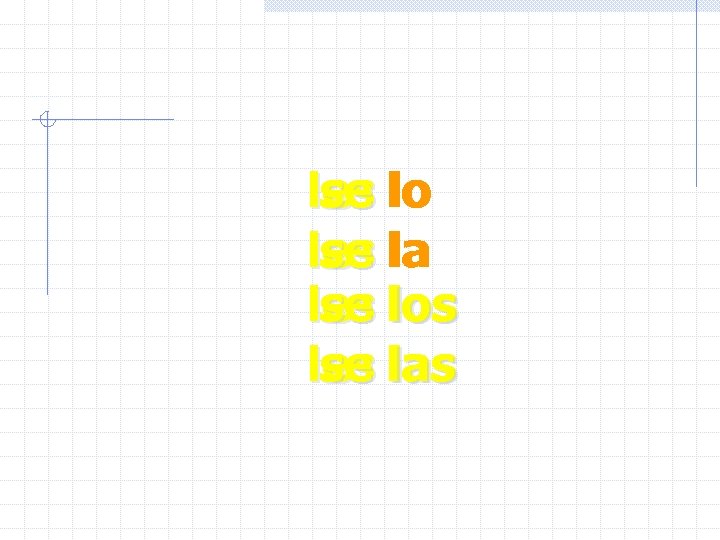
les lo se les la se les los se les las se

Yo le lo compré. se lo
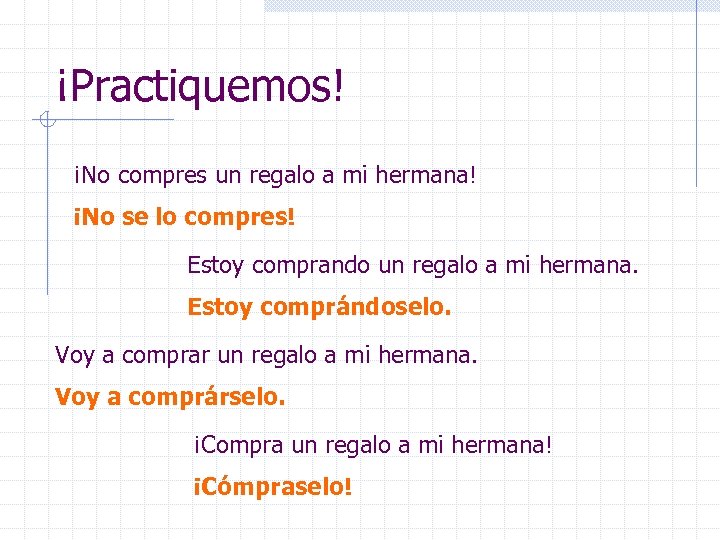
¡Practiquemos! ¡No compres un regalo a mi hermana! ¡No se lo compres! Estoy comprando un regalo a mi hermana. Estoy comprándoselo. Voy a comprar un regalo a mi hermana. Voy a comprárselo. ¡Compra un regalo a mi hermana! ¡Cómpraselo!

© 2001 James R. Yoder
Скачать презентацию Pronombres de objeto directo e indirecto Direct and
b6a906dfb62b9b9217f171b3914fa634.ppt