


 Скачать презентацию PROMOTION COMMUNICATION 4 Steps to Marketing Strategy
ca53a6dd670caecdfd9742d1b3fbc10d.ppt
- Количество слайдов: 35
 PROMOTION COMMUNICATION
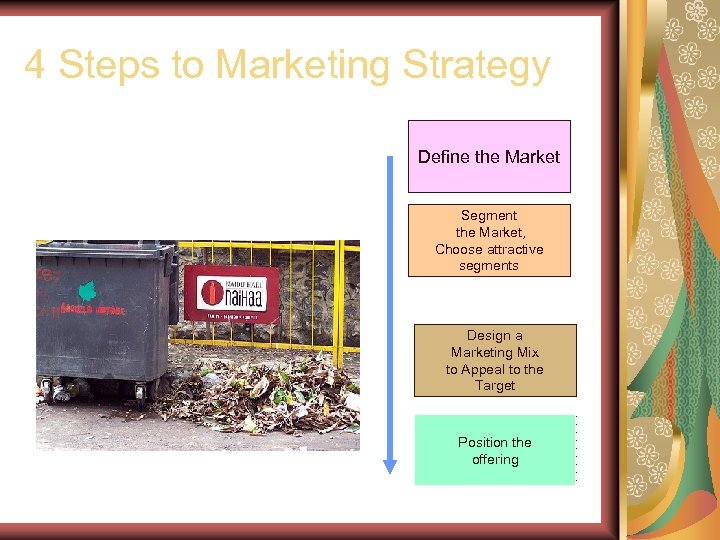 4 Steps to Marketing Strategy Define the Market Segment the Market, Choose attractive segments Design a Marketing Mix to Appeal to the Target Position the offering
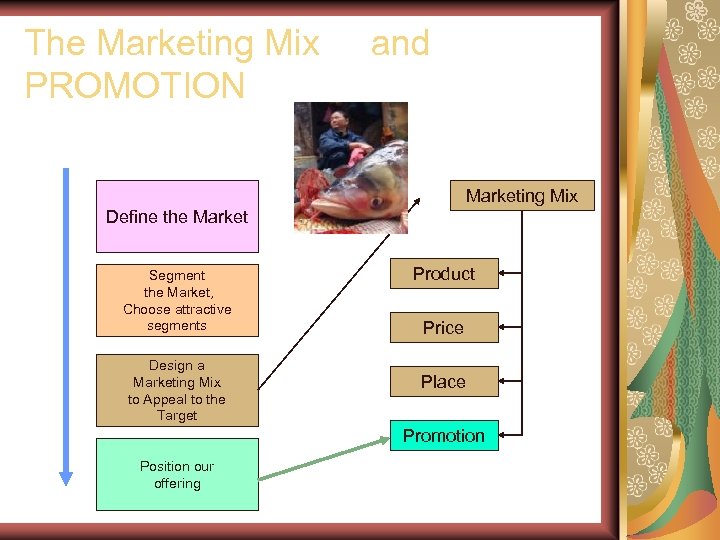 The Marketing Mix PROMOTION and Marketing Mix Define the Market Segment the Market, Choose attractive segments Design a Marketing Mix to Appeal to the Target Product Price Place Promotion Position our offering
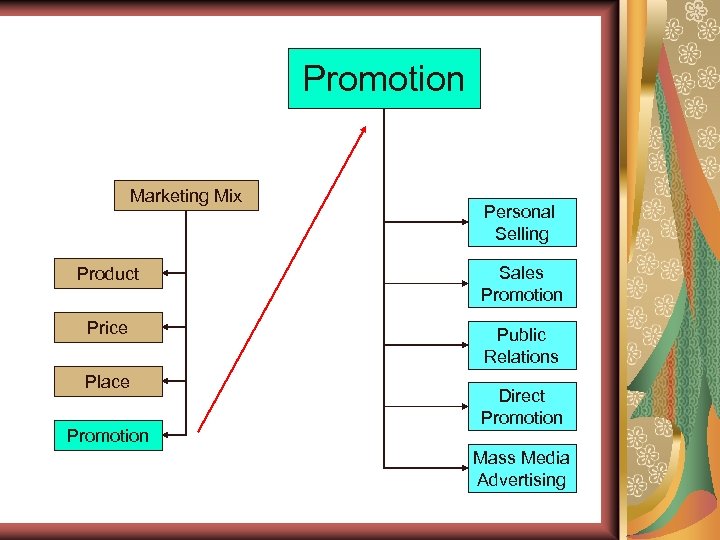 Promotion Marketing Mix Personal Selling Product Sales Promotion Price Public Relations Place Promotion Direct Promotion Mass Media Advertising
 The Role of Promotion Communication to build and maintain relationships by informing and persuading one or more audiences Overall role of promotion is to stimulate demand by: building and enhancing customer relationships. focusing customers on information about company activities and products. promoting programs that help selected groups to build goodwill. sponsoring special events that generate positive promotion of an organization and its brands. http: //www. moviegoods. com/customer_testimonial. asp
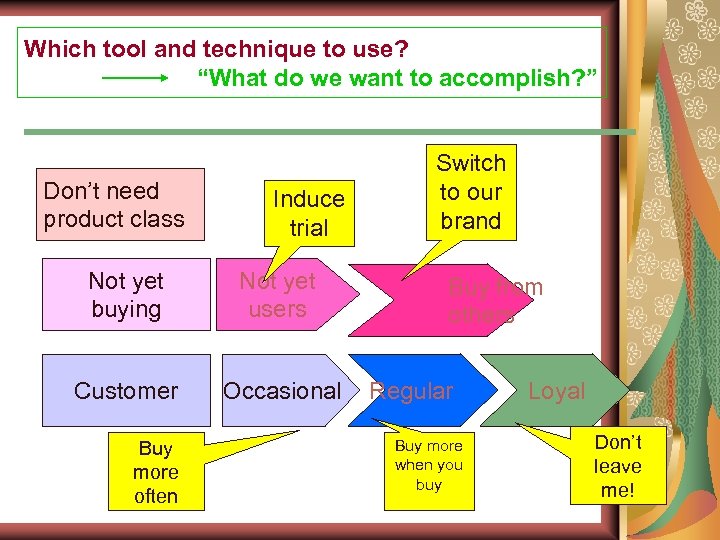 Which tool and technique to use? “What do we want to accomplish? ” Don’t need product class Induce trial Not yet buying Not yet users Customer Occasional Buy more often Switch to our brand Buy from others Regular Buy more when you buy Loyal Don’t leave me!
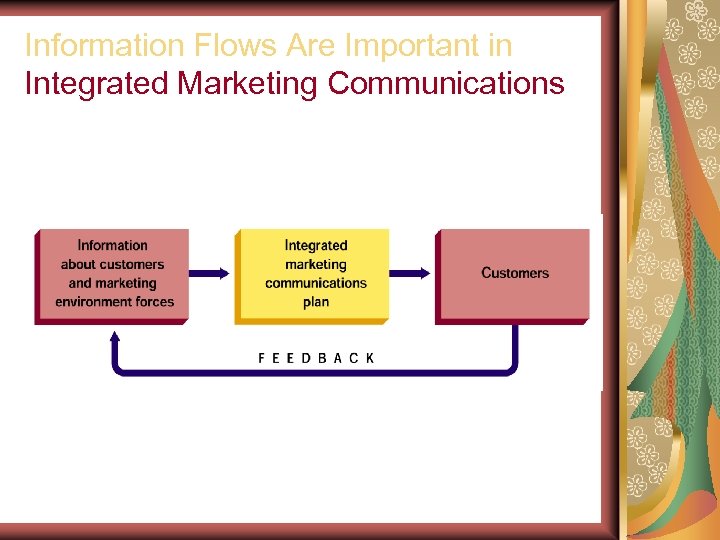 Information Flows Are Important in Integrated Marketing Communications
 Integrated Marketing Communications Coordination of promotion and other marketing efforts for maximum informational and persuasive effect Major goal is to send a consistent message to customers http: //integrated. tmp. com/index. htm
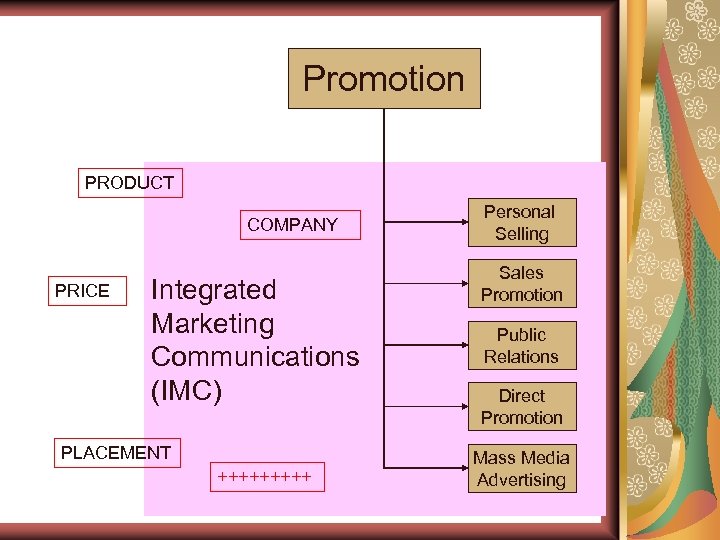 Promotion PRODUCT COMPANY PRICE Integrated Marketing Communications (IMC) PLACEMENT +++++ Personal Selling Sales Promotion Public Relations Direct Promotion Mass Media Advertising
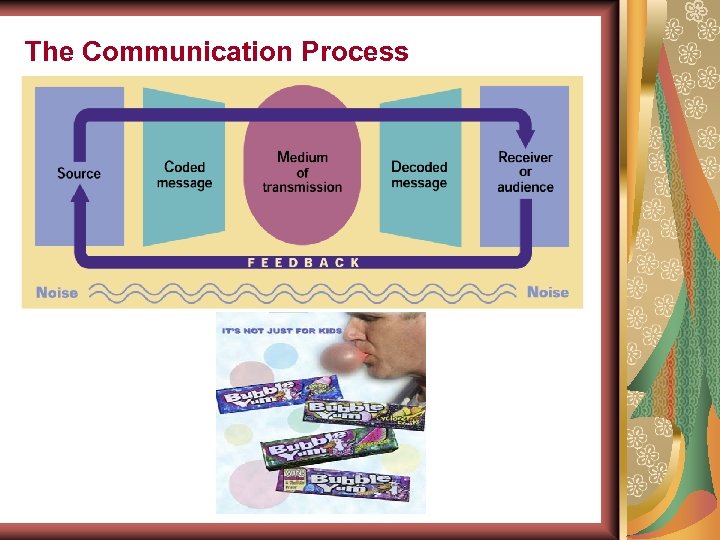 The Communication Process
 Promotion and the Communication Process: Key Terms Communication A sharing of meaning; the transmission of information Source is a person, group, or organization with a meaning it tries to share with an audience Receiver is an individual, group, or organization that decodes a coded message Coding process (encoding) is the converting meaning into a series of signs or symbols Medium of transmission is the means of carrying the coded message from the source to the receiver
 Decoding process is the conversion of signs or symbols into concepts and ideas Noise is anything which reduces a communication’s clarity and accuracy Feedback is the receiver’s response to a message Channel capacity is the limit on the volume of information a communication channel can handle effectively
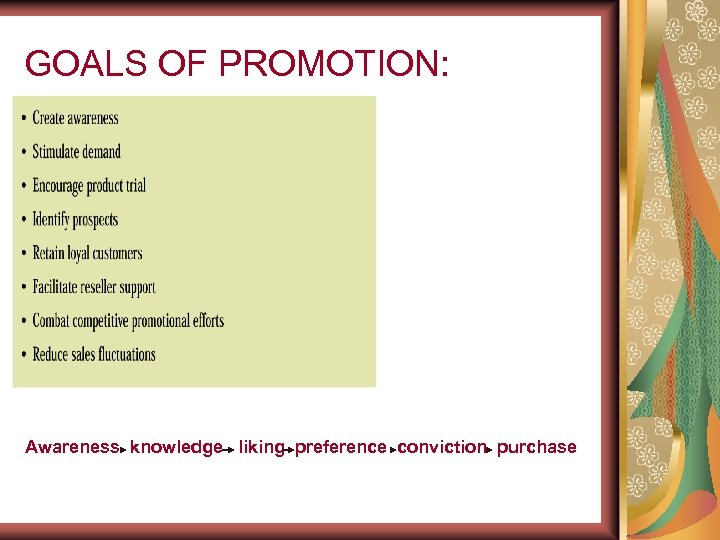 GOALS OF PROMOTION: Awareness knowledge liking preference conviction purchase
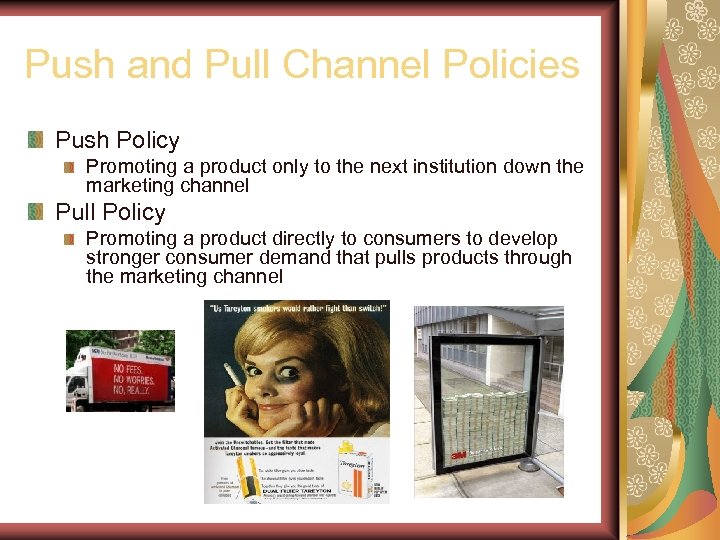 Push and Pull Channel Policies Push Policy Promoting a product only to the next institution down the marketing channel Pull Policy Promoting a product directly to consumers to develop stronger consumer demand that pulls products through the marketing channel
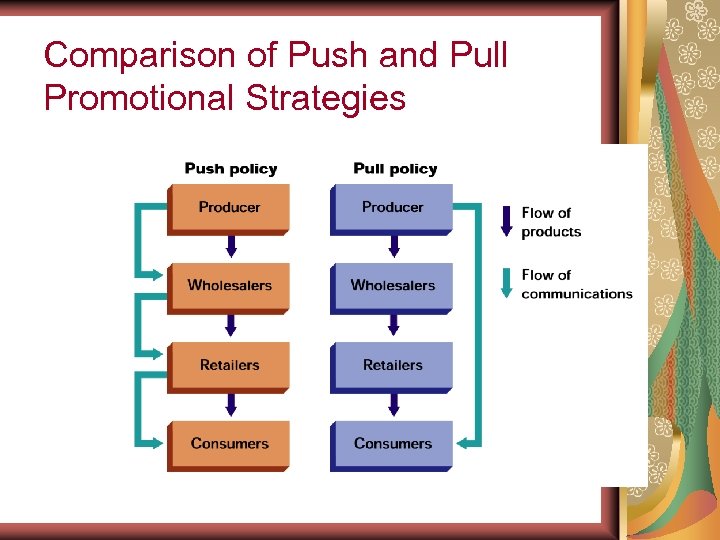 Comparison of Push and Pull Promotional Strategies
 Advertising A paid nonpersonal communication about an organization and its products transmitted to a target audience through mass media Benefits Extremely cost efficient (cost person) in reaching a large audience Repeatable several times and in several media markets Adds value to a product and enhances a firm’s image
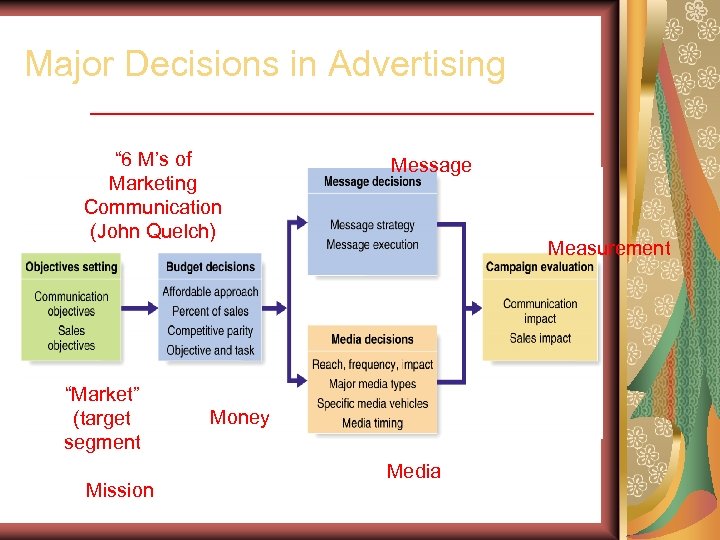 Major Decisions in Advertising “ 6 M’s of Marketing Communication (John Quelch) “Market” (target segment Mission Message Measurement Money Media
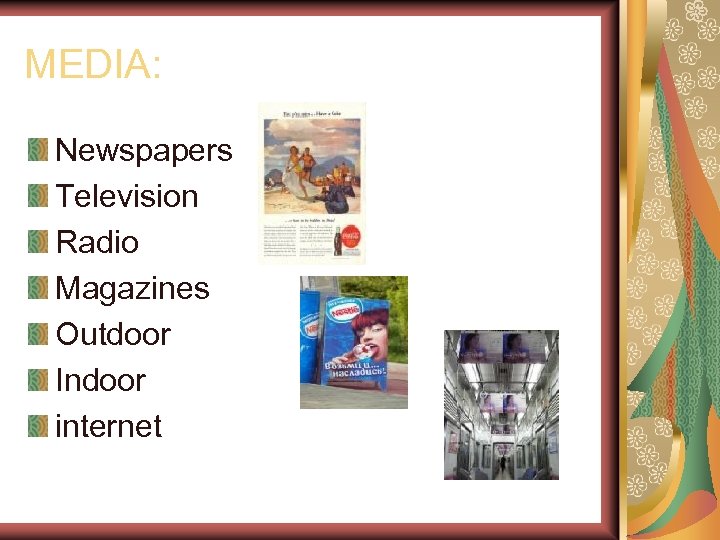 MEDIA: Newspapers Television Radio Magazines Outdoor Indoor internet
 Personal Selling It’s effective. . . but expensive A paid personal communication that seeks to inform customers and persuade them to purchase products in an exchange situation Advantages Is a more specific form of advertising Has greater impact on consumers Provides immediate feedback (kinesic, proxemic, and tactile communications) Limitations Is an expensive form of advertising Is labor intensive and time consuming Relationship marketing is focused on mutual benefit and the long term
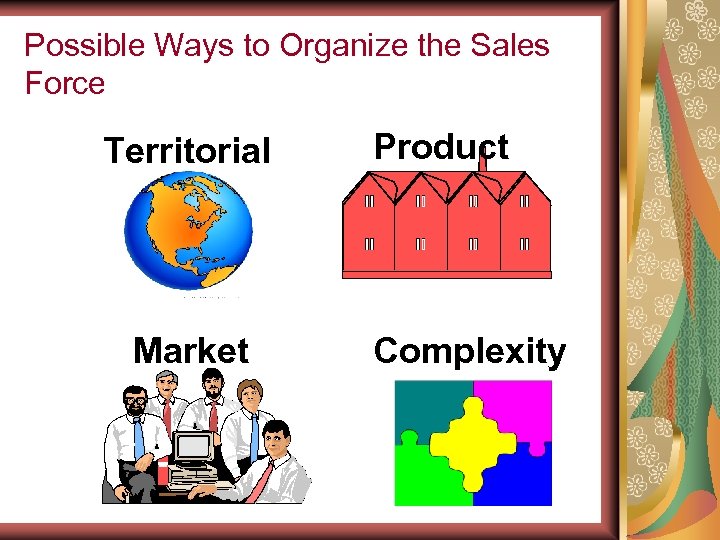 Possible Ways to Organize the Sales Force Territorial Market Product Complexity
 Motivating the Sales Force Surprise! Money works, also promotion, accomplishment Recognition (Salesperson of the month) and liking don’t work as well Most firms develop quotas Warning, there always unintended consequences Supplemental rewards (often travel) are typical
 Sales Promotion A “Necessary Evil” for Mature Products, and often useful to “induce trial” for new products
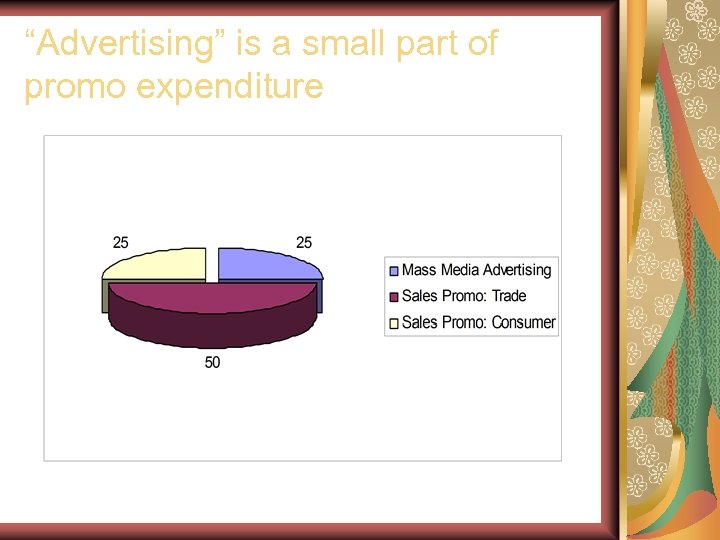 “Advertising” is a small part of promo expenditure
 Sales Promotion, pro and con A “necessary evil” in product maturity May give customers a “reason to buy” It works: Discounts do drive sales Erodes current quarter profitability May erode reference price May accelerate purchases from future periods to now
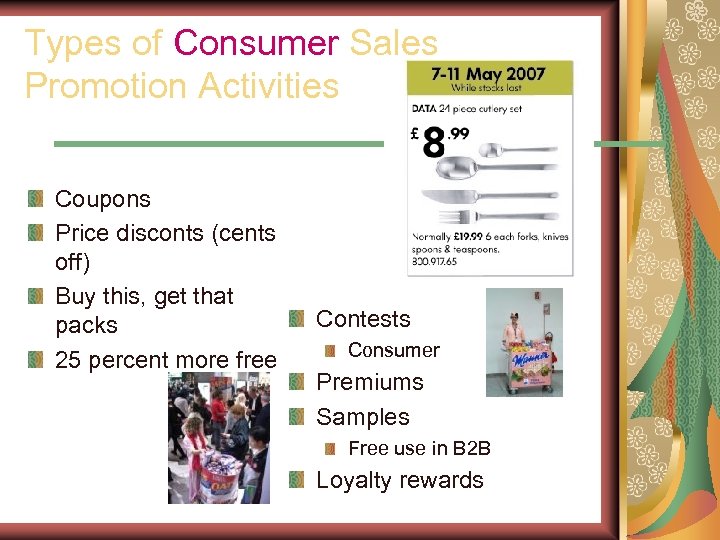 Types of Consumer Sales Promotion Activities Coupons Price disconts (cents off) Buy this, get that packs 25 percent more free Contests Consumer Premiums Samples Free use in B 2 B Loyalty rewards
 Types of Trade Sales Promotion Activities Temporary price reduction Increased margin Trade deals “buy 6 ship 8” Annual sales volume rewards Be careful about antitrust Contests (sales force)
 Public Relations Communications with the firm’s publics that are not “mass media paid advertising” or “direct promotion” A broad set of communication efforts used to create and maintain favorable relationships between the organization and its stakeholders Publicity is a nonpersonal communication in a news story form about an organization or its products, or both, transmitted through a mass medium for free
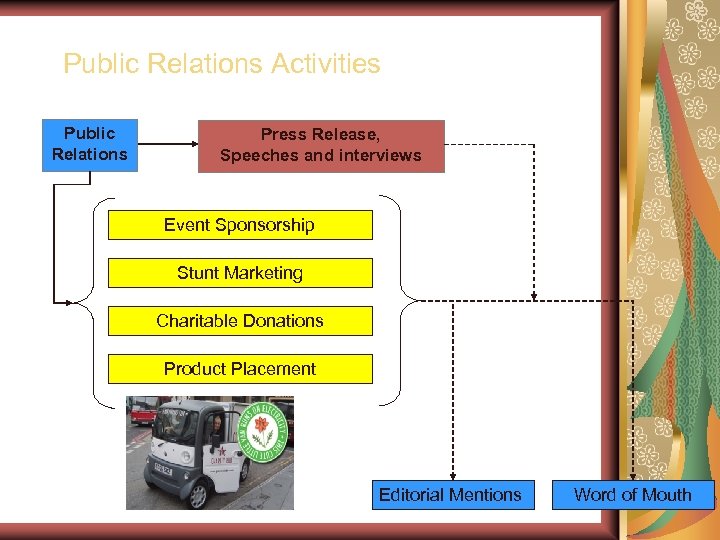 Public Relations Activities Public Relations Press Release, Speeches and interviews Event Sponsorship Stunt Marketing Charitable Donations Product Placement Editorial Mentions Word of Mouth
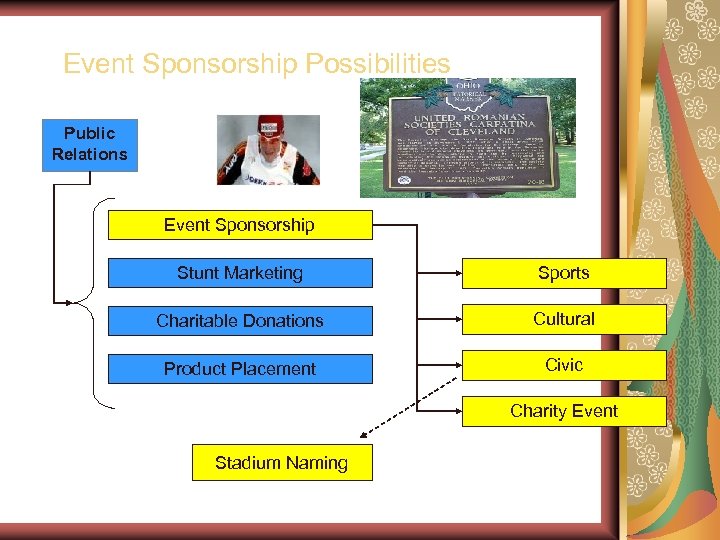 Event Sponsorship Possibilities Public Relations Event Sponsorship Stunt Marketing Sports Charitable Donations Cultural Product Placement Civic Charity Event Stadium Naming
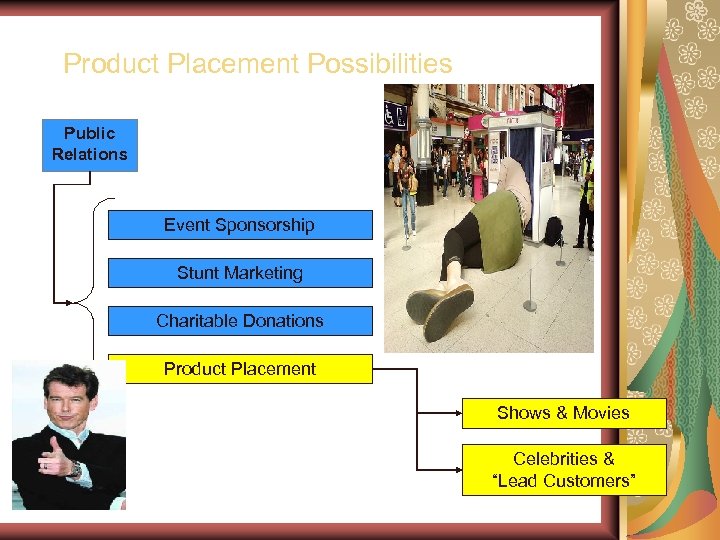 Product Placement Possibilities Public Relations Event Sponsorship Stunt Marketing Charitable Donations Product Placement Shows & Movies Celebrities & “Lead Customers”
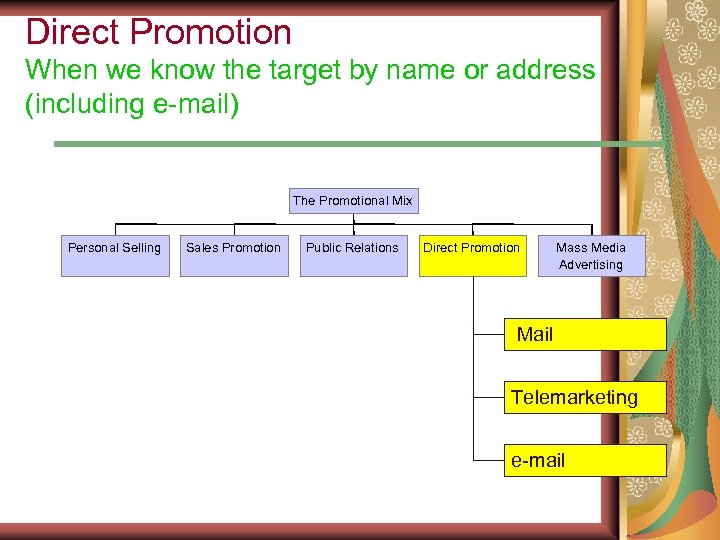 Direct Promotion When we know the target by name or address (including e-mail) The Promotional Mix Personal Selling Sales Promotion Public Relations Direct Promotion Mass Media Advertising Mail Telemarketing e-mail
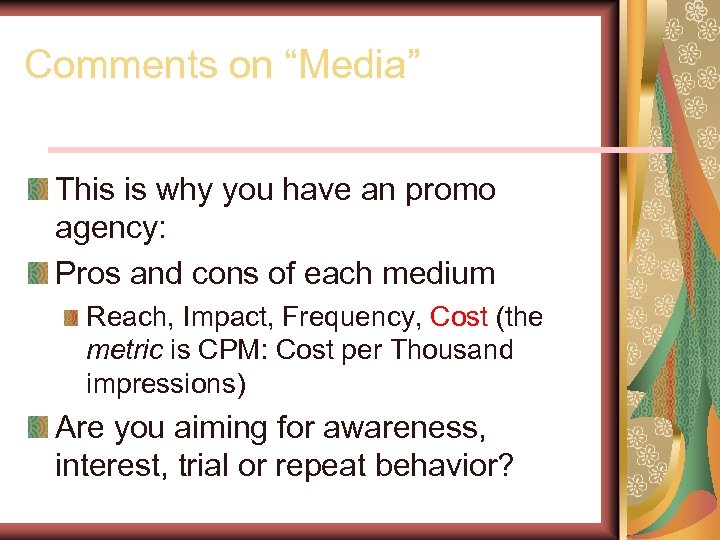 Comments on “Media” This is why you have an promo agency: Pros and cons of each medium Reach, Impact, Frequency, Cost (the metric is CPM: Cost per Thousand impressions) Are you aiming for awareness, interest, trial or repeat behavior?
 How to think about the Internet Both a medium for advertising, and a channel of distribution (“order on-line”) The great advantage of the Internet is that it permits context-based advertising (when you search for “Caribbean Cruise” Google shows you links to Disney Cruise Line and Expedia) http: //blog. frogbody. com/frogblog/2005/07/context_based_a. html
 Media terminology Timing All at once, or “flights” or “even” Reach (the percent of our target who will see) Impact Credibility Image “Impressions” (number of times target sees your ad) Conventional wisdom is that response peaks after 7 impressions
 Message Decisions What point are we trying to get across? “Now with more fiber” “Half the price of our competitor’s offer” The “brand essence statement” should drive this, followed by the specific promotional goal (e. g. “Induce brand switching from brand-y to us”)