 Скачать презентацию Promoting Well-Being in Children and Youth Linking Personal
58d3144323a546b658acd60ad7d8ccbb.ppt
- Количество слайдов: 68



Promoting Well-Being in Children and Youth: Linking Personal, Organizational, and Community Change Isaac Prilleltensky, Ph. D. Dean, School of Education University of Miami isaacp@miami. edu www. education. miami. edu/isaac
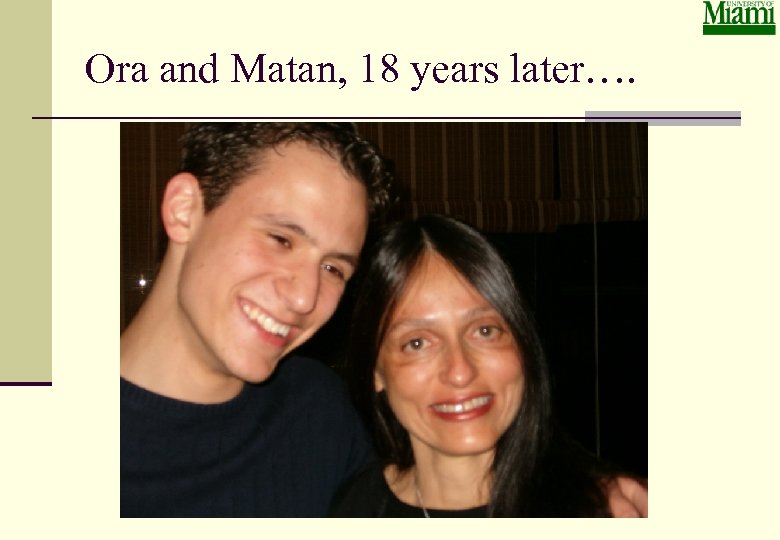
Ora and Matan, 18 years later….
Overview of Presentation n Well-Being n Signs and Sources n n Personal Organizational Community Strategies n SPEC approaches § § Strengths Prevention Empowerment Community Change
Part I Signs and Sources of Well-Being
What is Well-being? Well-being is a positive state of affairs, brought about by the simultaneous satisfaction of personal, organizational, and collective needs of individuals and communities
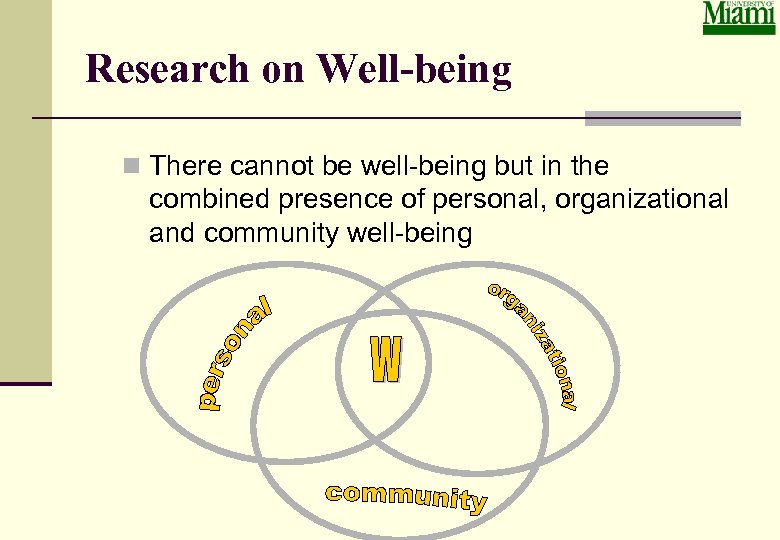
Research on Well-being n There cannot be well-being but in the combined presence of personal, organizational and community well-being
Signs of Personal Well-Being n Hope and optimism n Sense of control and self-determination n Environmental mastery and self-efficacy n Growth and meaningful engagement n Love, intimacy, and social support
Sources of Personal Well-Being n Biological and Constitutional Factors n Early Parenting Experiences n Emotional Intelligence n Supportive Relationships in Multiple Contexts and Settings n Opportunities for growth, engagement and self -determination
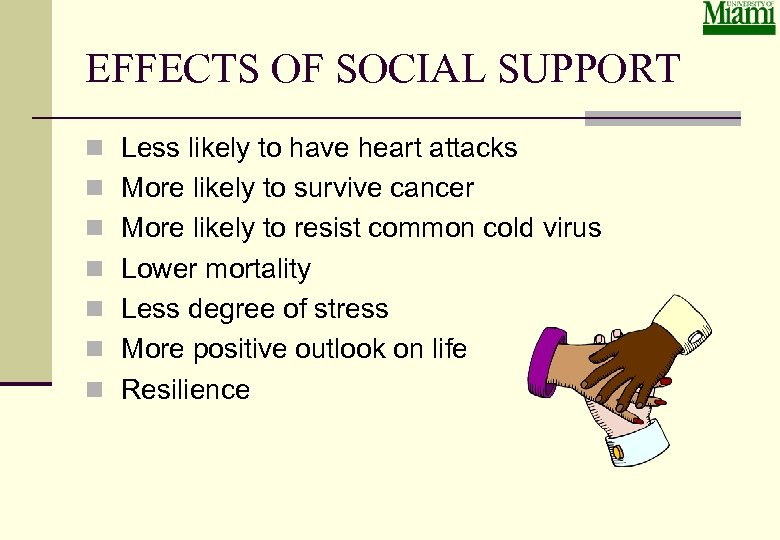
EFFECTS OF SOCIAL SUPPORT n Less likely to have heart attacks n More likely to survive cancer n More likely to resist common cold virus n Lower mortality n Less degree of stress n More positive outlook on life n Resilience
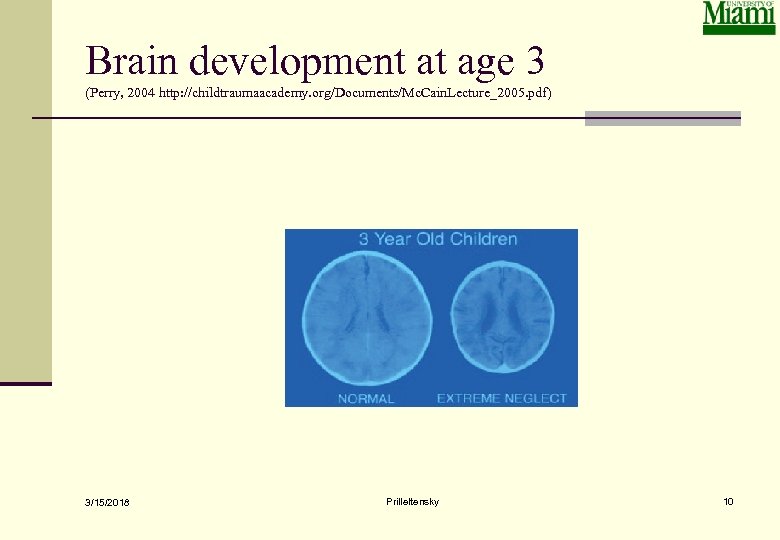
Brain development at age 3 (Perry, 2004 http: //childtraumaacademy. org/Documents/Mc. Cain. Lecture_2005. pdf) 3/15/2018 Prilleltensky 10
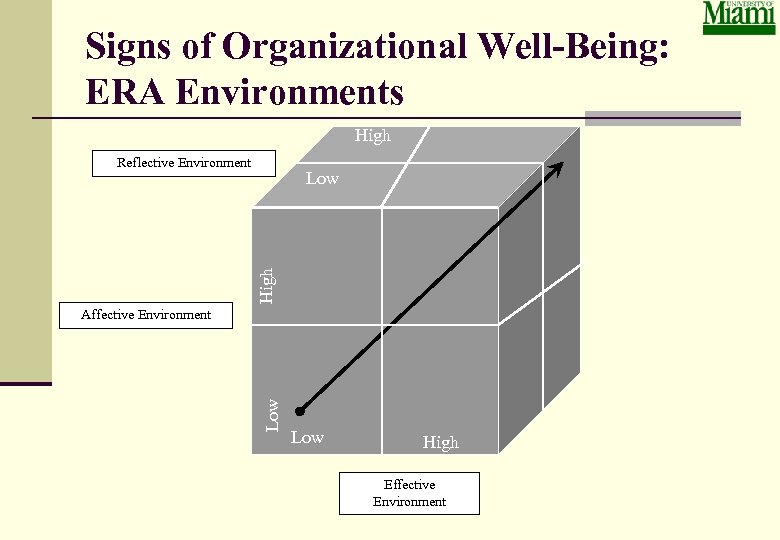
Signs of Organizational Well-Being: ERA Environments High Reflective Environment High Low Affective Environment Low High Effective Environment
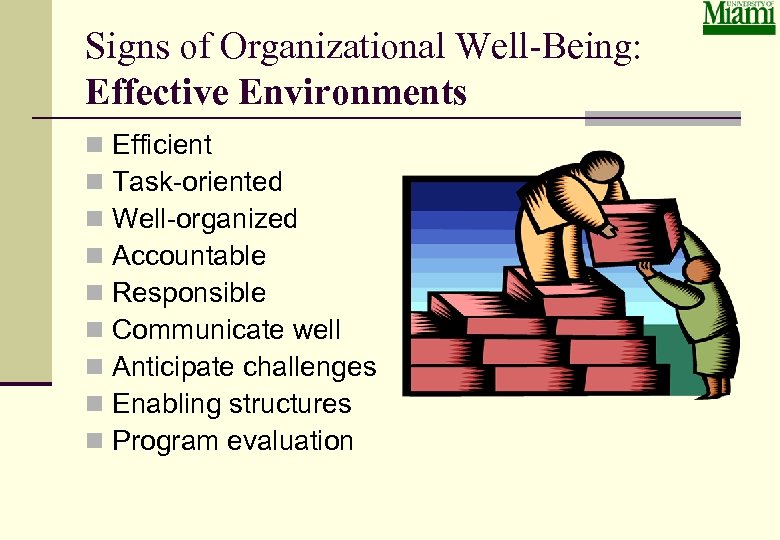
Signs of Organizational Well-Being: Effective Environments n n n n n Efficient Task-oriented Well-organized Accountable Responsible Communicate well Anticipate challenges Enabling structures Program evaluation
Signs of Organizational Well-Being: Reflective Environments n Learning opportunities n Organizational learning n Challenge old notions n Take risks n Ask big questions n Promote innovation n Stimulating
Signs of Organizational Well-Being: Affective Environments n Climate of acceptance n Appreciation n Affirmation n Respect n Safe place n Sense of control n Conviviality n Voice and choice
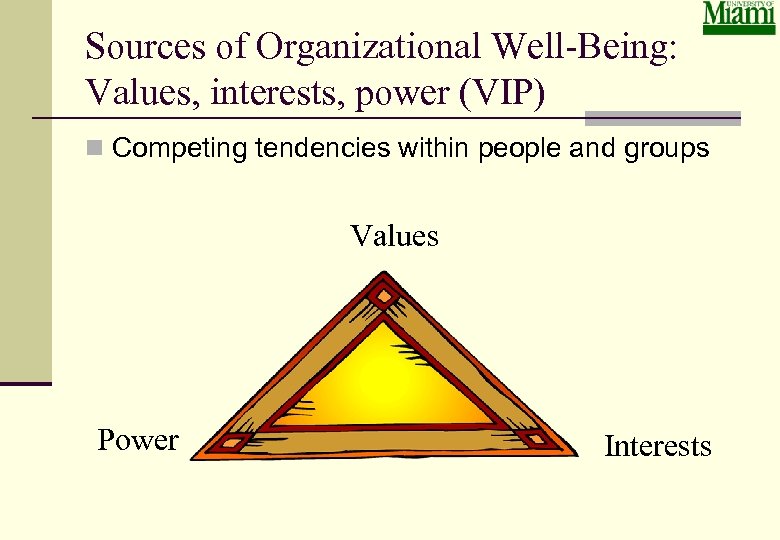
Sources of Organizational Well-Being: Values, interests, power (VIP) n Competing tendencies within people and groups Values Power Interests
Signs of Community Well-being n Social justice and equality n Liberation from oppressive forces n Quality education n Adequate health and social services n Economic prosperity n Adequate housing n Clean and safe environment n Support for community structures
Sources of Community Well-being n Poverty n Power n Participation
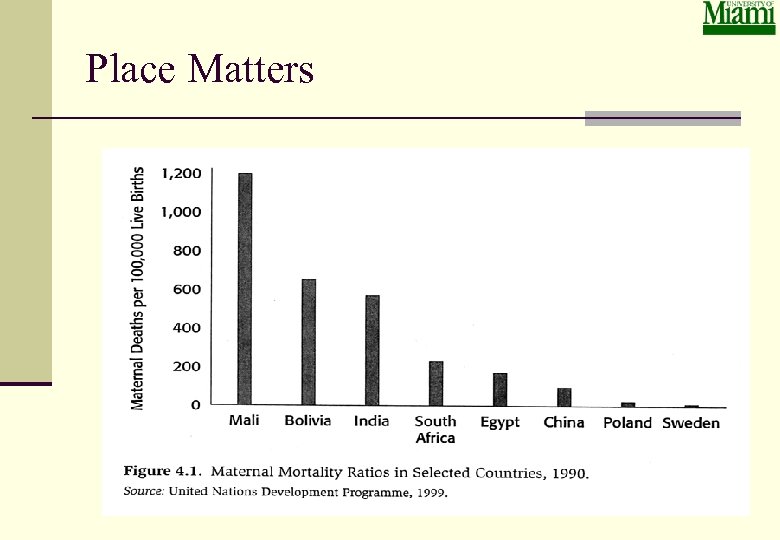
Place Matters
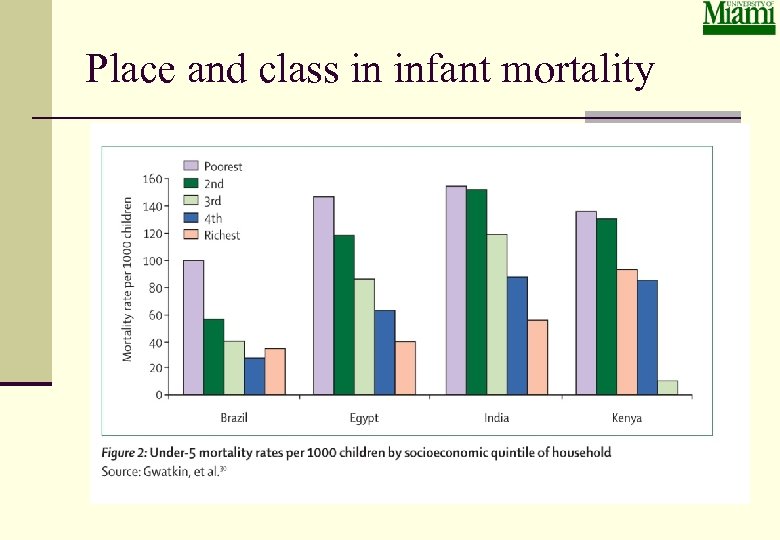
Place and class in infant mortality
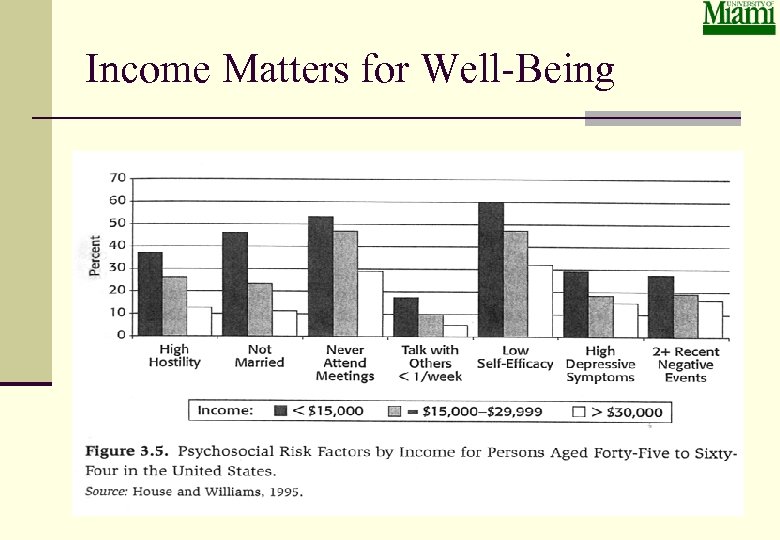
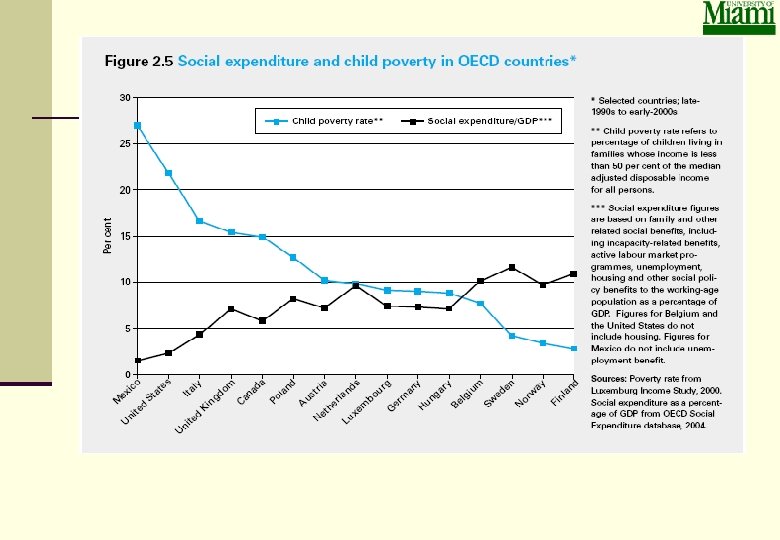
Income Matters for Well-Being
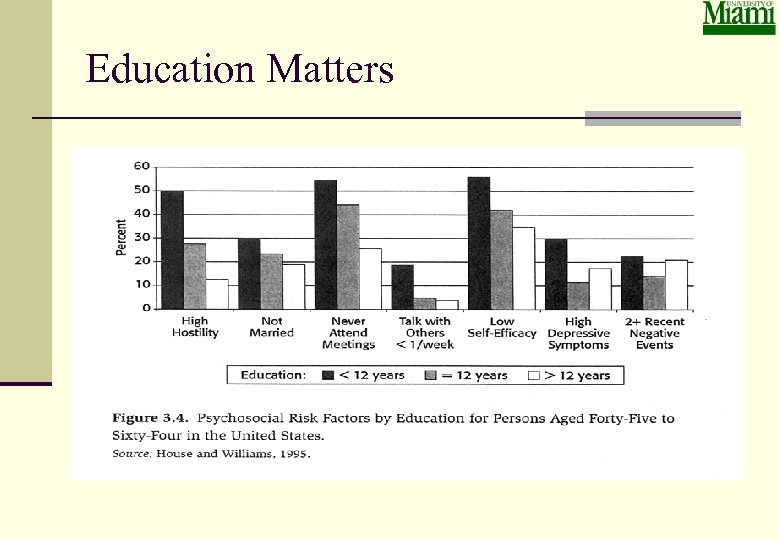
Education Matters
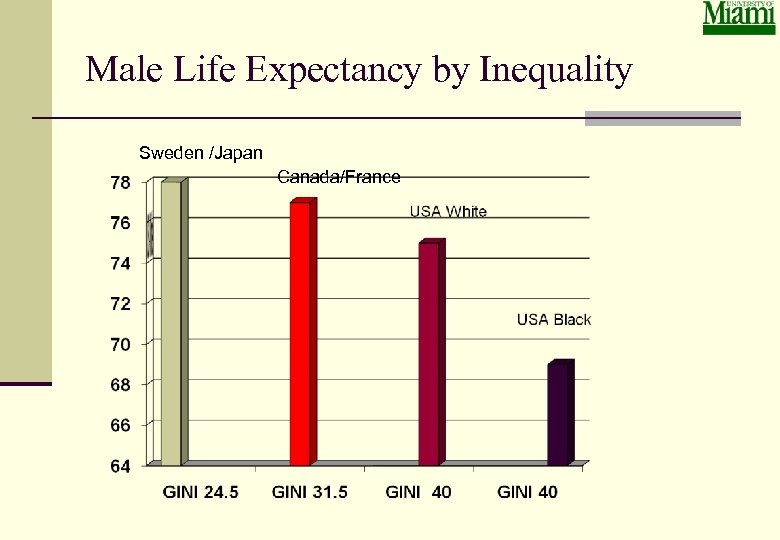
Male Life Expectancy by Inequality Sweden /Japan Canada/France
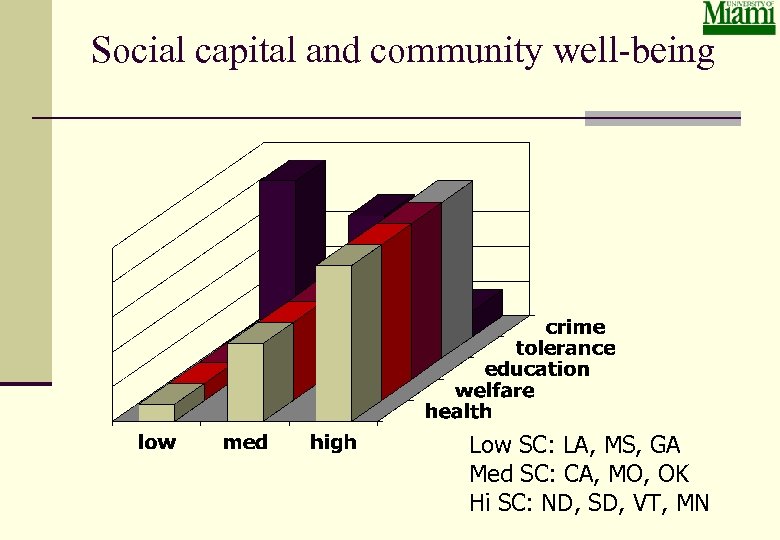
Social capital and community well-being Low SC: LA, MS, GA Med SC: CA, MO, OK Hi SC: ND, SD, VT, MN
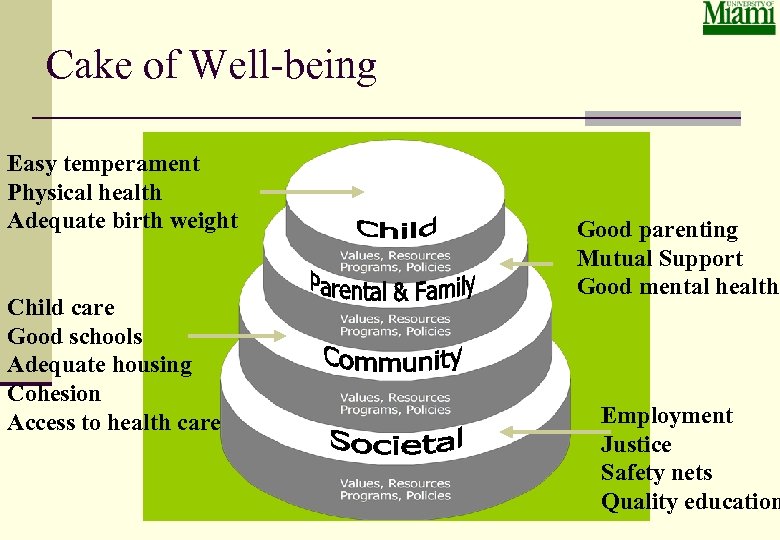
Cake of Well-being Easy temperament Physical health Adequate birth weight Child care Good schools Adequate housing Cohesion Access to health care Good parenting Mutual Support Good mental health Employment Justice Safety nets Quality education
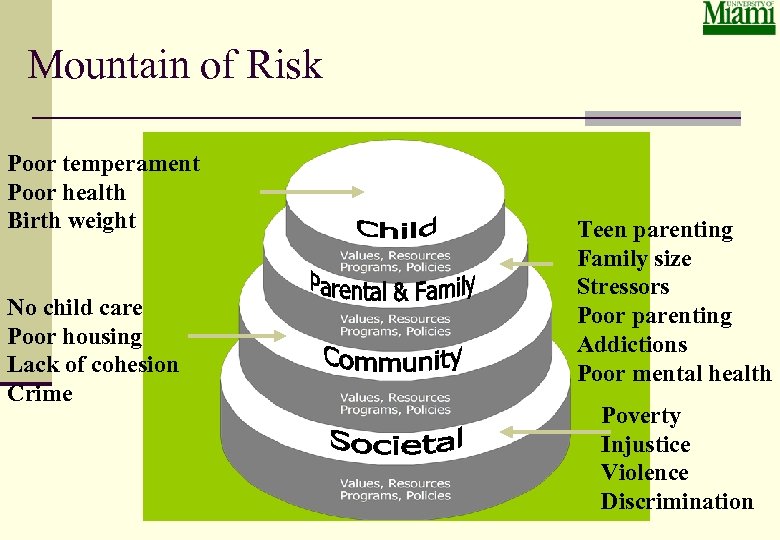
Mountain of Risk Poor temperament Poor health Birth weight No child care Poor housing Lack of cohesion Crime Teen parenting Family size Stressors Poor parenting Addictions Poor mental health Poverty Injustice Violence Discrimination
Part II Strategies for Well-Being
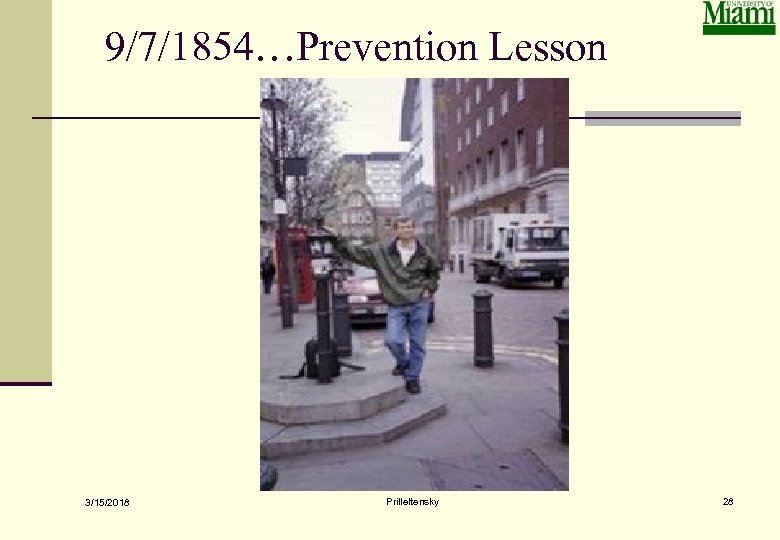
9/7/1854…Prevention Lesson 3/15/2018 Prilleltensky 28
Big wake up call!!! n No mass disorder, afflicting humankind, has ever been eliminated, or brought under control, by treating the affected individual n HIV/AIDS, crime, child abuse, poverty, teen pregnancy, are never eliminated one person at a time. n Cannot eliminate crime by treating the victim or the offender. Only solution is prevention. 3/15/2018 Prilleltensky 29
Education, health, community, and human services need investments that are: Less Draining of Resources n Deficits-based n Reactive n Alienating n Individual-focused More in line with SPEC n Strengths-based n Prevention n Empowerment n Community-focused From Prilleltensky, I. , & Prilleltensky, O. (2006). Promoting well-being: Linking personal, organizational, and community change. Wiley. 3/15/2018 Prilleltensky 30
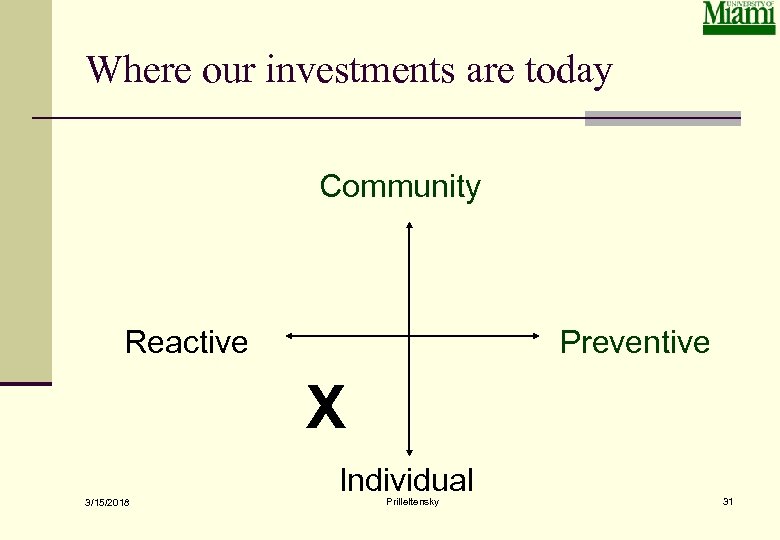
Where our investments are today Community Reactive Preventive X 3/15/2018 Individual Prilleltensky 31
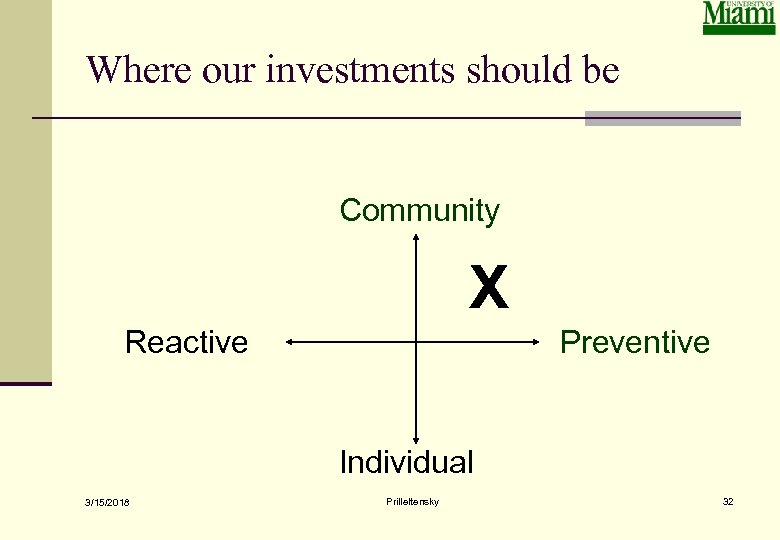
Where our investments should be Community X Reactive Preventive Individual 3/15/2018 Prilleltensky 32
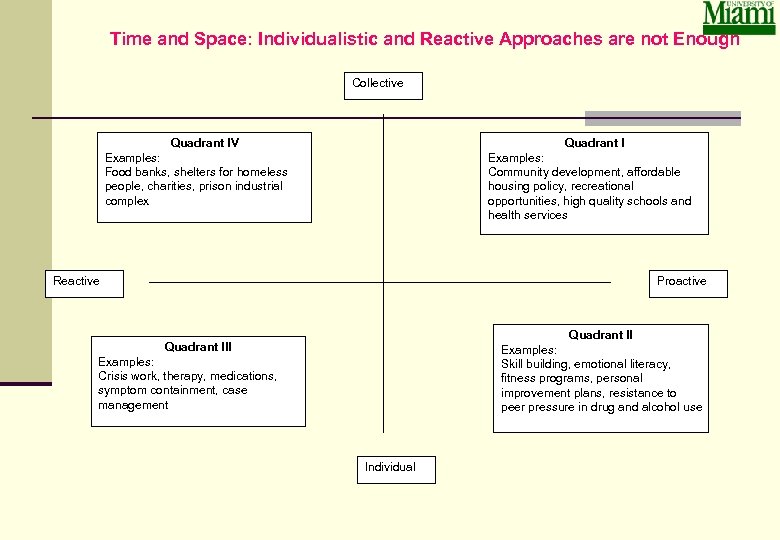
Time and Space: Individualistic and Reactive Approaches are not Enough Collective Quadrant IV Quadrant I Examples: Food banks, shelters for homeless people, charities, prison industrial complex Examples: Community development, affordable housing policy, recreational opportunities, high quality schools and health services Reactive Proactive Quadrant III Examples: Skill building, emotional literacy, fitness programs, personal improvement plans, resistance to peer pressure in drug and alcohol use Examples: Crisis work, therapy, medications, symptom containment, case management Individual
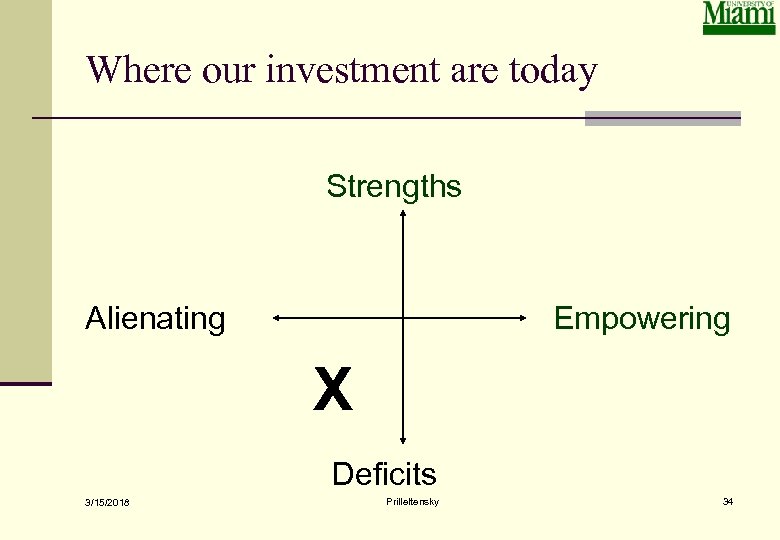
Where our investment are today Strengths Alienating Empowering X Deficits 3/15/2018 Prilleltensky 34
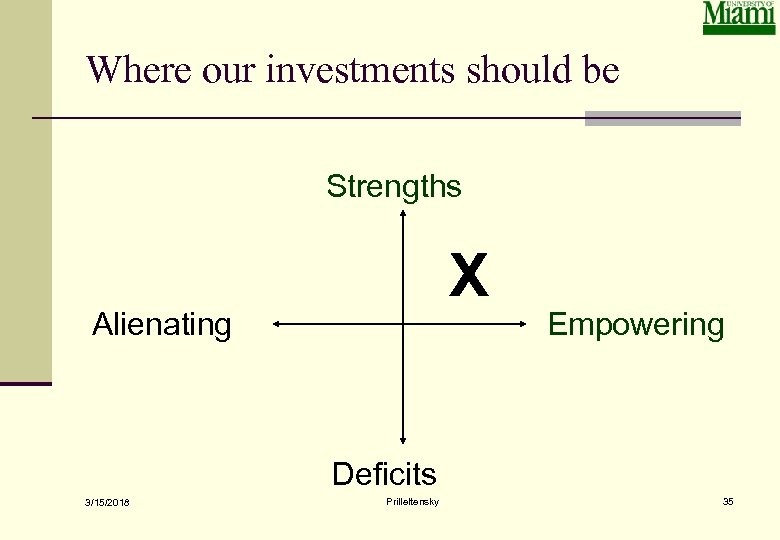
Where our investments should be Strengths X Alienating Empowering Deficits 3/15/2018 Prilleltensky 35
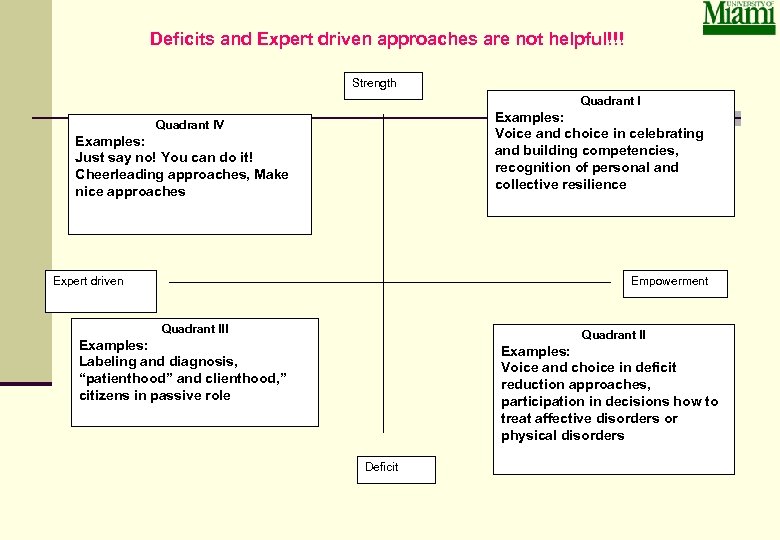
Deficits and Expert driven approaches are not helpful!!! Strength Quadrant I Examples: Voice and choice in celebrating and building competencies, recognition of personal and collective resilience Quadrant IV Examples: Just say no! You can do it! Cheerleading approaches, Make nice approaches Expert driven Empowerment Quadrant III Quadrant II Examples: Labeling and diagnosis, “patienthood” and clienthood, ” citizens in passive role Examples: Voice and choice in deficit reduction approaches, participation in decisions how to treat affective disorders or physical disorders Deficit
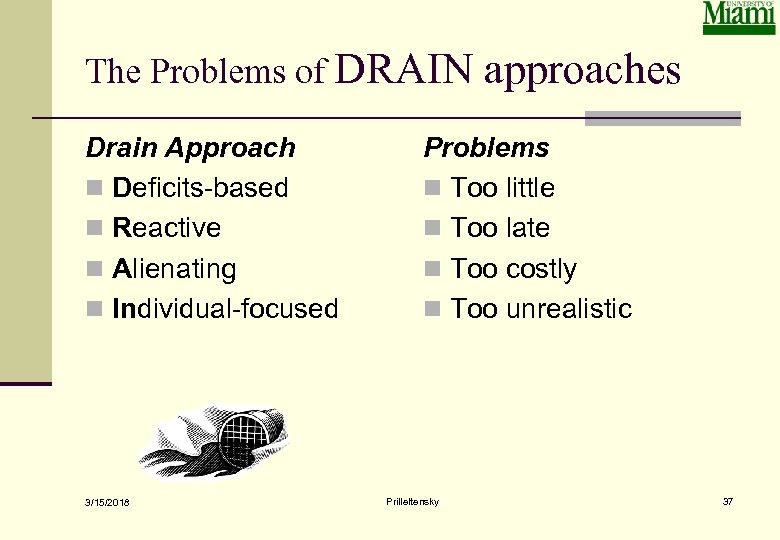
The Problems of DRAIN approaches Drain Approach n Deficits-based n Reactive n Alienating n Individual-focused 3/15/2018 Problems n Too little n Too late n Too costly n Too unrealistic Prilleltensky 37
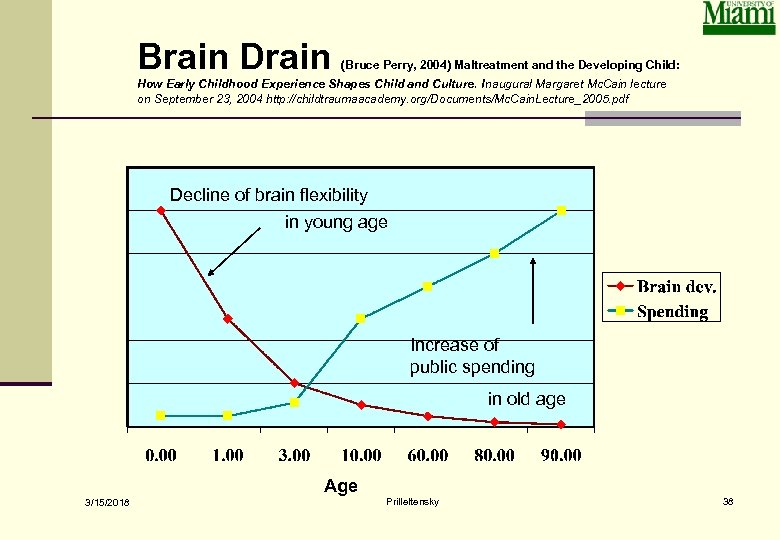
Brain Drain (Bruce Perry, 2004) Maltreatment and the Developing Child: How Early Childhood Experience Shapes Child and Culture. Inaugural Margaret Mc. Cain lecture on September 23, 2004 http: //childtraumaacademy. org/Documents/Mc. Cain. Lecture_2005. pdf Decline of brain flexibility in young age Increase of public spending in old age Age 3/15/2018 Prilleltensky 38
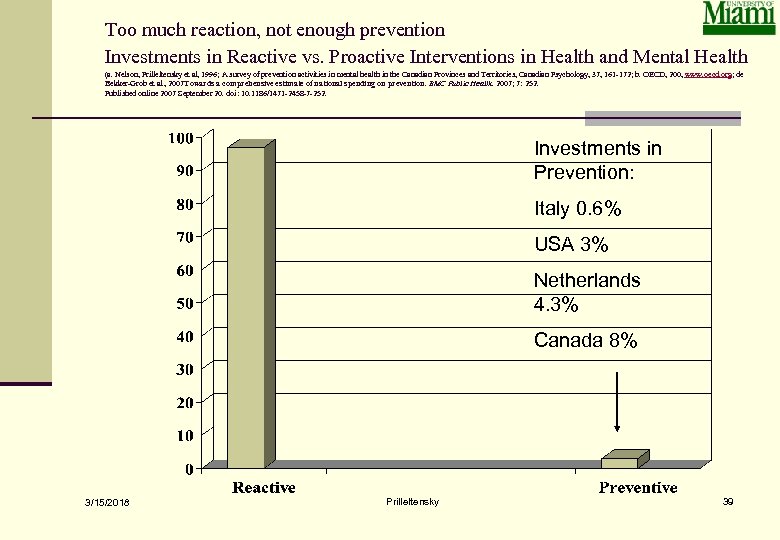
Too much reaction, not enough prevention Investments in Reactive vs. Proactive Interventions in Health and Mental Health (a. Nelson, Prilleltensky et al, 1996; A survey of prevention activities in mental health in the Canadian Provinces and Territories, Canadian Psychology, 37, 161 -172; b. OECD, 200, www. oecd. org; de Bekker-Grob et al. , 2007 Towards a comprehensive estimate of national spending on prevention. BMC Public Health. 2007; 7: 252. Published online 2007 September 20. doi: 10. 1186/1471 -2458 -7 -252. Investments in Prevention: Italy 0. 6% USA 3% Netherlands 4. 3% Canada 8% 3/15/2018 Prilleltensky 39
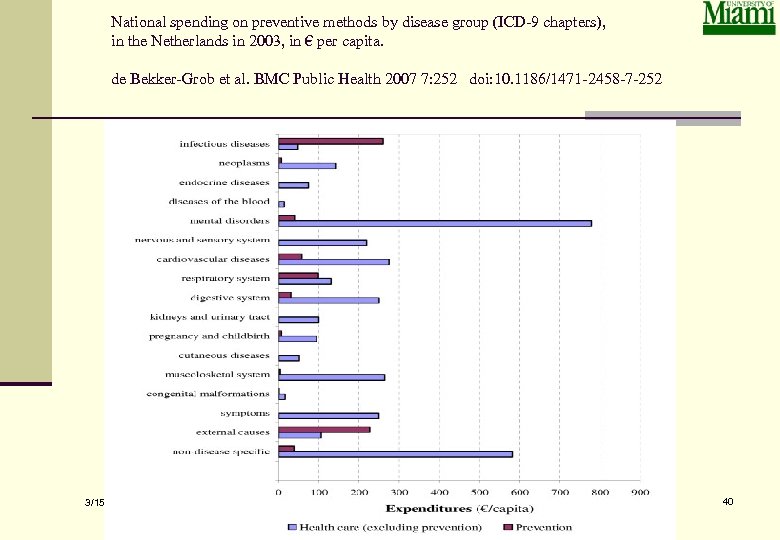
National spending on preventive methods by disease group (ICD-9 chapters), in the Netherlands in 2003, in € per capita. de Bekker-Grob et al. BMC Public Health 2007 7: 252 doi: 10. 1186/1471 -2458 -7 -252 3/15/2018 Prilleltensky 40
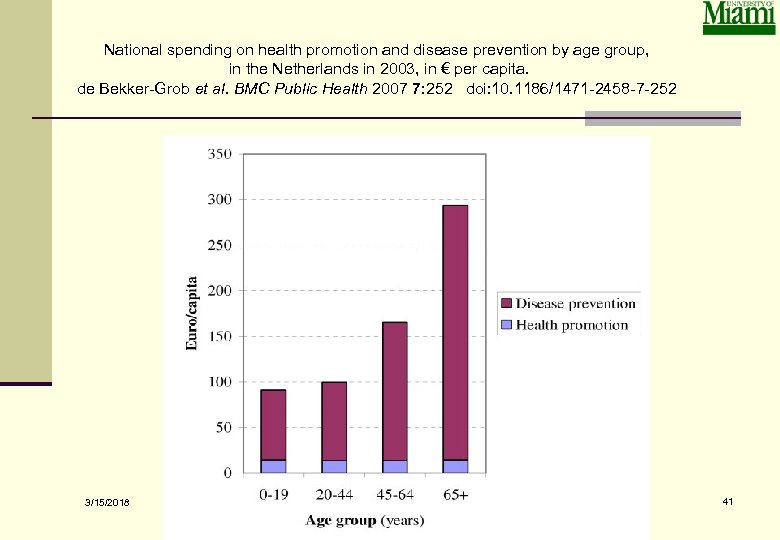
National spending on health promotion and disease prevention by age group, in the Netherlands in 2003, in € per capita. de Bekker-Grob et al. BMC Public Health 2007 7: 252 doi: 10. 1186/1471 -2458 -7 -252 3/15/2018 Prilleltensky 41
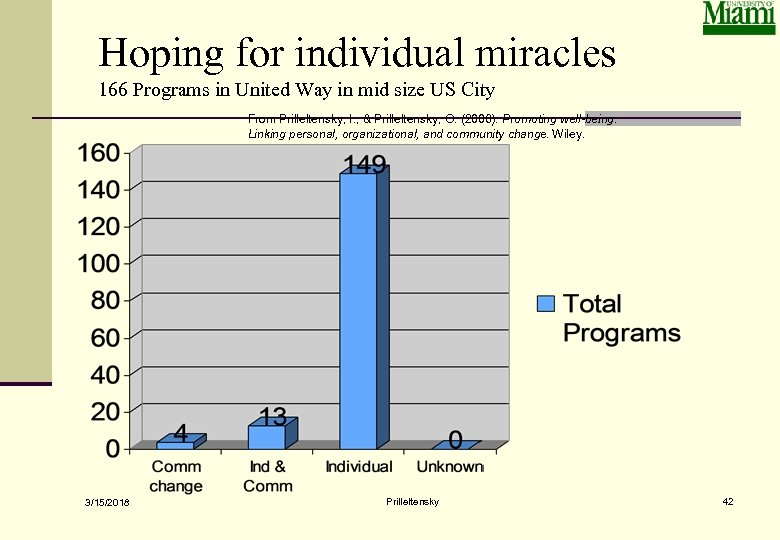
Hoping for individual miracles 166 Programs in United Way in mid size US City From Prilleltensky, I. , & Prilleltensky, O. (2006). Promoting well-being: Linking personal, organizational, and community change. Wiley. 3/15/2018 Prilleltensky 42
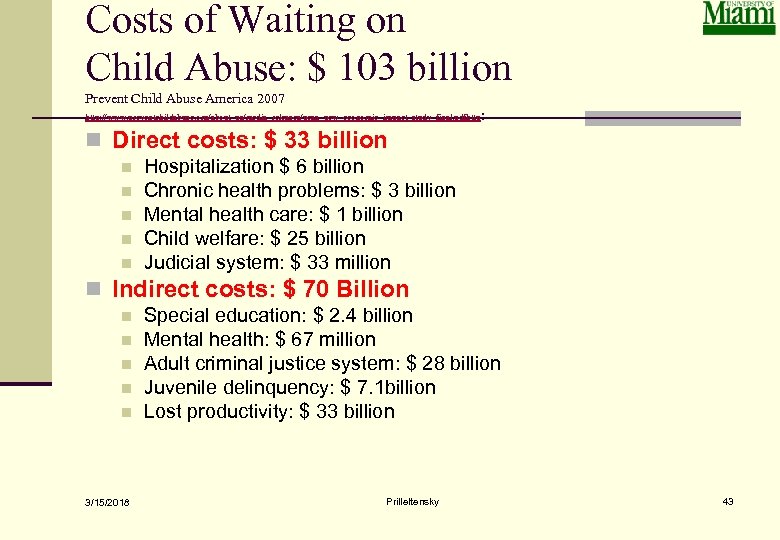
Costs of Waiting on Child Abuse: $ 103 billion Prevent Child Abuse America 2007 http: //www. preventchildabuse. org/about_us/media_releases/pcaa_pew_economic_impact_study_final. pdfhttp : n Direct costs: $ 33 billion n n Hospitalization $ 6 billion Chronic health problems: $ 3 billion Mental health care: $ 1 billion Child welfare: $ 25 billion Judicial system: $ 33 million n Indirect costs: $ 70 Billion n n 3/15/2018 Special education: $ 2. 4 billion Mental health: $ 67 million Adult criminal justice system: $ 28 billion Juvenile delinquency: $ 7. 1 billion Lost productivity: $ 33 billion Prilleltensky 43
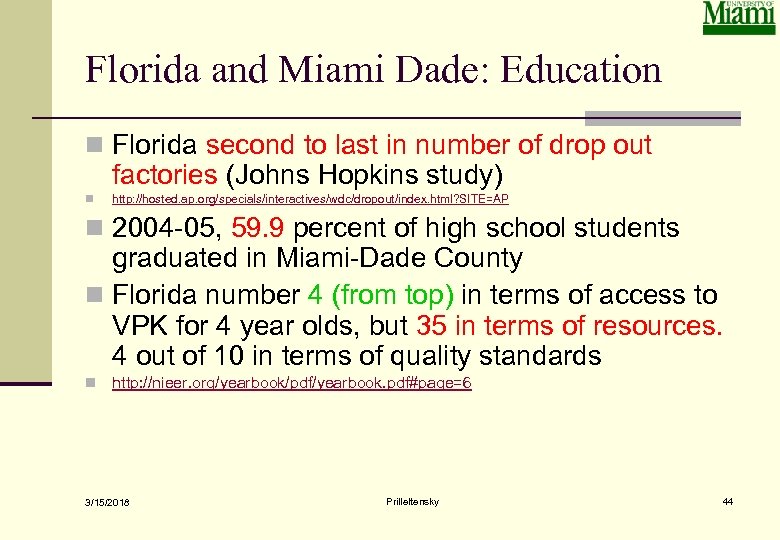
Florida and Miami Dade: Education n Florida second to last in number of drop out factories (Johns Hopkins study) n http: //hosted. ap. org/specials/interactives/wdc/dropout/index. html? SITE=AP n 2004 -05, 59. 9 percent of high school students graduated in Miami-Dade County n Florida number 4 (from top) in terms of access to VPK for 4 year olds, but 35 in terms of resources. 4 out of 10 in terms of quality standards n http: //nieer. org/yearbook/pdf/yearbook. pdf#page=6 3/15/2018 Prilleltensky 44
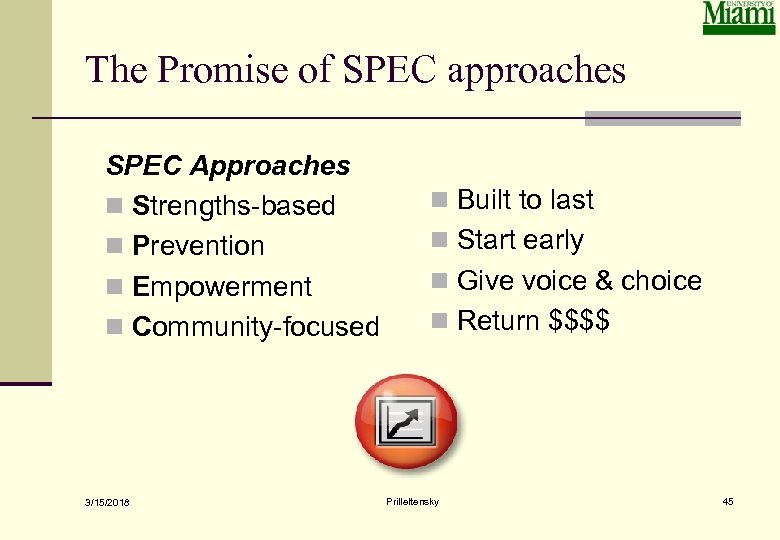
The Promise of SPEC approaches SPEC Approaches n Strengths-based n Prevention n Empowerment n Community-focused 3/15/2018 n Built to last n Start early n Give voice & choice n Return $$$$ Prilleltensky 45
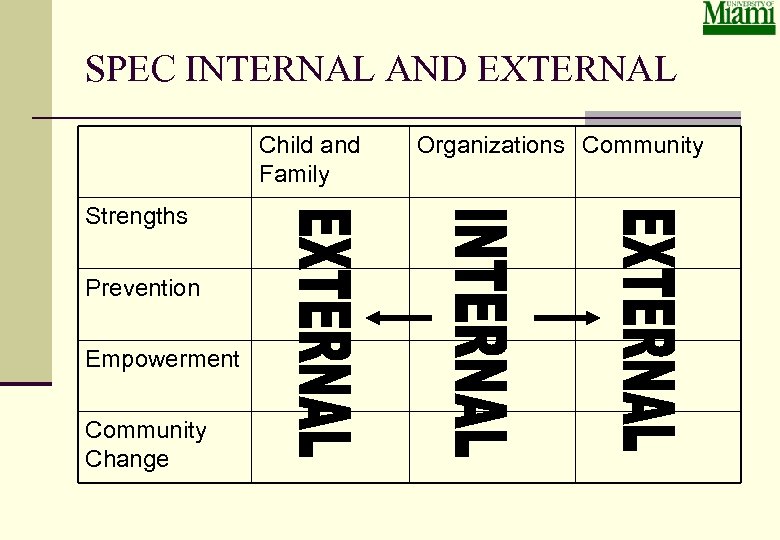
SPEC INTERNAL AND EXTERNAL Child and Family Strengths Prevention Empowerment Community Change Organizations Community
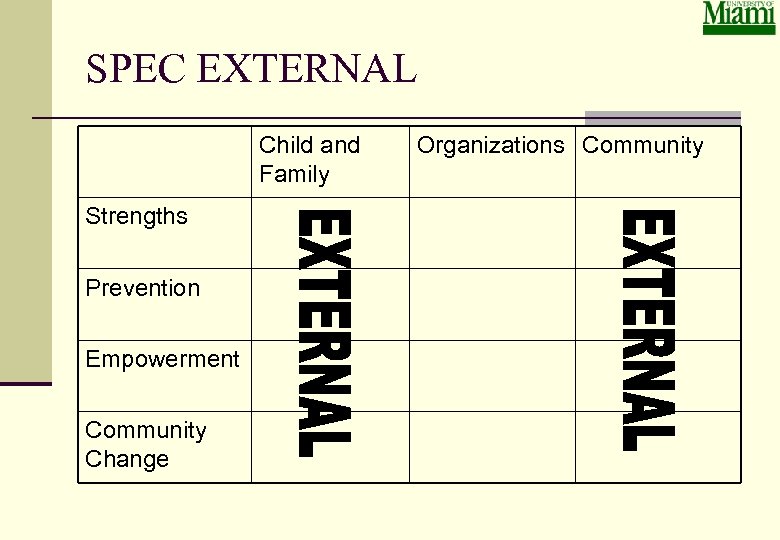
SPEC EXTERNAL Child and Family Strengths Prevention Empowerment Community Change Organizations Community
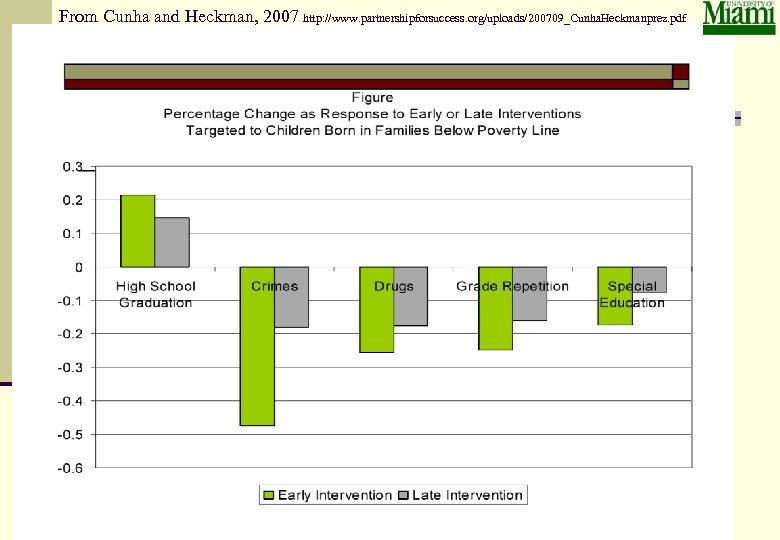
From Cunha and Heckman, 2007 http: //www. partnershipforsuccess. org/uploads/200709_Cunha. Heckmanprez. pdf 3/15/2018 Prilleltensky 48
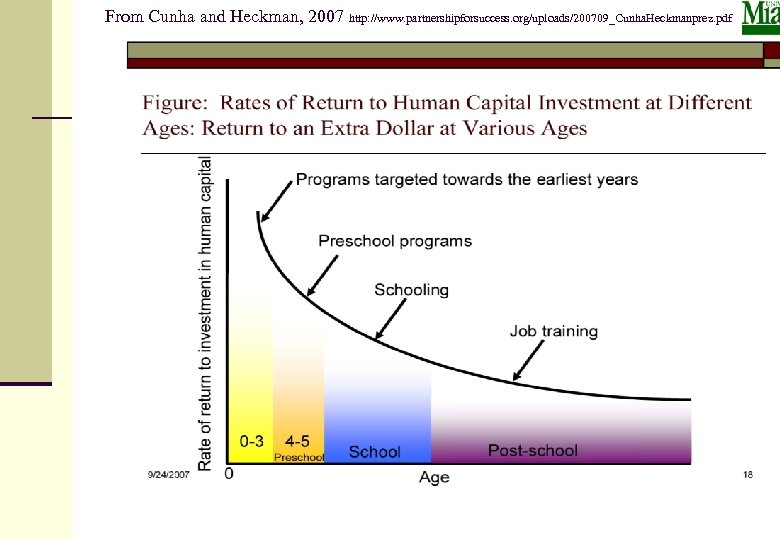
From Cunha and Heckman, 2007 http: //www. partnershipforsuccess. org/uploads/200709_Cunha. Heckmanprez. pdf 3/15/2018 Prilleltensky 49
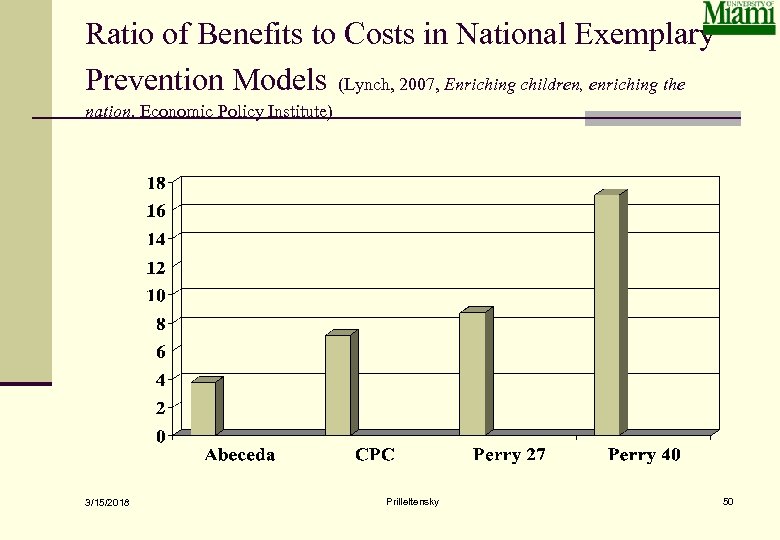
Ratio of Benefits to Costs in National Exemplary Prevention Models (Lynch, 2007, Enriching children, enriching the nation. Economic Policy Institute) 3/15/2018 Prilleltensky 50
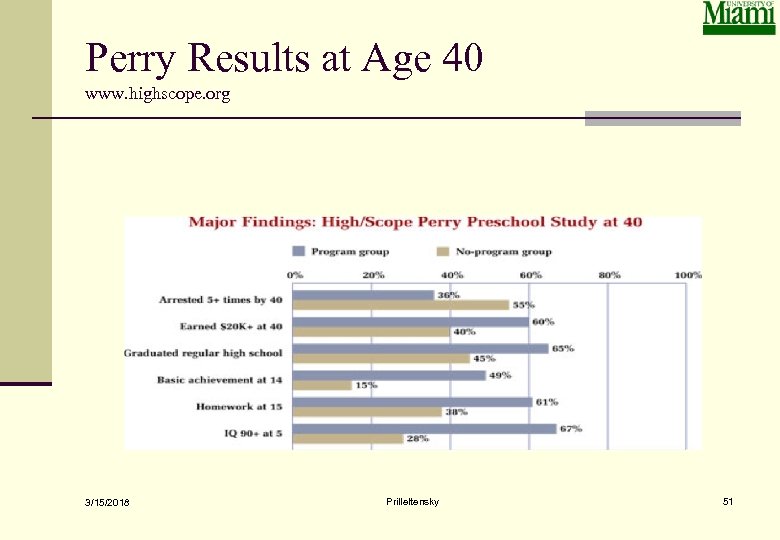
Perry Results at Age 40 www. highscope. org 3/15/2018 Prilleltensky 51
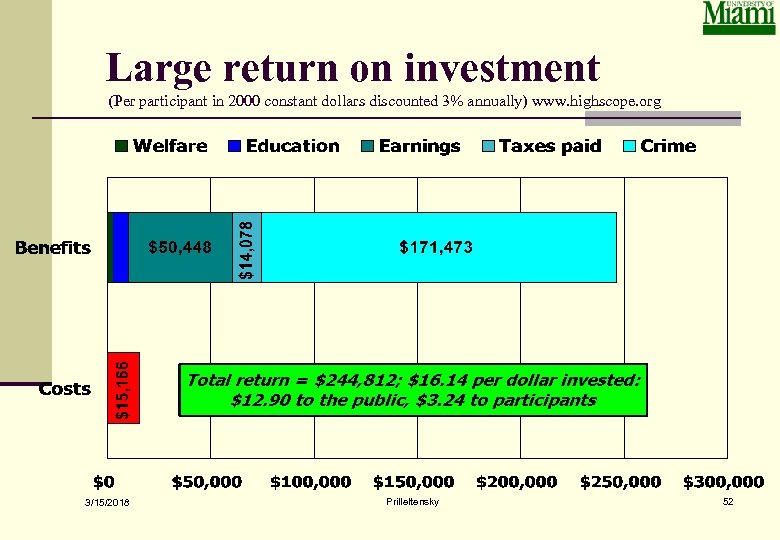
Large return on investment (Per participant in 2000 constant dollars discounted 3% annually) www. highscope. org 3/15/2018 Prilleltensky 52
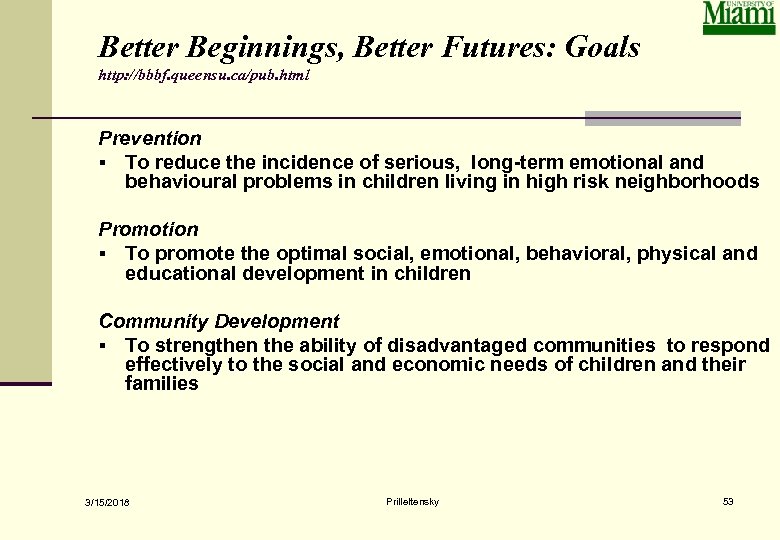
Better Beginnings, Better Futures: Goals http: //bbbf. queensu. ca/pub. html Prevention § To reduce the incidence of serious, long-term emotional and behavioural problems in children living in high risk neighborhoods Promotion § To promote the optimal social, emotional, behavioral, physical and educational development in children Community Development § To strengthen the ability of disadvantaged communities to respond effectively to the social and economic needs of children and their families 3/15/2018 Prilleltensky 53
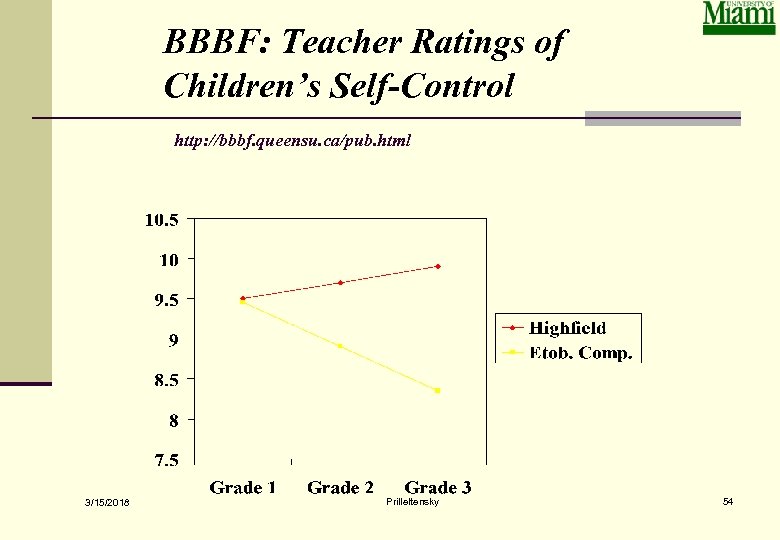
BBBF: Teacher Ratings of Children’s Self-Control http: //bbbf. queensu. ca/pub. html 3/15/2018 Prilleltensky 54
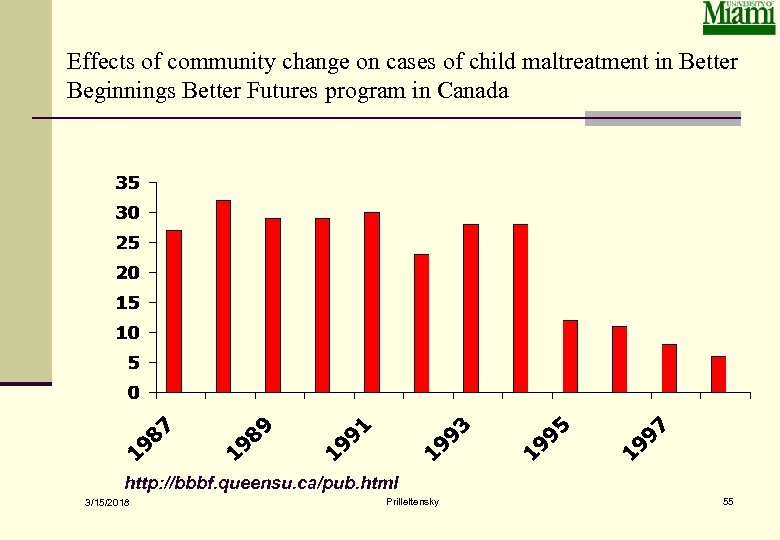
Effects of community change on cases of child maltreatment in Better Beginnings Better Futures program in Canada http: //bbbf. queensu. ca/pub. html 3/15/2018 Prilleltensky 55
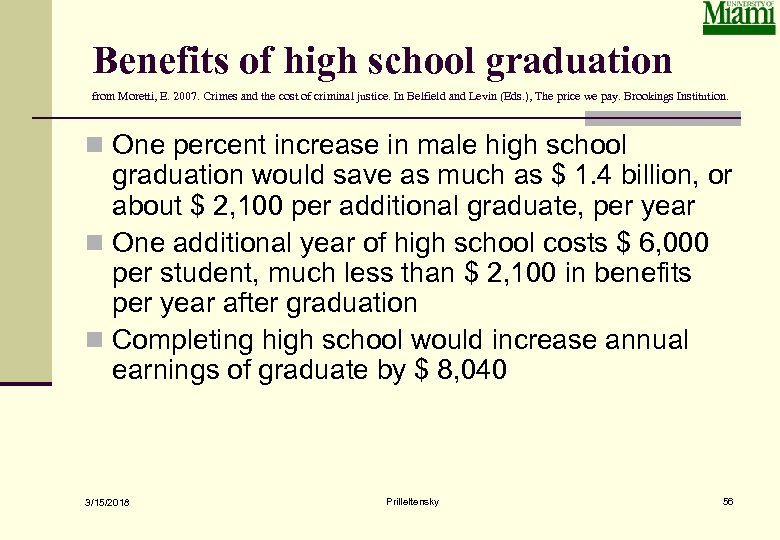
Benefits of high school graduation from Moretti, E. 2007. Crimes and the cost of criminal justice. In Belfield and Levin (Eds. ), The price we pay. Brookings Institution. n One percent increase in male high school graduation would save as much as $ 1. 4 billion, or about $ 2, 100 per additional graduate, per year n One additional year of high school costs $ 6, 000 per student, much less than $ 2, 100 in benefits per year after graduation n Completing high school would increase annual earnings of graduate by $ 8, 040 3/15/2018 Prilleltensky 56
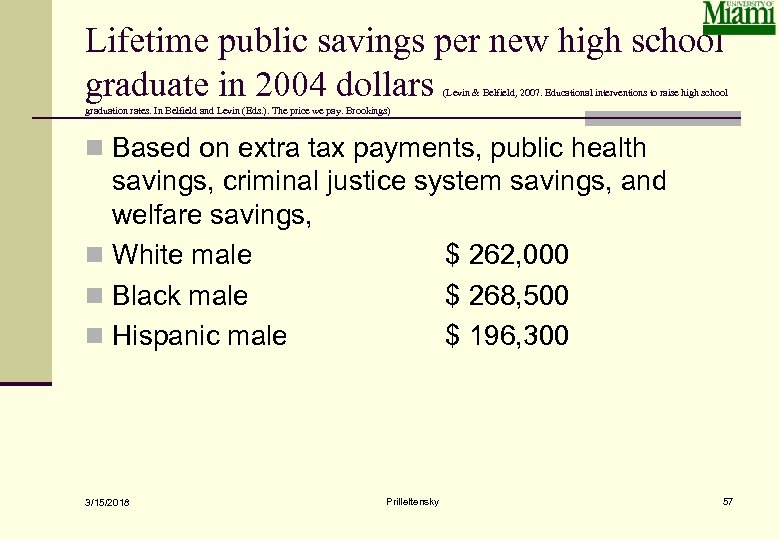
Lifetime public savings per new high school graduate in 2004 dollars (Levin & Belfield, 2007. Educational interventions to raise high school graduation rates. In Belfield and Levin (Eds. ). The price we pay. Brookings) n Based on extra tax payments, public health savings, criminal justice system savings, and welfare savings, n White male $ 262, 000 n Black male $ 268, 500 n Hispanic male $ 196, 300 3/15/2018 Prilleltensky 57
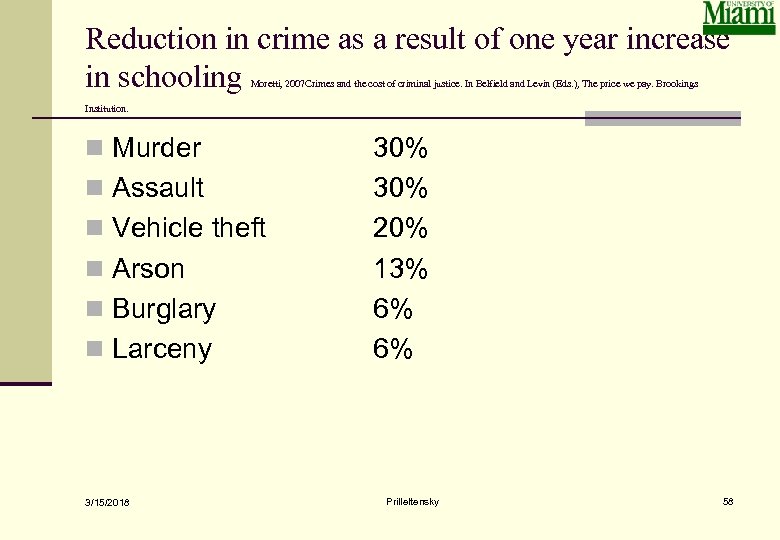
Reduction in crime as a result of one year increase in schooling Moretti, 2007 Crimes and the cost of criminal justice. In Belfield and Levin (Eds. ), The price we pay. Brookings Institution. n Murder n Assault n Vehicle theft n Arson n Burglary n Larceny 3/15/2018 30% 20% 13% 6% 6% Prilleltensky 58
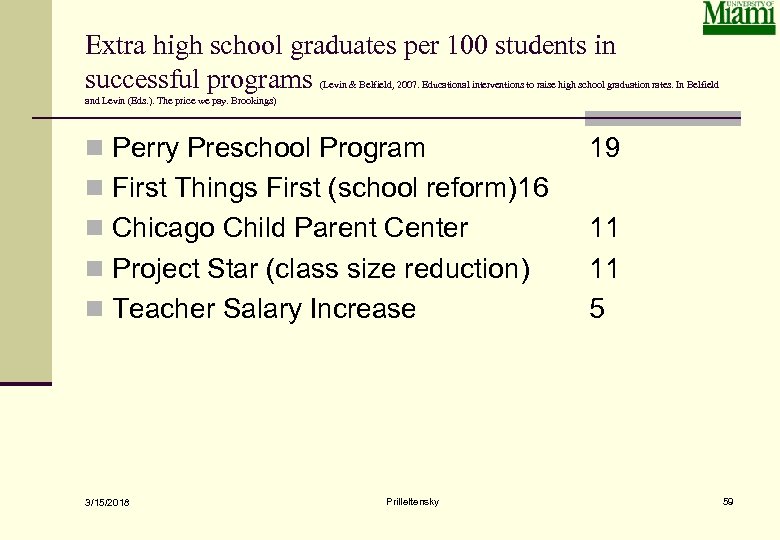
Extra high school graduates per 100 students in successful programs (Levin & Belfield, 2007. Educational interventions to raise high school graduation rates. In Belfield and Levin (Eds. ). The price we pay. Brookings) n Perry Preschool Program 19 n First Things First (school reform)16 n Chicago Child Parent Center n Project Star (class size reduction) n Teacher Salary Increase 3/15/2018 Prilleltensky 11 11 5 59
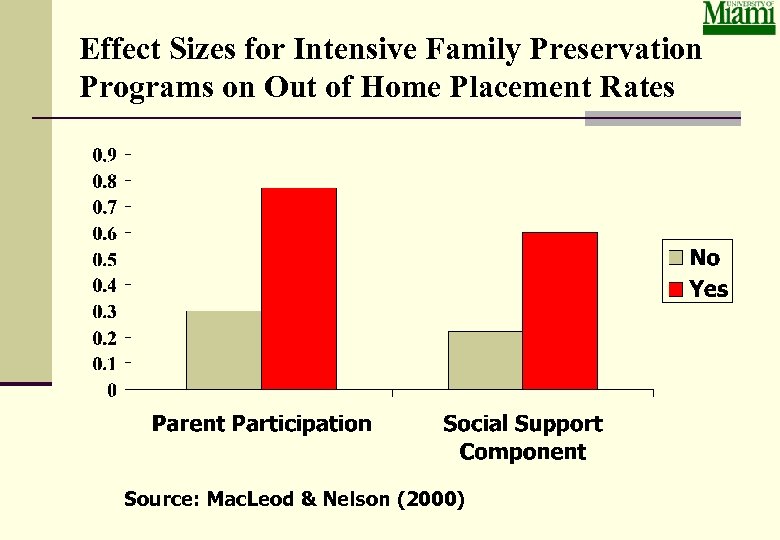
Effect Sizes for Intensive Family Preservation Programs on Out of Home Placement Rates Source: Mac. Leod & Nelson (2000)
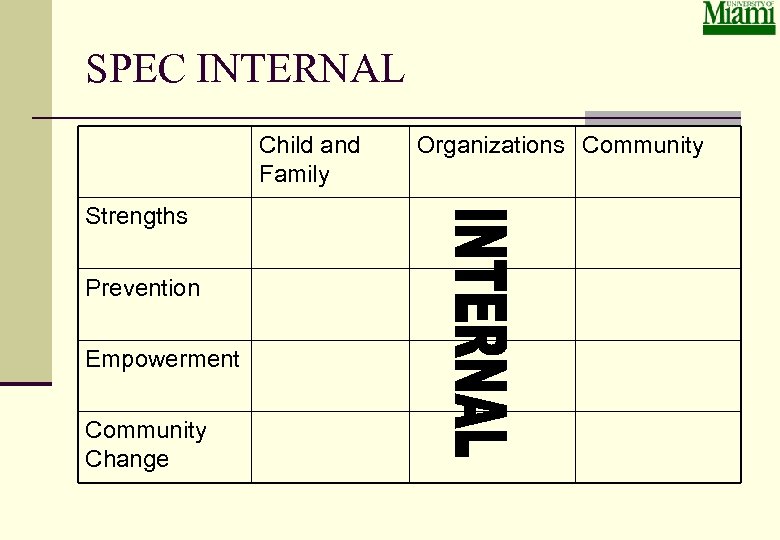
SPEC INTERNAL Child and Family Strengths Prevention Empowerment Community Change Organizations Community
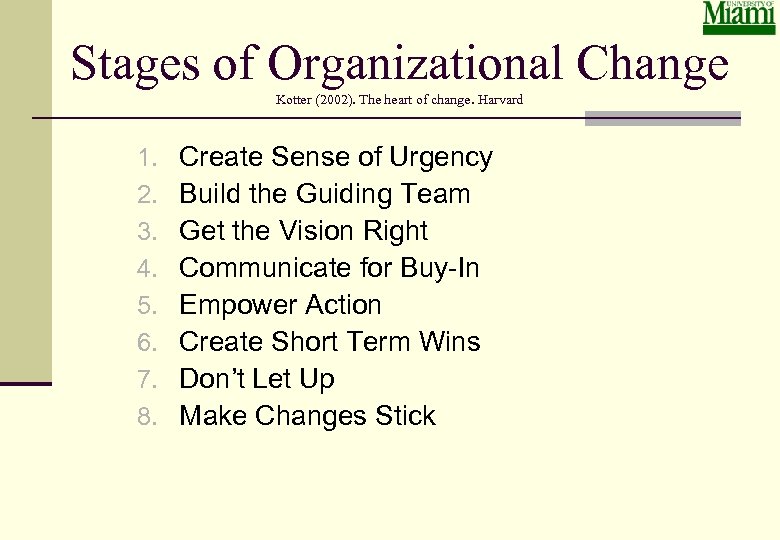
Stages of Organizational Change Kotter (2002). The heart of change. Harvard 1. 2. 3. 4. 5. 6. 7. 8. Create Sense of Urgency Build the Guiding Team Get the Vision Right Communicate for Buy-In Empower Action Create Short Term Wins Don’t Let Up Make Changes Stick
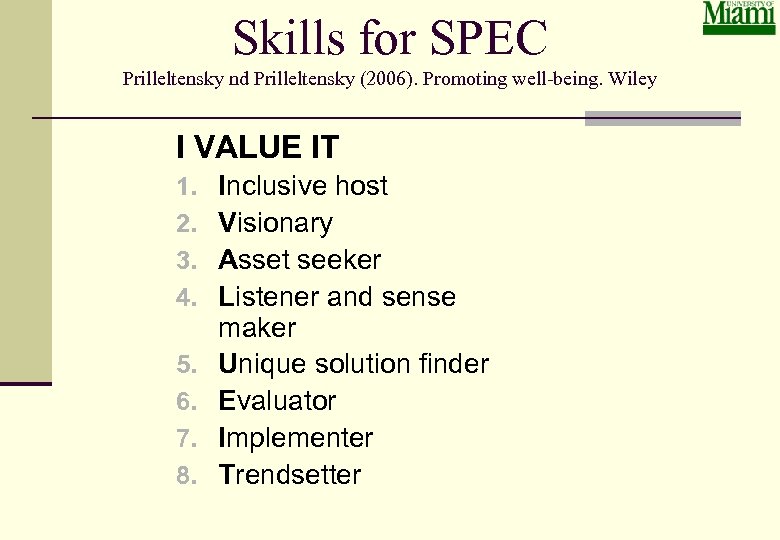
Skills for SPEC Prilleltensky nd Prilleltensky (2006). Promoting well-being. Wiley I VALUE IT 1. 2. 3. 4. 5. 6. 7. 8. Inclusive host Visionary Asset seeker Listener and sense maker Unique solution finder Evaluator Implementer Trendsetter
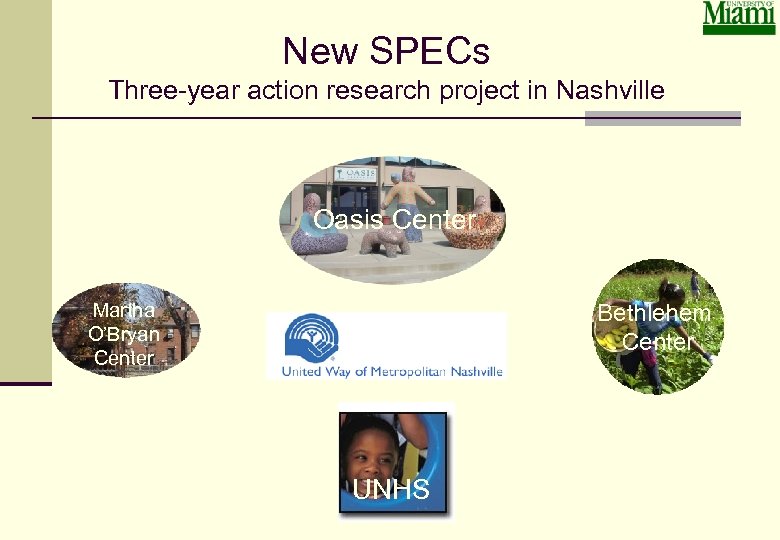
New SPECs Three-year action research project in Nashville Oasis Center Martha O’Bryan Center Bethlehem Center UNHS
Outcomes of NEW SPECS PROJECT n New mission statements n New outreach programs n More youth and client involvement n Assessment of projects in light of SPEC n More prevention efforts n Empowered counselors n Blending of therapy with social change
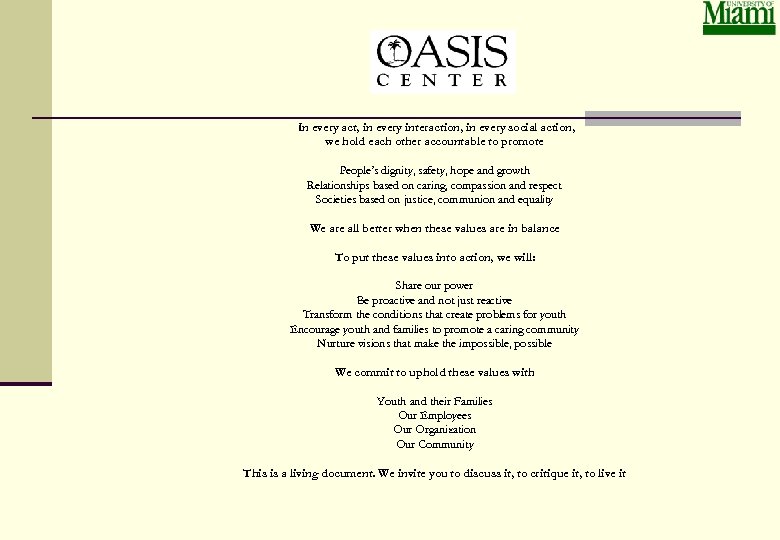
In every act, in every interaction, in every social action, we hold each other accountable to promote People’s dignity, safety, hope and growth Relationships based on caring, compassion and respect Societies based on justice, communion and equality We are all better when these values are in balance To put these values into action, we will: Share our power Be proactive and not just reactive Transform the conditions that create problems for youth Encourage youth and families to promote a caring community Nurture visions that make the impossible, possible We commit to uphold these values with Youth and their Families Our Employees Our Organization Our Community This is a living document. We invite you to discuss it, to critique it, to live it
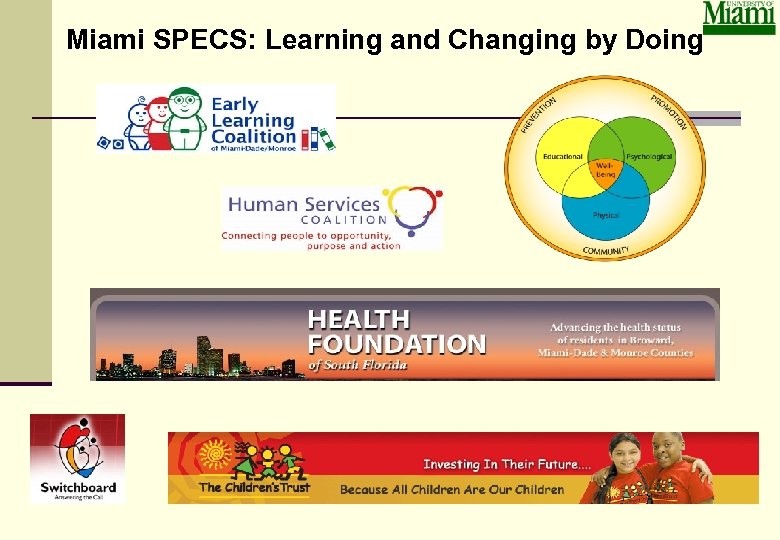
Miami SPECS: Learning and Changing by Doing
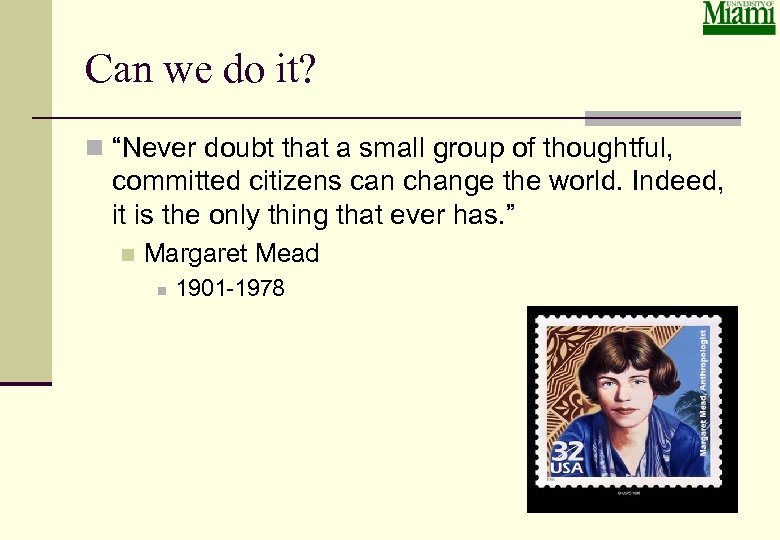
Can we do it? n “Never doubt that a small group of thoughtful, committed citizens can change the world. Indeed, it is the only thing that ever has. ” n Margaret Mead n 1901 -1978
Скачать презентацию Promoting Well-Being in Children and Youth Linking Personal
58d3144323a546b658acd60ad7d8ccbb.ppt