


 Скачать презентацию Promoting use of effective medicines supply strategies in
3b53a269b690a9c9e2ab0fd68fa5f828.ppt
- Количество слайдов: 27
 Promoting use of effective medicines supply strategies in Africa Multi-country study on drug supply and distribution activities of faith-based supply organizations in sub-Saharan African countries, 2003 Sophie Logez / Marthe Everard EDM/PAR
 Outline Objectives ¡ Methodology ¡ Results ¡ Next step ¡
 Objectives of the MC Study ¡ Document experiences and practices of FB DSOs ¡ Strengthen EPN’s technical capacity by evaluating drug supply systems existing in the Network ¡ Strengthen collaboration between WHO/EDM and EPN
 Outline Objectives ¡ Methodology ¡ Results ¡ Next step ¡
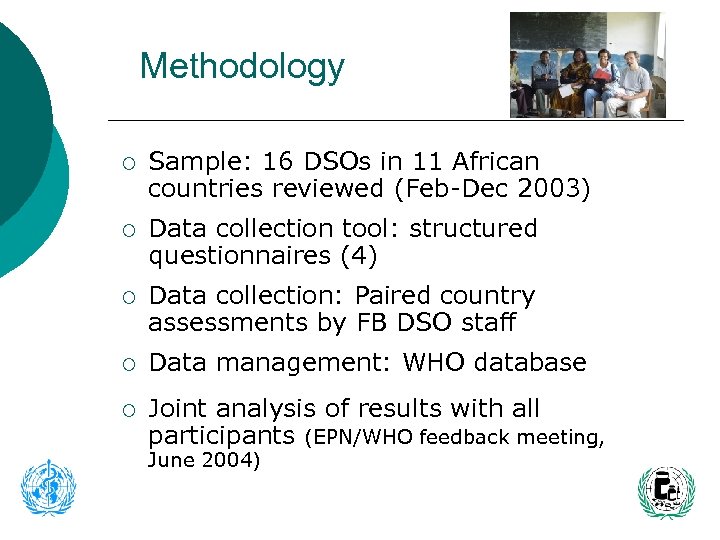 Methodology ¡ Sample: 16 DSOs in 11 African countries reviewed (Feb-Dec 2003) ¡ Data collection tool: structured questionnaires (4) ¡ Data collection: Paired country assessments by FB DSO staff ¡ Data management: WHO database ¡ Joint analysis of results with all participants (EPN/WHO feedback meeting, June 2004)
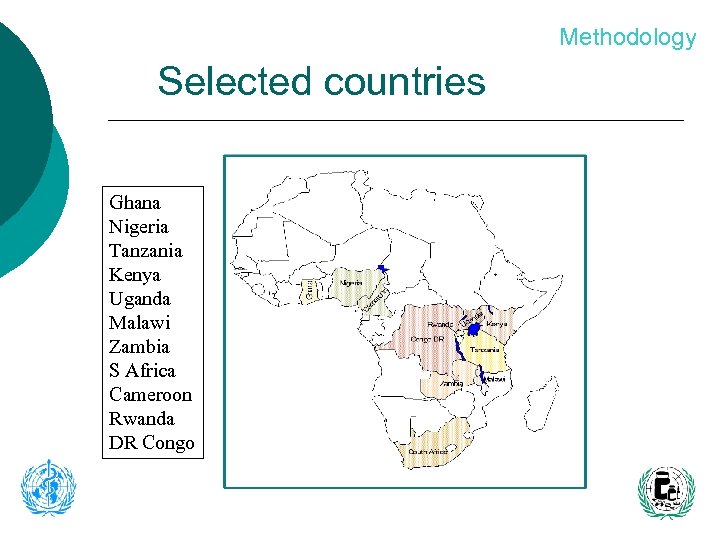 Methodology Selected countries Ghana Nigeria Tanzania Kenya Uganda Malawi Zambia S Africa Cameroon Rwanda DR Congo
 Issues Investigated ¡ ¡ ¡ Methodology Role, functions and perspectives of DSOs Procurement management Founding Bodies's opinion Government’s view Customer's view
 Outline ¡ ¡ Objectives Methodology Results Next step
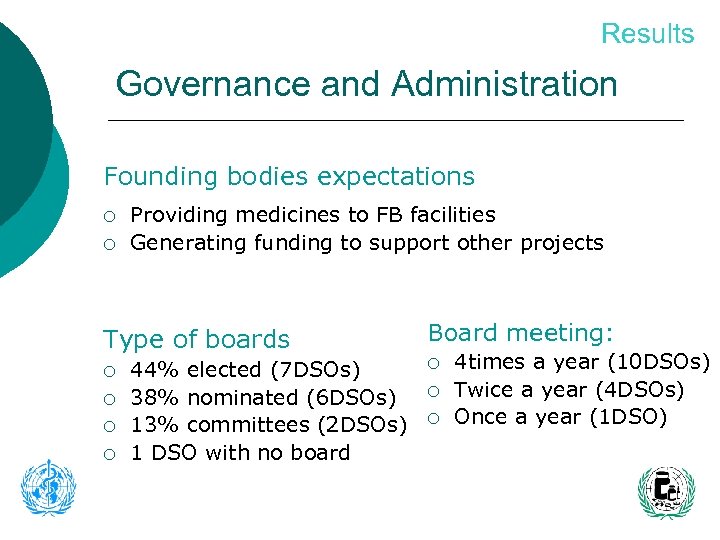 Results Governance and Administration Founding bodies expectations ¡ ¡ Providing medicines to FB facilities Generating funding to support other projects Type of boards ¡ ¡ 44% elected (7 DSOs) 38% nominated (6 DSOs) 13% committees (2 DSOs) 1 DSO with no board Board meeting: ¡ ¡ ¡ 4 times a year (10 DSOs) Twice a year (4 DSOs) Once a year (1 DSO)
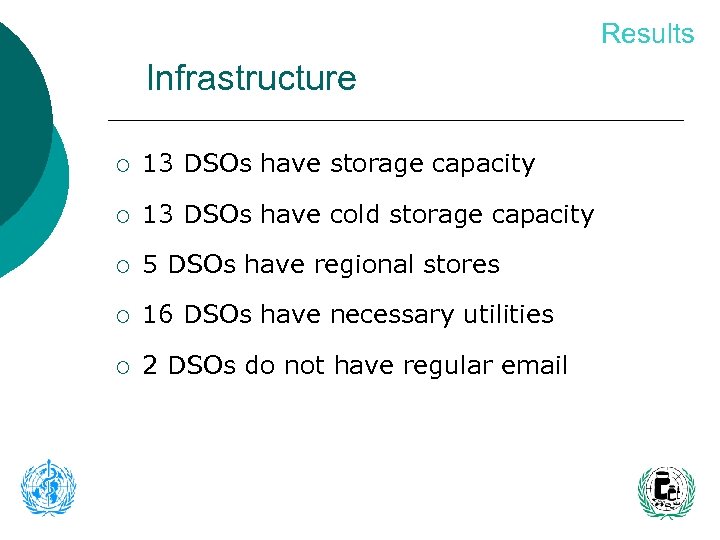 Results Infrastructure ¡ 13 DSOs have storage capacity ¡ 13 DSOs have cold storage capacity ¡ 5 DSOs have regional stores ¡ 16 DSOs have necessary utilities ¡ 2 DSOs do not have regular email
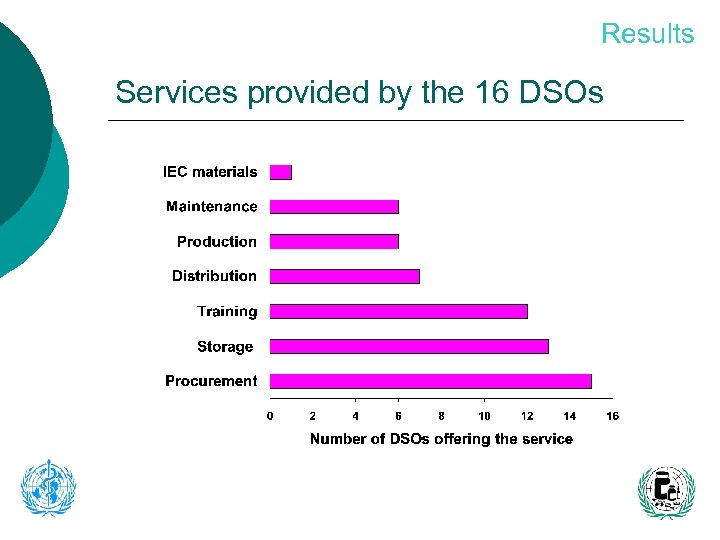 Results Services provided by the 16 DSOs
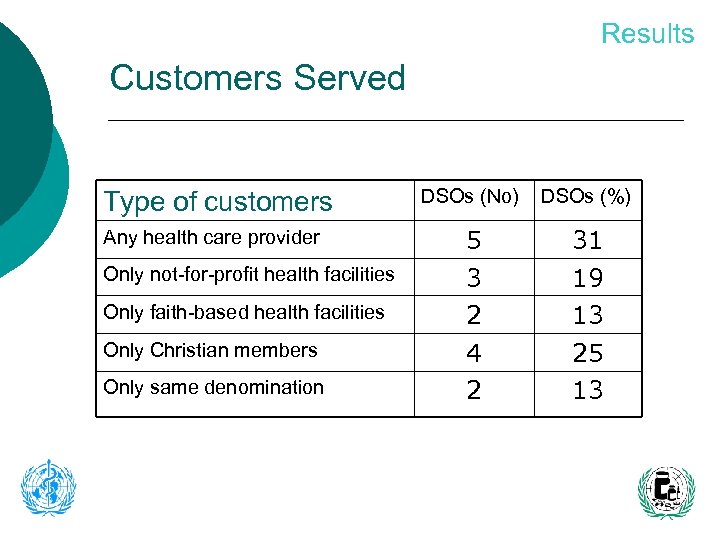 Results Customers Served DSOs (No) DSOs (%) Any health care provider 5 31 Only not-for-profit health facilities 3 2 19 13 4 2 25 13 Type of customers Only faith-based health facilities Only Christian members Only same denomination
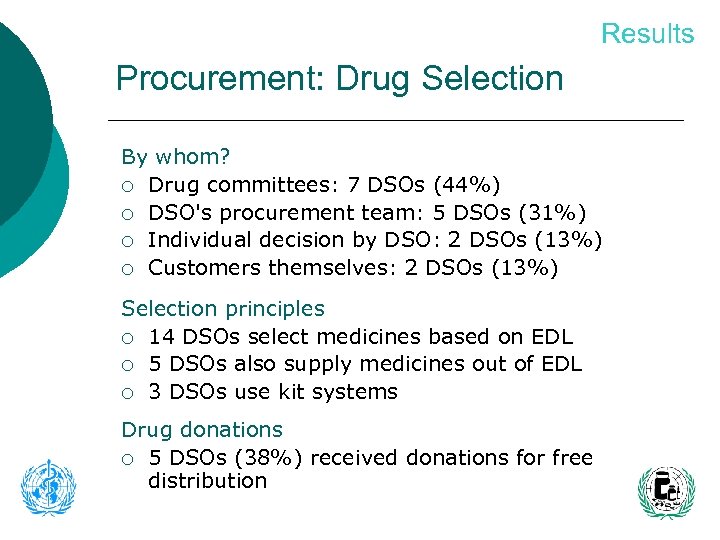 Results Procurement: Drug Selection By whom? ¡ Drug committees: 7 DSOs (44%) ¡ DSO's procurement team: 5 DSOs (31%) ¡ Individual decision by DSO: 2 DSOs (13%) ¡ Customers themselves: 2 DSOs (13%) Selection principles ¡ 14 DSOs select medicines based on EDL ¡ 5 DSOs also supply medicines out of EDL ¡ 3 DSOs use kit systems Drug donations ¡ 5 DSOs (38%) received donations for free distribution
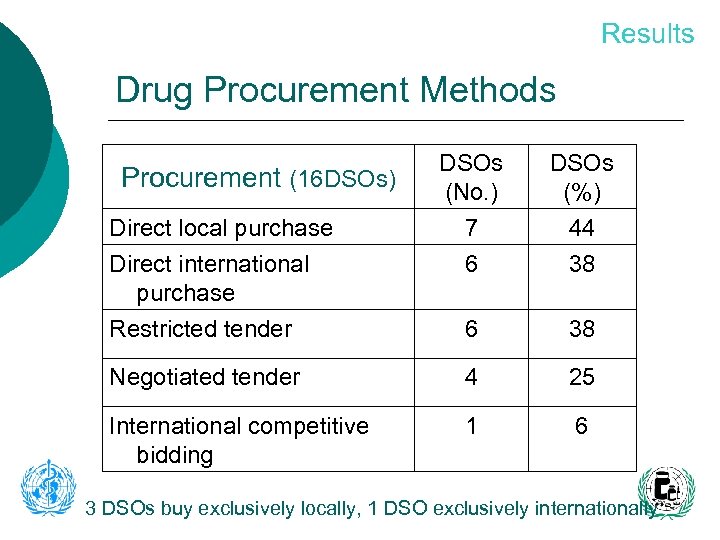 Results Drug Procurement Methods DSOs (No. ) DSOs (%) Direct local purchase Direct international purchase 7 6 44 38 Restricted tender 6 38 Negotiated tender 4 25 International competitive bidding 1 6 Procurement (16 DSOs) 3 DSOs buy exclusively locally, 1 DSO exclusively internationally
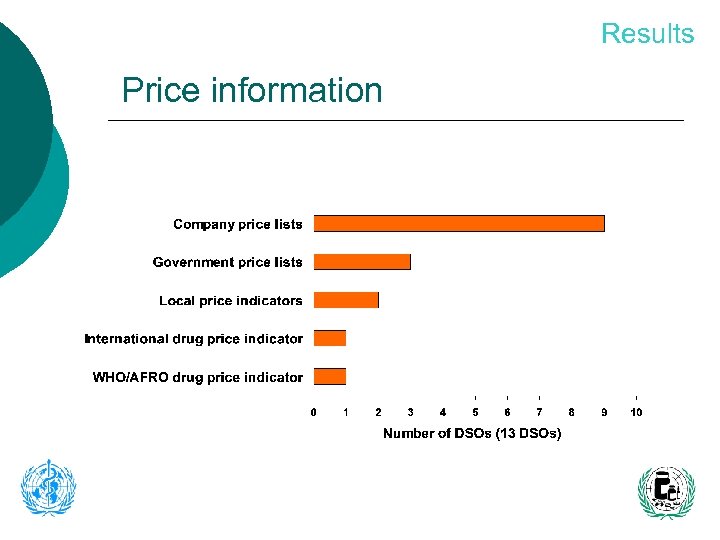 Results Price information
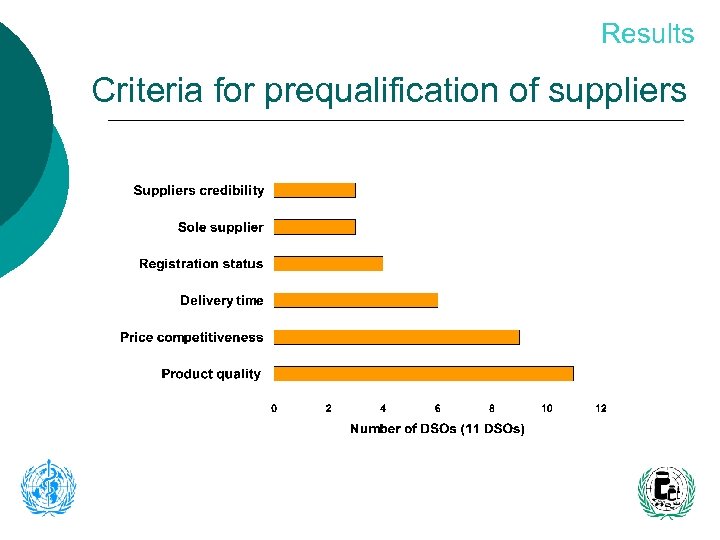 Results Criteria for prequalification of suppliers
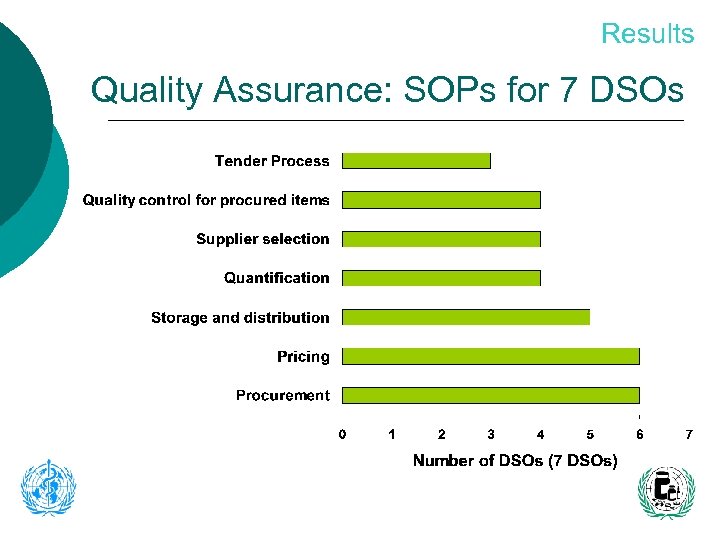 Results Quality Assurance: SOPs for 7 DSOs
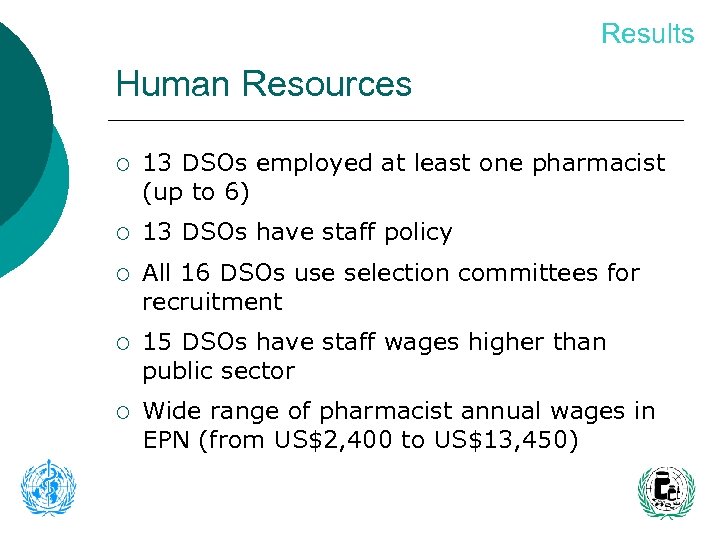 Results Human Resources ¡ 13 DSOs employed at least one pharmacist (up to 6) ¡ 13 DSOs have staff policy ¡ All 16 DSOs use selection committees for recruitment ¡ 15 DSOs have staff wages higher than public sector ¡ Wide range of pharmacist annual wages in EPN (from US$2, 400 to US$13, 450)
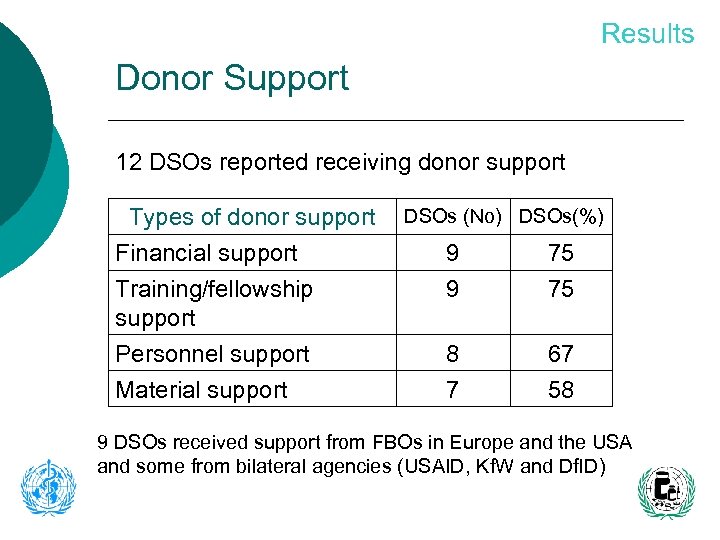 Results Donor Support 12 DSOs reported receiving donor support Types of donor support Financial support Training/fellowship support Personnel support Material support DSOs (No) DSOs(%) 9 9 75 75 8 7 67 58 9 DSOs received support from FBOs in Europe and the USA and some from bilateral agencies (USAID, Kf. W and Df. ID)
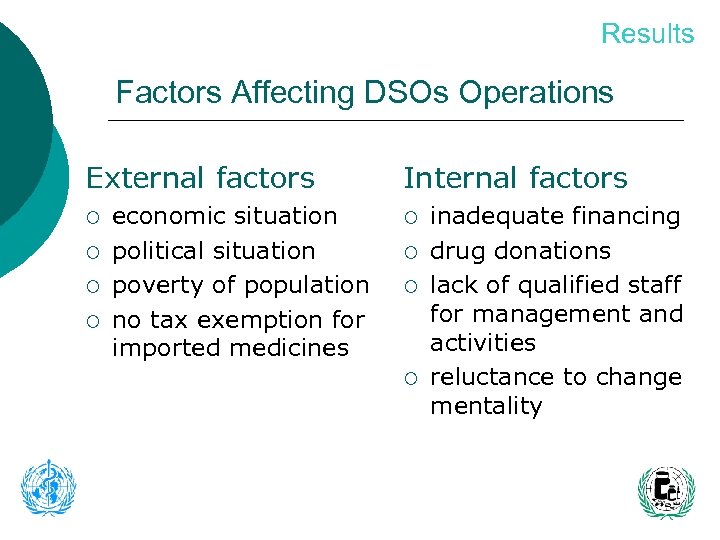 Results Factors Affecting DSOs Operations External factors ¡ ¡ economic situation political situation poverty of population no tax exemption for imported medicines Internal factors ¡ ¡ inadequate financing drug donations lack of qualified staff for management and activities reluctance to change mentality
 Results Governments’ view ¡ ¡ Acknowledge great contribution of FB DSOs to national drug supply system Lack of formal reporting/communication Lack of formal collaboration Perception of governments: l l quality of medicines supplied by FB DSOs questioned distribution of donated medicines not always found appropriate
 Results Customers’ view Good quality of medicines ¡ Medicines supplied ¡ l l ¡ Need for technical assistance l l ¡ quantities (50 - 75% of needs met) range of items (to be increased) regular supervision training (drug management/RDU) Better communication/relation
 Results Future Perspectives (1) Objectives for 15 DSOs: l l l Increase number of customers: 12 DSOs (80%) Improve delivery services for customers: 7 DSOs (47%) Collaborate with other DSOs: 7 DSOs (47%)
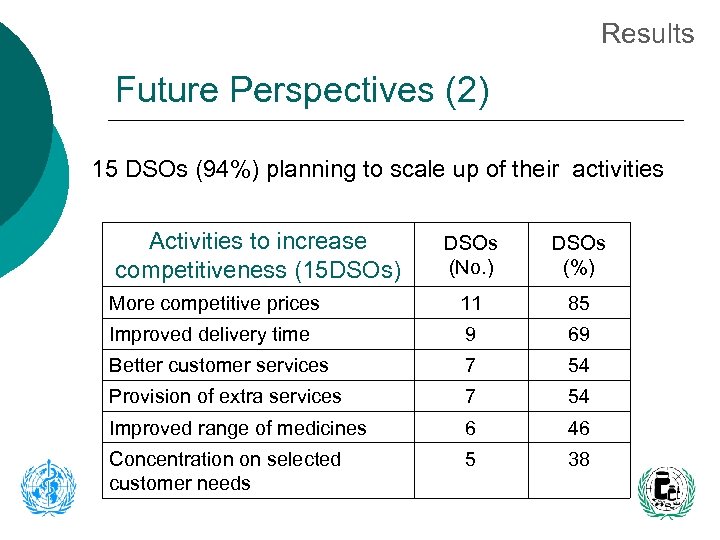 Results Future Perspectives (2) 15 DSOs (94%) planning to scale up of their activities Activities to increase competitiveness (15 DSOs) DSOs (No. ) DSOs (%) More competitive prices 11 85 Improved delivery time 9 69 Better customer services 7 54 Provision of extra services 7 54 Improved range of medicines 6 46 Concentration on selected customer needs 5 38
 Outline ¡ ¡ Objectives Methodology Results Next step
 Next step: Feedback meeting June 2004 l Recommendations drafted Quality assurance (SOPs) ¡ Sustainability of DSOs (financial/organizational) ¡ Training (sharing tools) ¡ Procurement and storage capacity ¡ Collaboration (DSOs/EPN) ¡ Distribution service (feasibility study) ¡ l Activities identified for DSOs/EPN/wider sector
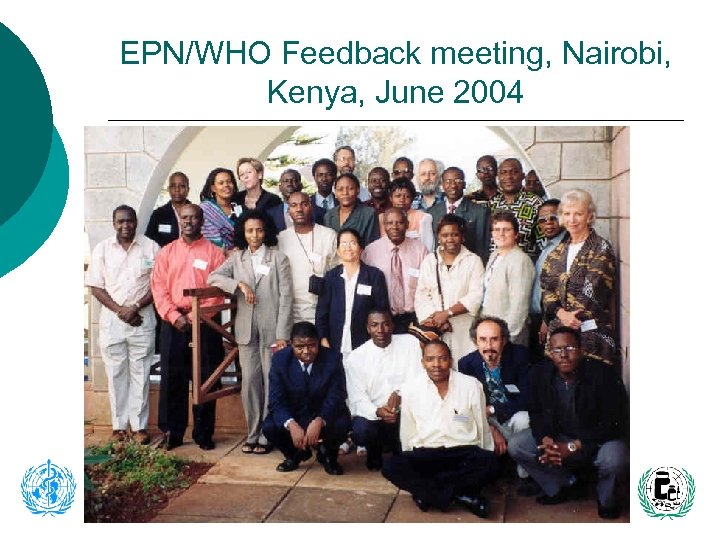 EPN/WHO Feedback meeting, Nairobi, Kenya, June 2004