


 Скачать презентацию Prokaryotes And Eukaryotes All living organisms are classified
fb787a2455e54e1c41ffeaa1774aaafd.ppt
- Количество слайдов: 36
 Prokaryotes And Eukaryotes All living organisms are classified into two broad categories, prokaryotes & eukaryote. Prokaryotes are those organisms whose cells lack a cell nucleus while eukaryotes possess a well-defined, membrane bound nucleus. Deepa John Harini Chandra
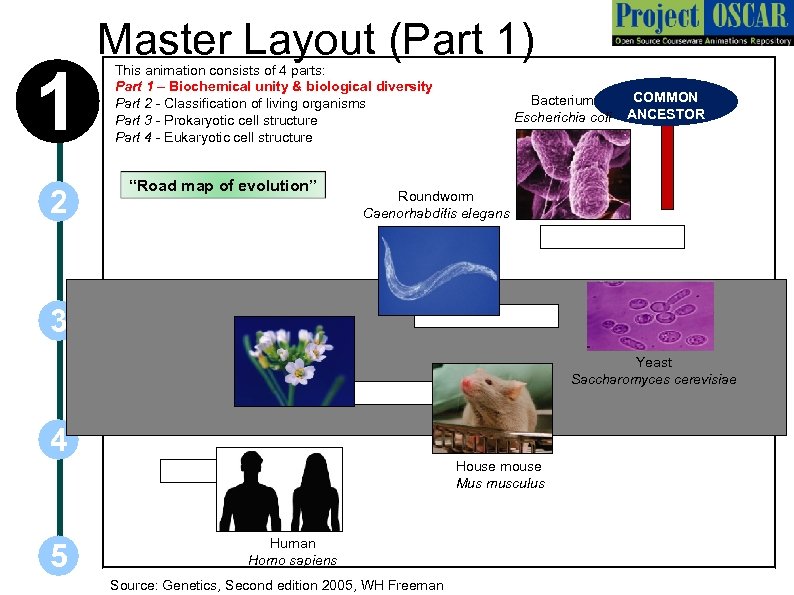 1 2 3 Master Layout (Part 1) This animation consists of 4 parts: Part 1 – Biochemical unity & biological diversity Part 2 - Classification of living organisms Part 3 - Prokaryotic cell structure Part 4 - Eukaryotic cell structure “Road map of evolution” Bacterium Escherichia coli COMMON ANCESTOR Roundworm Caenorhabditis elegans Thale cress Arabidopsis thalina Yeast Saccharomyces cerevisiae 4 House mouse Mus musculus 5 Human Homo sapiens Source: Genetics, Second edition 2005, WH Freeman
 1 2 3 4 5 Definitions of the components: Part 1: Biochemical unity & biological diversity 1. Evolution: The process by which various populations of organisms acquire and pass on their novel traits, in addition to other existing traits, from one generation to the next. This explains the origin of new species of organisms and the vast diversity that is observed in the biological world. However, it is believed that the origin of all organisms can be traced back to one common ancestor due to several underlying biochemical similarities.
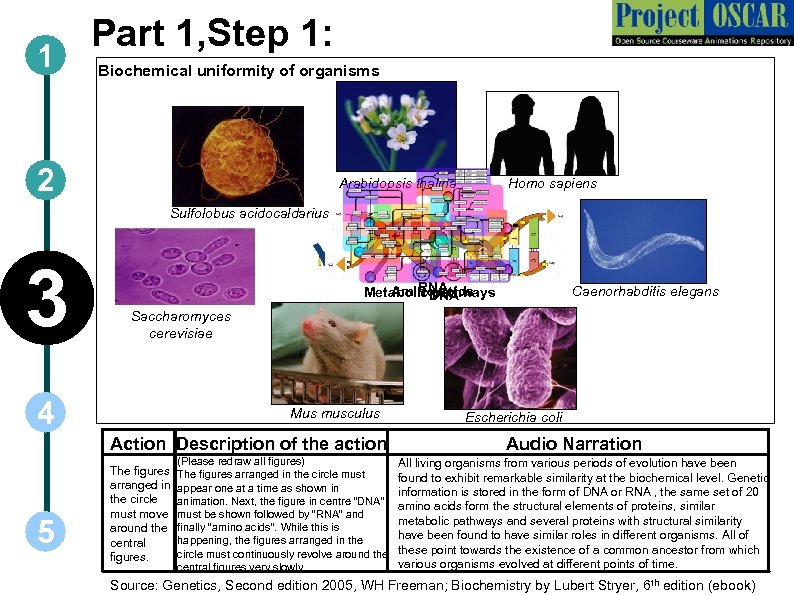 1 Part 1, Step 1: Biochemical uniformity of organisms 2 Homo sapiens Arabidopsis thalina Sulfolobus acidocaldarius + 3 4 N C C RNA Aminopathways acids Metabolic DNA Caenorhabditis elegans Saccharomyces cerevisiae Mus musculus Action Description of the action (Please redraw all figures) 5 - The figures arranged in the circle must arranged in appear one at a time as shown in the circle animation. Next, the figure in centre “DNA” must move must be shown followed by “RNA” and around the finally “amino acids”. While this is happening, the figures arranged in the central circle must continuously revolve around the figures. central figures very slowly. Escherichia coli Audio Narration All living organisms from various periods of evolution have been found to exhibit remarkable similarity at the biochemical level. Genetic information is stored in the form of DNA or RNA , the same set of 20 amino acids form the structural elements of proteins, similar metabolic pathways and several proteins with structural similarity have been found to have similar roles in different organisms. All of these point towards the existence of a common ancestor from which various organisms evolved at different points of time. Source: Genetics, Second edition 2005, WH Freeman; Biochemistry by Lubert Stryer, 6 th edition (ebook)
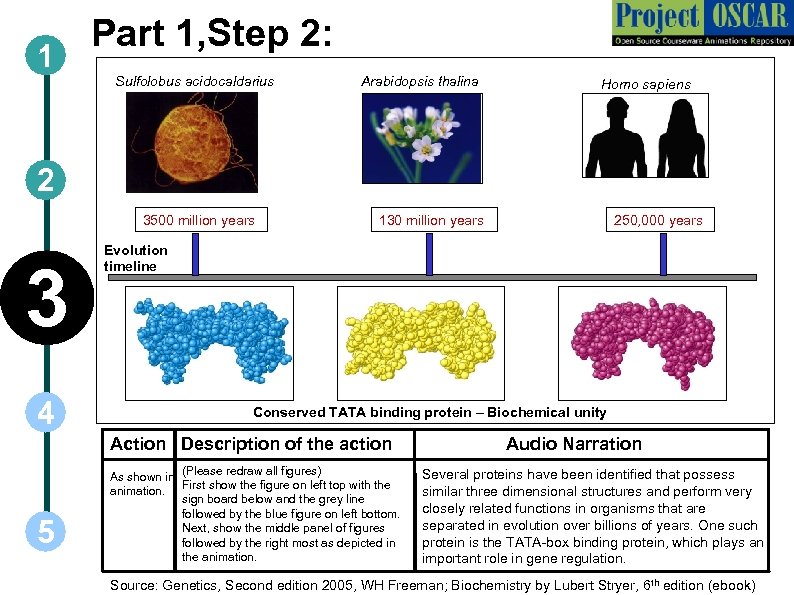 1 Part 1, Step 2: Sulfolobus acidocaldarius Arabidopsis thalina Homo sapiens 2 3500 million years 3 4 130 million years Evolution timeline Conserved TATA binding protein – Biochemical unity Action Description of the action 5 250, 000 years (Please redraw all figures) As shown in First show the figure on left top with the animation. sign board below and the grey line followed by the blue figure on left bottom. Next, show the middle panel of figures followed by the right most as depicted in the animation. Audio Narration Several proteins have been identified that possess similar three dimensional structures and perform very closely related functions in organisms that are separated in evolution over billions of years. One such protein is the TATA-box binding protein, which plays an important role in gene regulation. Source: Genetics, Second edition 2005, WH Freeman; Biochemistry by Lubert Stryer, 6 th edition (ebook)
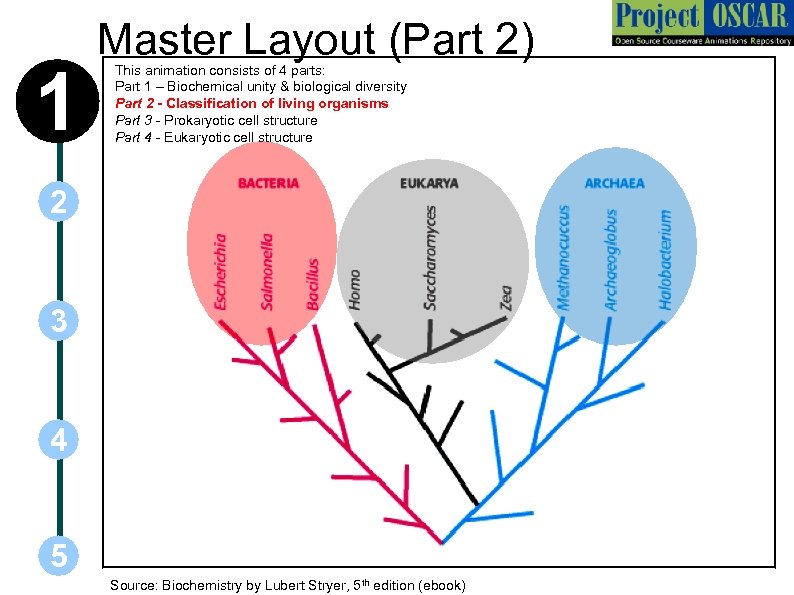 1 Master Layout (Part 2) This animation consists of 4 parts: Part 1 – Biochemical unity & biological diversity Part 2 - Classification of living organisms Part 3 - Prokaryotic cell structure Part 4 - Eukaryotic cell structure 2 3 4 5 Source: Biochemistry by Lubert Stryer, 5 th edition (ebook)
 1 2 3 4 5 Definitions of the components: Part 2: Classification of living organisms 1. Bacteria: These are a group of unicellular, prokaryotic microorganisms that are present in every habitat on earth. They are usually a few micrometers in length and have a range of shapes such as rods, spheres, and spirals. Bacteria are one of the most ancient life forms, believed to have been present over 3 billion years ago. These organisms lack a defined cell-nucleus and other cellular organelles, due to which they are classified as prokaryotes. 2. Archae: Archae are a group of single-celled microorganisms that are also classified as prokaryotes due to their lack of cellular organelles and a nucleus. They were originally classified as bacteria but now form their own separate domain due to several genetic and metabolic differences, in which they more closely resemble eukaryotes. Unlike eukaryotes however, they are capable of obtaining their energy from various sources such as organic compounds, sugars, ammonia etc. 3. Eukarya: These are multicellular organisms whose cells contain complex structures including a well-defined, membrane-bound nucleus carrying the genetic material. Eukaryotic cells are typically larger than prokaryotes and contain several other membrane-bound organelles which carry out complex metabolic & cell division processes.
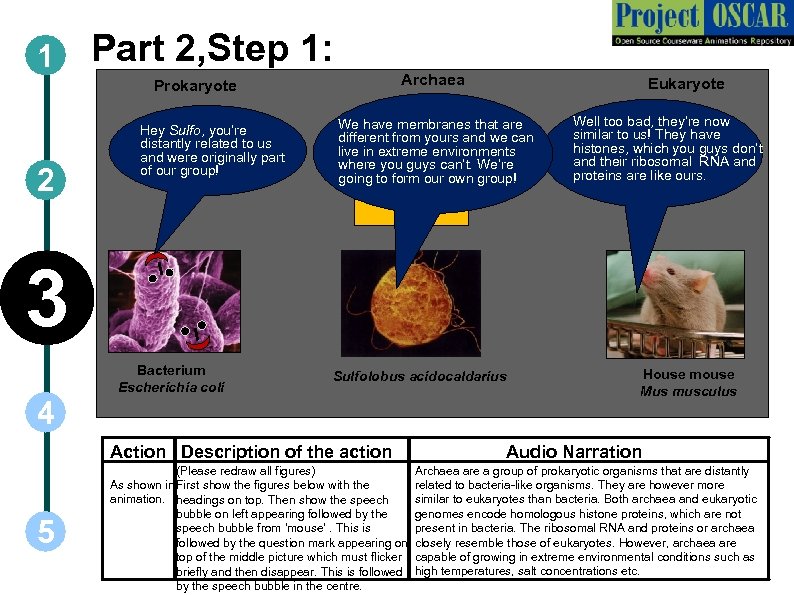 1 Part 2, Step 1: Archaea Prokaryote 2 Hey Sulfo, you’re distantly related to us and were originally part of our group! Eukaryote We have membranes that are different from yours and we can live in extreme environments where you guys can’t. We’re going to form our own group! Well too bad, they’re now similar to us! They have histones, which you guys don’t and their ribosomal RNA and proteins are like ours. 3 4 Bacterium Escherichia coli Sulfolobus acidocaldarius Action Description of the action 5 House mouse Mus musculus Audio Narration Archaea are a group of prokaryotic organisms that are distantly (Please redraw all figures) As shown in First show the figures below with the related to bacteria-like organisms. They are however more animation. headings on top. Then show the speech similar to eukaryotes than bacteria. Both archaea and eukaryotic genomes encode homologous histone proteins, which are not bubble on left appearing followed by the present in bacteria. The ribosomal RNA and proteins or archaea speech bubble from ‘mouse’. This is followed by the question mark appearing on closely resemble those of eukaryotes. However, archaea are top of the middle picture which must flicker capable of growing in extreme environmental conditions such as briefly and then disappear. This is followed high temperatures, salt concentrations etc. by the speech bubble in the centre.
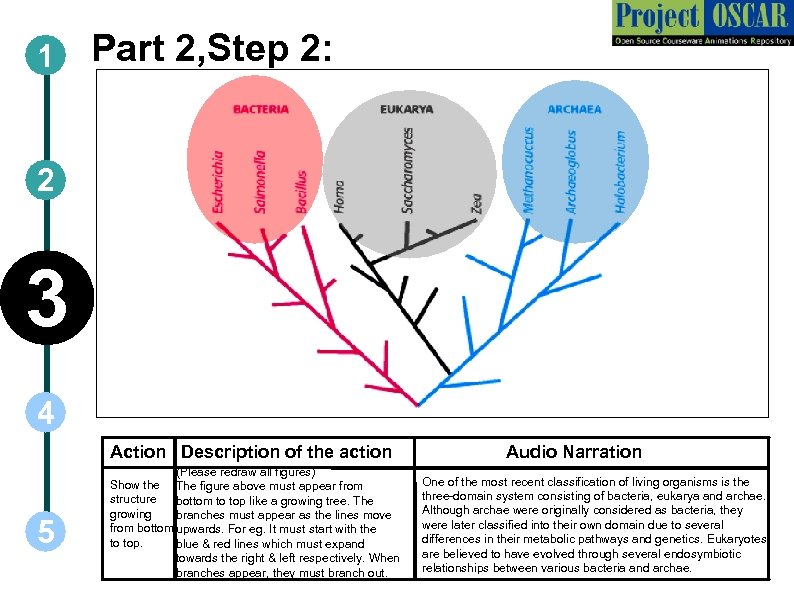 1 Part 2, Step 2: 2 3 4 Action Description of the action 5 (Please redraw all figures) Show the The figure above must appear from structure bottom to top like a growing tree. The growing branches must appear as the lines move from bottom upwards. For eg. It must start with the to top. blue & red lines which must expand towards the right & left respectively. When branches appear, they must branch out. Audio Narration One of the most recent classification of living organisms is the three-domain system consisting of bacteria, eukarya and archae. Although archae were originally considered as bacteria, they were later classified into their own domain due to several differences in their metabolic pathways and genetics. Eukaryotes are believed to have evolved through several endosymbiotic relationships between various bacteria and archae.
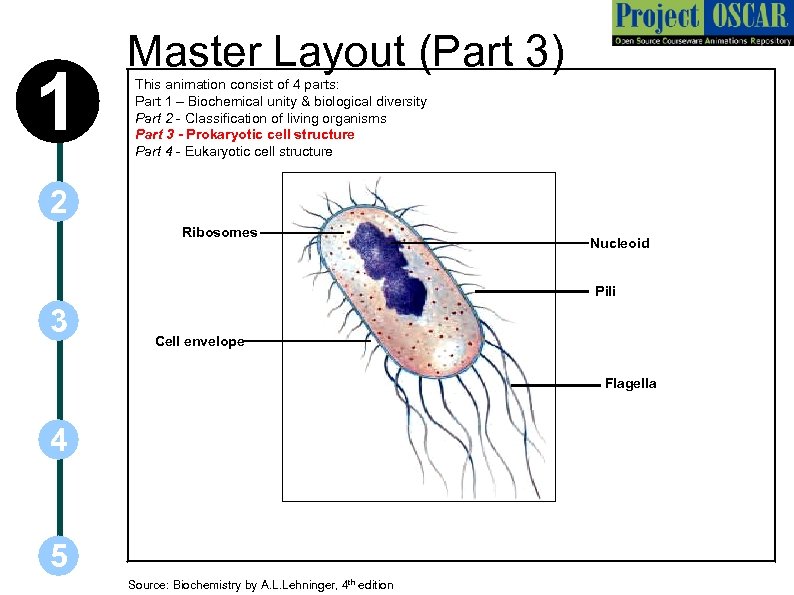 1 Master Layout (Part 3) This animation consist of 4 parts: Part 1 – Biochemical unity & biological diversity Part 2 - Classification of living organisms Part 3 - Prokaryotic cell structure Part 4 - Eukaryotic cell structure 2 Ribosomes Nucleoid Pili 3 Cell envelope Flagella 4 5 Source: Biochemistry by A. L. Lehninger, 4 th edition
 1 2 Definitions of the components: Part 3: Prokaryotic cell structure 1. Cell envelope: This encompasses the plasma membrane and layers outside it which confer the cell with rigidity. The composition of the cell envelope varies with organism. 2. Plasma membrane: The bacterial protoplast is bound by a living ultrathin and dynamic plasma membrane. It chemically comprises molecules lipids and proteins which are arranged in fluid mosaic pattern. 3. Cell wall: The plasma membrane is covered with a strong and rigid cell wall. 3 4 a) Peptidoglycan: Peptidoglycan is an enormous mesh like polymer composed of many identical subunits, lying outside the plasma membrane of bacteria. The polymer contains two sugar derivative, N- acetylglucoseamine and N- acetlymuramic acid and a chain of three to five amino acids attached to the N- acetlymuramic acid. b) Periplasmic space: A space observed between the plasma membrane and the outer membrane of Gram negative bacteria or equivalent space between the plasma membrane and wall of Gram positive bacteria. c) Teichoic acid: They are polymers of glycerol or ribitol joined by phosphate group, covalently linked to either the petidoglycan or plasma membrane of Gram positive bacteria. Amino acids such as D- alanine or sugars like glucose are attached to the glycerol and ribitol groups. d) Lipoteichoic acid: Teichoic acids covalently connected to plasma membrane of Gram positive bacteria. 5 e) Integral protein: Proteins attached to the bacterial plasma membrane.
 1 2 Definitions of the components: Part 3: Prokaryotic cell structure f) Outer membrane: It is 7 – 8 nm thick membrane lying outside the peptidoglycan layer and is linked to the cell either by a lipoprotein or via many adhesion sites. g) Porins: Porins are proteins composed of beta sheets , spans the outer membrane of Gram negative bacteria and is more or less tube shaped. Its narrow channels allows passage of molecules smaller than 600 – 700 Daltons. h) Lipopolysachharide(LPS): LPS is the major component of the outer membrane of Gramnegative bacteria. These large, complex molecules contain both lipid and carbohydrate and consists of three parts: 1) lipid A, (2) the core polysachharide and (3) the O side chain or O antigen. 3 4. Capsule: In some bacteria, the cell wall is surrounded by an additional slime or gel layer called capsule. 5. Nucleoid: In bacteria the nuclear material is not separated from the cytosol by the nuclear membrane. However, the nuclear material is usually concentrated in a specific clear region of the cytoplasm, called nucleoid, Contains a single, simple, long circular DNA molecule. 4 6. Ribosomes: Ribosomes are tiny spheroidal dense particles that contain approximately equal amount of RNA and proteins. Ribosomes have a sedimentation coefficient of about 70 S and are composed of two subunits namely 50 S and 30 S. 7. Flagella: Many bacteria are motile and one or more flagella for the cellular locomotion that propel cell through its surroundings 5
 1 2 3 4 5 Definitions of the components: Part 3: Prokaryotic cell structure . 8. Pili: Some bacteria contain non-flagellar, extremely fine, appendages called fimbriae or pilli that provide points of adhesion to surface of other cells. 9. Gram staining: It is a method of differentiating bacterial species into two broad categories, gram-positive and gram-negative, based on the composition of their cell walls.
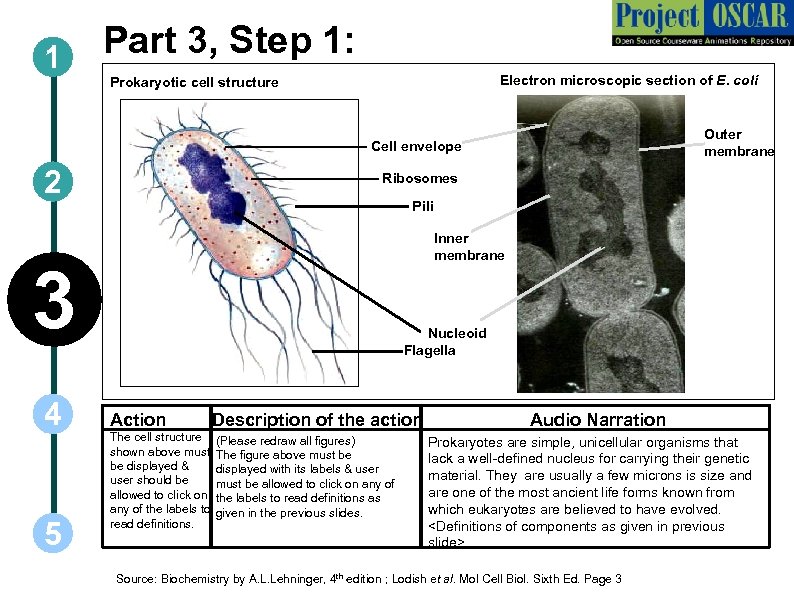 1 Part 3, Step 1: Electron microscopic section of E. coli Prokaryotic cell structure Outer membrane Cell envelope 2 Ribosomes Pili vv Inner membrane 3 4 5 Nucleoid Flagella Action Description of the action The cell structure (Please redraw all figures) shown above must The figure above must be be displayed & displayed with its labels & user should be must be allowed to click on any of allowed to click on the labels to read definitions as any of the labels to given in the previous slides. read definitions. Audio Narration Prokaryotes are simple, unicellular organisms that lack a well-defined nucleus for carrying their genetic material. They are usually a few microns is size and are one of the most ancient life forms known from which eukaryotes are believed to have evolved.
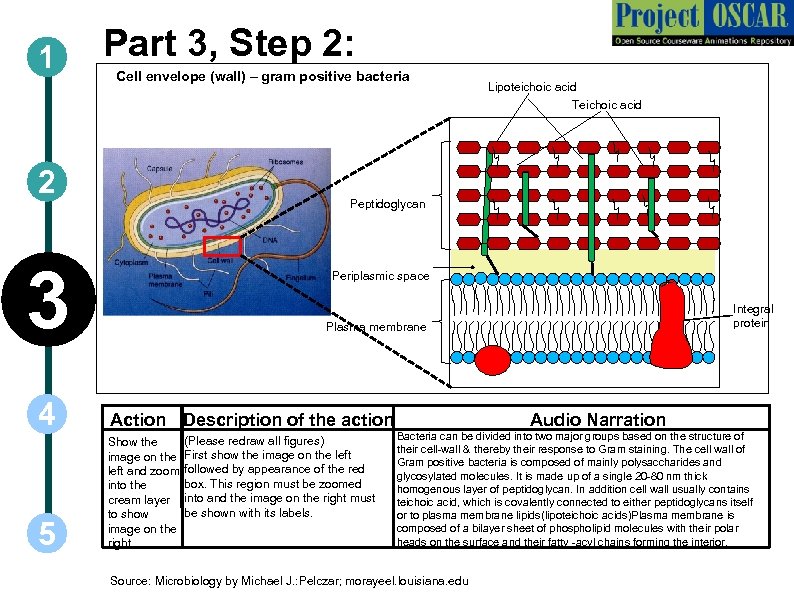 1 Part 3, Step 2: Cell envelope (wall) – gram positive bacteria 2 Lipoteichoic acid Teichoic acid Peptidoglycan vv 3 Periplasmic space Integral protein Plasma membrane 4 Action Description of the action 5 (Please redraw all figures) Show the image on the First show the image on the left and zoom followed by appearance of the red box. This region must be zoomed into the cream layer into and the image on the right must be shown with its labels. to show image on the right. Audio Narration Bacteria can be divided into two major groups based on the structure of their cell-wall & thereby their response to Gram staining. The cell wall of Gram positive bacteria is composed of mainly polysaccharides and glycosylated molecules. It is made up of a single 20 -80 nm thick homogenous layer of peptidoglycan. In addition cell wall usually contains teichoic acid, which is covalently connected to either peptidoglycans itself or to plasma membrane lipids(lipoteichoic acids)Plasma membrane is composed of a bilayer sheet of phospholipid molecules with their polar heads on the surface and their fatty -acyl chains forming the interior. Source: Microbiology by Michael J. : Pelczar; morayeel. louisiana. edu
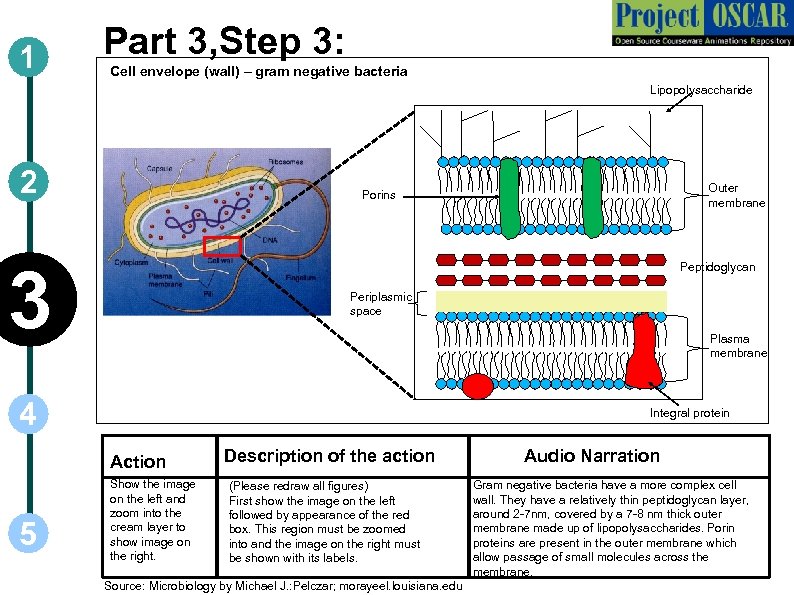 1 Part 3, Step 3: Cell envelope (wall) – gram negative bacteria Lipopolysaccharide 2 Outer membrane Porins vv 3 Peptidoglycan Periplasmic space Plasma membrane 4 Integral protein Action 5 Show the image on the left and zoom into the cream layer to show image on the right. Description of the action (Please redraw all figures) First show the image on the left followed by appearance of the red box. This region must be zoomed into and the image on the right must be shown with its labels. Source: Microbiology by Michael J. : Pelczar; morayeel. louisiana. edu Audio Narration Gram negative bacteria have a more complex cell wall. They have a relatively thin peptidoglycan layer, around 2 -7 nm, covered by a 7 -8 nm thick outer membrane made up of lipopolysaccharides. Porin proteins are present in the outer membrane which allow passage of small molecules across the membrane.
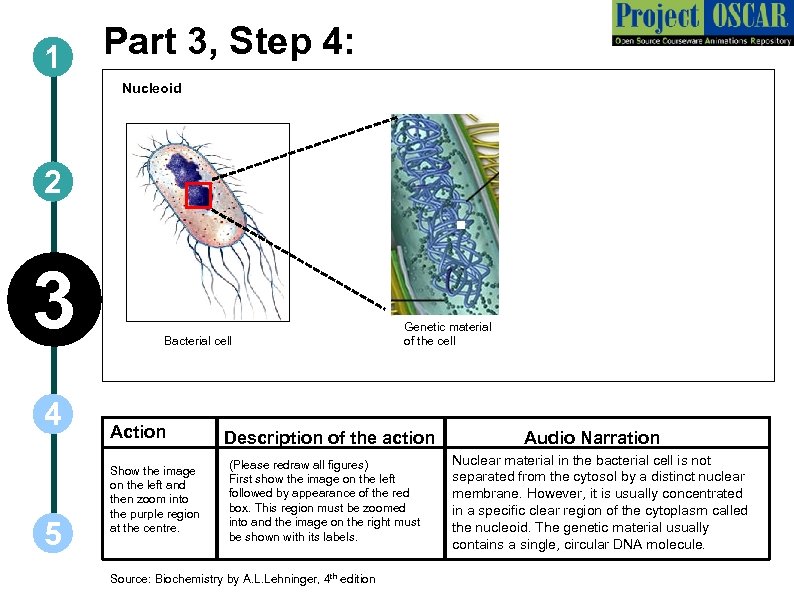 1 Part 3, Step 4: Nucleoid 2 3 4 5 Bacterial cell Action Show the image on the left and then zoom into the purple region at the centre. Genetic material of the cell Description of the action (Please redraw all figures) First show the image on the left followed by appearance of the red box. This region must be zoomed into and the image on the right must be shown with its labels. Source: Biochemistry by A. L. Lehninger, 4 th edition Audio Narration Nuclear material in the bacterial cell is not separated from the cytosol by a distinct nuclear membrane. However, it is usually concentrated in a specific clear region of the cytoplasm called the nucleoid. The genetic material usually contains a single, circular DNA molecule.
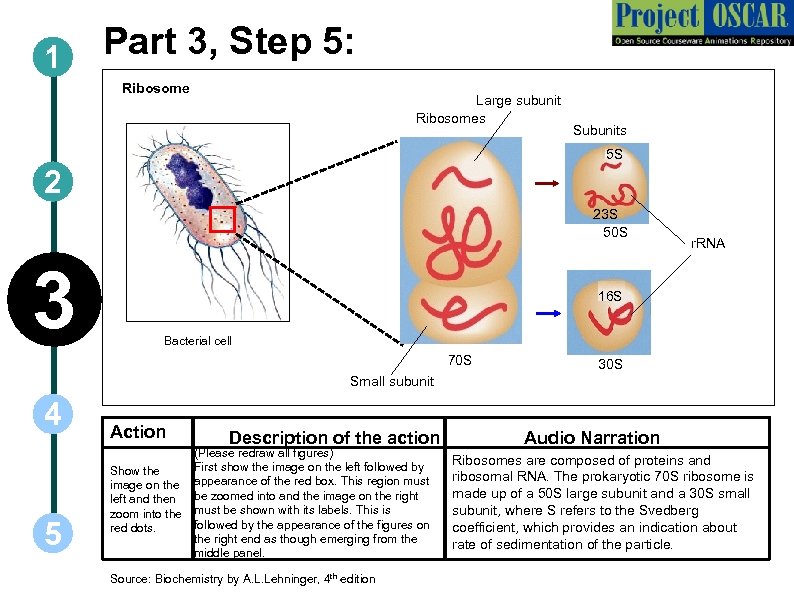 1 Part 3, Step 5: Ribosome Large subunit Ribosomes Subunits 5 S 2 23 S 50 S 3 r. RNA 16 S Bacterial cell 70 S 30 S Small subunit 4 5 Action Description of the action (Please redraw all figures) First show the image on the left followed by Show the image on the appearance of the red box. This region must left and then be zoomed into and the image on the right zoom into the must be shown with its labels. This is followed by the appearance of the figures on red dots. the right end as though emerging from the middle panel. Source: Biochemistry by A. L. Lehninger, 4 th edition Audio Narration Ribosomes are composed of proteins and ribosomal RNA. The prokaryotic 70 S ribosome is made up of a 50 S large subunit and a 30 S small subunit, where S refers to the Svedberg coefficient, which provides an indication about rate of sedimentation of the particle.
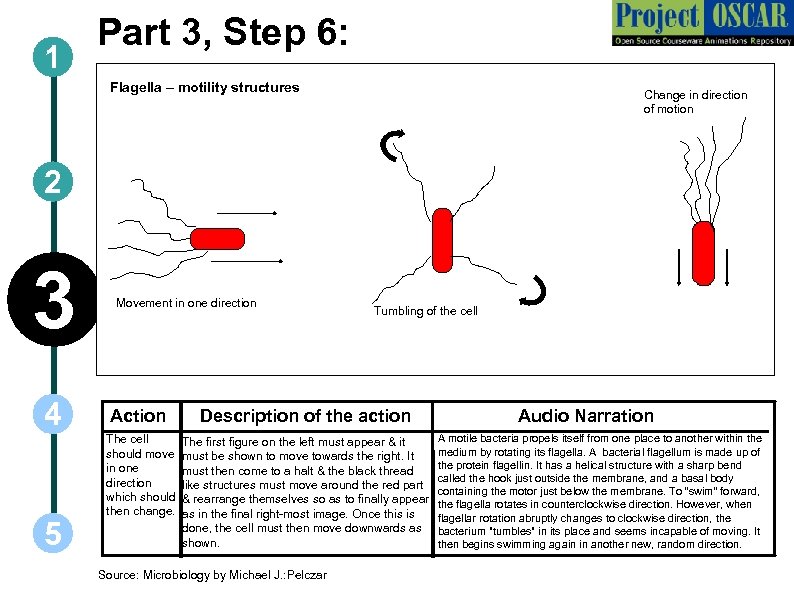 1 Part 3, Step 6: Flagella – motility structures Change in direction of motion 2 3 4 5 Movement in one direction Action Tumbling of the cell Description of the action The cell The first figure on the left must appear & it should move must be shown to move towards the right. It in one must then come to a halt & the black thread direction like structures must move around the red part which should & rearrange themselves so as to finally appear then change. as in the final right-most image. Once this is done, the cell must then move downwards as shown. Source: Microbiology by Michael J. : Pelczar Audio Narration A motile bacteria propels itself from one place to another within the medium by rotating its flagella. A bacterial flagellum is made up of the protein flagellin. It has a helical structure with a sharp bend called the hook just outside the membrane, and a basal body containing the motor just below the membrane. To “swim” forward, the flagella rotates in counterclockwise direction. However, when flagellar rotation abruptly changes to clockwise direction, the bacterium "tumbles" in its place and seems incapable of moving. It then begins swimming again in another new, random direction.
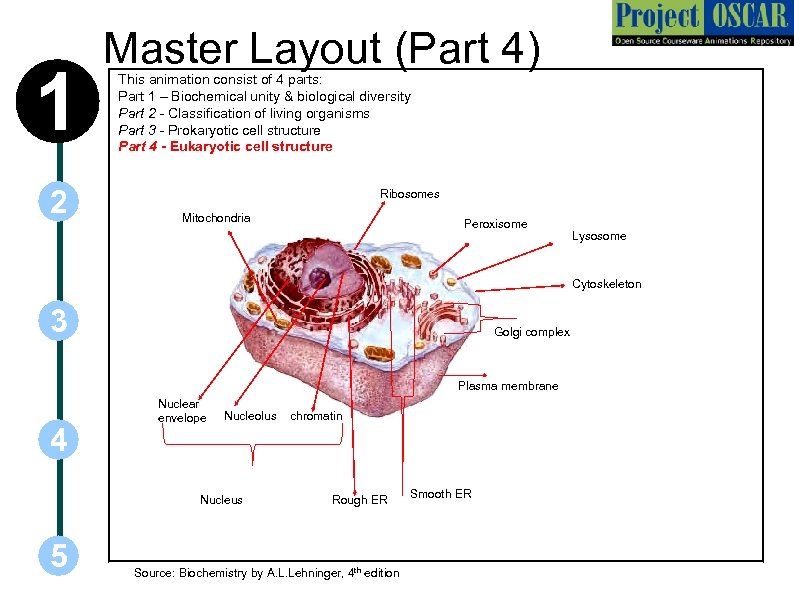 1 2 Master Layout (Part 4) This animation consist of 4 parts: Part 1 – Biochemical unity & biological diversity Part 2 - Classification of living organisms Part 3 - Prokaryotic cell structure Part 4 - Eukaryotic cell structure Ribosomes Mitochondria Peroxisome Lysosome Cytoskeleton 3 Golgi complex Plasma membrane 4 Nuclear envelope Nucleolus Nucleus 5 chromatin Rough ER Source: Biochemistry by A. L. Lehninger, 4 th edition Smooth ER
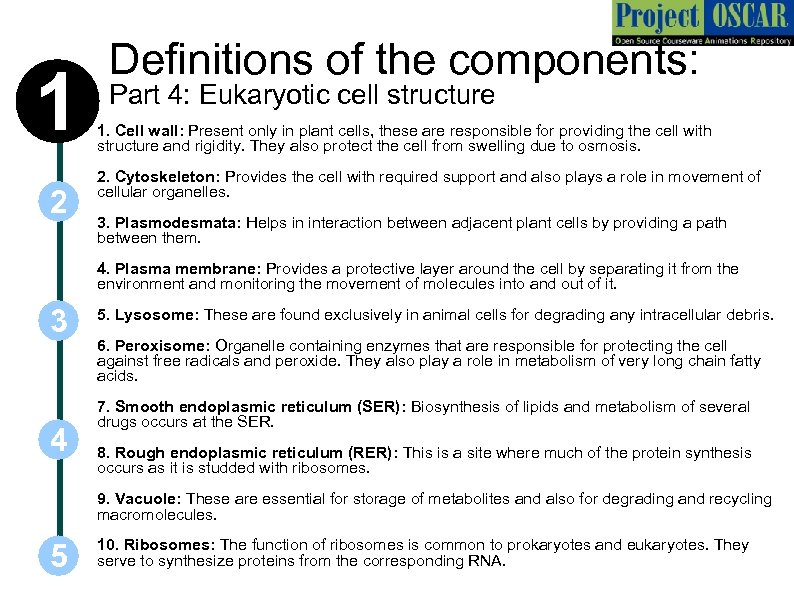 1 2 Definitions of the components: Part 4: Eukaryotic cell structure 1. Cell wall: Present only in plant cells, these are responsible for providing the cell with structure and rigidity. They also protect the cell from swelling due to osmosis. 2. Cytoskeleton: Provides the cell with required support and also plays a role in movement of cellular organelles. 3. Plasmodesmata: Helps in interaction between adjacent plant cells by providing a path between them. 4. Plasma membrane: Provides a protective layer around the cell by separating it from the environment and monitoring the movement of molecules into and out of it. 3 4 5. Lysosome: These are found exclusively in animal cells for degrading any intracellular debris. 6. Peroxisome: Organelle containing enzymes that are responsible for protecting the cell against free radicals and peroxide. They also play a role in metabolism of very long chain fatty acids. 7. Smooth endoplasmic reticulum (SER): Biosynthesis of lipids and metabolism of several drugs occurs at the SER. 8. Rough endoplasmic reticulum (RER): This is a site where much of the protein synthesis occurs as it is studded with ribosomes. 9. Vacuole: These are essential for storage of metabolites and also for degrading and recycling macromolecules. 5 10. Ribosomes: The function of ribosomes is common to prokaryotes and eukaryotes. They serve to synthesize proteins from the corresponding RNA.
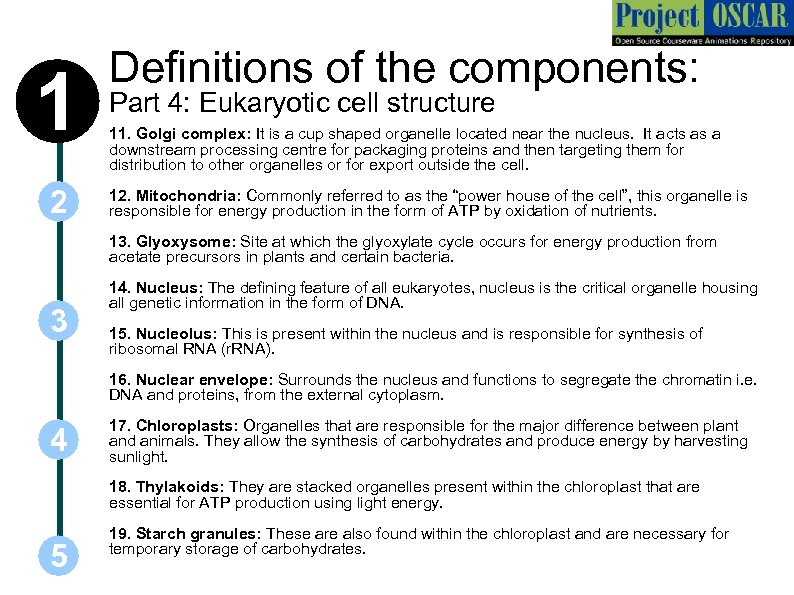 1 2 Definitions of the components: Part 4: Eukaryotic cell structure 11. Golgi complex: It is a cup shaped organelle located near the nucleus. It acts as a downstream processing centre for packaging proteins and then targeting them for distribution to other organelles or for export outside the cell. 12. Mitochondria: Commonly referred to as the “power house of the cell”, this organelle is responsible for energy production in the form of ATP by oxidation of nutrients. 13. Glyoxysome: Site at which the glyoxylate cycle occurs for energy production from acetate precursors in plants and certain bacteria. 3 14. Nucleus: The defining feature of all eukaryotes, nucleus is the critical organelle housing all genetic information in the form of DNA. 15. Nucleolus: This is present within the nucleus and is responsible for synthesis of ribosomal RNA (r. RNA). 16. Nuclear envelope: Surrounds the nucleus and functions to segregate the chromatin i. e. DNA and proteins, from the external cytoplasm. 4 17. Chloroplasts: Organelles that are responsible for the major difference between plant and animals. They allow the synthesis of carbohydrates and produce energy by harvesting sunlight. 18. Thylakoids: They are stacked organelles present within the chloroplast that are essential for ATP production using light energy. 5 19. Starch granules: These are also found within the chloroplast and are necessary for temporary storage of carbohydrates.
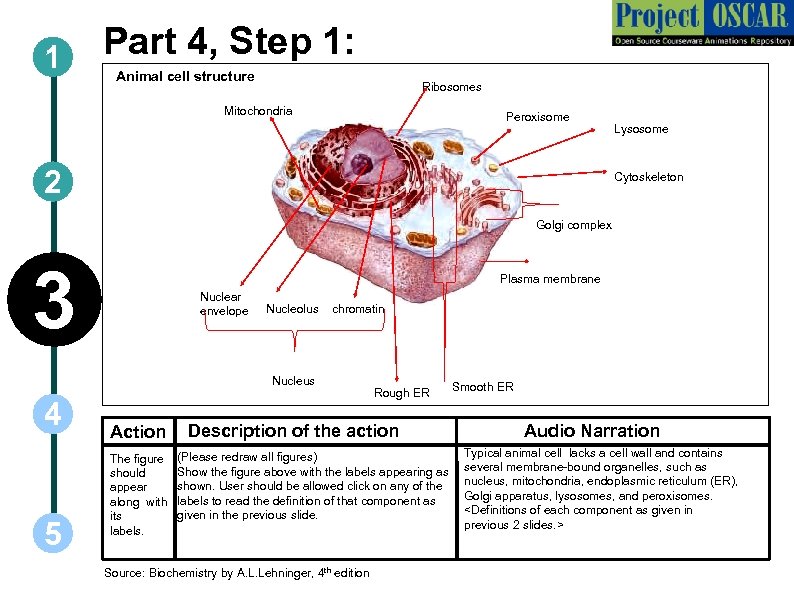 1 Part 4, Step 1: Animal cell structure Ribosomes Mitochondria Peroxisome 2 Lysosome Cytoskeleton Golgi complex 3 Plasma membrane Nuclear envelope Nucleolus chromatin Nucleus 4 5 Action The figure should appear along with its labels. Rough ER Description of the action (Please redraw all figures) Show the figure above with the labels appearing as shown. User should be allowed click on any of the labels to read the definition of that component as given in the previous slide. Source: Biochemistry by A. L. Lehninger, 4 th edition Smooth ER Audio Narration Typical animal cell lacks a cell wall and contains several membrane-bound organelles, such as nucleus, mitochondria, endoplasmic reticulum (ER), Golgi apparatus, lysosomes, and peroxisomes.
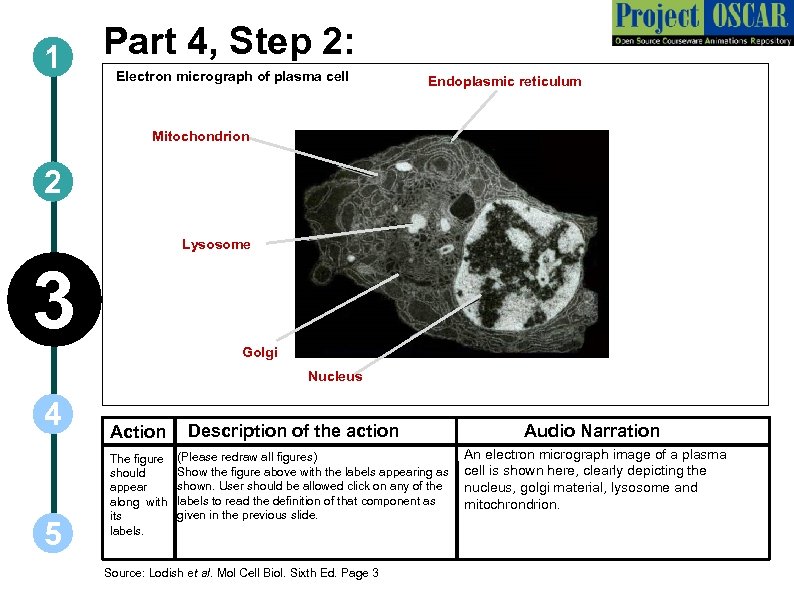 1 Part 4, Step 2: Electron micrograph of plasma cell Endoplasmic reticulum Mitochondrion 2 Lysosome 3 Golgi Nucleus 4 5 Action The figure should appear along with its labels. Description of the action (Please redraw all figures) Show the figure above with the labels appearing as shown. User should be allowed click on any of the labels to read the definition of that component as given in the previous slide. Source: Lodish et al. Mol Cell Biol. Sixth Ed. Page 3 Audio Narration An electron micrograph image of a plasma cell is shown here, clearly depicting the nucleus, golgi material, lysosome and mitochrondrion.
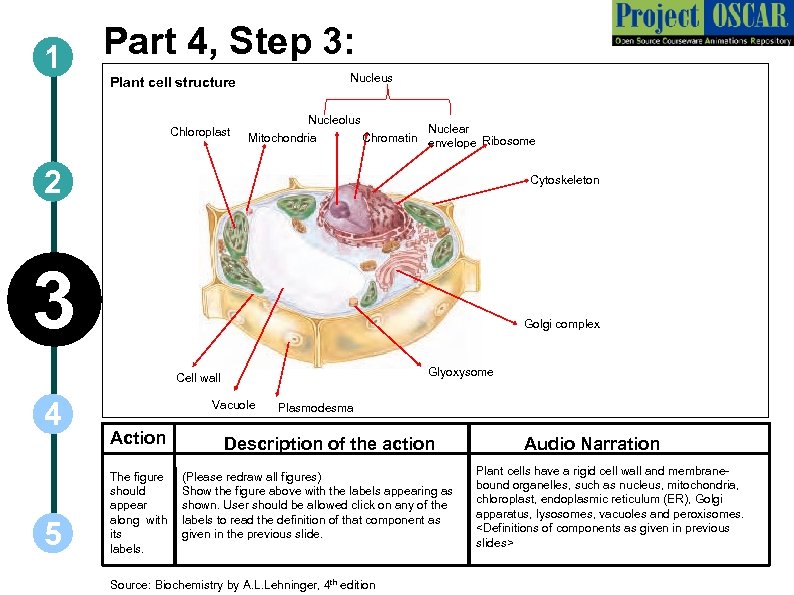 1 Part 4, Step 3: Nucleus Plant cell structure Chloroplast Nucleolus Mitochondria Nuclear Chromatin envelope Ribosome 2 Cytoskeleton 3 Golgi complex Glyoxysome Cell wall 4 5 Vacuole Action The figure should appear along with its labels. Plasmodesma Description of the action (Please redraw all figures) Show the figure above with the labels appearing as shown. User should be allowed click on any of the labels to read the definition of that component as given in the previous slide. Source: Biochemistry by A. L. Lehninger, 4 th edition Audio Narration Plant cells have a rigid cell wall and membranebound organelles, such as nucleus, mitochondria, chloroplast, endoplasmic reticulum (ER), Golgi apparatus, lysosomes, vacuoles and peroxisomes.
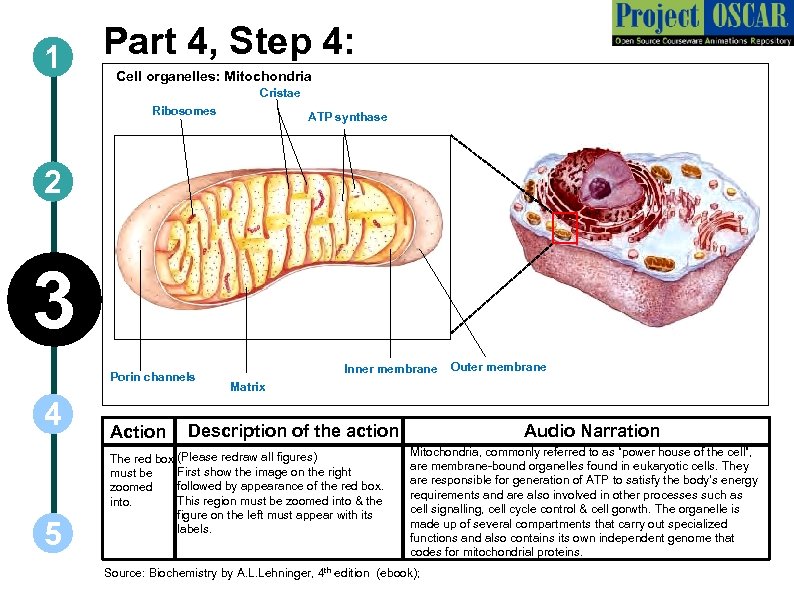 1 Part 4, Step 4: Cell organelles: Mitochondria Cristae Ribosomes ATP synthase 2 3 Porin channels 4 5 Action Inner membrane Outer membrane Matrix Description of the action The red box (Please redraw all figures) First show the image on the right must be followed by appearance of the red box. zoomed This region must be zoomed into & the into. figure on the left must appear with its labels. Audio Narration Mitochondria, commonly referred to as “power house of the cell”, are membrane-bound organelles found in eukaryotic cells. They are responsible for generation of ATP to satisfy the body’s energy requirements and are also involved in other processes such as cell signalling, cell cycle control & cell gorwth. The organelle is made up of several compartments that carry out specialized functions and also contains its own independent genome that codes for mitochondrial proteins. Source: Biochemistry by A. L. Lehninger, 4 th edition (ebook);
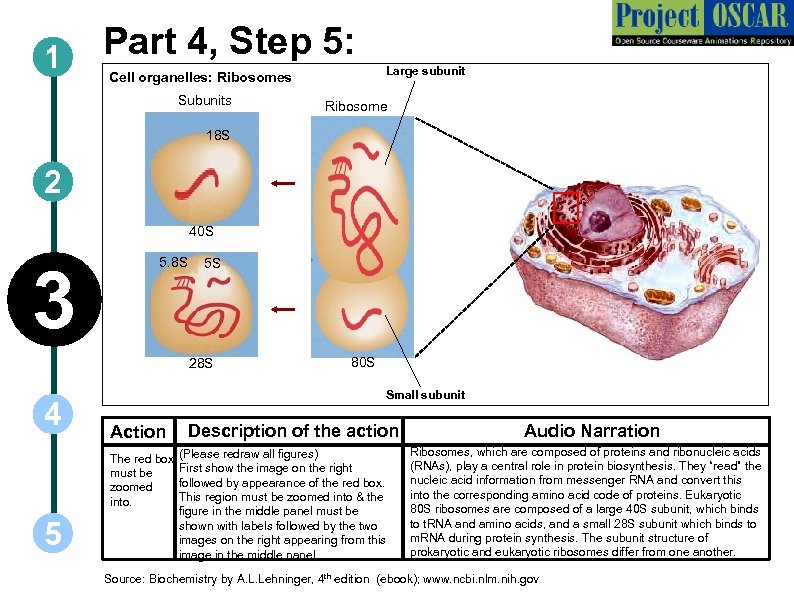 1 Part 4, Step 5: Large subunit Cell organelles: Ribosomes Subunits Ribosome 18 S 2 40 S 3 5. 8 S 5 S 28 S 4 5 80 S Small subunit Action Description of the action The red box (Please redraw all figures) First show the image on the right must be followed by appearance of the red box. zoomed This region must be zoomed into & the into. figure in the middle panel must be shown with labels followed by the two images on the right appearing from this image in the middle panel. Audio Narration Ribosomes, which are composed of proteins and ribonucleic acids (RNAs), play a central role in protein biosynthesis. They “read” the nucleic acid information from messenger RNA and convert this into the corresponding amino acid code of proteins. Eukaryotic 80 S ribosomes are composed of a large 40 S subunit, which binds to t. RNA and amino acids, and a small 28 S subunit which binds to m. RNA during protein synthesis. The subunit structure of prokaryotic and eukaryotic ribosomes differ from one another. Source: Biochemistry by A. L. Lehninger, 4 th edition (ebook); www. ncbi. nlm. nih. gov
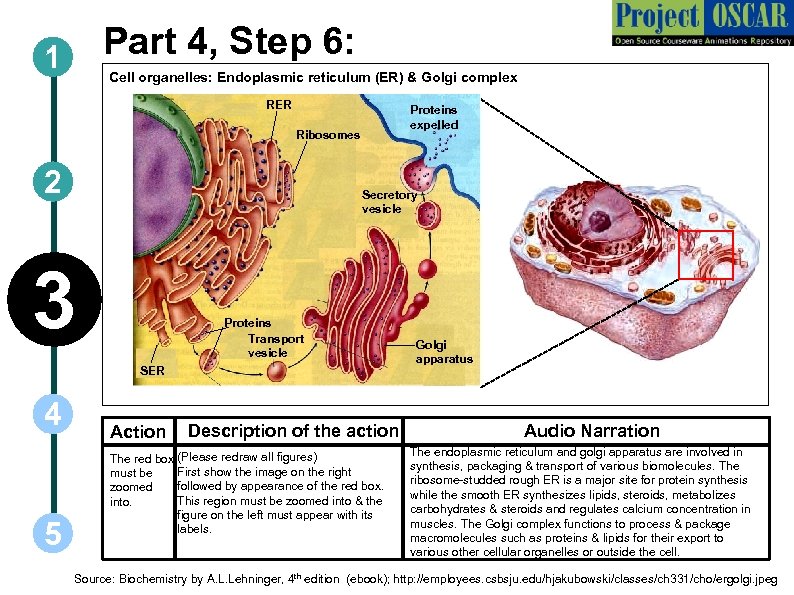 Part 4, Step 6: 1 Cell organelles: Endoplasmic reticulum (ER) & Golgi complex RER Proteins expelled Ribosomes 2 Secretory vesicle 3 Proteins Transport vesicle SER 4 5 Action Description of the action The red box (Please redraw all figures) First show the image on the right must be followed by appearance of the red box. zoomed This region must be zoomed into & the into. figure on the left must appear with its labels. Golgi apparatus Audio Narration The endoplasmic reticulum and golgi apparatus are involved in synthesis, packaging & transport of various biomolecules. The ribosome-studded rough ER is a major site for protein synthesis while the smooth ER synthesizes lipids, steroids, metabolizes carbohydrates & steroids and regulates calcium concentration in muscles. The Golgi complex functions to process & package macromolecules such as proteins & lipids for their export to various other cellular organelles or outside the cell. Source: Biochemistry by A. L. Lehninger, 4 th edition (ebook); http: //employees. csbsju. edu/hjakubowski/classes/ch 331/cho/ergolgi. jpeg
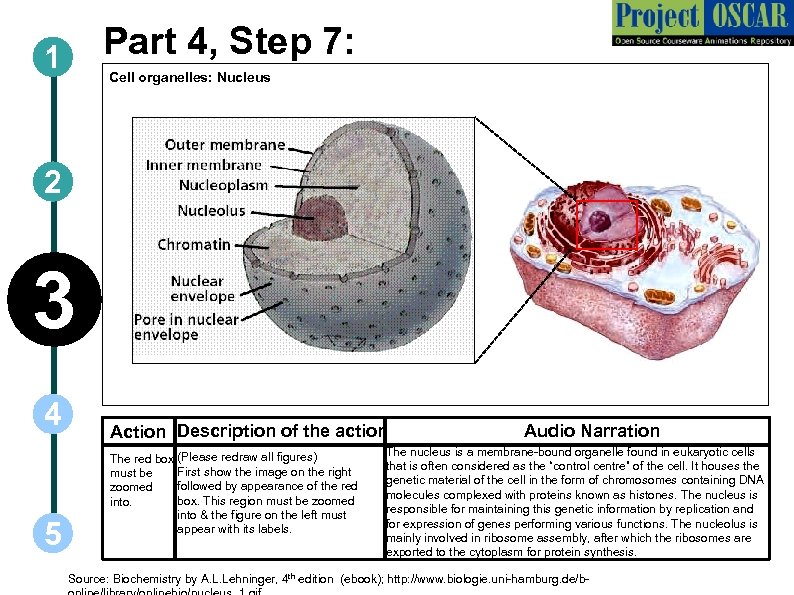 Part 4, Step 7: 1 Cell organelles: Nucleus 2 3 4 5 Action Description of the action The red box (Please redraw all figures) First show the image on the right must be followed by appearance of the red zoomed box. This region must be zoomed into & the figure on the left must appear with its labels. Audio Narration The nucleus is a membrane-bound organelle found in eukaryotic cells that is often considered as the “control centre” of the cell. It houses the genetic material of the cell in the form of chromosomes containing DNA molecules complexed with proteins known as histones. The nucleus is responsible for maintaining this genetic information by replication and for expression of genes performing various functions. The nucleolus is mainly involved in ribosome assembly, after which the ribosomes are exported to the cytoplasm for protein synthesis. Source: Biochemistry by A. L. Lehninger, 4 th edition (ebook); http: //www. biologie. uni-hamburg. de/b-
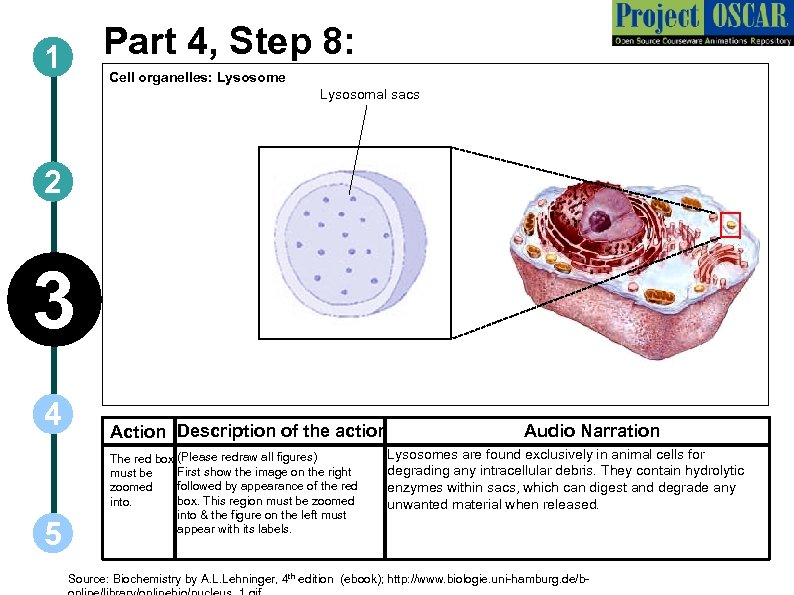 Part 4, Step 8: 1 Cell organelles: Lysosome Lysosomal sacs 2 3 4 5 Action Description of the action The red box (Please redraw all figures) First show the image on the right must be followed by appearance of the red zoomed box. This region must be zoomed into & the figure on the left must appear with its labels. Audio Narration Lysosomes are found exclusively in animal cells for degrading any intracellular debris. They contain hydrolytic enzymes within sacs, which can digest and degrade any unwanted material when released. Source: Biochemistry by A. L. Lehninger, 4 th edition (ebook); http: //www. biologie. uni-hamburg. de/b-
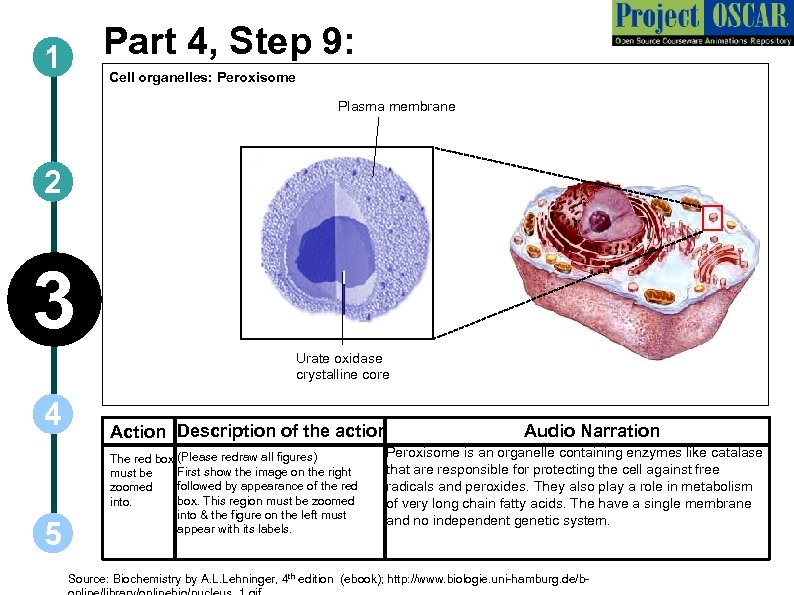 Part 4, Step 9: 1 Cell organelles: Peroxisome Plasma membrane 2 3 Urate oxidase crystalline core 4 5 Action Description of the action The red box (Please redraw all figures) First show the image on the right must be followed by appearance of the red zoomed box. This region must be zoomed into & the figure on the left must appear with its labels. Audio Narration Peroxisome is an organelle containing enzymes like catalase that are responsible for protecting the cell against free radicals and peroxides. They also play a role in metabolism of very long chain fatty acids. The have a single membrane and no independent genetic system. Source: Biochemistry by A. L. Lehninger, 4 th edition (ebook); http: //www. biologie. uni-hamburg. de/b-
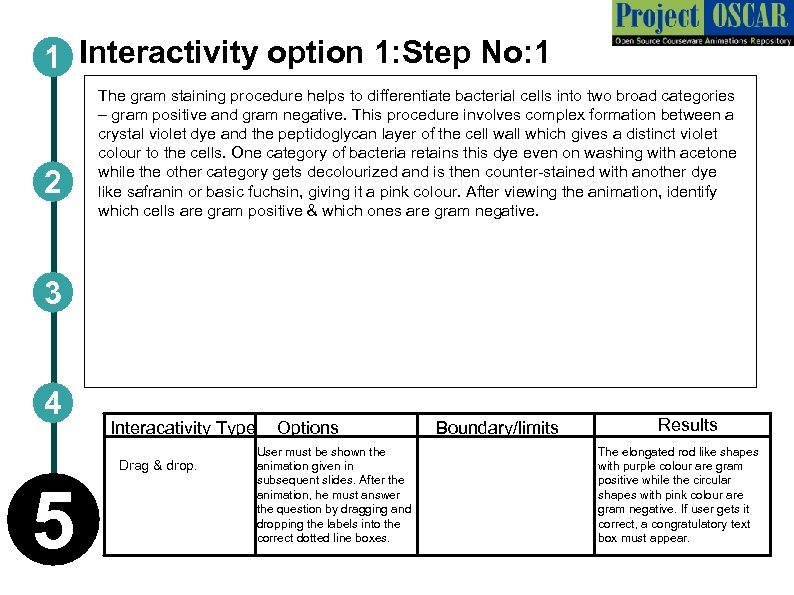 1 Interactivity option 1: Step No: 1 2 The gram staining procedure helps to differentiate bacterial cells into two broad categories – gram positive and gram negative. This procedure involves complex formation between a crystal violet dye and the peptidoglycan layer of the cell wall which gives a distinct violet colour to the cells. One category of bacteria retains this dye even on washing with acetone while the other category gets decolourized and is then counter-stained with another dye like safranin or basic fuchsin, giving it a pink colour. After viewing the animation, identify which cells are gram positive & which ones are gram negative. 3 4 Interacativity Type Options Drag & drop. 5 User must be shown the animation given in subsequent slides. After the animation, he must answer the question by dragging and dropping the labels into the correct dotted line boxes. Boundary/limits Results The elongated rod like shapes with purple colour are gram positive while the circular shapes with pink colour are gram negative. If user gets it correct, a congratulatory text box must appear.
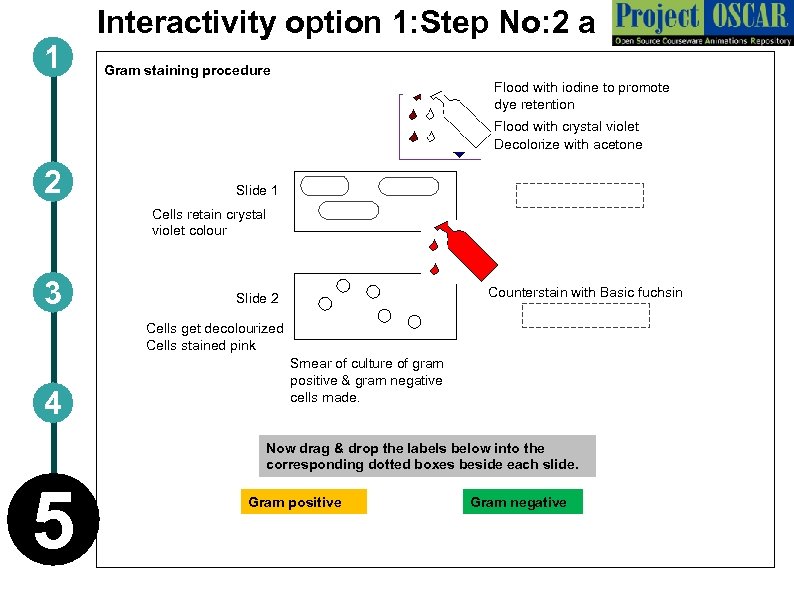 1 Interactivity option 1: Step No: 2 a Gram staining procedure Flood with iodine to promote dye retention Flood with crystal violet Decolorize with acetone 2 Slide 1 Cells retain crystal violet colour 3 Counterstain with Basic fuchsin Slide 2 Cells get decolourized Cells stained pink 4 Smear of culture of gram positive & gram negative cells made. Now drag & drop the labels below into the corresponding dotted boxes beside each slide. 5 Gram positive Gram negative
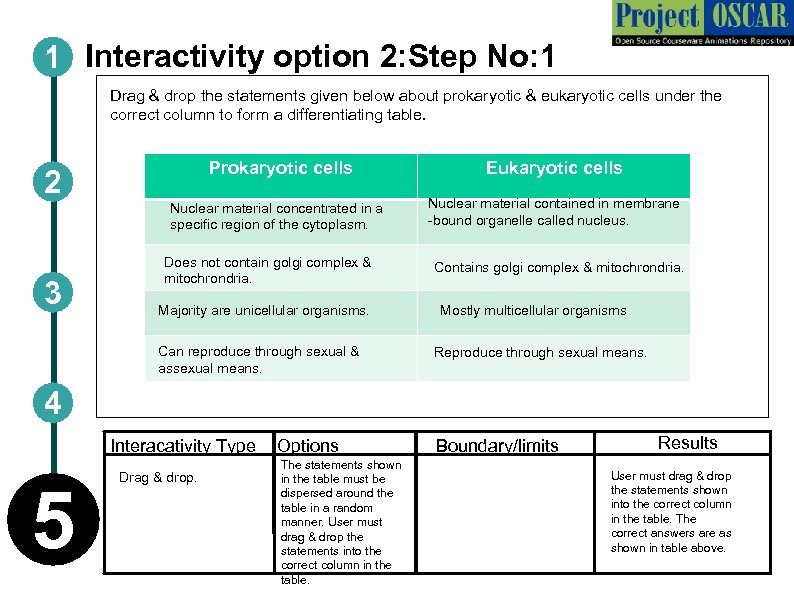 1 Interactivity option 2: Step No: 1 Drag & drop the statements given below about prokaryotic & eukaryotic cells under the correct column to form a differentiating table. Prokaryotic cells Eukaryotic cells Nuclear material concentrated in a specific region of the cytoplasm. Nuclear material contained in membrane -bound organelle called nucleus. 2 3 Does not contain golgi complex & mitochrondria. Majority are unicellular organisms. Can reproduce through sexual & assexual means. Contains golgi complex & mitochrondria. Mostly multicellular organisms Reproduce through sexual means. 4 Interacativity Type Options 5 Drag & drop. The statements shown in the table must be dispersed around the table in a random manner. User must drag & drop the statements into the correct column in the table. Boundary/limits Results User must drag & drop the statements shown into the correct column in the table. The correct answers are as shown in table above.
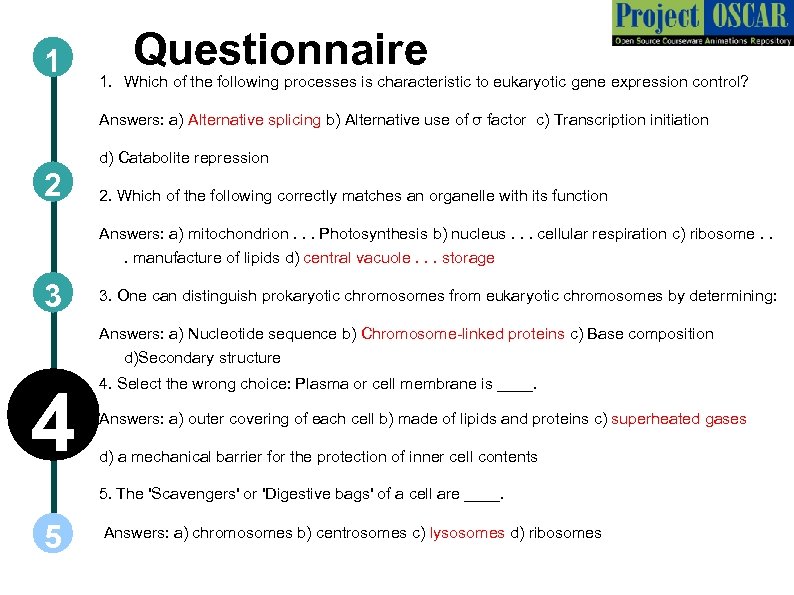 1 Questionnaire 1. Which of the following processes is characteristic to eukaryotic gene expression control? Answers: a) Alternative splicing b) Alternative use of σ factor c) Transcription initiation d) Catabolite repression 2 2. Which of the following correctly matches an organelle with its function Answers: a) mitochondrion. . . Photosynthesis b) nucleus. . . cellular respiration c) ribosome. . . manufacture of lipids d) central vacuole. . . storage 3 3. One can distinguish prokaryotic chromosomes from eukaryotic chromosomes by determining: Answers: a) Nucleotide sequence b) Chromosome-linked proteins c) Base composition d)Secondary structure 4 4. Select the wrong choice: Plasma or cell membrane is ____. Answers: a) outer covering of each cell b) made of lipids and proteins c) superheated gases d) a mechanical barrier for the protection of inner cell contents 5. The 'Scavengers' or 'Digestive bags' of a cell are ____. 5 Answers: a) chromosomes b) centrosomes c) lysosomes d) ribosomes
 Links for further reading Books: Biochemistry by A. L. Lehninger, 4 th edition Biochemistry by Stryer et al. , 6 th edtion Biochemistry by Voet & Voet, 3 rd edition Microbiology by Michael. J. Pelczar, Links: http: //www. wellcometreeoflife. org/video/