Project work done by Grigoryeva Polleena
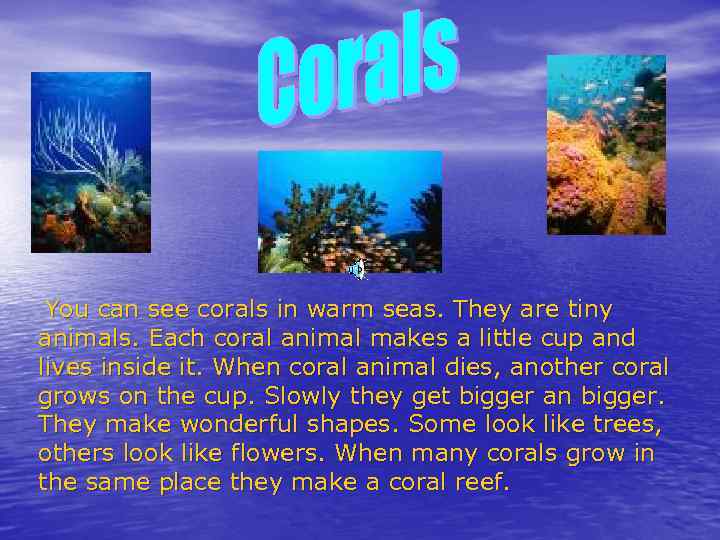
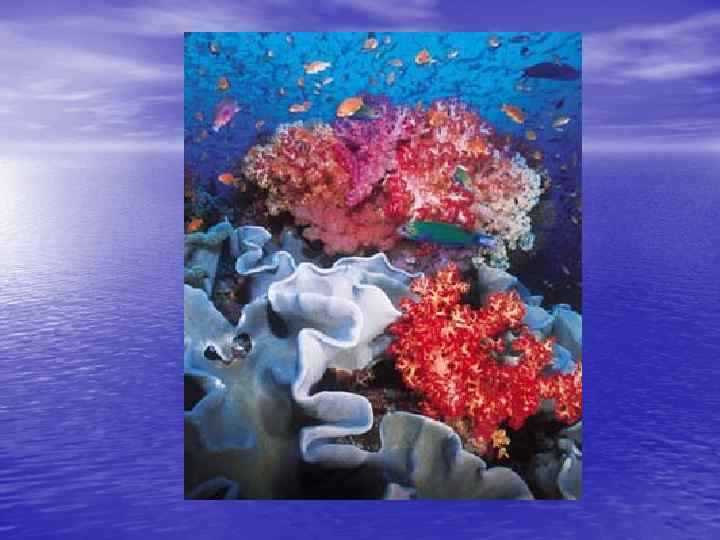
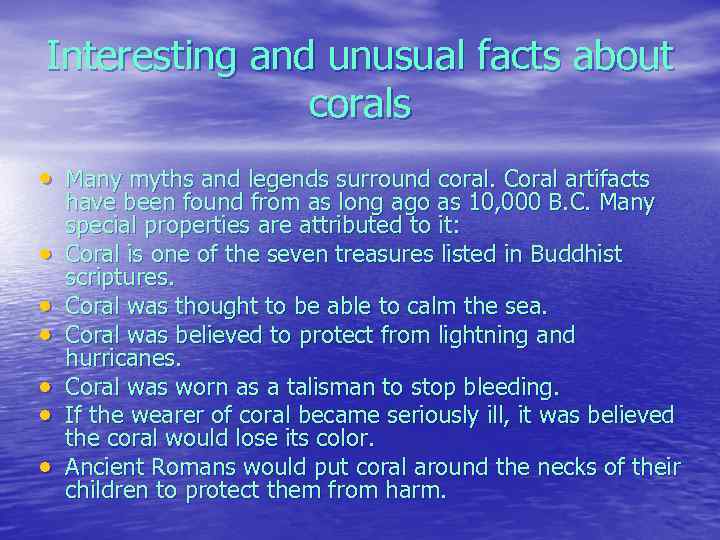
You can see corals in warm seas. They are tiny animals. Each coral animal makes a little cup and lives inside it. When coral animal dies, another coral grows on the cup. Slowly they get bigger an bigger. They make wonderful shapes. Some look like trees, others look like flowers. When many corals grow in the same place they make a coral reef.
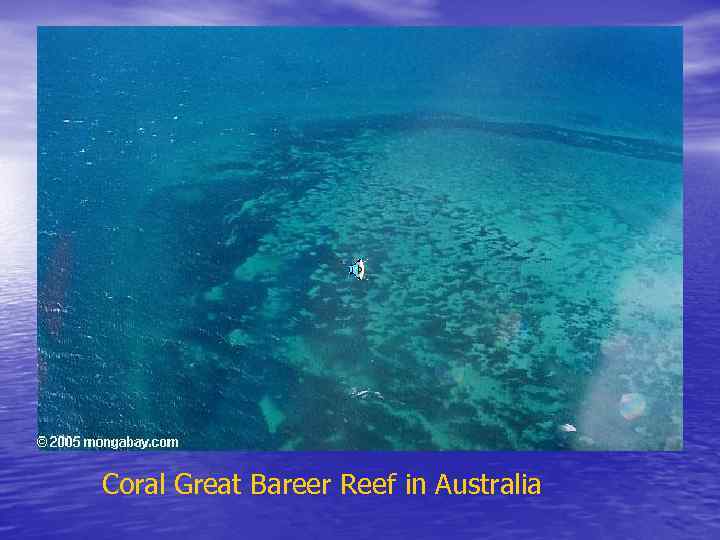
Coral Great Bareer Reef in Australia
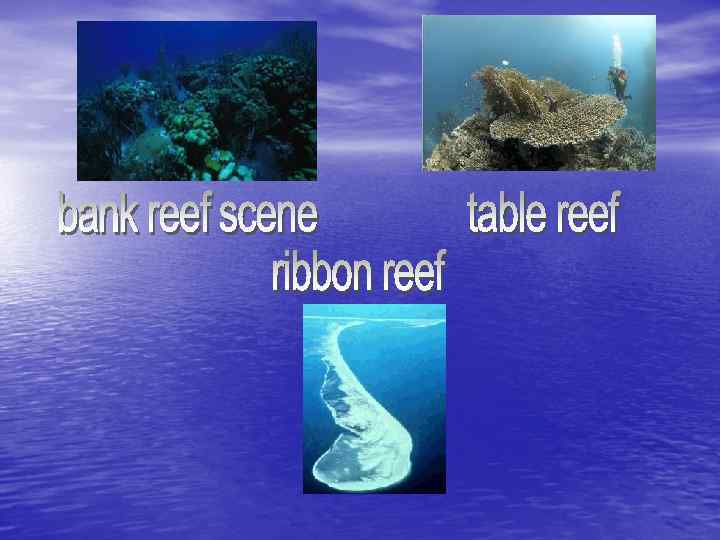
Kinds of coral reefs • There are three basic kinds of coral reefs: fringing reefs, barrier reefs, and atolls. • Fringing reefs grow in shallow waters close to the coast. Barrier reefs are separated from land by a lagoon, growing parallel to the coast and forming a large and continuous reef. Atolls are ringshaped reefs that develop near the sea surface on underwater islands or islands that sink, or subside.
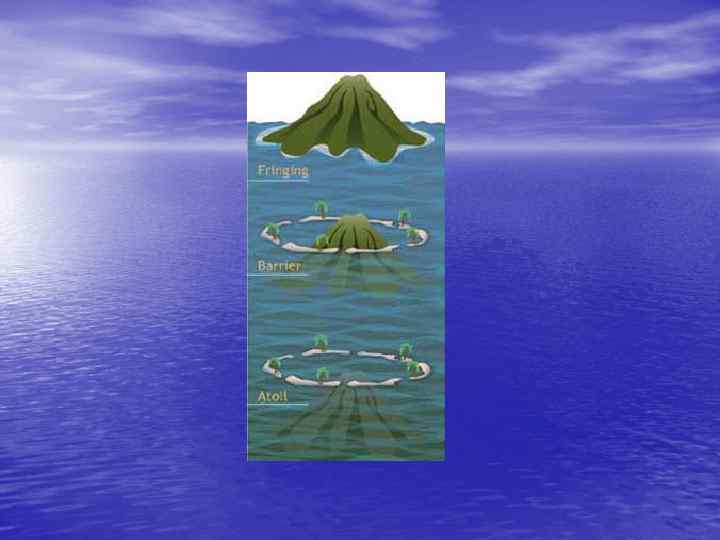
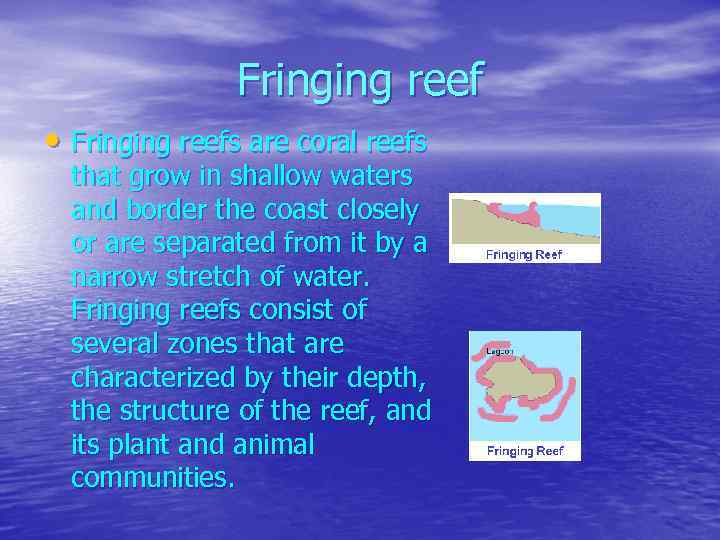
Fringing reef • Fringing reefs are coral reefs that grow in shallow waters and border the coast closely or are separated from it by a narrow stretch of water. Fringing reefs consist of several zones that are characterized by their depth, the structure of the reef, and its plant and animal communities.
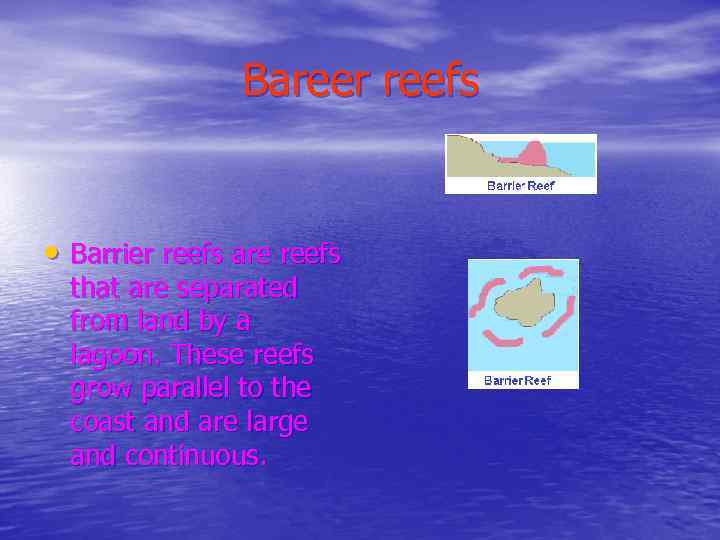
Bareer reefs • Barrier reefs are reefs that are separated from land by a lagoon. These reefs grow parallel to the coast and are large and continuous.
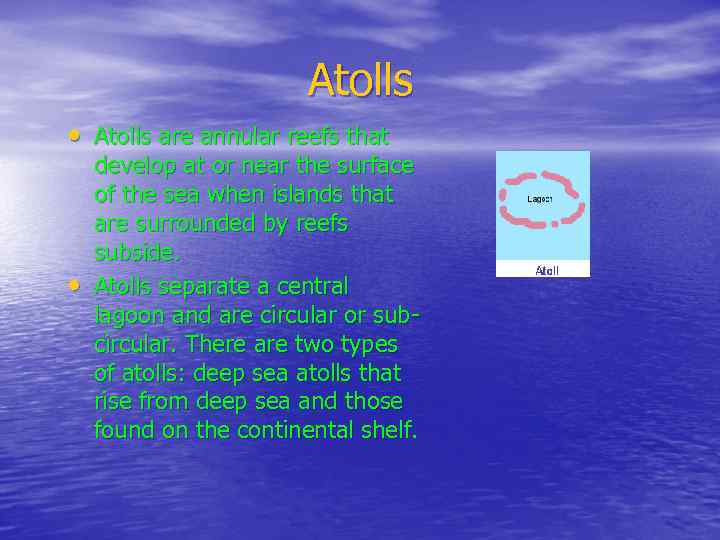
Atolls • Atolls are annular reefs that • develop at or near the surface of the sea when islands that are surrounded by reefs subside. Atolls separate a central lagoon and are circular or subcircular. There are two types of atolls: deep sea atolls that rise from deep sea and those found on the continental shelf.
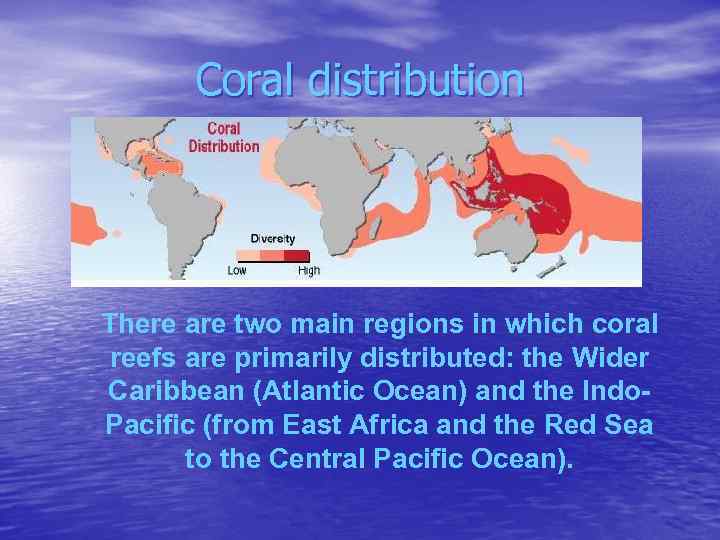
Coral distribution There are two main regions in which coral reefs are primarily distributed: the Wider Caribbean (Atlantic Ocean) and the Indo. Pacific (from East Africa and the Red Sea to the Central Pacific Ocean).
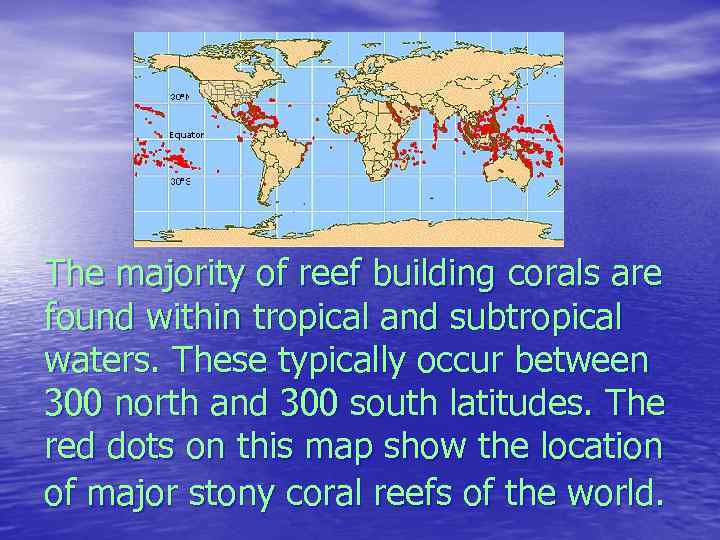
The majority of reef building corals are found within tropical and subtropical waters. These typically occur between 300 north and 300 south latitudes. The red dots on this map show the location of major stony coral reefs of the world.
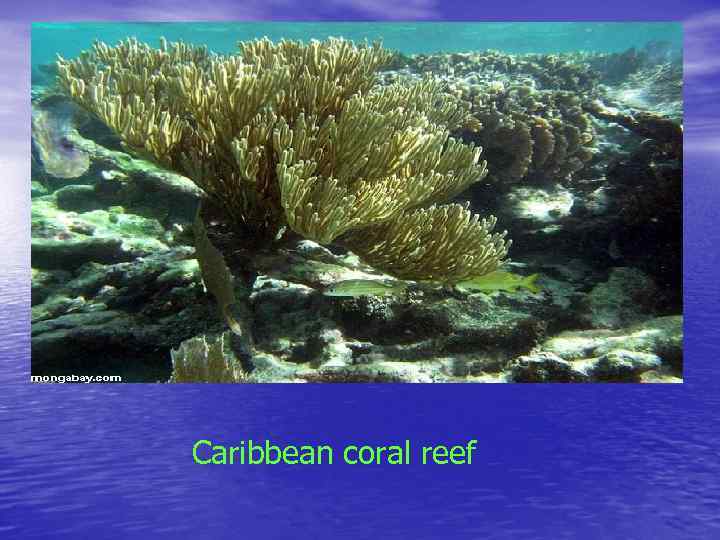
Caribbean coral reef
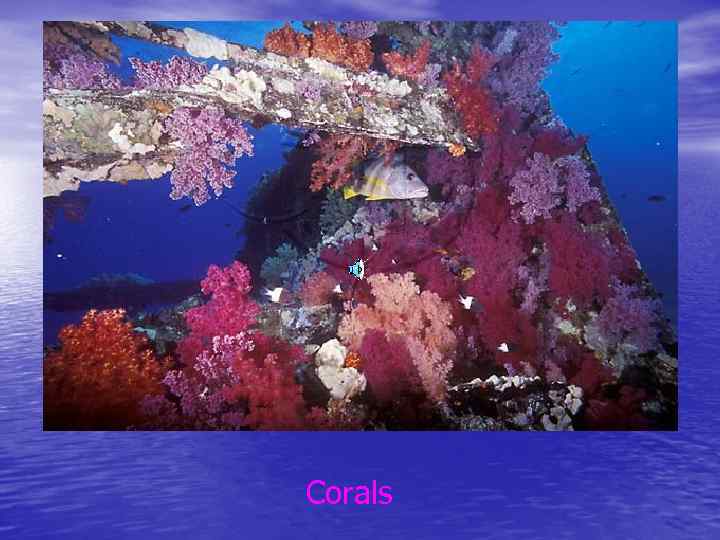
Corals
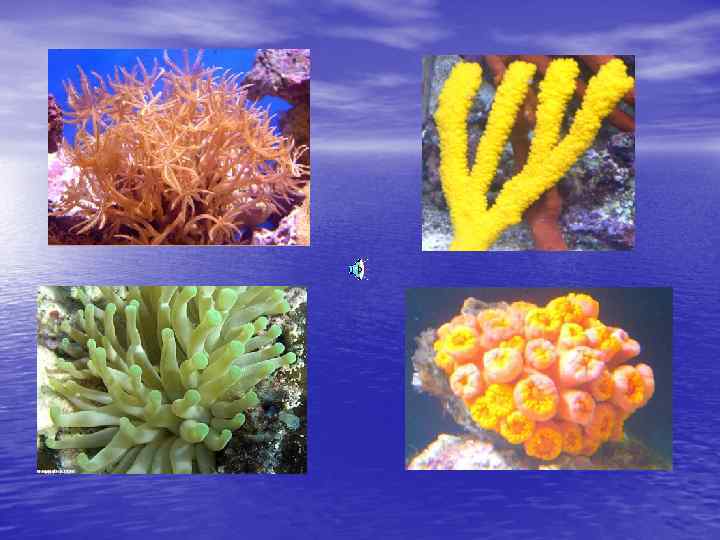
Basic facts about corals: • Coral are living animals that die and leave hard • • exoskeletons. Corals typically form colonies consisting of many individuals. The term 'coral' refers to a number of different of animals. Coral are extremely fragile, but they are sharp! Coral are considered a delicacy by whales. Coral naturally lose their color. Coral are of the jellyfish family. More than 80% of the world's shallow reefs are severely over-fished. Coral reefs are found in 109 countries.
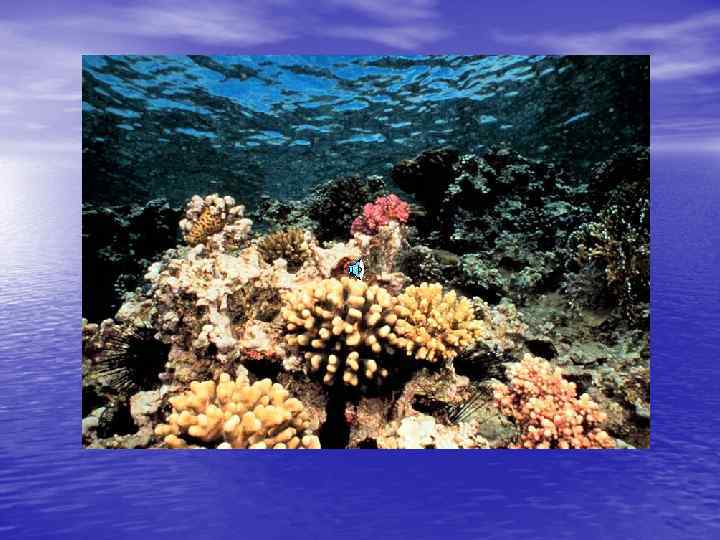
Interesting and unusual facts about corals • Many myths and legends surround coral. Coral artifacts have been found from as long ago as 10, 000 B. C. Many special properties are attributed to it: Coral is one of the seven treasures listed in Buddhist scriptures. Coral was thought to be able to calm the sea. Coral was believed to protect from lightning and hurricanes. Coral was worn as a talisman to stop bleeding. If the wearer of coral became seriously ill, it was believed the coral would lose its color. Ancient Romans would put coral around the necks of their children to protect them from harm.