 Скачать презентацию Prof nadzw dr hab Jarosław Rokicki Sociology
Social bonds.pptx
- Количество слайдов: 17



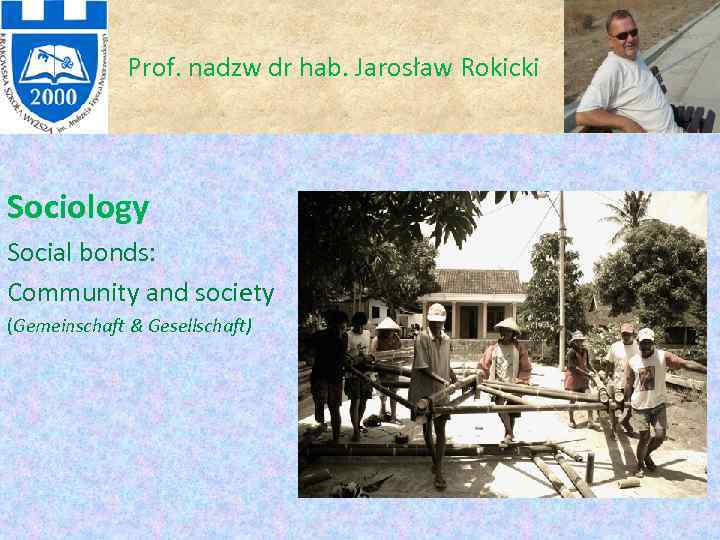
Prof. nadzw dr hab. Jarosław Rokicki Sociology Social bonds: Community and society (Gemeinschaft & Gesellschaft)
Więź społeczna. Podstawowe kategorie i podziały Social bonds: a feeling of togetherness which guarantees a group persistence • Objective - as a result of social status, profession, age, sex and other ascribed components of the social status • subjective - resulting from individual, personal identification with the others. Me + them = us „A collection of people becomes a social group only when they feel they belong to each other, and they identify themselves as >we< and >us< group”. ” (Stanisław Ossowski)
Więź społeczna. Podstawowe kategorie i podziały An interpersonal relationship is a strong, deep, or close association or acquaintance between two or more people that may range in duration from brief to enduring. Gemeinschaft: belonging to personal social interactions, and the roles, values, and beliefs based on such interactions. a social unit of any size that shares common values. Based on face-toface relationships. Gesellschaft: belonging to indirect interactions, impersonal roles, formal values, and beliefs based on such interaction Determined relatioinships: determined by society, coercion, power and/or law. Face to face relationships: A type of interaction in which sensory organs play an important role Status relationships: The relationships stemmed from social status, i. e. the position or rank of a person or group, within the society.
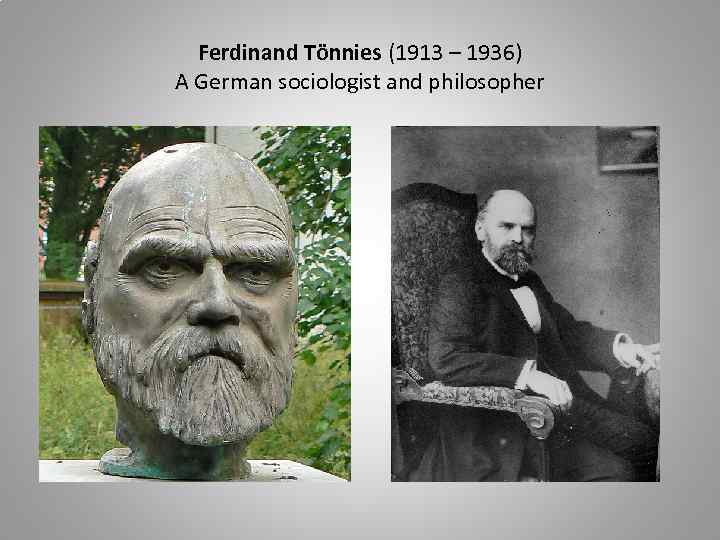
Ferdinand Tönnies (1913 – 1936) A German sociologist and philosopher
Gemeinschaft & Gesellschaft Gemeinschaft —translated • Gesellschaft — often as community (or left translated as society — untranslated)— refers to on the other hand, groupings based on refers to groups that are feelings of togetherness sustained by it being and on mutual bonds, instrumental for their which are felt as a goal members' individual to be kept up, their aims and goals. members being means for this goal.

Gemeinschaft & Gesellschaft Gemeinschaft, or community, relations are based on • a relatively homogenous culture and • tend to be intimate, informal, cooperative, and imbued with a sense of moral obligation to the group. These relationships are typical of hunter-gatherer, horticultural, and other relatively small preindustrial societies. Gesellschaft relations are: • more formal, • goal-oriented, • heterogeneous, and • based on individual selfinterest, • competition, and • complex division of labor. These relationships are typical of industrial societies.
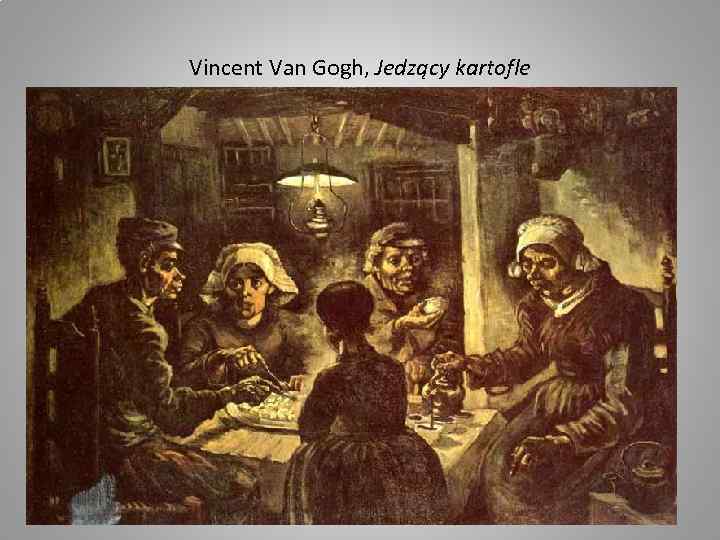
Vincent Van Gogh, Jedzący kartofle
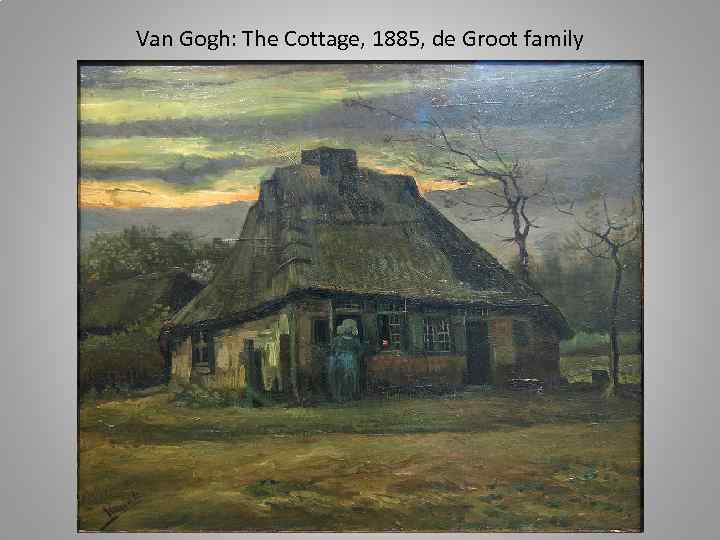
Van Gogh: The Cottage, 1885, de Groot family
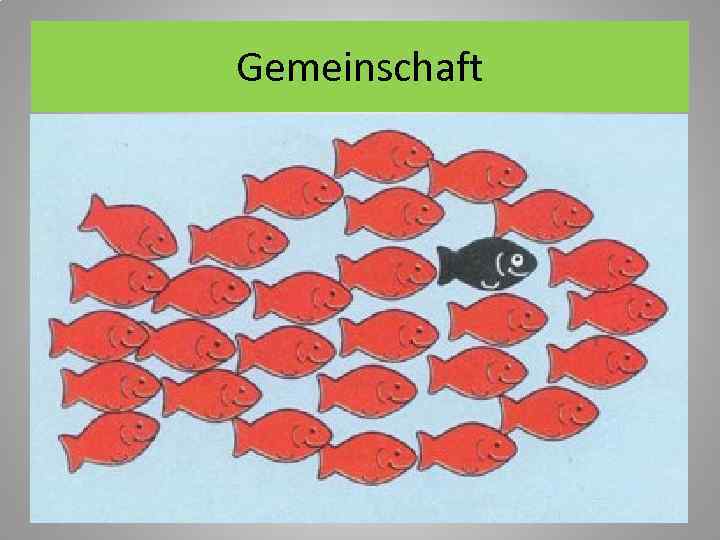
Gemeinschaft
Gesellschaft
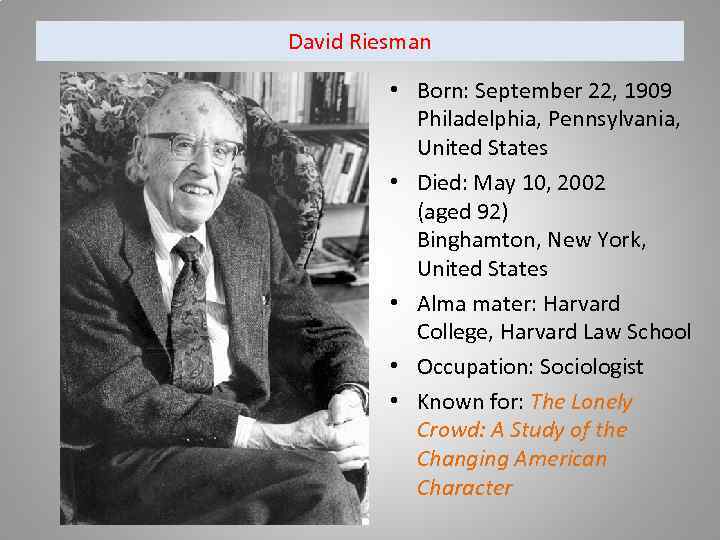
David Riesman • Born: September 22, 1909 Philadelphia, Pennsylvania, United States • Died: May 10, 2002 (aged 92) Binghamton, New York, United States • Alma mater: Harvard College, Harvard Law School • Occupation: Sociologist • Known for: The Lonely Crowd: A Study of the Changing American Character
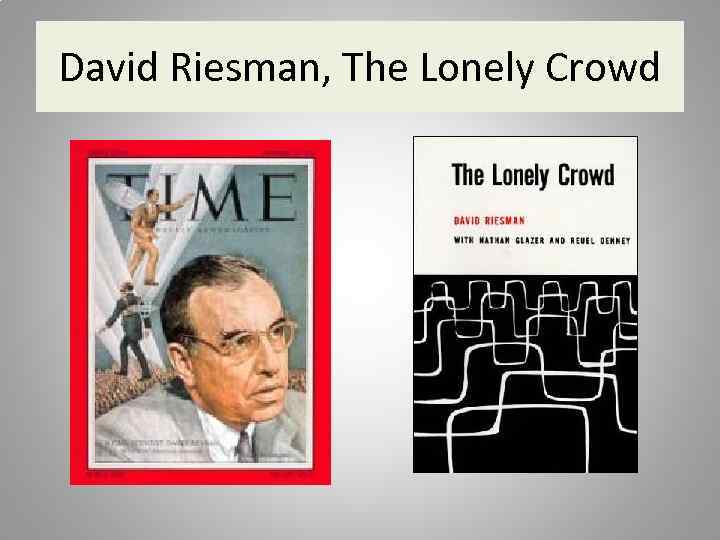
David Riesman, The Lonely Crowd
The Lonely Crowd • A study of modern conformity, which postulates the existence of the "innerdirected" and "other-directed" personalities. • Inner directed: directed in thought and action by one's own scale of values as opposed to external norms • Other directed: people who take on the goals, ideology, likes, and dislikes of others, eg. their community.
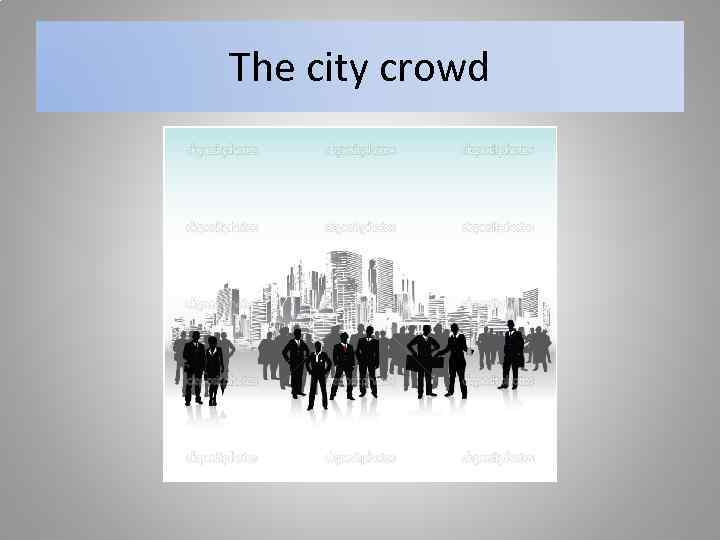
The city crowd
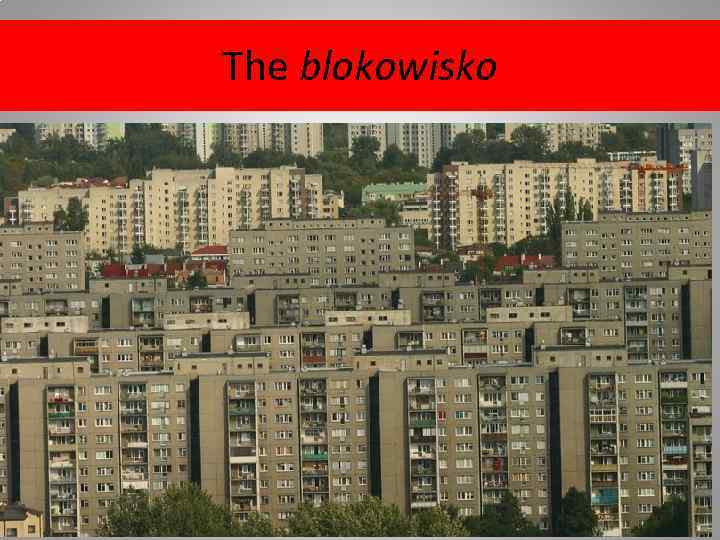
The blokowisko
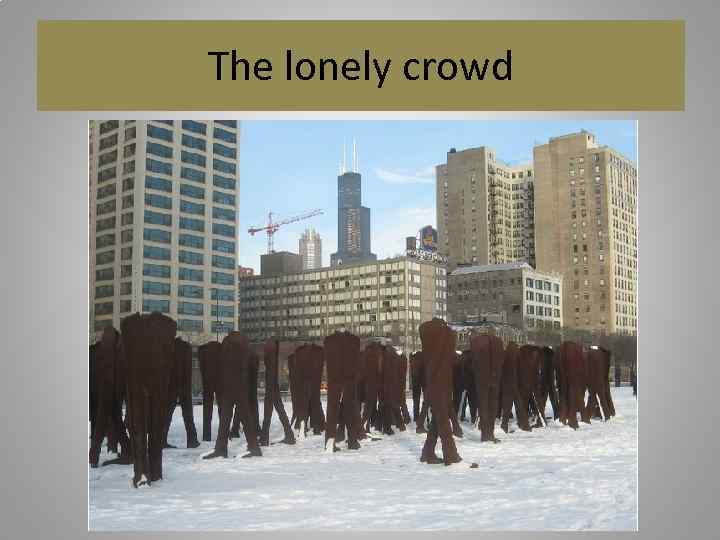
The lonely crowd
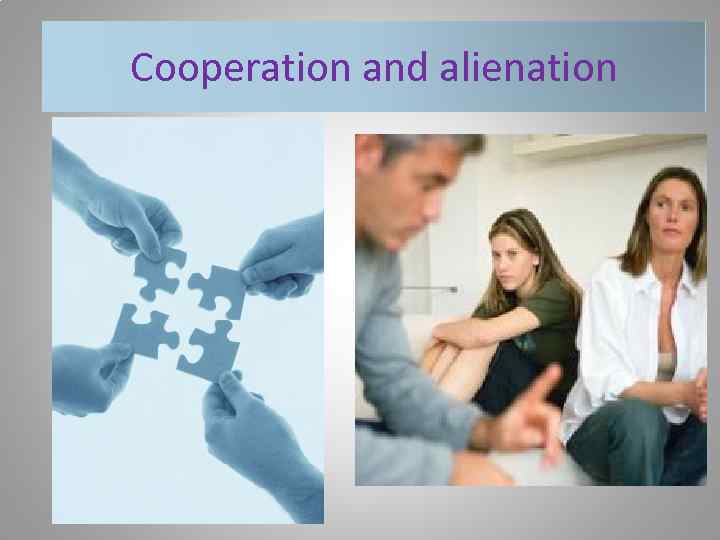
Cooperation and alienation
Скачать презентацию Prof nadzw dr hab Jarosław Rokicki Sociology
Social bonds.pptx