


 Скачать презентацию Prof Dr Peter MIHÁLYI Hungary The crisis of
EN_The_crisis_of_the_euro.pptx
- Количество слайдов: 14
 Prof. Dr. Peter MIHÁLYI (Hungary) The crisis of the Euro Российский Экономический Университет имени Г. В. Плеханова, Финансовый факультет Международный финансовый симпозиум, Moscow, 8 October, 2015.
 Introduction of Prof. Dr. Peter MIHÁLYI Born in Budapest (1953) Education: Karl Marx University of Economics (Budapest) 1983 -1993: United Nations Economic Commission for Europe (Geneva, Switzerland) 1994 -95: Deputy Government Commissioner for Privatization 1997 -98: Deputy Minister of Finance 1998 – to date: University professor. Author of 15 books and cca. 100 scholarly papers articles. Editor-in-Chief: Acta Oeconomica (English language academic quarterly journal with impact factor) 2
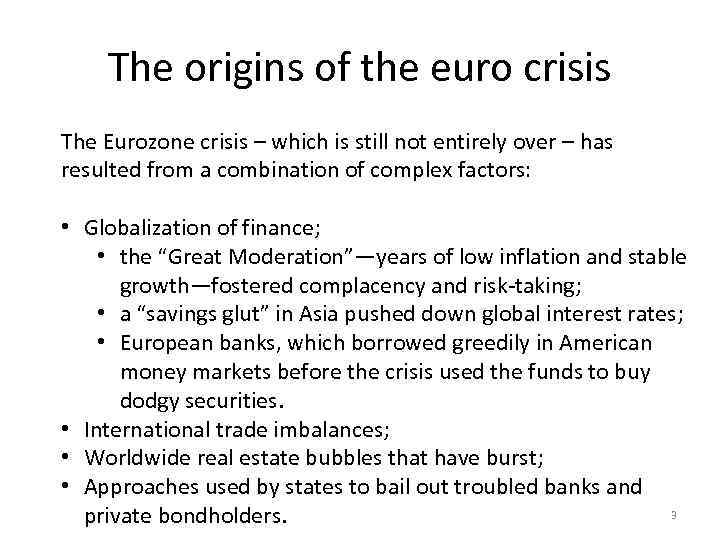 The origins of the euro crisis The Eurozone crisis – which is still not entirely over – has resulted from a combination of complex factors: • Globalization of finance; • the “Great Moderation”—years of low inflation and stable growth—fostered complacency and risk-taking; • a “savings glut” in Asia pushed down global interest rates; • European banks, which borrowed greedily in American money markets before the crisis used the funds to buy dodgy securities. • International trade imbalances; • Worldwide real estate bubbles that have burst; • Approaches used by states to bail out troubled banks and 3 private bondholders.
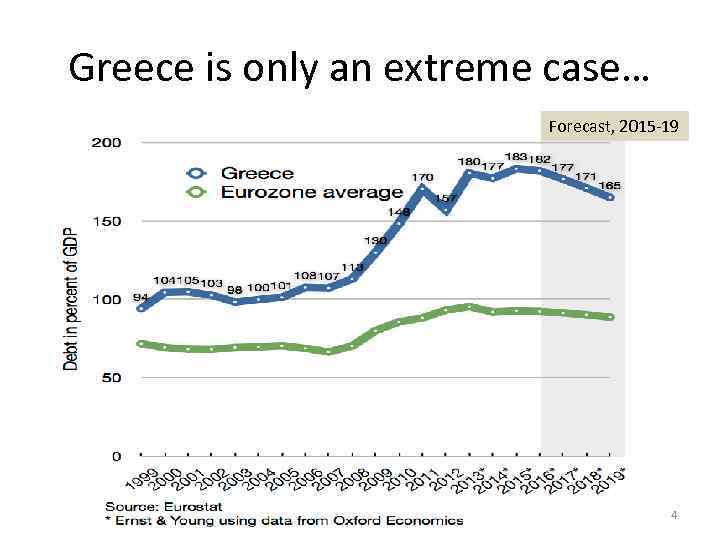 Greece is only an extreme case… Forecast, 2015 -19 4
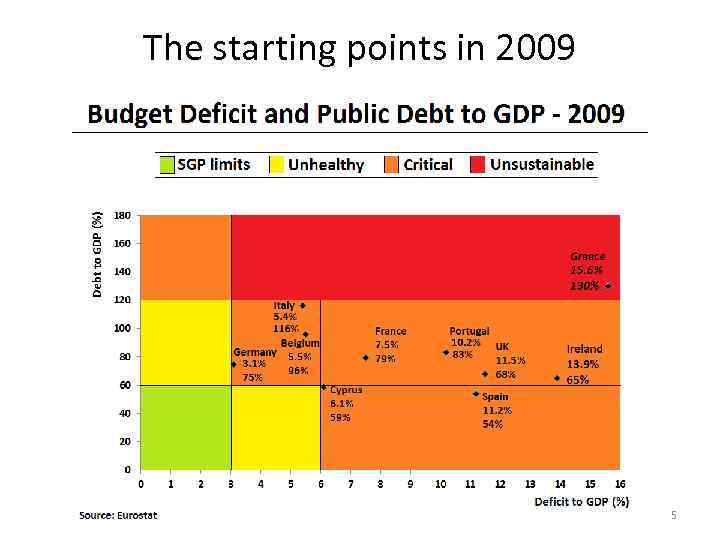 The starting points in 2009 5
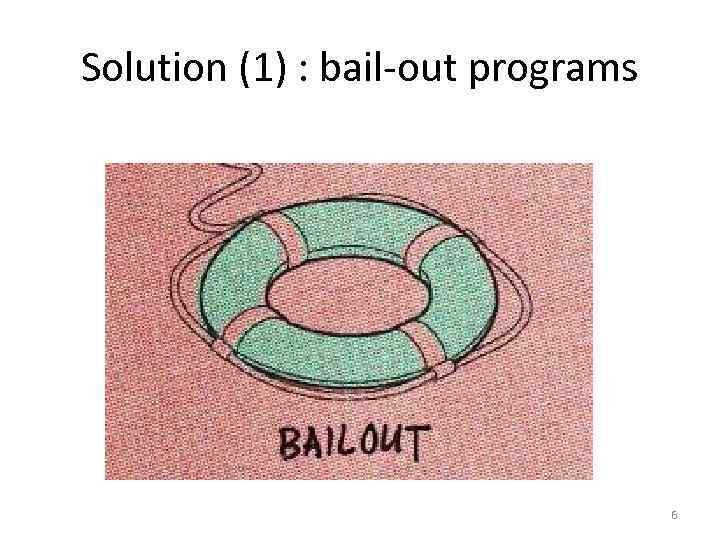 Solution (1) : bail-out programs 6
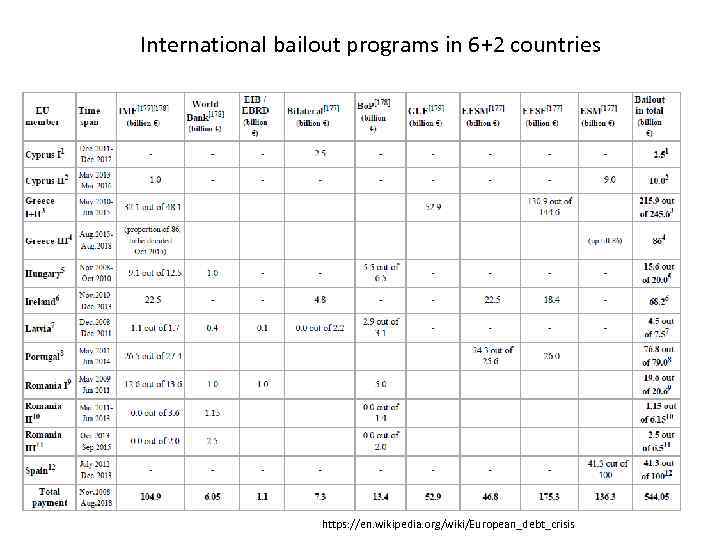 International bailout programs in 6+2 countries https: //en. wikipedia. org/wiki/European_debt_crisis 7
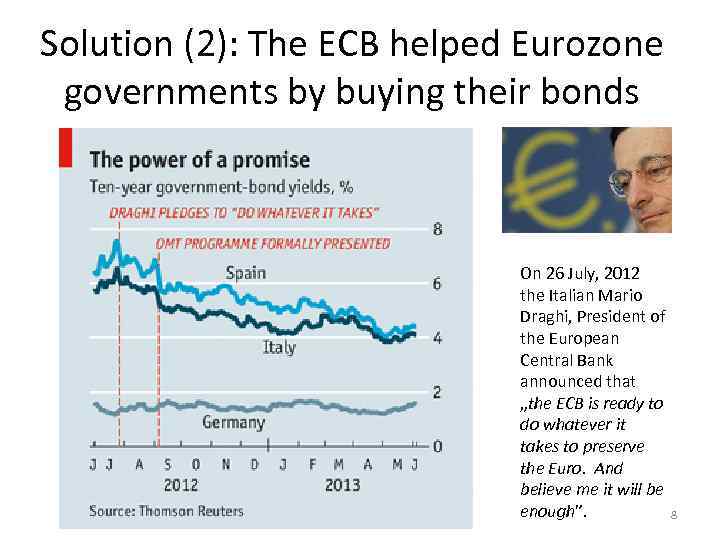 Solution (2): The ECB helped Eurozone governments by buying their bonds On 26 July, 2012 the Italian Mario Draghi, President of the European Central Bank announced that „the ECB is ready to do whatever it takes to preserve the Euro. And believe me it will be enough”. 8
 Solution (3): Radical austerity programs 1)Expenditure cuts 2)Tax increases 3)Structural reforms 9
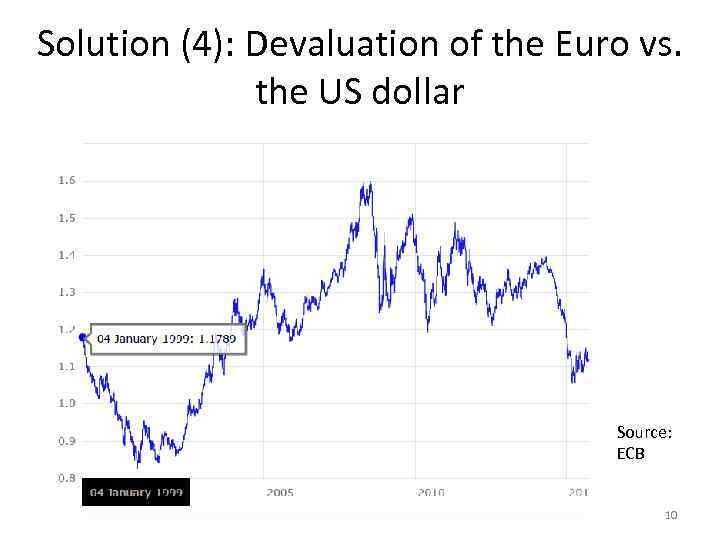 Solution (4): Devaluation of the Euro vs. the US dollar Source: ECB 10
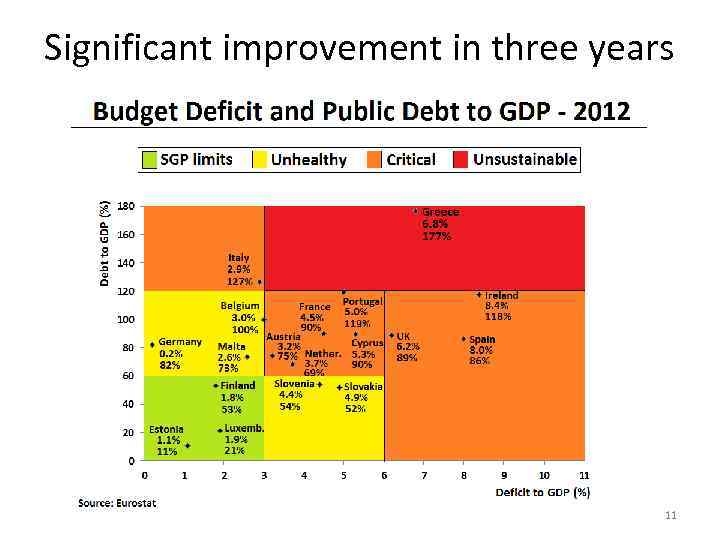 Significant improvement in three years 11
 Take-home messages 1) Austerity works when it is applied before it is too late. If the interest payments on government debt are already crippling the economy then a default might be unavoidable. The consequences of this are that government will not be able to afford to pay public sector workers and large parts of it will shut down entirely. Early, planned austerity to restore financial balance can avert this outcome. 2) Austerity works only, where the voters and the majority of the society believes in the superiority of the liberal market economy vis-a-vis populist „third way” alternatives. The two extreme examples are Greece and Ireland. 12
 Contact coordinates: Prof. Dr. Peter MIHÁLYI Visiting Professor Central European University (Budapest) Economics Department and Head Department of Finance University of Pannonia (Veszprém) E-mail: peter@mihalyi. com Editor-in-Chief of Acta Oeconomica URL: http: //akkrt. hu/22/journals/products/economics/ acta_oeconomica_eng 13
 14
14