 Скачать презентацию Product Presentation Instruments for Animal Behavioral Research
e3d226fe97808edef87bf515ce7b46ff.ppt
- Количество слайдов: 62



Product Presentation Instruments for Animal Behavioral Research © Metris b. v. 2009 1
Content n Company overview n Products n Importance of the energy parameter in Behavioral Pharmacology 2
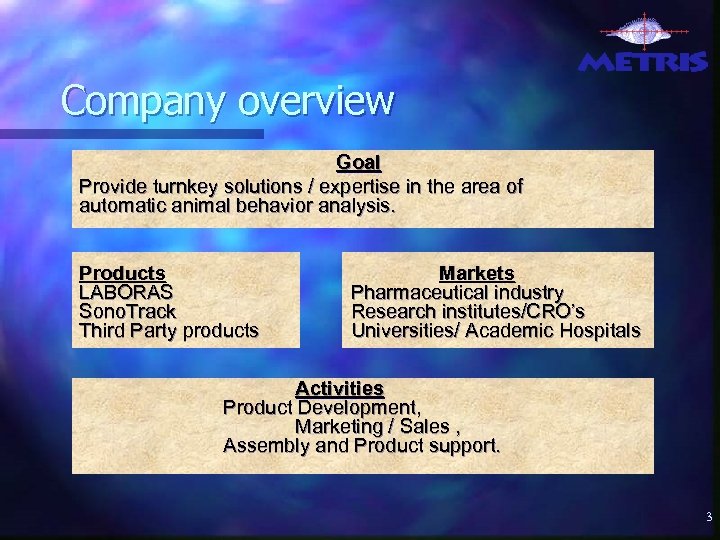
Company overview Goal Provide turnkey solutions / expertise in the area of automatic animal behavior analysis. Products LABORAS Sono. Track Third Party products Markets Pharmaceutical industry Research institutes/CRO’s Universities/ Academic Hospitals Activities Product Development, Marketing / Sales , Assembly and Product support. 3
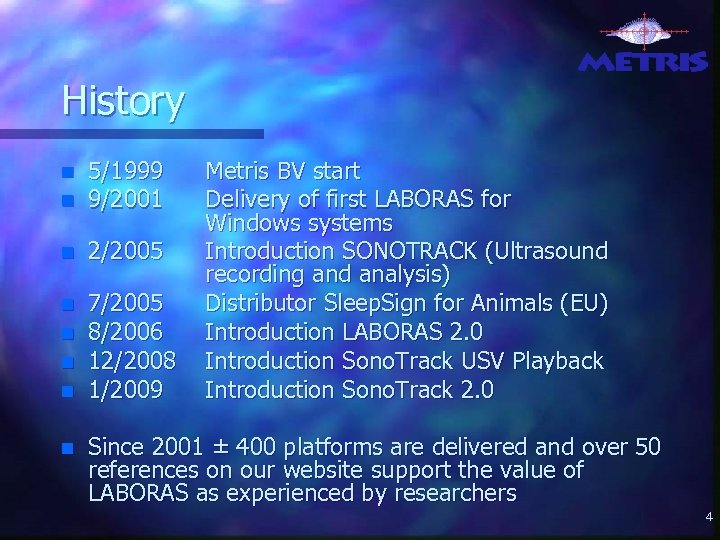
History n 5/1999 9/2001 n 2/2005 n 7/2005 8/2006 12/2008 1/2009 n n n Metris BV start Delivery of first LABORAS for Windows systems Introduction SONOTRACK (Ultrasound recording and analysis) Distributor Sleep. Sign for Animals (EU) Introduction LABORAS 2. 0 Introduction Sono. Track USV Playback Introduction Sono. Track 2. 0 Since 2001 ± 400 platforms are delivered and over 50 references on our website support the value of LABORAS as experienced by researchers 4
Company Relations Distributors n n n Neuroscience Inc. (Japan) Kuo Yang Scientific Corporation (Taiwan) Mirae Korea Inc. (South Korea) Medi Analytika Ltd. (India) AH Medical Supply (China) Radon Medical (Turkey) Cooperations n n Data. Sciences – Telemetry (USA) Kissei (Japan) Porsolt (France) National Instruments (USA, NL, Armenia) 5
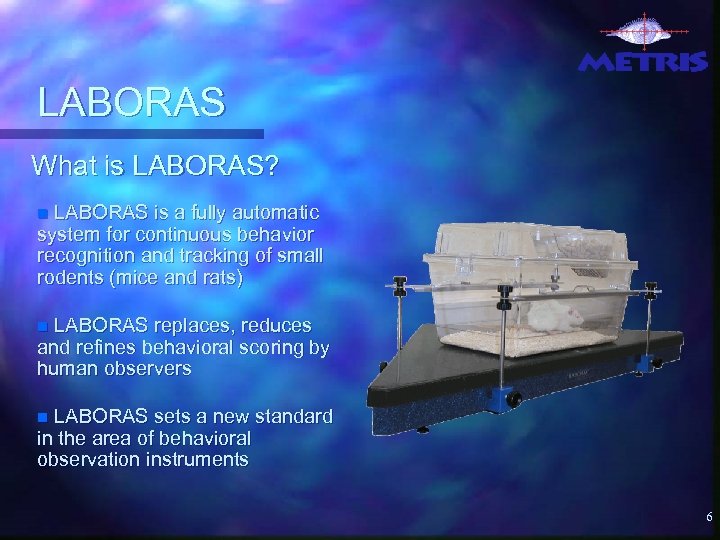
LABORAS What is LABORAS? LABORAS is a fully automatic system for continuous behavior recognition and tracking of small rodents (mice and rats) n LABORAS replaces, reduces and refines behavioral scoring by human observers n LABORAS sets a new standard in the area of behavioral observation instruments n 6
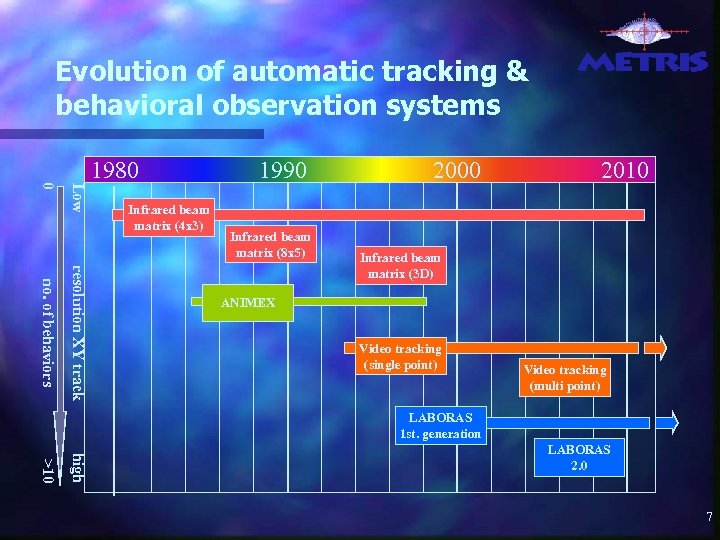
Evolution of automatic tracking & behavioral observation systems Low 0 1980 Infrared beam matrix (4 x 3) 1990 Infrared beam matrix (8 x 5) 2000 2010 resolution XY track no. of behaviors Infrared beam matrix (3 D) ANIMEX Video tracking (single point) Video tracking (multi point) LABORAS 1 st. generation high >10 LABORAS 2. 0 7
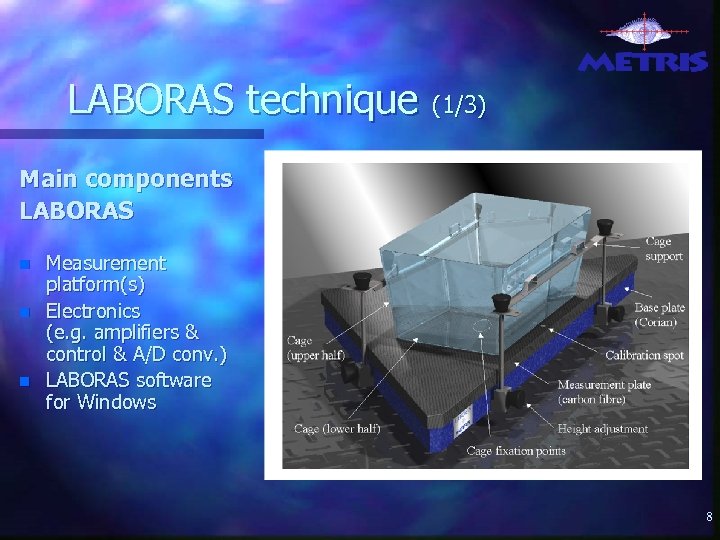
LABORAS technique (1/3) Main components LABORAS n n n Measurement platform(s) Electronics (e. g. amplifiers & control & A/D conv. ) LABORAS software for Windows 8
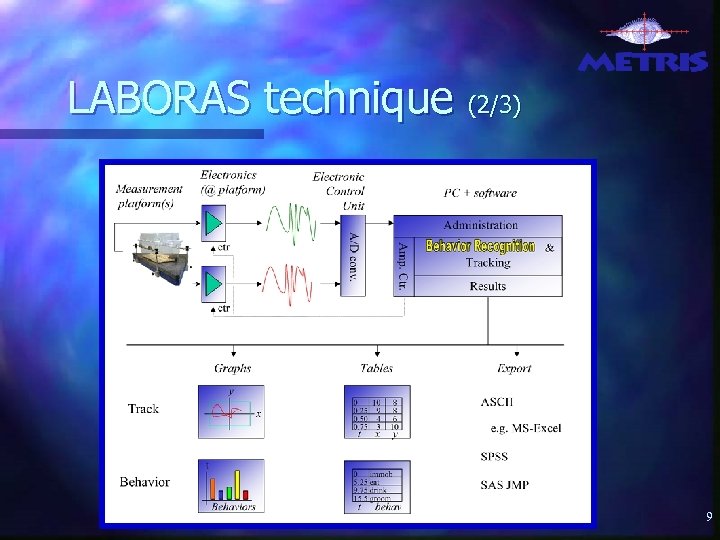
LABORAS technique (2/3) 9
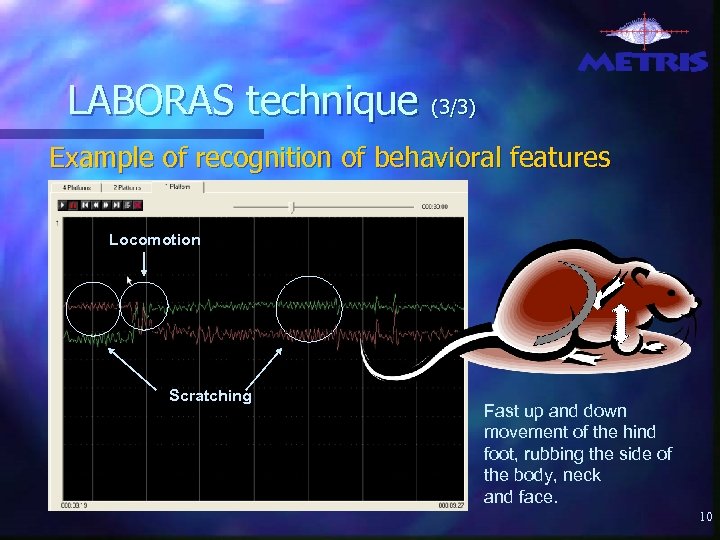
LABORAS technique (3/3) Example of recognition of behavioral features Locomotion Scratching Fast up and down movement of the hind foot, rubbing the side of the body, neck and face. 10
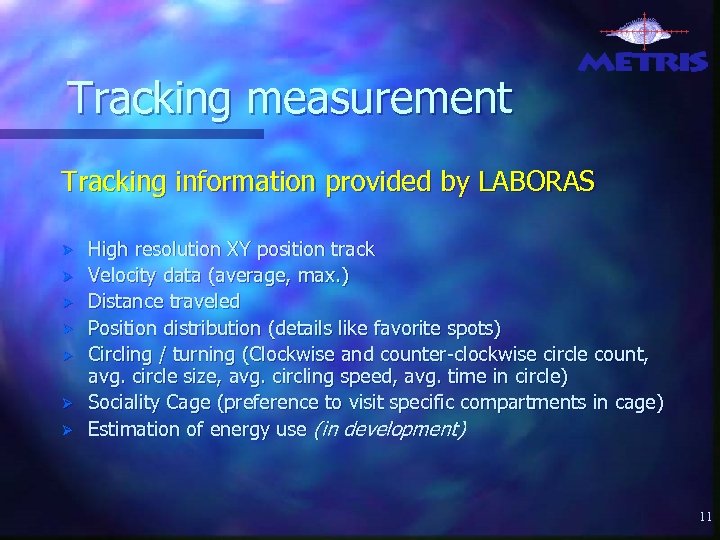
Tracking measurement Tracking information provided by LABORAS Ø Ø Ø Ø High resolution XY position track Velocity data (average, max. ) Distance traveled Position distribution (details like favorite spots) Circling / turning (Clockwise and counter-clockwise circle count, avg. circle size, avg. circling speed, avg. time in circle) Sociality Cage (preference to visit specific compartments in cage) Estimation of energy use (in development) 11
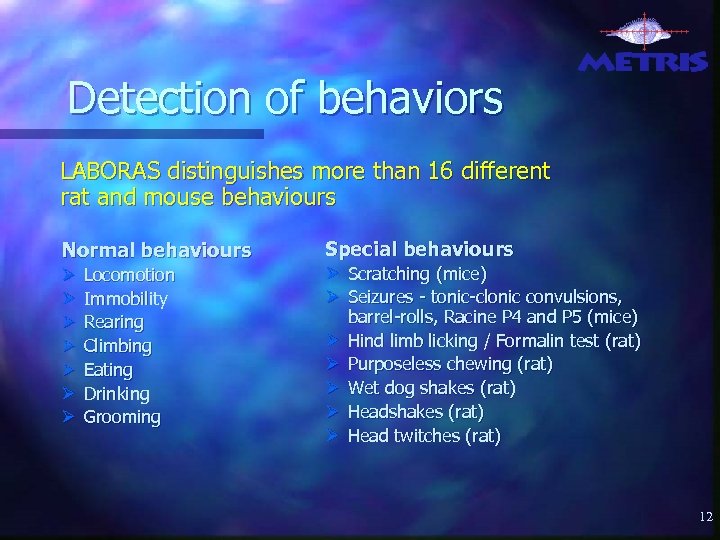
Detection of behaviors LABORAS distinguishes more than 16 different rat and mouse behaviours Normal behaviours Ø Ø Ø Ø Locomotion Immobility Rearing Climbing Eating Drinking Grooming Special behaviours Ø Ø Ø Ø Scratching (mice) Seizures - tonic-clonic convulsions, barrel-rolls, Racine P 4 and P 5 (mice) Hind limb licking / Formalin test (rat) Purposeless chewing (rat) Wet dog shakes (rat) Head twitches (rat) 12
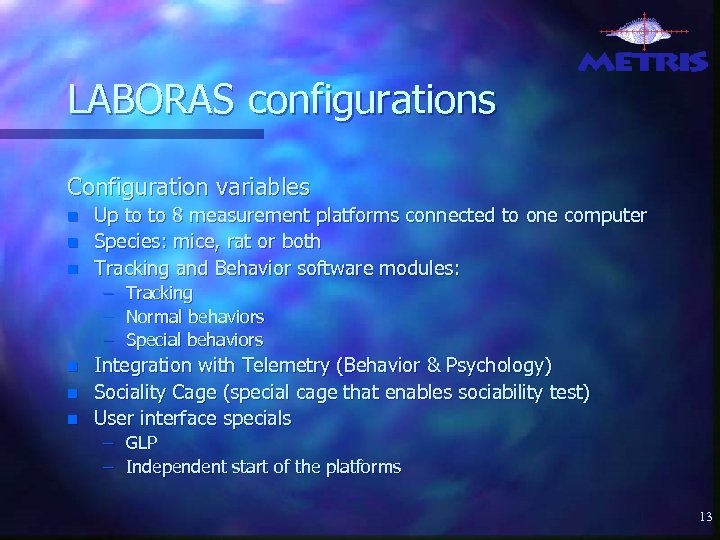
LABORAS configurations Configuration variables n n n Up to to 8 measurement platforms connected to one computer Species: mice, rat or both Tracking and Behavior software modules: – Tracking – Normal behaviors – Special behaviors n n n Integration with Telemetry (Behavior & Psychology) Sociality Cage (special cage that enables sociability test) User interface specials – GLP – Independent start of the platforms 13
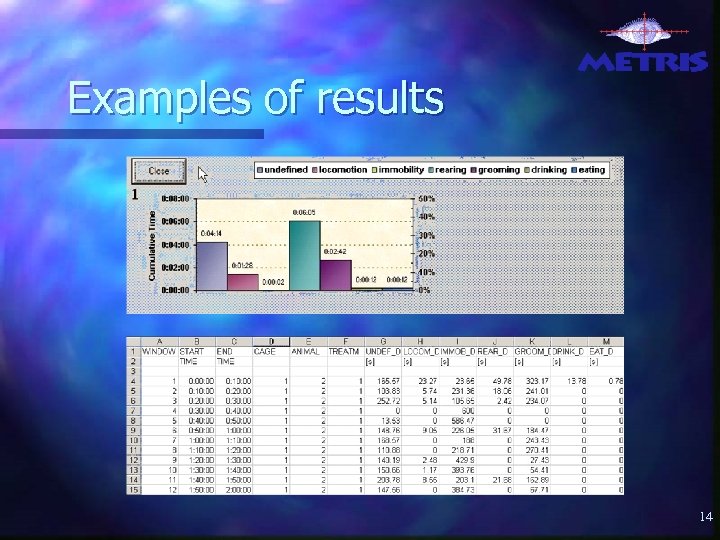
Examples of results 14
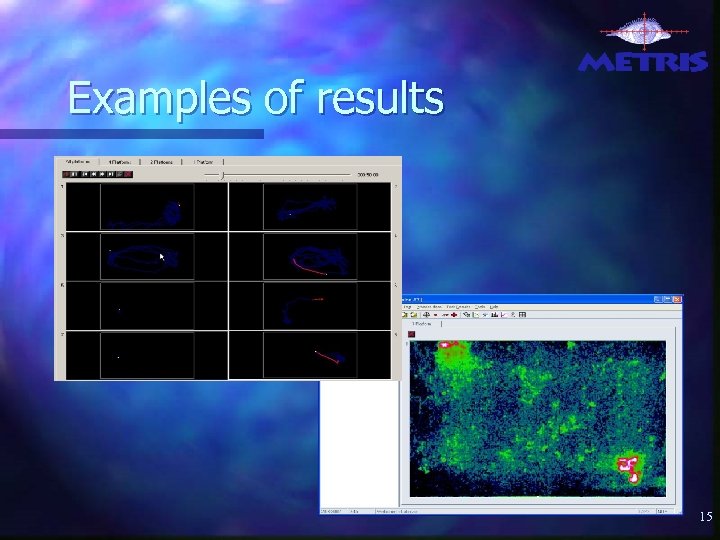
Examples of results 15
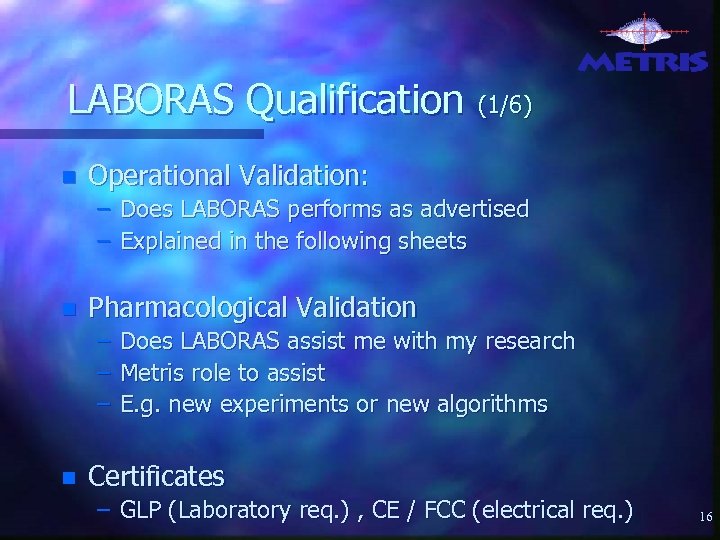
LABORAS Qualification n (1/6) Operational Validation: – Does LABORAS performs as advertised – Explained in the following sheets n Pharmacological Validation – Does LABORAS assist me with my research – Metris role to assist – E. g. new experiments or new algorithms n Certificates – GLP (Laboratory req. ) , CE / FCC (electrical req. ) 16
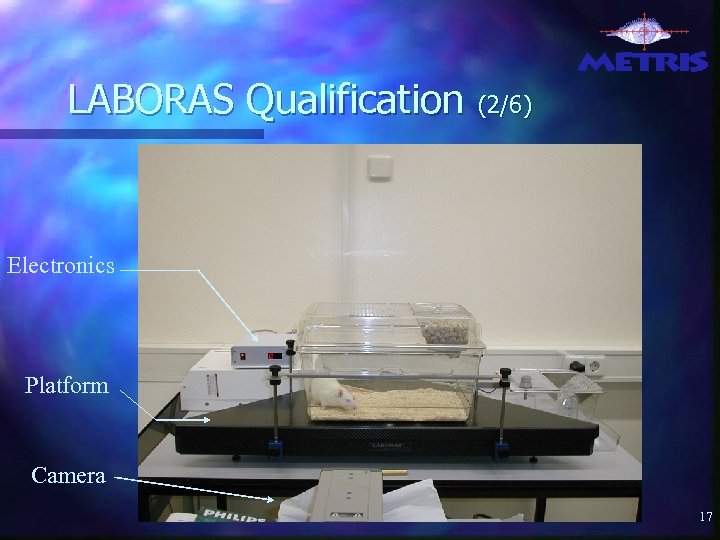
LABORAS Qualification (2/6) Electronics Platform Camera 17
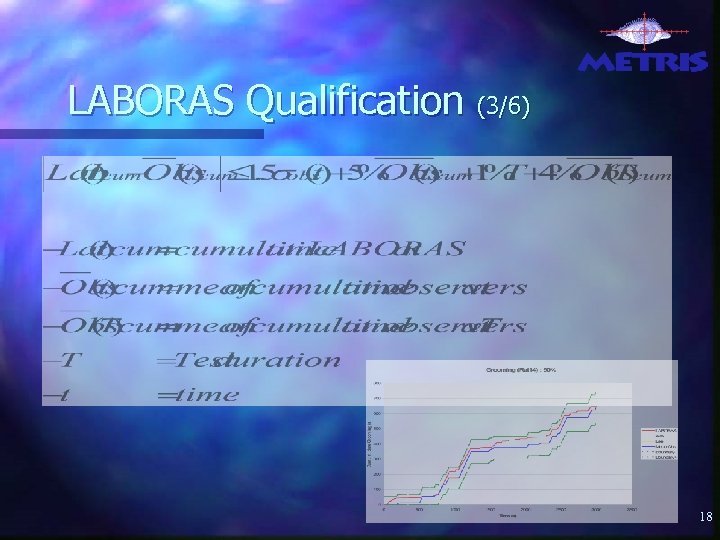
LABORAS Qualification (3/6) 18
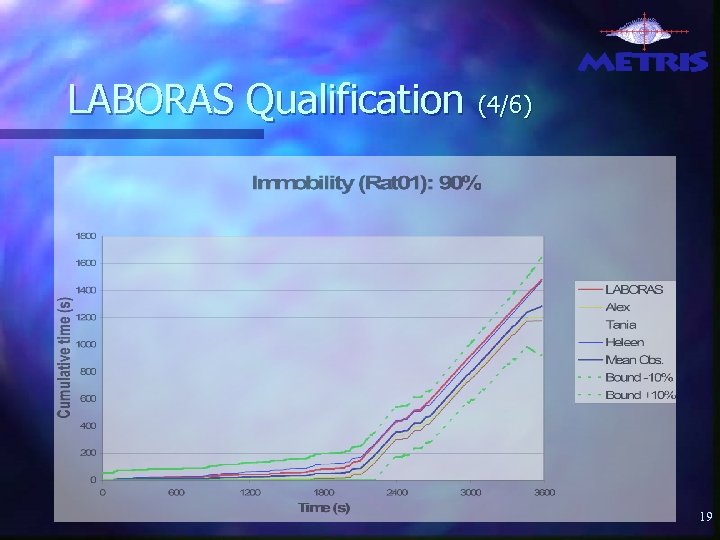
LABORAS Qualification (4/6) 19
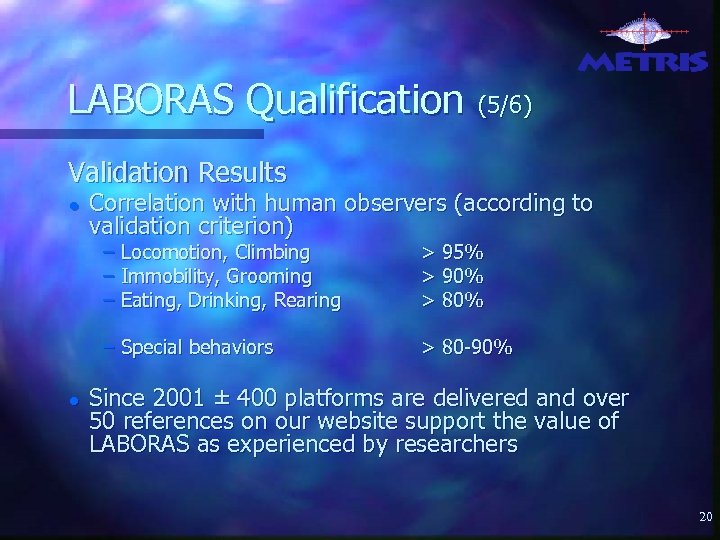
LABORAS Qualification (5/6) Validation Results ● Correlation with human observers (according to validation criterion) – Locomotion, Climbing – Immobility, Grooming – Eating, Drinking, Rearing – Special behaviors ● > 95% > 90% > 80 -90% Since 2001 ± 400 platforms are delivered and over 50 references on our website support the value of LABORAS as experienced by researchers 20
LABORAS Qualification (6/6) Development of new algorithms • • Good animal behavior definition Proper definition of the experiment protocol - and use of the LABORAS experiment administration • • Choice of pharmacological relevant behaviors Good correlation with the real behavior (acceptation criterion) - Not always human observer reference • Results presentation - Recording and Presentation of result data - Use of previous raw data/ result summaries Enabling the full benefit of LABORAS 21
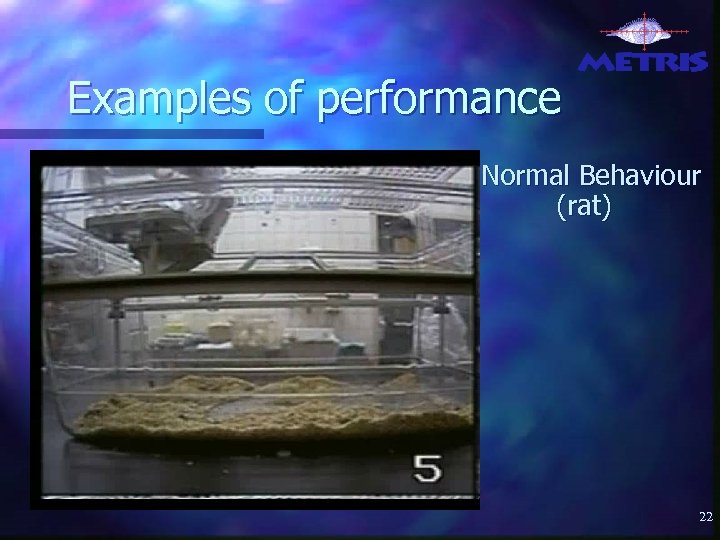
Examples of performance Normal Behaviour (rat) 22
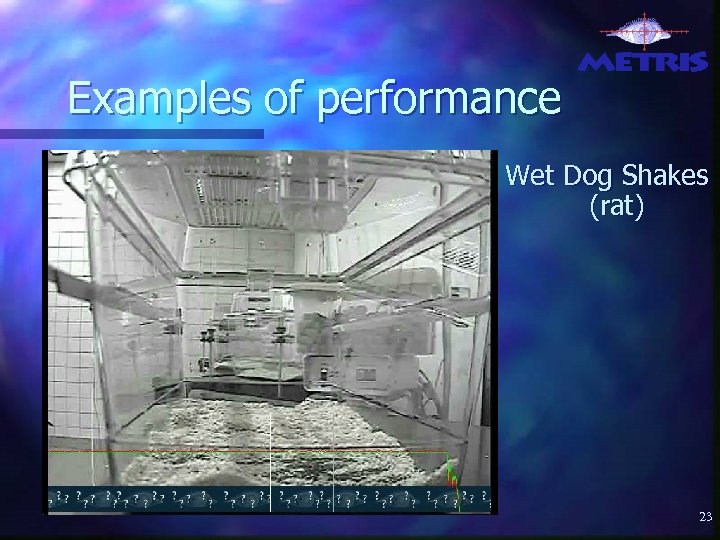
Examples of performance Wet Dog Shakes (rat) 23
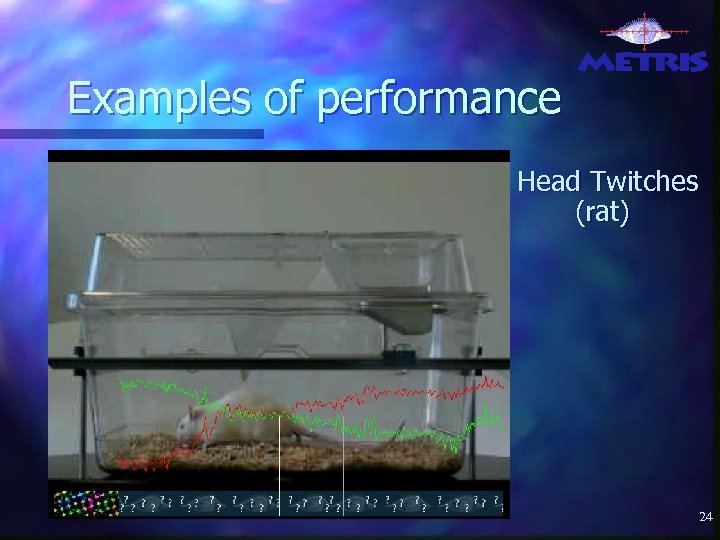
Examples of performance Head Twitches (rat) 24
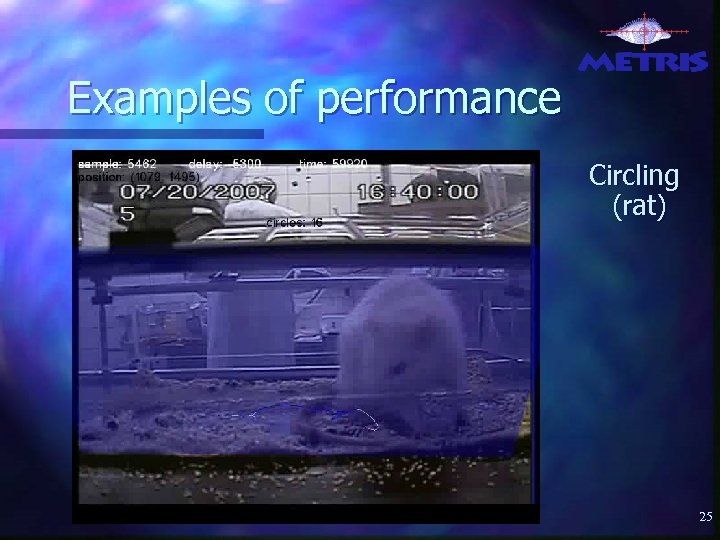
Examples of performance Circling (rat) 25
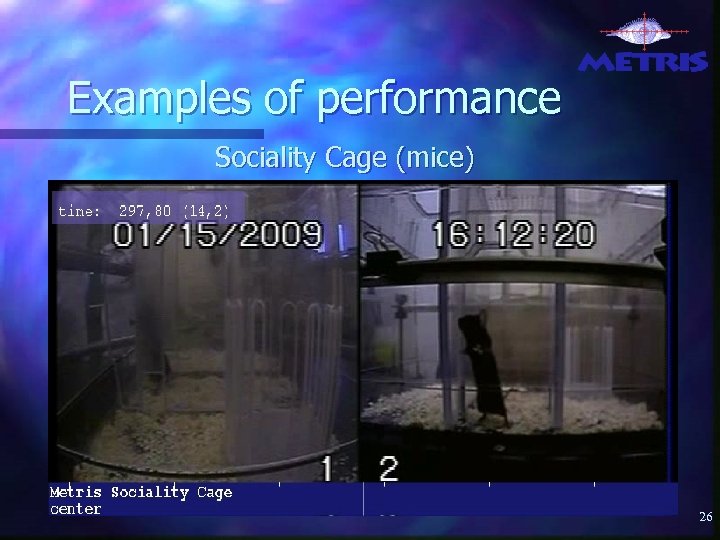
Examples of performance Sociality Cage (mice) 26
Applications LABORAS n LABORAS application areas are: (behavioral assessment in) – – – n Drug Development Safety Pharmacology Toxicology – Phenotyping – Lab. animal science Typical customers are: – Pharmaceutical Corp – Academic institutes – Hospitals – CRO’s (Contract Research Org. ) – Lab. animal suppliers – Governmental Organizations 27
Applications LABORAS Monitoring of behavioral changes and effects in: n Drug Development Drug Discovery research – Efficacy studies of new compounds – Long term observation tests (e. g. circadian rhytm, eat-drink patterns) – Experimentally induced behaviors (e. g. grooming, drinking, movement patterns, hindlimb-licking / formalin-test, scratching, WDS, Head Shakes) n n n Safety Pharmacology Toxicology Phenotyping research – High Capacity Phenotyping with transgenic mice 28
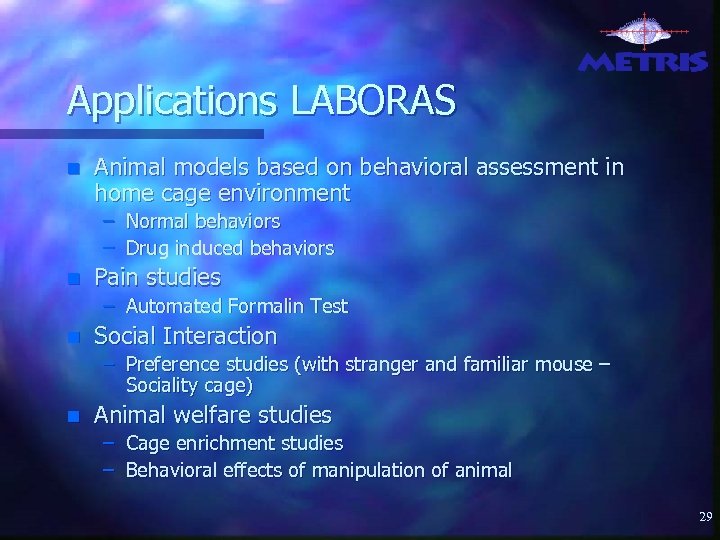
Applications LABORAS n Animal models based on behavioral assessment in home cage environment – Normal behaviors – Drug induced behaviors n Pain studies – Automated Formalin Test n Social Interaction – Preference studies (with stranger and familiar mouse – Sociality cage) n Animal welfare studies – Cage enrichment studies – Behavioral effects of manipulation of animal 29
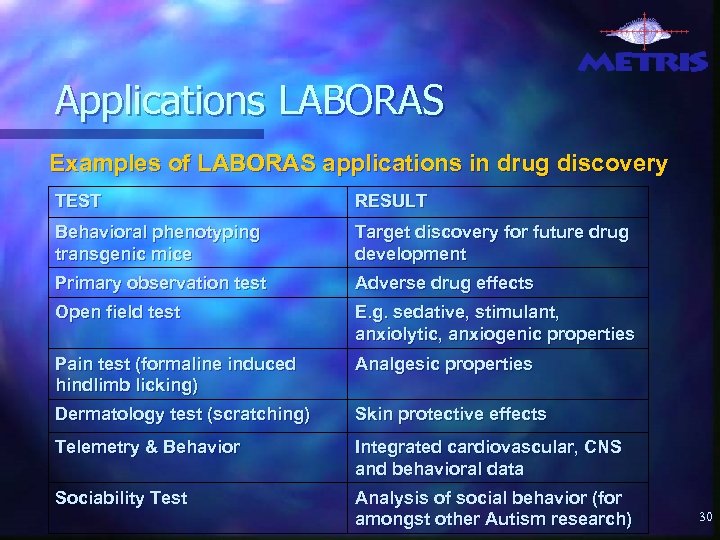
Applications LABORAS Examples of LABORAS applications in drug discovery TEST RESULT Behavioral phenotyping transgenic mice Target discovery for future drug development Primary observation test Adverse drug effects Open field test E. g. sedative, stimulant, anxiolytic, anxiogenic properties Pain test (formaline induced hindlimb licking) Analgesic properties Dermatology test (scratching) Skin protective effects Telemetry & Behavior Integrated cardiovascular, CNS and behavioral data Sociability Test Analysis of social behavior (for amongst other Autism research) 30
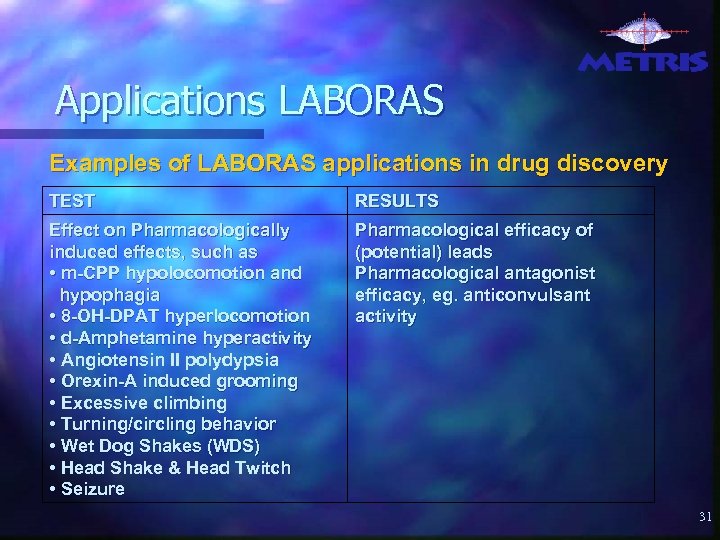
Applications LABORAS Examples of LABORAS applications in drug discovery TEST RESULTS Effect on Pharmacologically induced effects, such as • m-CPP hypolocomotion and hypophagia • 8 -OH-DPAT hyperlocomotion • d-Amphetamine hyperactivity • Angiotensin II polydypsia • Orexin-A induced grooming • Excessive climbing • Turning/circling behavior • Wet Dog Shakes (WDS) • Head Shake & Head Twitch • Seizure Pharmacological efficacy of (potential) leads Pharmacological antagonist efficacy, eg. anticonvulsant activity 31
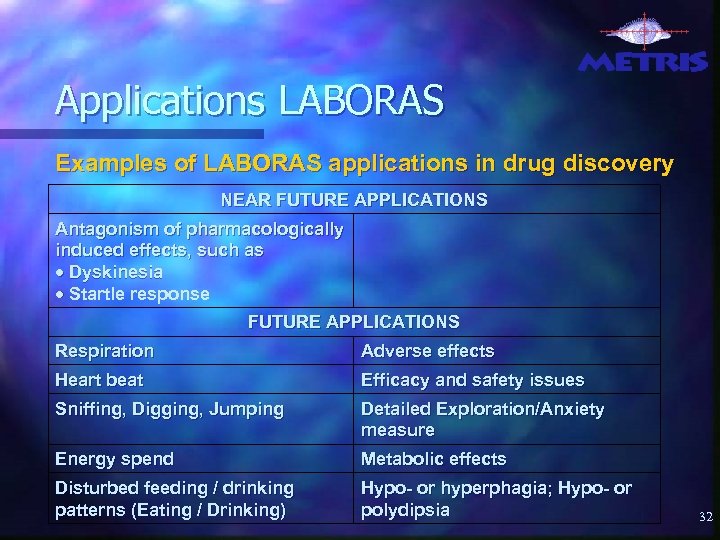
Applications LABORAS Examples of LABORAS applications in drug discovery NEAR FUTURE APPLICATIONS Antagonism of pharmacologically induced effects, such as Dyskinesia Startle response FUTURE APPLICATIONS Respiration Adverse effects Heart beat Efficacy and safety issues Sniffing, Digging, Jumping Detailed Exploration/Anxiety measure Energy spend Metabolic effects Disturbed feeding / drinking patterns (Eating / Drinking) Hypo- or hyperphagia; Hypo- or polydipsia 32
Overall benefits LABORAS General benefits for customer ● Standard and objective method − Eliminates inter- and intra observer deviation − Does not require trained or experienced raters ● ● Reduces time & costs (>75% reduction) Results are almost immediately available Many independent parameters can be measured with just one system (Tracking & behavior recognition combined in single system) Growth potential to determine several new behavioral and tracking parameters 33
Overall benefits LABORAS Important benefits for experiment ● ● ● Independent of light conditions Home cage environment and non-invasive method (stress minimized) Large scale observational experiments possible Long test periods possible More consistent results 34
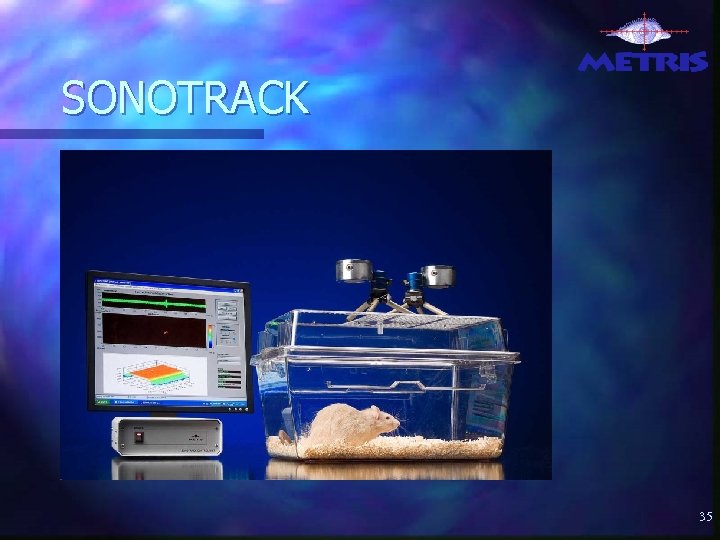
SONOTRACK 35
What is SONOTRACK? ● SONOTRACK records, visualizes and plays back ● SONOTRACK records the full spectrum from 15 k. Hz up to 100 k. Hz ● SONOTRACK records 4 independent ultrasound channels ● SONOTRACK can easily be adjusted to experimental environment and is easy to use Ultrasound Calls 36
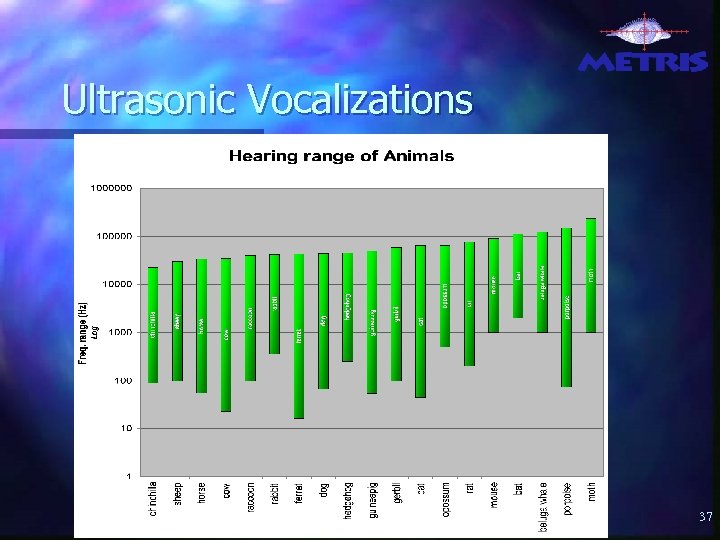
Ultrasonic Vocalizations 37
What is SONOTRACK ● SONOTRACK can be used for long term experiments ● SONOTRACK recognizes and counts Ultrasonic Vocalizations in user definable frequency bands ● SONOTRACK offers a new approach for characterization of animal behavior 38
SONOTRACK Applications ● SONOTRACK can be used to monitor animal welfare and interaction between animals based on the ultrasonic vocalizations of the animals ● Typical research areas: – – – Pain Anxiety Stress Depression Social interaction Animal Welfare 39
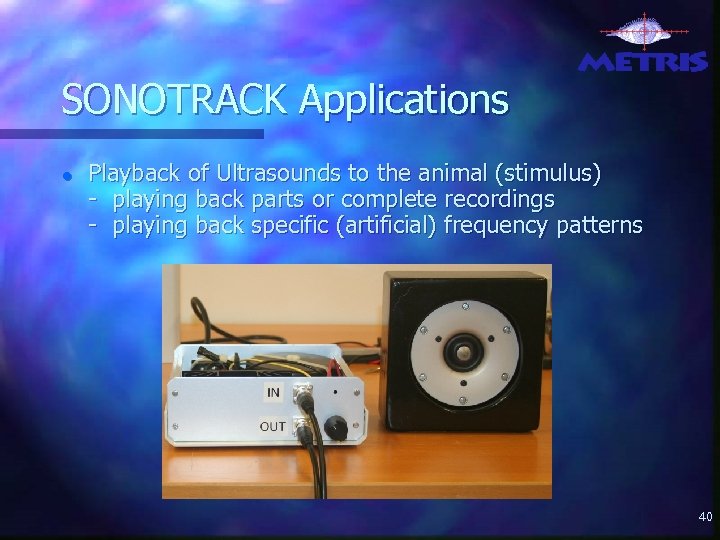
SONOTRACK Applications ● Playback of Ultrasounds to the animal (stimulus) - playing back parts or complete recordings - playing back specific (artificial) frequency patterns 40
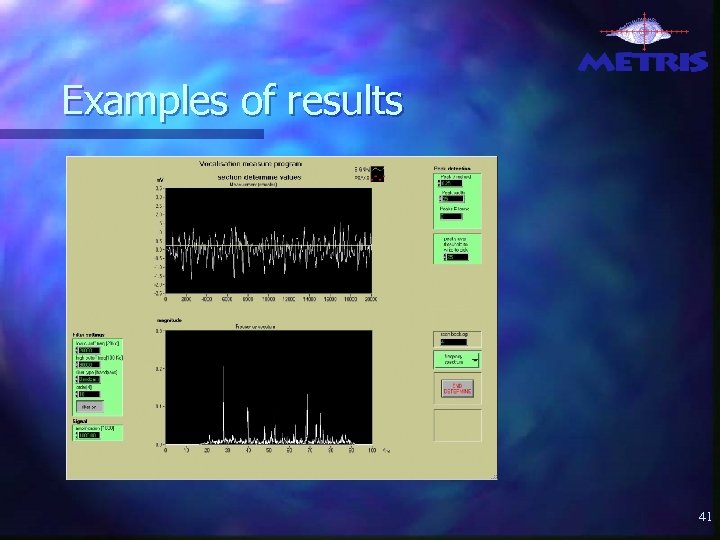
Examples of results 41
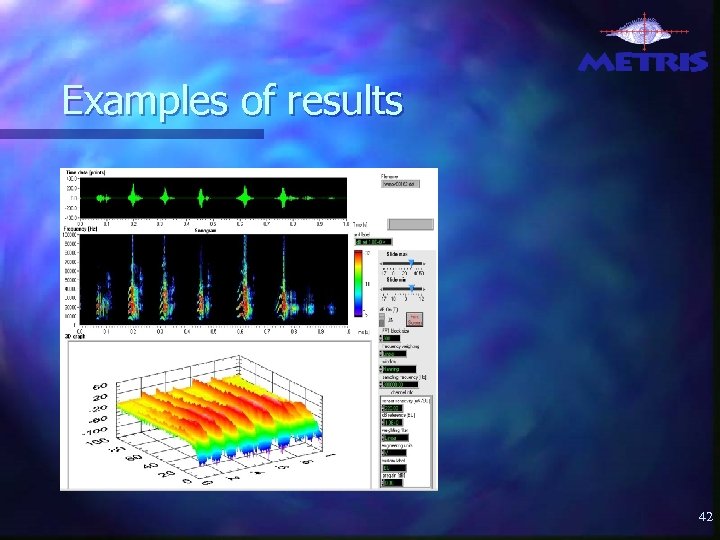
Examples of results 42
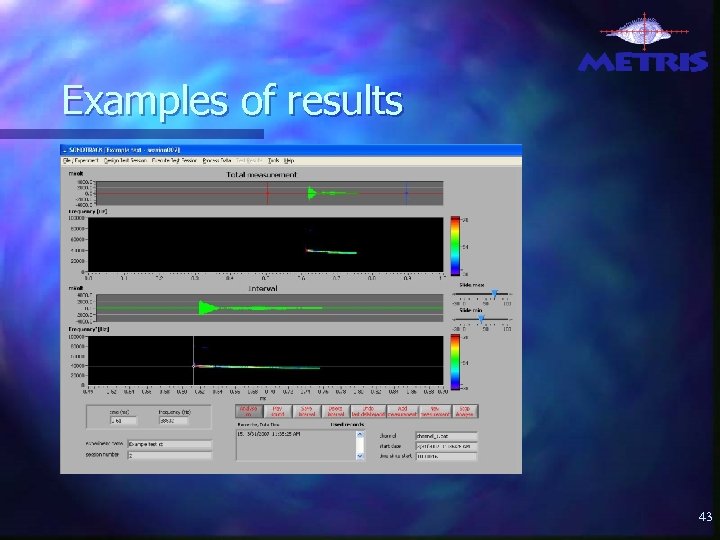
Examples of results 43
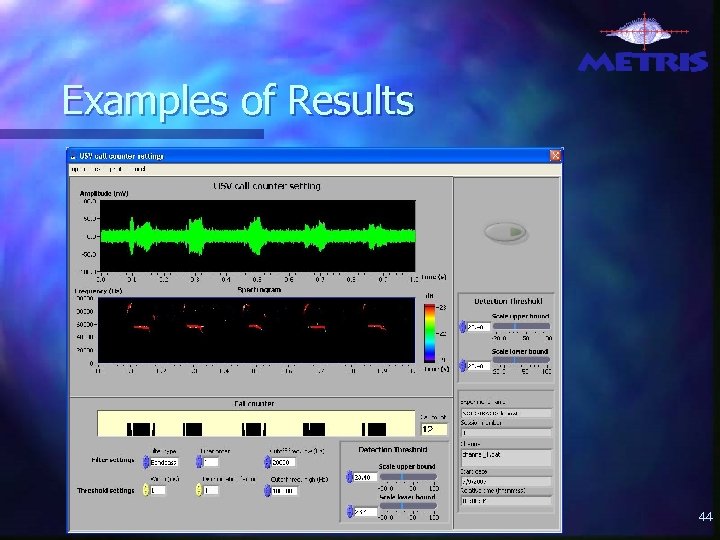
Examples of Results 44
Examples of results Ultrasound Vocalizations Marmoset Rats, Mother & Pup 45
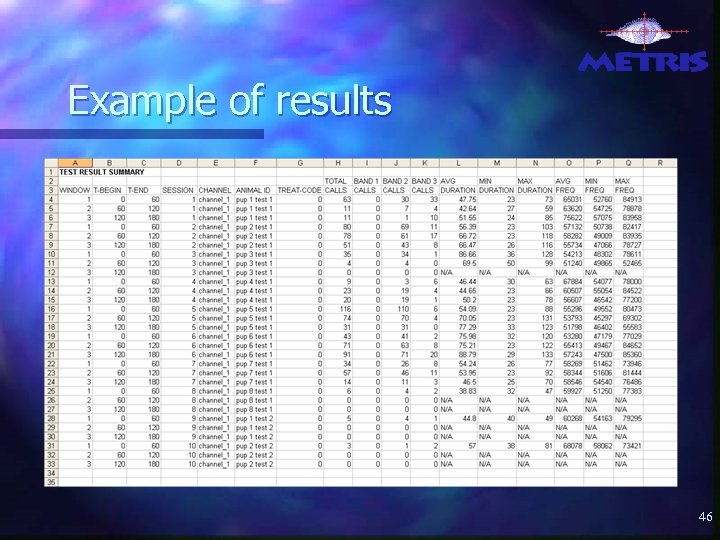
Example of results 46
What is Sleep. Sign? n Software for scoring of sleep stages n Based on EMG and EEG signals n Sleep stages can be scored in a manual mode as well as automatically n Scores pre-assigned sleep stages (such as REM, WAKE, SWS) and up to 3 user defined vigilance stages 47
Special features n n Works with wireless or wired EMG and EEG signals In depth analysis using Hypnograms and Trend Graphs Various analysis functions, incl. Stage Graphs, Vigilance State Parameter Display, FFT analysis Integrated with Video 48
Application areas n Pharmaceutical Research n Sleep Disorder Studies and Sleep pattern Analysis 49
Integration of Systems Integration of systems such as LABORAS, Video, DSI Telemetry, Sono. Track & Sleepsign § Less Experiments & Experimental lead time § Less Resources (animals, researchers & money) § Integrated analysis of parameters from different domains collected from the same experiment - Behavioral data and Tracking data - Psychological data - Sounds - Sleep stages 50
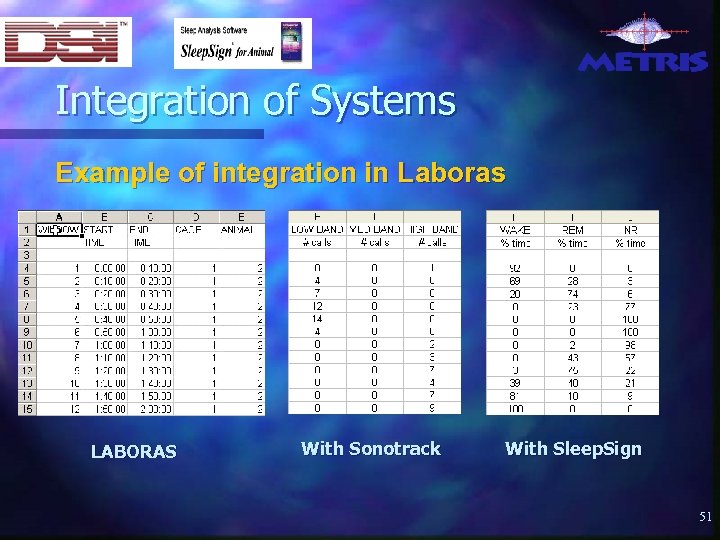
Integration of Systems Example of integration in Laboras LABORAS With Sonotrack With Sleep. Sign 51
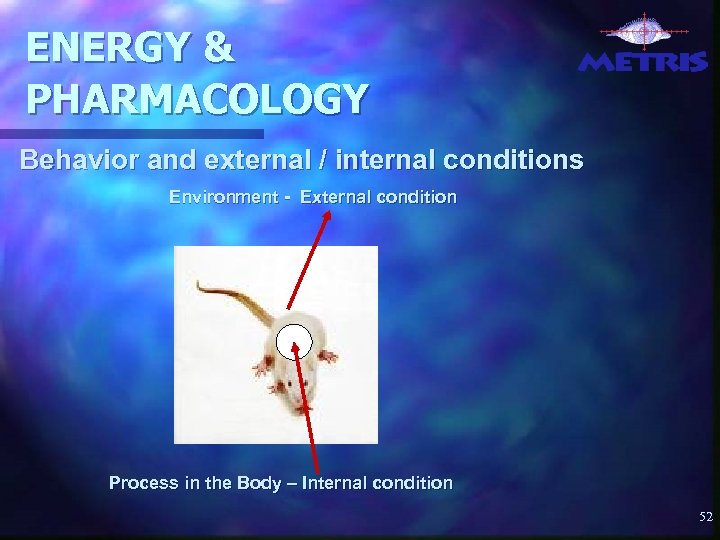
ENERGY & PHARMACOLOGY Behavior and external / internal conditions Environment - External condition Process in the Body – Internal condition 52
ENERGY & PHARMACOLOGY Basic structure BEHAVIOR = Function { Internal stimulus, external stimulus} 53
ENERGY & PHARMACOLOGY Animal behavior and environment BEHAVIOR= Function {Process in the Body, nervous Body system structure, nervous function, hormonal effects , biological clocks, perceptual mechanisms, Genes, stimulus filtering} 54
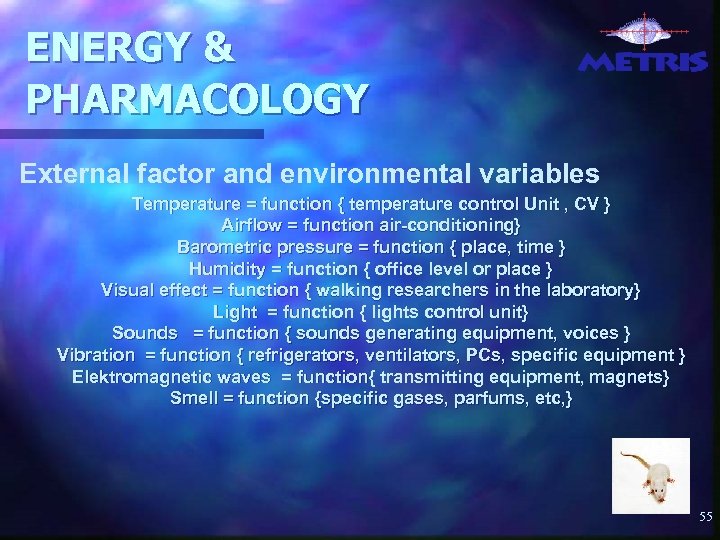
ENERGY & PHARMACOLOGY External factor and environmental variables Temperature = function { temperature control Unit , CV } Airflow = function air-conditioning} Barometric pressure = function { place, time } Humidity = function { office level or place } Visual effect = function { walking researchers in the laboratory} Light = function { lights control unit} Sounds = function { sounds generating equipment, voices } Vibration = function { refrigerators, ventilators, PCs, specific equipment } Elektromagnetic waves = function{ transmitting equipment, magnets} Smell = function {specific gases, parfums, etc, } 55
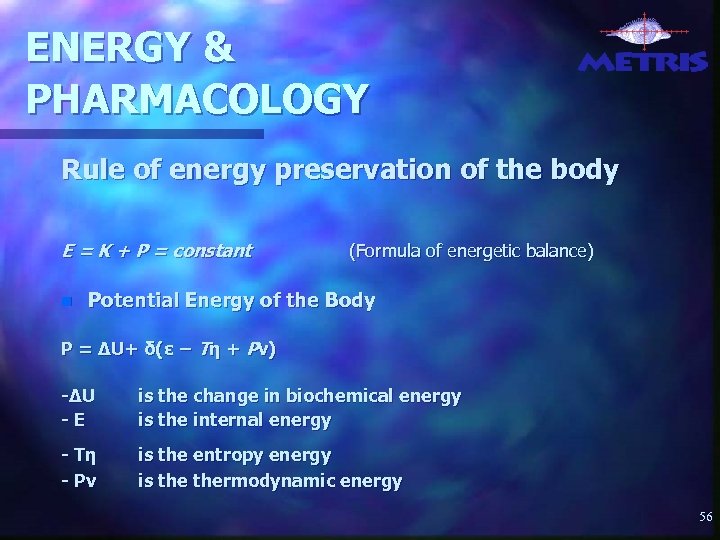
ENERGY & PHARMACOLOGY Rule of energy preservation of the body E = K + P = constant n (Formula of energetic balance) Potential Energy of the Body P = ∆U+ δ(ε − Tη + Pν) -∆U -Ε is the change in biochemical energy is the internal energy - Tη - Pv is the entropy energy is thermodynamic energy 56
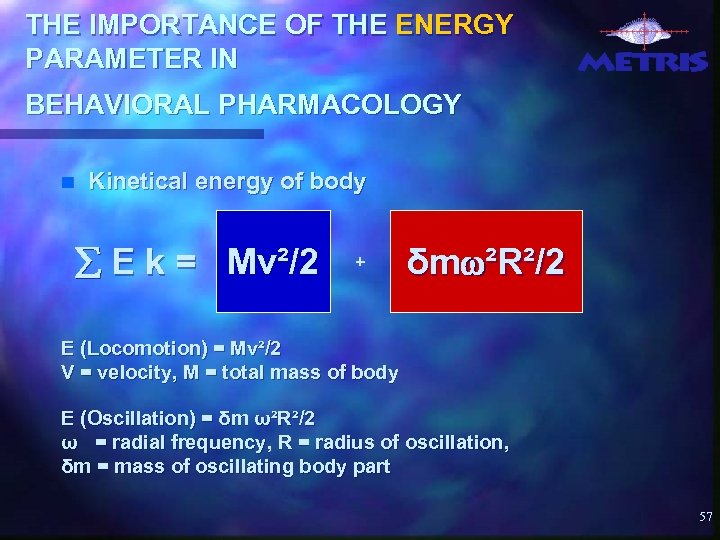
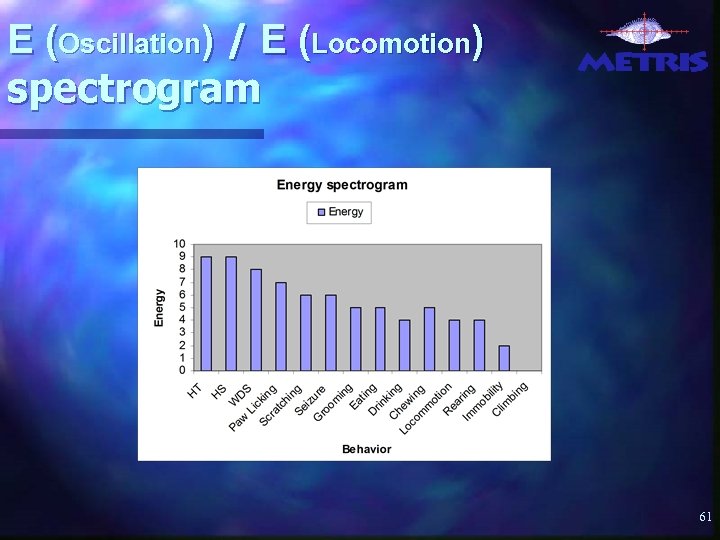
THE IMPORTANCE OF THE ENERGY PARAMETER IN BEHAVIORAL PHARMACOLOGY n Kinetical energy of body E k = Mv²/2 + δm ²R²/2 E (Locomotion) = Mv²/2 V = velocity, M = total mass of body E (Oscillation) = δm ω²R²/2 ω = radial frequency, R = radius of oscillation, δm = mass of oscillating body part 57
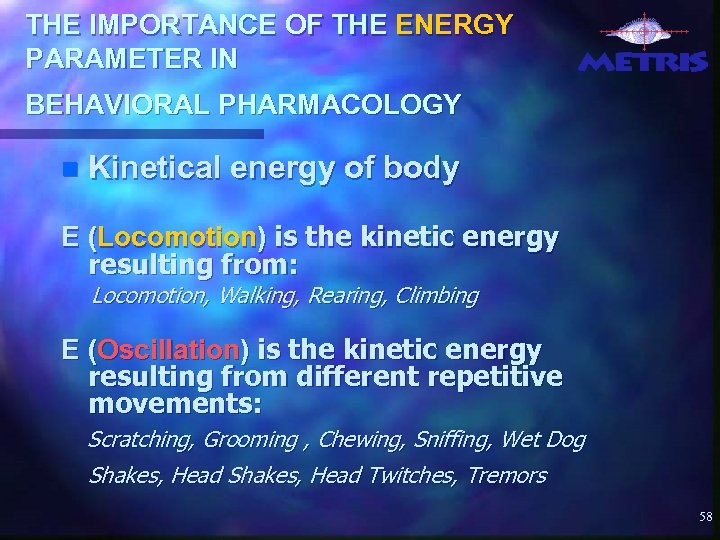
THE IMPORTANCE OF THE ENERGY PARAMETER IN BEHAVIORAL PHARMACOLOGY n Kinetical energy of body E (Locomotion) is the kinetic energy resulting from: Locomotion, Walking, Rearing, Climbing E (Oscillation) is the kinetic energy resulting from different repetitive movements: Scratching, Grooming , Chewing, Sniffing, Wet Dog Shakes, Head Twitches, Tremors 58
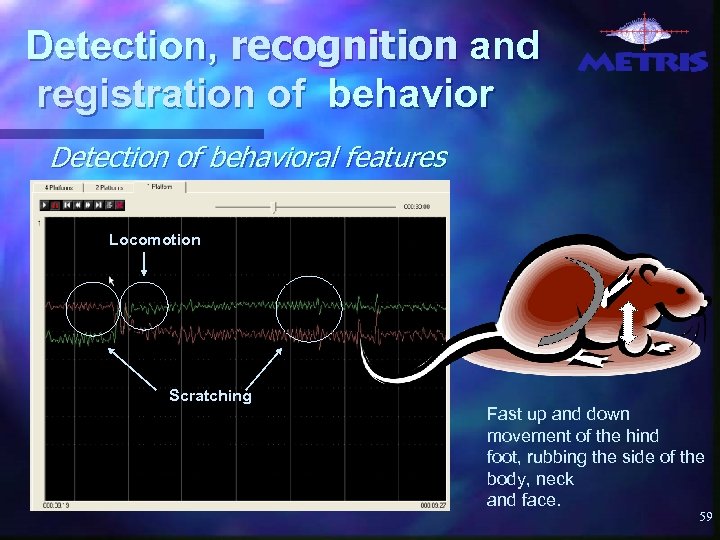
Detection, recognition and registration of behavior Detection of behavioral features Locomotion Scratching Fast up and down movement of the hind foot, rubbing the side of the body, neck and face. 59
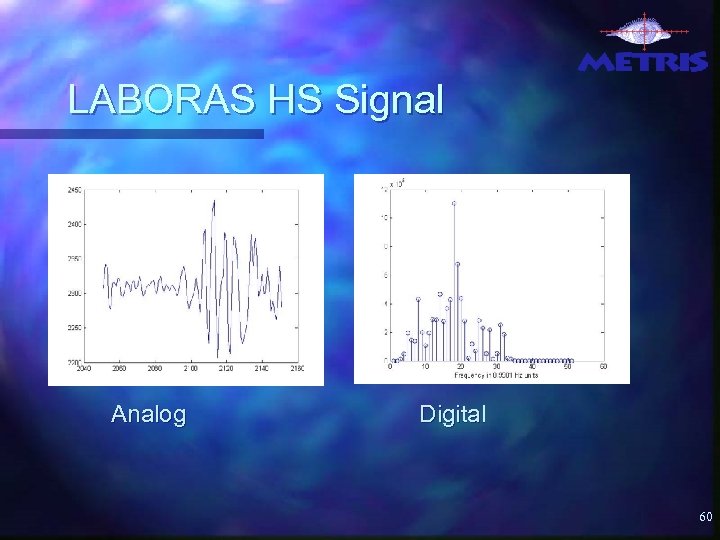
LABORAS HS Signal Analog Digital 60
E (Oscillation) / E (Locomotion) spectrogram 61
For Fast, Efficient & Quality Pre-clinical Research Questions? More information mail: info@metris. nl Metris BV Kruisweg 825 2132 NG Hoofddorp Phone: +31 23 5623400 Fax: +31 23 5623425 www. metris. nl 62
Скачать презентацию Product Presentation Instruments for Animal Behavioral Research
e3d226fe97808edef87bf515ce7b46ff.ppt