


 Скачать презентацию Produción y mercados internaciónal de Tilapia Kevin Fitzsimmons
b993f73116cfa36b488686fbc5567610.ppt
- Количество слайдов: 60
 Produción y mercados internaciónal de Tilapia Kevin Fitzsimmons University of Arizona American Tilapia Association Guadalajara, Jalisco, MEXICO Mar 20, 2003
 Introduction FReview worldwide tilapia trade FSuppliers and consumers in the Americas FMexico production FOpportunities to expand markets
 Tilapia trade FSecond in volume to the carps FPrediction: Tilapia will become most important aquaculture crop in this century FMore genetic potential FGreatest variety of production systems
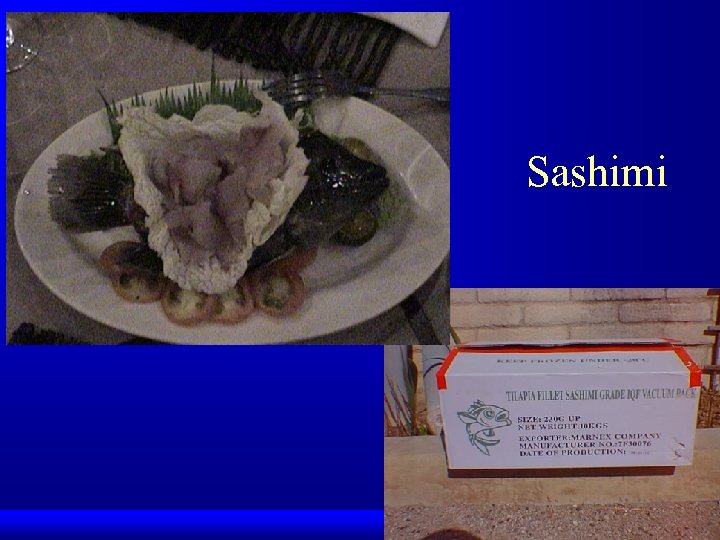
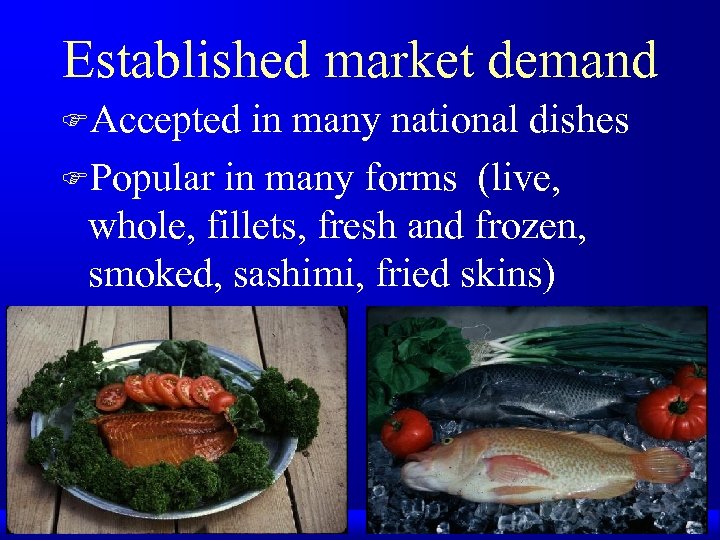 Established market demand FAccepted in many national dishes FPopular in many forms (live, whole, fillets, fresh and frozen, smoked, sashimi, fried skins)
 International Research ISTA (next in Manila, Philippines, Sept 2004) F International Symposia on Tilapia in Aquaculture
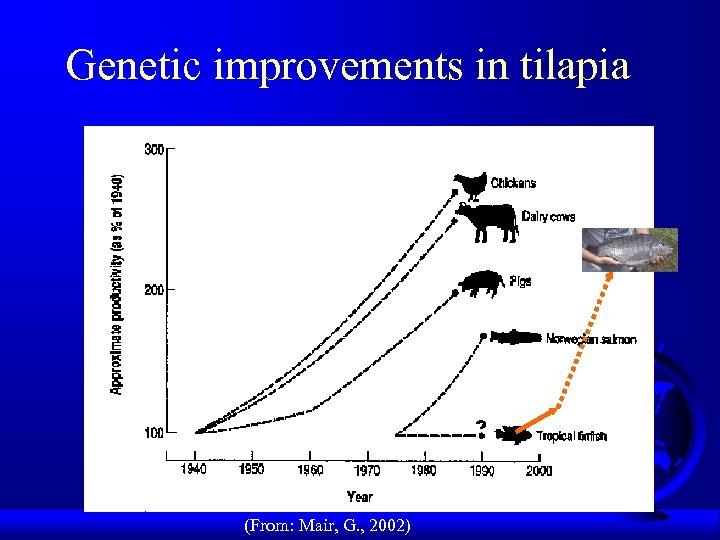 Genetic improvements in tilapia (From: Mair, G. , 2002)
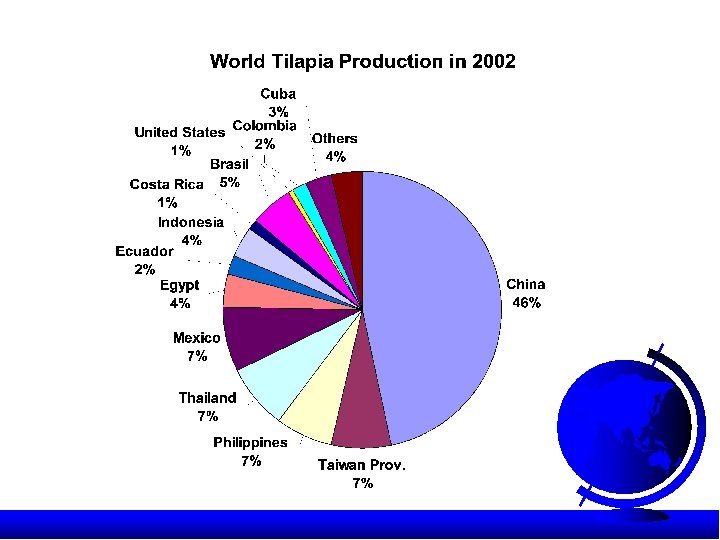
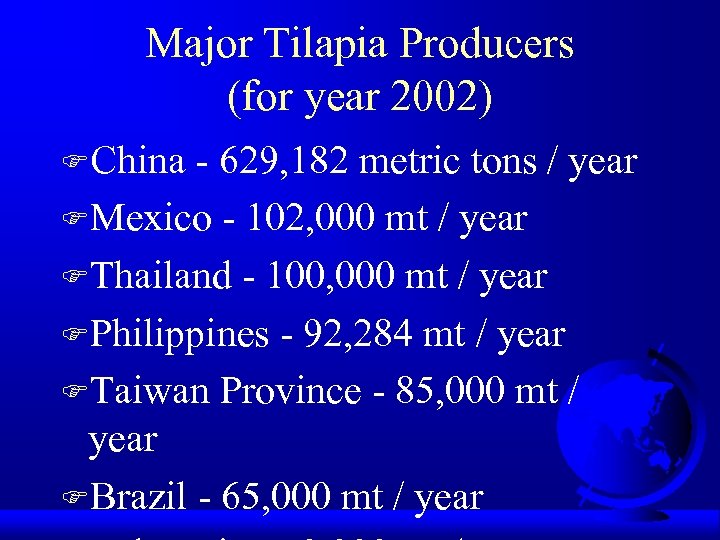 Major Tilapia Producers (for year 2002) FChina - 629, 182 metric tons / year FMexico - 102, 000 mt / year FThailand - 100, 000 mt / year FPhilippines - 92, 284 mt / year FTaiwan Province - 85, 000 mt / year FBrazil - 65, 000 mt / year
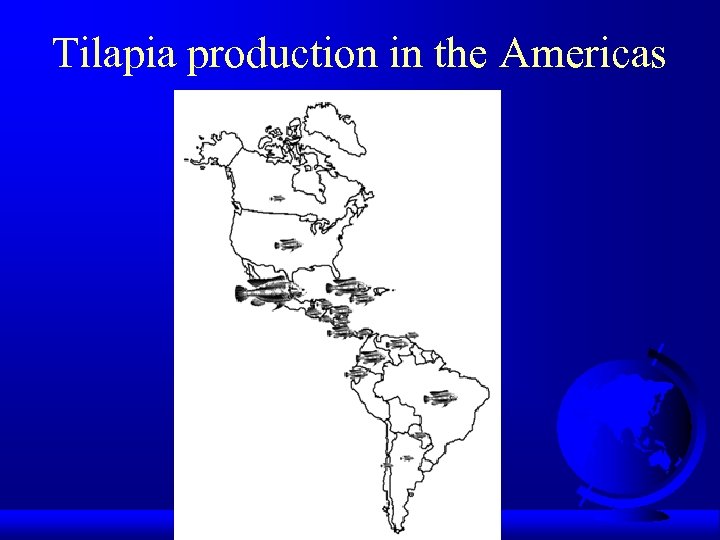 Tilapia production in the Americas
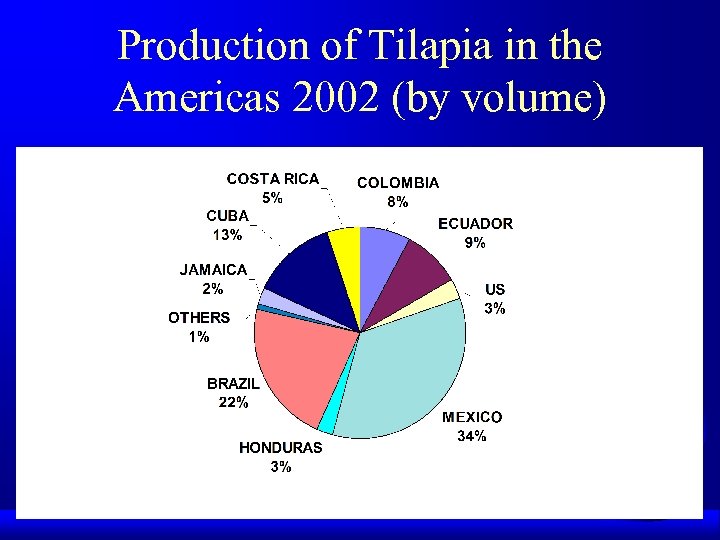 Production of Tilapia in the Americas 2002 (by volume)
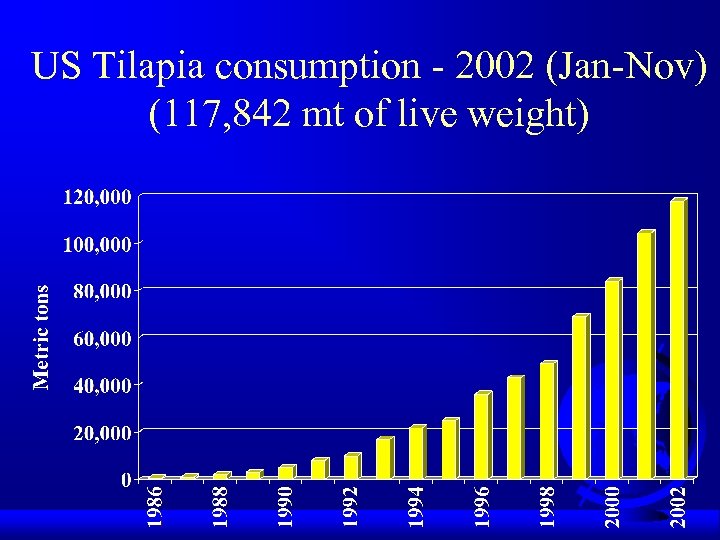 US Tilapia consumption - 2002 (Jan-Nov) (117, 842 mt of live weight)
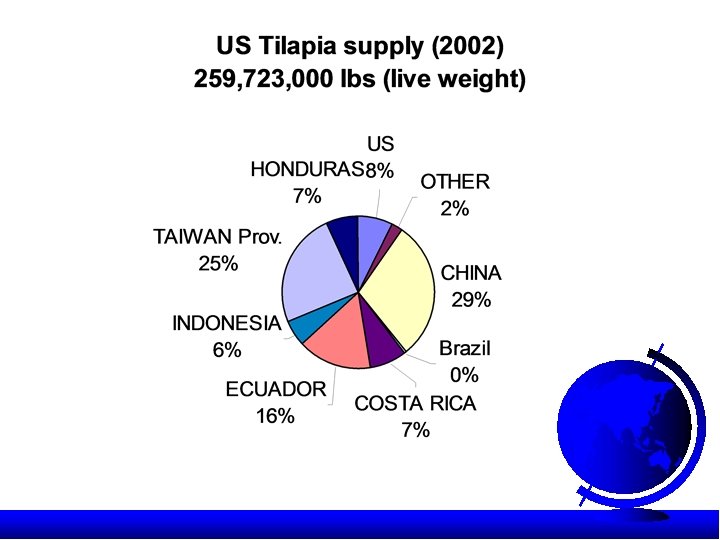
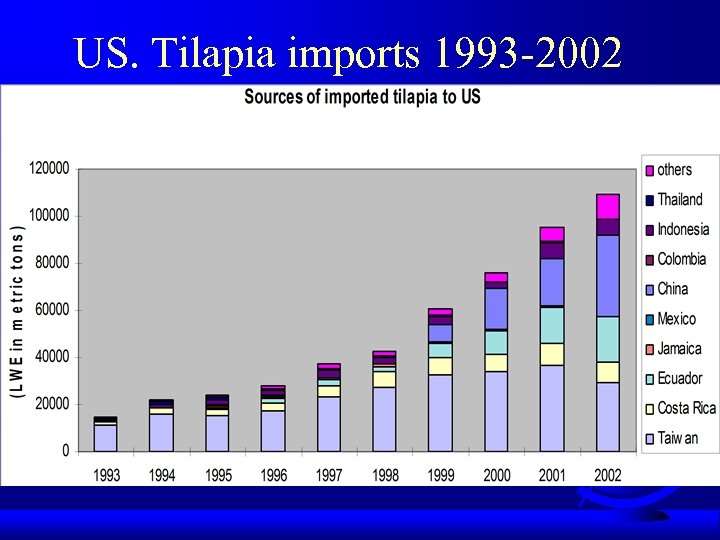 US. Tilapia imports 1993 -2002
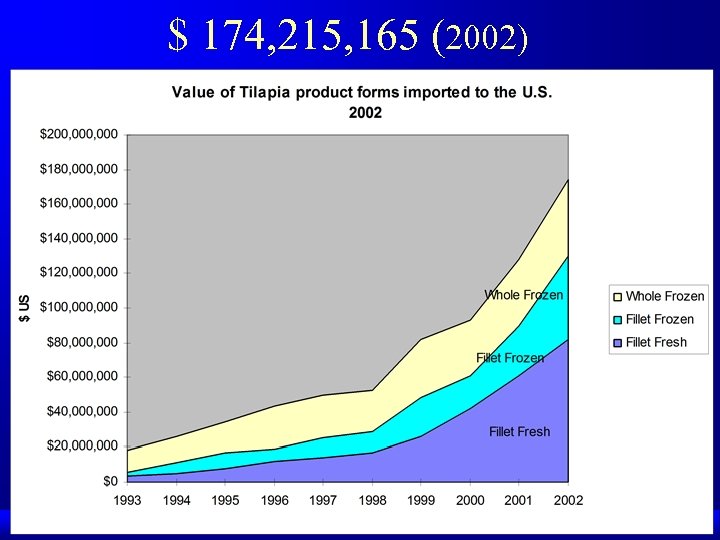 $ 174, 215, 165 (2002)
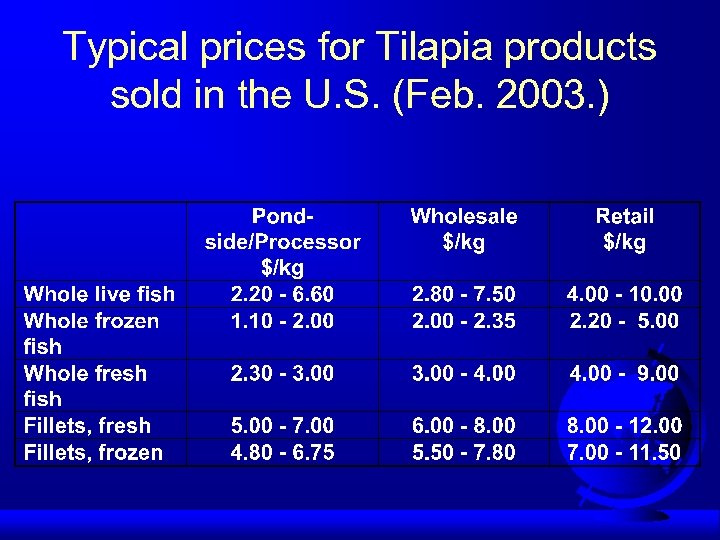 Typical prices for Tilapia products sold in the U. S. (Feb. 2003. )
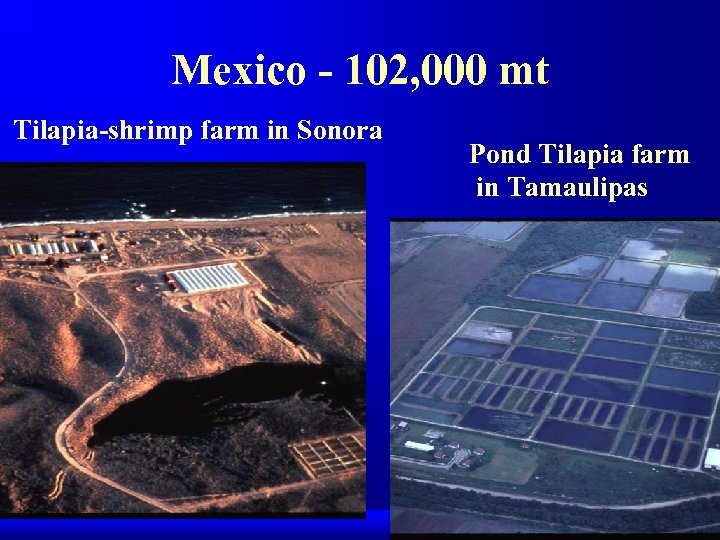 Mexico - 102, 000 mt Tilapia-shrimp farm in Sonora Pond Tilapia farm in Tamaulipas
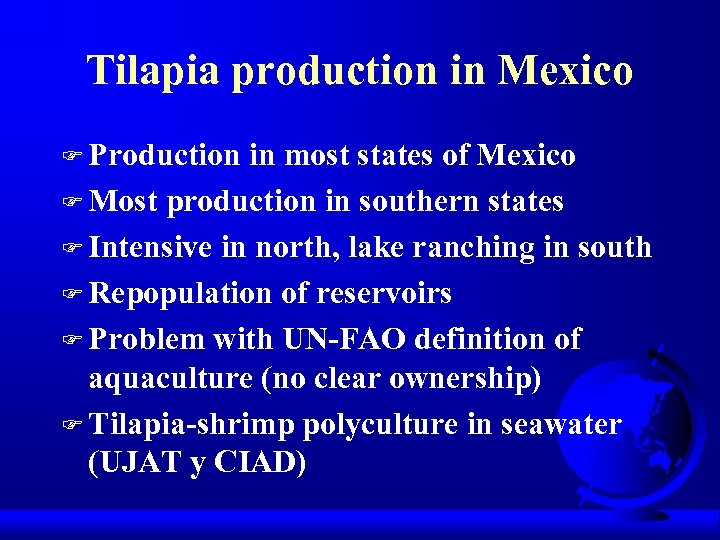 Tilapia production in Mexico F Production in most states of Mexico F Most production in southern states F Intensive in north, lake ranching in south F Repopulation of reservoirs F Problem with UN-FAO definition of aquaculture (no clear ownership) F Tilapia-shrimp polyculture in seawater (UJAT y CIAD)
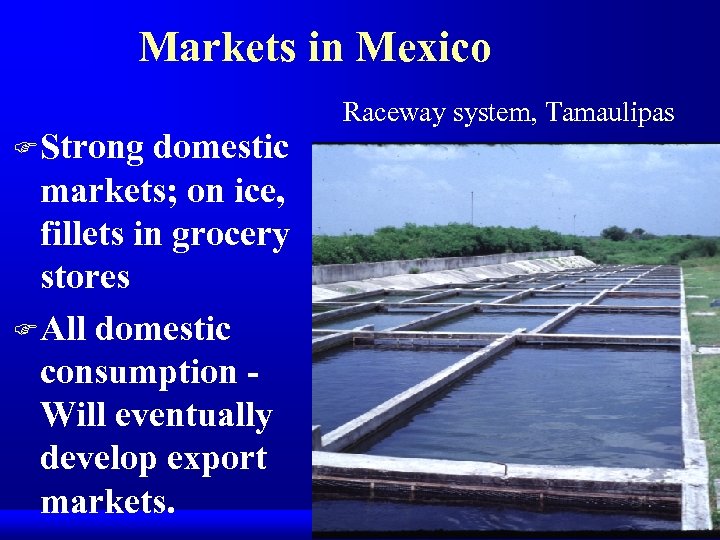 Markets in Mexico F Strong domestic markets; on ice, fillets in grocery stores F All domestic consumption Will eventually develop export markets. Raceway system, Tamaulipas
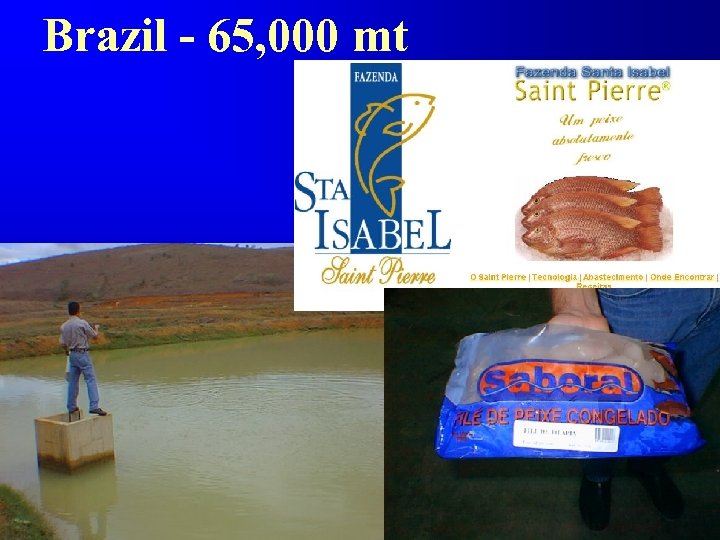 Brazil - 65, 000 mt
 Tilapia production & Markets in Brasil FProduction in Southeast and Northeast FRed tilapia in Southeast for fee-fishing and food FCage farms allowed in NE reservoirs. FTilapia leather industry FJump in interest with ISTA 5 in Rio. FDeveloping export markets.
 Tilapia production in Ecuador FReplacing shrimp because of white spot and other shrimp diseases FUsing shrimp infrastructure FExporting to US and EU FBenefits to shrimp culture with polyculture
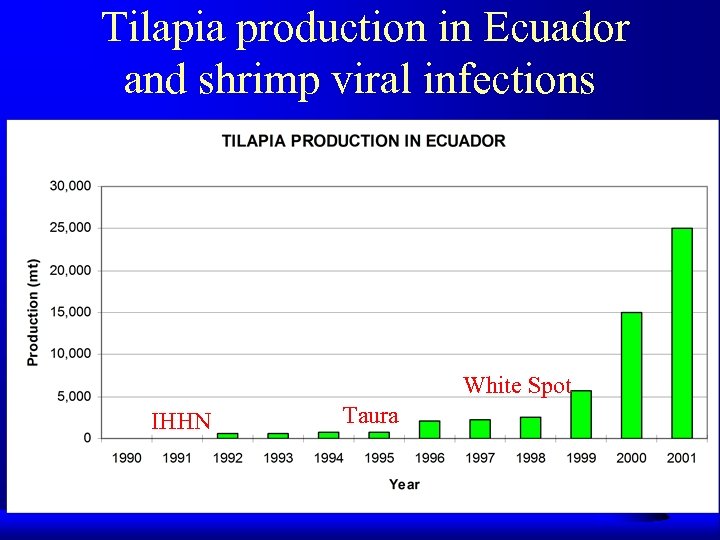 Tilapia production in Ecuador and shrimp viral infections White Spot IHHN Taura
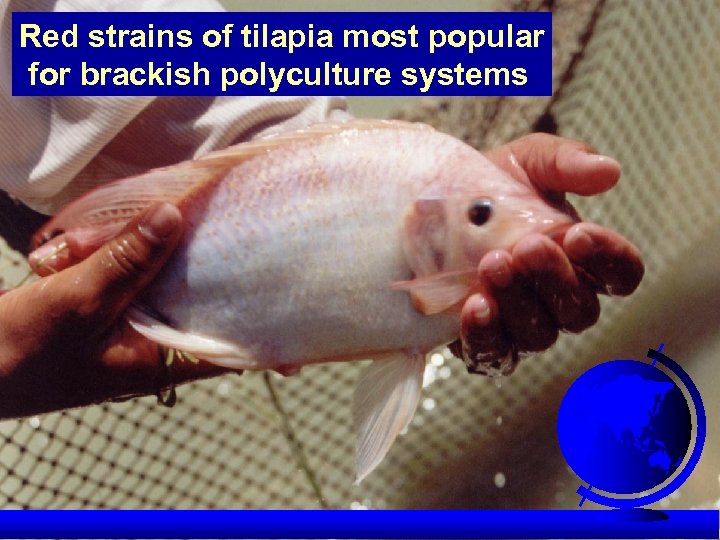 Red strains of tilapia most popular for brackish polyculture systems
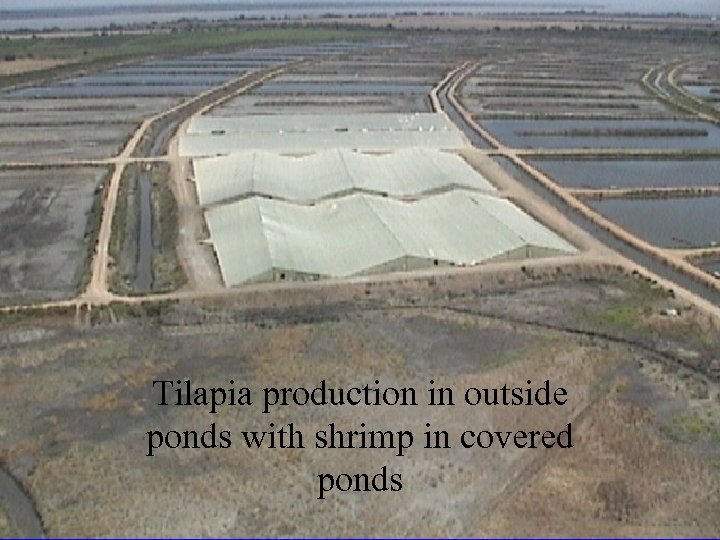 Tilapia production in outside ponds with shrimp in covered ponds
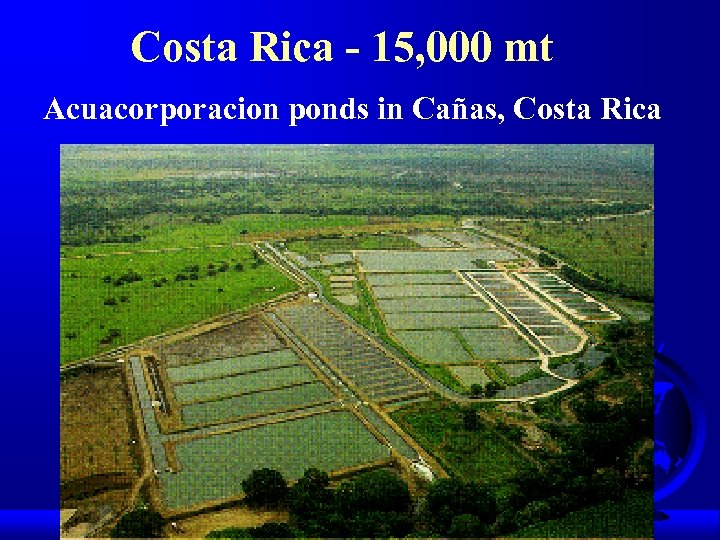 Costa Rica - 15, 000 mt Acuacorporacion ponds in Cañas, Costa Rica
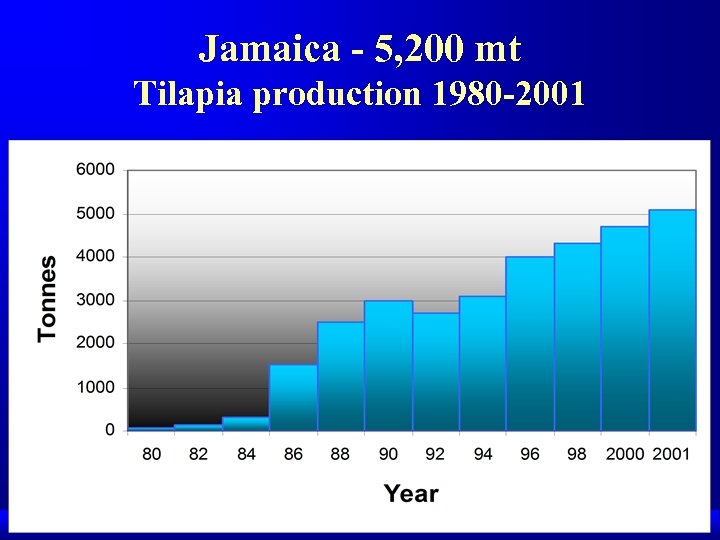 Jamaica - 5, 200 mt Tilapia production 1980 -2001
 USA 9, 000 mt F Production in many states F Mostly intensive systems, many recirculating F Sales to ethnic markets as live fish, high value
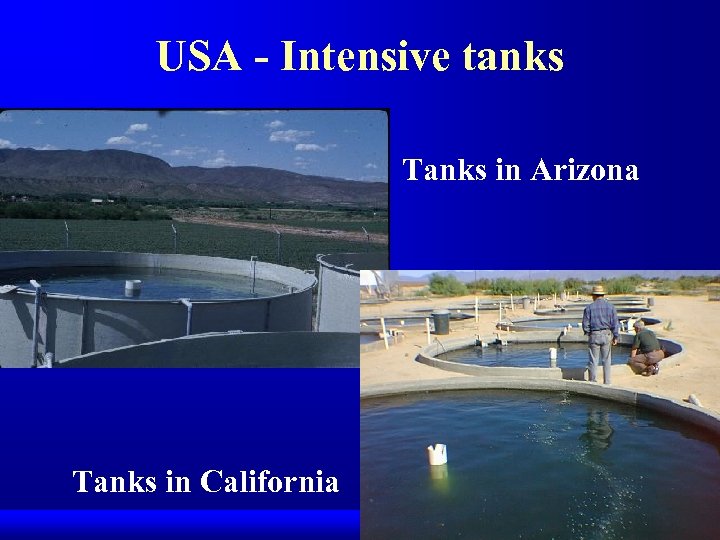 USA - Intensive tanks Tanks in Arizona Tanks in California
 USA - Ponds and cages
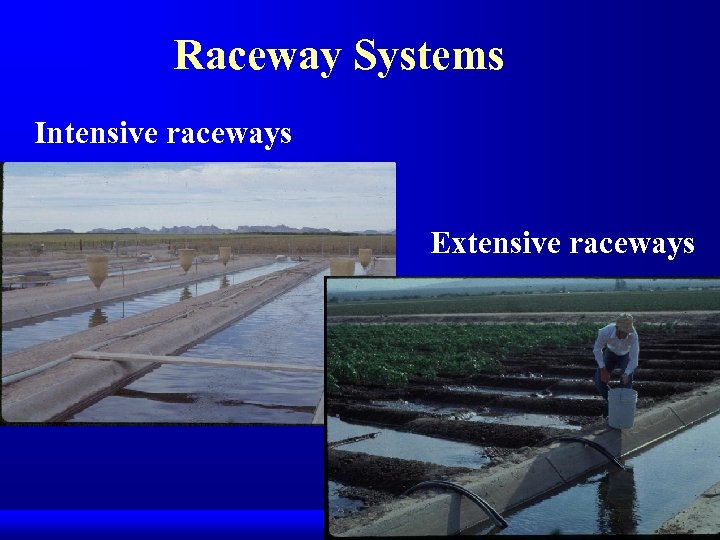 Raceway Systems Intensive raceways Extensive raceways
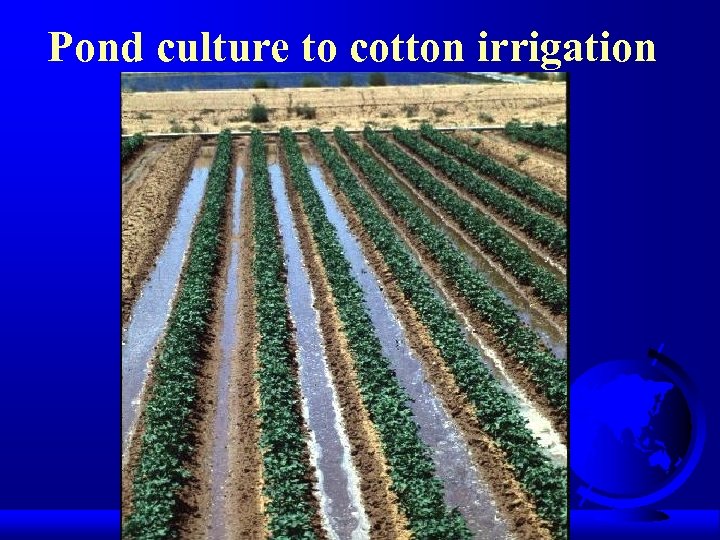 Pond culture to cotton irrigation
 Intensive farms in New York and Iowa
 Intensive farms in Illinois & Louisiana
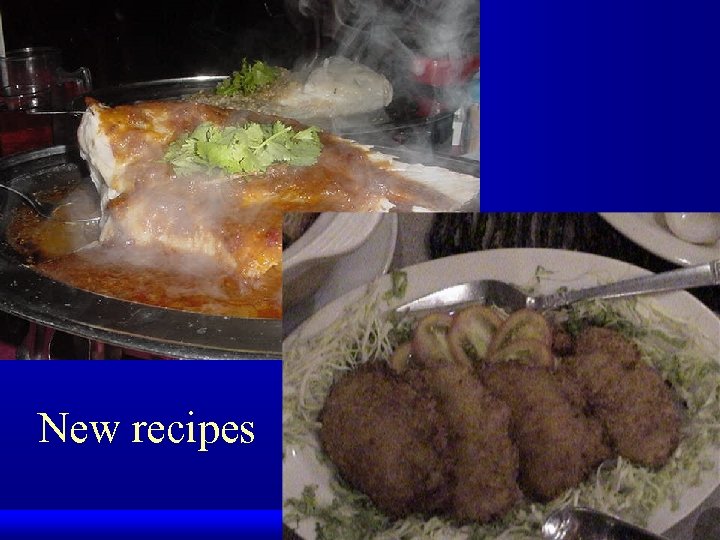
 Expanding markets FQuality control and assurance FAdvertising FProduct placement FEndorsements FNew recipes and product forms
 Quality control and assurance FNational standards FHACCP (Hazard Analysis at Critical Control Points) FIndustry standards FBuyer standards FOther (NGO’s)
 Advertising
 Direct retail sales
 www. tilapia. org
 Product placement F “Saving Faith” F Murder mystery F Detective fixes elegant tilapia dinner to seduce the beautiful blonde.
 Dear Kevin, F I recently began using Tilapia fillets farm raised by Sea Best and distributed by Beaver Street Fisheries, Inc. I buy these in individual vacuum sealed packages in one pound bags at Wal-Mart in San Marcos, Texas. My husband has diabetes and we both are very weight conscious. This fish is the perfect food item for us, I love the way it is packaged, just use what I need for one meal, it is reasonably priced, always available in the market and consistently high quality. I trust you will forward these comments to the producer. F I LOVE THE PRODUCT!!!! F Marian Birnie Aug. 12, 2001 F
 New recipes
 New recipes
 Sashimi
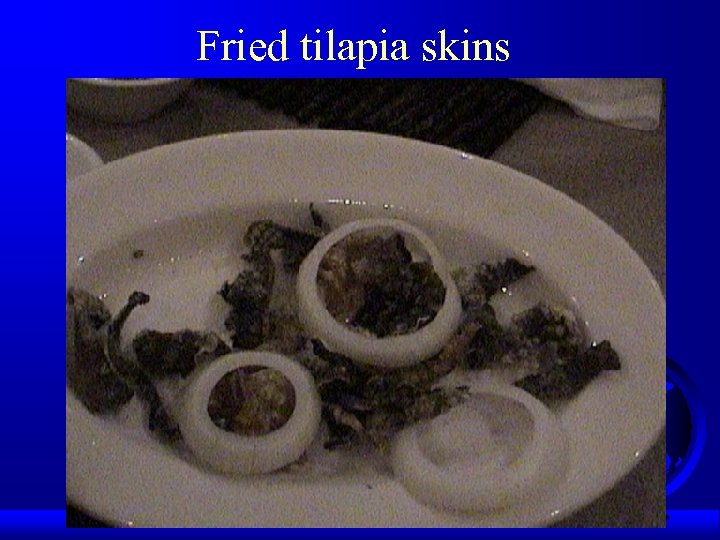 Fried tilapia skins
 International/US Supply and Demand TRENDS FSupply of fillets primarily from China, Southeast Asia, Ecuador and Central America. FDemand for live fish needs to expand beyond Asian markets FWith rapid increases in supply, demand must increase at least as fast to support price.
 Major Tilapia Producers in International Trade FChina - whole frozen, IQF fillets FEcuador - fresh fillets FTaiwan Prov. - whole, IQF, sashimi FCentral America - fresh fillets FIndonesia - IQF fillets FThailand - IQF fillets
 Current International Market Trends FIncrease in demand for all forms of tilapia FDemand increase will be greatest for fresh fillets FPrices have been constant for several years and will remain stable, will not increase with inflation.
 Changes and Predictions FFurther intensification in virtually every country F F Production will be 75% Oreochromis niloticus, 20% Red strains, O. aureus and O. mossambicus mostly for hybridization Production will be 50% intensive ponds, 25% cages, 10% intensive recirculating systems
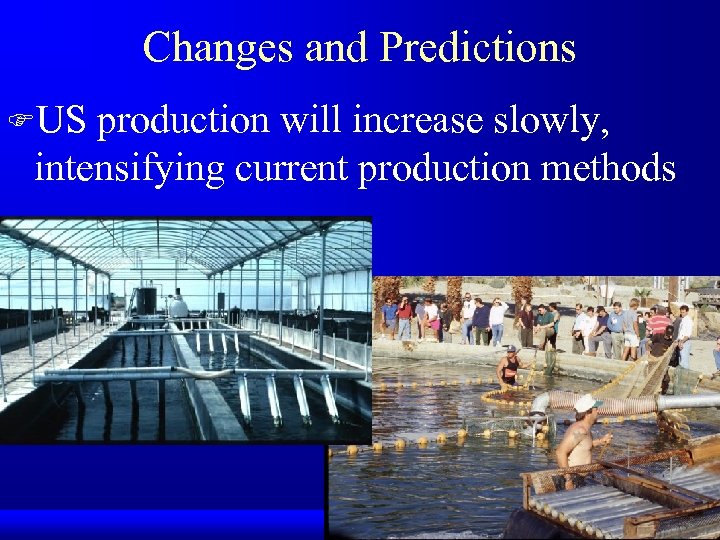 Changes and Predictions FUS production will increase slowly, intensifying current production methods
 Changes and Predictions F Further intensification in virtually every country FProduction will be 75% Oreochromis niloticus, 20% Red strains, O. aureus and O. mossambicus mostly for hybridization F Production will be 50% intensive ponds, 25% cages, 10% intensive recirculating systems
 Changes and Predictions F F Further intensification in virtually every country Production will be 75% Oreochromis niloticus, 20% Red strains, O. aureus and O. mossambicus mostly for hybridization FProduction will be 50% intensive ponds, 25% cages, 10% intensive recirculating systems
 Changes and Predictions FLeather goods from skin will become a significant contributor to profitability F Processing and "value-adding" will intensify in producing countries F Polyculture with shrimp will become common in most shrimp farming areas
 Changes and Predictions F Leather goods from skin will become a significant contributor to profitability FProcessing and "value-adding" will intensify in producing countries F Polyculture with shrimp will become common in most shrimp farming areas
 Changes and Predictions F F Leather goods from skin will become a significant contributor to profitability Processing and "value-adding" will intensify in producing countries FPolyculture with shrimp will become common in most shrimp farming areas (already practiced in Thailand, Philippines, Mexico, US, Ecuador, Peru, Eritrea)
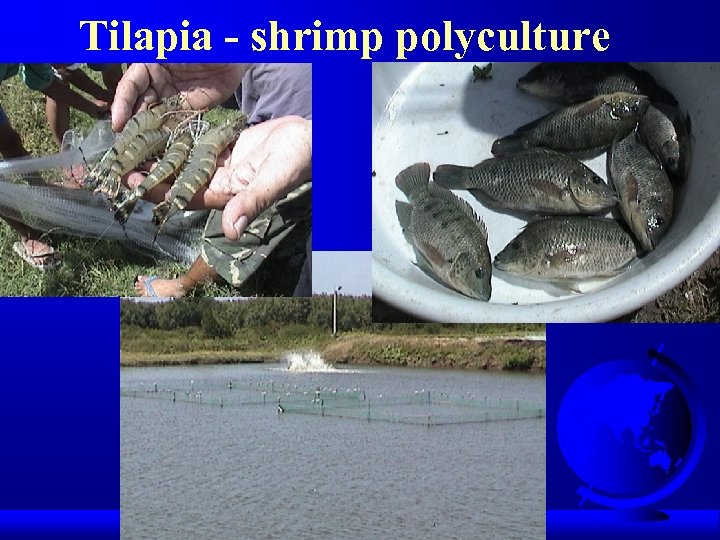 Tilapia - shrimp polyculture
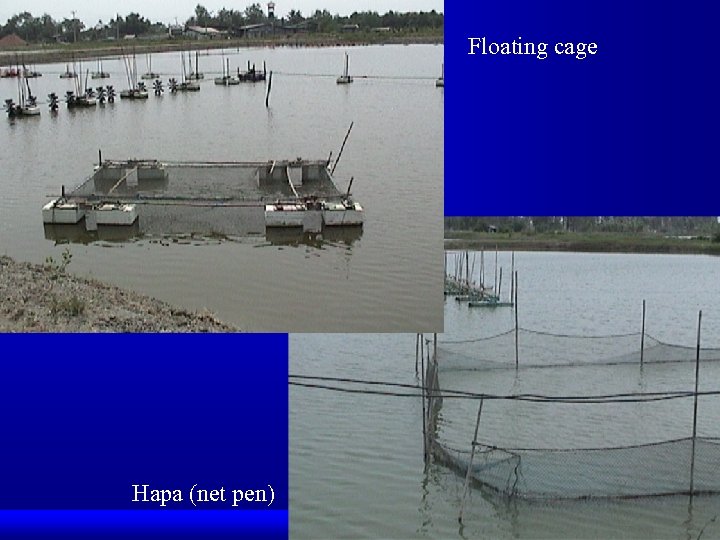 Floating cage Hapa (net pen)
 Changes and Predictions F US production will increase slowly, intensifying current production methods FWorld tilapia production will reach 1, 500, 000 mt in 2003 and 2, 000 mt by 2010
 Mil gracias F ¿Preguntas?
 Carbon monoxide Most plants appear to use carbon monoxide F Some gas in chambers others infuse in bags before freezing F
 Estimated cost of production F China - $0. 70/kg F Philippines, Indonesia - $0. 80/kg F Brazil, Ecuador, Thailand - $0. 85/kg F Honduras, Costa Rica - $0. 90/kg F Mexico - $1. 00/kg F Taiwan Province - $1. 05/kg F US - $2. 00/kg F Canada - $2. 10/kg