


 Скачать презентацию Processes Controlling the Toxicity and Transport of Nutrients
60727ba6fe4381ff97b29ee4f18c6569.ppt
- Количество слайдов: 22
 Processes Controlling the Toxicity and Transport of Nutrients and Contaminants in the Critical Zone Matthew Ginder-Vogel Environmental Soil Chemistry Group and the Center for Critical Zone Research University of Delaware
 Contributors and Collaborators University of Delaware Donald L. Sparks Ryan Tappero Jen Seiter Kristin Staats-Borda Stanford University Scott Fendorf Synchrotron Light Sources Tony Lanzirotti Bill Rao Steve Sutton Matthew Newville Sam Webb Joe Rogers John Bargar Matthew Marcus Funding Sources: NSF, USDA, and DOE-ERSD Light Sources: ALS, APS, NSLS, and SSRL
 X-ray Spectroscopy in Environmental Science n n n Dependence on aqueous solid interactions Redox transformations play an important role in contaminant mobility Resolving chemical species and bonding environments within solids is challenging Low concentrations and varying scales Multiple X-ray techniques are required for thorough characterization n m-XAS, m-XRD, microtomography, XAS, XRD
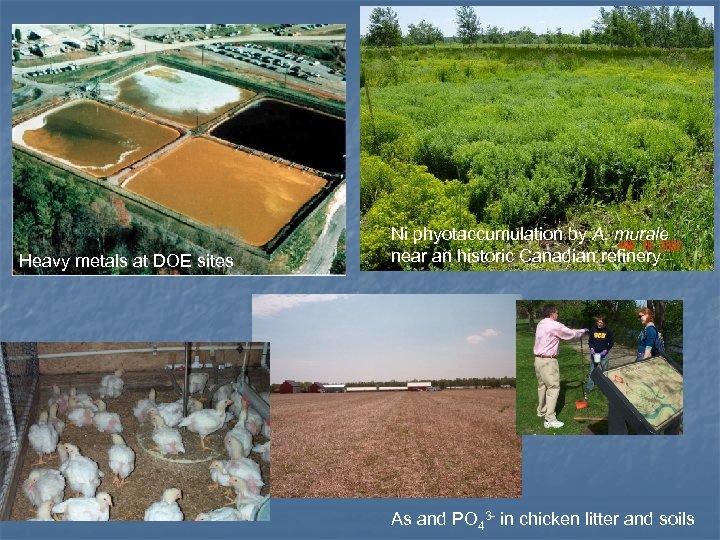 Heavy metals at DOE sites Ni phyotaccumulation by A. murale near an historic Canadian refinery As and PO 43 - in chicken litter and soils
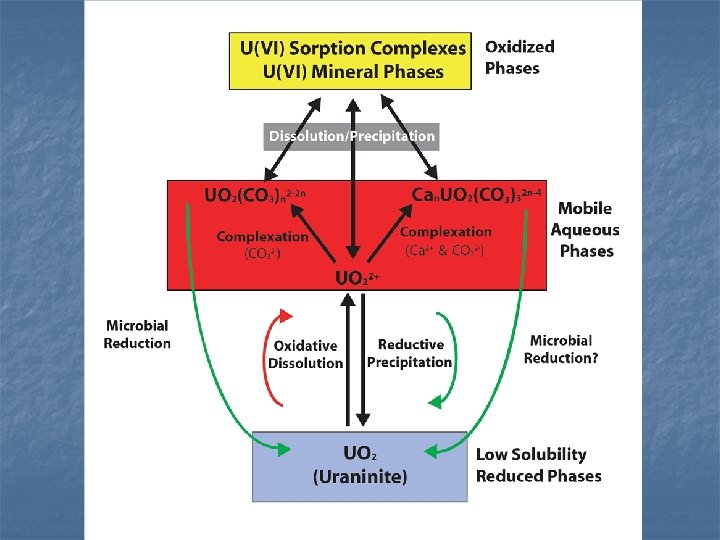
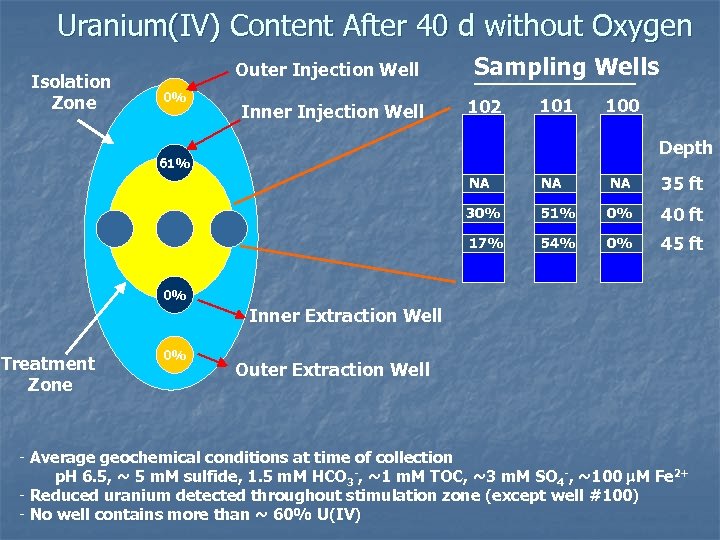 Uranium(IV) Content After 40 d without Oxygen Isolation Zone Outer Injection Well 0% Inner Injection Well Sampling Wells 102 101 100 Depth 61% NA NA NA 35 ft 30% 51% 0% 40 ft 17% 54% 0% 45 ft 0% Inner Extraction Well Treatment Zone 0% Outer Extraction Well - Average geochemical conditions at time of collection p. H 6. 5, ~ 5 m. M sulfide, 1. 5 m. M HCO 3 -, ~1 m. M TOC, ~3 m. M SO 4 -, ~100 m. M Fe 2+ - Reduced uranium detected throughout stimulation zone (except well #100) - No well contains more than ~ 60% U(IV)
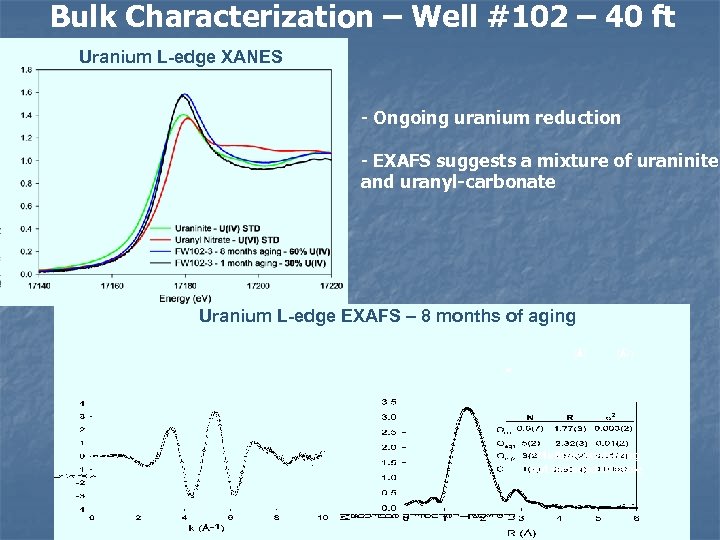 Bulk Characterization – Well #102 – 40 ft Uranium L-edge XANES - Ongoing uranium reduction - EXAFS suggests a mixture of uraninite and uranyl-carbonate Uranium L-edge EXAFS – 8 months of aging (Å) (Å2) * *Multiple scattering not included in table
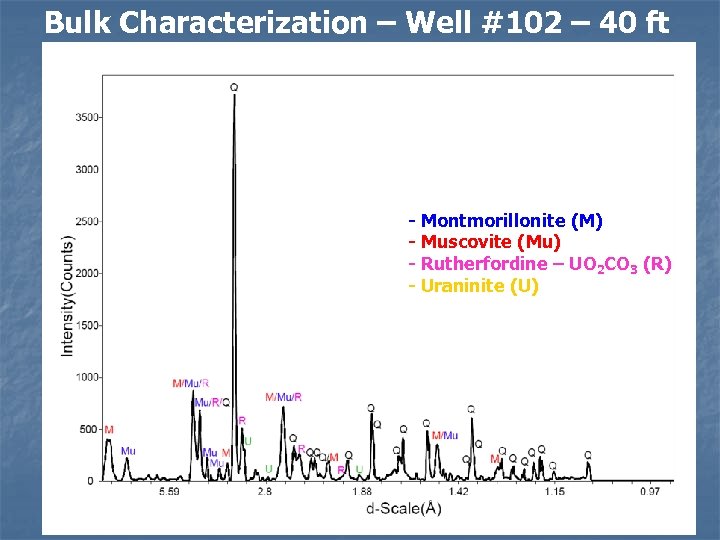 Bulk Characterization – Well #102 – 40 ft Minerals Identified - Quartz (Q) - Montmorillonite (M) - Muscovite (Mu) - Rutherfordine – UO 2 CO 3 (R) - Uraninite (U)
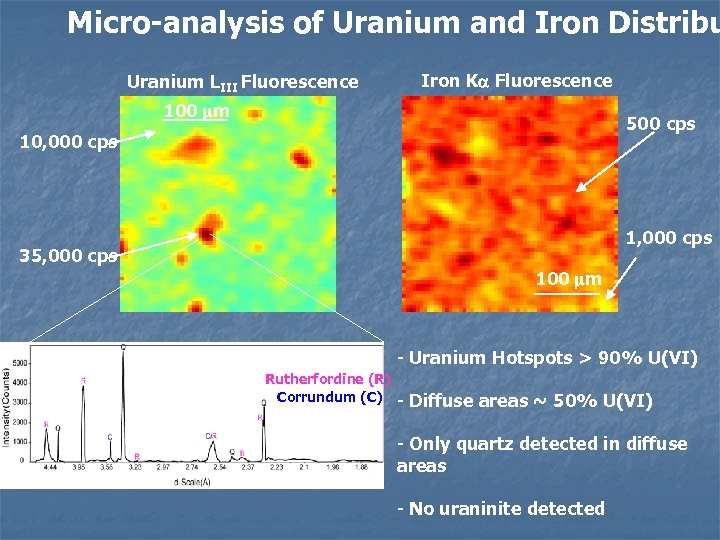 Micro-analysis of Uranium and Iron Distribu Uranium LIII Fluorescence Iron Ka Fluorescence 100 mm 500 cps 10, 000 cps 1, 000 cps 35, 000 cps 100 mm m-XRD Quartz (Q) Rutherfordine (R) Corrundum (C) - Uranium Hotspots > 90% U(VI) - Diffuse areas ~ 50% U(VI) - Only quartz detected in diffuse areas - No uraninite detected
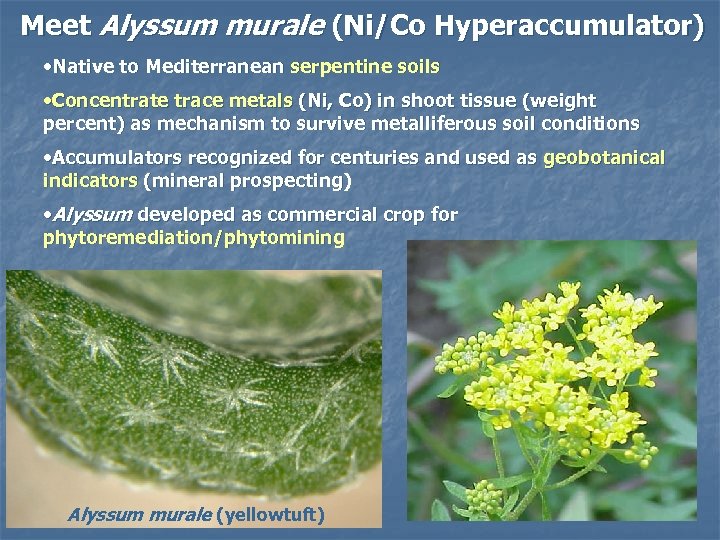 Meet Alyssum murale (Ni/Co Hyperaccumulator) • Native to Mediterranean serpentine soils • Concentrate trace metals (Ni, Co) in shoot tissue (weight percent) as mechanism to survive metalliferous soil conditions • Accumulators recognized for centuries and used as geobotanical indicators (mineral prospecting) • Alyssum developed as commercial crop for phytoremediation/phytomining Alyssum murale (yellowtuft)
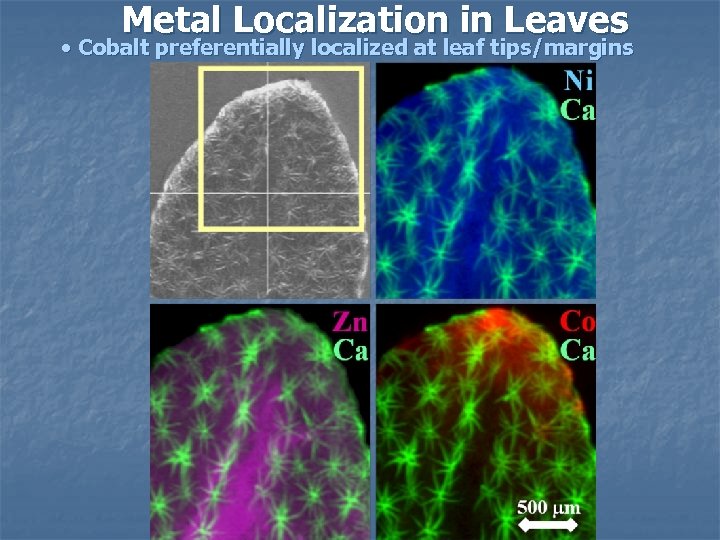 Metal Localization in Leaves • Cobalt preferentially localized at leaf tips/margins
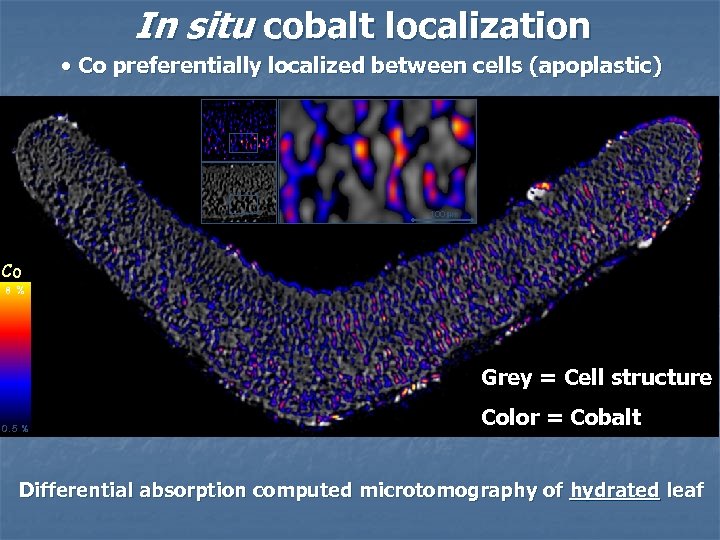 In situ cobalt localization • Co preferentially localized between cells (apoplastic) 100 mm Co 8 % Grey = Cell structure 0. 5 % Color = Cobalt Differential absorption computed microtomography of hydrated leaf
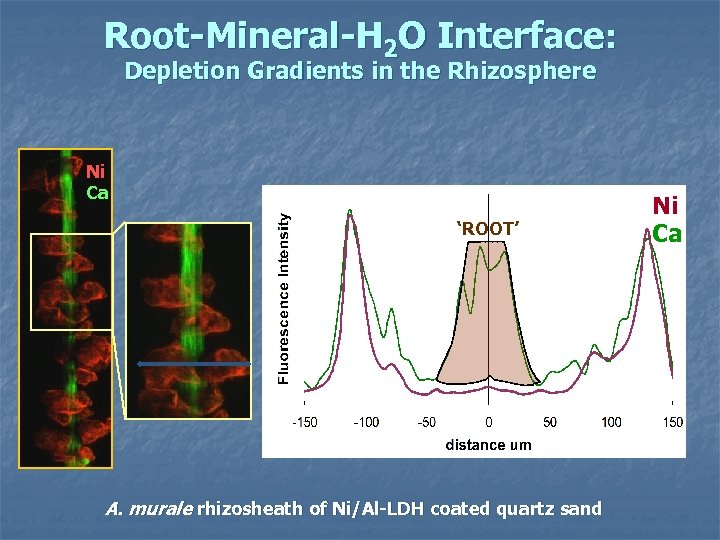 Root-Mineral-H 2 O Interface: Depletion Gradients in the Rhizosphere Ni Ca ‘ROOT’ A. murale rhizosheath of Ni/Al-LDH coated quartz sand Ni Ca
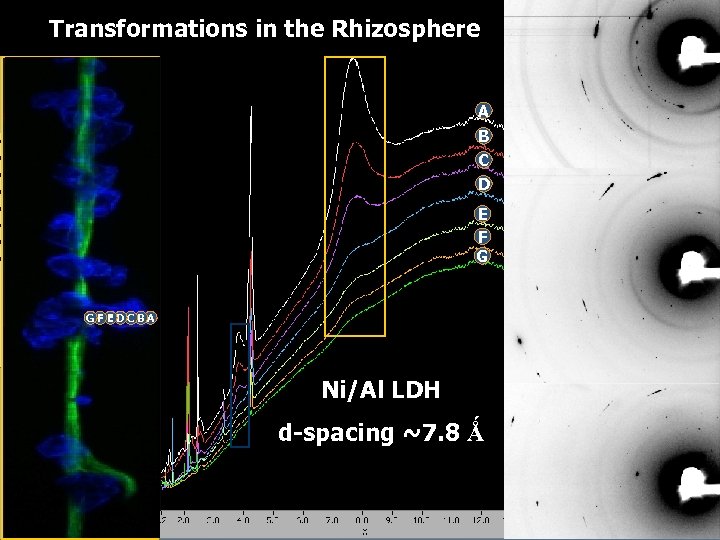 Transformations in the Rhizosphere A B C D E F G GF ED C BA Ni/Al LDH d-spacing ~7. 8 Ǻ
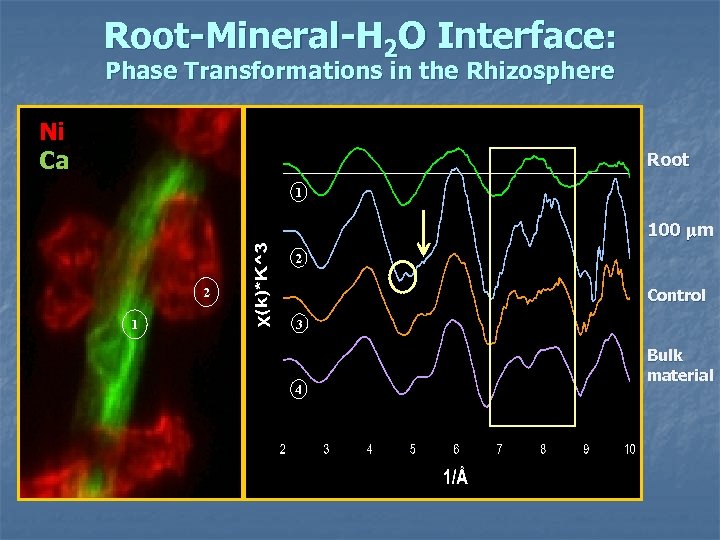 Root-Mineral-H 2 O Interface: Phase Transformations in the Rhizosphere Ni Ca Root 1 100 mm 2 2 1 Control 3 4 Bulk material
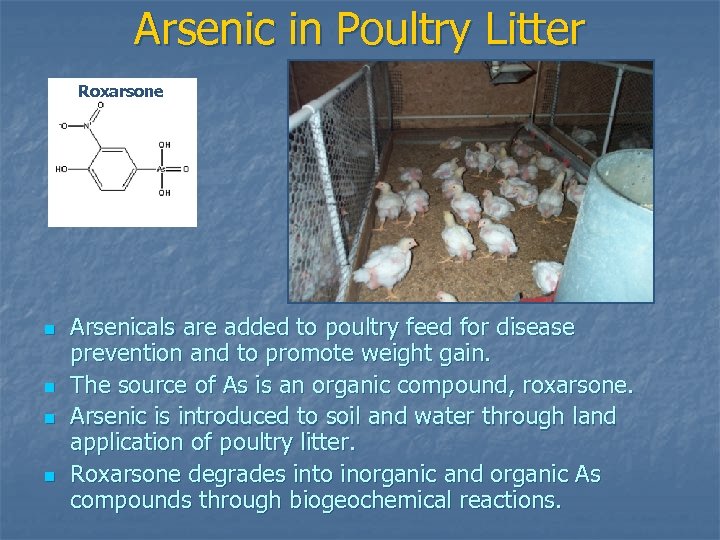 Arsenic in Poultry Litter Roxarsone n n Arsenicals are added to poultry feed for disease prevention and to promote weight gain. The source of As is an organic compound, roxarsone. Arsenic is introduced to soil and water through land application of poultry litter. Roxarsone degrades into inorganic and organic As compounds through biogeochemical reactions.
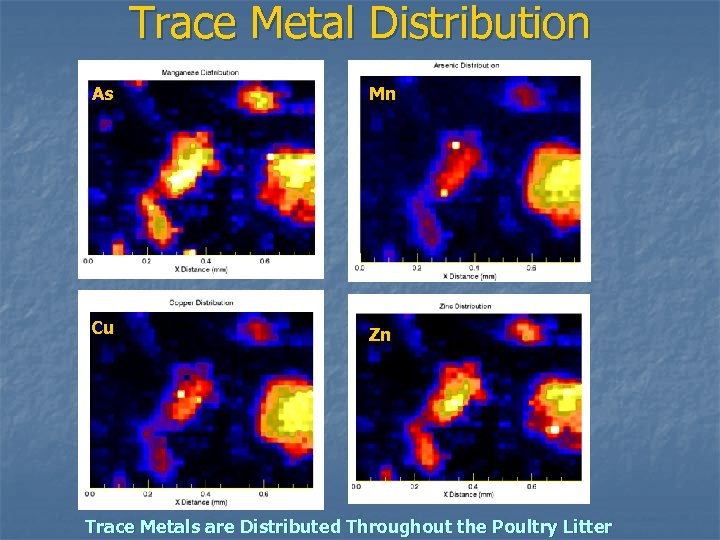 Trace Metal Distribution As Mn Cu Zn Trace Metals are Distributed Throughout the Poultry Litter
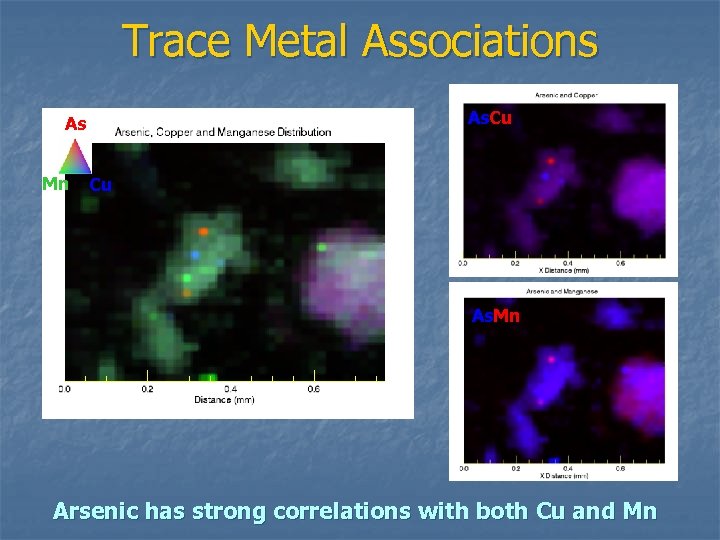 Trace Metal Associations As. Cu As Mn Cu As. Mn Arsenic has strong correlations with both Cu and Mn
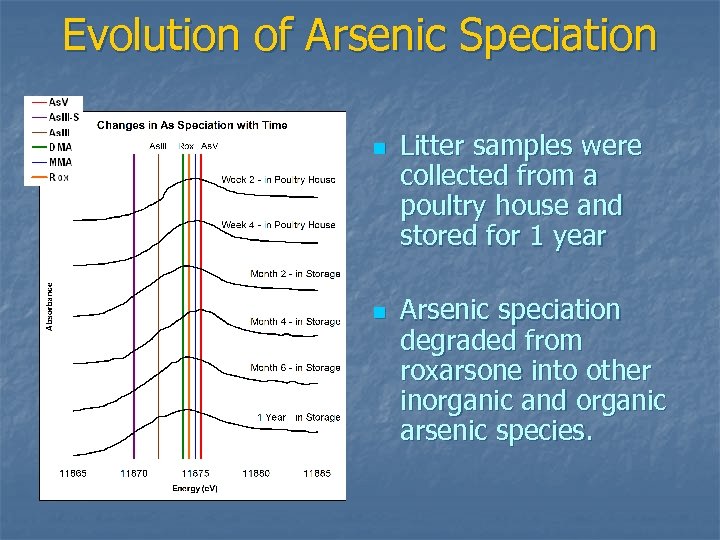 Evolution of Arsenic Speciation n n Litter samples were collected from a poultry house and stored for 1 year Arsenic speciation degraded from roxarsone into other inorganic and organic arsenic species.
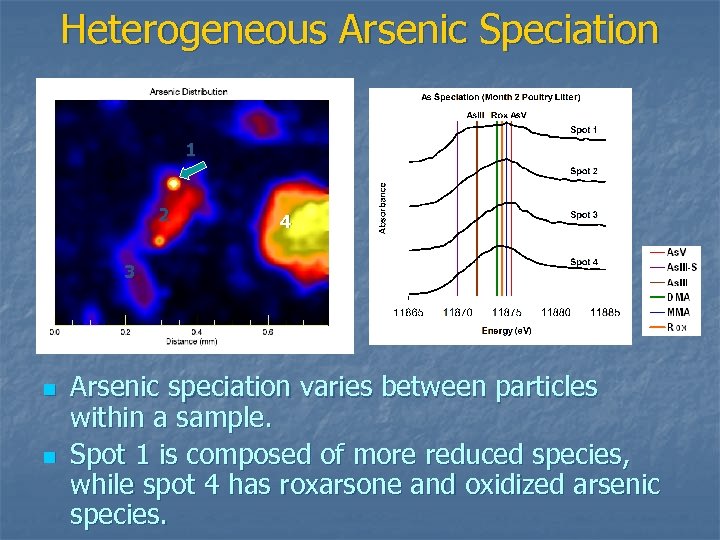 Heterogeneous Arsenic Speciation 1 2 4 3 n n Arsenic speciation varies between particles within a sample. Spot 1 is composed of more reduced species, while spot 4 has roxarsone and oxidized arsenic species.
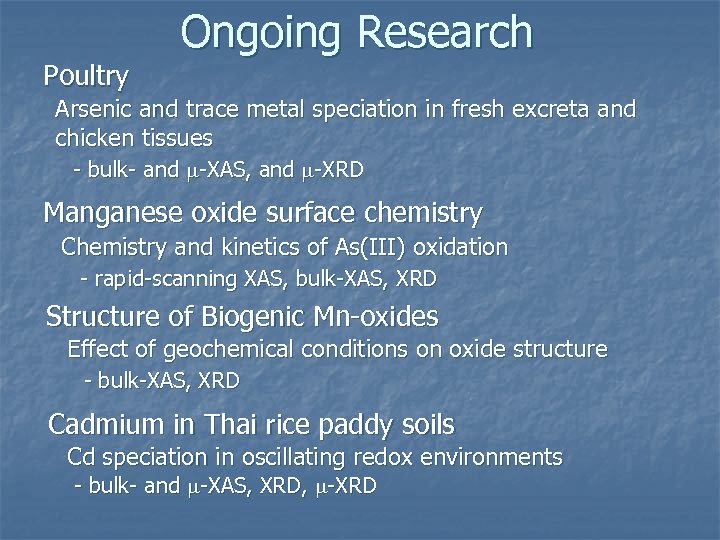 Poultry Ongoing Research Arsenic and trace metal speciation in fresh excreta and chicken tissues - bulk- and m-XAS, and m-XRD Manganese oxide surface chemistry Chemistry and kinetics of As(III) oxidation - rapid-scanning XAS, bulk-XAS, XRD Structure of Biogenic Mn-oxides Effect of geochemical conditions on oxide structure - bulk-XAS, XRD Cadmium in Thai rice paddy soils Cd speciation in oscillating redox environments - bulk- and m-XAS, XRD, m-XRD
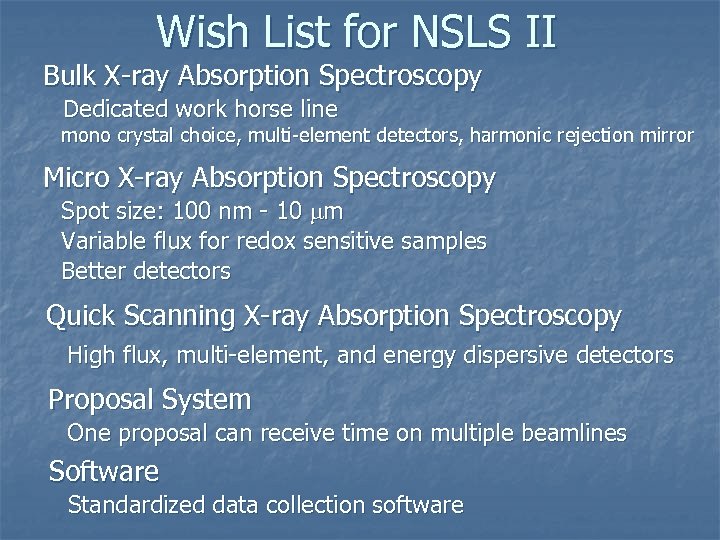 Wish List for NSLS II Bulk X-ray Absorption Spectroscopy Dedicated work horse line mono crystal choice, multi-element detectors, harmonic rejection mirror Micro X-ray Absorption Spectroscopy Spot size: 100 nm - 10 mm Variable flux for redox sensitive samples Better detectors Quick Scanning X-ray Absorption Spectroscopy High flux, multi-element, and energy dispersive detectors Proposal System One proposal can receive time on multiple beamlines Software Standardized data collection software