 Скачать презентацию PROBLEM SOLVING COURTS Moderator Dail Moore Director National
ab804167f849423c22bbf055624c2b81.ppt
- Количество слайдов: 53



PROBLEM SOLVING COURTS Moderator: Dail Moore, Director, National Technical Assistance & Training Center, OCSE Speakers: n n n Judge Kristin Ruth, Raleigh, NC Judge Scott Rosenberg, Nashville, TN Judge Allan Schmalenberger, Dickenson, ND
Wake County Model Child Support Enforcement & Problem-Solving Courts Integrated Solutions
Wake County Model Integrated Solutions The Goals Increased Child Support Payments and Reduced Jail Overcrowding
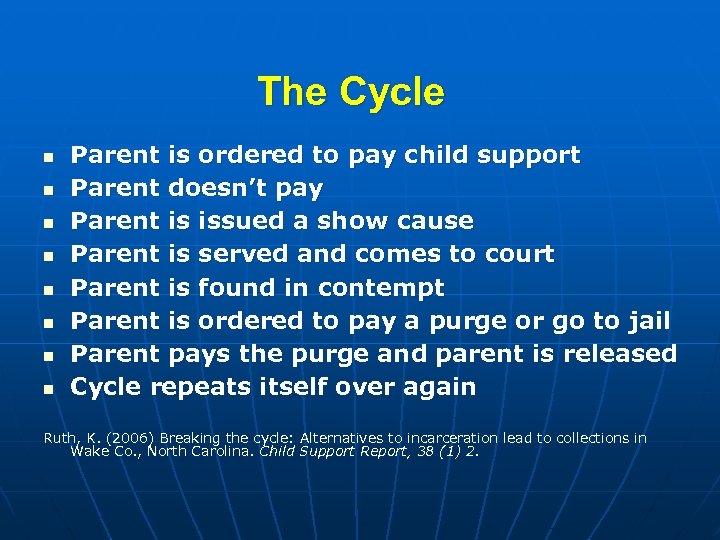
The Cycle n n n n Parent is ordered to pay child support Parent doesn’t pay Parent is issued a show cause Parent is served and comes to court Parent is found in contempt Parent is ordered to pay a purge or go to jail Parent pays the purge and parent is released Cycle repeats itself over again Ruth, K. (2006) Breaking the cycle: Alternatives to incarceration lead to collections in Wake Co. , North Carolina. Child Support Report, 38 (1) 2.
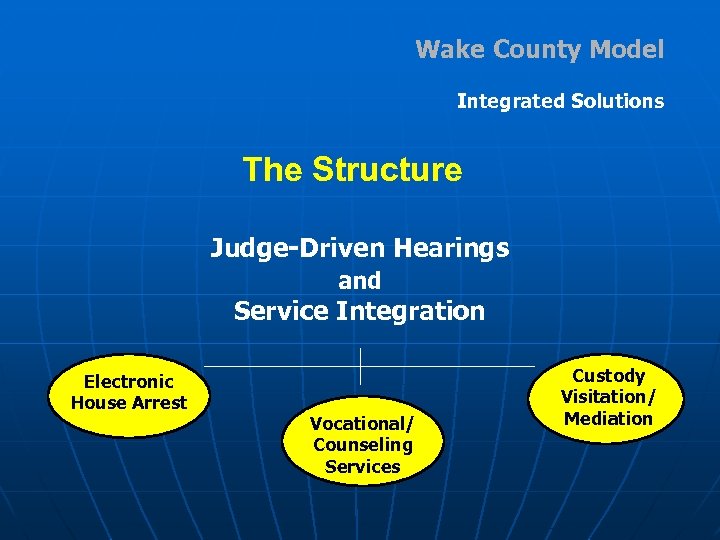
Wake County Model Integrated Solutions The Structure Judge-Driven Hearings and Service Integration Electronic House Arrest Vocational/ Counseling Services Custody Visitation/ Mediation
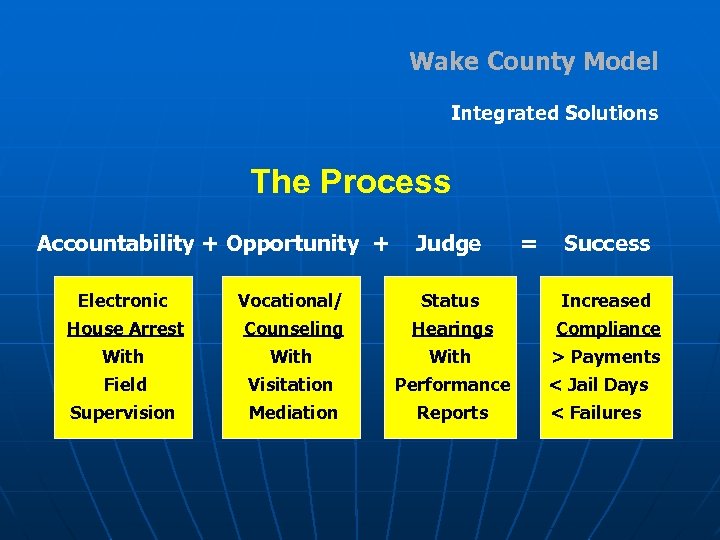
Wake County Model Integrated Solutions The Process Accountability + Opportunity + Judge = Success Electronic Vocational/ Status Increased House Arrest Counseling Hearings Compliance With > Payments Field Visitation Performance < Jail Days Supervision Mediation Reports < Failures
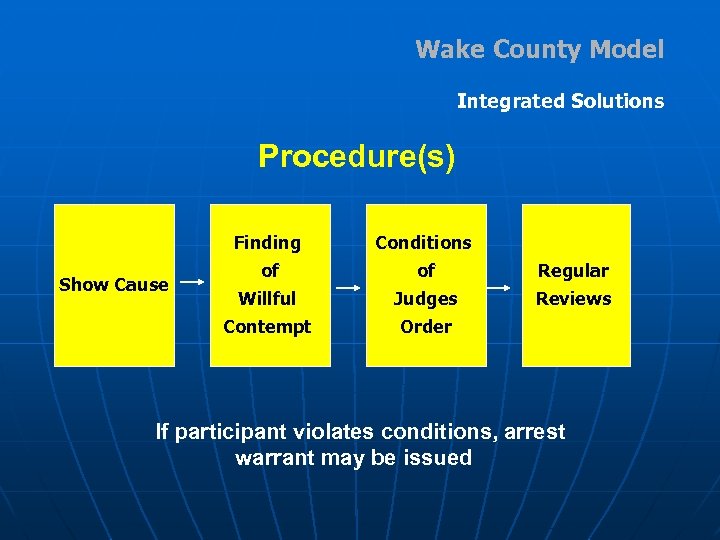
Wake County Model Integrated Solutions Procedure(s) Finding of of Regular Willful Judges Reviews Contempt Show Cause Conditions Order If participant violates conditions, arrest warrant may be issued
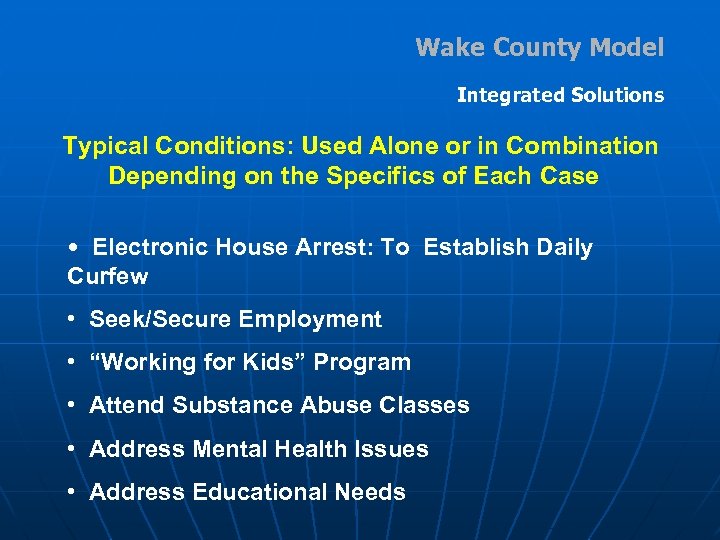
Wake County Model Integrated Solutions Typical Conditions: Used Alone or in Combination Depending on the Specifics of Each Case • Electronic House Arrest: To Establish Daily Curfew • Seek/Secure Employment • “Working for Kids” Program • Attend Substance Abuse Classes • Address Mental Health Issues • Address Educational Needs
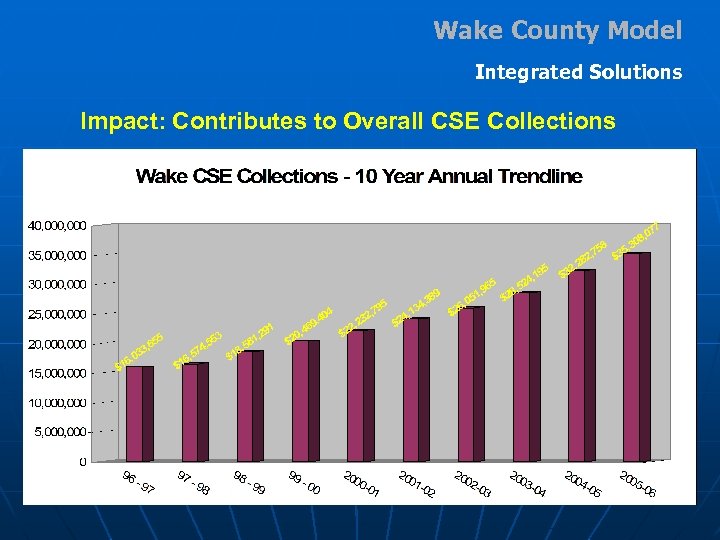
Wake County Model Integrated Solutions Impact: Contributes to Overall CSE Collections
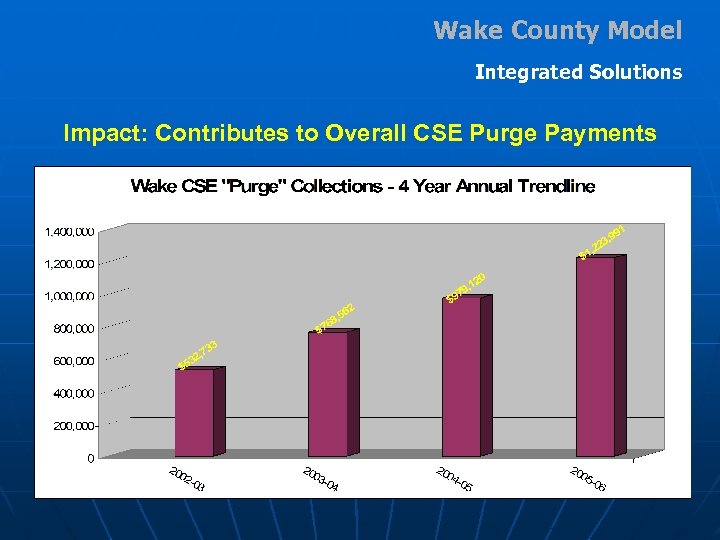
Wake County Model Integrated Solutions Impact: Contributes to Overall CSE Purge Payments

Academic Research Meredith College A Phase I study designed and led by Dr. Rhonda Zingraff, Professor of Sociology at Meredith College
Child Support Sanctions and Effects on Non-custodial Parent Compliance By: Sheenagh Lopez & Jennifer Mc. Coy Meredith College
Title IV-D of Social Security Act n n Created the Child Support Enforcement Program Provides establishment of paternity and the establishment, enforcement, collection, and distribution of all child support payments Ashton, J. (2006) Child support dockets benefit from uprising problem solving court principle. Juvenile and Family Justice Today, 14 (4), 19 -21.
OCSE Case Definition n A parent who is now, or eventually may be, obligated under law for the support of a child or children receiving services under Title IV-D program. Ashton, J. (2006) Child support dockets benefit from uprising problemsolving court principle. Juvenile and Family Justice Today, 14 (4), 19 -21.
Facts about Child Support n n 2004: Estimated 1. 2 million child support orders in the U. S. Child support enforcement is not cost effective; Net loss of $745 million per year (1996) Mothers on welfare can only expect to receive $50 a month from child support paymentremaining money goes to the state to cover cost of welfare program Only 20% of welfare mothers receive any child support at all. Hays, S. (2003) Flat broke with children: Women in the age of welfare reform. New York: Oxford University Press, Inc.
Child Support: Scope of Need n n 28% of all children under 18 live in single parent homes 85% live with mother Only 50% receive child support payments Only 25% get full amount of payment I-Fen, L. (2000) Perceived fairness and compliance with child support obligations. Journal of Marriage and Family, 62(2) 388 -398.
What do we know about child support payment compliance?
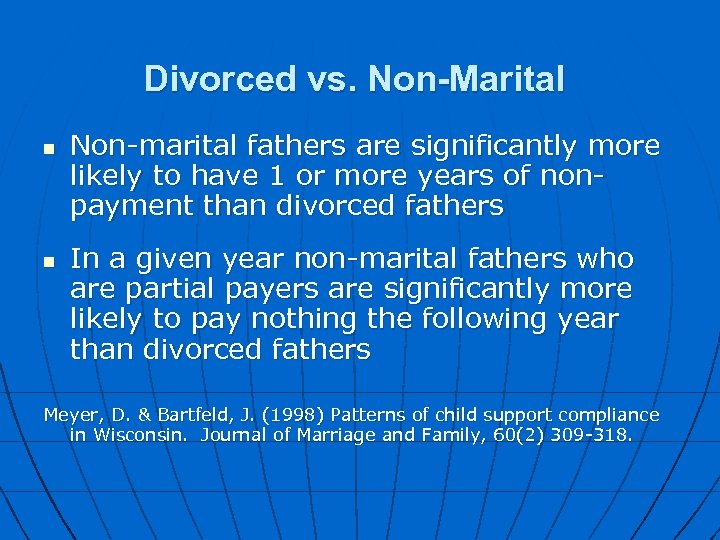
Divorced vs. Non-Marital n n Non-marital fathers are significantly more likely to have 1 or more years of nonpayment than divorced fathers In a given year non-marital fathers who are partial payers are significantly more likely to pay nothing the following year than divorced fathers Meyer, D. & Bartfeld, J. (1998) Patterns of child support compliance in Wisconsin. Journal of Marriage and Family, 60(2) 309 -318.
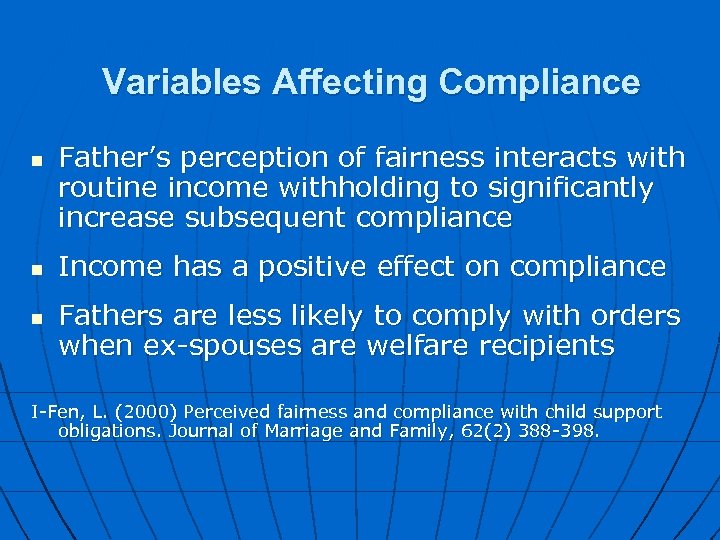
Variables Affecting Compliance n n n Father’s perception of fairness interacts with routine income withholding to significantly increase subsequent compliance Income has a positive effect on compliance Fathers are less likely to comply with orders when ex-spouses are welfare recipients I-Fen, L. (2000) Perceived fairness and compliance with child support obligations. Journal of Marriage and Family, 62(2) 388 -398.
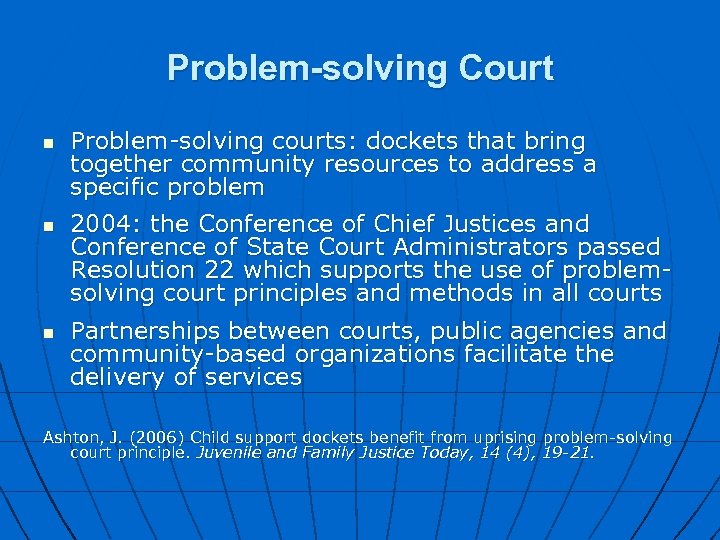
Problem-solving Court n n n Problem-solving courts: dockets that bring together community resources to address a specific problem 2004: the Conference of Chief Justices and Conference of State Court Administrators passed Resolution 22 which supports the use of problemsolving court principles and methods in all courts Partnerships between courts, public agencies and community-based organizations facilitate the delivery of services Ashton, J. (2006) Child support dockets benefit from uprising problem-solving court principle. Juvenile and Family Justice Today, 14 (4), 19 -21.

Wake County Model n Judge Kristin H. Ruth has implemented the problem solving court model in application to child support enforcement with the use of: - Electronic House Arrest -“Working for Kids” - Jail Incarceration Ruth, K. (2006) Breaking the cycle: Alternatives to incarceration lead to collections in Wake County, North Carolina. Child Support Report, 38 (1) 2.
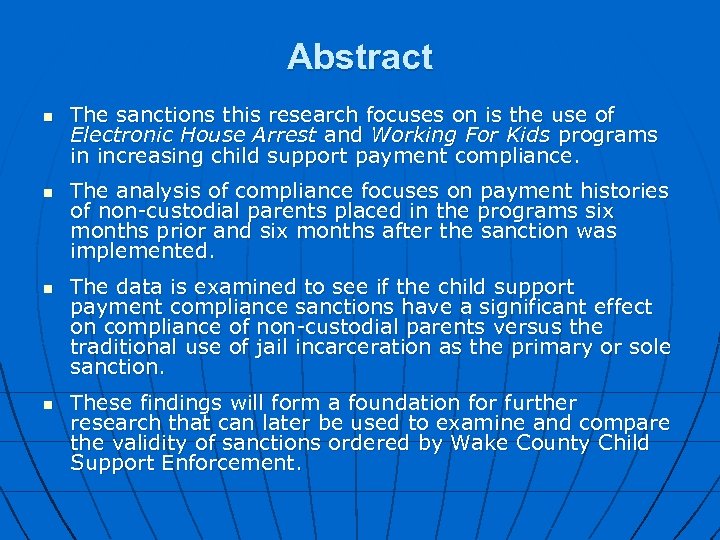
Abstract n n The sanctions this research focuses on is the use of Electronic House Arrest and Working For Kids programs in increasing child support payment compliance. The analysis of compliance focuses on payment histories of non-custodial parents placed in the programs six months prior and six months after the sanction was implemented. The data is examined to see if the child support payment compliance sanctions have a significant effect on compliance of non-custodial parents versus the traditional use of jail incarceration as the primary or sole sanction. These findings will form a foundation for further research that can later be used to examine and compare the validity of sanctions ordered by Wake County Child Support Enforcement.
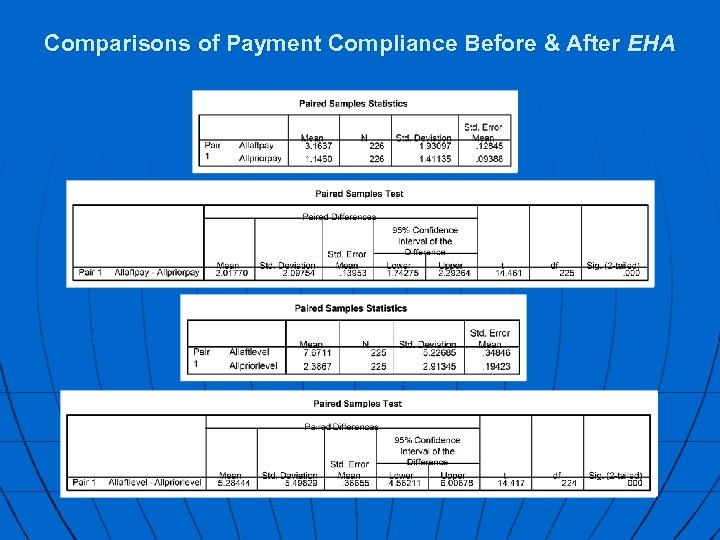
Comparisons of Payment Compliance Before & After EHA
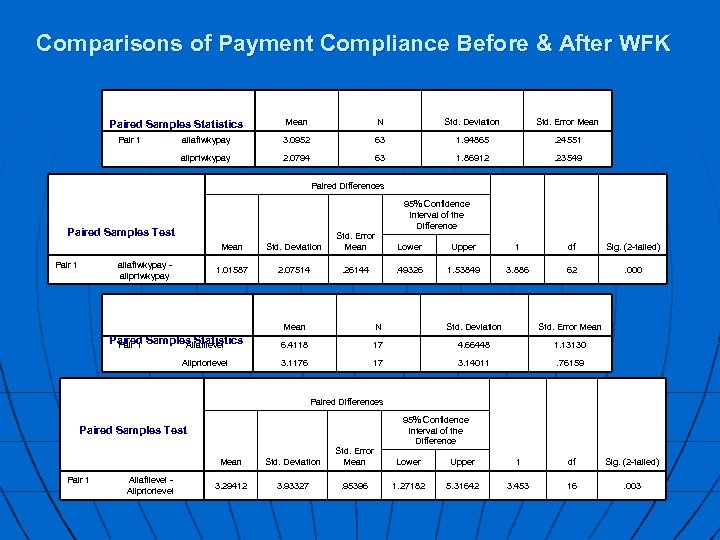
Comparisons of Payment Compliance Before & After WFK Mean N Std. Deviation Std. Error Mean allaftwkypay 3. 0952 63 1. 94865 . 24551 allprtwkypay 2. 0794 63 1. 86912 . 23549 Paired Samples Statistics Pair 1 Paired Differences 95% Confidence Interval of the Difference Paired Samples Test Mean Pair 1 Std. Error Mean Lower Upper t df Sig. (2 -tailed) 1. 01587 allaftwkypay allprtwkypay Std. Deviation 2. 07514 . 26144 . 49326 1. 53849 3. 886 62 . 000 Mean Paired Samples Statistics Pair 1 Allaftlevel Allpriorlevel N Std. Deviation Std. Error Mean 6. 4118 17 4. 66448 1. 13130 3. 1176 17 3. 14011 . 76159 Paired Differences 95% Confidence Interval of the Difference Paired Samples Test Mean Pair 1 Allaftlevel Allpriorlevel Std. Deviation Std. Error Mean Lower Upper t df Sig. (2 -tailed) 3. 29412 3. 93327 . 95396 1. 27182 5. 31642 3. 453 16 . 003
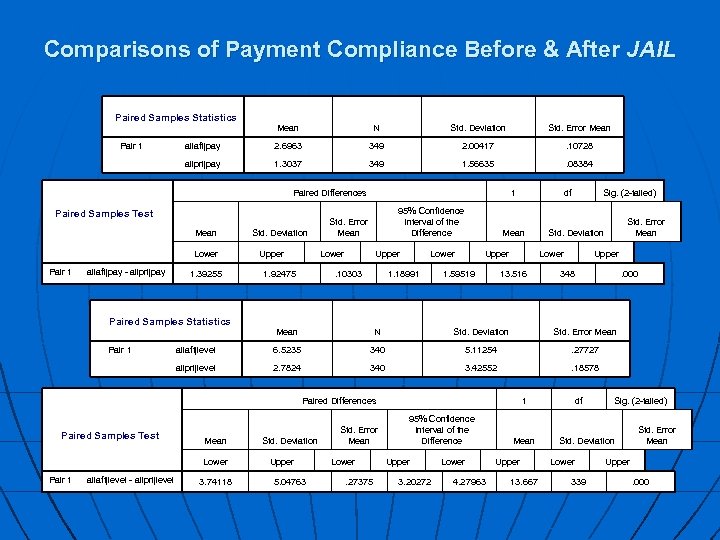
Comparisons of Payment Compliance Before & After JAIL Paired Samples Statistics N Std. Deviation Std. Error Mean allaftjpay 2. 6963 349 2. 00417 . 10728 allprijpay Pair 1 Mean 1. 3037 349 1. 56635 . 08384 Paired Differences Paired Samples Test Mean Lower Pair 1 allaftjpay - allprijpay 1. 39255 Paired Samples Statistics Std. Deviation Upper t 95% Confidence Interval of the Difference Std. Error Mean Lower 1. 92475 Upper . 10303 Mean Lower 1. 18991 df Upper 1. 59519 Sig. (2 -tailed) 13. 516 Std. Error Mean Std. Deviation Lower 348 N Std. Deviation Std. Error Mean allaftjlevel 6. 5235 340 5. 11254 . 27727 2. 7824 340 3. 42552 . 18578 Mean Lower Pair 1 allaftjlevel - allprijlevel . 000 Mean Paired Differences Paired Samples Test Upper allprijlevel Pair 1 3. 74118 Std. Deviation Upper 5. 04763 Std. Error Mean Lower. 27375 t 95% Confidence Interval of the Difference Upper 3. 20272 Lower 4. 27963 Mean Upper 13. 667 df Sig. (2 -tailed) Std. Deviation Lower 339 Std. Error Mean Upper. 000
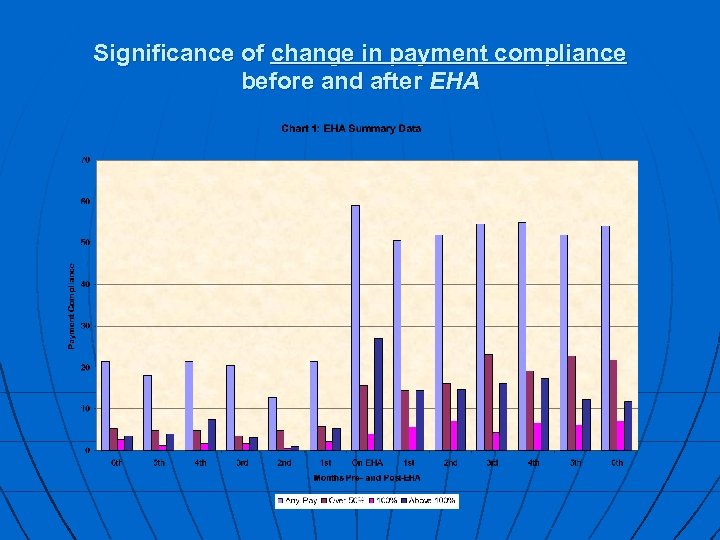
Significance of change in payment compliance before and after EHA
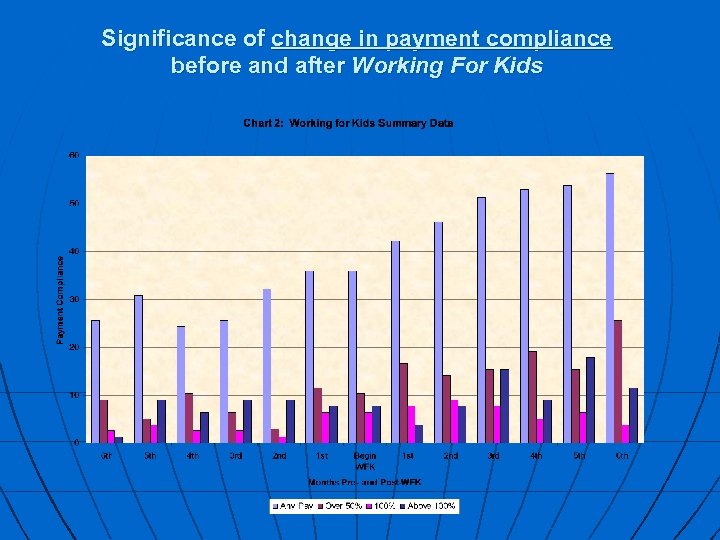
Significance of change in payment compliance before and after Working For Kids
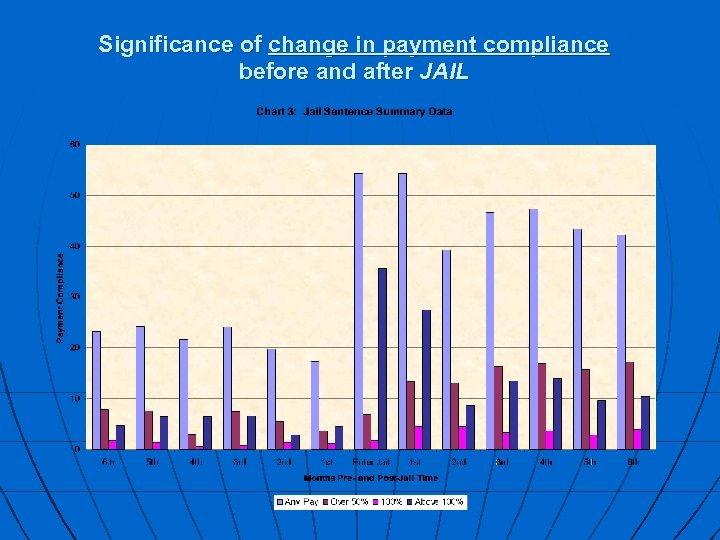
Significance of change in payment compliance before and after JAIL
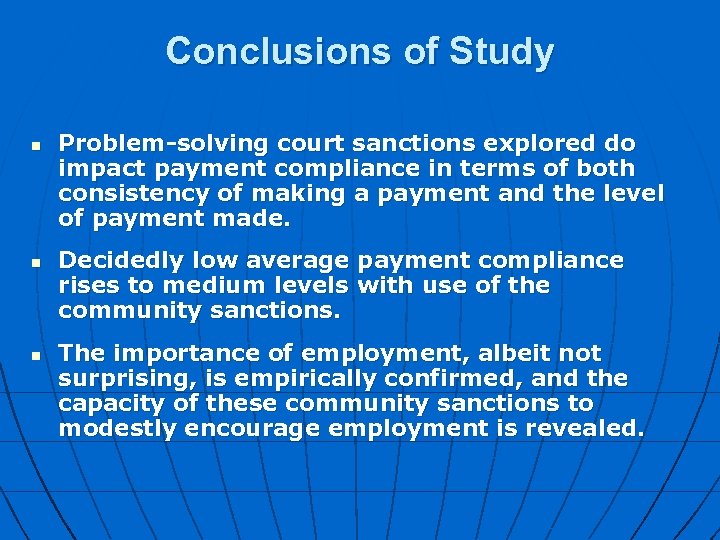
Conclusions of Study n n n Problem-solving court sanctions explored do impact payment compliance in terms of both consistency of making a payment and the level of payment made. Decidedly low average payment compliance rises to medium levels with use of the community sanctions. The importance of employment, albeit not surprising, is empirically confirmed, and the capacity of these community sanctions to modestly encourage employment is revealed.
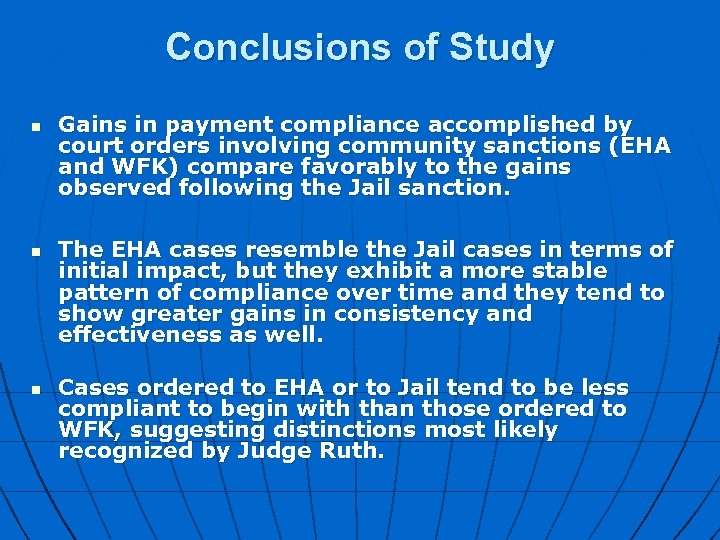
Conclusions of Study n n n Gains in payment compliance accomplished by court orders involving community sanctions (EHA and WFK) compare favorably to the gains observed following the Jail sanction. The EHA cases resemble the Jail cases in terms of initial impact, but they exhibit a more stable pattern of compliance over time and they tend to show greater gains in consistency and effectiveness as well. Cases ordered to EHA or to Jail tend to be less compliant to begin with than those ordered to WFK, suggesting distinctions most likely recognized by Judge Ruth.
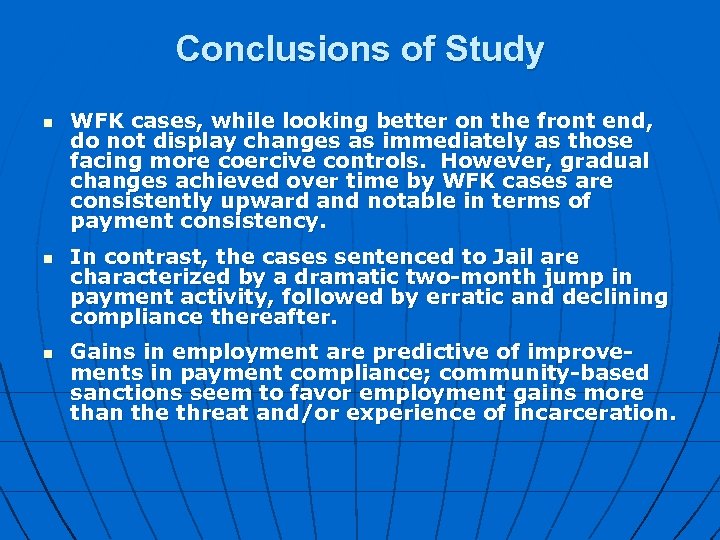
Conclusions of Study n n n WFK cases, while looking better on the front end, do not display changes as immediately as those facing more coercive controls. However, gradual changes achieved over time by WFK cases are consistently upward and notable in terms of payment consistency. In contrast, the cases sentenced to Jail are characterized by a dramatic two-month jump in payment activity, followed by erratic and declining compliance thereafter. Gains in employment are predictive of improvements in payment compliance; community-based sanctions seem to favor employment gains more than the threat and/or experience of incarceration.
Implementing a Problem Solving Court One Court’s Approach
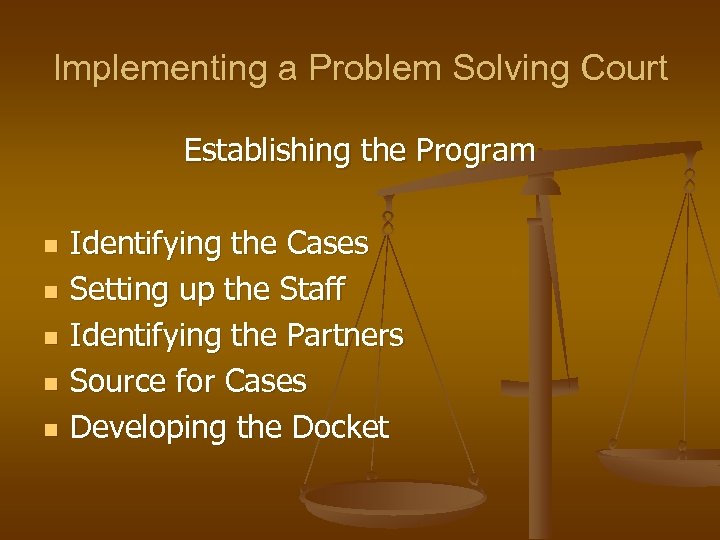
Implementing a Problem Solving Court Establishing the Program n n n Identifying the Cases Setting up the Staff Identifying the Partners Source for Cases Developing the Docket
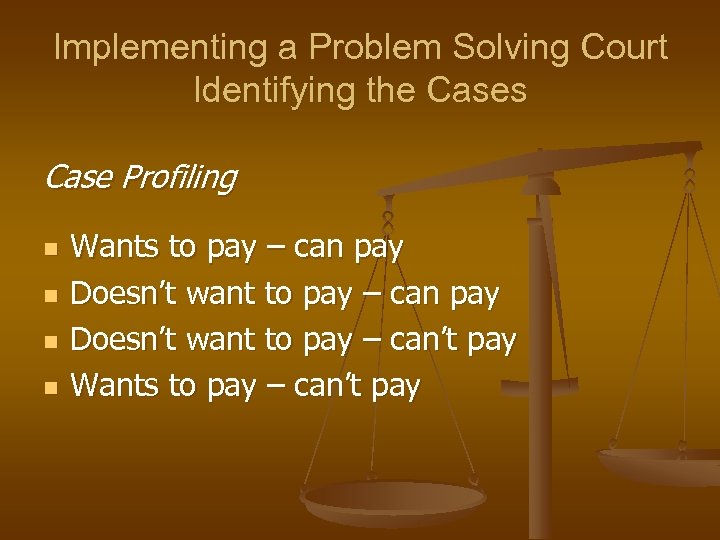
Implementing a Problem Solving Court Identifying the Cases Case Profiling n n Wants to pay – can pay Doesn’t want to pay – can’t pay Wants to pay – can’t pay
Implementing a Problem Solving Court Identifying the Cases Wants to pay – can’t pay Identify the barriers. n n No employment history / lack of skills Criminal Background Underemployed / need higher paying job Disability
Implementing a Problem Solving Court Setting up the Staff Probation / Intensive Enforcement Officer n n n Monitor the cases File actions when necessary Liaison between Court and Partner Providers
Implementing a Problem Solving Court Identifying the Partners Identified Sources n n Workforce Investment Board Local Agencies n n Goodwill Center for Independent Living Project Return Mental Health Cooperative Still Seeking n Clinic to identify real disabilities
Implementing a Problem Solving Court Source for Cases n n n Identify cases on regular dockets Child Support Agency direct referrals Referral from Partner Agencies
Implementing a Problem Solving Court Developing the Docket n Finding the available docket time How to conduct the docket n Different dockets for different issues n How often to schedule n n How long will this last? Identifying general timeframes with partners n 1, 2, 3 strikes you’re out n n “Graduate Level” programs?
NORTH DAKOTA PARENTAL RESPONSIBILITY INITIATIVE FOR THE DEVELOPMENT OF EMPLOYMENT PRIDE A COLLABORATIVE PROJECT AMONG THE NORTH DAKOTA DEPARTMENT OF HUMAN SERVICES, JOB SERVICE NORTH DAKOTA, SOUTHWEST DISTRICT COURT, NORTHEAST DISTRICT COURT, AND NORTHEAST CENTRAL DISTRICT COURT
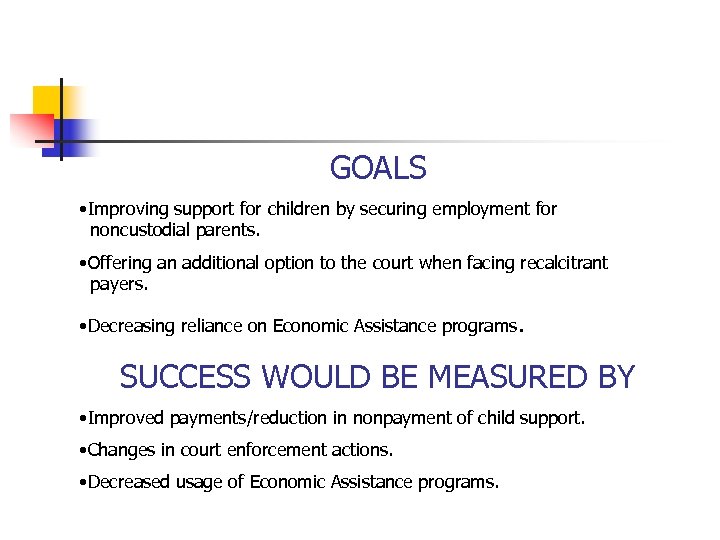
GOALS • Improving support for children by securing employment for noncustodial parents. • Offering an additional option to the court when facing recalcitrant payers. • Decreasing reliance on Economic Assistance programs. SUCCESS WOULD BE MEASURED BY • Improved payments/reduction in nonpayment of child support. • Changes in court enforcement actions. • Decreased usage of Economic Assistance programs.
MISSING LINK Monitoring compliance?
PROGRAM CASE MANAGER n n Secret to success Shelia
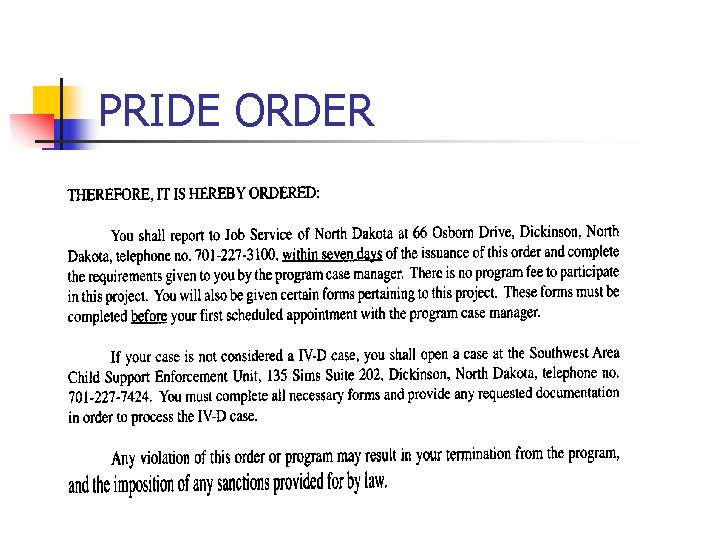
PRIDE ORDER
FAILURE TO COMPLY n Immediate Order to Show Cause
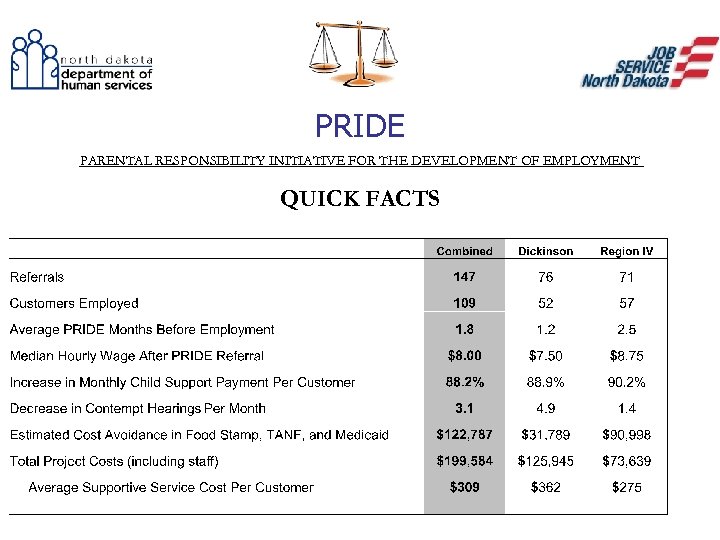
PRIDE PARENTAL RESPONSIBILITY INITIATIVE FOR THE DEVELOPMENT OF EMPLOYMENT QUICK FACTS
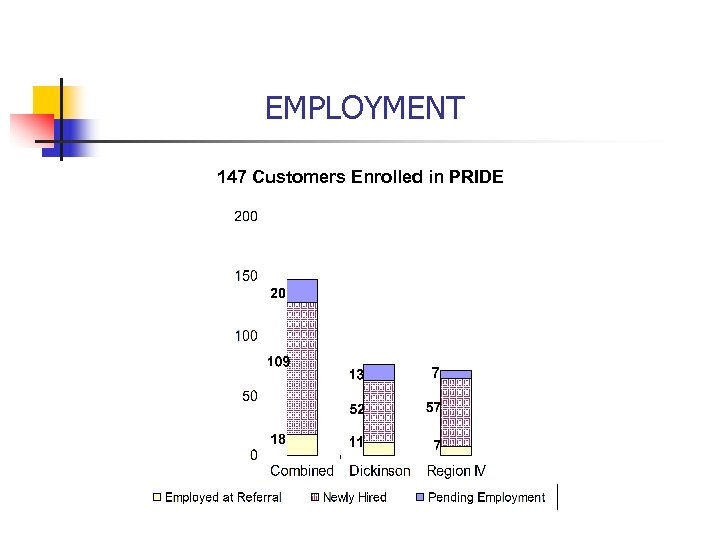
EMPLOYMENT 147 Customers Enrolled in PRIDE
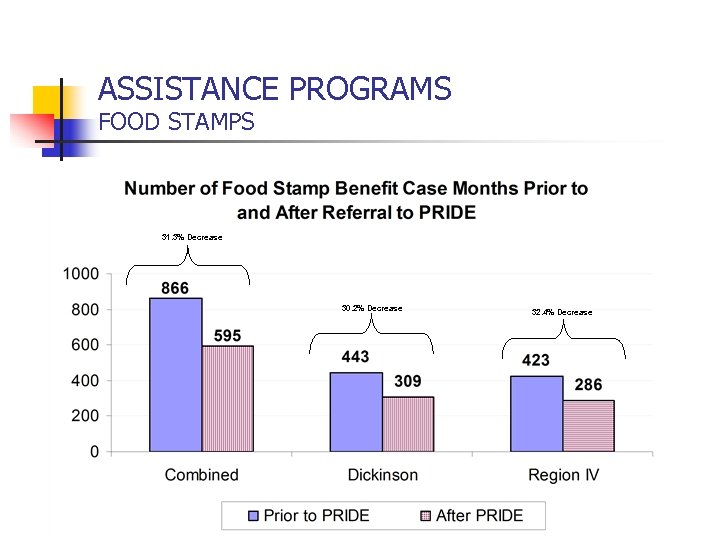
ASSISTANCE PROGRAMS FOOD STAMPS 31. 3% Decrease 30. 2% Decrease 32. 4% Decrease
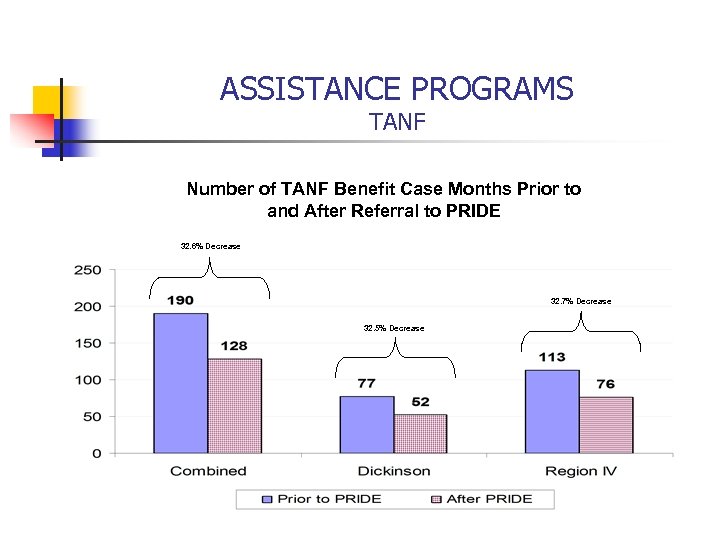
ASSISTANCE PROGRAMS TANF Number of TANF Benefit Case Months Prior to and After Referral to PRIDE 32. 6% Decrease 32. 7% Decrease 32. 5% Decrease
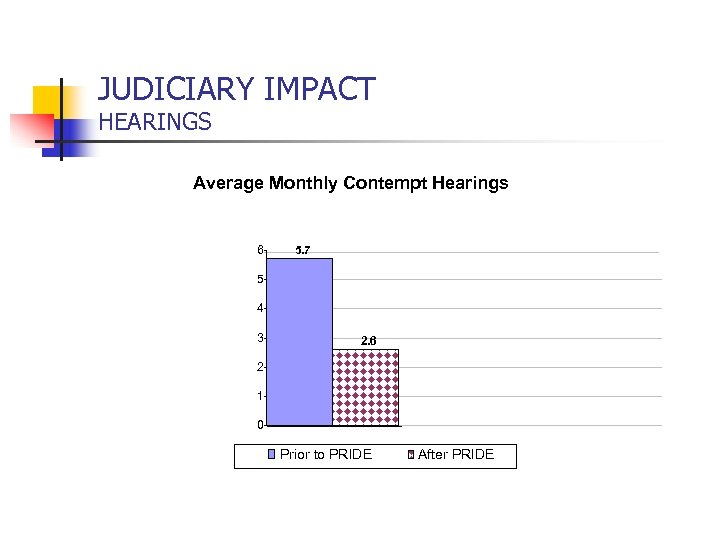
JUDICIARY IMPACT HEARINGS Average Monthly Contempt Hearings 6 5. 7 5 4 3 2. 6 2 1 0 Prior to PRIDE After PRIDE
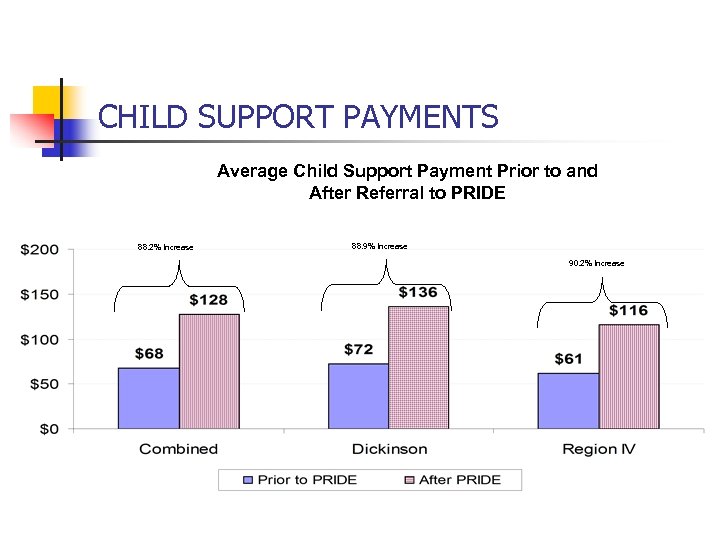
CHILD SUPPORT PAYMENTS Average Child Support Payment Prior to and After Referral to PRIDE 88. 2% Increase 88. 9% Increase 90. 2% Increase
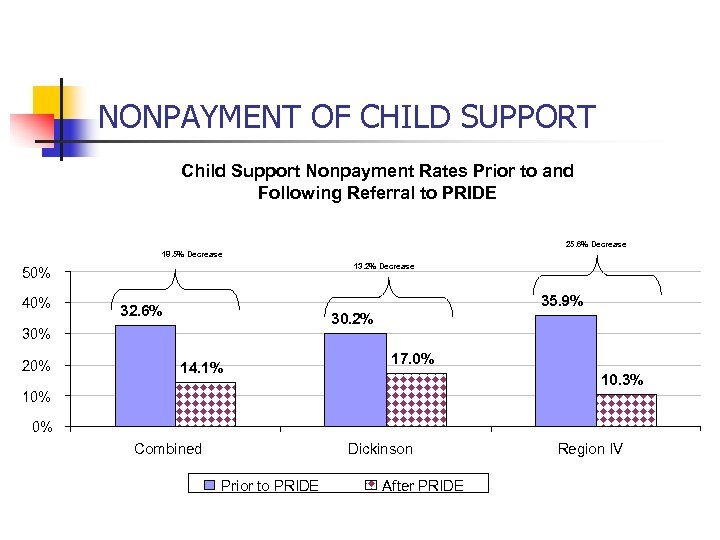
NONPAYMENT OF CHILD SUPPORT Child Support Nonpayment Rates Prior to and Following Referral to PRIDE 25. 6% Decrease 18. 5% Decrease 13. 2% Decrease 50% 40% 35. 9% 32. 6% 30. 2% 30% 20% 14. 1% 17. 0% 10. 3% 10% 0% Combined Dickinson Prior to PRIDE After PRIDE Region IV
IT WORKS! Special Thanks Mike Schwindt North Dakota IV-D Director
Скачать презентацию PROBLEM SOLVING COURTS Moderator Dail Moore Director National
ab804167f849423c22bbf055624c2b81.ppt