 Скачать презентацию Problem No 3 Drehu Cemuhi The
d92c7d0117832fda9577981a8ea239ec.ppt
- Количество слайдов: 32



Problem No. 3 Drehu / Cemuhi
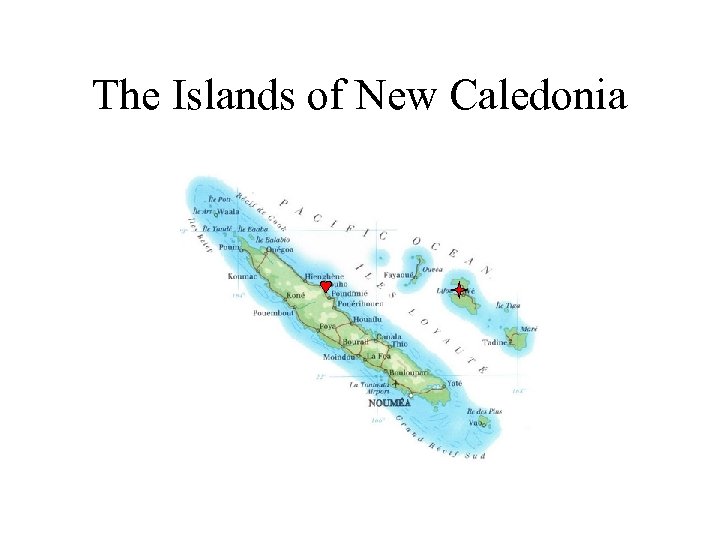
The Islands of New Caledonia
Drehu
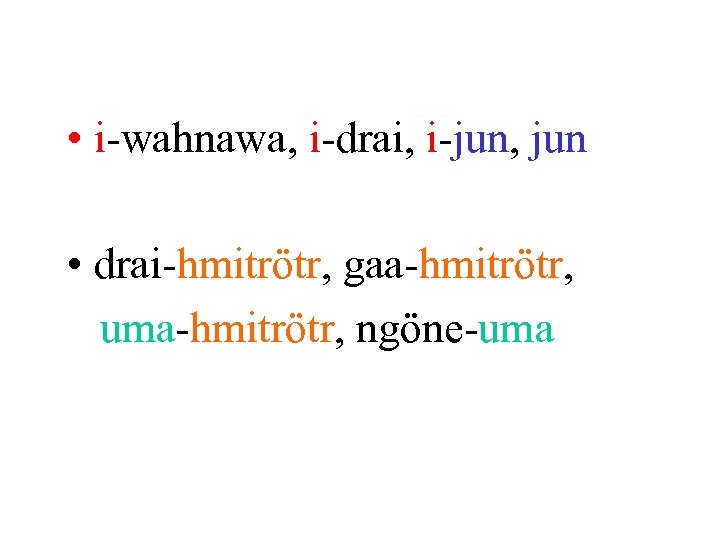
• i-wahnawa, i-drai, i-jun, jun • drai-hmitrötr, gaa-hmitrötr, uma-hmitrötr, ngöne-uma
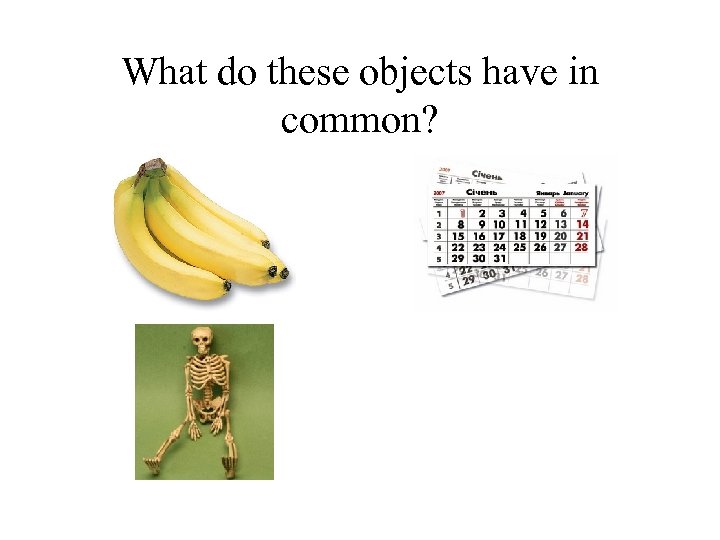
What do these objects have in common?
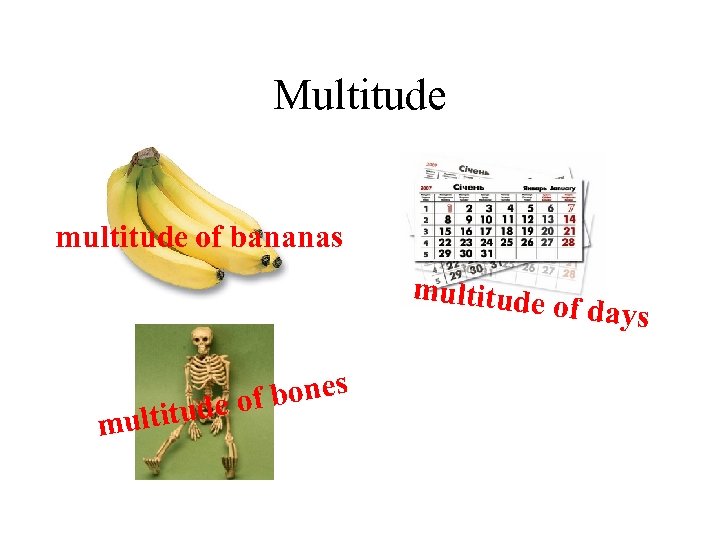
Multitude multitude of bananas multitude ultitu m bones de of of days
HOLY (in Christian religion) • church = ‘holy house’ • Sunday = ‘holy day’ • sanctuary = ‘holy place (or part)’ • wall = ‘house X? ’
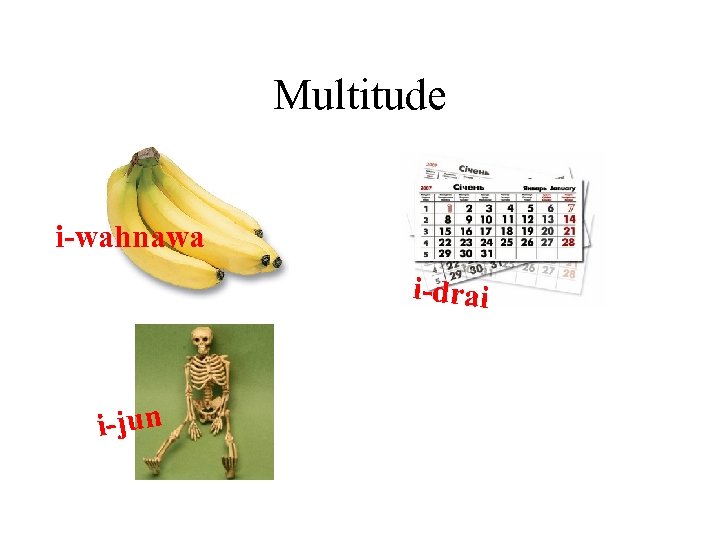
Multitude i-wahnawa i-drai i-jun
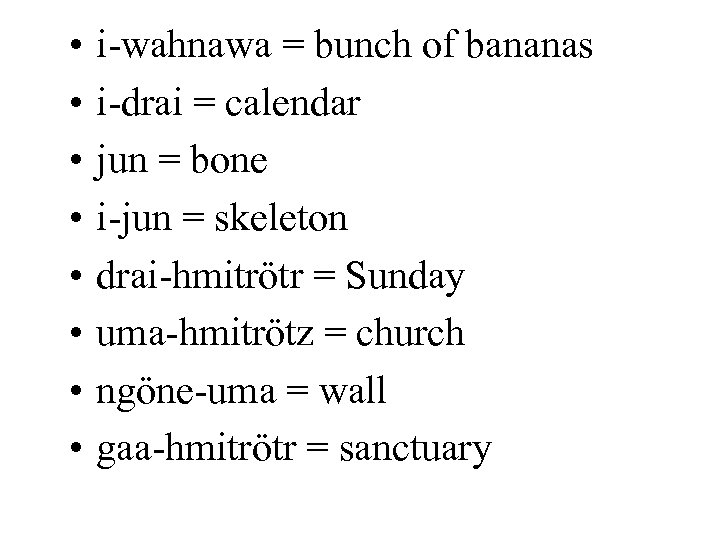
• • i-wahnawa = bunch of bananas i-drai = calendar jun = bone i-jun = skeleton drai-hmitrötr = Sunday uma-hmitrötz = church ngöne-uma = wall gaa-hmitrötr = sanctuary
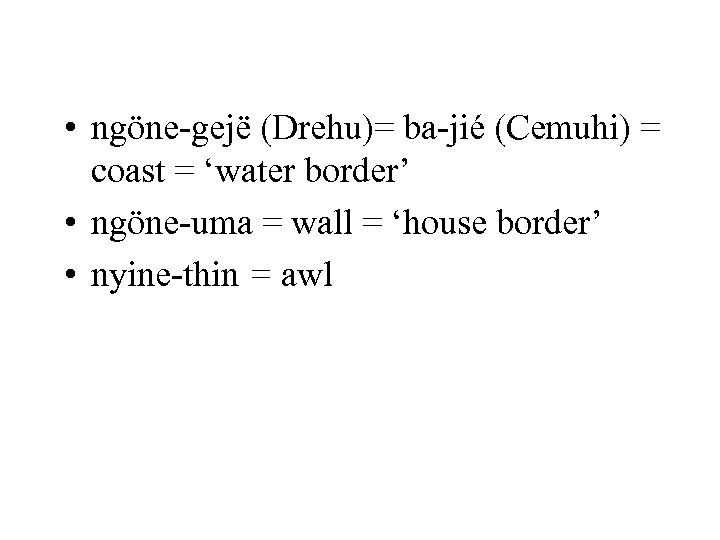
• ngöne-gejë (Drehu)= ba-jié (Cemuhi) = coast = ‘water border’ • ngöne-uma = wall = ‘house border’ • nyine-thin = awl
Cemuhi
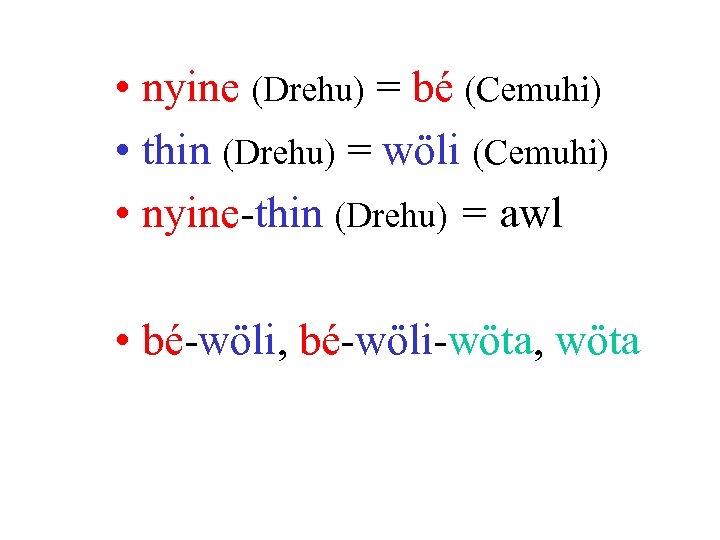
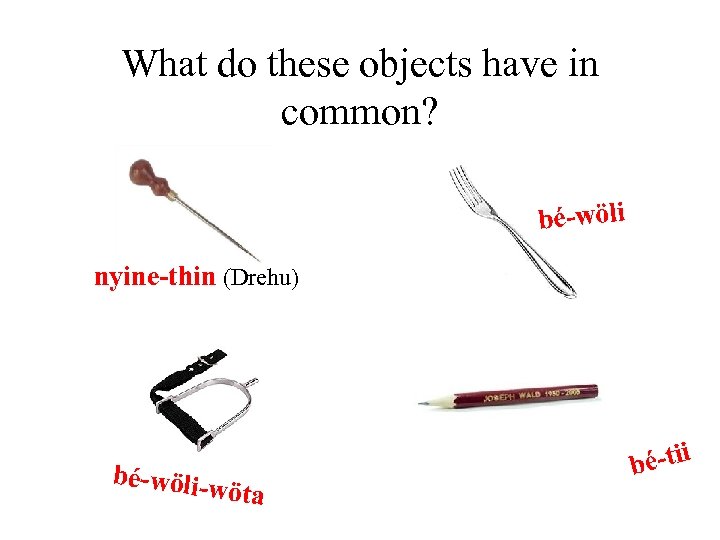
• nyine (Drehu) = bé (Cemuhi) • thin (Drehu) = wöli (Cemuhi) • nyine-thin (Drehu) = awl • bé-wöli, bé-wöli-wöta, wöta
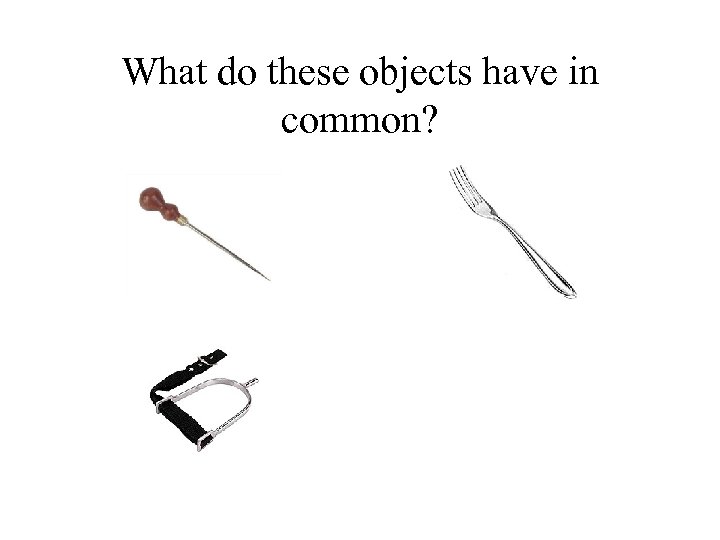
What do these objects have in common?
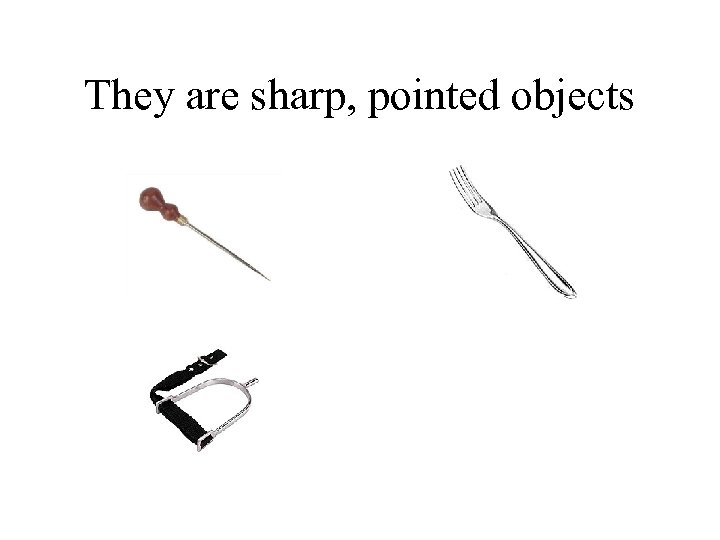
They are sharp, pointed objects
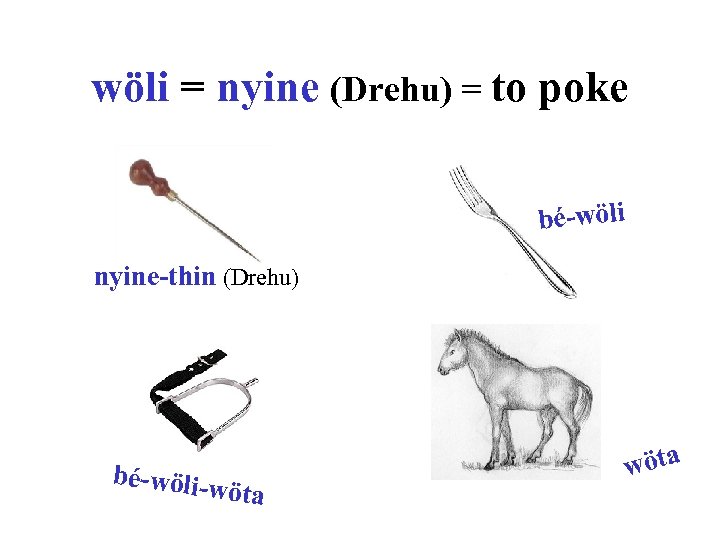
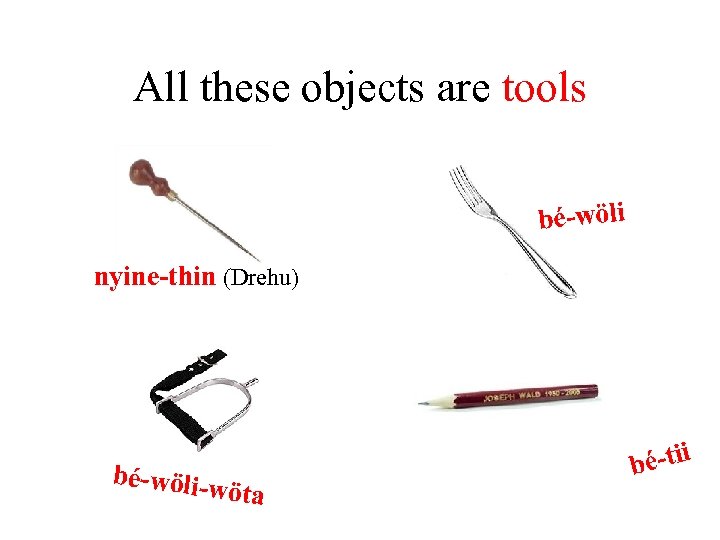
wöli = nyine (Drehu) = to poke bé-wöli nyine-thin (Drehu) bé-wöli-w öta wöta
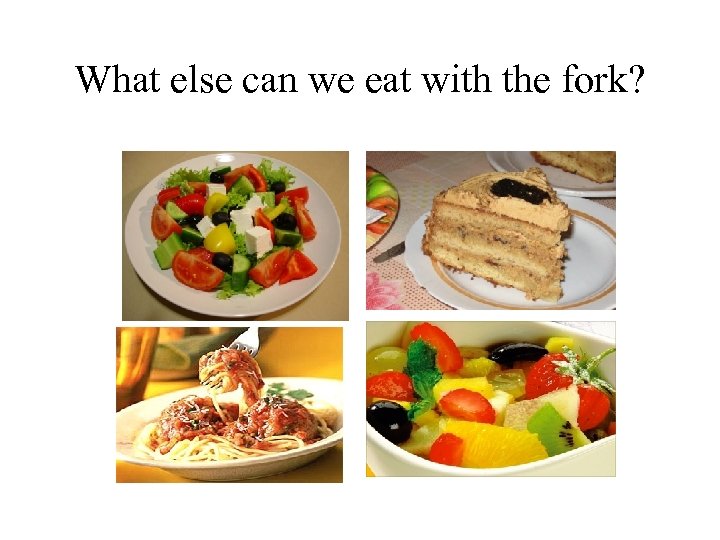
What else can we eat with the fork?
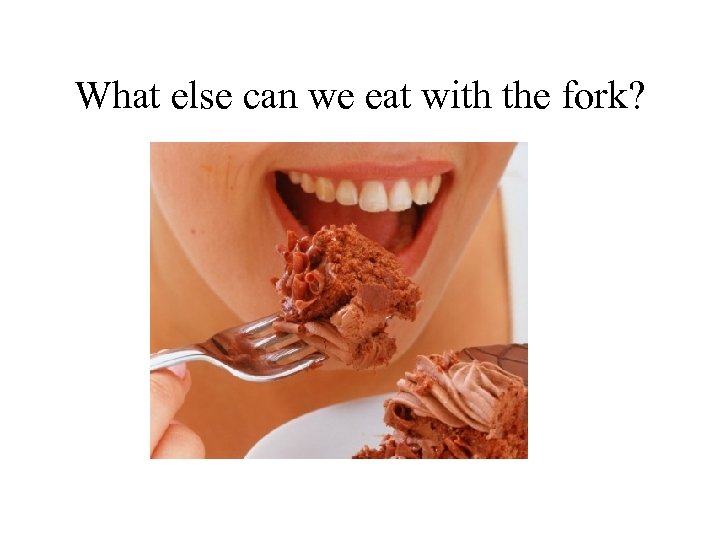
What else can we eat with the fork?
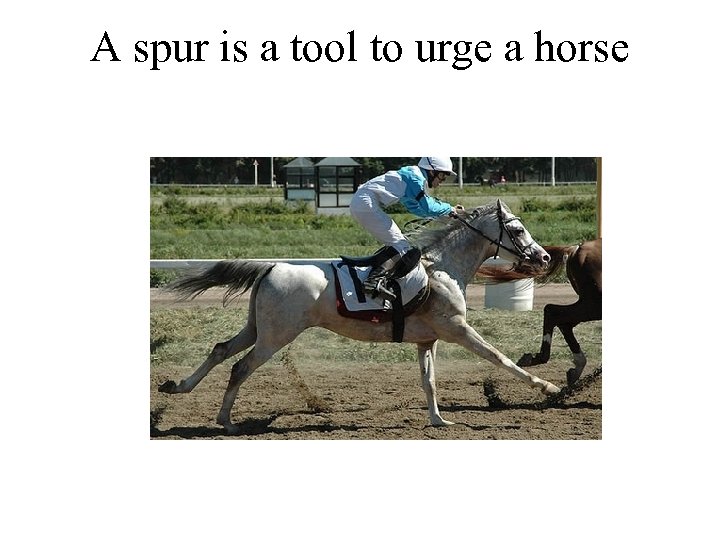
A spur is a tool to urge a horse
ba = border • ba-jié = coast = ‘sea border’ • ba-bwén = twilight =‘night border’
• tii = to write • bé-tii = pencil
What do these objects have in common? bé-wöli nyine-thin (Drehu) bé-wöli-w i öta bé-ti
All these objects are tools bé-wöli nyine-thin (Drehu) bé-wöli-w i öta bé-ti
What does bé-ôdu mean? OR
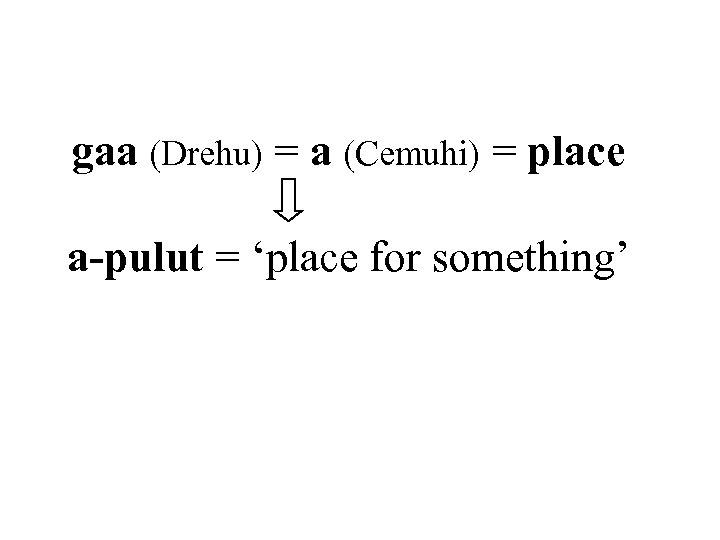
gaa (Drehu) = a (Cemuhi) = place a-pulut = ‘place for something’
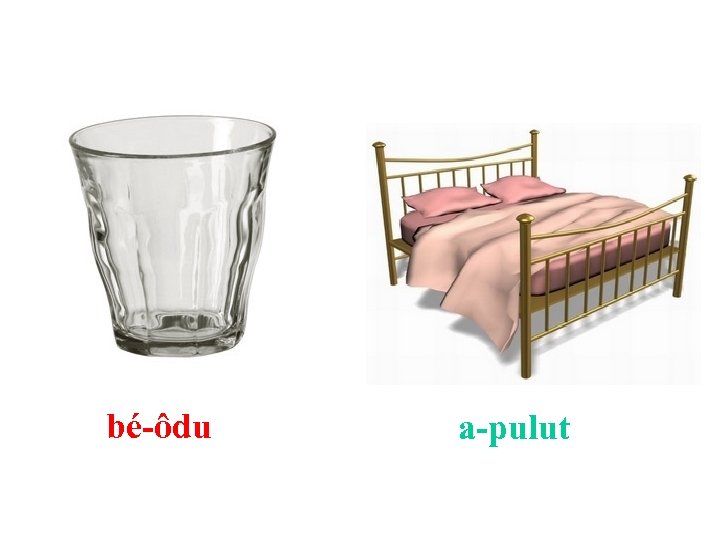
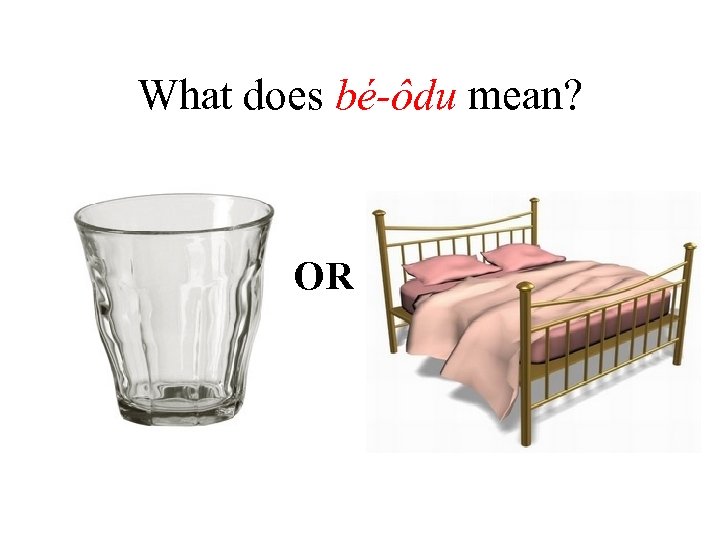
bé-ôdu a-pulut
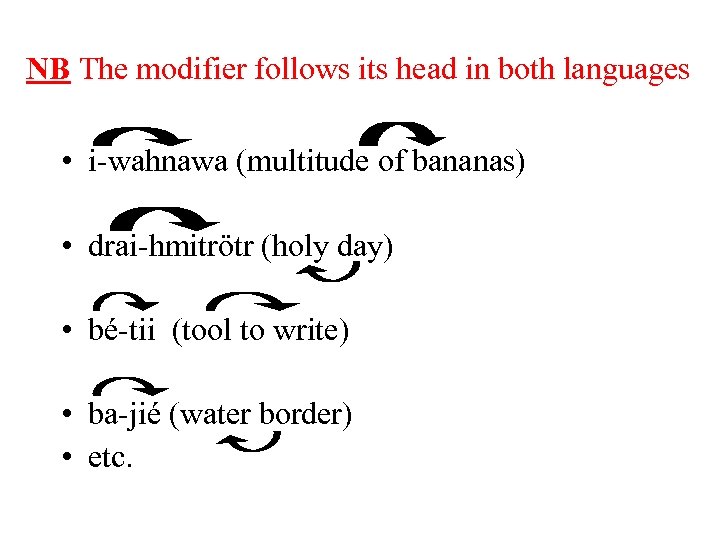
NB The modifier follows its head in both languages • i-wahnawa (multitude of bananas) • drai-hmitrötr (holy day) • bé-tii (tool to write) • ba-jié (water border) • etc.
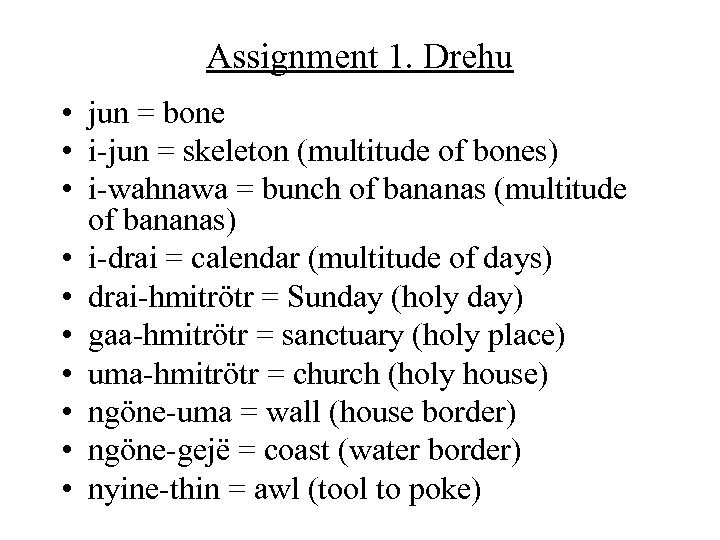
Assignment 1. Drehu • jun = bone • i-jun = skeleton (multitude of bones) • i-wahnawa = bunch of bananas (multitude of bananas) • i-drai = calendar (multitude of days) • drai-hmitrötr = Sunday (holy day) • gaa-hmitrötr = sanctuary (holy place) • uma-hmitrötr = church (holy house) • ngöne-uma = wall (house border) • ngöne-gejë = coast (water border) • nyine-thin = awl (tool to poke)
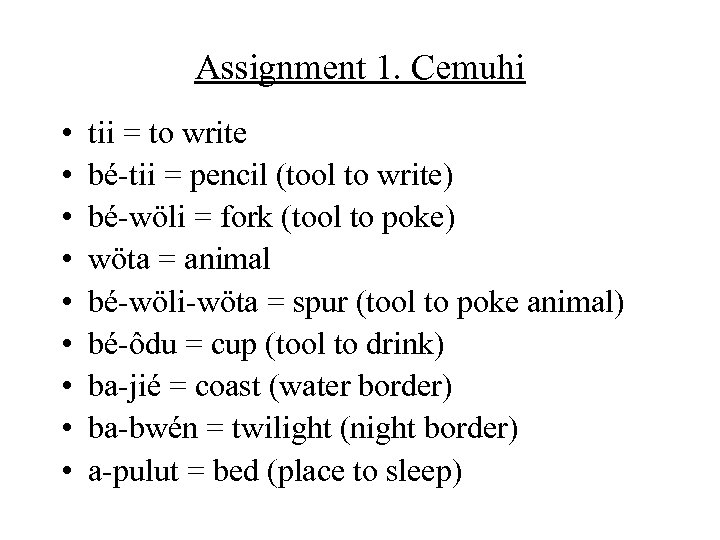
Assignment 1. Cemuhi • • • tii = to write bé-tii = pencil (tool to write) bé-wöli = fork (tool to poke) wöta = animal bé-wöli-wöta = spur (tool to poke animal) bé-ôdu = cup (tool to drink) ba-jié = coast (water border) ba-bwén = twilight (night border) a-pulut = bed (place to sleep)
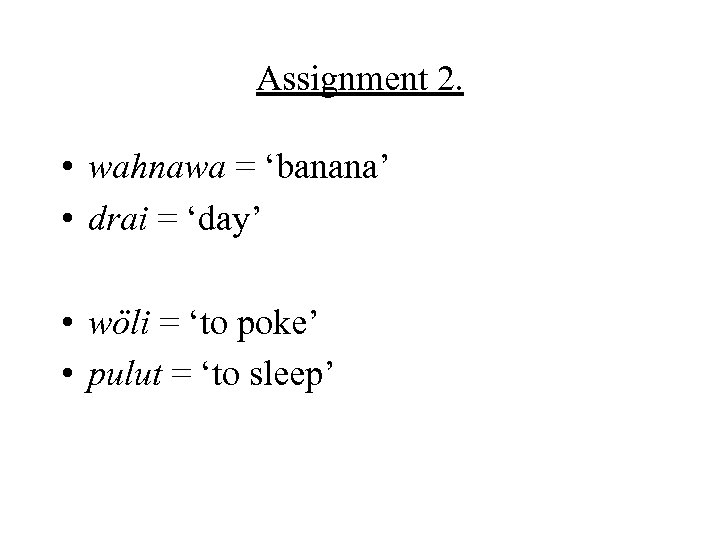
Assignment 2. • wahnawa = ‘banana’ • drai = ‘day’ • wöli = ‘to poke’ • pulut = ‘to sleep’
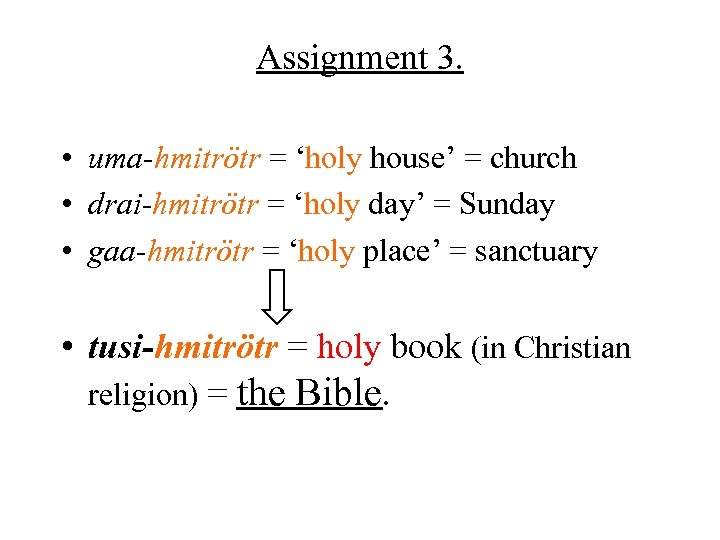
Assignment 3. • uma-hmitrötr = ‘holy house’ = church • drai-hmitrötr = ‘holy day’ = Sunday • gaa-hmitrötr = ‘holy place’ = sanctuary • tusi-hmitrötr = holy book (in Christian religion) = the Bible.
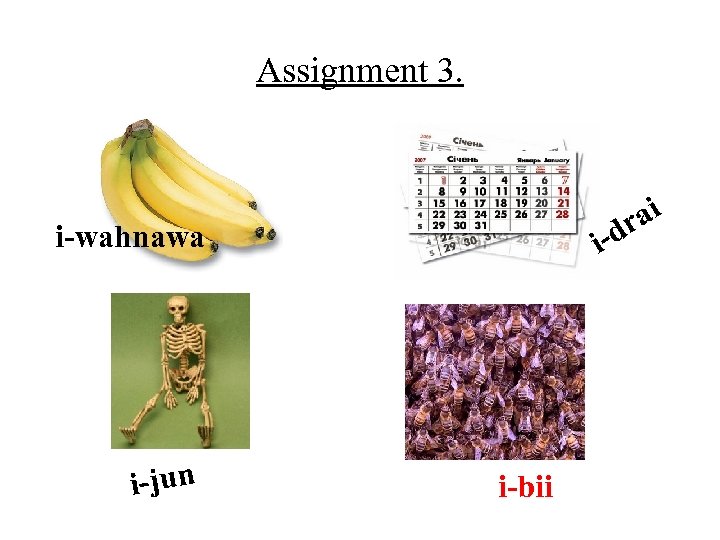
Assignment 3. ai r i-d i-wahnawa i-jun i-bii
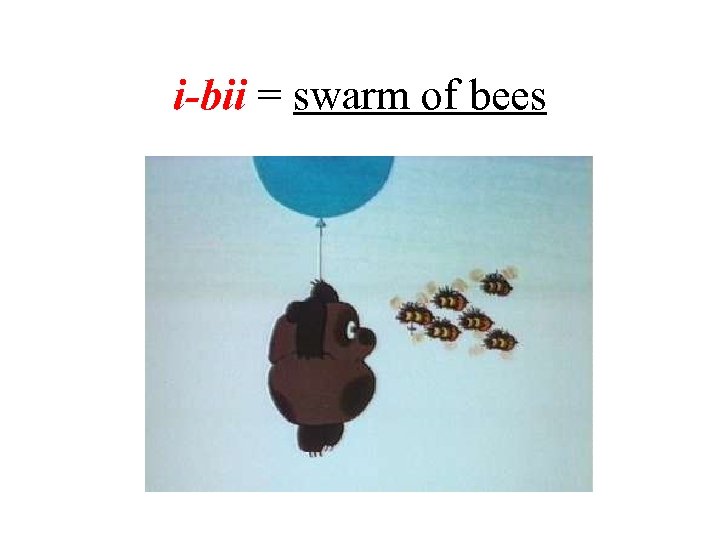
i-bii = swarm of bees
Скачать презентацию Problem No 3 Drehu Cemuhi The
d92c7d0117832fda9577981a8ea239ec.ppt