 Скачать презентацию Problem Materials and Household Hazardous Waste What
68a367b39598a434c29f138632c06e05.ppt
- Количество слайдов: 18



Problem Materials and Household Hazardous Waste • What are they? And why are they a problem? • How to identify household hazardous products • Using and storing household hazardous products • Reducing household hazardous waste • How to dispose of household hazardous waste
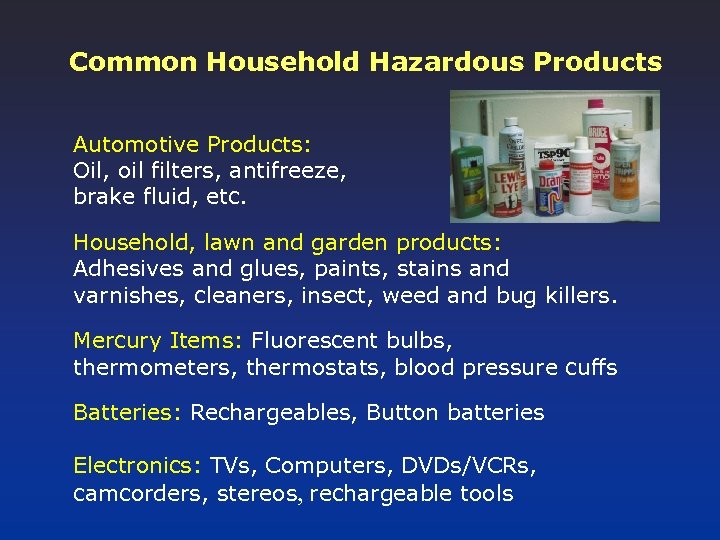
Common Household Hazardous Products Automotive Products: Oil, oil filters, antifreeze, brake fluid, etc. Household, lawn and garden products: Adhesives and glues, paints, stains and varnishes, cleaners, insect, weed and bug killers. Mercury Items: Fluorescent bulbs, thermometers, thermostats, blood pressure cuffs Batteries: Rechargeables, Button batteries Electronics: TVs, Computers, DVDs/VCRs, camcorders, stereos, rechargeable tools
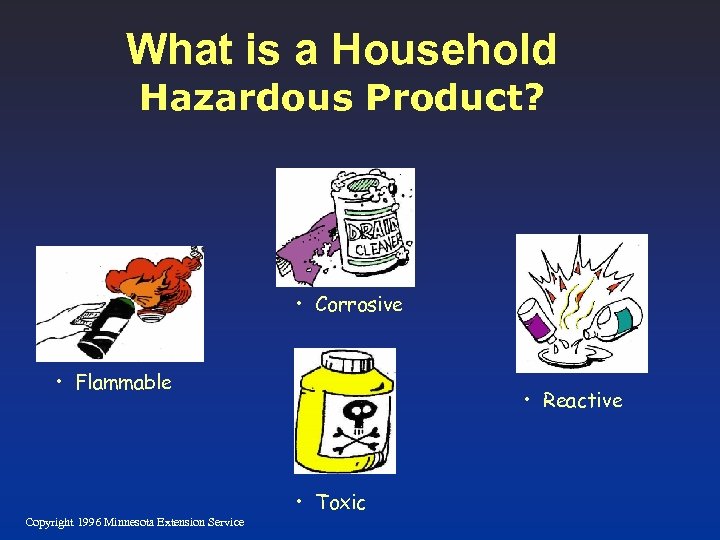
What is a Household Hazardous Product? • Corrosive • Flammable • Reactive • Toxic Copyright 1996 Minnesota Extension Service
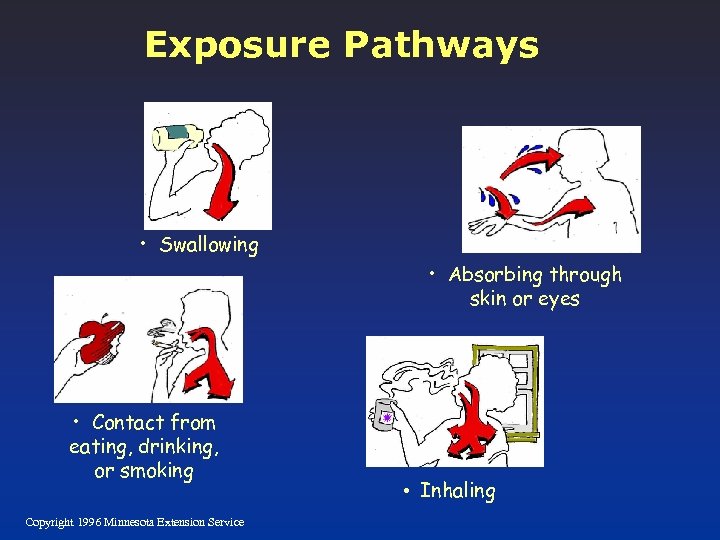
Exposure Pathways • Swallowing • Absorbing through skin or eyes • Contact from eating, drinking, or smoking Copyright 1996 Minnesota Extension Service • Inhaling
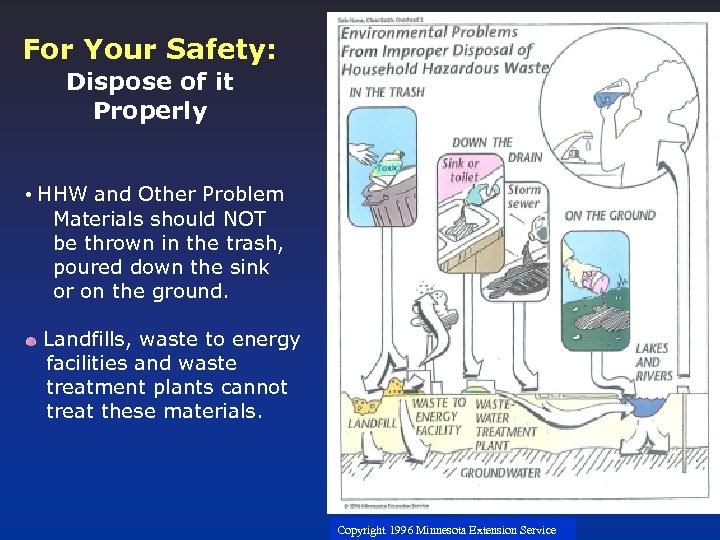
For Your Safety: Dispose of it Properly • HHW and Other Problem Materials should NOT be thrown in the trash, poured down the sink or on the ground. Landfills, waste to energy facilities and waste treatment plants cannot treat these materials. Copyright 1996 Minnesota Extension Service
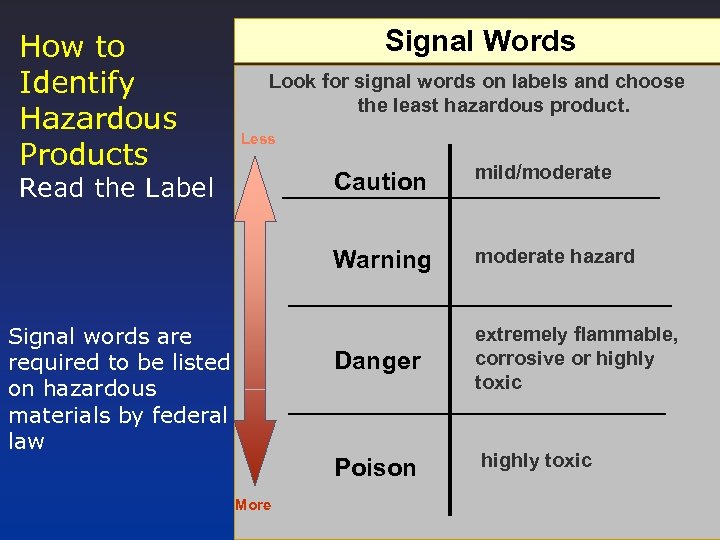
How to Identify Hazardous Products Signal Words Look for signal words on labels and choose the least hazardous product. Less Caution Warning More extremely flammable, corrosive or highly toxic Poison Signal words are required to be listed on hazardous materials by federal law moderate hazard Danger Read the Label mild/moderate highly toxic
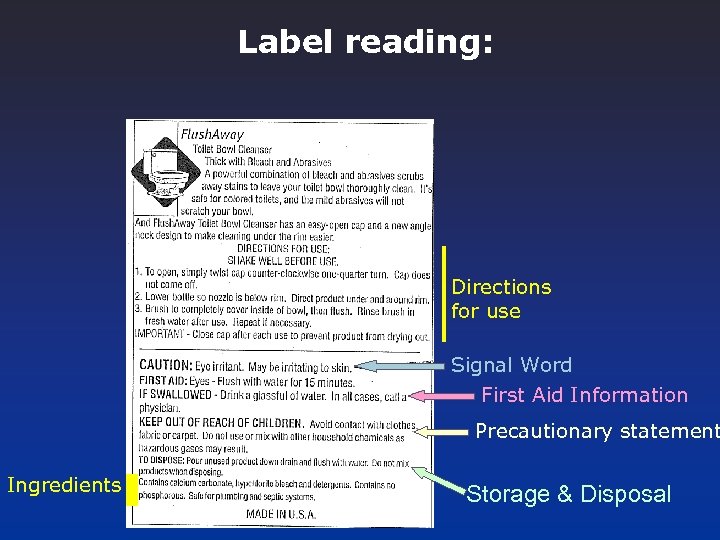
Label reading: Directions for use Signal Word First Aid Information Precautionary statement Ingredients Storage & Disposal
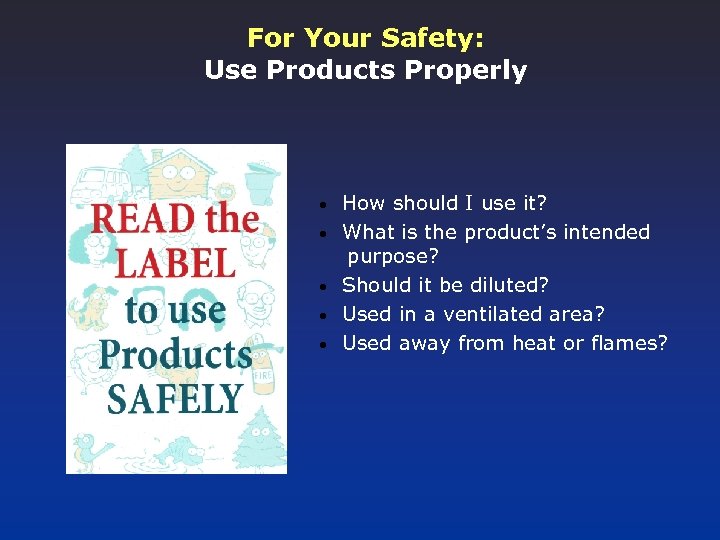
For Your Safety: Use Products Properly • • • How should I use it? What is the product’s intended purpose? Should it be diluted? Used in a ventilated area? Used away from heat or flames?
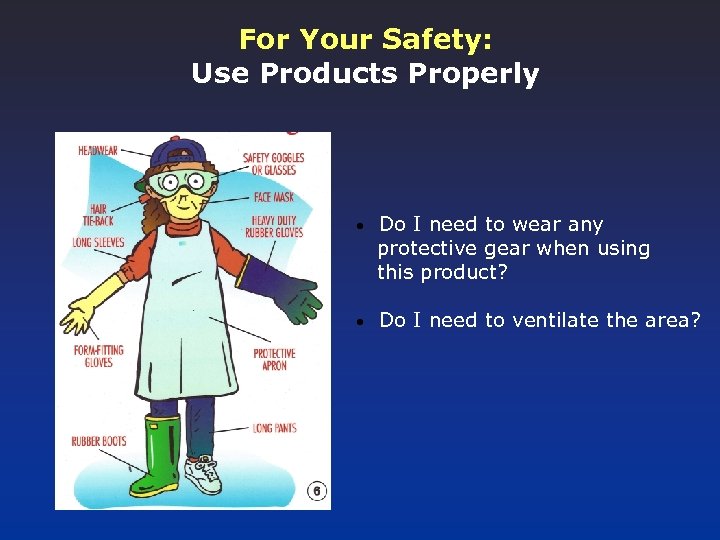
For Your Safety: Use Products Properly • Do I need to wear any protective gear when using this product? • Do I need to ventilate the area?
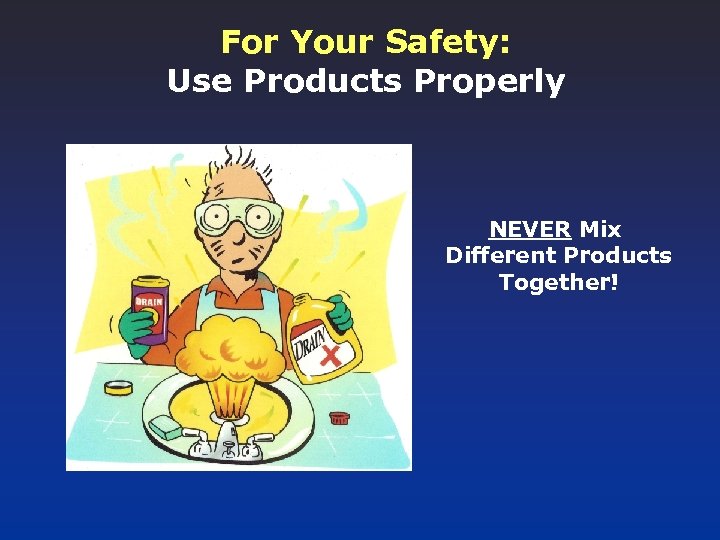
For Your Safety: Use Products Properly NEVER Mix Different Products Together!
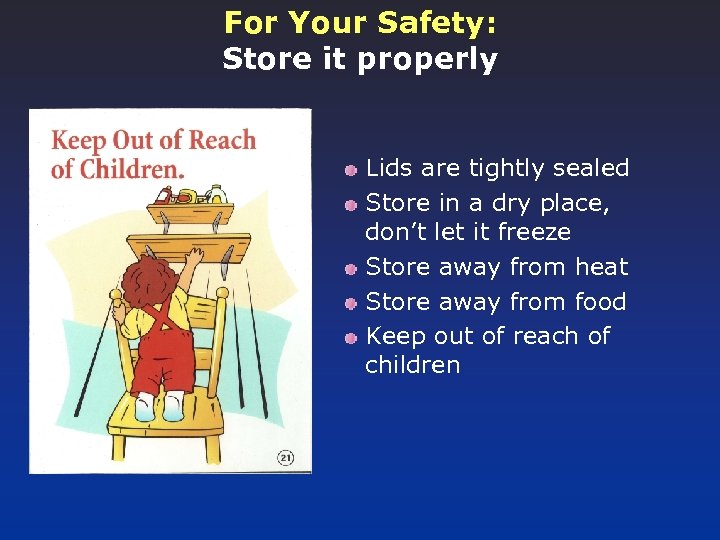
For Your Safety: Store it properly Lids are tightly sealed Store in a dry place, don’t let it freeze Store away from heat Store away from food Keep out of reach of children
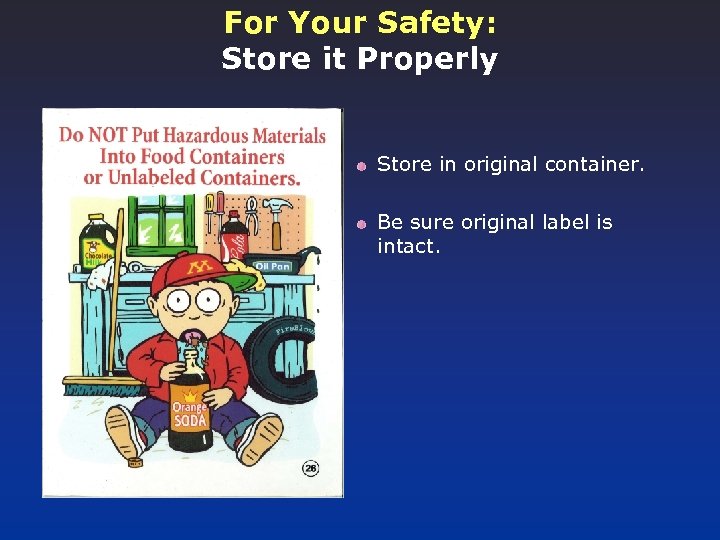
For Your Safety: Store it Properly Store in original container. Be sure original label is intact.
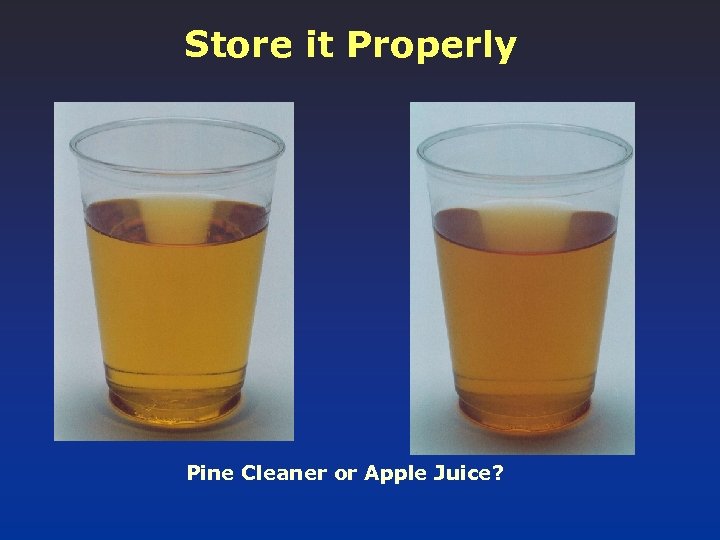
Store it Properly Pine Cleaner or Apple Juice?
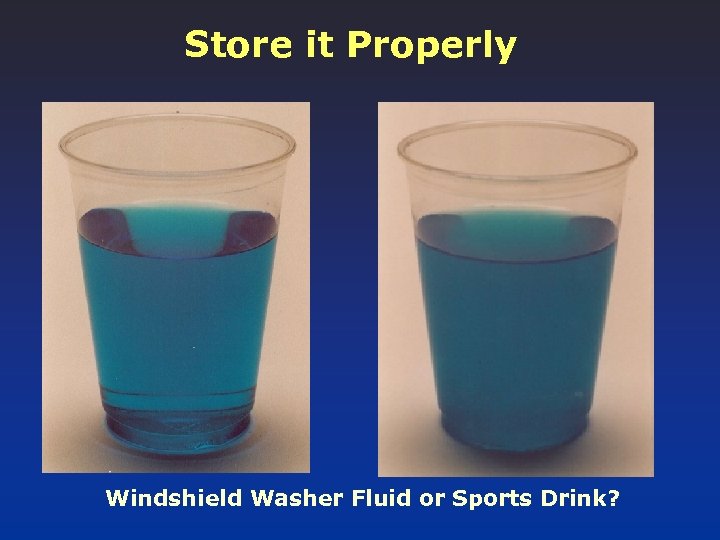
Store it Properly Windshield Washer Fluid or Sports Drink?
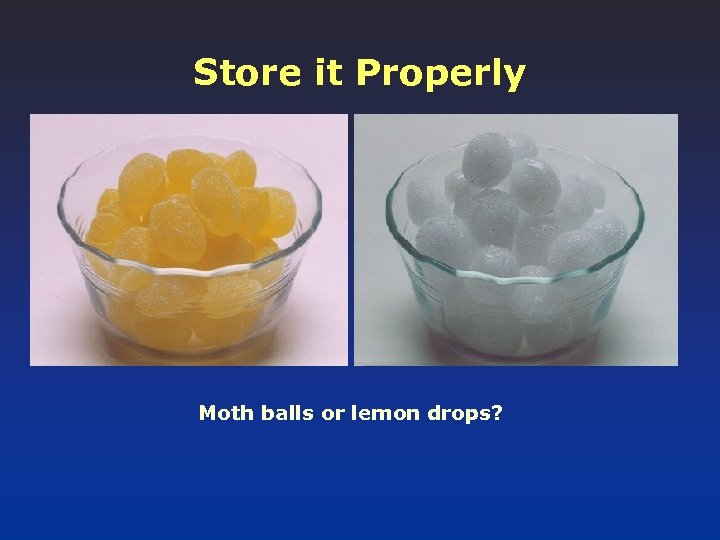
Store it Properly Moth balls or lemon drops?
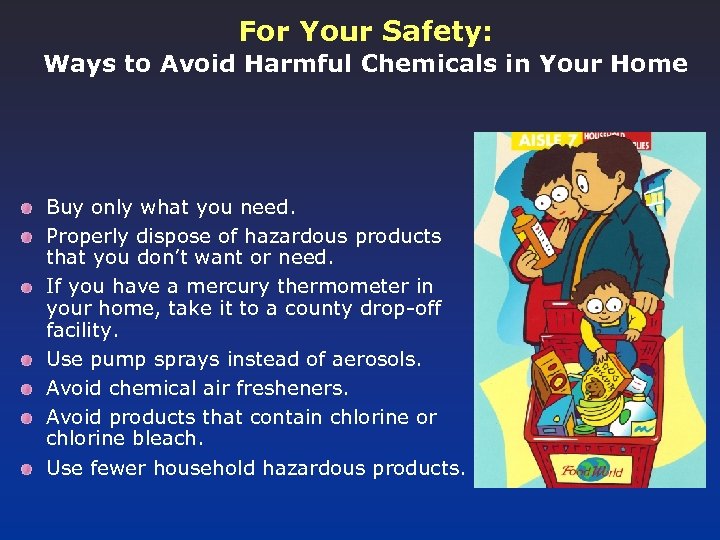
For Your Safety: Ways to Avoid Harmful Chemicals in Your Home Buy only what you need. Properly dispose of hazardous products that you don’t want or need. If you have a mercury thermometer in your home, take it to a county drop-off facility. Use pump sprays instead of aerosols. Avoid chemical air fresheners. Avoid products that contain chlorine or chlorine bleach. Use fewer household hazardous products.

Properly Dispose of Hazardous Wastes Hennepin County operates two year-round facilities for residents to properly dispose of hazardous wastes. Bloomington Brooklyn Park
For more information • Visit the A to Z How-to-Get-Rid-of-It online guide: www. hennepin. us keyword search: a to z • Or call: Hennepin County Environmental Services 612 -348 -3777 (M-F 8: 00 -4: 30) • For information on facilities operated by other metro area counties, visit www. Rethink. Recycling. com or contact your county environmental office.
Скачать презентацию Problem Materials and Household Hazardous Waste What
68a367b39598a434c29f138632c06e05.ppt