 Скачать презентацию Problem Designing the best channel for an analog
b866d74d26ab3c887737a1f3d409b3c1.ppt
- Количество слайдов: 33



Problem: Designing the “best” channel for an analog cellular system • A specific example of a generic radio system problem, in which both signal and interference are controlled. • A seemingly simple problem that turns out to be complex and interesting • Goals: Good voice quality; “spectrum efficiency” Critique the approach! Does it apply to “unregulated” designs Like 802. 11? How much complexity needs to be included? R. Frenkiel 9/18/03
What’s this about “spectrum efficiency? ” • Politically important in the 60’s and 70’s • Why?
What’s this about “spectrum efficiency? ” • • • Politically important in the 60’s and 70’s Free spectrum to the “best” system “efficiency” implied serving more people BH Erlangs/MHz of spectrum/square mile But… cell size accomplishes the same thing So… what’s the real reason to be “efficient? ”
What’s this about “spectrum efficiency? ” • • But… cell size accomplishes the same thing So… what’s the real reason to be “efficient? ” COST!! (want to maximize channels/cell) Base station radios are a minor cost. The cost of a cell is almost entirely fixed (land, building, etc. ), and the cost of a system (investment/customer) is almost entirely in the cells, so doubling the calls handled by a cell cuts the system investment almost in half.
What’s this about “spectrum efficiency? ” • Today– you “buy” the spectrum, and efficiency is seldom mentioned • But… the problem of being “efficient” remains– but only to minimize investment (not as a “political objective”)
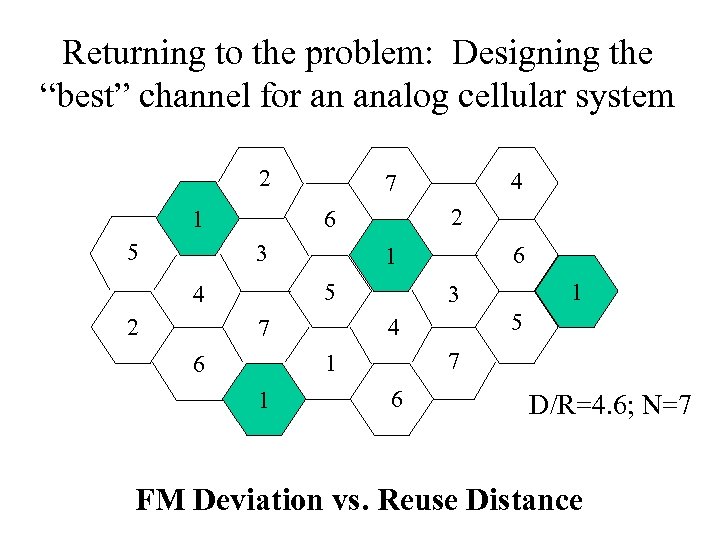
Returning to the problem: Designing the “best” channel for an analog cellular system 2 5 3 5 7 1 1 1 3 4 7 6 6 1 5 4 2 2 6 1 4 7 6 D/R=4. 6; N=7 FM Deviation vs. Reuse Distance
Problem: Designing the “best” channel for analog cellular system • Underlying logic (circa 1970) – Channel reuse distance determined by interference – Greater FM deviation (wider channels) rejects interference better – Thus, wider channels can be used in nearer cells • Fewer Channels, but more channels per cell? • Systems engineers love an optimum
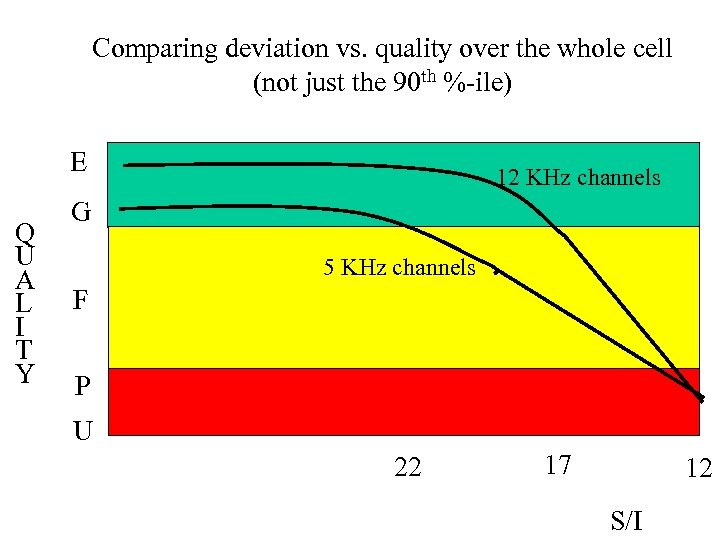
We need an objective • Radio systems used a 5 level quality scale-excellent, good, fair, poor or unintelligible • Tentative Objective: 90% of calls good or excellent • But cells (and therefore calls) are variable • Re-statement: quality is “good” at 90 th %-ile s/i of the cell; i. e. , the quality is good 90% of the time • Is that the same? • How do we apply this objective to the problem?
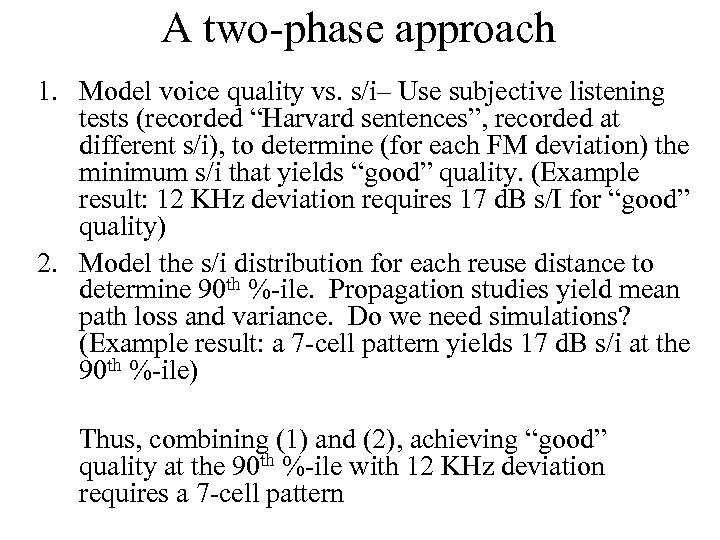
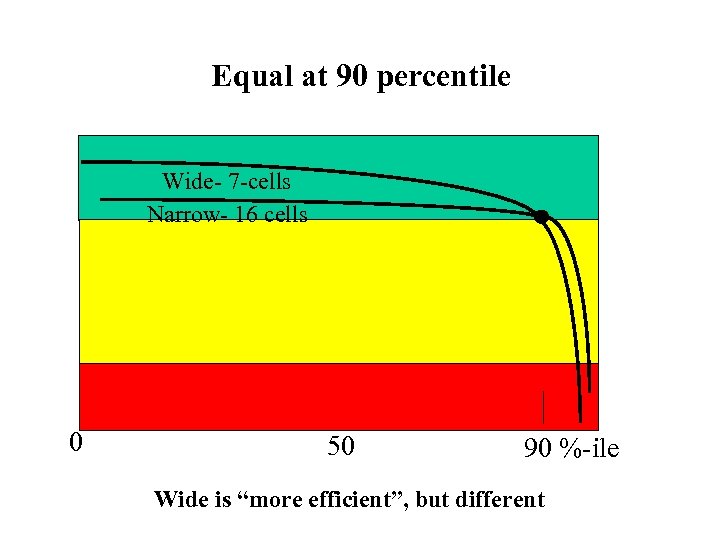
A two-phase approach 1. Model voice quality vs. s/i– Use subjective listening tests (recorded “Harvard sentences”, recorded at different s/i), to determine (for each FM deviation) the minimum s/i that yields “good” quality. (Example result: 12 KHz deviation requires 17 d. B s/I for “good” quality) 2. Model the s/i distribution for each reuse distance to determine 90 th %-ile. Propagation studies yield mean path loss and variance. Do we need simulations? (Example result: a 7 -cell pattern yields 17 d. B s/i at the 90 th %-ile) Thus, combining (1) and (2), achieving “good” quality at the 90 th %-ile with 12 KHz deviation requires a 7 -cell pattern
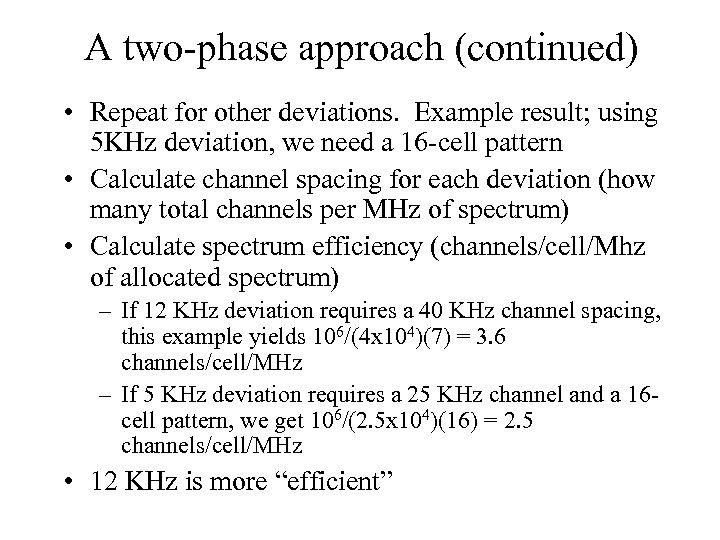
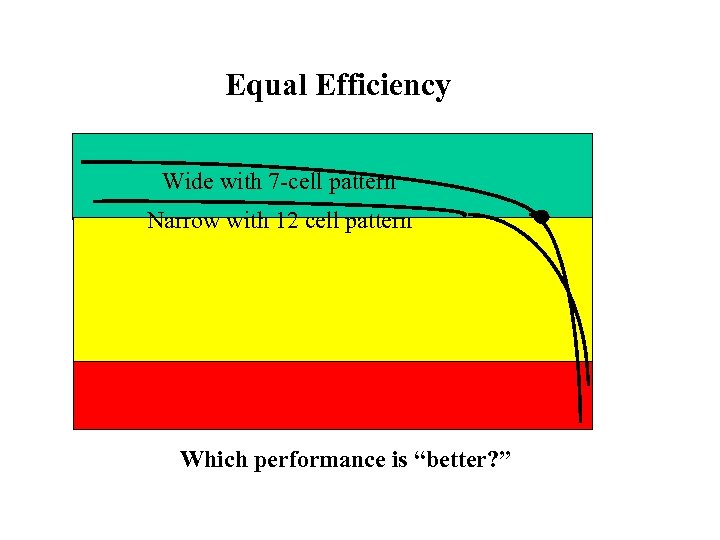
A two-phase approach (continued) • Repeat for other deviations. Example result; using 5 KHz deviation, we need a 16 -cell pattern • Calculate channel spacing for each deviation (how many total channels per MHz of spectrum) • Calculate spectrum efficiency (channels/cell/Mhz of allocated spectrum) – If 12 KHz deviation requires a 40 KHz channel spacing, this example yields 106/(4 x 104)(7) = 3. 6 channels/cell/MHz – If 5 KHz deviation requires a 25 KHz channel and a 16 cell pattern, we get 106/(2. 5 x 10⁴)(16) = 2. 5 channels/cell/MHz • 12 KHz is more “efficient”
We have skipped over some significant problems What channel conditions are we actually recording for these tests? Just s/i = x d. B?
Problem: Rayleigh Fading • How does fading get included in this method? • Not realistic to use recordings at constant s/i – Sounds too good • How does fading get included in this method?
Problem: Rayleigh Fading • How does fading get included in this method? – Include fading in the recording – Create s/i distributions based on “local mean” of fading signal and interference signals • What fading rate? • What other questions does this suggest?
Problem: Receiver diversity? • Cost effective? (at base? at mobile? what type? )
Problem: Other radio parameters (radio is non-linear device; we need not just a radio– we need the radio) • What does “ 12 KHz” deviation really mean?
Problem: Radio parameters (radio is non-linear device) • What does “ 12 KHz” deviation mean? – What if I shout? (need peak limiter) • How do we set limiter (hard vs. soft)? • Relationship of mean to peak? (deviation vs. distortion)
Problem: Radio parameters (radio is non-linear device) • What if I whisper (need AGC)? – parameters of AGC? • How do we maximize deviation without distortion?
Problem: Radio parameters (radio is non-linear device) • What if I whisper (need AGC)? – parameters of AGC? • How do we maximize deviation without distortion? • Compandor (a real breakthrough!) • What limits the compression rule (2: 1, 4: 1, etc)
Problem: Channel Spacing • 12 KHz deviation generally meant 40 KHz channel spacing (Carson’s Rule) – Why did cellular use only 30 KHz channel spacing?
Problem: Channel Spacing • 12 KHz deviation generally meant 40 KHz channel spacing (Carson’s Rule) – Why did cellular use only 30 KHz channel spacing? • Spacing must tolerate near/far problem – Filter must reject adjacent channel at much higher level – Cellular can use adjacent channel at different cell
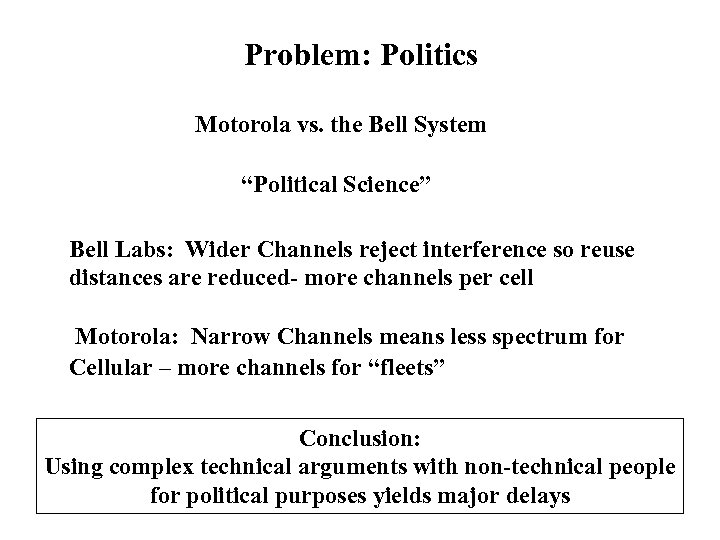
Problem: Politics Motorola vs. the Bell System “Political Science” Bell Labs: Wider Channels reject interference so reuse distances are reduced- more channels per cell Motorola: Narrow Channels means less spectrum for Cellular – more channels for “fleets” Conclusion: Using complex technical arguments with non-technical people for political purposes yields major delays
Problem: Non-uniform Cell grids • How do we account for irregular grids and variable terrain? (Good and bad cells? )
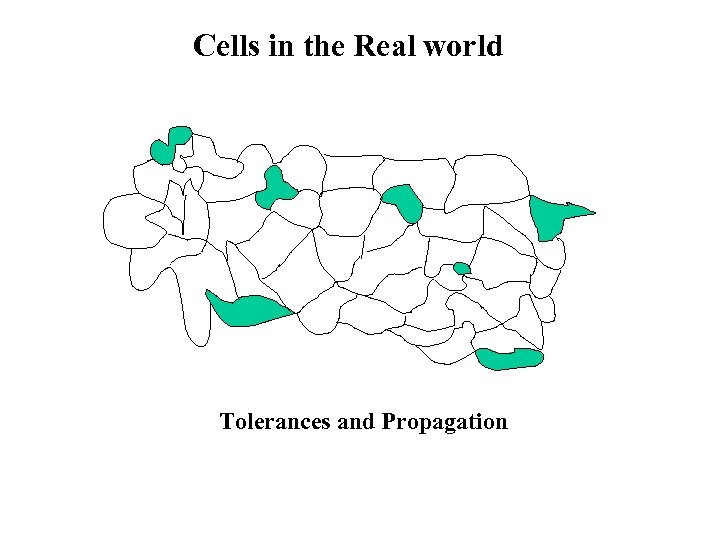
Cells in the Real world Tolerances and Propagation
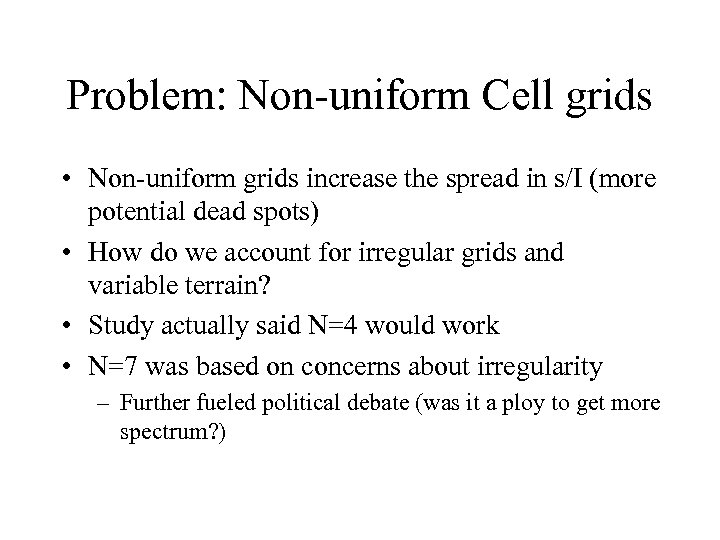
Problem: Non-uniform Cell grids • Non-uniform grids increase the spread in s/I (more potential dead spots) • How do we account for irregular grids and variable terrain? • Study actually said N=4 would work • N=7 was based on concerns about irregularity – Further fueled political debate (was it a ploy to get more spectrum? )
Comparing deviation vs. quality over the whole cell (not just the 90 th %-ile) E Q U A L I T Y 12 KHz channels G 5 KHz channels F P U 22 17 12 S/I
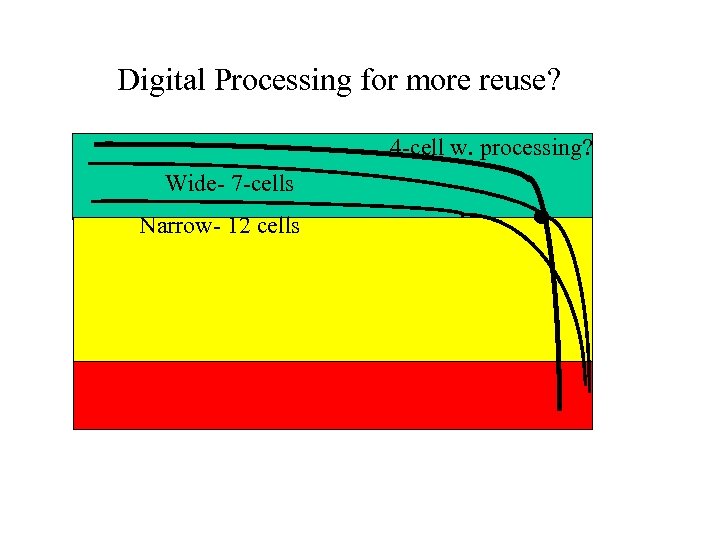
Equal at 90 percentile Wide- 7 -cells Narrow- 16 cells 0 50 90 %-ile Wide is “more efficient”, but different
Equal Efficiency Wide with 7 -cell pattern Narrow with 12 cell pattern Which performance is “better? ”
What have we ignored?
What have we ignored? §Variability during call §Pedestrians vs. cars §Harvard sentences vs conversation §Quiet listening booths vs environmental noise
What have we ignored? §Variability during call §Pedestrians vs. cars §Harvard sentences vs conversation §Quiet listening booths vs environmental noise §NEW TECHNOLOGY
And now-- the new world of “digital quality” • Digital voice compression (more channels) – Dramatic cost reduction (more than 50%) • Error coding to allow “good” performance at 12 d. B (3 -4 cell reuse patterns) • Any Concerns?
Digital Processing for more reuse? 4 -cell w. processing? Wide- 7 -cells Narrow- 12 cells
So what do we conclude? • Is such a process worthwhile? • Is it so complex that conclusions are meaningless? • Does it lead to improvements in subsystems (like companding)? • Is it applicable to “unregulated” systems?
Скачать презентацию Problem Designing the best channel for an analog
b866d74d26ab3c887737a1f3d409b3c1.ppt