


 Скачать презентацию Privatizing Life on the appropriation of seeds 28
2b6a6072a14a7db2d01a0261921b9b06.ppt
- Количество слайдов: 28
 Privatizing Life, on the appropriation of seeds 28 March 2014 Blanche MAGARINOS-REY Contact : blanche@avocat-magarinos-rey. com
 • The biological way of privatizing seeds • The legal way of privatizing seeds ü Plant Breeder’s Right ü Patent • Infringement and enforcement • Critic of IPRs = innovation • The Commons as solution
 2 ways of privatizing seeds/plant varieties • Biologically : through methods of agronomic selection • Legally : through legal regimes on intellectual property rights (IPRs)
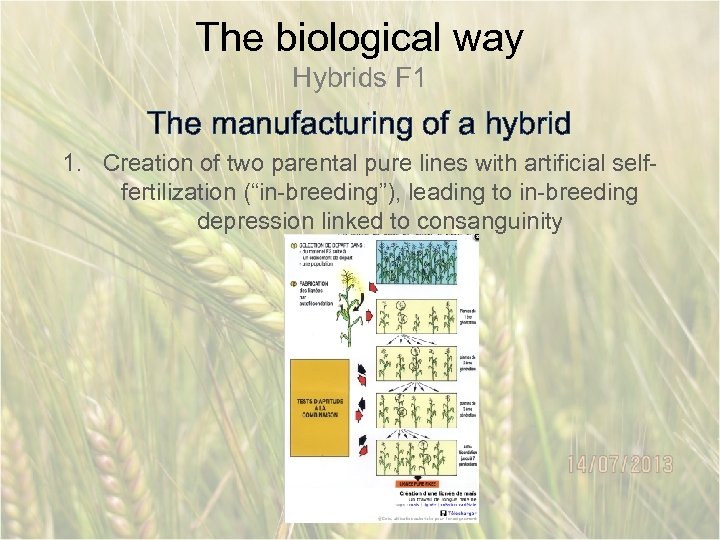 The biological way Hybrids F 1 The manufacturing of a hybrid 1. Creation of two parental pure lines with artificial selffertilization (“in-breeding”), leading to in-breeding depression linked to consanguinity
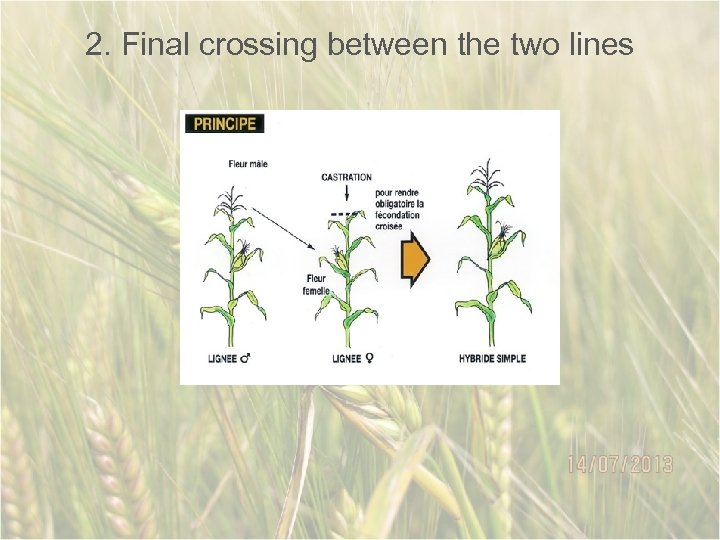 2. Final crossing between the two lines
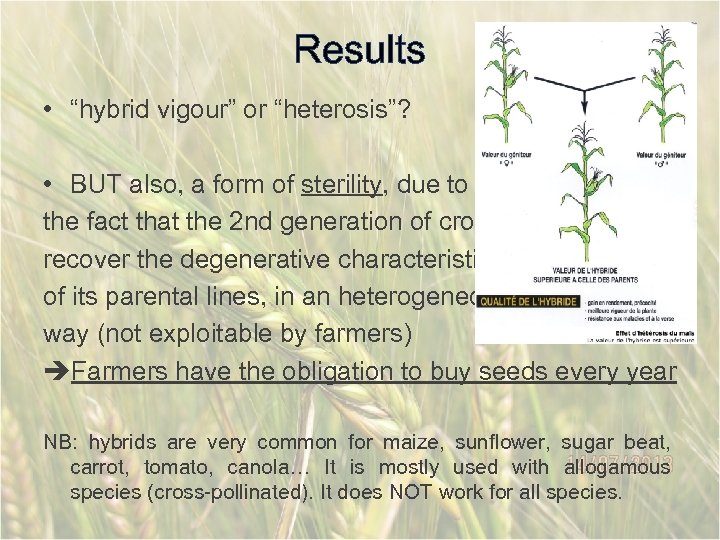 Results • “hybrid vigour” or “heterosis”? • BUT also, a form of sterility, due to the fact that the 2 nd generation of crop recover the degenerative characteristics of its parental lines, in an heterogeneous way (not exploitable by farmers) Farmers have the obligation to buy seeds every year NB: hybrids are very common for maize, sunflower, sugar beat, carrot, tomato, canola… It is mostly used with allogamous species (cross-pollinated). It does NOT work for all species.
 • For other species, where hybridization is not possible (mainly autogamous / self-pollinated), breeders have to use the legal way. ex: wheat, barley, peas, rice, canola, soy, linen, lupin… The situation today - In the French official catalogue of seed varieties (2011) : - Tomatoes : 98, 6 % hybrids F 1 Peppers : 91, 6 % hybrids F 1 Zucchinis : 93, 7 % hybrids F 1 Cucumbers : 95, 3 % hybrids F 1 Melons : 96% hybrids F 1 Watermelons : 87, 5 % hybrids F 1 Broccoli : 100 % hybrids F 1, etc. ✓ The same goes for the European catalogue ✓ The same goes for the organic sector (probably 95% of hybrids F 1)
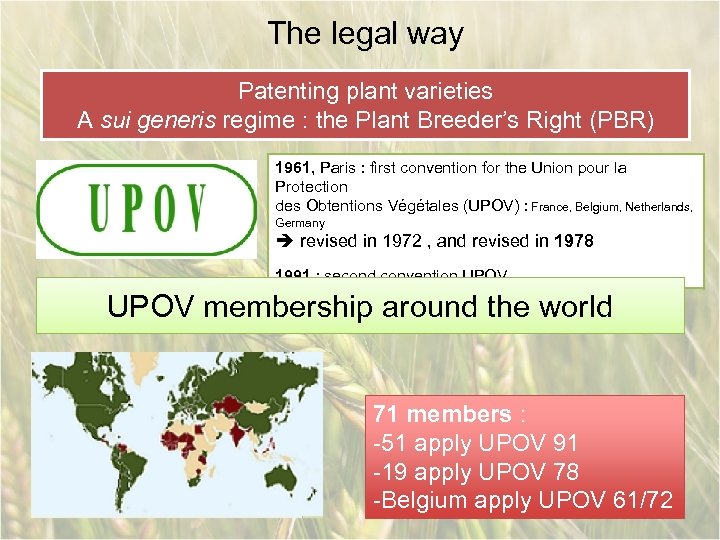 The legal way Patenting plant varieties A sui generis regime : the Plant Breeder’s Right (PBR) 1961, Paris : first convention for the Union pour la Protection des Obtentions Végétales (UPOV) : France, Belgium, Netherlands, Germany revised in 1972 , and revised in 1978 1991 : second convention UPOV membership around the world 71 members : -51 apply UPOV 91 -19 apply UPOV 78 -Belgium apply UPOV 61/72
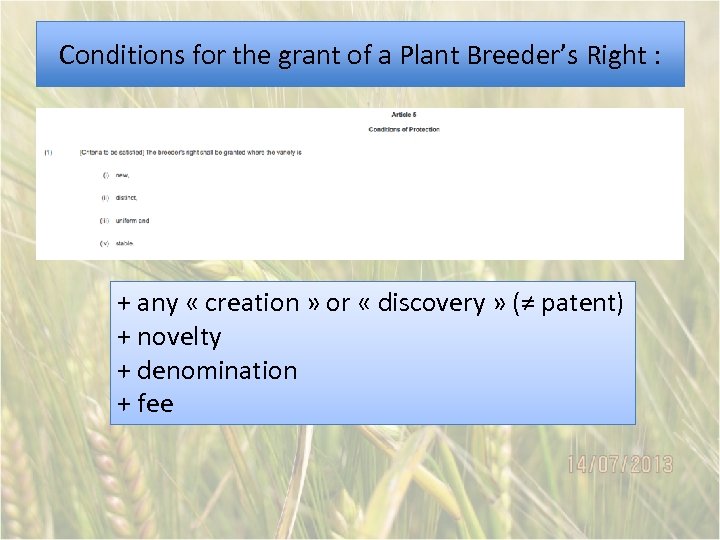 Conditions for the grant of a Plant Breeder’s Right : + any « creation » or « discovery » (≠ patent) + novelty + denomination + fee
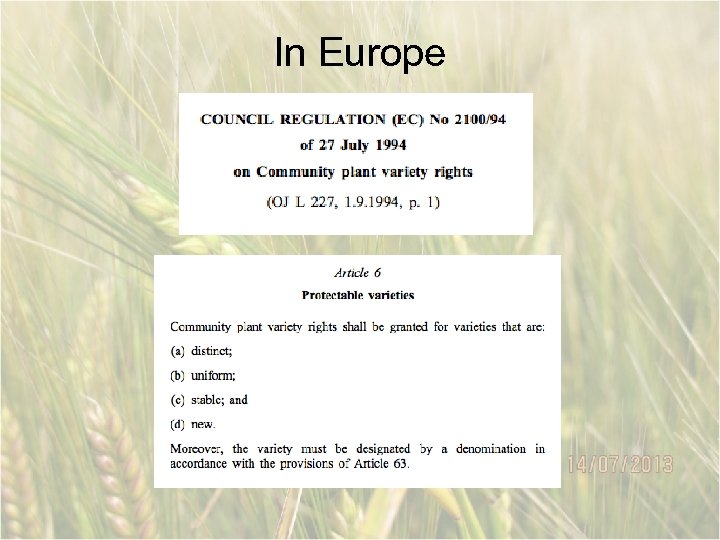 In Europe
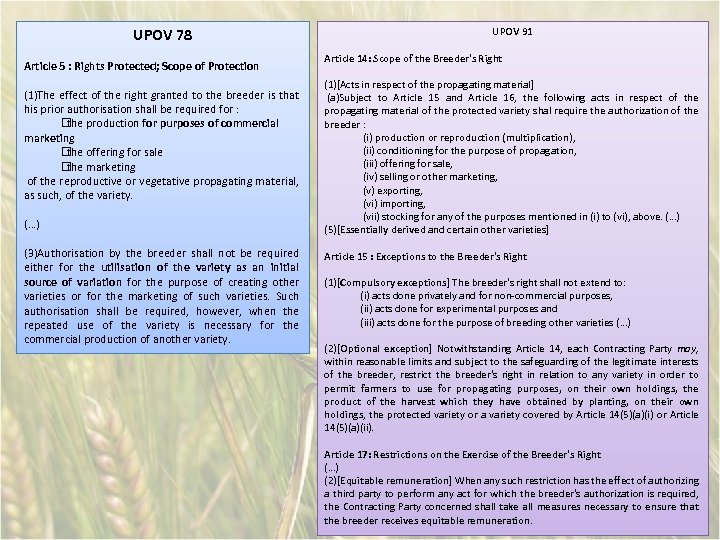 UPOV 78 Article 5 : Rights Protected; Scope of Protection (1)The effect of the right granted to the breeder is that his prior authorisation shall be required for : the production for purposes of commercial marketing the offering for sale the marketing of the reproductive or vegetative propagating material, as such, of the variety. (…) (3)Authorisation by the breeder shall not be required either for the utilisation of the variety as an initial source of variation for the purpose of creating other varieties or for the marketing of such varieties. Such authorisation shall be required, however, when the repeated use of the variety is necessary for the commercial production of another variety. UPOV 91 Article 14: Scope of the Breeder's Right (1)[Acts in respect of the propagating material] (a)Subject to Article 15 and Article 16, the following acts in respect of the propagating material of the protected variety shal require the authorization of the breeder : (i) production or reproduction (multiplication), (ii) conditioning for the purpose of propagation, (iii) offering for sale, (iv) selling or other marketing, (v) exporting, (vi) importing, (vii) stocking for any of the purposes mentioned in (i) to (vi), above. (…) (5)[Essentially derived and certain other varieties] Article 15 : Exceptions to the Breeder's Right (1)[Compulsory exceptions] The breeder's right shall not extend to: (i) acts done privately and for non-commercial purposes, (ii) acts done for experimental purposes and (iii) acts done for the purpose of breeding other varieties (…) (2)[Optional exception] Notwithstanding Article 14, each Contracting Party may, within reasonable limits and subject to the safeguarding of the legitimate interests of the breeder, restrict the breeder's right in relation to any variety in order to permit farmers to use for propagating purposes, on their own holdings, the product of the harvest which they have obtained by planting, on their own holdings, the protected variety or a variety covered by Article 14(5)(a)(i) or Article 14(5)(a)(ii). Article 17: Restrictions on the Exercise of the Breeder's Right (…) (2)[Equitable remuneration] When any such restriction has the effect of authorizing a third party to perform any act for which the breeder's authorization is required, the Contracting Party concerned shall take all measures necessary to ensure that the breeder receives equitable remuneration.
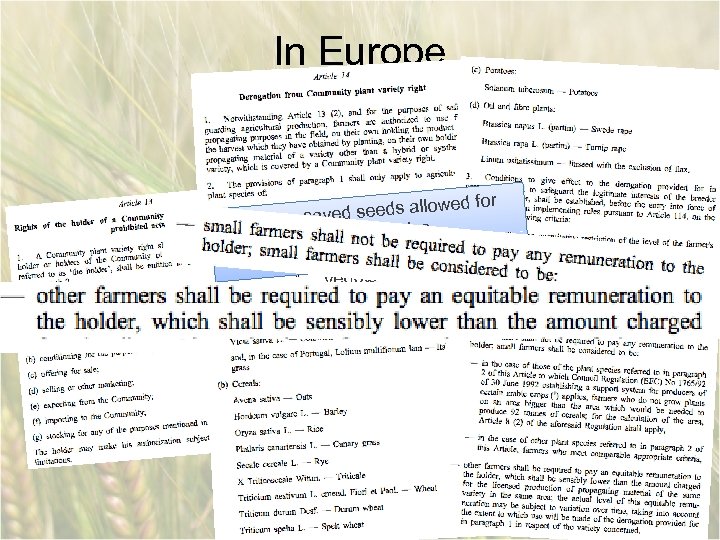 In Europe wed for ed seeds allo Farm sav s only 21 specie n, no e, no soy bea No maiz vegetable…
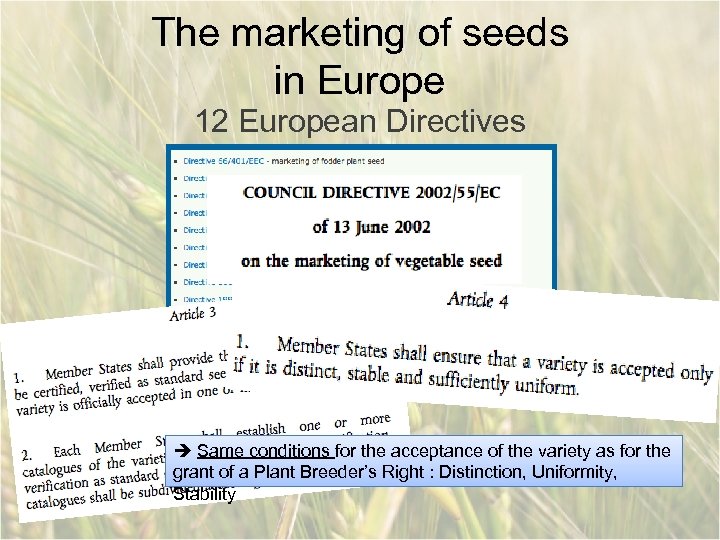 The marketing of seeds in Europe 12 European Directives Same conditions for the acceptance of the variety as for the grant of a Plant Breeder’s Right : Distinction, Uniformity, Stability
 Results • Enormous loss of biodiversity by pushing traditional varieties, not protected by IPRs, into illegality (not fulfilling the Uniformity and Stability criteria) • Identity of criteria for marketing authorisation and grant of IPR is equivalent to an obligation to use only appropriated seeds “expropriation” of our commons through the promotion of “appropriation”
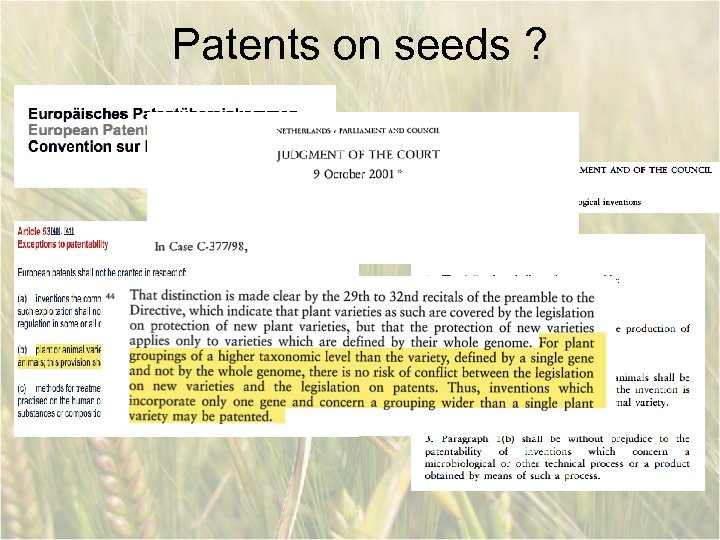 Patents on seeds ?
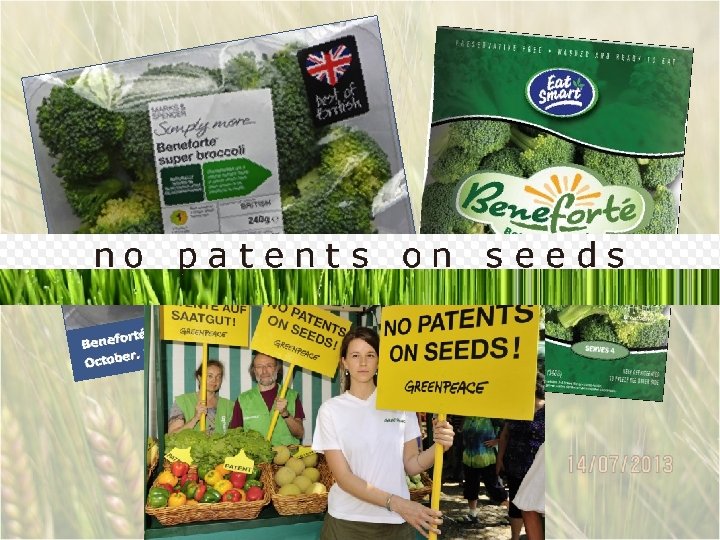
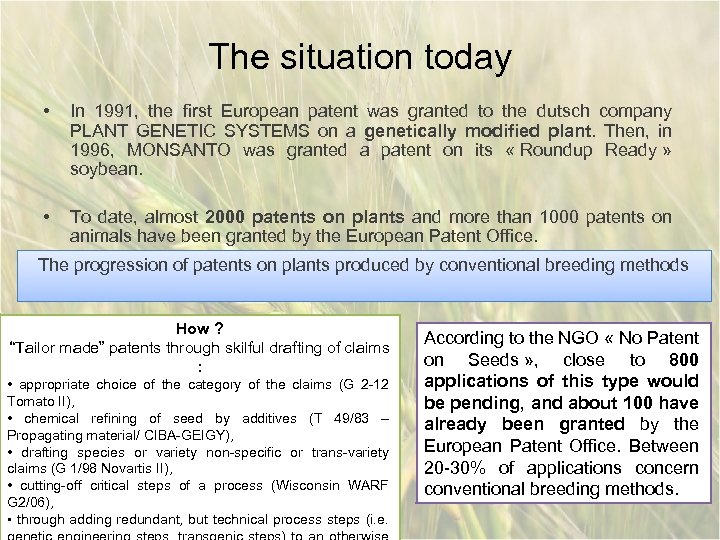 The situation today • In 1991, the first European patent was granted to the dutsch company PLANT GENETIC SYSTEMS on a genetically modified plant. Then, in 1996, MONSANTO was granted a patent on its « Roundup Ready » soybean. • To date, almost 2000 patents on plants and more than 1000 patents on animals have been granted by the European Patent Office. The progression of patents on plants produced by conventional breeding methods How ? “Tailor made” patents through skilful drafting of claims : • appropriate choice of the category of the claims (G 2 -12 Tomato II), • chemical refining of seed by additives (T 49/83 – Propagating material/ CIBA-GEIGY), • drafting species or variety non-specific or trans-variety claims (G 1/98 Novartis II), • cutting-off critical steps of a process (Wisconsin WARF G 2/06), • through adding redundant, but technical process steps (i. e. According to the NGO « No Patent on Seeds » , close to 800 applications of this type would be pending, and about 100 have already been granted by the European Patent Office. Between 20 -30% of applications concern conventional breeding methods.
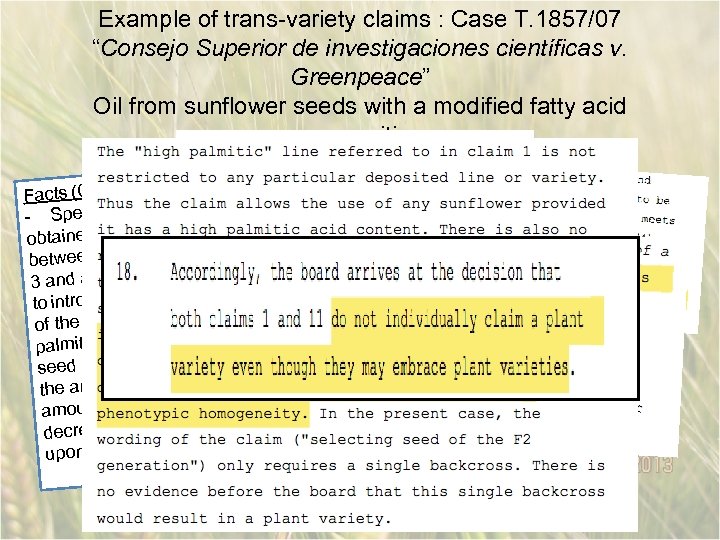 Example of trans-variety claims : Case T. 1857/07 “Consejo Superior de investigaciones científicas v. Greenpeace” Oil from sunflower seeds with a modified fatty acid composition nd 11) : ts (Claims 1 a Fac profile fatty acid - Specific ssing simple cro obtained by line CAS high stearic between a n order palmitic line i 3 and a high tivity enzymatic ac e to introduce th the high stearic line in of the high cting and then sele palmitic line, ich erations in wh n seed of F 2 ge nd the of palmitoleic a the amount are asclepic acid amount of % based to less than 4 decreased tent. l fatty acid con upon the tota
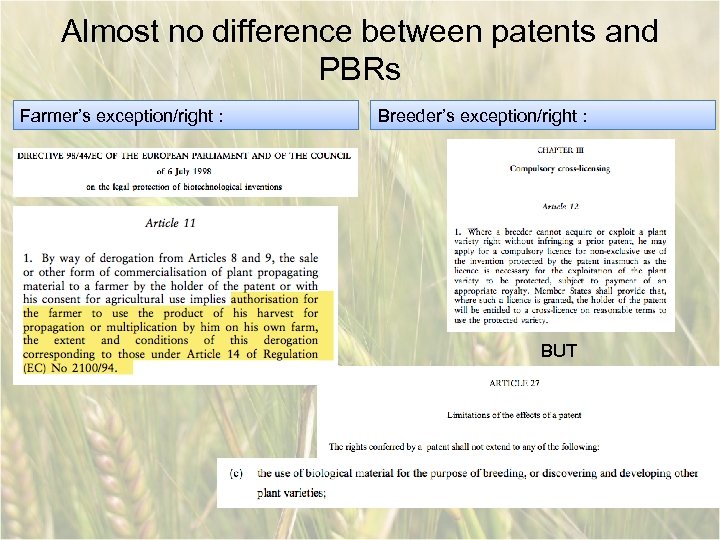 Almost no difference between patents and PBRs Farmer’s exception/right : Breeder’s exception/right : BUT
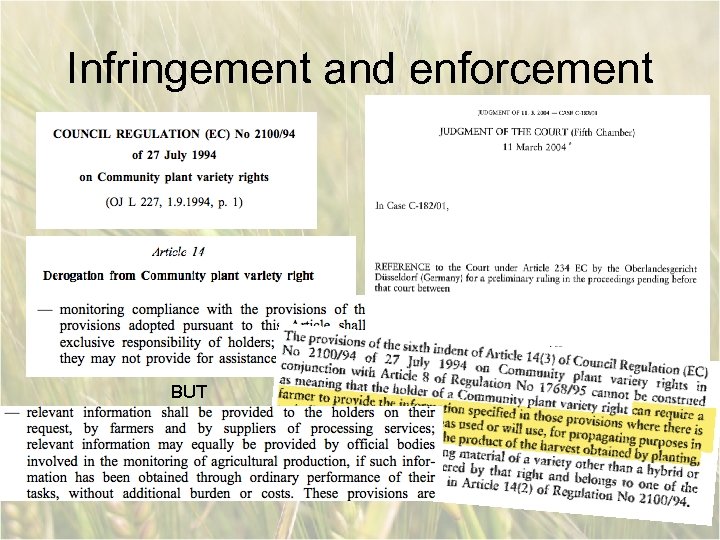 Infringement and enforcement BUT
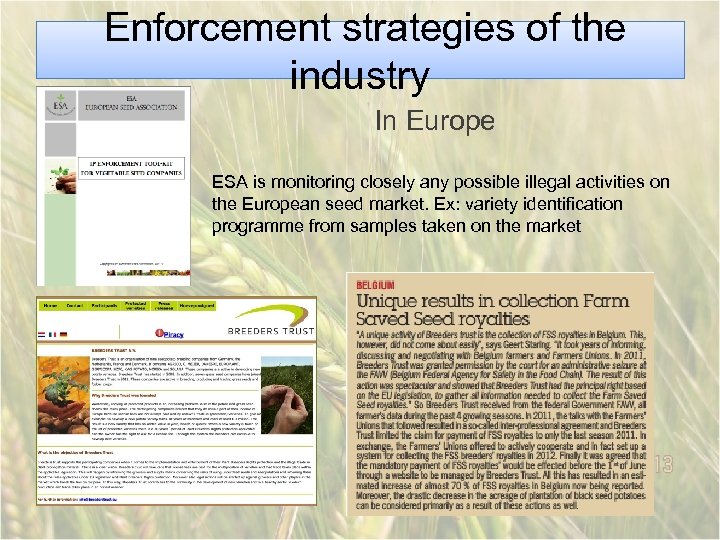 Enforcement strategies of the industry In Europe ESA is monitoring closely any possible illegal activities on the European seed market. Ex: variety identification programme from samples taken on the market
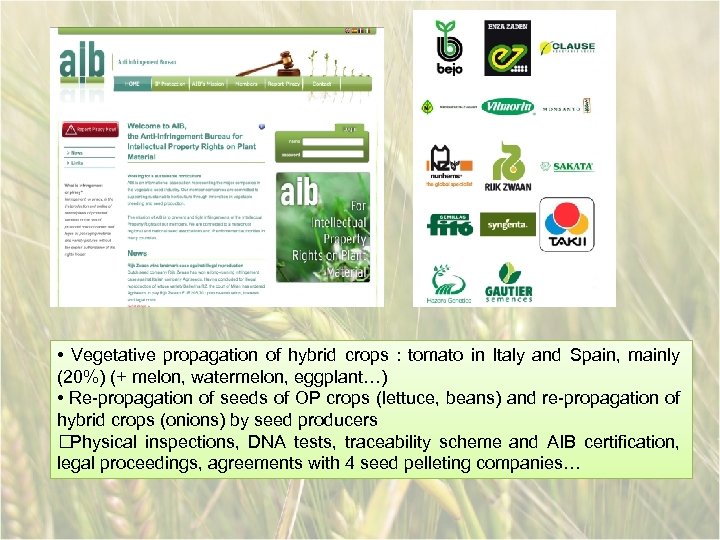 • Vegetative propagation of hybrid crops : tomato in Italy and Spain, mainly (20%) (+ melon, watermelon, eggplant…) • Re-propagation of seeds of OP crops (lettuce, beans) and re-propagation of hybrid crops (onions) by seed producers Physical inspections, DNA tests, traceability scheme and AIB certification, legal proceedings, agreements with 4 seed pelleting companies…
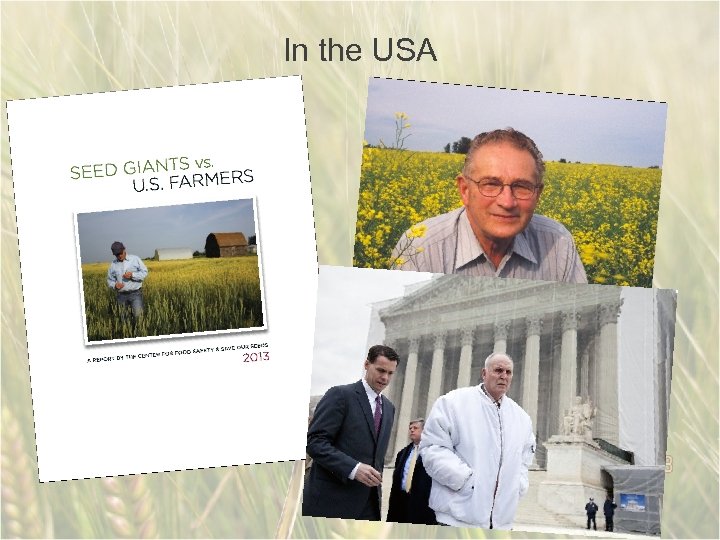 In the USA
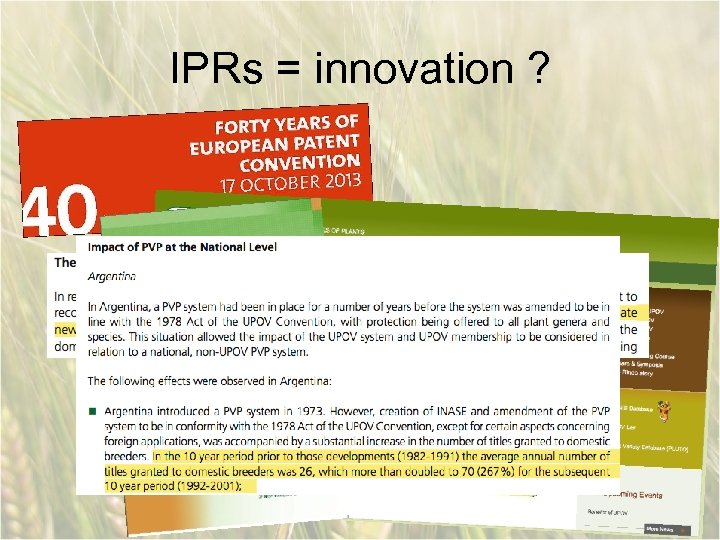 IPRs = innovation ?
 Drawbacks of IPR regimes In general : • Situation of monopolies on useful technologies • Anti-competition strategies with the acquisition of patent portfolios by dominant economic actors • Market concentration and disappearance of small innovative actors (high costs for acquisition and enforcement of patents) • Problems of “patent thickets” in research and development sectors • Very codified, hermetic dissemination of information, not easily exploitable Concerning seeds : • The innovation of breeders is limited to what is commercially (very) viable, on a large scale • Public breeding sector has been forced to withdraw from the seed market (“unfair competition”) • Leads to market concentration (patents owned by large actors) and disappearance of small actors • Patents have awarded non-innovative strategies and created barriers for innovation. Ex: MONSANTO « Roundup Ready » soybean – 20 years of rents without any innovation for drought resistance or nutritionally improved varieties Ex : MONSANTO and its bacteria Agrobacterium tumefactiens, central for transgenesis, until similar discovery was placed in the public domain by public researchers
 Innovative companies have other (more efficient) strategies for securing a return on investment : -Industrial secret - marketing strategies for differentiation - careful contractual policies for distribution of products - constant innovation exclusive appropriation is often the strategy of non-innovative actors IPRs may protect absence of innovation and creates barriers for those who try to innovate Stimulating innovation requires a lot more than a legal regime securing appropriation • Creative impulse inherent to Humankind • Stimulation depends more on a comprehensive socio-economico-cultural context : education, financial and technical support, large dissemination of information…
 Our Commons as solution
 Thanks for your attention ! 28 March 2014 Blanche MAGARINOS-REY Contact : blanche@avocat-magarinos-rey. com