


 Скачать презентацию Private Sector Programme in Health PSP Presentation at
a34b5e0bb88f334200c1ded0d692ad07.ppt
- Количество слайдов: 49
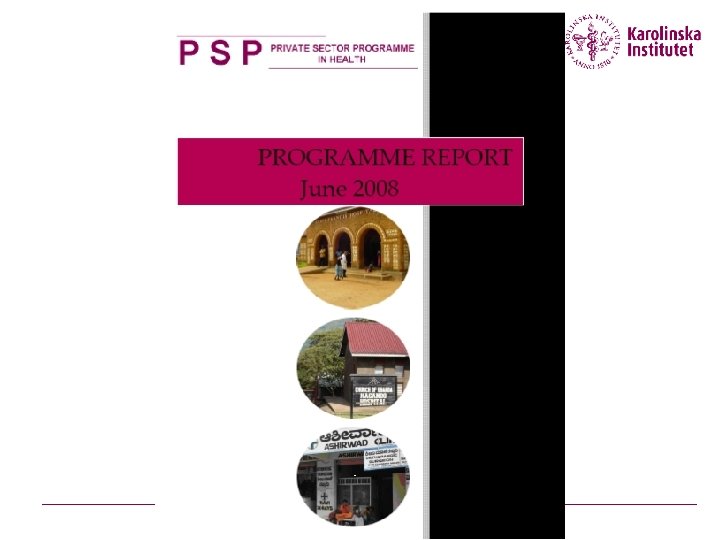
 Private Sector Programme in Health (PSP) Presentation at Asia Health Policy Program Walter H. Shorenstein Asia-Pacific Research Center Stanford University, January 27, 2009 Birger Carl Forsberg Programme Coordinator
 Background § The private sector constitutes a significant portion of available health care in low- and middle-income countries § The private sector has often been overlooked in efforts to improve health care in low- and middle-income countries PSP IHCAR KI 16 March 2018 2
 Aim § Explore the private health care sector and its role in improving people’s health in low- and middle-income countries § Contribute to a well functioning health care system, which reaches the entire population, in low- and middle-income countries PSP IHCAR KI 16 March 2018 3
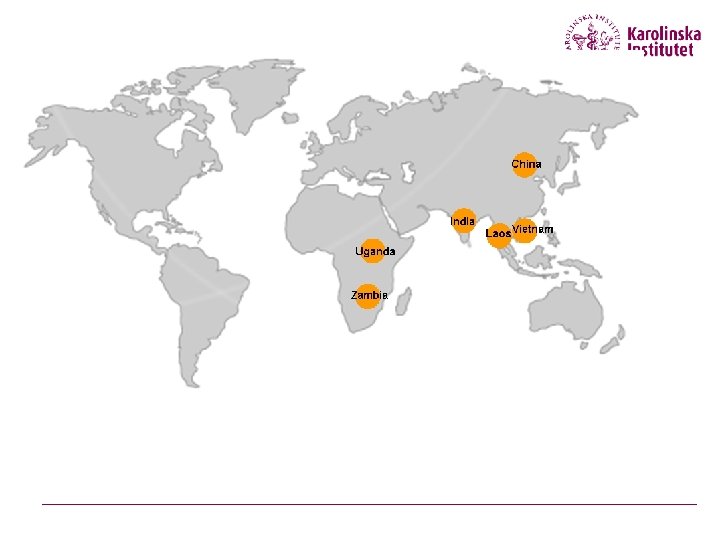
 Participating Institutions § Sweden: International Health (IHCAR), Karolinska Institutet § USA: International Health Systems Program (IHSP), Harvard School of Public Health § China: Sun Yat-Sen University, Guangzhou. Shandong University, Jinan § Vietnam: Ministry of Health § Laos: Ministry of Health § India: Achuta Menon, Trivandrum. Gardi Medical College, Ujjain § Uganda: School of Public Health (SPH) § Zambia: University of Zambia (UNZA) PSP IHCAR KI 16 March 2018 4
 Facts § Started in April 2002 § Funders: àSida (Swedish International Development Cooperation Agency)– à Core financing to International Health (IHCAR), Karolinska Institute, Stockholm and International Health Systems Program (IHSP), Harvard School of Public Health à Country study funding in Vietnam, India, Uganda and Zambia àCountry level work in China financed by Jiaikai Foundation, Japan àCountry level work in India financed by Danida PSP IHCAR KI 16 March 2018 6
 Outputs § § § § § Conferences Research Participation in conferences Articles and book chapters Reports Master’s theses Website Database Training courses PSP IHCAR KI 16 March 2018 7
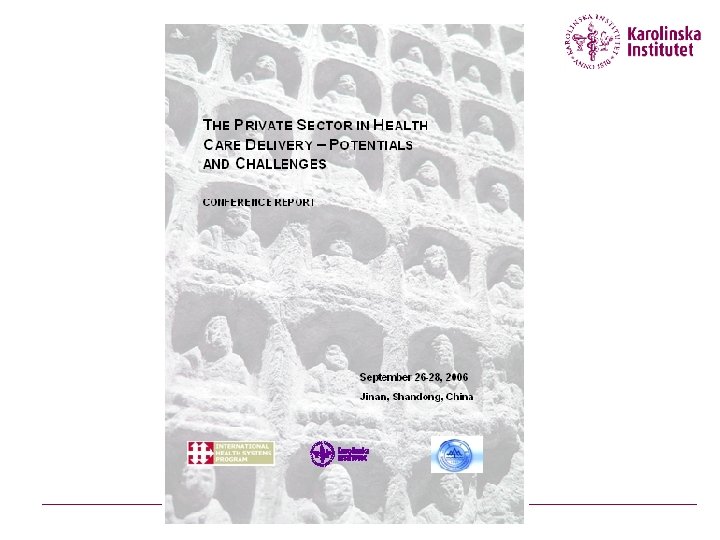
 Conferences § ”The Private Sector in Health Care Delivery – Potentials and Challenges” Conference, Jinan, Shandong, China, 2006 § “Working with the private sector to improve health - from theory to evidence and implementation” International Workshop, Stockholm, 2004 § “Private Sector Provider Performance - A Research Project” International Workshop, Stockholm, 2002 PSP IHCAR KI 16 March 2018 8
 Participation with seminars and presentations in congresses i. HEA (International Health Economics Association) § Preconference on the Role of the Private Sector in Health preceding next IHEA World Congress in Beijing in July 2009 § Copenhagen 2007 § Barcelona 2005 § San Fransisco 2003 PSP IHCAR KI 16 March 2018 11
 Website: www. psp. ki. se A tool to: à Disseminate PSP research à Make tools for studying the private sector publicly available à Be a source of information for other stakeholders PSP IHCAR KI 16 March 2018 15
 Database § Compilation of articles related to the non-state health care sector in low- and middle-income countries. § Contains approximately 600 articles from Pub. Med and other sources PSP IHCAR KI 16 March 2018 16
 Courses § "Private health care: developing successful policies and programs“ § Course directors: Peter Berman, HSPH and Birger C Forsberg, KI Training course organized by Harvard School of Public Health in Delhi, April 4 -9, 2005 and in Stowe, Vermont, October 14 -24, 2003. PSP IHCAR KI 16 March 2018 17
 Shandong Study Situation and performance of village clinics in three rural counties in Shandong Province Prof Quingyue Meng Prof Jiangbin Qu Center for Health Management and Policy Shandong University
 Shandong Study Background § Over 90% rural people have to pay health expenditures out of pocket. § At the time of the study (2003 -04), there were 514 900 village clinics in China, among which around 60% were privately owned. § 80% of preventive and treatment service in rural areas are provided by village clinics.
 Shandong Study § Clinics studied in three rural counties § Public: 20 (24%) § Private 63 (76%) à 38 individual clinics, (46%) à 18 contracted clinics (22%), and à 7 joint venture clinics (8%)
 Shandong Study Results § Of the 146 village doctors à 12% had been trained less than 1 year. à 84% had been trained less than 3 years. àNo significant difference in the training length of doctors from private and public clinics
 Shandong Study Results § Public clinics are somewhat larger: Total income of an average public clinic is about 2 times that of the private (cost to the patient is about the same) § The income from drug-sale of public and private clinics accounts for 88% and 85% respectively, § The capital which is invested in infrastructures is limited.
 Shandong Study Results § 80% of public clinics are included in the insurance system, àwhich means that these clinics can pay reimbursement to their patients. § But only 18% of private clinics are involved in the insurance system. àSo that most of the private clinics cannot offer reimbursement to their patients Ø Many rural residents have to go to the public clinics that may be far away from their home.
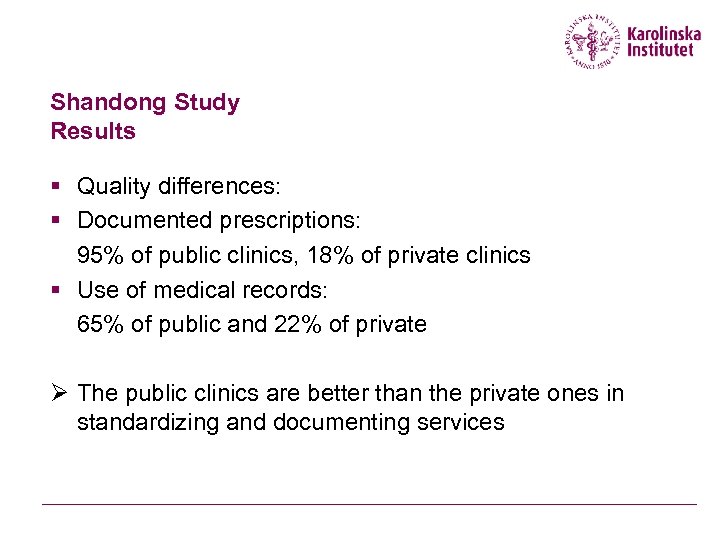 Shandong Study Results § Quality differences: § Documented prescriptions: 95% of public clinics, 18% of private clinics § Use of medical records: 65% of public and 22% of private Ø The public clinics are better than the private ones in standardizing and documenting services
 Shandong Study Results § On the whole the service quality of public clinics was better than the private ones
 Shandong Study Results § The three main reasons for the patients selecting public clinics in turn are vicinity, high perceived quality and trustiness. § To the patients selecting private clinics, the three main reasons are vicinity, low price and friendliness of staff.
 Guangzhou Study Prof Liang Hao-Cai and Cunrui Huang School of Public Health Sun-Yat Sen University Guangzhou
 Guangzhou Study objectives § Describe the private hospital sector in an urban environment and § Make comparisons of patient experiences in public and private hospitals
 Guangzhou Study Results § 138 non-governmental hospitals in Guangdong Province. They account for 6% of all 2410 hospitals of the province. § Their market share is 3% § Mostly located in well developed Pearl River Delta § Often provide limited specialized services
 Guangzhou Study Results Compared to public hospitals, nongovernmental hospitals § prioritize specialization; § employ strict management and flexible allocation; § emphasize patient-centered concept, attitude and quality of medical services; § focus their attention on those able to pay and § Put much effort on marketing themselves.
 Guangzhou Study Results Number of patients interviewed Hospital Type Inpatients Outpatients Public 600 592 Private 446 481
 Guangzhou Study Results § Outpatients in private hospitals were more satisfied with services than patients in public hospitals (p<0. 05) § Satisfaction with in-patient services in private was higher but the difference with public hospitals was not significant (p>0. 05)
 Guangzhou Study Results § Patients in private hospitals tended to be better educated, have higher incomes, live in better off areas and § paid more for services
 Guangzhou Study Results § Patients claim that private clinics are more affordable, convenient and accessible, have better attitudes towards patients, and have flexible opening hours.
 Vietnam Study SITUATION, ROLES AND POTENTIALS OF PRIVATE HEALTH PROVIDERS IN PEOPLE’S HEALTH CARE Nguyen Hoang Long Duc Thien, Luu Hoai Chuan, Pham Duc Minh, Phan Thanh Thuy, Nguyen Thi Thu Cuc Health Policy Unit Ministry of Health
 Vietnam Study Objectives § Describe the situation of private health sector in Vietnam and investigate their role and potential in health service delivery.
 Vietnam Study § The study included two sub-studies; § Sub-study 1 àreviewed current status of the private health sector in terms of size, operational types, distribution, development trend as well as policies/regulations affecting their performance – desk study § Sub-study 2 àexplored the private health sector, in Bac Giang province – field study
 Vietnam Study Sub-study 1 - Results § In 1994, there were only 942 private health services nationwide. In 2001, this figure was estimated at 27 394 units. § In 2003, National Assembly issued the new ordinance on medical and pharmaceutical practices with the aim at further improving the involvement of private health sector in the health system.
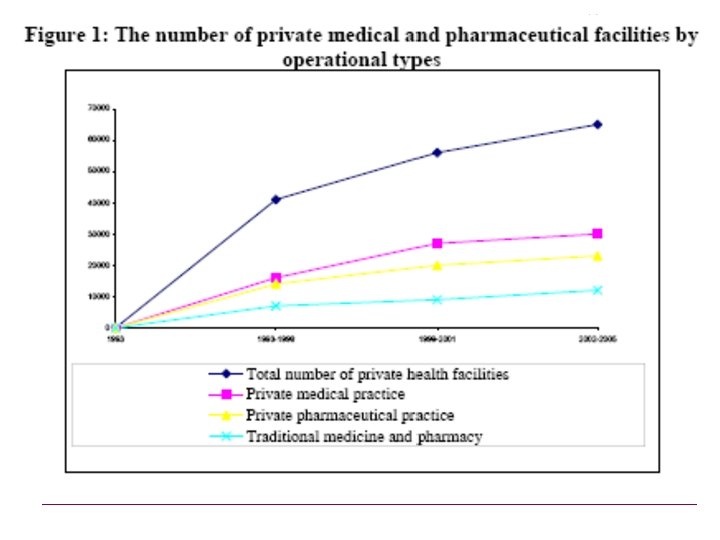
 Vietnam Study The number of public health workers working privately off-hours accounted for 83% of the total number of private practitioners in 2002.
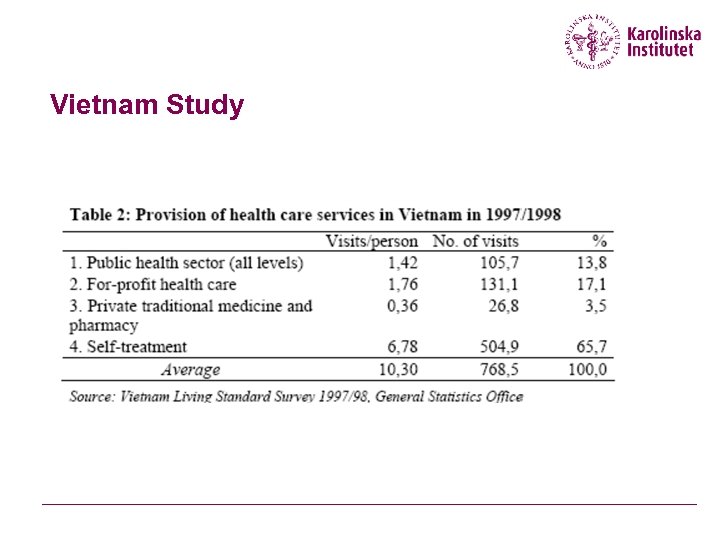 Vietnam Study
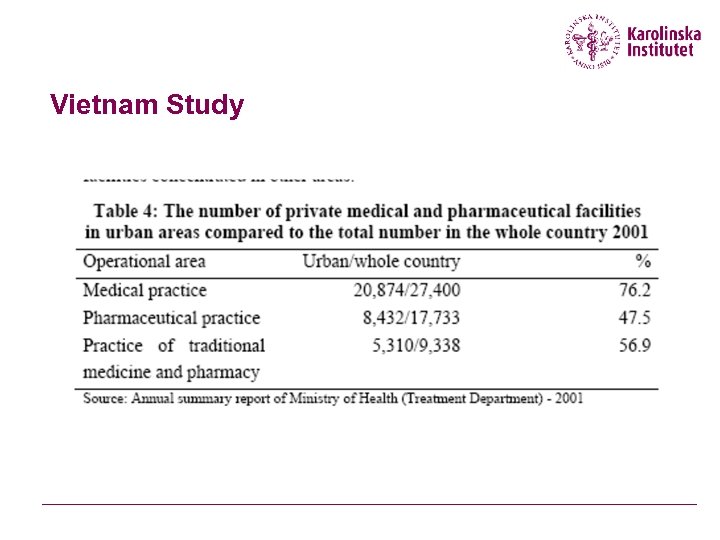 Vietnam Study
 Vietnam Study § The utilization of private outpatient health services accounts for 60% of all outpatient treatment, § whereas private health services only make up 4% of all inpatient treatment § and 11% of people’s preventive care.
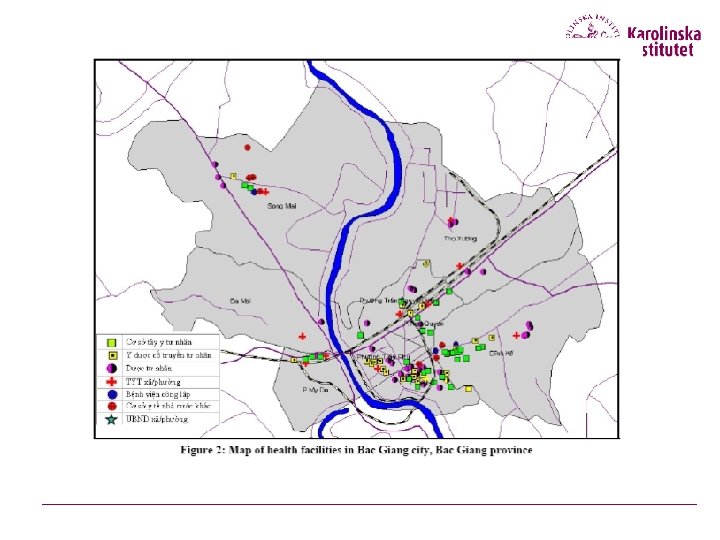
 Vietnam Study Sub-study 2 Methods § Mapping of all facilities in the province § Random selection of 124 (72 medical facilities and 52 facilities of traditional medicine and pharmacy), in which 117 facilities agreed to participate in the survey, response rate was 94%. § facility owner interviewed by structured questionnaires § 65 providers interviewed on quality of care § 200 patients interviewed after visit
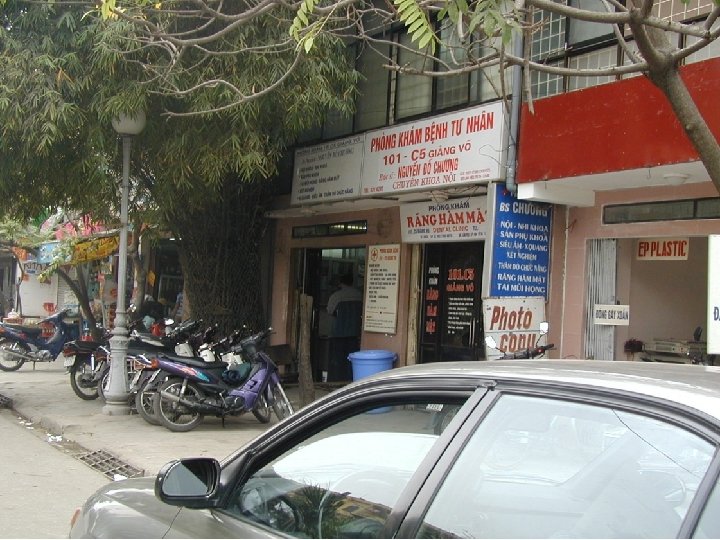
 Vietnam § According to the survey, 9% of private practitioners in Bac Giang city and 91% in Viet Yen district operate without license. § In rural area most of unlicensed private practitioners work at home, out of working hours, § They have only simple medical tools and provide first aids or primary health care for their neighbors and relatives. § The number of visit per day is about 10.
 Vietnam § Payment mechanism applied by all facilities is fee for service. Revenue is mainly from examination fee and drug selling. § Service fee level is similar in private and public facilities.
 Vietnam § Quality of care and knowledge of providers differed little in the public and private sector
 Some policy Implications from the studies § Acknowledge and regulate the private health care sector § Integrate private health care providers in planning of national health systems § Involve private providers in public health programmes § Initiate public-private collaboration (public-private partnerships) PSP IHCAR KI 16 March 2018 50
 RESEARCH ISSUES? § Let us discuss!
 Thank You!