 Скачать презентацию Private Homeowner Drinking Water Issues Presenter Mr Brian
799737f27614a215087b9cdc16145a72.ppt
- Количество слайдов: 31




Private Homeowner Drinking Water Issues Presenter Mr. Brian Oram, Professional Geologist Wilkes University Geo. Environmental Sciences and Engineering Department Center for Environmental Quality Wilkes Barre, PA 18766 http: //www. water-research. net (570) 408 -4619
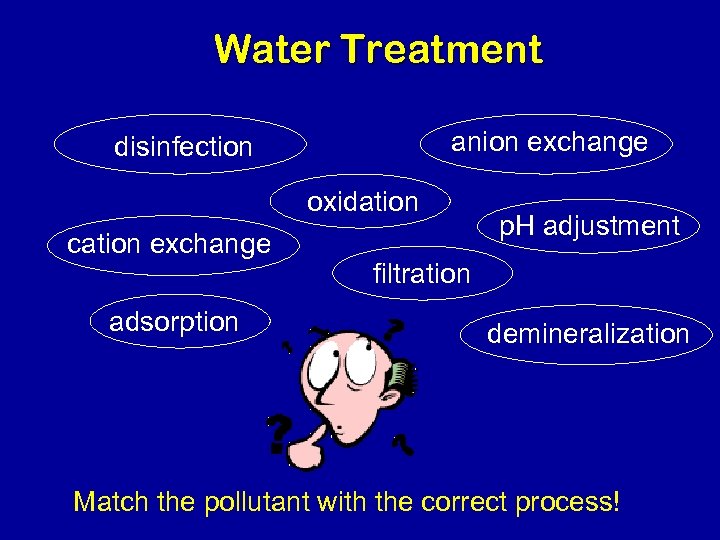
Water Treatment anion exchange disinfection oxidation cation exchange adsorption p. H adjustment filtration demineralization Match the pollutant with the correct process!
Do We Need to Treat the Water ? • Evaluate Existing Source- Construction, Location, and Water Quality • Is Maintenance Needed ? • Identify and Repair System Deficiencies • Pollution Control Measures- well cap, control drainage, and change land-us practice • Treatment- POU, POE, or other The Last Control Measure is Treatment
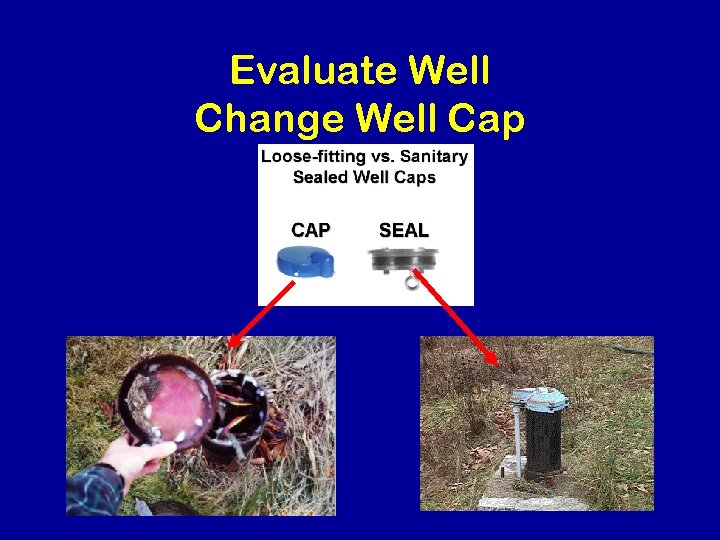
Evaluate Well Change Well Cap
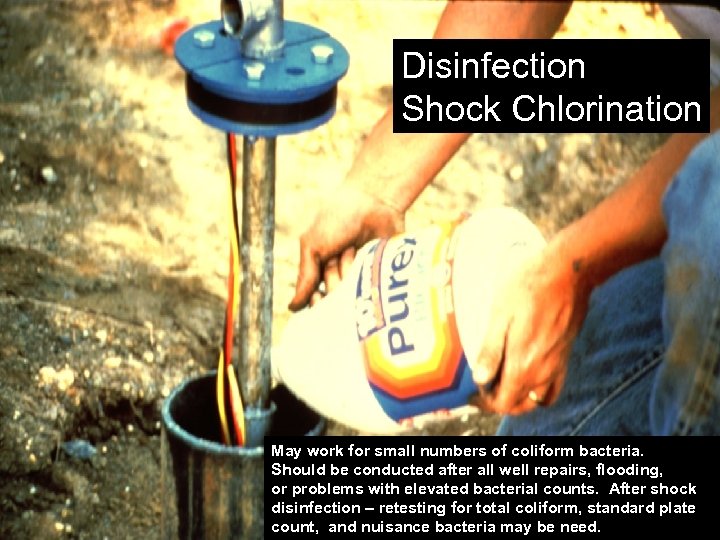
Disinfection Shock Chlorination May work for small numbers of coliform bacteria. Should be conducted after all well repairs, flooding, or problems with elevated bacterial counts. After shock disinfection – retesting for total coliform, standard plate count, and nuisance bacteria may be need.
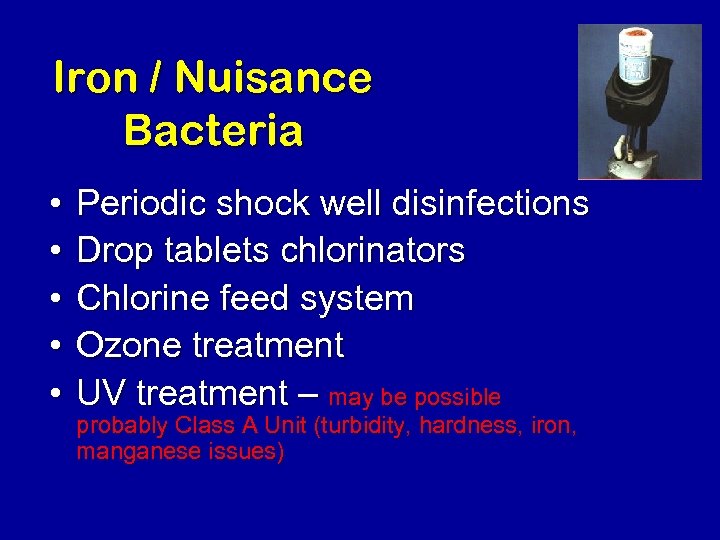
Iron / Nuisance Bacteria • • • Periodic shock well disinfections Drop tablets chlorinators Chlorine feed system Ozone treatment UV treatment – may be possible probably Class A Unit (turbidity, hardness, iron, manganese issues)
Whole House Treatment Point of Entry (POE)
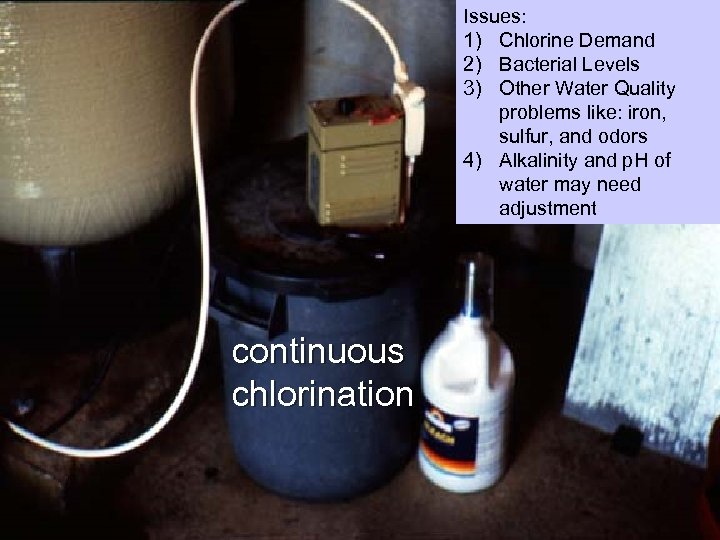
Issues: 1) Chlorine Demand 2) Bacterial Levels 3) Other Water Quality problems like: iron, sulfur, and odors 4) Alkalinity and p. H of water may need adjustment continuous chlorination
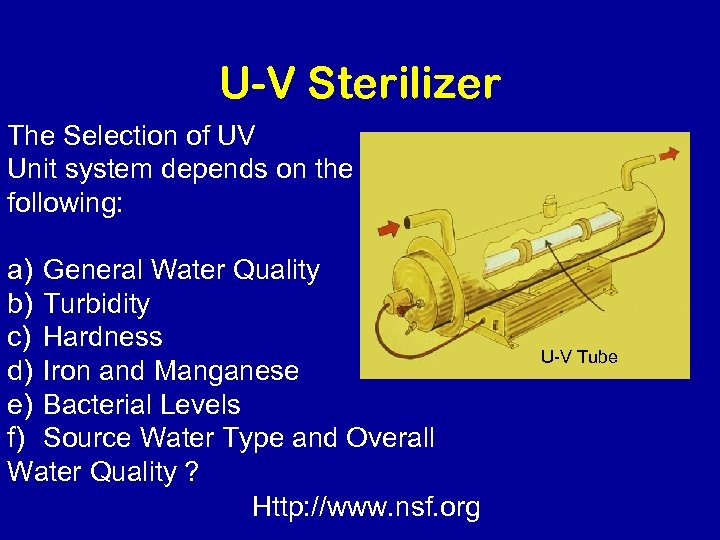
U-V Sterilizer The Selection of UV Unit system depends on the following: a) General Water Quality b) Turbidity c) Hardness d) Iron and Manganese e) Bacterial Levels f) Source Water Type and Overall Water Quality ? Http: //www. nsf. org U-V Tube
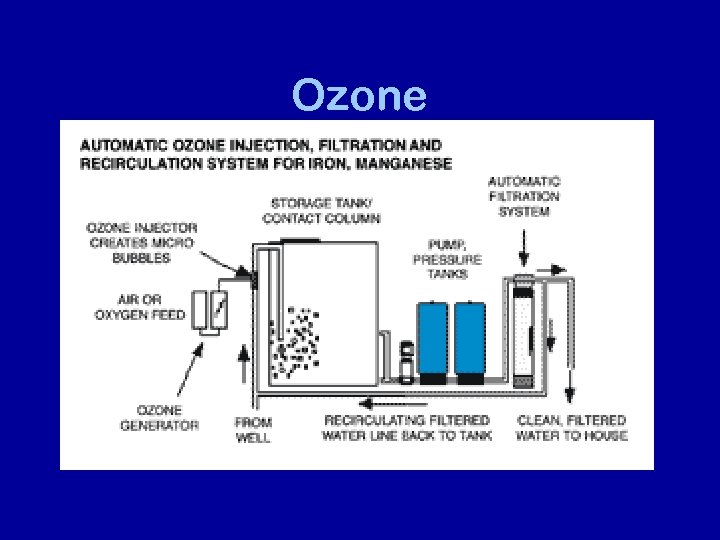
Ozone
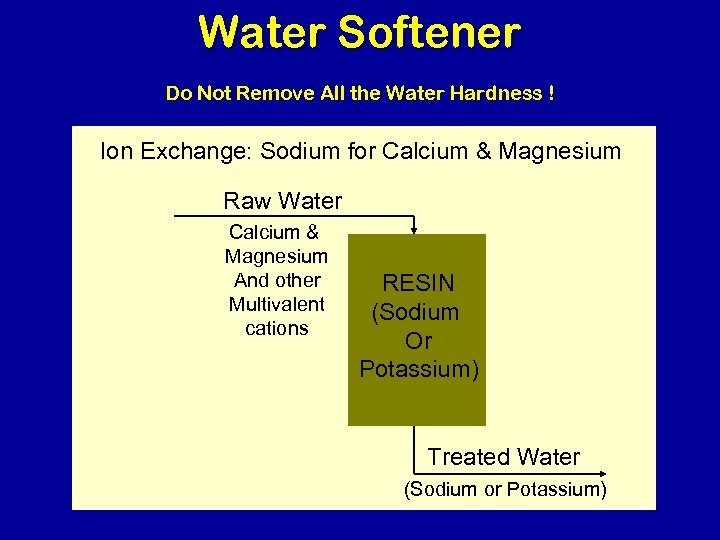
Water Softener Do Not Remove All the Water Hardness ! Ion Exchange: Sodium for Calcium & Magnesium Raw Water Schematic of Softener Calcium & Magnesium And other Multivalent cations RESIN (Sodium Or Potassium) Treated Water (Sodium or Potassium)
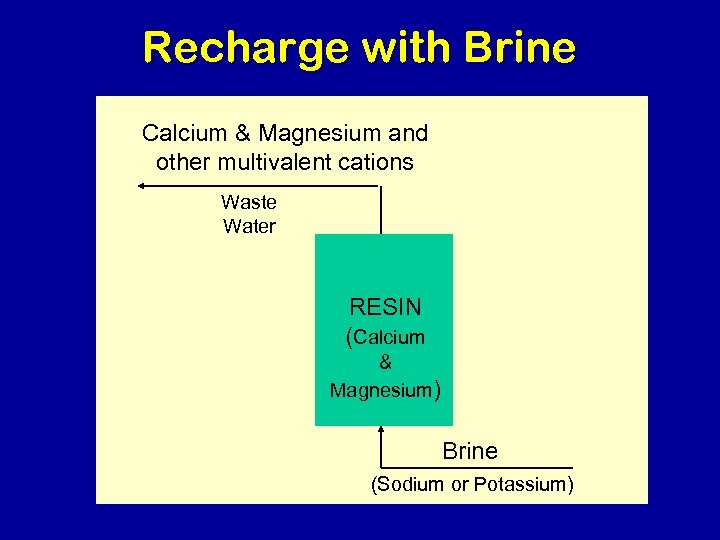
Recharge with Brine Calcium & Magnesium and other multivalent cations Waste Water RESIN (Calcium & Magnesium) Brine (Sodium or Potassium)
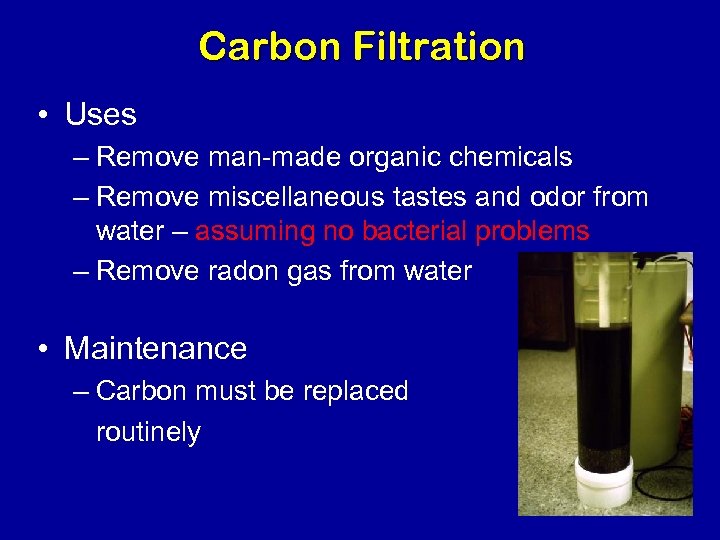
Carbon Filtration • Uses – Remove man-made organic chemicals – Remove miscellaneous tastes and odor from water – assuming no bacterial problems – Remove radon gas from water • Maintenance – Carbon must be replaced routinely
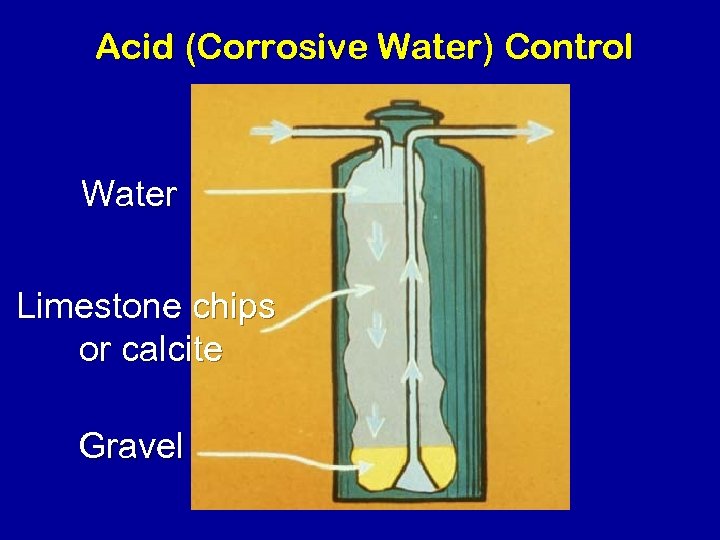
Acid (Corrosive Water) Control Water Limestone chips or calcite Gravel
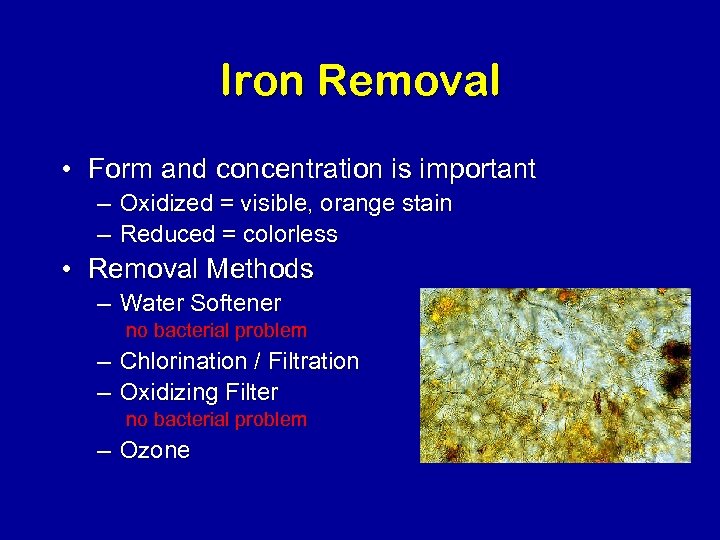
Iron Removal • Form and concentration is important – Oxidized = visible, orange stain – Reduced = colorless • Removal Methods – Water Softener no bacterial problem – Chlorination / Filtration – Oxidizing Filter no bacterial problem – Ozone
Hydrogen Sulfide • Hot water only? – Adjust water heater to a temperature of 160 F for 12 to 24 hours and then flush – remove or replace rod in heater (Warranty Issues) • Carbon Filtration- no bacterial problem • Chlorination/ Contact Tank / Filtration • Aeration- no bacterial problem • Oxidizing filter- manganese greensand no bacterial problem
At the Sink Point of Use (POU)
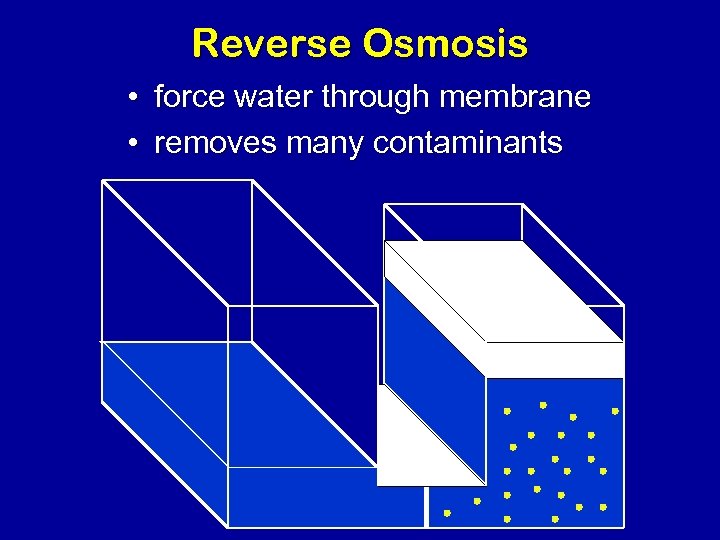
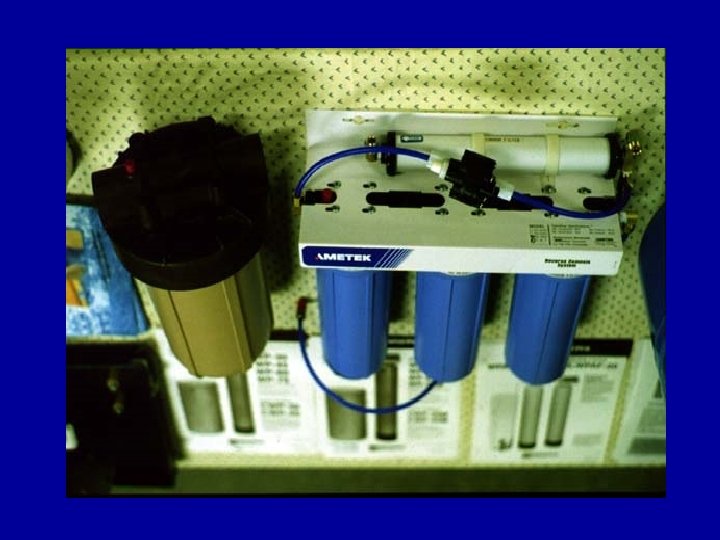
Reverse Osmosis • force water through membrane • removes many contaminants
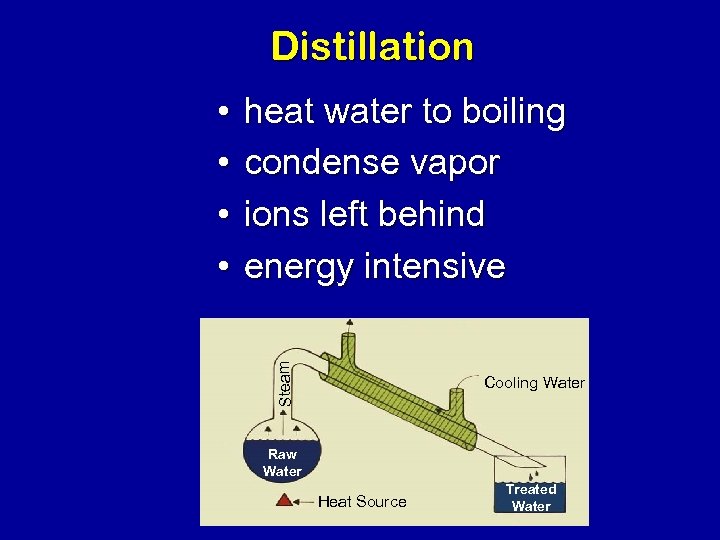
Distillation heat water to boiling condense vapor ions left behind energy intensive Steam • • Cooling Water Raw Water Heat Source Treated Water
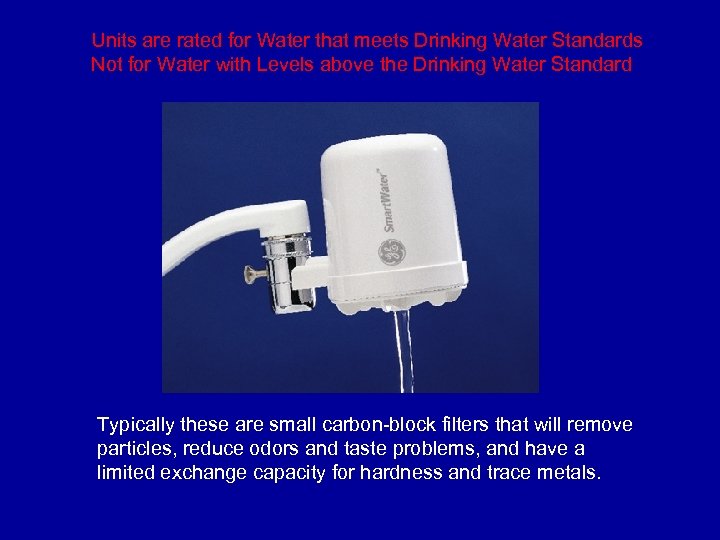
Units are rated for Water that meets Drinking Water Standards Not for Water with Levels above the Drinking Water Standard Typically these are small carbon-block filters that will remove particles, reduce odors and taste problems, and have a limited exchange capacity for hardness and trace metals.
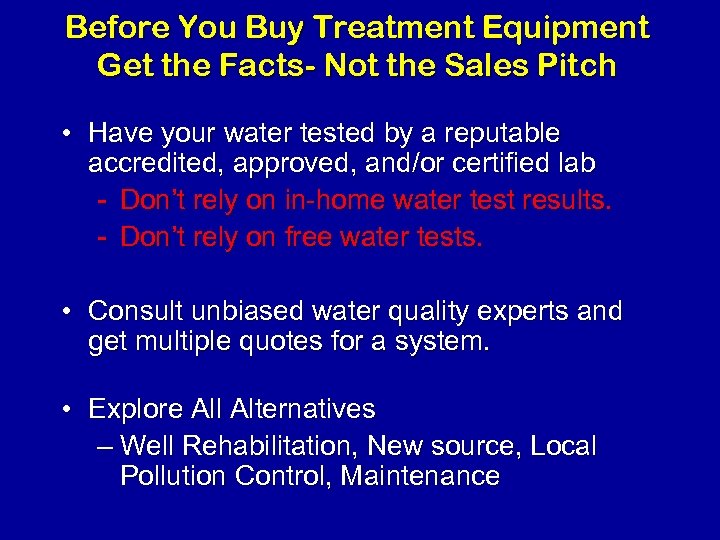
Before You Buy Treatment Equipment Get the Facts- Not the Sales Pitch • Have your water tested by a reputable accredited, approved, and/or certified lab - Don’t rely on in-home water test results. - Don’t rely on free water tests. • Consult unbiased water quality experts and get multiple quotes for a system. • Explore All Alternatives – Well Rehabilitation, New source, Local Pollution Control, Maintenance
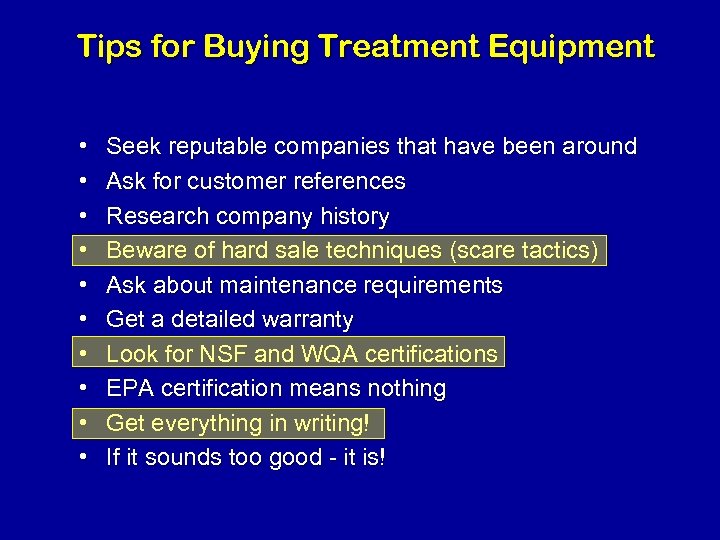
Tips for Buying Treatment Equipment • • • Seek reputable companies that have been around Ask for customer references Research company history Beware of hard sale techniques (scare tactics) Ask about maintenance requirements Get a detailed warranty Look for NSF and WQA certifications EPA certification means nothing Get everything in writing! If it sounds too good - it is!
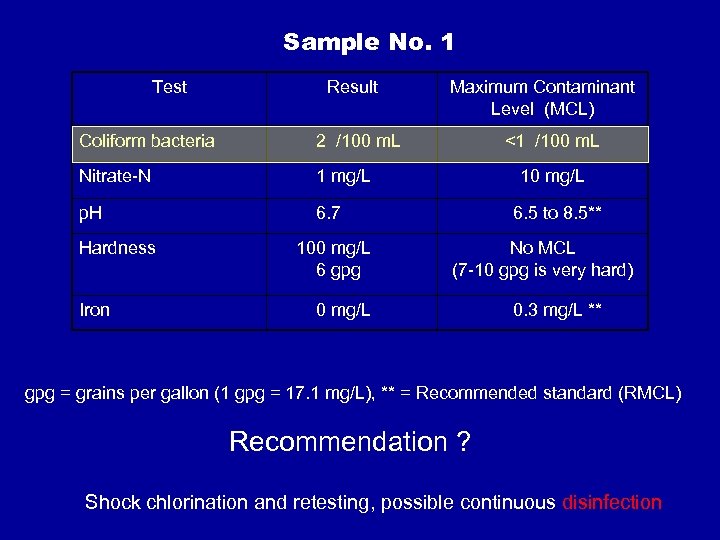
Sample No. 1 Test Result Coliform bacteria 2 /100 m. L Nitrate-N 1 mg/L p. H Maximum Contaminant Level (MCL) 6. 7 Hardness Iron 100 mg/L 6 gpg <1 /100 m. L 10 mg/L 6. 5 to 8. 5** No MCL (7 -10 gpg is very hard) 0 mg/L 0. 3 mg/L ** gpg = grains per gallon (1 gpg = 17. 1 mg/L), ** = Recommended standard (RMCL) Recommendation ? Shock chlorination and retesting, possible continuous disinfection
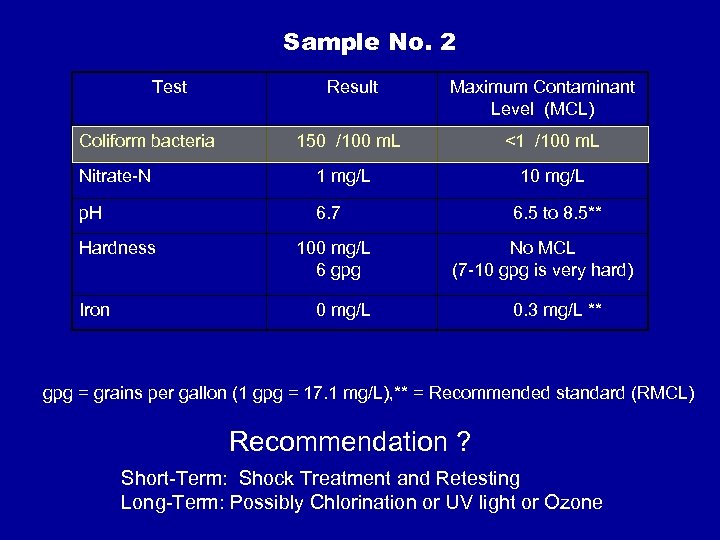
Sample No. 2 Test Coliform bacteria Result Maximum Contaminant Level (MCL) 150 /100 m. L <1 /100 m. L Nitrate-N 1 mg/L 10 mg/L p. H 6. 7 Hardness Iron 100 mg/L 6 gpg 6. 5 to 8. 5** No MCL (7 -10 gpg is very hard) 0 mg/L 0. 3 mg/L ** gpg = grains per gallon (1 gpg = 17. 1 mg/L), ** = Recommended standard (RMCL) Recommendation ? Short-Term: Shock Treatment and Retesting Long-Term: Possibly Chlorination or UV light or Ozone
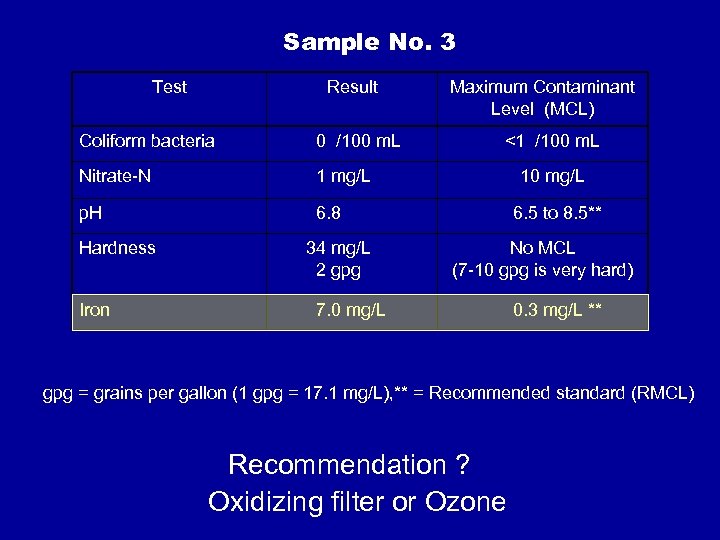
Sample No. 3 Test Result Coliform bacteria 0 /100 m. L Nitrate-N 1 mg/L p. H Maximum Contaminant Level (MCL) 6. 8 Hardness Iron 34 mg/L 2 gpg <1 /100 m. L 10 mg/L 6. 5 to 8. 5** No MCL (7 -10 gpg is very hard) 7. 0 mg/L 0. 3 mg/L ** gpg = grains per gallon (1 gpg = 17. 1 mg/L), ** = Recommended standard (RMCL) Recommendation ? Oxidizing filter or Ozone
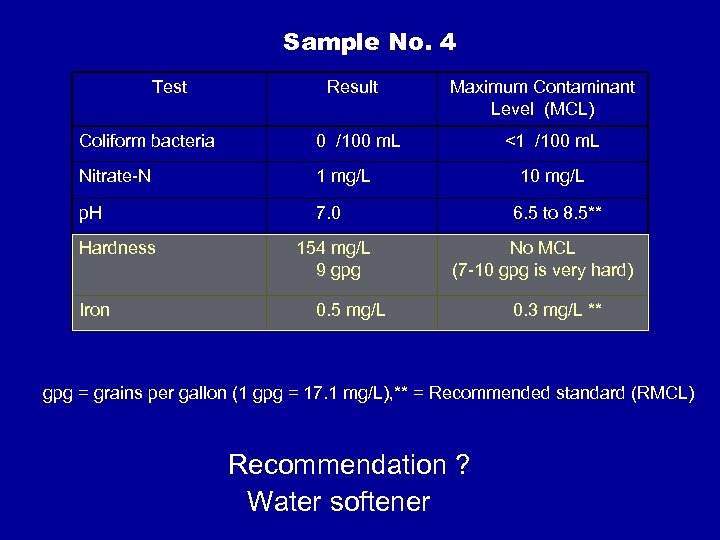
Sample No. 4 Test Result Coliform bacteria 0 /100 m. L Nitrate-N 1 mg/L p. H Maximum Contaminant Level (MCL) 7. 0 Hardness Iron 154 mg/L 9 gpg <1 /100 m. L 10 mg/L 6. 5 to 8. 5** No MCL (7 -10 gpg is very hard) 0. 5 mg/L 0. 3 mg/L ** gpg = grains per gallon (1 gpg = 17. 1 mg/L), ** = Recommended standard (RMCL) Recommendation ? Water softener
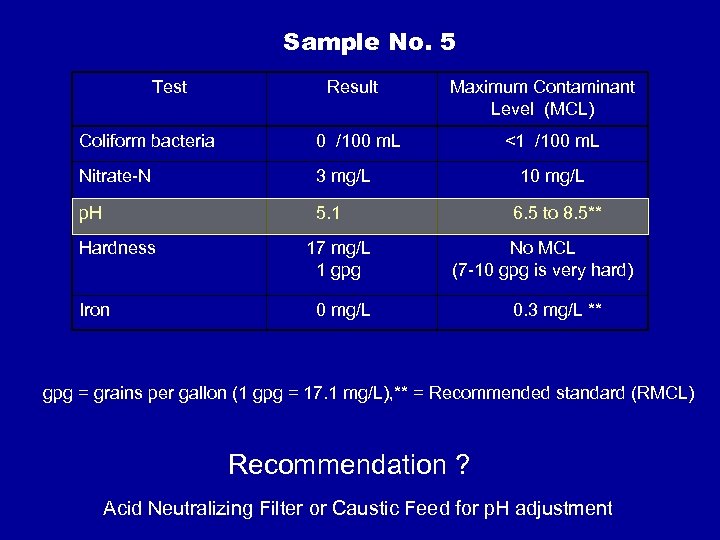
Sample No. 5 Test Result Coliform bacteria 0 /100 m. L Nitrate-N 3 mg/L p. H Maximum Contaminant Level (MCL) 5. 1 Hardness Iron 17 mg/L 1 gpg <1 /100 m. L 10 mg/L 6. 5 to 8. 5** No MCL (7 -10 gpg is very hard) 0 mg/L 0. 3 mg/L ** gpg = grains per gallon (1 gpg = 17. 1 mg/L), ** = Recommended standard (RMCL) Recommendation ? Acid Neutralizing Filter or Caustic Feed for p. H adjustment
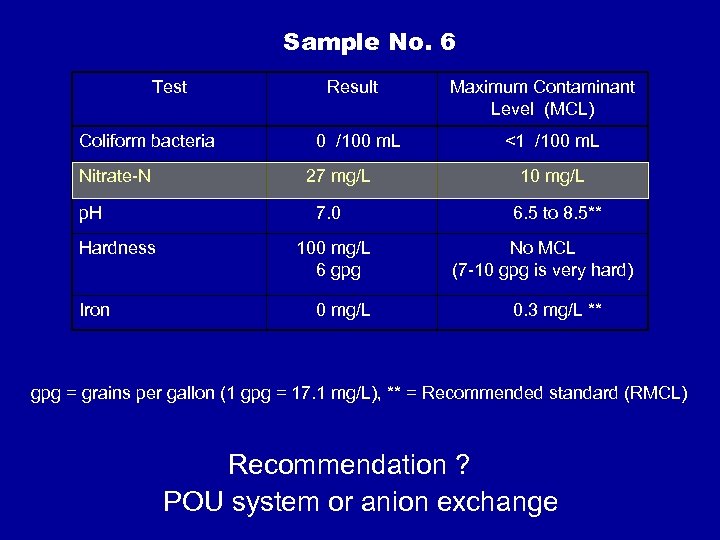
Sample No. 6 Test Coliform bacteria Nitrate-N p. H Hardness Iron Result 0 /100 m. L 27 mg/L 7. 0 100 mg/L 6 gpg 0 mg/L Maximum Contaminant Level (MCL) <1 /100 m. L 10 mg/L 6. 5 to 8. 5** No MCL (7 -10 gpg is very hard) 0. 3 mg/L ** gpg = grains per gallon (1 gpg = 17. 1 mg/L), ** = Recommended standard (RMCL) Recommendation ? POU system or anion exchange
Questions?

Private Homeowner Drinking Water Issues Presenter Mr. Brian Oram, Professional Geologist Wilkes University Geo. Environmental Sciences and Environmental Engineering Department Center for Environmental Quality Wilkes Barre, PA 18766 http: //www. water-research. net (570) 408 -4619
Скачать презентацию Private Homeowner Drinking Water Issues Presenter Mr Brian
799737f27614a215087b9cdc16145a72.ppt