


 Скачать презентацию Privacy and Rationality Theory and Evidence Alessandro Acquisti
5e0d061be885c37f94e438ec03db2152.ppt
- Количество слайдов: 23
 Privacy and Rationality: Theory and Evidence Alessandro Acquisti Heinz School, Carnegie Mellon University acquisti@andrew. cmu. edu
 Who should protect your privacy? It is true that there are potential costs of using Gmail for email storage […] The question is whether consumers should have the right to make that choice and balance the tradeoffs, or whether it will be preemptively denied to them by privacy fundamentalists out to deny consumers that choice. -- Declan Mc. Cullagh (2004)
 Privacy attitudes vs. behavior… • Attitudes: usage – Top reason for not going online (Harris [2001]). 78% would increase Internet usage given more privacy (Harris [2001]) • Attitudes: shopping – $18 billion in lost e-tail sales (Jupiter [2001]). Reason for 61% of Internet users to avoid ECommerce (P&AB [2001]). 73% would shop more online with guarantee for privacy (Harris [2001]) • Behavior – Anecdotic evidence: DNA for Big. Mac – Experiments: Spiekermann, Grossklags, and Berendt (2001): privacy “advocates” & cameras – Everyday examples: Dot com deathbed
 Explanations • Syverson (2003) – “Rational, after all” explanation • Shostack (2003) – “When it matters” explanation • Vila, Greenstadt, and Molnar (2003) – “Lemon market” explanation • Are there other explanations? – Acquisti and Grossklags (2003): privacy and rationality
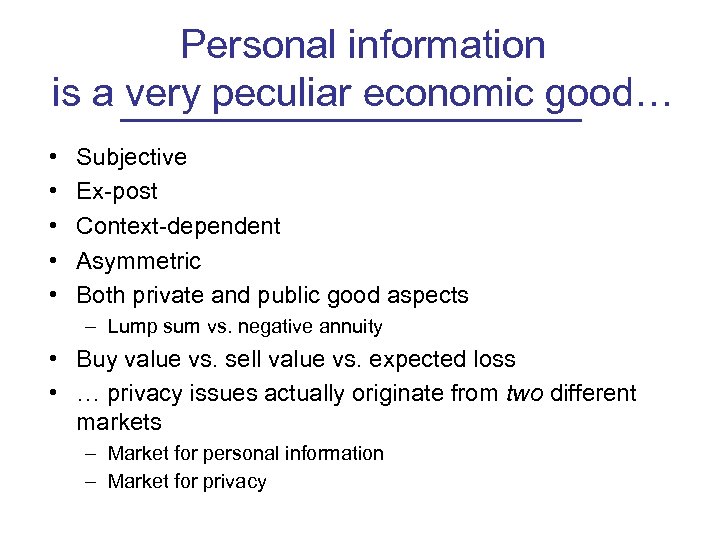 Personal information is a very peculiar economic good… • • • Subjective Ex-post Context-dependent Asymmetric Both private and public good aspects – Lump sum vs. negative annuity • Buy value vs. sell value vs. expected loss • … privacy issues actually originate from two different markets – Market for personal information – Market for privacy
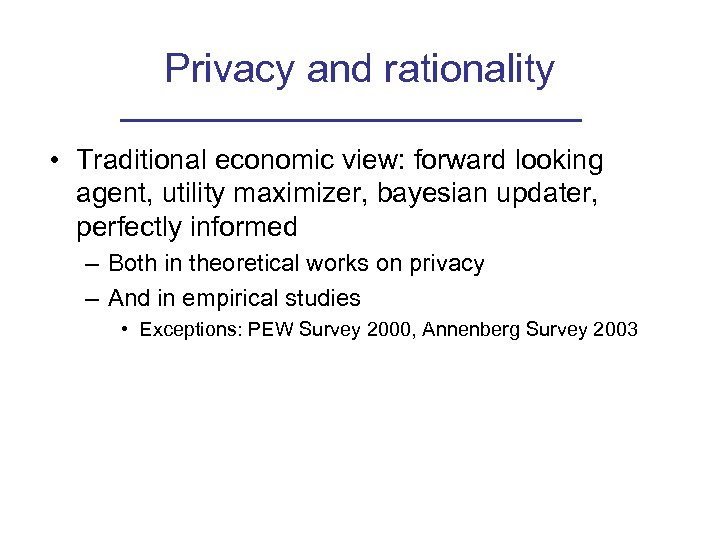 Privacy and rationality • Traditional economic view: forward looking agent, utility maximizer, bayesian updater, perfectly informed – Both in theoretical works on privacy – And in empirical studies • Exceptions: PEW Survey 2000, Annenberg Survey 2003
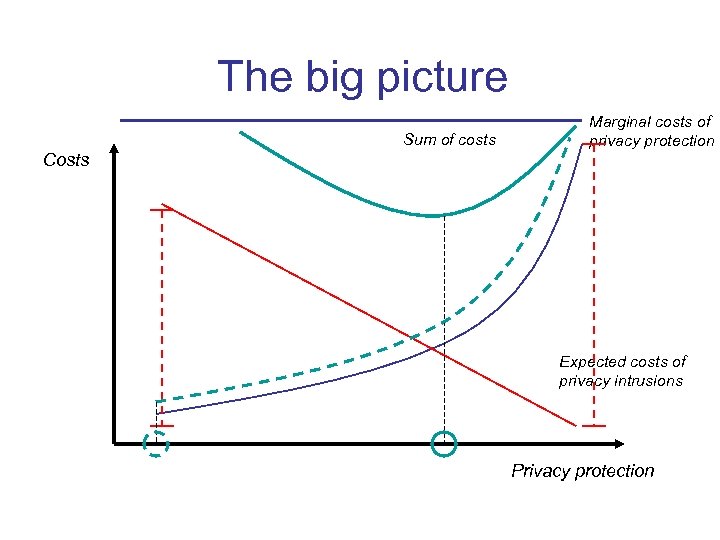
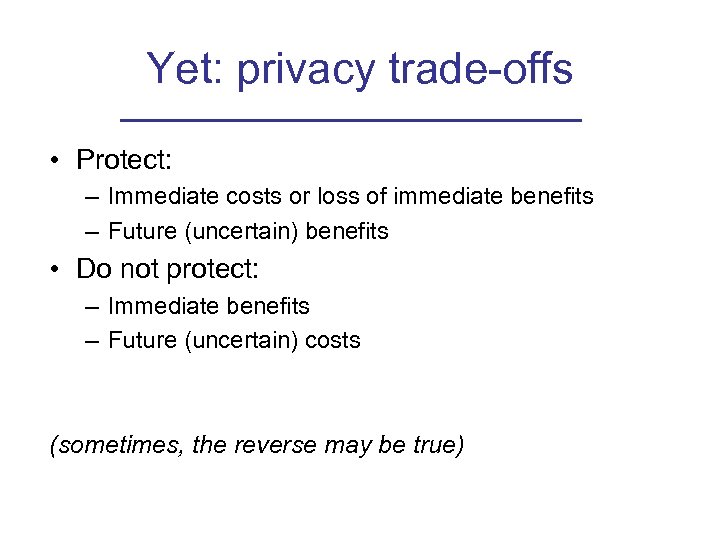 Yet: privacy trade-offs • Protect: – Immediate costs or loss of immediate benefits – Future (uncertain) benefits • Do not protect: – Immediate benefits – Future (uncertain) costs (sometimes, the reverse may be true)
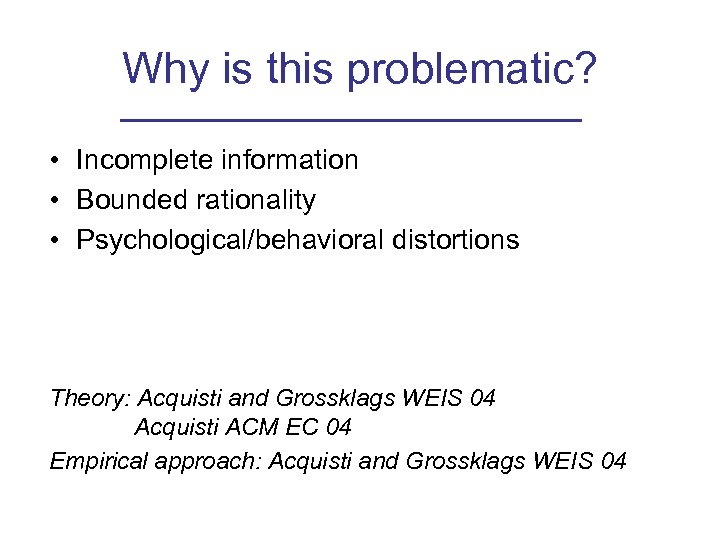 Why is this problematic? • Incomplete information • Bounded rationality • Psychological/behavioral distortions Theory: Acquisti and Grossklags WEIS 04 Acquisti ACM EC 04 Empirical approach: Acquisti and Grossklags WEIS 04
 1. Incomplete information • What information has the individual access to when she takes privacy sensitive decisions? – For instance, is she aware of privacy invasions and associated probability and magnitude of risks? – Is she aware of benefits she may miss by protecting her personal data? – What is her knowledge of the existence and characteristics of protective technologies? • Privacy: – Asymmetric information • Exacerbating: e. g. , RFID, GPS – Material and immaterial costs and benefits – Uncertainty vs. risk, ex post evaluations
 2. Bounded rationality • Is the individual able to consider all the parameters relevant to her choice? – Or is she limited by bounded rationality? – Herbert Simon’s “mental models” (or shortcuts) • Privacy: – Decisions must be based on several stochastic assessments and intricate “anonymity sets” – Inability to process all the stochastic information related to risks and probabilities of events leading to privacy costs and benefits – E. g. , HIPAA – E. g. , pervasive computing
 3. Psychological/behavioral distortions • Privacy and deviations from rationality – Optimism bias – Complacency towards large risks – Inability to deal with prolonged accumulation of small risks – Coherent arbitrariness – “Hot/cold” theory – Attitude (generic) vs. behavior (specific) • Fishbein and Ajzen. Attitude, Intention and Behavior: An Introduction to Theory and Research, 1975 – Hyperbolic discounting, immediate gratification
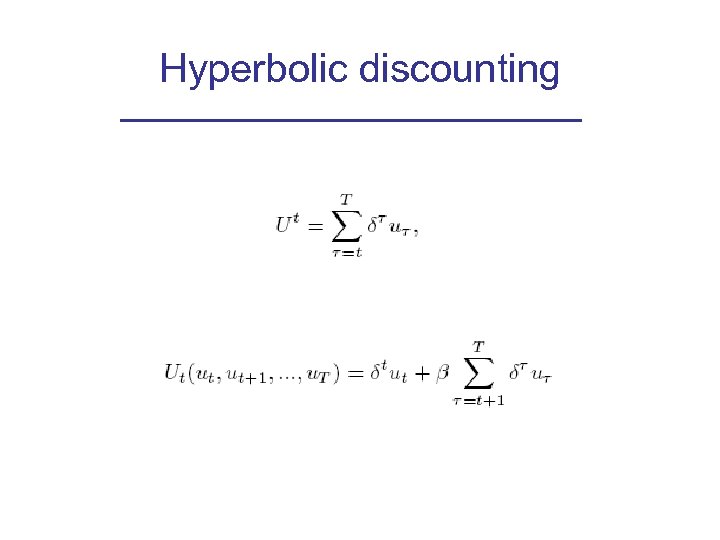
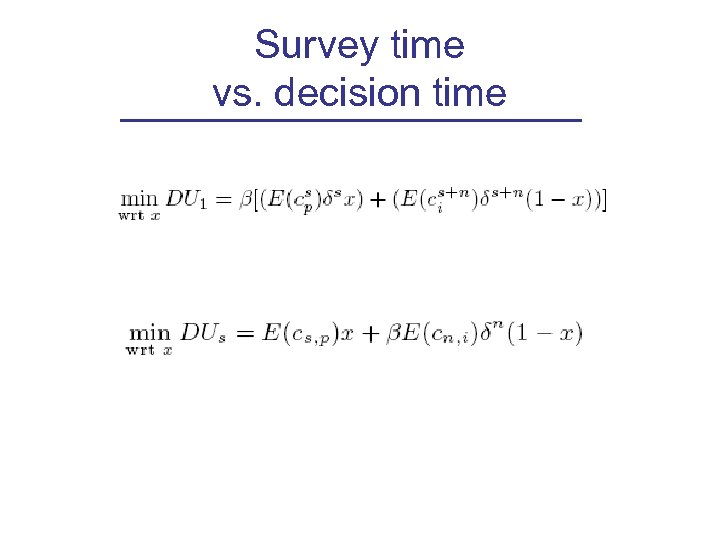
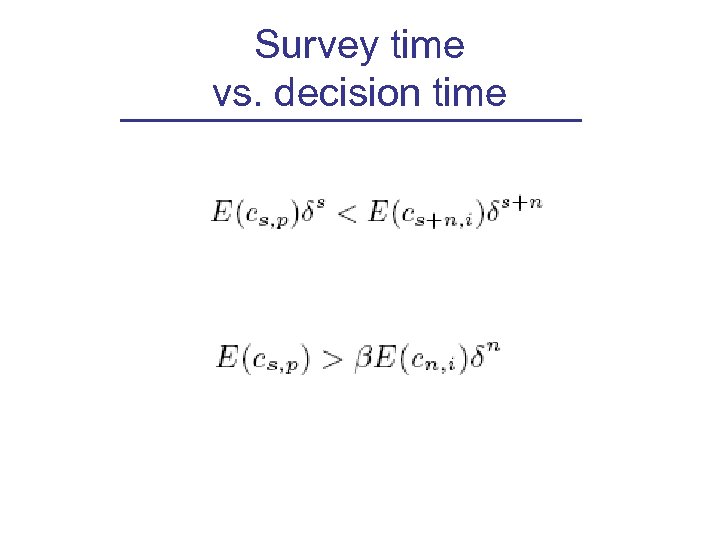
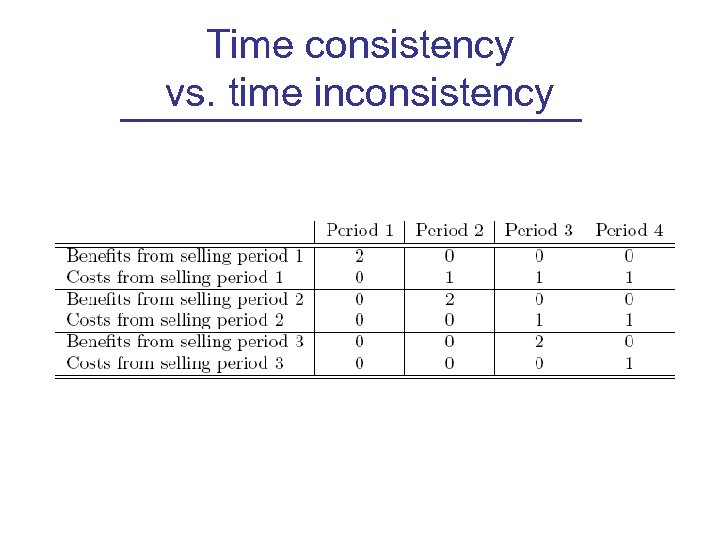
 Hyperbolic discounting and Privacy • Hyperbolic discounting (Laibson 94; O’Donoghue and Rabin 01) • Procrastination, immediate gratification • We do not discount future events in timeconsistent way • Compare: • Privacy attitude in survey versus actual behavior • Privacy behavior when risks are more or less temporally close
 Hyperbolic discounting
 Survey time vs. decision time
 Survey time vs. decision time
 Time consistency vs. time inconsistency
 The big picture Sum of costs Marginal costs of privacy protection Costs Expected costs of privacy intrusions Privacy protection
 Survey and experiment • Phase One: pilot • Phase Two: ~100 questions, 119 subjects from CMU list. – Paid, online survey (CMU Berkman Fund) – Goals: check for – Privacy attitudes / behavior – Information, bounded rationality, and psychological distortions • Phase Three: experiment
 Clusters • Multivariate clustering techniques (k-means) • Privacy attitudes – privacy fundamentalists 26. 1%; two medium groups (concerned about online 23. 5% or offline 20. 2% identity); low concerns 27. 7% • Self reported behavior of privacy relevance – high degree of information revelation and risk exposure 64. 7%; low revelation and exposure 35. 3% • Knowledge of privacy risks – • average knowledge of privacy threats 46. 2%; high unawareness 31. 9%; “aware” 21. 9% Knowledge of privacy protection and security – small group very knowledgeable 31. 7%; larger group showing a blatant lack of awareness 68. 3%
 Economic factors (excerpts) • Preliminary evidence of hyperbolic discounting, bounded rationality, risk aversion
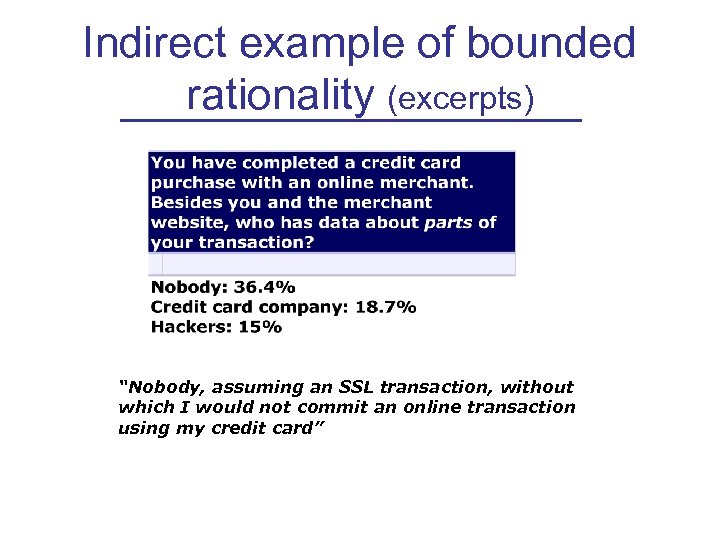 Indirect example of bounded rationality (excerpts) “Nobody, assuming an SSL transaction, without which I would not commit an online transaction using my credit card”
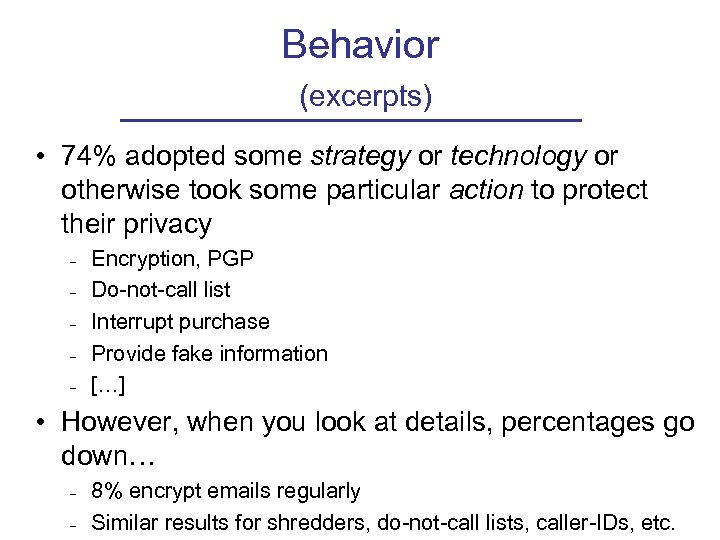 Behavior (excerpts) • 74% adopted some strategy or technology or otherwise took some particular action to protect their privacy – – – Encryption, PGP Do-not-call list Interrupt purchase Provide fake information […] • However, when you look at details, percentages go down… – – 8% encrypt emails regularly Similar results for shredders, do-not-call lists, caller-IDs, etc.
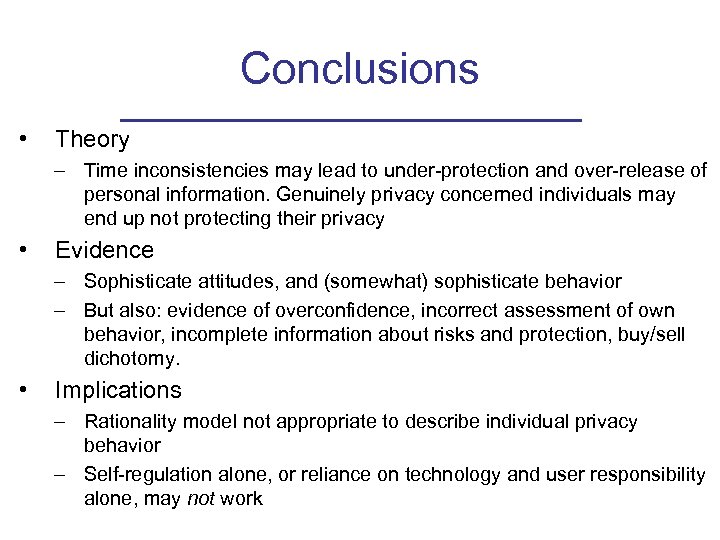 Conclusions • Theory – Time inconsistencies may lead to under-protection and over-release of personal information. Genuinely privacy concerned individuals may end up not protecting their privacy • Evidence – Sophisticate attitudes, and (somewhat) sophisticate behavior – But also: evidence of overconfidence, incorrect assessment of own behavior, incomplete information about risks and protection, buy/sell dichotomy. • Implications – Rationality model not appropriate to describe individual privacy behavior – Self-regulation alone, or reliance on technology and user responsibility alone, may not work