


 Скачать презентацию Principles of Postharvest Pathology Dr Ron Porat Dept
9e6d0aebbeac3bd2c2215fa732469ffe.ppt
- Количество слайдов: 54
 Principles of Postharvest Pathology Dr. Ron Porat Dept. of Postharvest Science of Fresh Produce ARO, The Volcani Center, Bet Dagan, Israel
 The main causes for postharvest losses during storage are: 1. Physiological deterioration (softening, wilting) 2. Pathological deterioration (decay and rots) Postharvest decay causes significant commercial losses due to wastage. Further economic losses occurs if the market requires re-packaging of the contaminated commodity. In consumer packages, if one fruit in the package is rotten, you need to throw away the entire bag.
 The major postharvest diseases are caused by several types of fungi: Alternaria Botrytis Colletotrichum Diplodia Penicillium Phytophthora Rhizopus
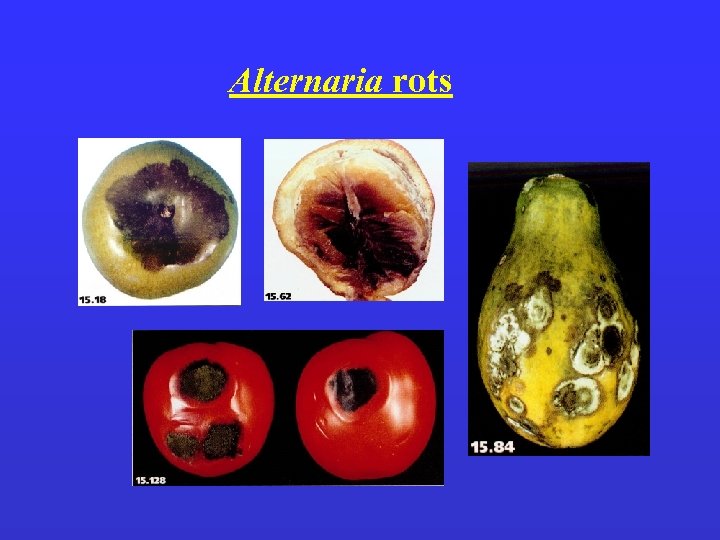 Alternaria rots
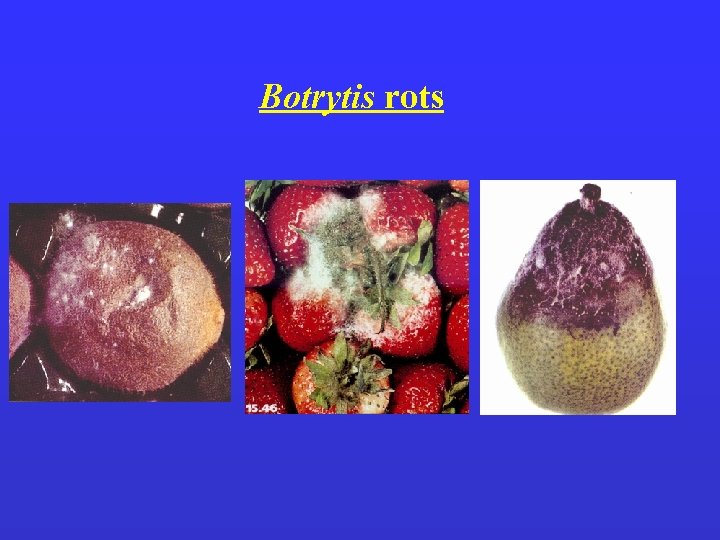 Botrytis rots
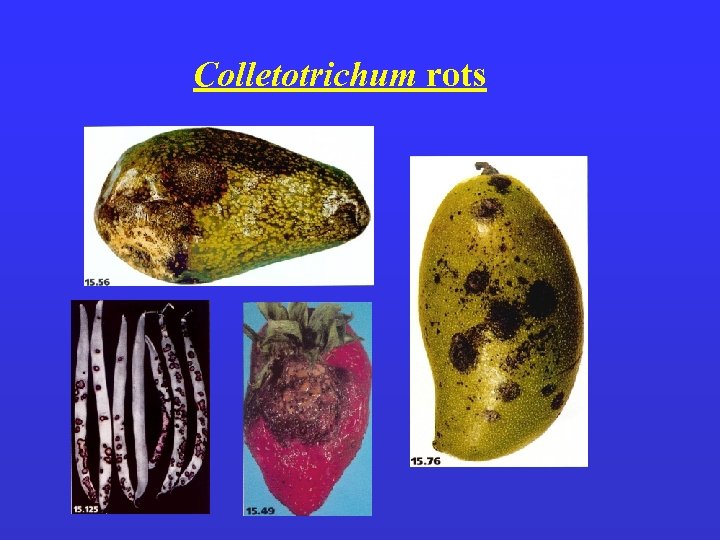 Colletotrichum rots
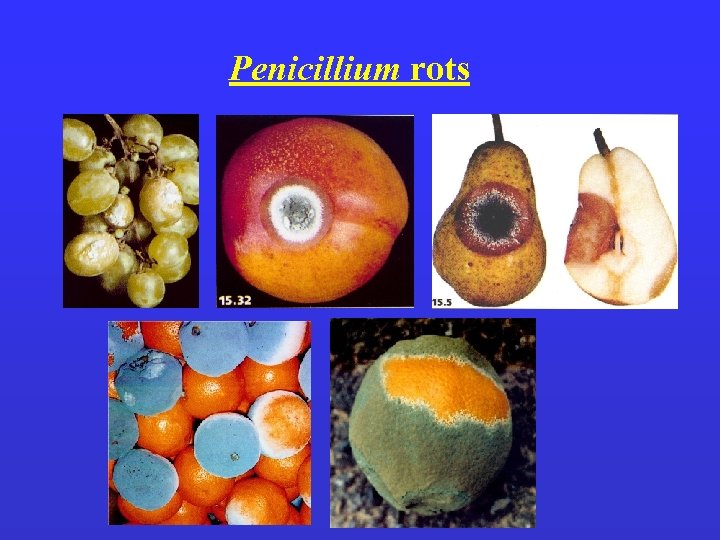 Penicillium rots
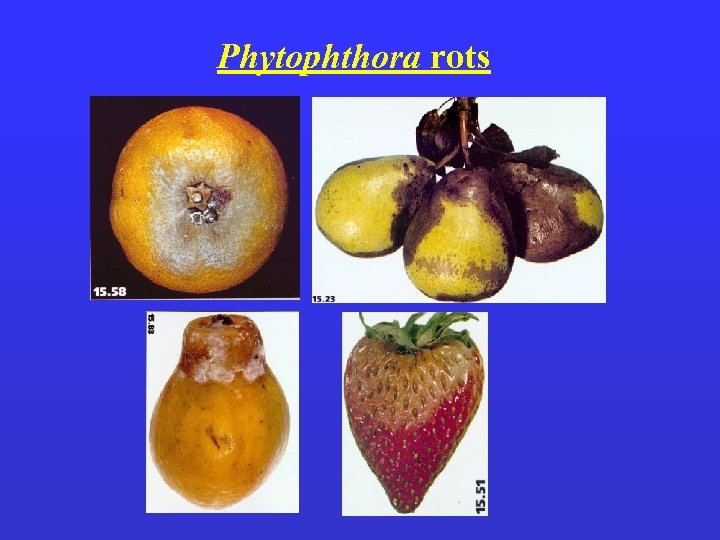 Phytophthora rots
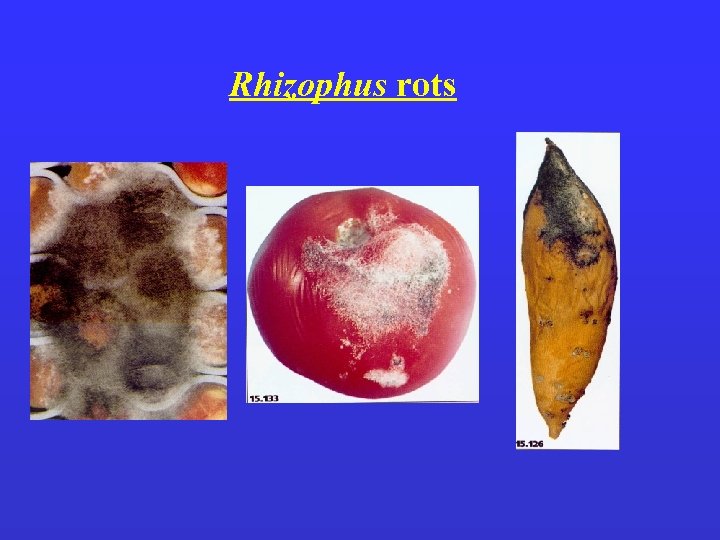 Rhizophus rots
 There are specific genetic interactions between the host and the pathogen, which govern if the commodity will be resistant or susceptible. For example, Penicillium digitatum attacks only citrus, whereas Penicillium expansum can attack apples and pears but not citrus
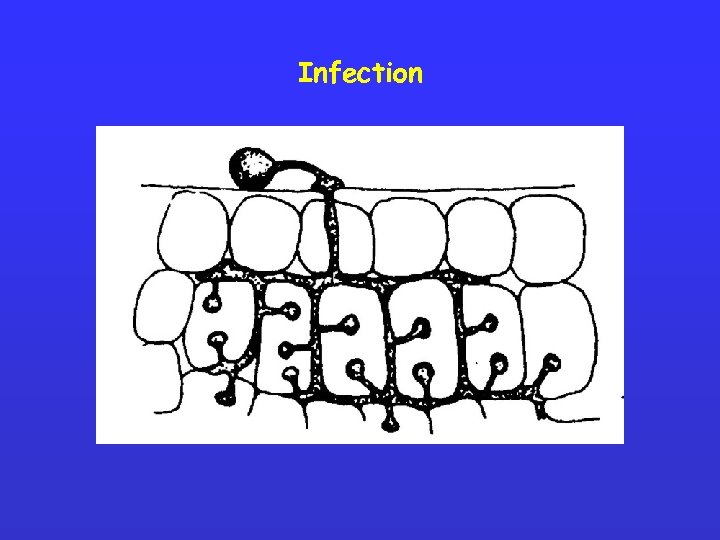
 The infection process Fruit and vegetables may be infected in the field while they are still attached to the plant (preharvest infection) or after harvest (postharvest infection). Preharvest infection – occurs especially on floral parts and during fruit development. These infections are arrested (‘lattent’ infections) until the commodity ripens and senesces. Examples are Colletotrichum, Botrytis and various stem-end rots. Postharvest infection – occurs after harvest by penetration through the skin or by invasion through surface wounds. Examples are Penicillium and Rhizophus.
 Sources of infection * At the field or orchard * Greenhouses * Harvesting tools * Buckets, carts, boxes, etc. * Packinghouse facilities * Storage facilities * Markets
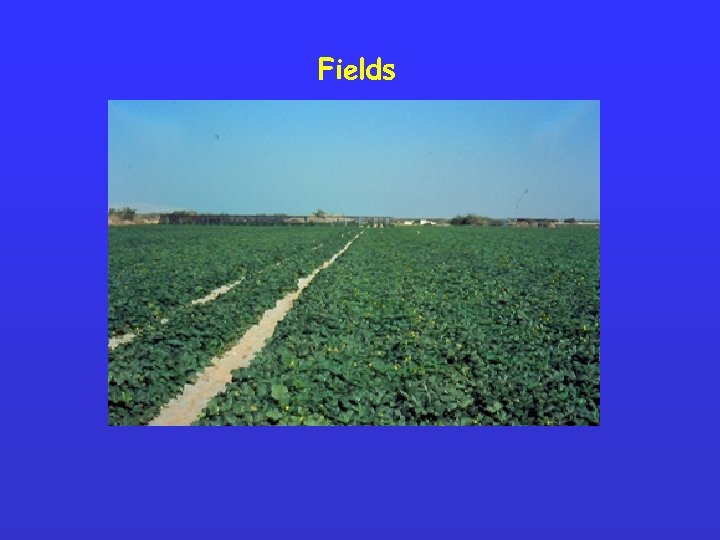 Fields
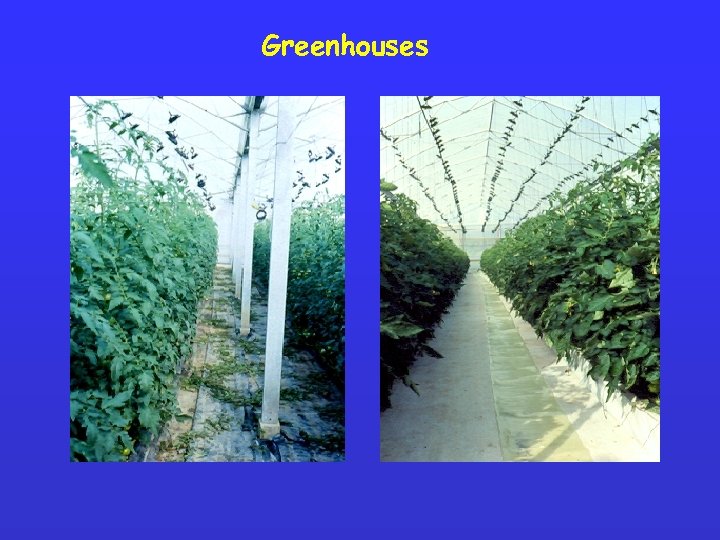 Greenhouses
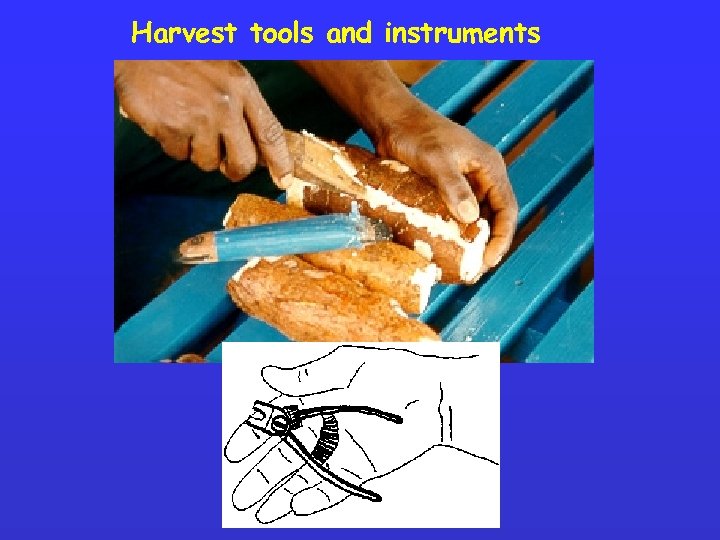 Harvest tools and instruments
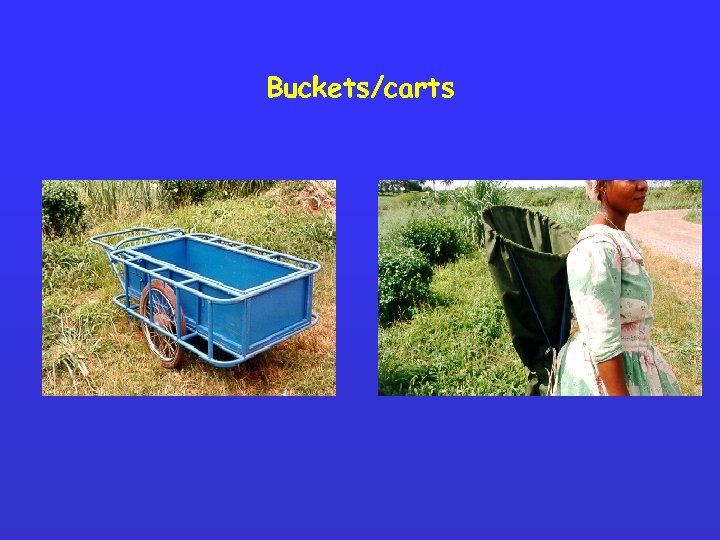 Buckets/carts
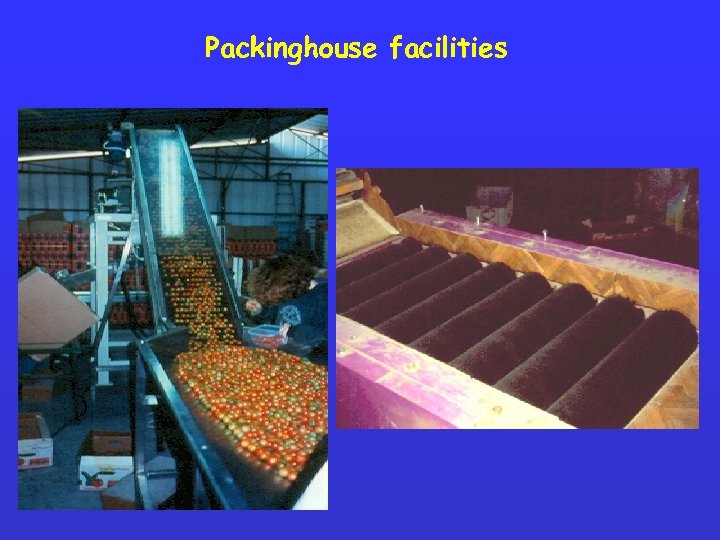 Packinghouse facilities
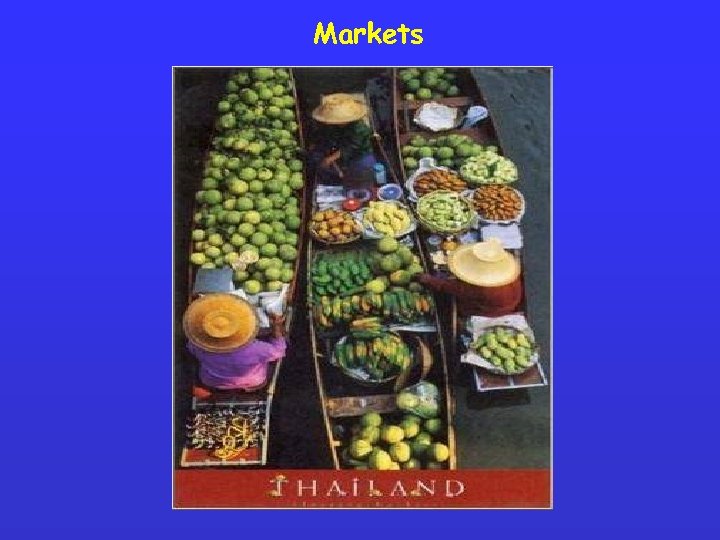 Markets
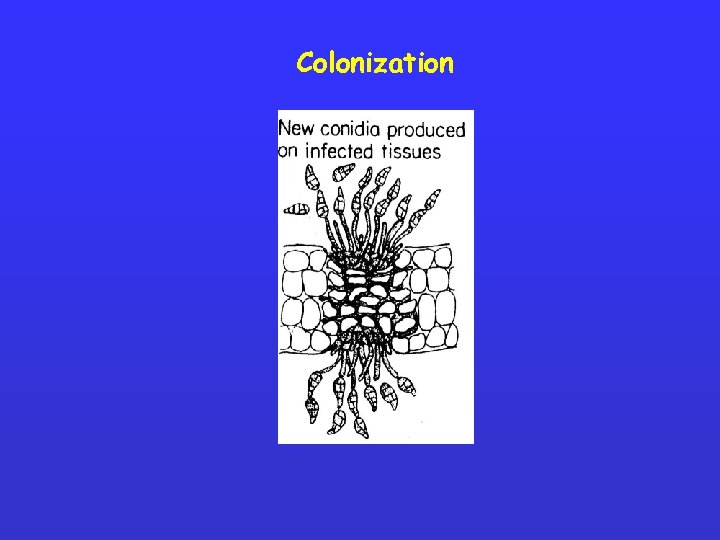
 The infection process Fungus produce millions of spores, which serve as reproduction units
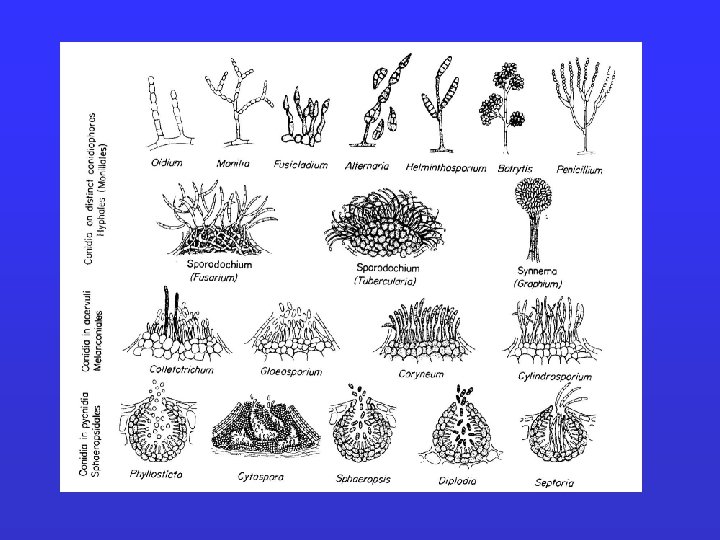
 Attachment to the fruit surface.
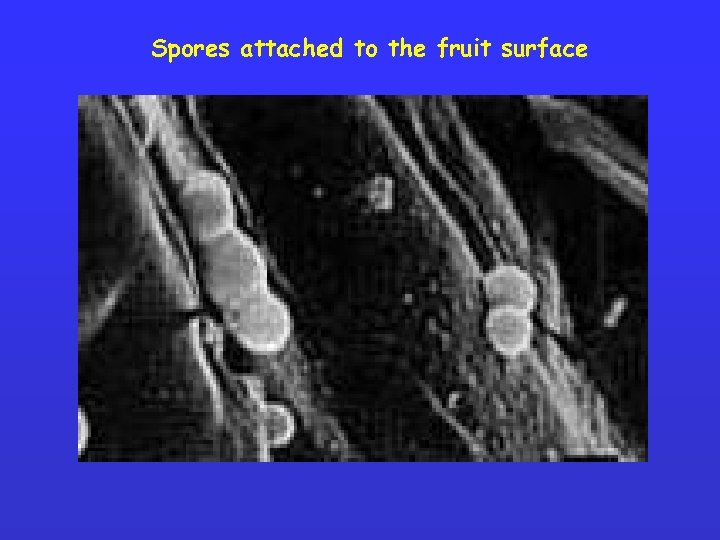 Spores attached to the fruit surface
 Penetration and invasion by fungi 1. through natural openings. 2. wounds. 3. mechanical wounds. 4. physiological damages. 5. senescence.
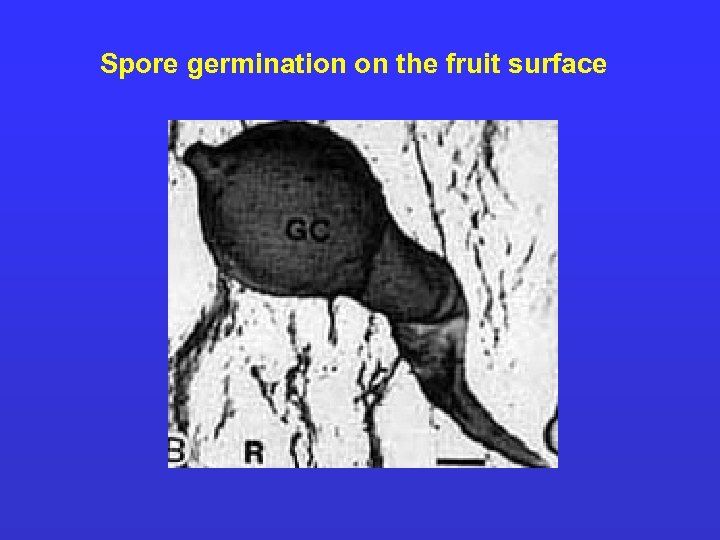 Spore germination on the fruit surface
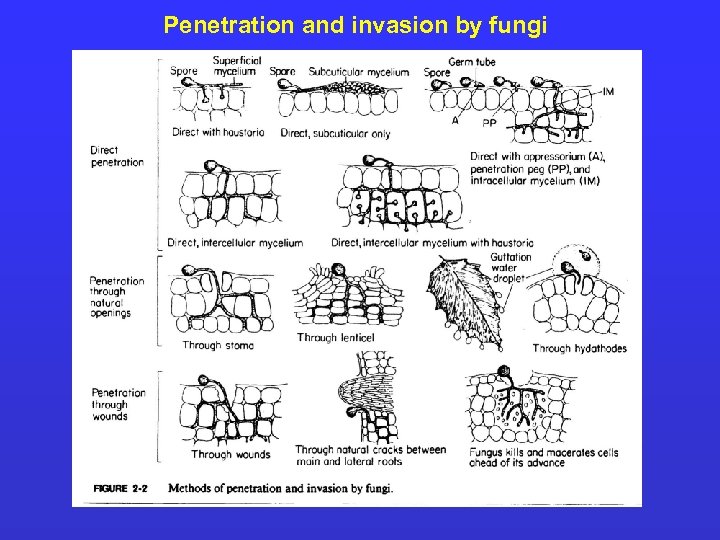 Penetration and invasion by fungi
 Infection
 Colonization
 Factors affecting disease development * Storage temperature * Humidity * Controlled atmosphere * Produce maturity and defense mechanisms
 Factors affecting rot development * Storage temperature * Humidity * Controlled atmosphere * Produce maturity and defense mechanisms
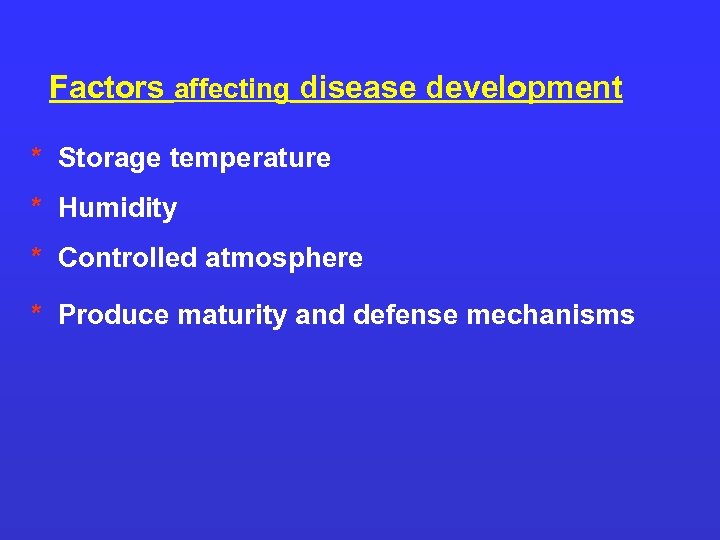
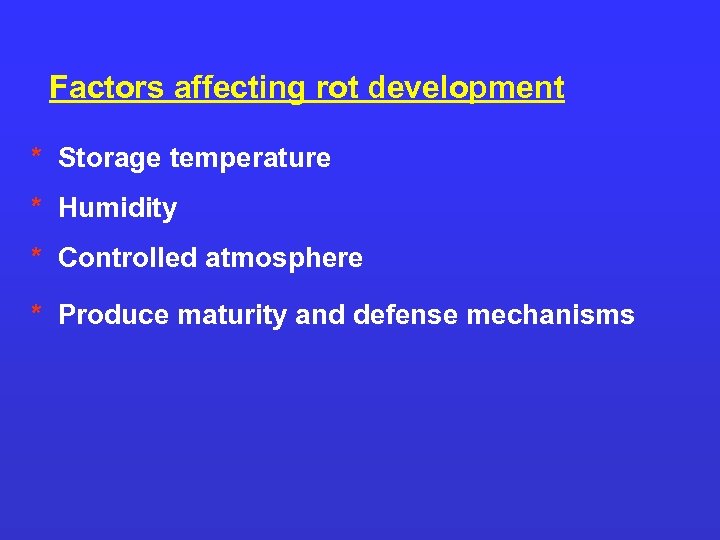
 Temperature is the most critical environmental factor used to control decay development. Other disease control measures are rather supplements to refrigeration. Low temperature reduces decay development directly by inhibiting fungus growth and indirectly by maintaining quality and reducing deterioration. Most postharvest pathogens grow best at 20 -25ºC. Lower temperatures slows and even may kill the pathogen.
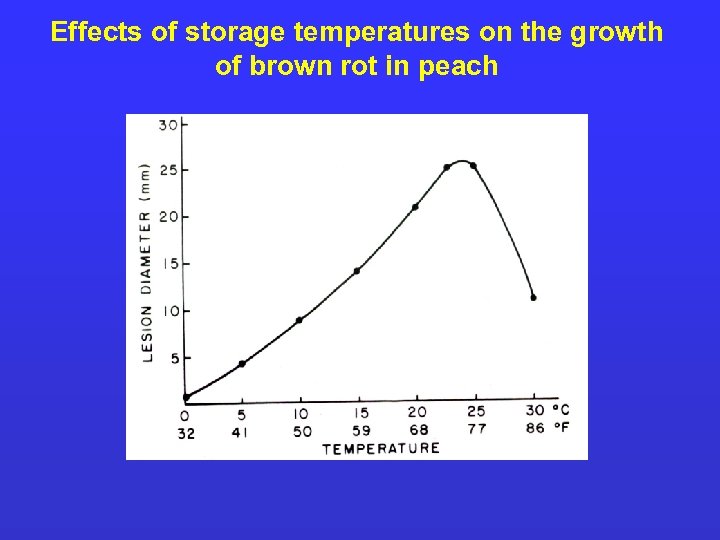 Effects of storage temperatures on the growth of brown rot in peach
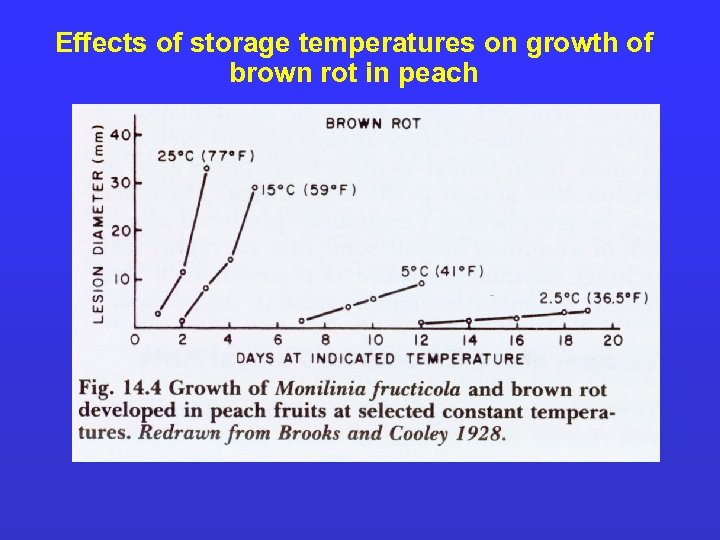 Effects of storage temperatures on growth of brown rot in peach
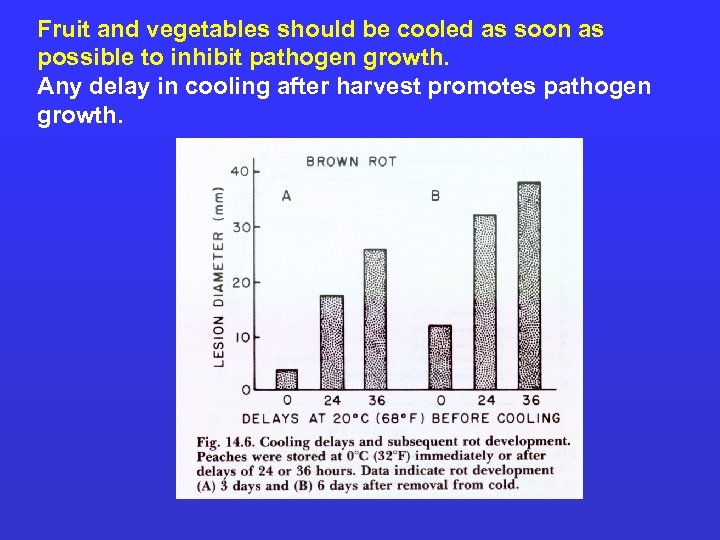 Fruit and vegetables should be cooled as soon as possible to inhibit pathogen growth. Any delay in cooling after harvest promotes pathogen growth.
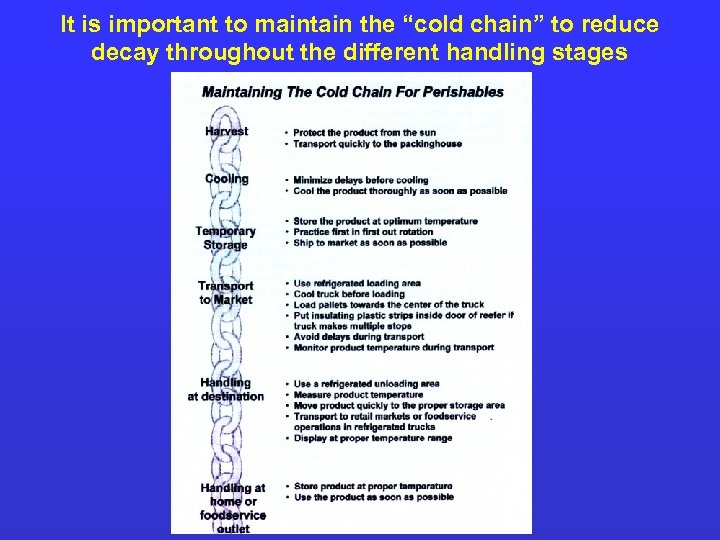 It is important to maintain the “cold chain” to reduce decay throughout the different handling stages
 Humidity High humidity during storage is required to maintain produce quality and fresh weight. However, high humidity, and especially water condensation on the fruit surface, also promotes pathogen growth and decay. Therefore, the optimal humidity should be evaluated specifically for each commodity.
 Controlled atmosphere may directly inhibit pathogen growth or indirectly inhibit decay by delaying ripening and senescence. Low O 2 – For many commodities, CA storage includes 2 -5% O 2 (lower levels enhance anaerobic respiration). However, only lower oxygen levels below 1% significantly reduce pathogen growth. High CO 2 – High CO 2 levels (10 -15%) are used in CA storage of some commodities (strawberry, figs, cherry). These high CO 2 concentrations also inhibit pathogen growth.
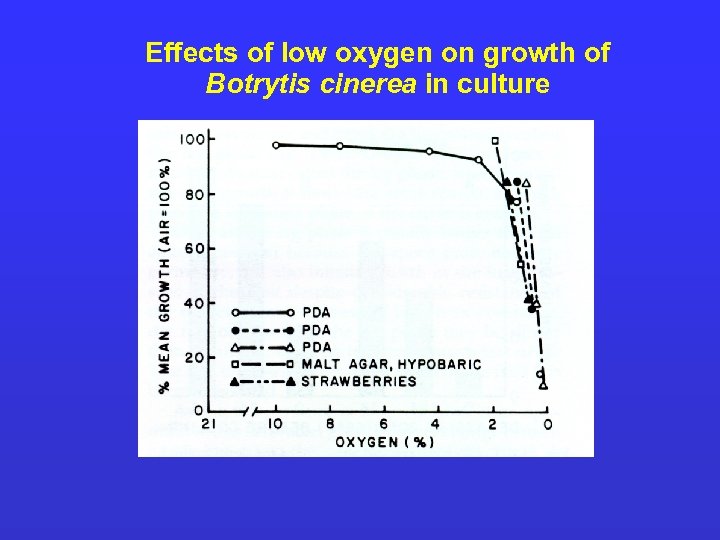 Effects of low oxygen on growth of Botrytis cinerea in culture
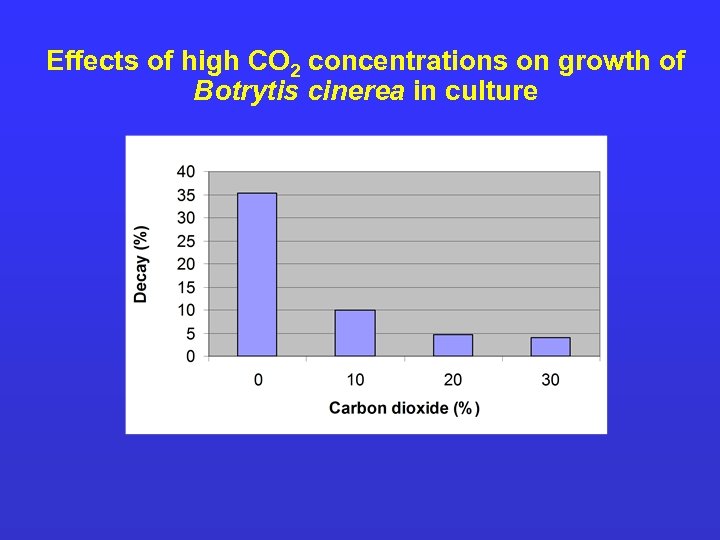 Effects of high CO 2 concentrations on growth of Botrytis cinerea in culture
 Maturity and natural host defense mechanisms Young immature fruit are normally resistance to pathogen infections. However, when the fruit ripens it becomes more susceptible to various diseases. Natural host pathogen defense mechanisms include toughness of cell walls, production of phytoalexins, induction of PR-proteins, lignification, etc.
 Control of postharvest decay Field treatments Sanitation: Sanitation in the groves and fields by pruning and removal of dead wood and fallen rotted fruit. Field sprays: Field treatments with fungicides help protecting against infection in the field. Careful picking and handling: To avoid mechanical damage, wounds and injuries. Maintenance of fruit resistance: Treatments with growth regulators, such as gibberellic acid and 2, 4 -D, delay senescence and maintain fruit resistance.
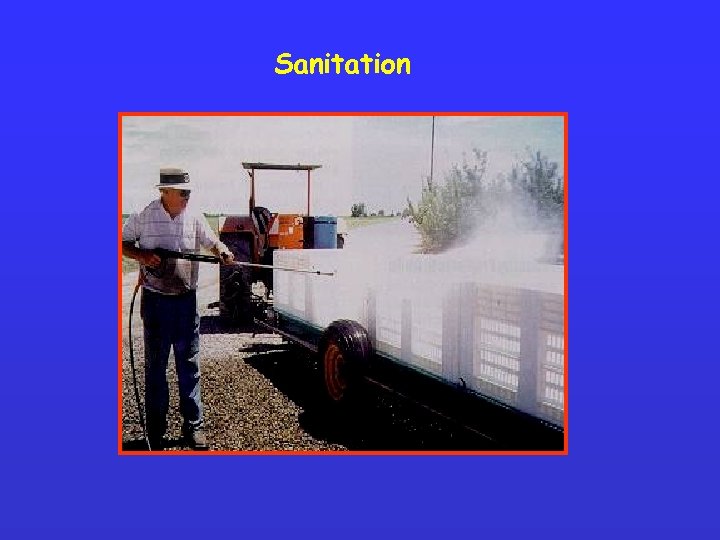 Sanitation
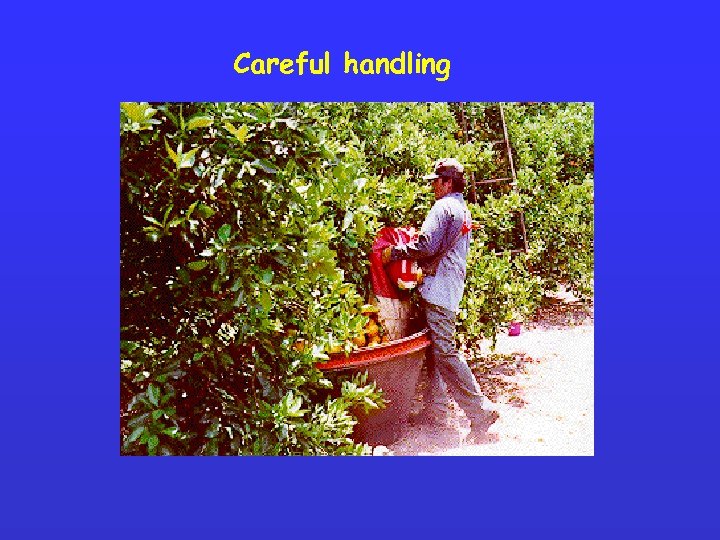 Careful handling
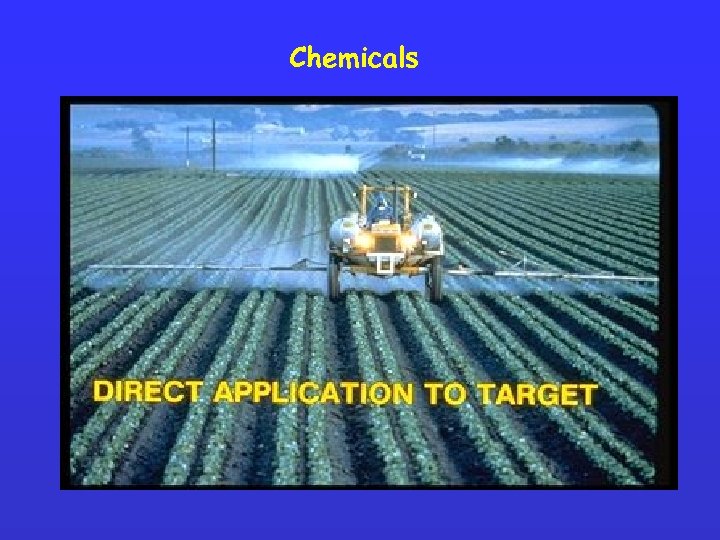 Chemicals
 Control of postharvest decay (continue) Postharvest treatments Washing: Washing removes spores and reduces the initial inoculum present on the commodity surface. Chemical treatments: Postharvest fungicides are currently the most effective method used to reduce decay. Physical treatments: Hot water (heat) and irradiation may be used for sanitization of produce. Biological control: Antagonistic microorganisms may be used to compete with the pathogens and reduce decay.
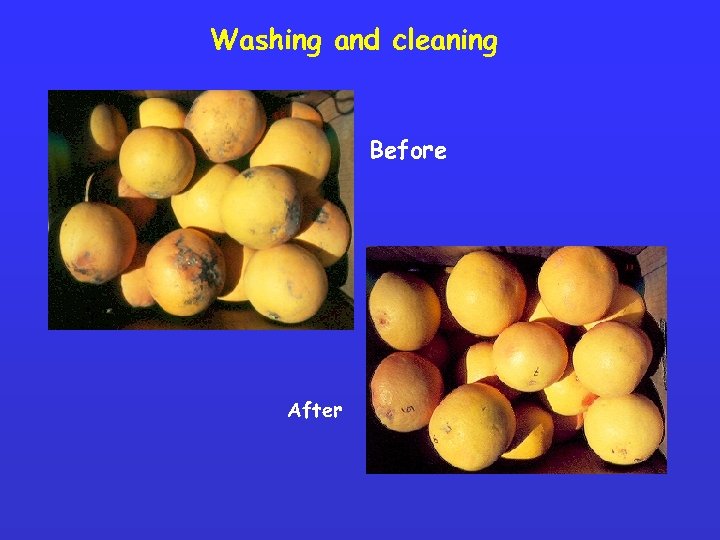 Washing and cleaning Before After
 Chemical treatments in the packinghouse Sanitation of equipment: include treatments to reduce populations of microorganisms on packinghouse equipment. Sanitizing treatments, are usually done with quaternary ammonium. Sanitation of fruit and vegetables: include treatments to reduce the inoculums levels of decay-causing organisms from the product surface. This is important to prevent contamination of the healthy fruit from infected ones. Sanitation treatments usually include chlorination washes, or treatments with ozone or fumigation with sulfur dioxide.
 Chemical treatments Postharvest fungicides are currently the most effective method to reduce decay. Chemical fungicides prevent germination of fungal spores and inhibit mycelial growth. The problem with chemical treatments is that most fungicides are toxic, and because of health concerns, their use is limited to certain allowed residue uptake levels, whereas others fungicides were totally abounded for postharvest use.
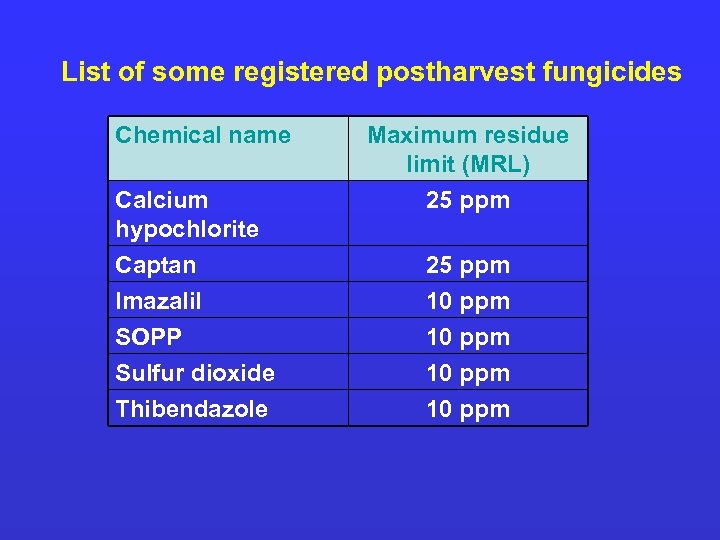 List of some registered postharvest fungicides Chemical name Calcium hypochlorite Maximum residue limit (MRL) 25 ppm Captan 25 ppm Imazalil SOPP Sulfur dioxide Thibendazole 10 ppm
 The Codex Alimentarius commission was formed at 1985 by the United Nations and consulted by the Food and Agriculture Organization (FAO) and World Health Organization (WHO). This commission provides international standards regarding which chemical are allowed for use, and their Maximum Residue Limits (MRL). In the Codex Alimentarius web site (http: //www. fao. org), everyone can search and find all the information regarding which chemicals are allowed for each commodity and its MRLs.
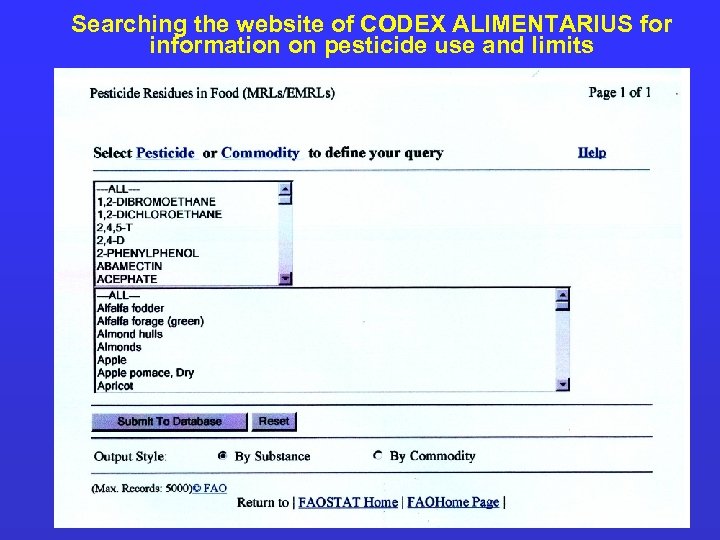 Searching the website of CODEX ALIMENTARIUS for information on pesticide use and limits
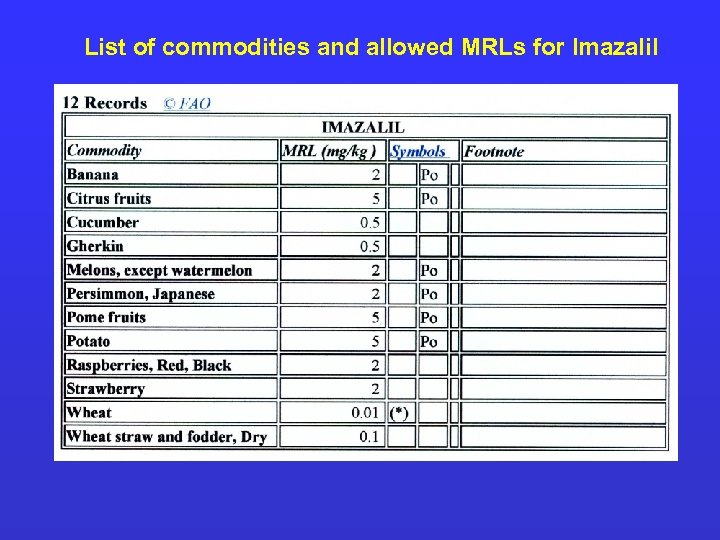 List of commodities and allowed MRLs for Imazalil
 New fungicides for postharvest use During the last few years, more new fungicides are being developed, introduced and registered. The new generation of fungicides were developed with greater awareness to environmental and human safety. The new fungicides allow lower application rates, greater efficacy against target pathogens and minimal effects against non-target organisms, short persistence, non-reactivity to the environment and greater safety to the workers and consumers.
 Example of a new developed fungicide Fludioxonil was registered in 1998 for postharvest use of stone fruit, and is currently being tested for use with other fruit. Fludioxonil belongs to a new class of fungicides, the phenylpyrroles, which are very active at low rates against all major postharvest pathogens. Fludioxonil has the lowest mammalian toxicity of any fungicide previously registered for postharvest use. Fludioxonil is a synthetic product based on a natural metabolite of a specific genus of the soil bacteria Pseudomonas.
 Thank you for your attention!