


 Скачать презентацию Principles of Pharmacoeconomics Kem P Krueger Pharm D
Principles of Pharmacoeconomics.ppt
- Количество слайдов: 36
 Principles of Pharmacoeconomics Kem P. Krueger, Pharm. D. , Ph. D. Kimberly Braxton Lloyd, Pharm. D. Auburn University School of Pharmacy
 Cost Determination Lecture 2
 Objectives Ø Compare and contrast direct, indirect, and intangible costs Ø Describe the relationship between marginal and average costs Ø Describe the five steps involved in determining the cost of therapy or service
 Objectives Ø Given a specific perspective, identify all relevant costs that should be included in an analysis Ø Identify at least five sources of cost data Ø Discuss the differences between costs and charges Ø Explain why discounting is necessary and perform the discounting calculation
 Measurement of resource use Cost Data
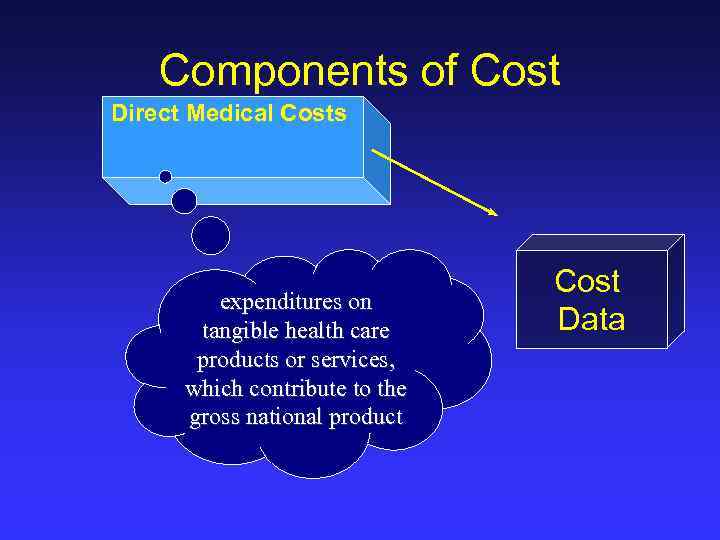 Components of Cost Direct Medical Costs expenditures on tangible health care products or services, which contribute to the gross national product Cost Data
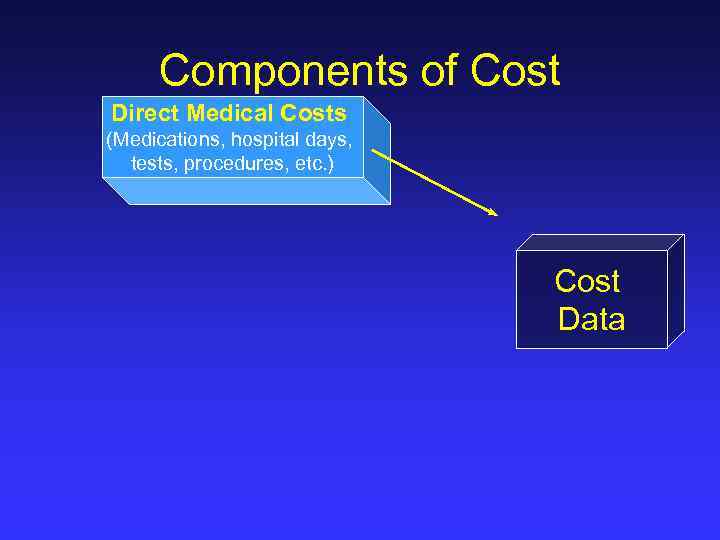 Components of Cost Direct Medical Costs (Medications, hospital days, tests, procedures, etc. ) Cost Data
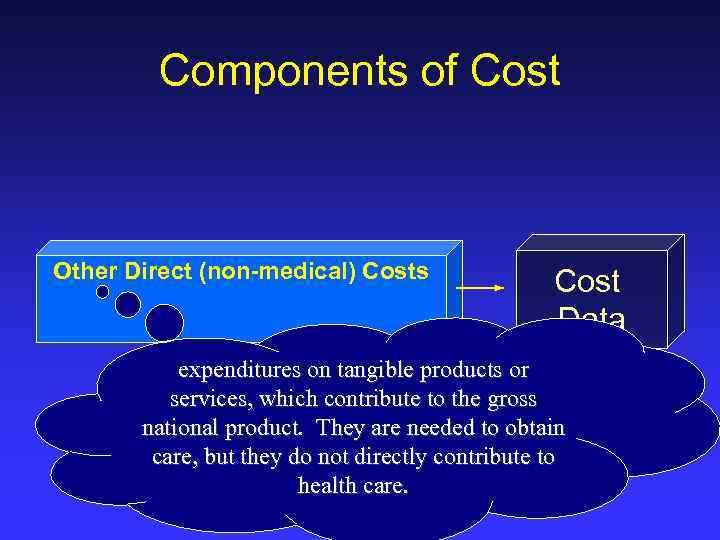 Components of Cost Other Direct (non-medical) Costs Cost Data expenditures on tangible products or services, which contribute to the gross national product. They are needed to obtain care, but they do not directly contribute to health care.
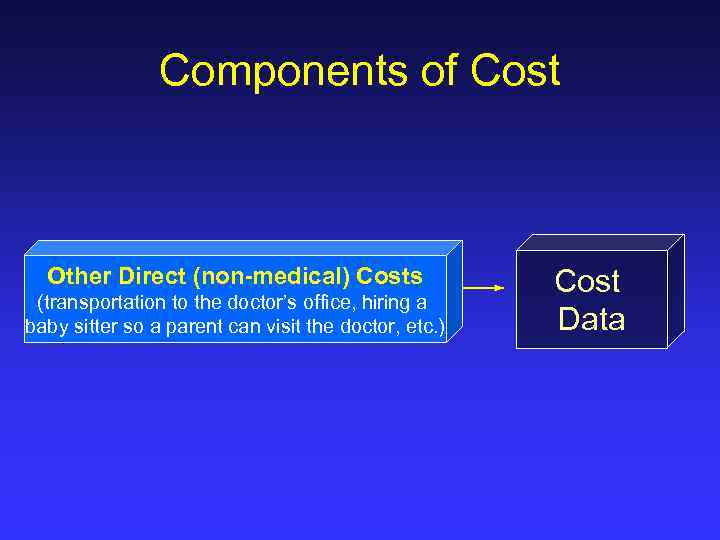 Components of Cost Other Direct (non-medical) Costs (transportation to the doctor’s office, hiring a baby sitter so a parent can visit the doctor, etc. ) Cost Data
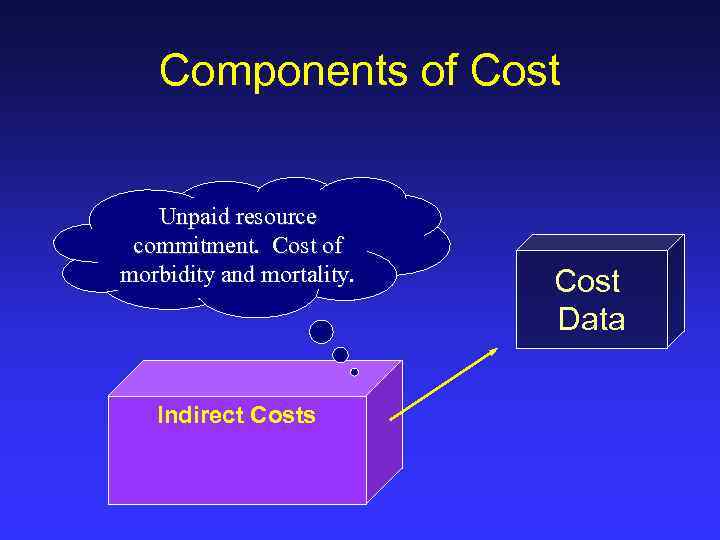 Components of Cost Unpaid resource commitment. Cost of morbidity and mortality. Indirect Costs Cost Data
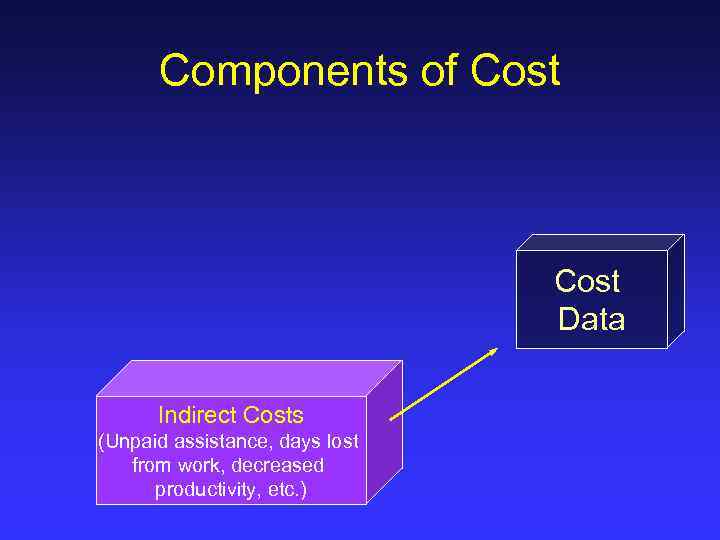 Components of Cost Data Indirect Costs (Unpaid assistance, days lost from work, decreased productivity, etc. )
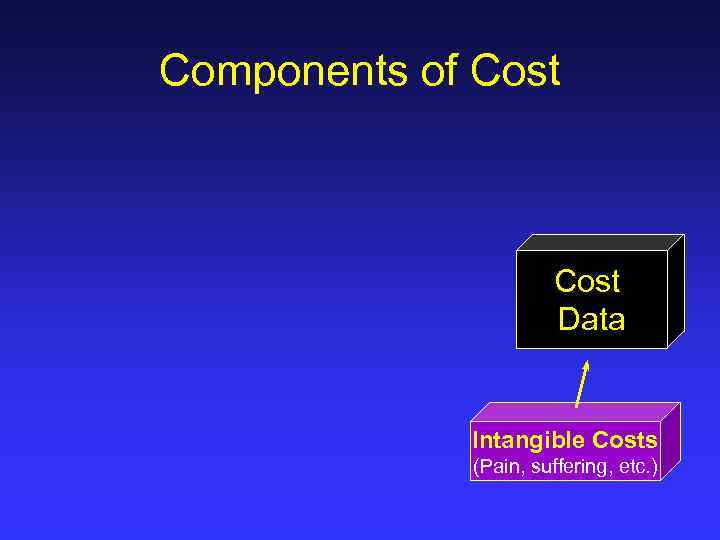 Components of Cost Data Intangible Costs (Pain, suffering, etc. )
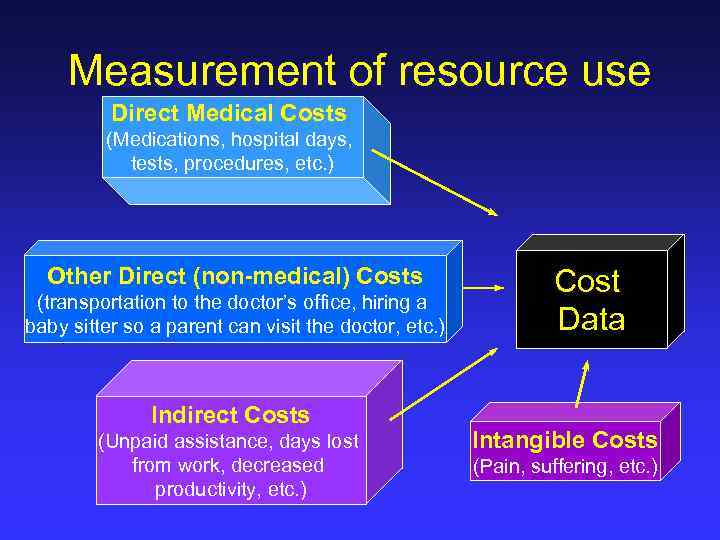 Measurement of resource use Direct Medical Costs (Medications, hospital days, tests, procedures, etc. ) Other Direct (non-medical) Costs (transportation to the doctor’s office, hiring a baby sitter so a parent can visit the doctor, etc. ) Indirect Costs (Unpaid assistance, days lost from work, decreased productivity, etc. ) Cost Data Intangible Costs (Pain, suffering, etc. )
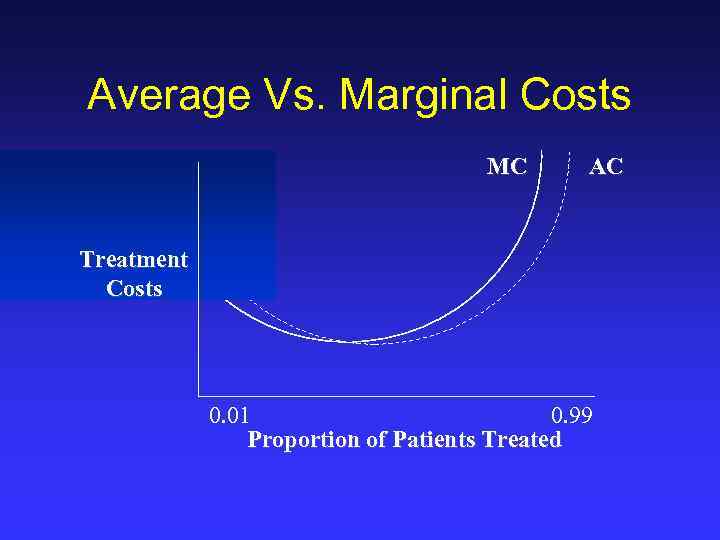
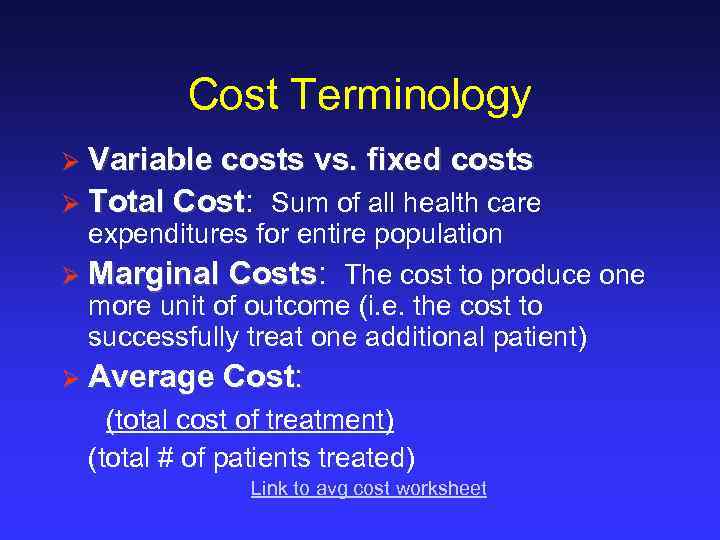 Cost Terminology Ø Variable costs vs. fixed costs Ø Total Cost: Sum of all health care Cost expenditures for entire population Ø Marginal Costs: The cost to produce one Costs more unit of outcome (i. e. the cost to successfully treat one additional patient) Ø Average Cost: (total cost of treatment) (total # of patients treated) Link to avg cost worksheet
 Average Vs. Marginal Costs MC AC Treatment Costs 0. 01 0. 99 Proportion of Patients Treated
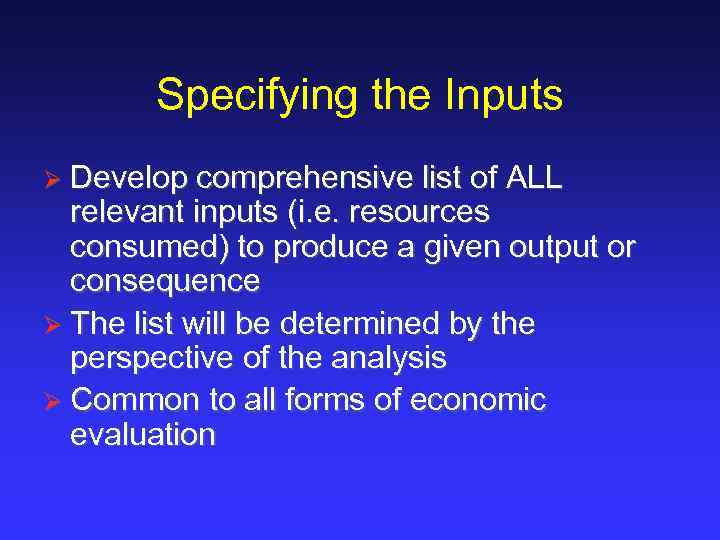 Specifying the Inputs Ø Develop comprehensive list of ALL relevant inputs (i. e. resources consumed) to produce a given output or consequence Ø The list will be determined by the perspective of the analysis Ø Common to all forms of economic evaluation
 Payer Perspective Ø Ø Asthma management service Direct Indirect
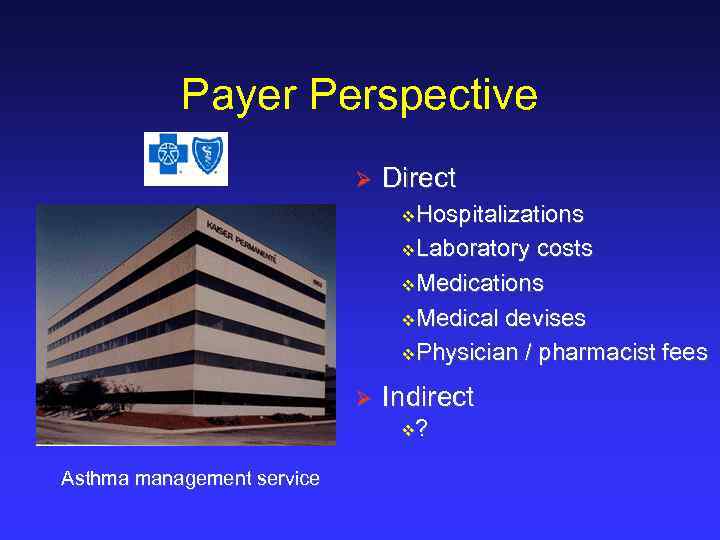 Payer Perspective Ø Direct v. Hospitalizations v. Laboratory costs v. Medications v. Medical devises v. Physician / pharmacist fees Ø Indirect v? Asthma management service
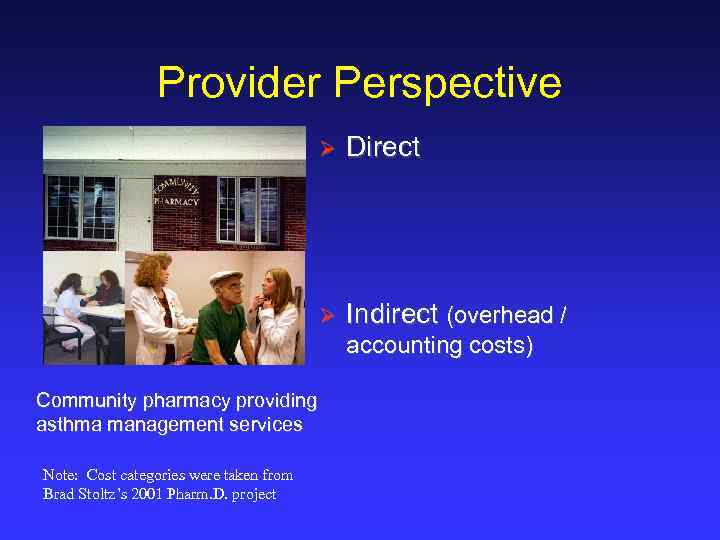 Provider Perspective Ø Direct Ø Indirect (overhead / accounting costs) Community pharmacy providing asthma management services Note: Cost categories were taken from Brad Stoltz’s 2001 Pharm. D. project
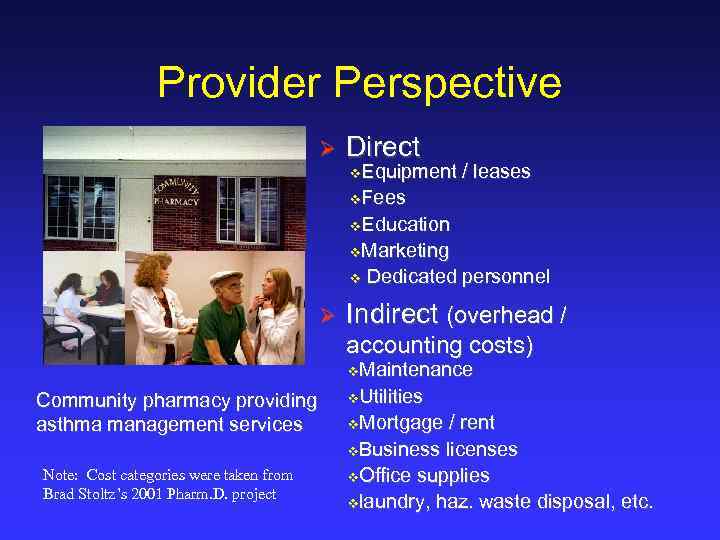 Provider Perspective Ø Direct v. Equipment / leases v. Fees v. Education v. Marketing v Ø Dedicated personnel Indirect (overhead / accounting costs) v. Maintenance Community pharmacy providing asthma management services Note: Cost categories were taken from Brad Stoltz’s 2001 Pharm. D. project v. Utilities v. Mortgage / rent v. Business licenses v. Office supplies vlaundry, haz. waste disposal, etc.
 Patient Perspective Ø Ø Asthma management service Direct Indirect
 Patient Perspective Ø Direct v. Co-pays, veducation, vinsurance premium, vtransportation, vprescriptions, v sitters Ø Indirect vmissed Asthma management service vsitters work,
 Societal Perspective Ø Ø Asthma management service Direct Indirect
 Societal Perspective Ø Direct v v v Asthma cost of illness Ø healthcare costs, e. g. premiums, Medicare & Medicaid, Taxes, Medication R&D, Healthcare workforce, Indirect v v lost productivity, lost wages
 Counting Units Ø Determine the unit of use for a given resource (e. g. , hospital day, single lab test, 30 -day supply of medication) Ø Determine how many units will be consumed over the study period
 Assigning Dollar Values Ø Opportunity costs Vs. market price Ø Personnel time / costs Ø Medication costs Ø Physician and other services Ø Hospital / emergency department costs Ø Based upon cost accounting system
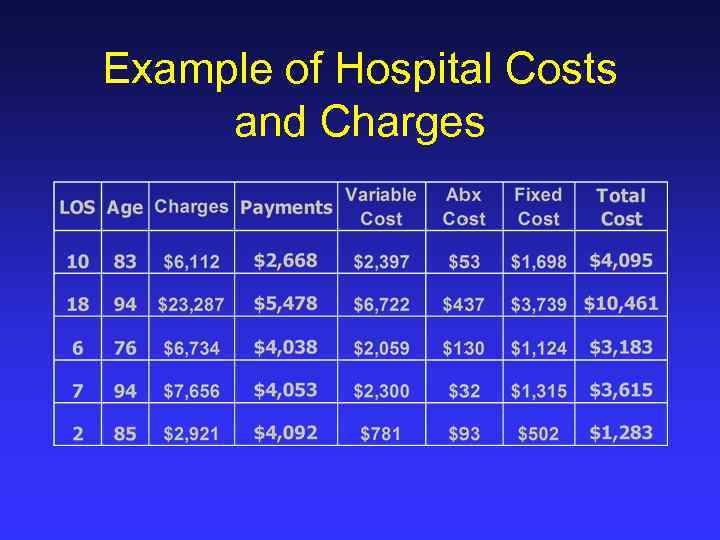 Example of Hospital Costs and Charges
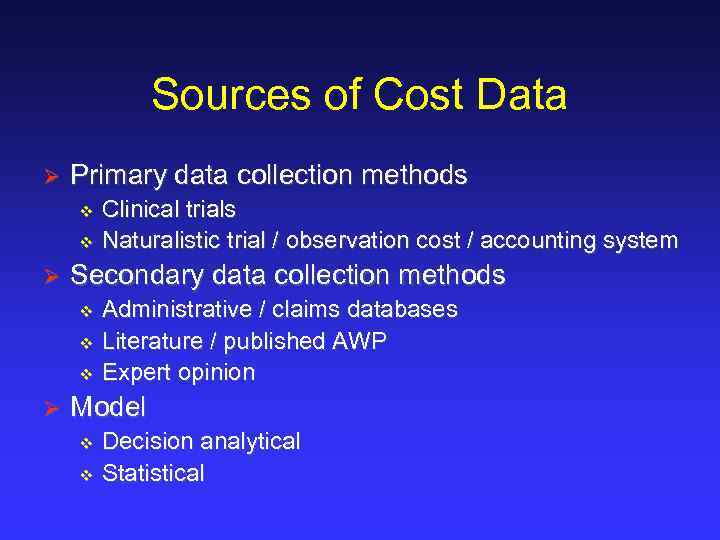 Sources of Cost Data Ø Primary data collection methods v v Ø Secondary data collection methods v v v Ø Clinical trials Naturalistic trial / observation cost / accounting system Administrative / claims databases Literature / published AWP Expert opinion Model v v Decision analytical Statistical
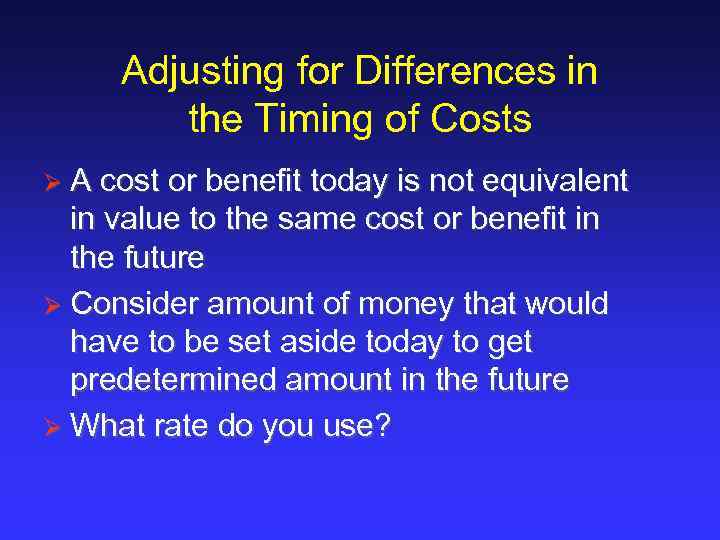 Adjusting for Differences in the Timing of Costs ØA cost or benefit today is not equivalent in value to the same cost or benefit in the future Ø Consider amount of money that would have to be set aside today to get predetermined amount in the future Ø What rate do you use?
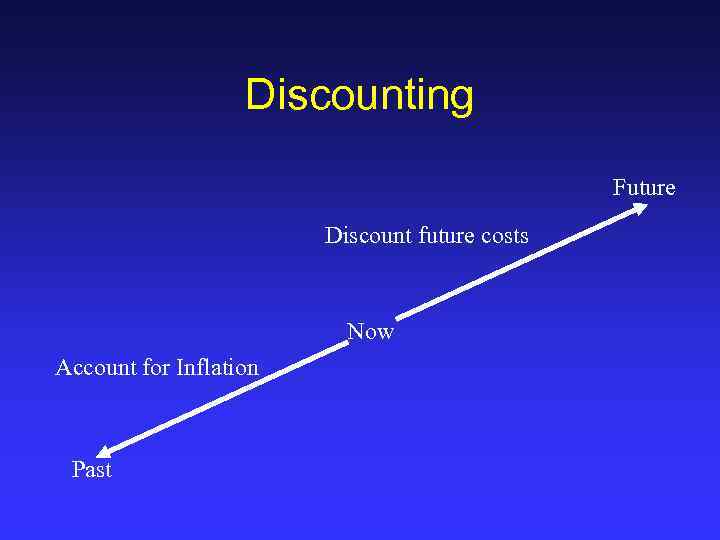 Discounting Future Discount future costs Now Account for Inflation Past
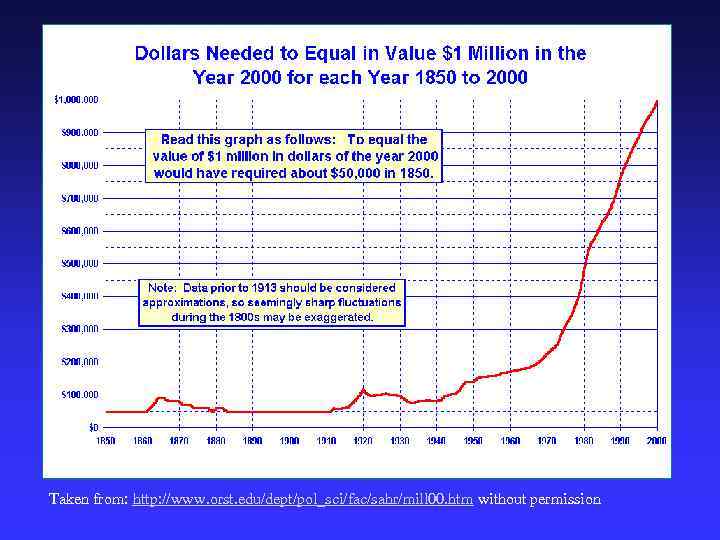 Taken from: http: //www. orst. edu/dept/pol_sci/fac/sahr/mill 00. htm without permission
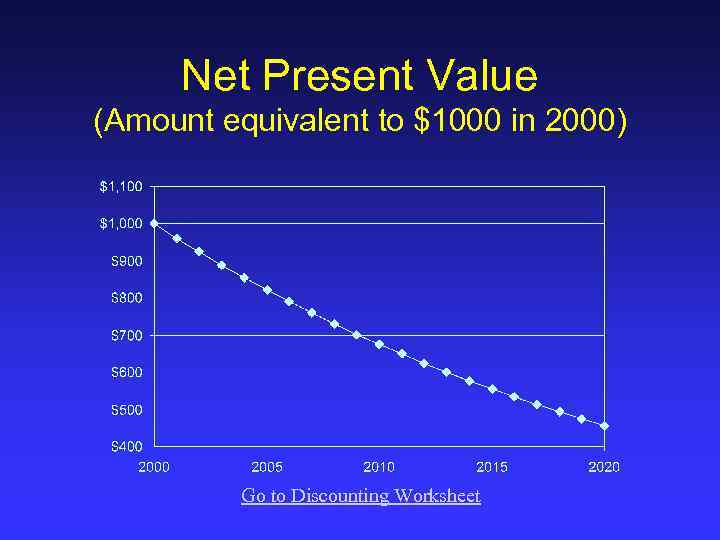 Net Present Value (Amount equivalent to $1000 in 2000) Go to Discounting Worksheet
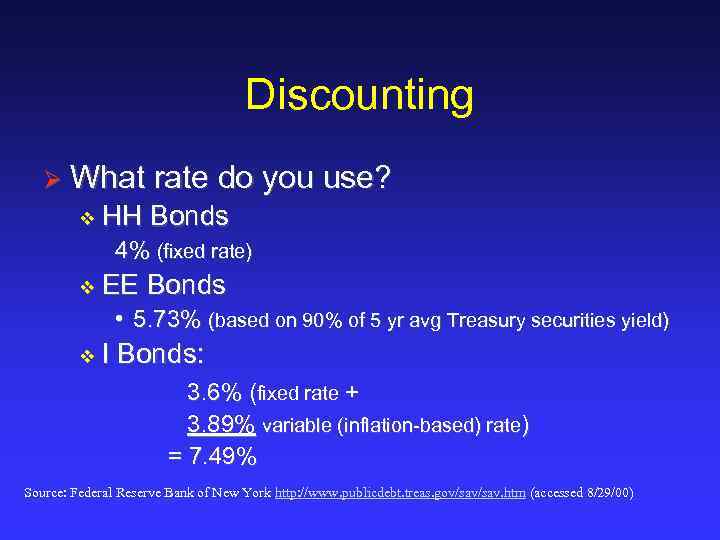 Discounting Ø What v HH rate do you use? Bonds 4% (fixed rate) v EE Bonds • 5. 73% (based on 90% of 5 yr avg Treasury securities yield) v. I Bonds: 3. 6% (fixed rate + 3. 89% variable (inflation-based) rate) = 7. 49% Source: Federal Reserve Bank of New York http: //www. publicdebt. treas. gov/sav. htm (accessed 8/29/00)
 Allowing for Uncertainty Ø What if the type and number of resources included in the analysis change? Ø What if a different discount rate is used? Ø Sensitivity analysis is the technique of systematically varying key variables in an analysis to determine if the results of the analysis change. (This will be covered later).
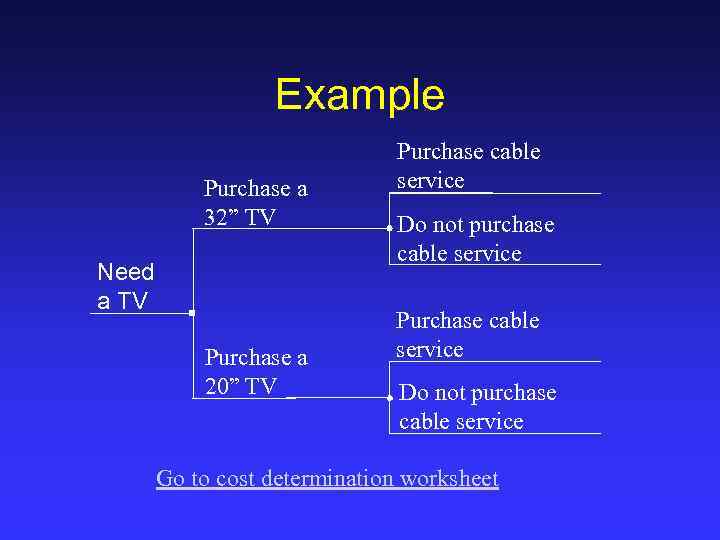 Example Purchase a 32” TV Need a TV Purchase a 20” TV Purchase cable service Do not purchase cable service Go to cost determination worksheet
 Questions