


 Скачать презентацию Примеры развития языка Richard Excuse me anyone
2 курс ОДОУ.ppt
- Количество слайдов: 26
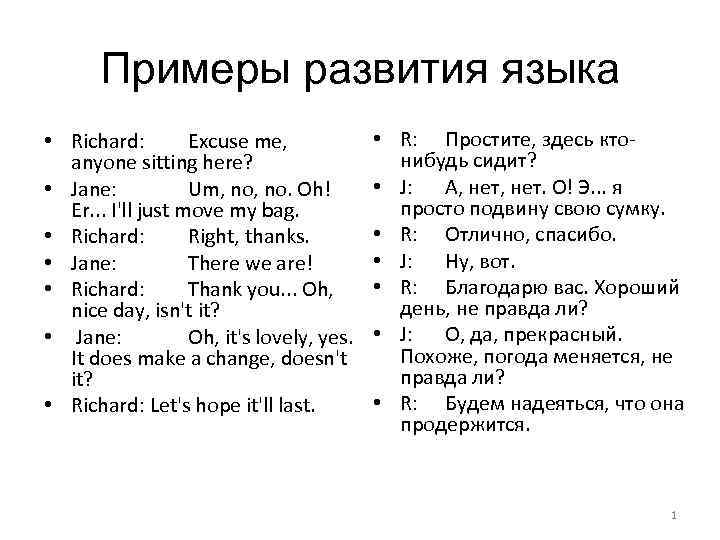 Примеры развития языка • Richard: Excuse me, anyone sitting here? • Jane: Um, no. Oh! Er. . . I'll just move my bag. • Richard: Right, thanks. • Jane: There we are! • Richard: Thank you. . . Oh, nice day, isn't it? • Jane: Oh, it's lovely, yes. It does make a change, doesn't it? • Richard: Let's hope it'll last. • R: Простите, здесь ктонибудь сидит? • J: А, нет. О! Э. . . я просто подвину свою сумку. • R: Отлично, спасибо. • J: Ну, вот. • R: Благодарю вас. Хороший день, не правда ли? • J: О, да, прекрасный. Похоже, погода меняется, не правда ли? • R: Будем надеяться, что она продержится. 1
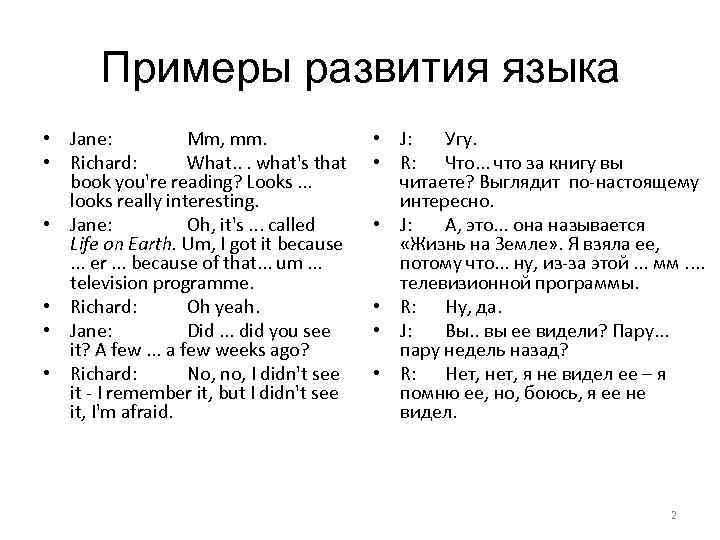 Примеры развития языка • Jane: Mm, mm. • Richard: What. . . what's that book you're reading? Looks. . . looks really interesting. • Jane: Oh, it's. . . called Life on Earth. Um, I got it because . . . er. . . because of that. . . um. . . television programme. • Richard: Oh yeah. • Jane: Did. . . did you see it? A few. . . a few weeks ago? • Richard: No, no, I didn't see it - I remember it, but I didn't see it, I'm afraid. • J: Угу. • R: Что. . . что за книгу вы читаете? Выглядит по-настоящему интересно. • J: А, это. . . она называется «Жизнь на Земле» . Я взяла ее, потому что. . . ну, из-за этой. . . мм. . телевизионной программы. • R: Ну, да. • J: Вы. . вы ее видели? Пару. . . пару недель назад? • R: Нет, нет, я не видел ее – я помню ее, но, боюсь, я ее не видел. 2
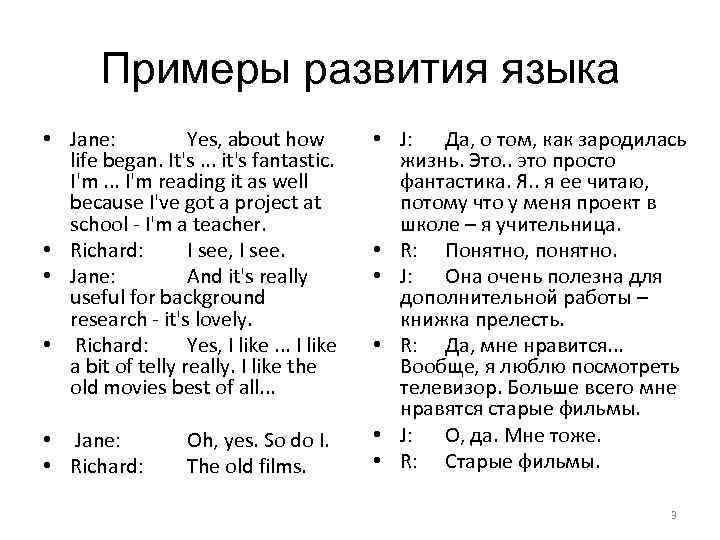 Примеры развития языка • Jane: Yes, about how life began. It's. . . it's fantastic. I'm. . . I'm reading it as well because I've got a project at school - I'm a teacher. • Richard: I see, I see. • Jane: And it's really useful for background research - it's lovely. • Richard: Yes, I like. . . I like a bit of telly really. I like the old movies best of all. . . • Jane: • Richard: Oh, yes. So do I. The old films. • J: Да, о том, как зародилась жизнь. Это. . это просто фантастика. Я. . я ее читаю, потому что у меня проект в школе – я учительница. • R: Понятно, понятно. • J: Она очень полезна для дополнительной работы – книжка прелесть. • R: Да, мне нравится. . . Вообще, я люблю посмотреть телевизор. Больше всего мне нравятся старые фильмы. • J: О, да. Мне тоже. • R: Старые фильмы. 3
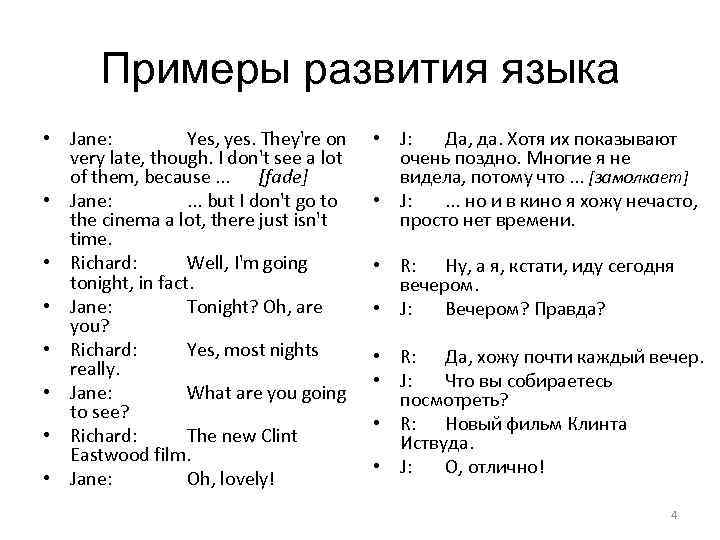 Примеры развития языка • Jane: Yes, yes. They're on very late, though. I don't see a lot of them, because. . . [fade] • Jane: . . . but I don't go to the cinema a lot, there just isn't time. • Richard: Well, I'm going tonight, in fact. • Jane: Tonight? Oh, are you? • Richard: Yes, most nights really. • Jane: What are you going to see? • Richard: The new Clint Eastwood film. • Jane: Oh, lovely! • J: Да, да. Хотя их показывают очень поздно. Многие я не видела, потому что. . . [замолкает] • J: . . . но и в кино я хожу нечасто, просто нет времени. • R: Ну, а я, кстати, иду сегодня вечером. • J: Вечером? Правда? • R: Да, хожу почти каждый вечер. • J: Что вы собираетесь посмотреть? • R: Новый фильм Клинта Иствуда. • J: О, отлично! 4
 Примеры развития языка • Richard: You wouldn't like to come, would you? Why don't you come as well? • Jane: Oh, that would be nice, yes! Oh, why not? . . . Oh, oh dear, I'm busy tonight, I'm afraid. What about tomorrow night? Is that any good to you? • Richard: Oh dear, no, I'm afraid I'm busy then myself. • Jane: Oh. . . well. . . • Richard: Well. . . we. . . obviously it'd be nice to meet sometime. Er. . . • Jane: Yes. • R: А вы не хотели бы пойти, как вы? Почему бы вам тоже не пойти? • J: О, это было бы здорово, да! Почему бы и нет? О, боже, боюсь, сегодня вечером я занята. А что если завтра вечером? Вам это подойдет? • R: Боюсь, нет, я сам буду занят. • J: Ну, ладно. . . • R: Так. . . мы. . . очевидно, было бы славно как-нибудь встретиться. Ну. . . • J: Да. 5
 Примеры развития языка • Richard: Er. . . perhaps if you gave me your phone number I could. . . we could fix something up? • Jane: Oh, yes, alright. Well, shall I write it down for you? • Richard: Sure, yes. • Jane: OK. . . • Richard: Good heavens! I should have been at the office ten minutes ago! • Jane: Oh dear. • Richard: Er, look, I'll. . . that's the number, is it? • Jane: Yes, here you are. • R: Ну. . . может быть, если бы вы дали мне номер вашего телефона, я бы мог. . . мы могли бы как-то договориться? • J: О, да, отлично. Ну, давайте я вам его напишу. • R: Да, конечно. • J: Ну, вот. • R: Боже мой! Мне следовало быть в офисе 10 минут назад! • J: Ну, надо же. • R: Ну, послушайте, я бы. . вы пишете свой номер? • J: Да, вот он. 6
 Примеры развития языка • Richard: Thanks, I'll. . . I'll give you a ring then and. . . and we'll sort something out. • Jane: Alright. • Richard: Right, well, it's been very nice meeting you. • Jane: Yes! • Richard: Byebye, then! • Jane: Yes, byebye! • Richard: Byebye! • R: Спасибо, я. . . тогда я вам позвоню и. . . и мы что-нибудь придумаем. • J: Договорились. • R: Да, вот, было очень приятно с вами познакомиться. • J: Да! • R: Тогда пока! • J: Да, пока! • R: Пока, пока! 7
 Задания к определению дискурса • Разбейте диалог на отдельные смысловые группы. • Озаглавьте каждую смысловую группу. • Скажите, кто инициирует беседу в каждой смысловой группе. • Выделите модель беседы и назовите, какими рамочными механизмами начинается и заканчивается данная беседа. • Определите в каждой смысловой группе цель беседы. • Определите инициирующие шаги. • Найдите в диалоге комментарии, расширяющие просьбы, вопросы и т. д. • Найдите эксплицитно-имплицитное начало в диалоге. 8
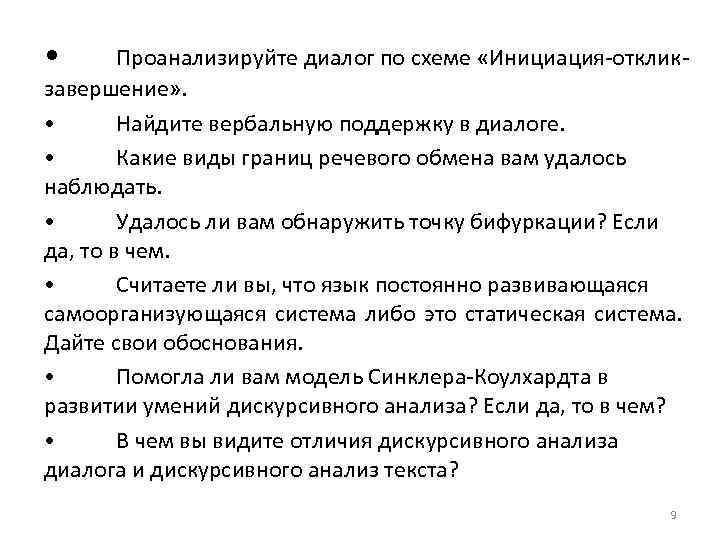 • Проанализируйте диалог по схеме «Инициация-откликзавершение» . • Найдите вербальную поддержку в диалоге. • Какие виды границ речевого обмена вам удалось наблюдать. • Удалось ли вам обнаружить точку бифуркации? Если да, то в чем. • Считаете ли вы, что язык постоянно развивающаяся самоорганизующаяся система либо это статическая система. Дайте свои обоснования. • Помогла ли вам модель Синклера-Коулхардта в развитии умений дискурсивного анализа? Если да, то в чем? • В чем вы видите отличия дискурсивного анализа диалога и дискурсивного анализ текста? 9
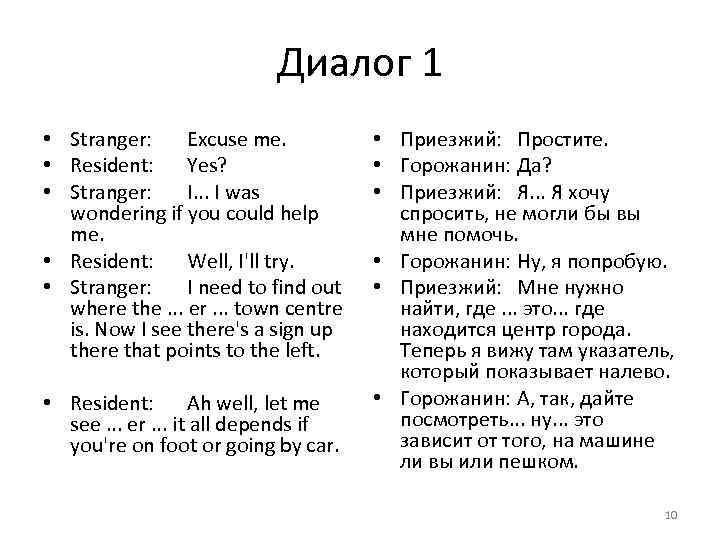 Диалог 1 • Stranger: Excuse me. • Resident: Yes? • Stranger: I. . . I was wondering if you could help me. • Resident: Well, I'll try. • Stranger: I need to find out where the. . . er. . . town centre is. Now I see there's a sign up there that points to the left. • Resident: Ah well, let me see. . . er. . . it all depends if you're on foot or going by car. • Приезжий: Простите. • Горожанин: Да? • Приезжий: Я. . . Я хочу спросить, не могли бы вы мне помочь. • Горожанин: Ну, я попробую. • Приезжий: Мне нужно найти, где. . . это. . . где находится центр города. Теперь я вижу там указатель, который показывает налево. • Горожанин: А, так, дайте посмотреть. . . ну. . . это зависит от того, на машине ли вы или пешком. 10
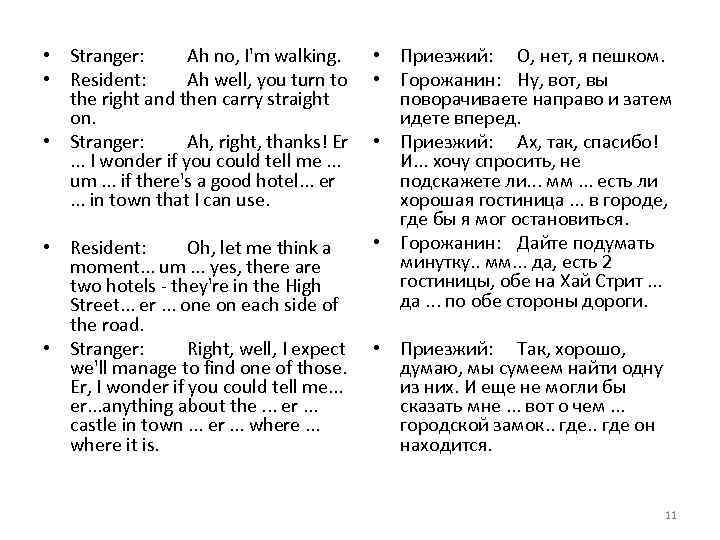 • Stranger: Ah no, I'm walking. • Resident: Ah well, you turn to the right and then carry straight on. • Stranger: Ah, right, thanks! Er. . . I wonder if you could tell me. . . um. . . if there's a good hotel. . . er . . . in town that I can use. • Resident: Oh, let me think a moment. . . um. . . yes, there are two hotels - they're in the High Street. . . er. . . one on each side of the road. • Stranger: Right, well, I expect we'll manage to find one of those. Er, I wonder if you could tell me. . . er. . . anything about the. . . er. . . castle in town. . . er. . . where. . . where it is. • Приезжий: О, нет, я пешком. • Горожанин: Ну, вот, вы поворачиваете направо и затем идете вперед. • Приезжий: Ах, так, спасибо! И. . . хочу спросить, не подскажете ли. . . мм. . . есть ли хорошая гостиница. . . в городе, где бы я мог остановиться. • Горожанин: Дайте подумать минутку. . мм. . . да, есть 2 гостиницы, обе на Хай Стрит. . . да. . . по обе стороны дороги. • Приезжий: Так, хорошо, думаю, мы сумеем найти одну из них. И еще не могли бы сказать мне. . . вот о чем. . . городской замок. . где он находится. 11
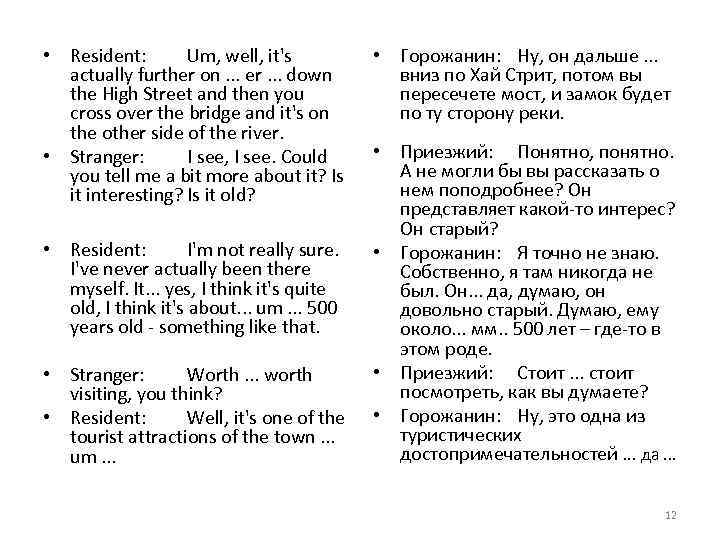 • Resident: Um, well, it's actually further on. . . er. . . down the High Street and then you cross over the bridge and it's on the other side of the river. • Stranger: I see, I see. Could you tell me a bit more about it? Is it interesting? Is it old? • Resident: I'm not really sure. I've never actually been there myself. It. . . yes, I think it's quite old, I think it's about. . . um. . . 500 years old - something like that. • Stranger: Worth. . . worth visiting, you think? • Resident: Well, it's one of the tourist attractions of the town. . . um. . . • Горожанин: Ну, он дальше. . . вниз по Хай Стрит, потом вы пересечете мост, и замок будет по ту сторону реки. • Приезжий: Понятно, понятно. А не могли бы вы рассказать о нем поподробнее? Он представляет какой-то интерес? Он старый? • Горожанин: Я точно не знаю. Собственно, я там никогда не был. Он. . . да, думаю, он довольно старый. Думаю, ему около. . . мм. . 500 лет – где-то в этом роде. • Приезжий: Стоит. . . стоит посмотреть, как вы думаете? • Горожанин: Ну, это одна из туристических достопримечательностей. . . да. . . 12
 Диалог 2 • Brenda: Ah, right, here we are! • Bob: This is the place I was telling you about. • Brenda: Yeah, could you ask the waiter if we can sit near the window? • Bob: Er, yes, of course. Er, waiter! • Waiter: Good evening, sir. • Bob: We'd like to sit near the window if that's possible. • Waiter: Er. . . Ah!. . . er. . . I'm afraid all the tables there are. . . are taken. Would you mind sitting near. . . nearer the bar? • Бренда: Ну, вот мы и добрались! • Боб: Это то место, о котором я тебе говорил. • Бренда: А. . . спроси официанта, можно ли нам сесть у окна. • Боб: Да, да, конечно. Официант! • Официант: Добрый вечер, сэр. • Боб: Мы бы хотели сидеть у окна, если возможно. • Официант: О. . . А. . . боюсь, что все столики там заняты. Вы не против сесть у. . . ближе к бару? 13
 • Bob: Oh, yes, alright. That suit you? • Brenda: Mm, fine. • Bob: Good. • Waiter: Thank you, sir. • Bob: Now let's have a. . . er. . . oh, I. . . I don't seem to have any cigarettes on me. Have you got a cigarette, by any chance? • Brenda: I'm awfully sorry, but you see I've given up. • Bob: Oh, you've stopped smoking at last. Well done!. . . Oh well, let's have a look at the menu, then. Um. . . oh, there isn't a menu. . . er, do you think you could ask the people at the next table if we could look at their menu? • Боб: Да, хорошо. Как тебе? Бренда: Мм, отлично. Боб: Хорошо. Официант : Спасибо, сэр. Боб: А теперь давай. . . э. . о, я. . . у меня, кажется, нет с собой сигарет. У тебя случайно не найдется сигареты? • Бренда: Очень жаль, но, видишь ли, я больше не курю. • Боб: О, ты, наконец-то, бросила курить. Это здорово!. . . Ну, ладно, тогда давай посмотрим меню. Мм. . . о, здесь нет меню. . . та-ак, ты не могла бы спросить у людей за соседним столиком, можно нам посмотреть их меню? • • 14
 • Brenda: Yes, of course. Um • Бренда: Да, конечно. Мм. . . excuse me, could you possibly простите, не могли бы вы дать let us see your menu? Oh, they нам ваше меню? О, у них его haven't got one either. тоже нет. • Bob: Er, oh, I'll. . . I'll ask these • Боб: А, э, я. . . я спрошу за people at this table. Um, I wonder другим столиком. Мм, скажите, if you could possibly let us have a не могли бы мы взглянуть на look at your menu. . . Thank you!. . . ваше меню? . . . Благодарю вас!. . . Ah, here we are, then. Now, Ну, вот оно. Так, что тут есть? what's on? Um. . . oh, 'Soup of the Мм. . . а, «Суп дня» , ну, Day' - well, I wonder what that is. интересно, что же это. 15
 Диалоги в рамках следующих тем • talking about yourself, starting a conversation, making a date; • asking for information: question techniques, answering techniques, getting more information; • getting people to do things: requesting, attracting attention, agreeing and refusing; • talking about past events: remembering, describing experiences, imagining ‘What if …’; • conversation techniques: hesitating, preventing interruptions and interrupting politely, bringing in other people; • talking about the future: stating intentions, discussing probability, considering ‘What if …’; • offering to do something, asking permission, giving reasons; • giving opinions, agreeing and disagreeing, discussing. 16
 Диалоги в рамках следующих тем • describing things, instructing people how to do things, checking understanding; • talking about similarities, talking about differences, stating preferences; • making suggestions and giving advice, expressing enthusiasm, persuading; • complaining, apologizing and forgiving, expressing disappointment; • describing places, describing people; • telling a story: narrative techniques, handling dialogue, controlling a narrative; • dealing with moods and feelings: anger, sadness, indifference; saying goodbye. 17
 Фразы, открывающие дискурс What a nice day, isn’t it? Dreadful weather, don’t you think? Excuse me, is anybody sitting here? Excuse me, haven’t we met somewhere before? Sorry, I couldn’t help overhearing – did you mention something about …? • Excuse me, have you got a light by any chance? • Excuse me, could you tell me the time? • Er, could you help me, I’m trying to find my way to … • • • 18
 Фразы, инициирующие дискурс • Oh, um, are you doing anything this evening, by any chance? • Um, I was thinking of going to the cinema this evening, would you like to come? • Er, are you going to be busy this evening? I was wondering if you might like to come to the cinema with me. • I’m going out to theatre with some friends. Would you like to join us? 19
 Фразы, содержащие утвердительный ответ • • That’d be lovely. I’d like to. How nice of you, thanks very much. Mmm, that’s a great idea. 20
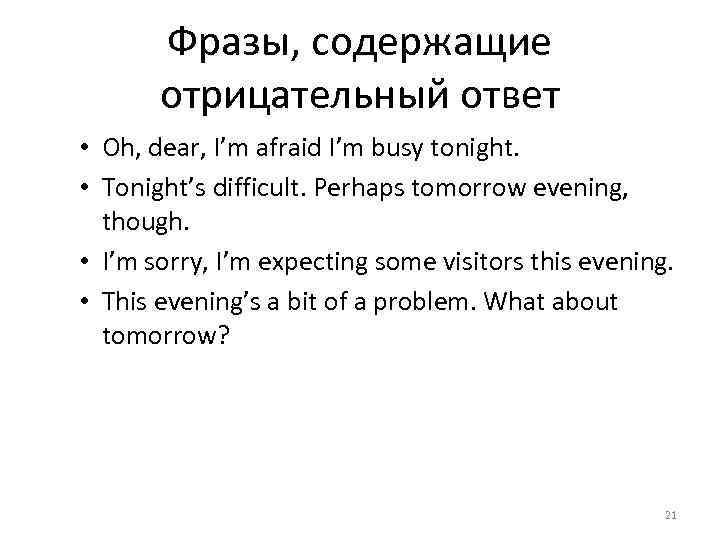 Фразы, содержащие отрицательный ответ • Oh, dear, I’m afraid I’m busy tonight. • Tonight’s difficult. Perhaps tomorrow evening, though. • I’m sorry, I’m expecting some visitors this evening. • This evening’s a bit of a problem. What about tomorrow? 21
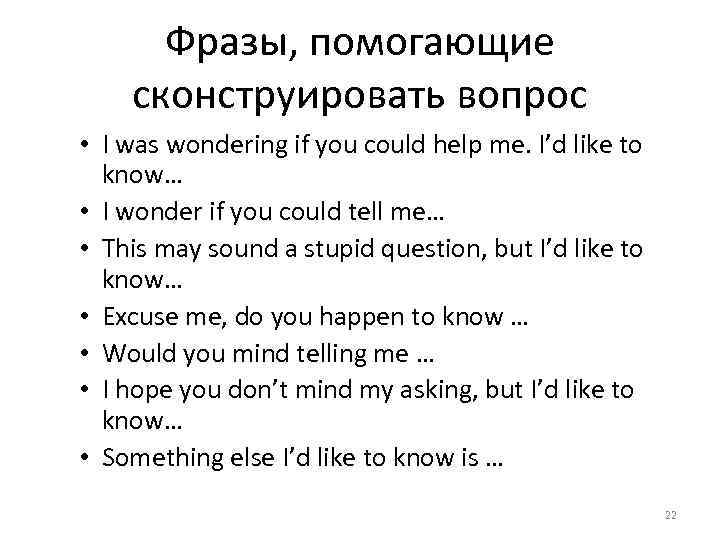 Фразы, помогающие сконструировать вопрос • I was wondering if you could help me. I’d like to know… • I wonder if you could tell me… • This may sound a stupid question, but I’d like to know… • Excuse me, do you happen to know … • Would you mind telling me … • I hope you don’t mind my asking, but I’d like to know… • Something else I’d like to know is … 22
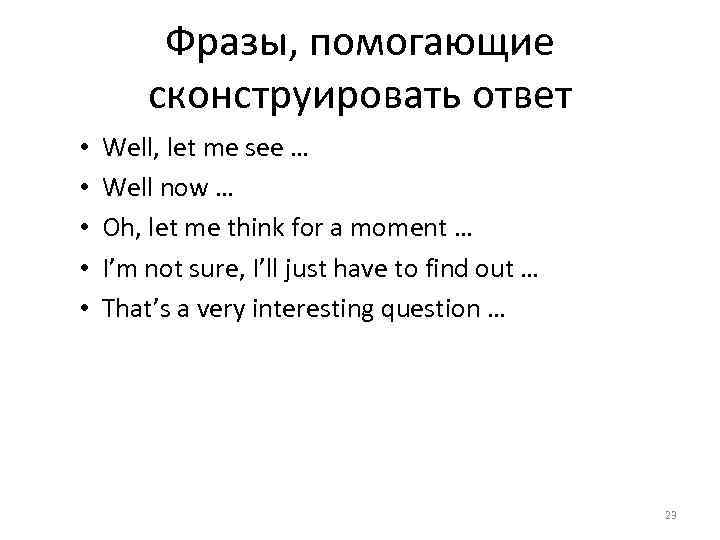 Фразы, помогающие сконструировать ответ • • • Well, let me see … Well now … Oh, let me think for a moment … I’m not sure, I’ll just have to find out … That’s a very interesting question … 23
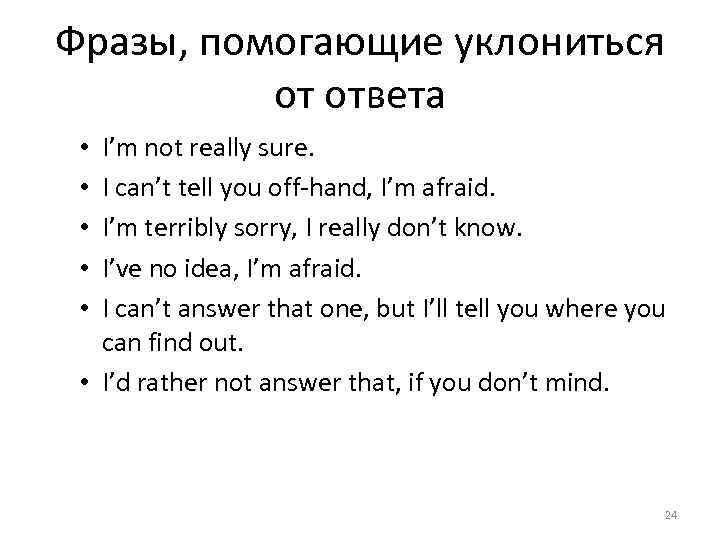 Фразы, помогающие уклониться от ответа I’m not really sure. I can’t tell you off-hand, I’m afraid. I’m terribly sorry, I really don’t know. I’ve no idea, I’m afraid. I can’t answer that one, but I’ll tell you where you can find out. • I’d rather not answer that, if you don’t mind. • • • 24
 Фразы, помогающие получить более исчерпывающую информацию Could you tell me a bit more about…? Sorry, but I’d like to know some more about… I didn’t quite follow what you said about… Sorry, that’s not quite what I meant, what I really wanted to know was… • Sorry to press you, but could you tell me…? • Sorry, I don’t quite understand why… • • 25
 Фразы, выражающие просьбу • • • • Hey, I need some change for the phone. Oh, dear, I haven’t got any change for the phone. I don’t seem to have any change on me. You haven’t got 10 p, have you? Have you got 10 p, by any chance? You couldn’t lend me 50 p, could you? Do you think you could lend me 50 p? I wonder if you could lend me 50 p? Would you mind lending me £ 1? If you could lend me £ 1, I’d be very grateful. Could you possibly lend me your typewriter? Do you think you could possibly lend me your typewriter? I wonder if you could possibly lend me your typewriter? 26