


 Скачать презентацию Primary Care Paediatrics PCP in Europe Demography of
b81c94028d6b9653fdd197a74b0a8ca5.ppt
- Количество слайдов: 22
 Primary Care Paediatrics (PCP) in Europe* Demography of Care and Forecast for the Profession Manuel Katz MD, MPH President Israel Ambulatory Paediatric Society, Fmer President Israel Pediatric Society Ben Gurion University , Israel and Maimonides University , Argentina Fmer EPA Secretary General, EPCPC Tertiary care group representative to EAP ISSOP boardcouncil member, President , Global Initiative for Consensus in Pediatrics, CIP WHO technical advisor ECPCP, Prague 2015
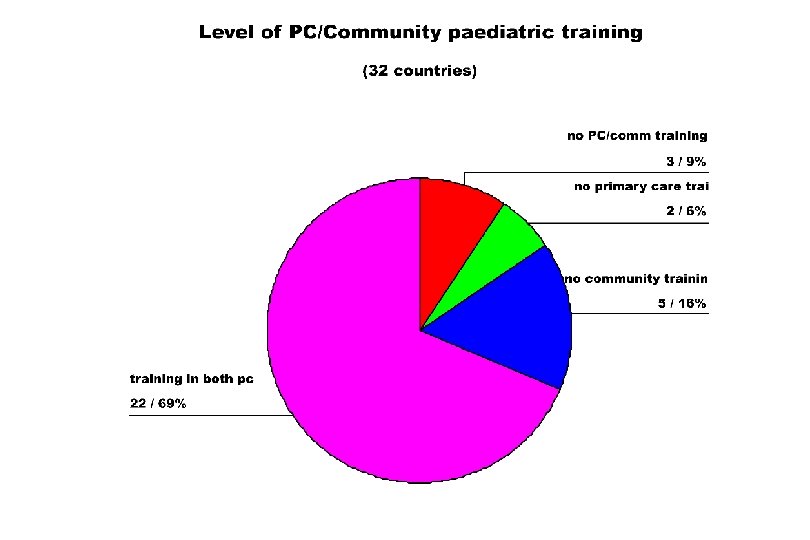
 Objectives • To describe the organisation of the Paediatric Care at the Community and Primary Care level in the European countries • To identify different types of Paediatricians working in the community. • To understand variations of care for children between and within countries. • To determine type of training offered to doctors who look after children at the Primary Care level. • *Katz M et al. Pediatrics Vol 109 No 5, May 2002 ECPCP, Prague 2015
 Definitions • Paediatrician - A physician who finished his/her formal training for paediatrics approved by the local health authorities or academic bodies in the country (either after under/post-graduate training). • Primary Care Paediatrician - Paediatrician who offers curative and preventive services for acute and chronic problems in outpatient/ambulatory settings (primary care level). • Community Paediatrician - Paediatrician who devotes to the comprehensive recognition and understanding, prevention and treatment of community related health problems (secondary/tertiary care level). ECPCP, Prague 2015
 PRIMARY CARE PEDIATRICIAN Offers curative (general practice ) and health promotion (immunizations, school-care, etc. ) for acute and chronic illnesses in out-patient or ambulatory settings like dispensaries, primary care clinics, health community centers or in private practice ECPCP, Prague 2015 Katz - 2001
 COMMUNITY PEDIATRICIAN Devoted to the comprehensive recognition, prevention and treatment of community related health problems such as child protection, children in need, behavior problems, learning disorders, growth, developmental pediatrics, school medicine, etc. ECPCP, Prague 2015 Katz - 2001
 Definitions Primary Care Systems for children - defined according to the proportion of the country’s children aged < 15 years seen at the Primary Care level by either Paediatricians or General Practitioners/Family Doctors. – More than 75% of children seen in the Paediatric System. – 50% ± 25% children seen by both paediatricians and GPs offering primary care - Combined System. – More than 75% of children seen by General Practitioner/Family Doctor GP System. ECPCP, Prague 2015
 Differences in between and within countries • Demography • Socio-economic characteristics • Background and culture • Pathology ECPCP, Prague 2015
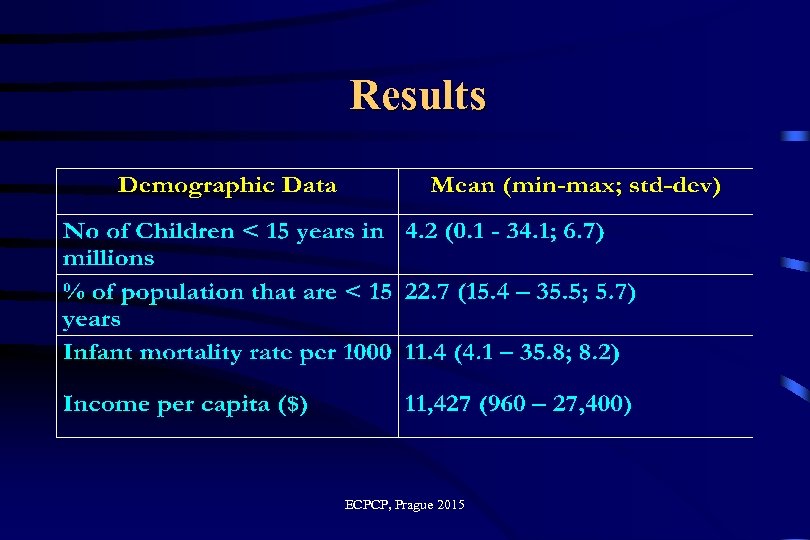 Results ECPCP, Prague 2015
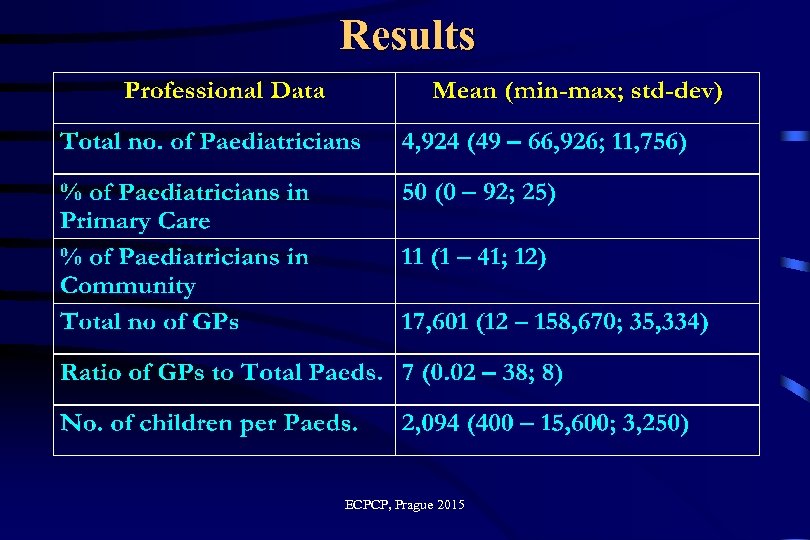 Results ECPCP, Prague 2015
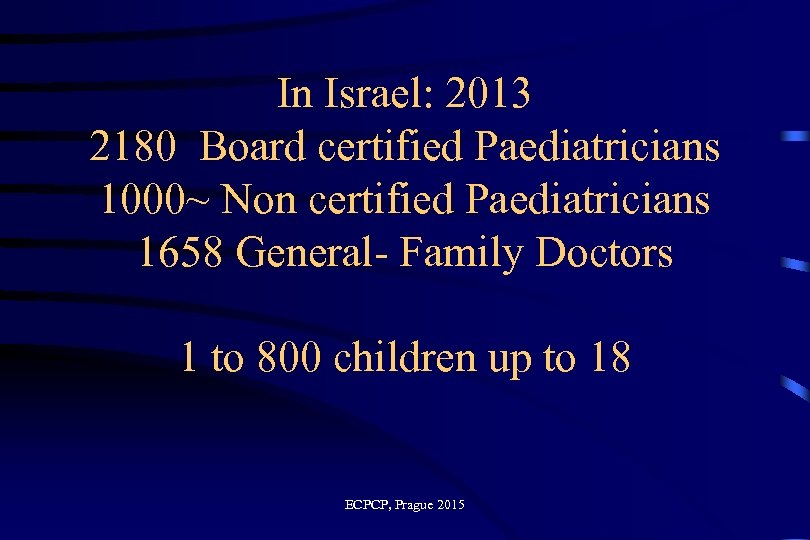 In Israel: 2013 2180 Board certified Paediatricians 1000~ Non certified Paediatricians 1658 General- Family Doctors 1 to 800 children up to 18 ECPCP, Prague 2015
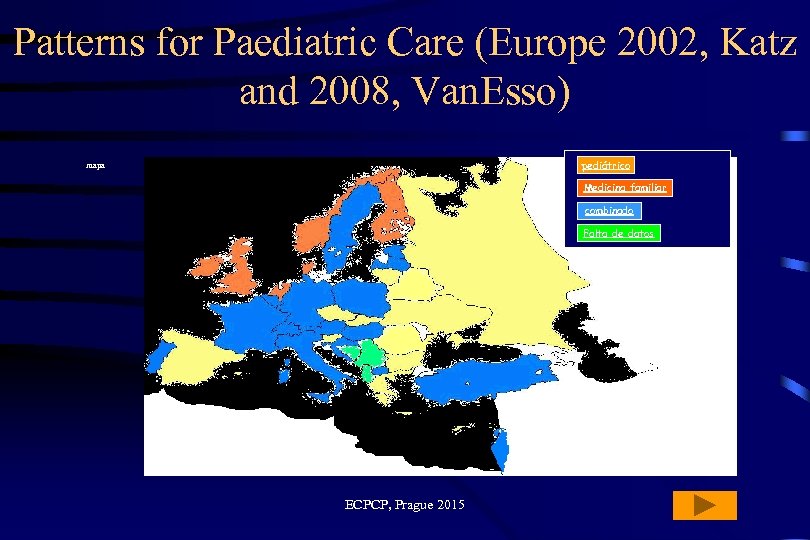 Patterns for Paediatric Care (Europe 2002, Katz and 2008, Van. Esso) pediátrico mapa Medicina familiar combinado Falta de datos ECPCP, Prague 2015
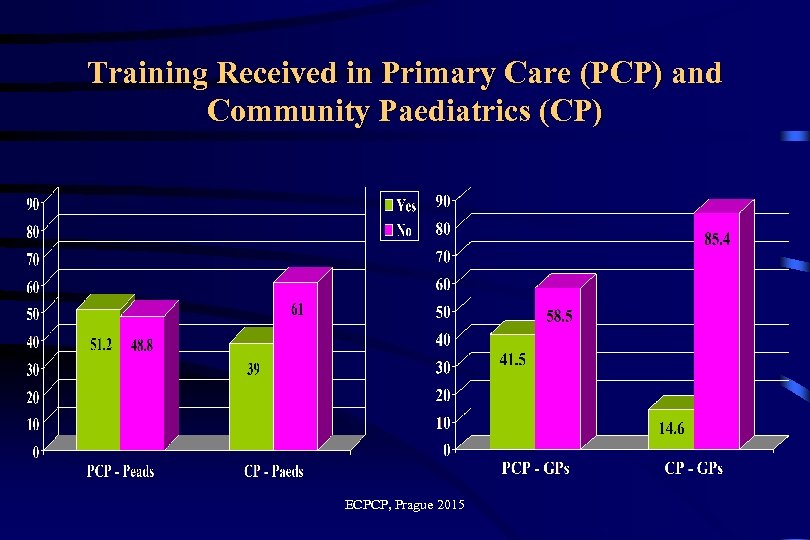 Training Received in Primary Care (PCP) and Community Paediatrics (CP) ECPCP, Prague 2015
 ECPCP, Prague 2015
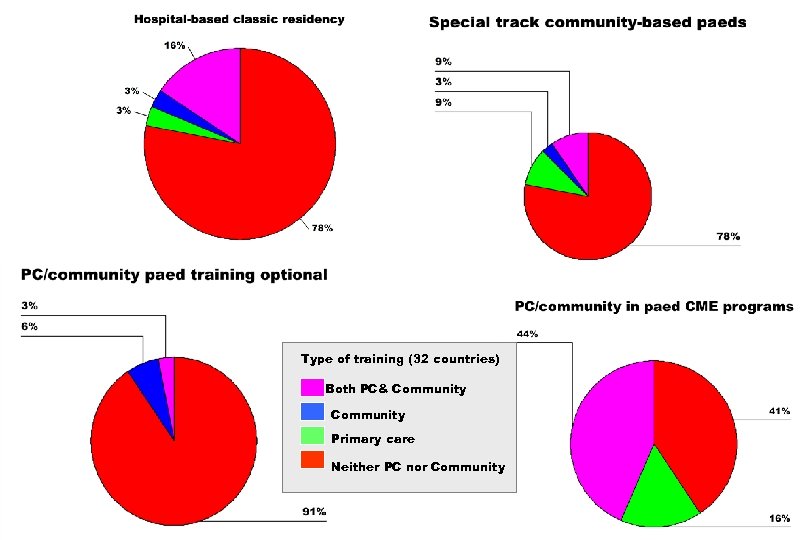 Type of training (32 countries) Both PC& Community Primary care Neither PC nor Community ECPCP, Prague 2015
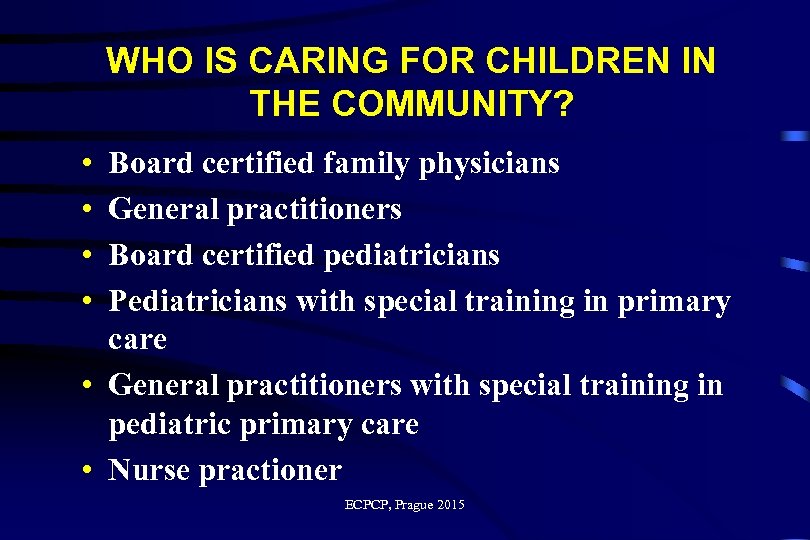 WHO IS CARING FOR CHILDREN IN THE COMMUNITY? • • Board certified family physicians General practitioners Board certified pediatricians Pediatricians with special training in primary care • General practitioners with special training in pediatric primary care • Nurse practioner ECPCP, Prague 2015
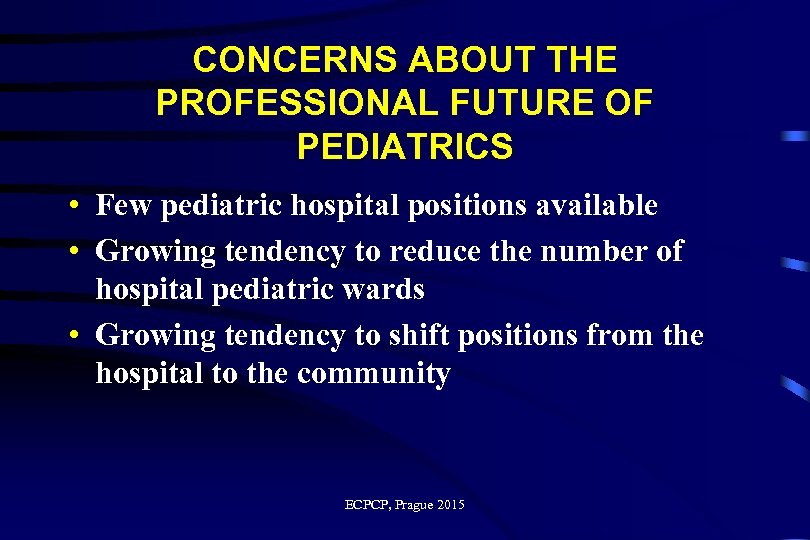 CONCERNS ABOUT THE PROFESSIONAL FUTURE OF PEDIATRICS • Few pediatric hospital positions available • Growing tendency to reduce the number of hospital pediatric wards • Growing tendency to shift positions from the hospital to the community ECPCP, Prague 2015
 CONCERNS ABOUT THE PROFESSIONAL FUTURE OF PEDIATRICS • Health policy decisions regarding who should provide pediatric care at the primary care level: • Who care for “new morbility” • Family physicians/general practitioners; Pediatricians as consultants only; • Limiting the age of care by pediatricians (up to 2 -to 8 to 12 -to 18 -to 21? ) ECPCP, Prague 2015
 FORECAST FOR THE PROFESSION • Less candidates for residency in pediatrics • Lack of academic positions at the community level • Community positions filled by family physicians and by general practitioners with special training • Non “profitable”profession • Non attractive profession • Gender related profession? ECPCP, Prague 2015
 FORECAST FOR THE PROFESSION • Lack of planning for career development in community pediatrics • Pediatrics to become a high technology, intensive care profession, forgetting its role in health promotion and health maintenance ECPCP, Prague 2015
 HOSPITAL, COMMUNITY AND UNIVERSITY COMMITMENT IS ESSENTIAL ECPCP, Prague 2015
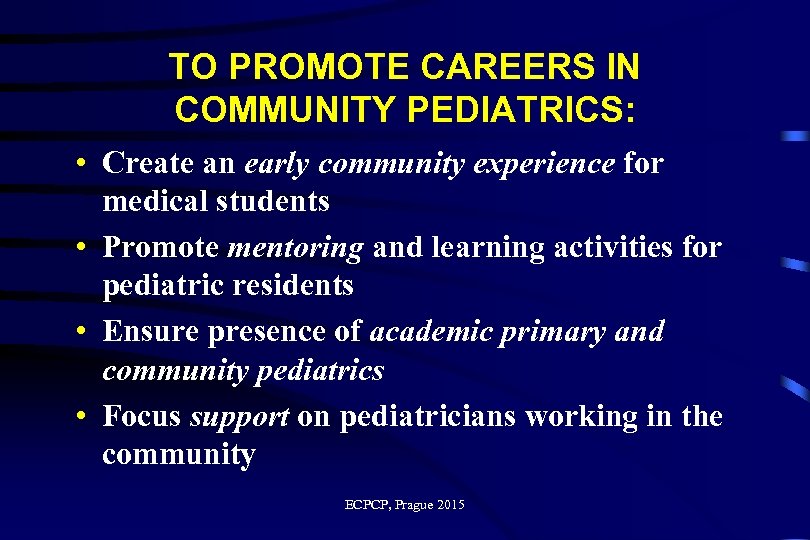 TO PROMOTE CAREERS IN COMMUNITY PEDIATRICS: • Create an early community experience for medical students • Promote mentoring and learning activities for pediatric residents • Ensure presence of academic primary and community pediatrics • Focus support on pediatricians working in the community ECPCP, Prague 2015
 THANK YOU FOR YOUR ATTENTION For comments and ideas: Manuel Katz MD, MPH Katzmanuel gmail. com Phone + 972 50 6243342 ECPCP, Prague 2015 Katz - 2005