


 Скачать презентацию Прилагательные и наречия Степени сравнения СТЕПЕНИ СРАВНЕНИЯ
прилагательные и наречия(степени сравнения) -.pptx
- Количество слайдов: 38
 Прилагательные и наречия Степени сравнения
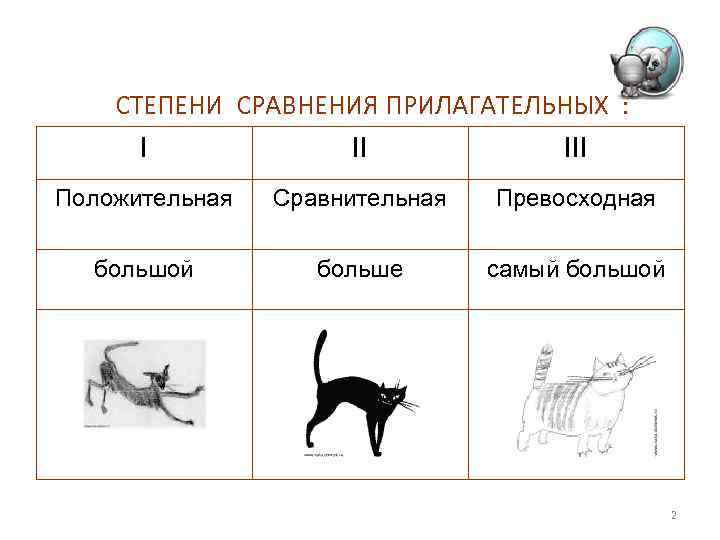 СТЕПЕНИ СРАВНЕНИЯ ПРИЛАГАТЕЛЬНЫХ : I II III Положительная Сравнительная Превосходная большой больше самый большой 2
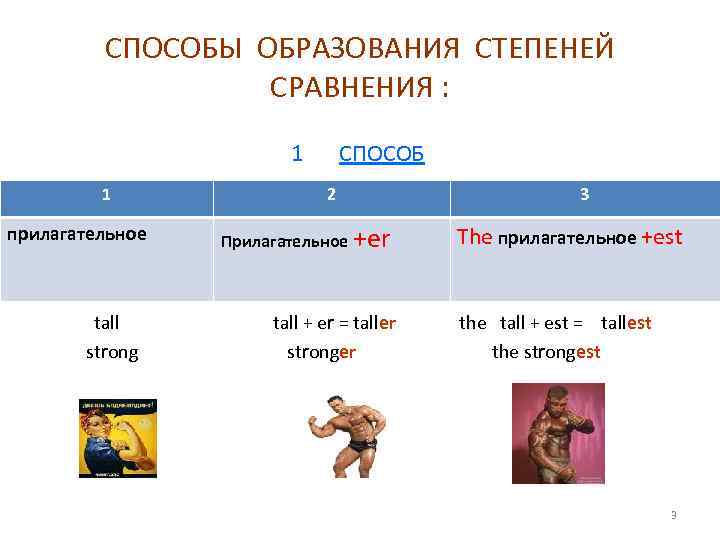 СПОСОБЫ ОБРАЗОВАНИЯ СТЕПЕНЕЙ СРАВНЕНИЯ : 1 СПОСОБ 1 2 прилагательное Прилагательное +er 3 The прилагательное +est tall tall + er = taller the tall + est = tallest strong stronger the strongest 3
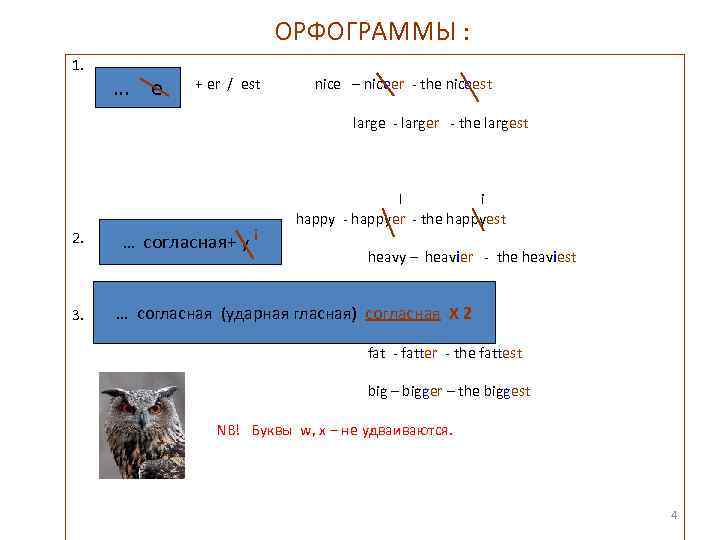 ОРФОГРАММЫ : 1. + er / est nice – niceer - the niceest … e large - larger - the largest I i happy - happyer - the happyest 2. … согласная+ y i heavy – heavier - the heaviest 3. … согласная (ударная гласная) согласная Х 2 fat - fatter - the fattest big – bigger – the biggest NB! Буквы w, x – не удваиваются. 4
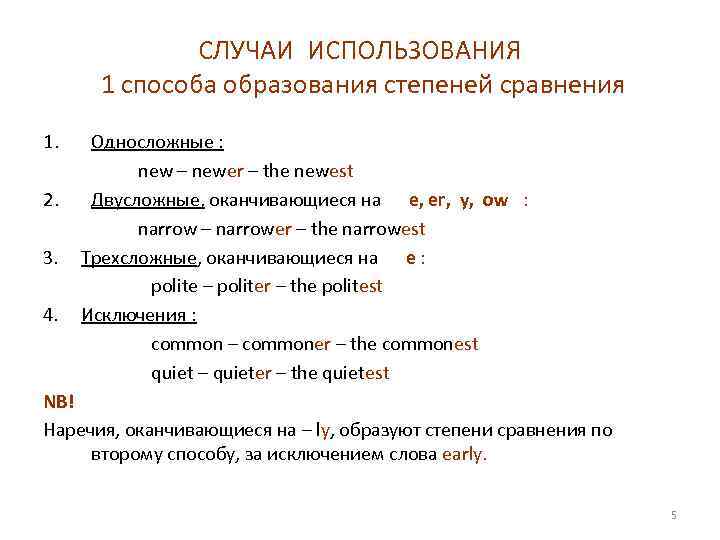 СЛУЧАИ ИСПОЛЬЗОВАНИЯ 1 способа образования степеней сравнения 1. Односложные : new – newer – the newest 2. Двусложные, оканчивающиеся на e, er, y, ow : narrow – narrower – the narrowest 3. Трехсложные, оканчивающиеся на e : polite – politer – the politest 4. Исключения : common – commoner – the commonest quiet – quieter – the quietest NB! Наречия, оканчивающиеся на – ly, образуют степени сравнения по второму способу, за исключением слова early. 5
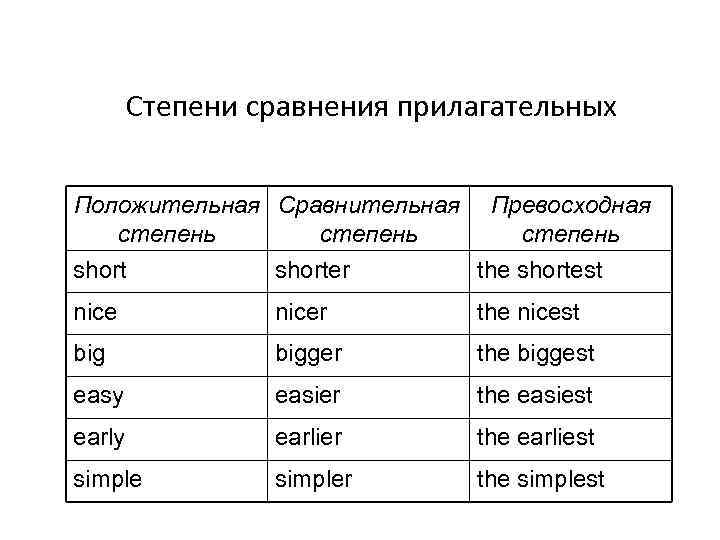 Степени сравнения прилагательных Положительная Сравнительная Превосходная степень shorter the shortest nicer the nicest bigger the biggest easy easier the easiest early earlier the earliest simpler the simplest
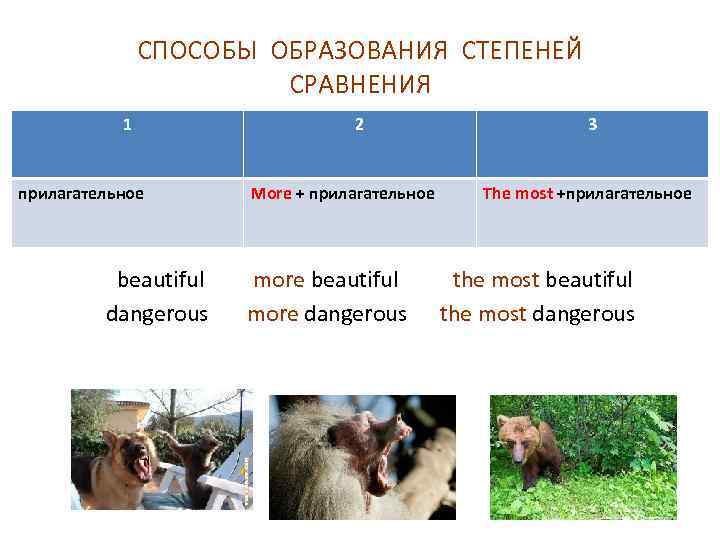 СПОСОБЫ ОБРАЗОВАНИЯ СТЕПЕНЕЙ СРАВНЕНИЯ 1 прилагательное 2 2 СПОСОБ : More + прилагательное 3 The most +прилагательное beautiful more beautiful the most beautiful dangerous more dangerous the most dangerous 7
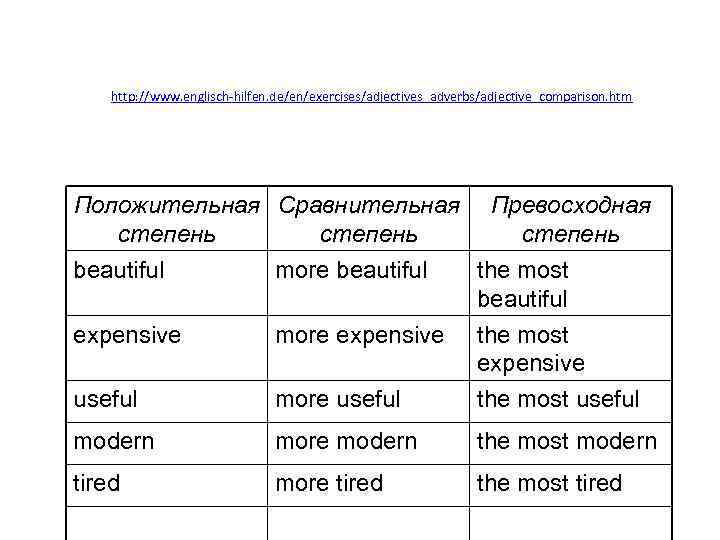 http: //www. englisch-hilfen. de/en/exercises/adjectives_adverbs/adjective_comparison. htm Положительная Сравнительная Превосходная степень beautiful more beautiful the most beautiful expensive more expensive the most expensive useful more useful the most useful modern more modern the most modern tired more tired the most tired
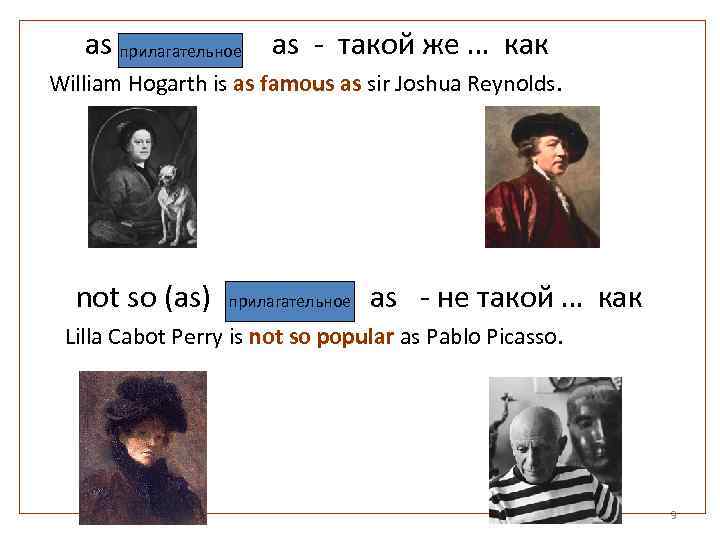 as as - такой же … как прилагательное William Hogarth is as famous as sir Joshua Reynolds. прилагательное not so (as) as - не такой … как Lilla Cabot Perry is not so popular as Pablo Picasso. 9
 Put the adjectives in brackets into the correct form: http: //www. englisch-hilfen. de/en/exercises/adjectives_adverbs/adjectives_comparison_as_as. htm - упражнения 10
 Прилагательные и наречия http: //www. englisch-hilfen. de/en/exercises/adjectives_adverbs/adjective_adverb. htm-упр http: //www. englisch-hilfen. de/en/exercises/adjectives_adverbs/adjective_adverb 2. htm-упр Прилагательное относится к существительному и сообщает нам о том какой человек или предмет (отвечает на вопрос какой? какая? какие? ) • Mandy is a careful driver. • Мэнди- аккуратный водитель (какой? ) • Наречие относиться к глаголу и сообщает нам как выполняется действие (отвечает на вопрос как? ). • Mandy drives carefully. • Мэнди водит аккуратно. (как? )
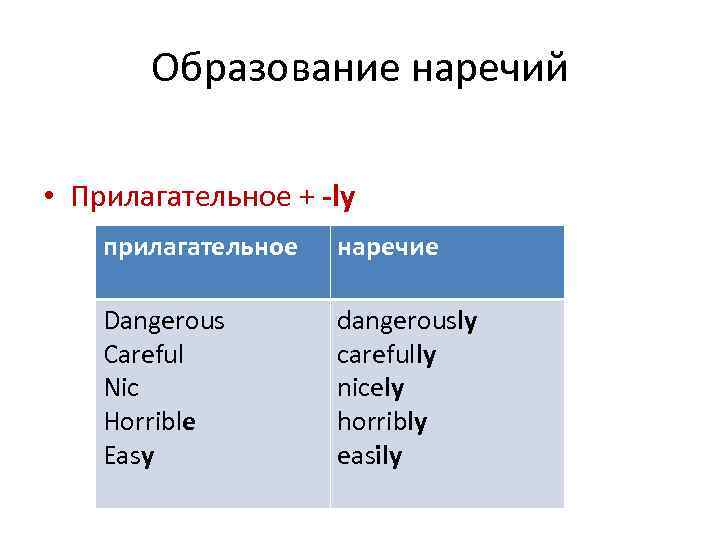 Образование наречий • Прилагательное + -ly прилагательное наречие Dangerous Careful Nic Horrible Easy dangerously carefully nicely horribly easily
 If the adjective ends in -y, change -y to -i. Then add -ly: • happy – happily • but: shy – shyly
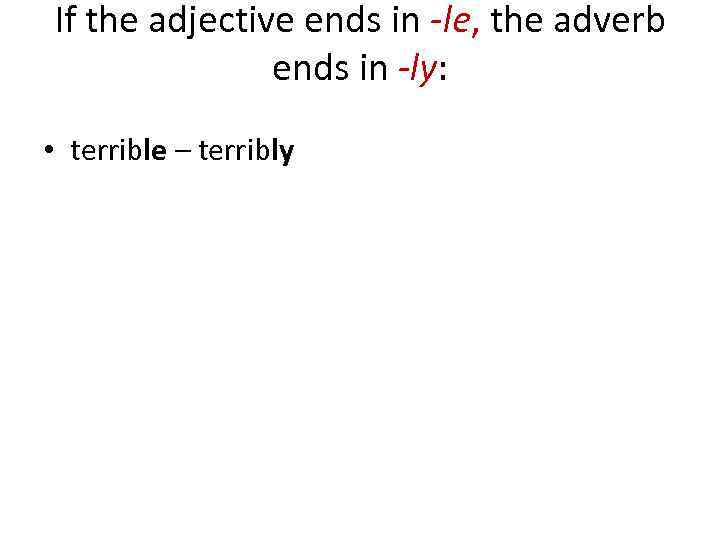 If the adjective ends in -le, the adverb ends in -ly: • terrible – terribly
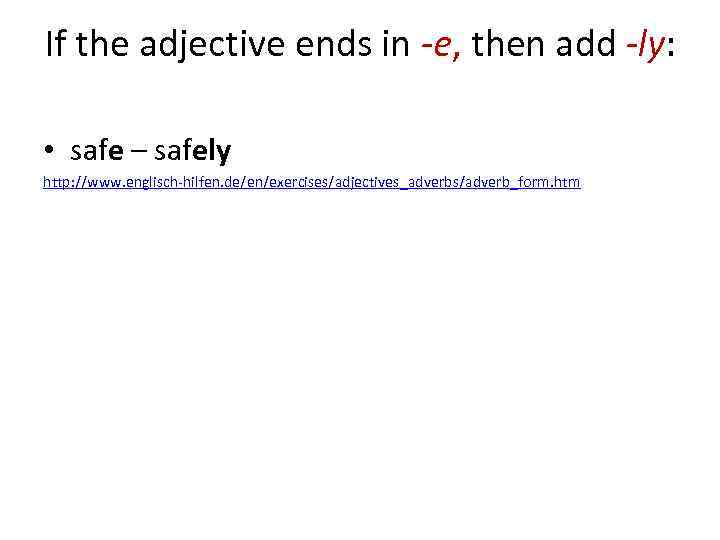 If the adjective ends in -e, then add -ly: • safe – safely http: //www. englisch-hilfen. de/en/exercises/adjectives_adverbs/adverb_form. htm
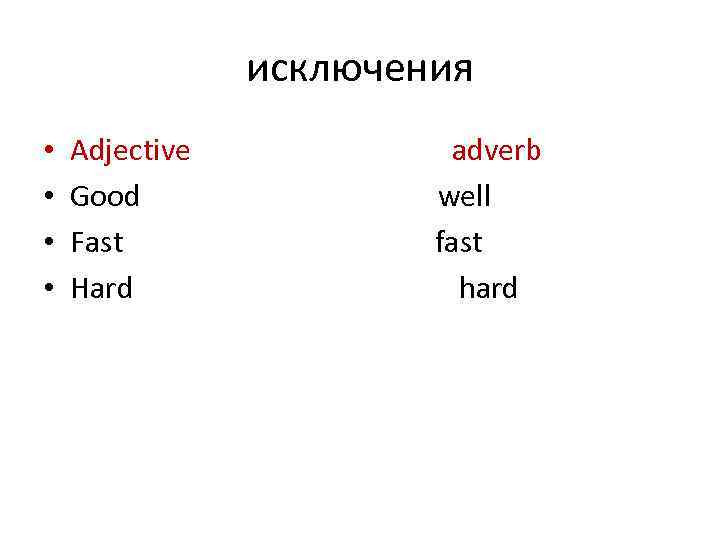 исключения • • Adjective adverb Good well Fast fast Hard hard
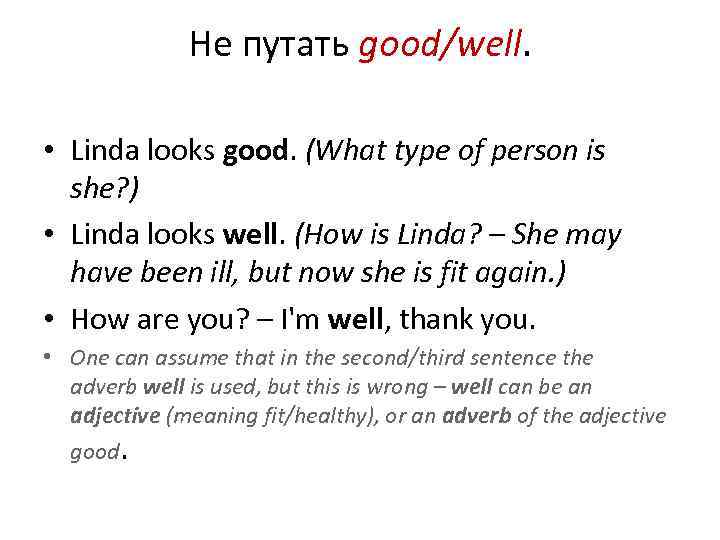 Не путать good/well. • Linda looks good. (What type of person is she? ) • Linda looks well. (How is Linda? – She may have been ill, but now she is fit again. ) • How are you? – I'm well, thank you. • One can assume that in the second/third sentence the adverb well is used, but this is wrong – well can be an adjective (meaning fit/healthy), or an adverb of the adjective good.
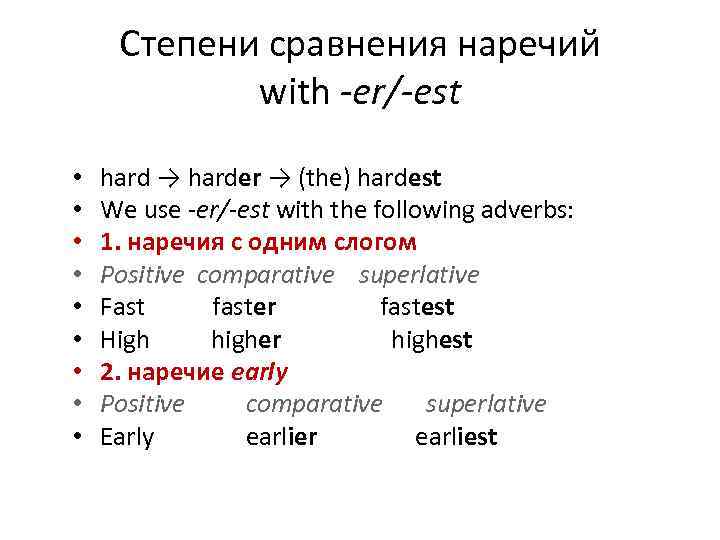 Степени сравнения наречий with -er/-est • • • hard → harder → (the) hardest We use -er/-est with the following adverbs: 1. наречия с одним слогом Positive comparative superlative Fast faster fastest High higher highest 2. наречие early Positive comparative superlative Early earlier earliest
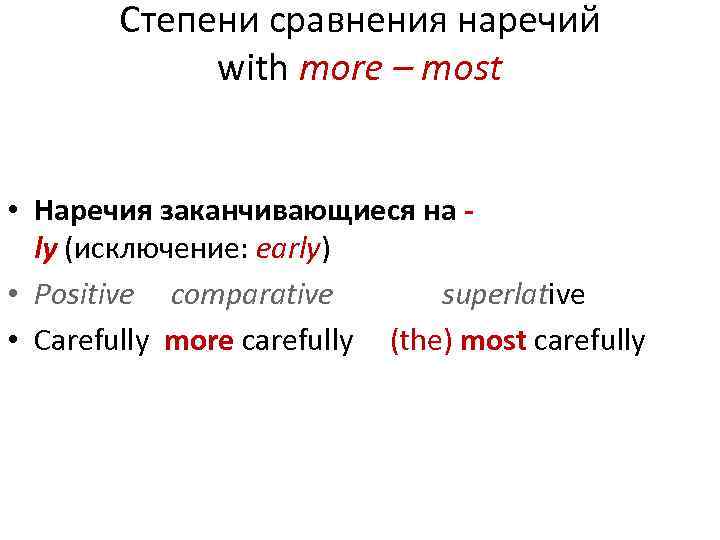 Степени сравнения наречий with more – most • Наречия заканчивающиеся на ly (исключение: early) • Positive comparative superlative • Carefully more carefully (the) most carefully
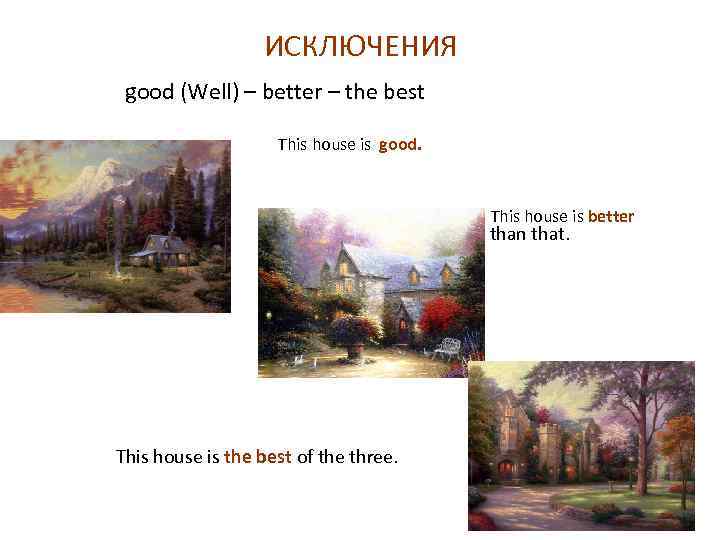 ИСКЛЮЧЕНИЯ good (Well) – better – the best This house is good. This house is better than that. This house is the best of the three. 20
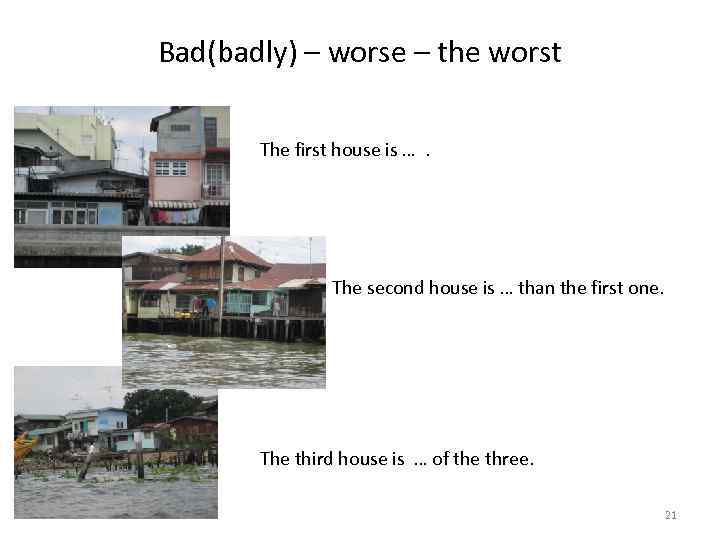 Bad(badly) – worse – the worst The first house is … . The second house is … than the first one. The third house is … of the three. 21
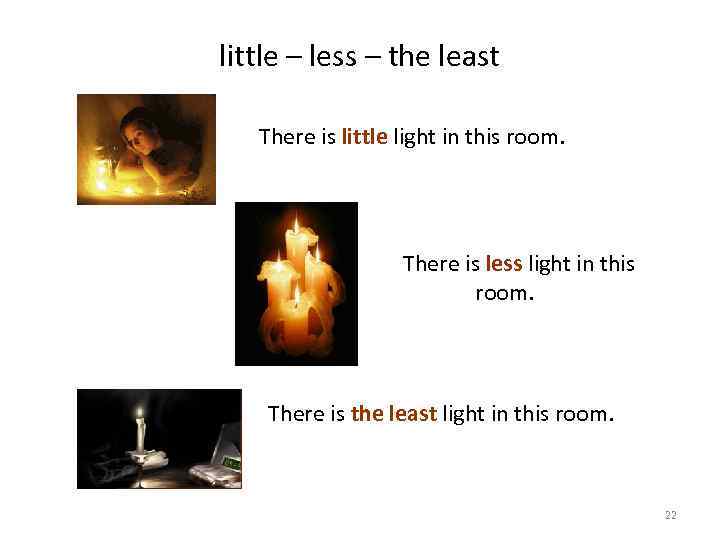 little – less – the least There is little light in this room. There is less light in this room. There is the least light in this room. 22
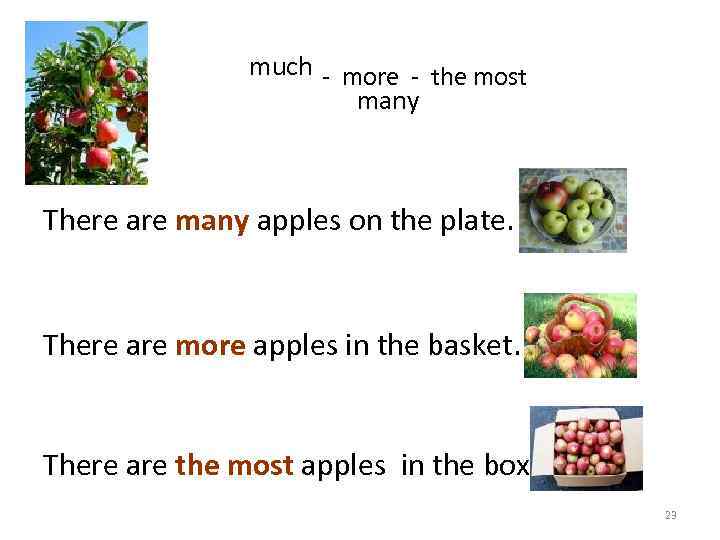 much - more - the most many There are many apples on the plate. There are more apples in the basket. There are the most apples in the box. 23
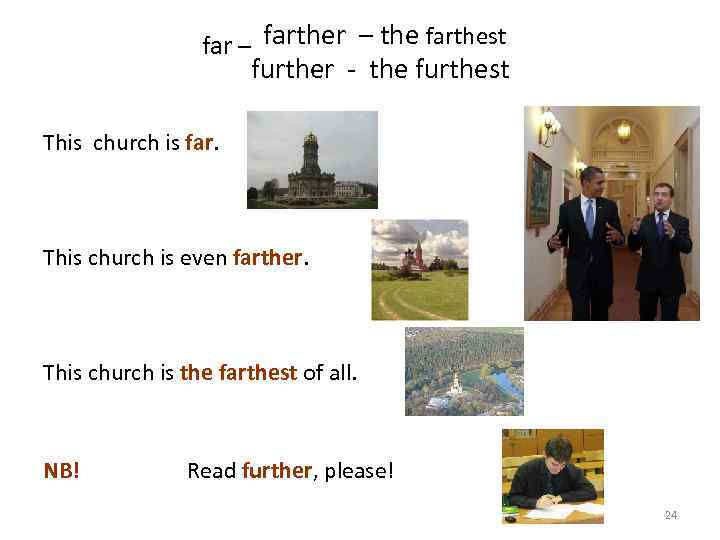 far – farther – the farthest further - the furthest This church is far. This church is even farther. This church is the farthest of all. NB! Read further, please! 24
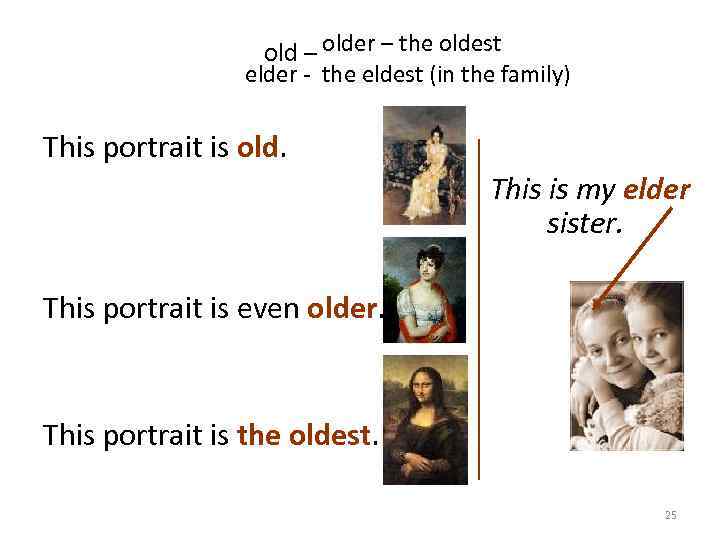 old – older – the oldest elder - the eldest (in the family) This portrait is old. This is my elder sister. This portrait is even older. This portrait is the oldest. 25
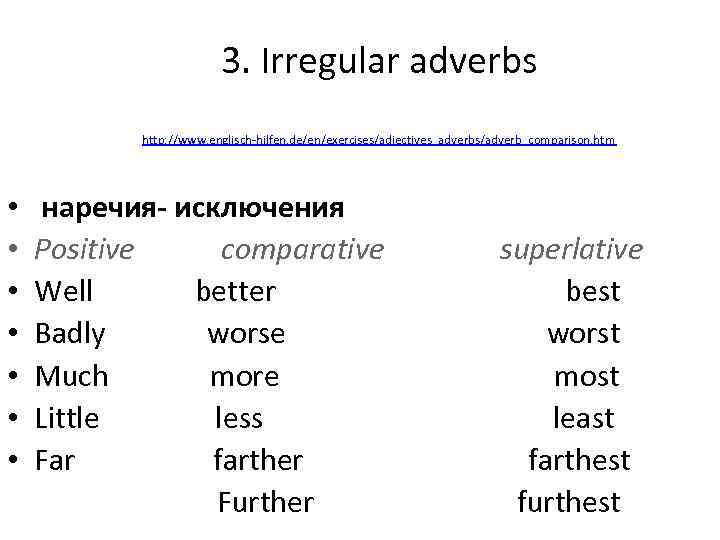 3. Irregular adverbs http: //www. englisch-hilfen. de/en/exercises/adjectives_adverbs/adverb_comparison. htm • наречия- исключения • Positive comparative superlative • Well better best • Badly worse worst • Much more most • Little less least • Far farther farthest Further furthest
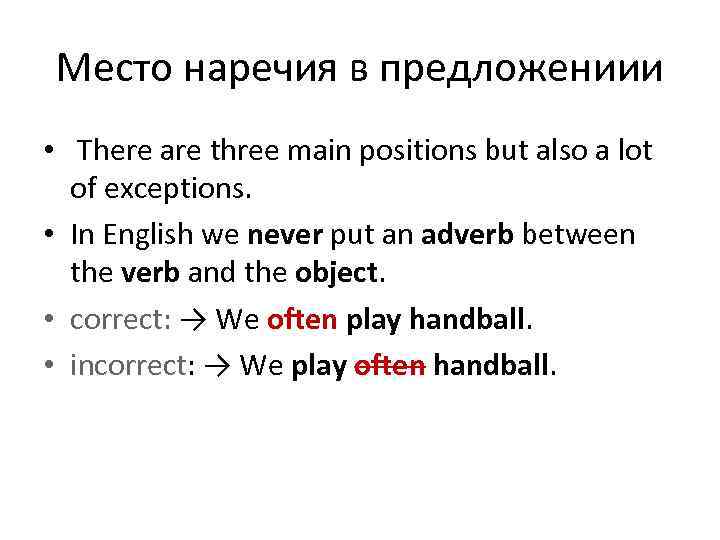 Место наречия в предложениии • There are three main positions but also a lot of exceptions. • In English we never put an adverb between the verb and the object. • correct: → We often play handball. • incorrect: → We play often handball.
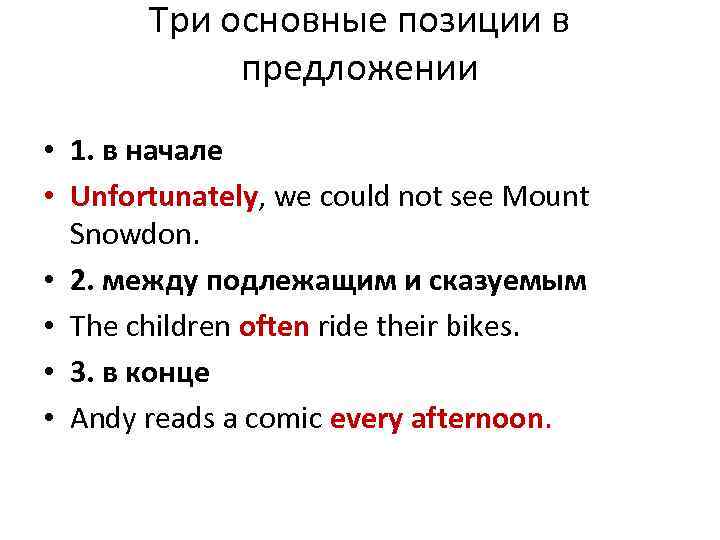 Три основные позиции в предложении • 1. в начале • Unfortunately, we could not see Mount Snowdon. • 2. между подлежащим и сказуемым • The children often ride their bikes. • 3. в конце • Andy reads a comic every afternoon.
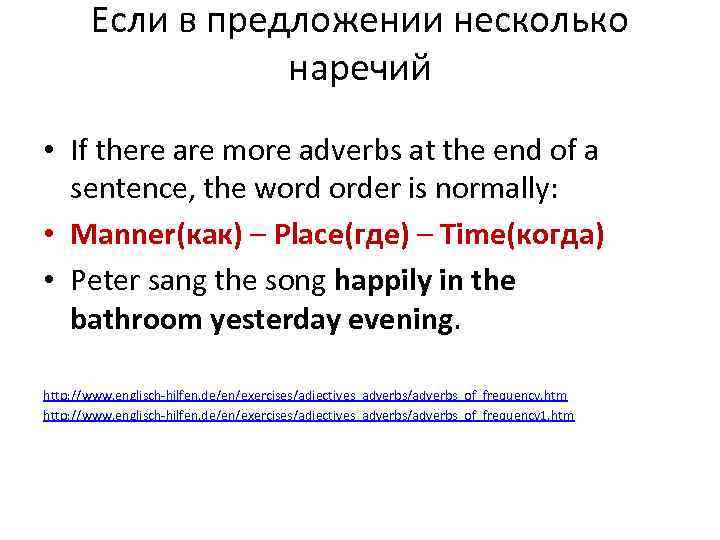 Если в предложении несколько наречий • If there are more adverbs at the end of a sentence, the word order is normally: • Manner(как) – Place(где) – Time(когда) • Peter sang the song happily in the bathroom yesterday evening. http: //www. englisch-hilfen. de/en/exercises/adjectives_adverbs/adverbs_of_frequency. htm http: //www. englisch-hilfen. de/en/exercises/adjectives_adverbs/adverbs_of_frequency 1. htm
 TOO/ENOUGH
 • Слова too и enough являются наречиями меры и степени в английском языке (отвечают на вопросы сколько? насколько? ), и переводятся следующим образом: • too – слишком (excessively), очень, крайне (very); • enough – достаточно.
 Употребление наречия too • Наречие too работает совместно с прилагательными и наречиями. Его место в предложении – перед упомянутыми частями речи. Рассмотрим это на примерах: • It’s too cold for swimming. – Слишком холодно, чтобы купаться. (с прилагательным) • I’m too busy to talk to you now. – Я слишком занят, чтобы сейчас разговаривать с тобой. (с прилагательным) • He’s too lazy to work. – Он очень ленив, чтобы работать. (с прилагательным)
 • Часто употребление too можно увидеть с наречиями этой же группы (меры и степени) – many / much и little. В первом случае сочетание too many /too much будет переводиться как «слишком много» , а во втором too little – «слишком мало» . Например: • Mother objects to his smoking too much. — Мама возражает против того, чтобы он так много курил. • I can’t discuss the problem. I know too little about it. – Я не могу обсуждать эту проблему. Я слишком мало знаю о ней.
 Употребление наречия enough • Наречие enough употребляется не только с прилагательными и наречиями, но и с существительными. Обратите внимание, что enough мы ставим перед существительным, но после прилагательного и наречия. • Are you warm enough? – Вы не замерзли? (после прилагательного) • Try this jacket on and see if it’s big enough for you. – Примерь эту куртку и посмотри, достаточно ли велика она тебе. (после прилагательного) • You know well enough. – Вы прекрасно знаете. (после наречия)
 • Кстати, вариант наречия enough с отрицательной частицей not будет иметь противоположное значение «не достаточно, не слишком» . Например: • You are not walking fast enough. – Ты идешь недостаточно быстро.
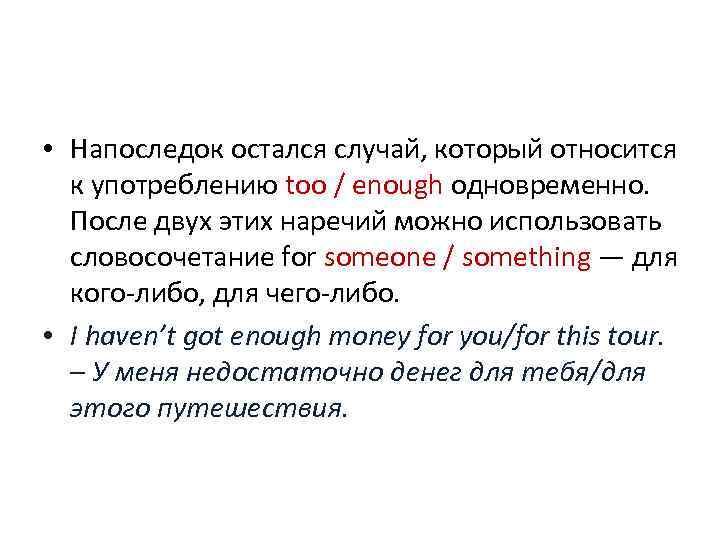 • Напоследок остался случай, который относится к употреблению too / enough одновременно. После двух этих наречий можно использовать словосочетание for someone / something — для кого-либо, для чего-либо. • I haven’t got enough money for you/for this tour. – У меня недостаточно денег для тебя/для этого путешествия.
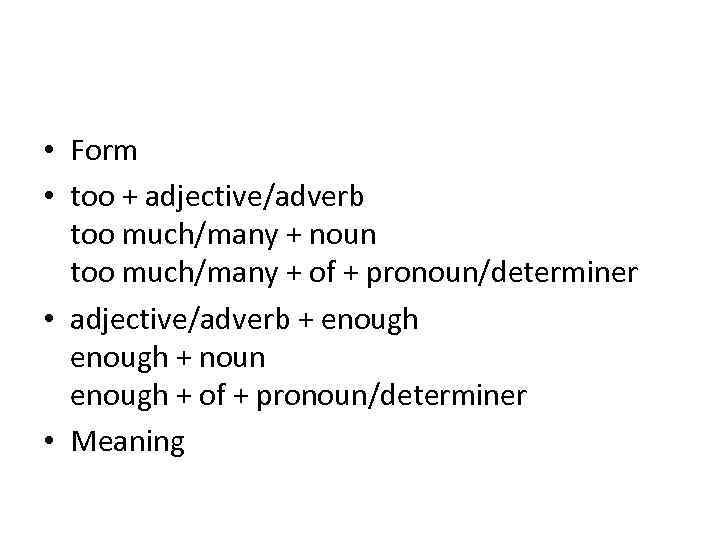 • Form • too + adjective/adverb too much/many + noun too much/many + of + pronoun/determiner • adjective/adverb + enough + noun enough + of + pronoun/determiner • Meaning
 • http: //englsecrets. ru/grammatika/upotrebleni e-too-i-enough. html (ВИДЕОУРОК TOO/ENOUGH) • http: //www. myenglish. edu. pl/index. php? id=16(УПР)