


Price n. Competition based n. Market based n. Elasticity
Pricing Strategies Cost-plus pricing (fixed eg 25%) % of profit above the costs n Marginal-cost pricing (eg internet) When all fixed costs are covered n Contribution pricing = profit only above the certain number sold n
Competition-based n n n Price leadership = small following the big Predatory pricing = price to push competitor out. e. g. Amazon Going-rate pricing = not able to control. e. g. farmers
Market-based n n n Price penetration = low price to break in Price skimming = innovative product Price discrimination = different at different time, not easily traded
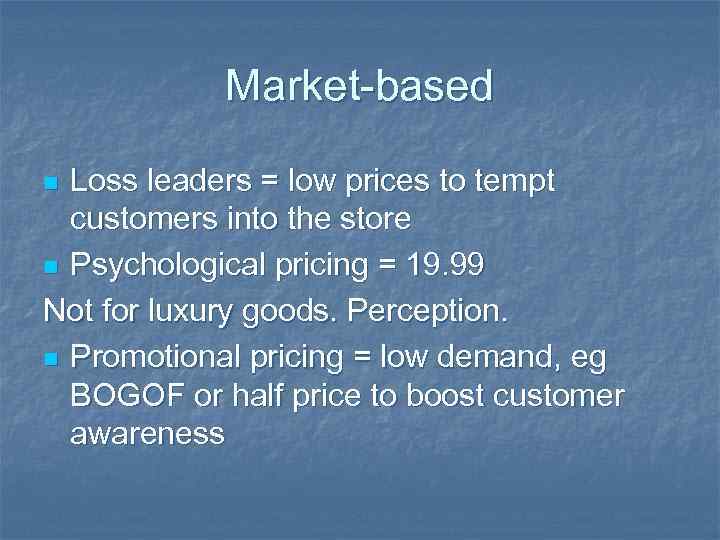
Market-based Loss leaders = low prices to tempt customers into the store n Psychological pricing = 19. 99 Not for luxury goods. Perception. n Promotional pricing = low demand, eg BOGOF or half price to boost customer awareness n
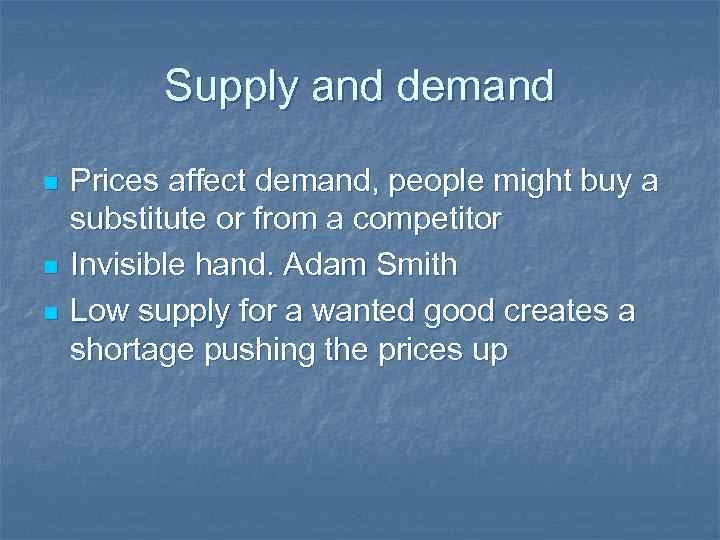
Supply and demand n n n Prices affect demand, people might buy a substitute or from a competitor Invisible hand. Adam Smith Low supply for a wanted good creates a shortage pushing the prices up
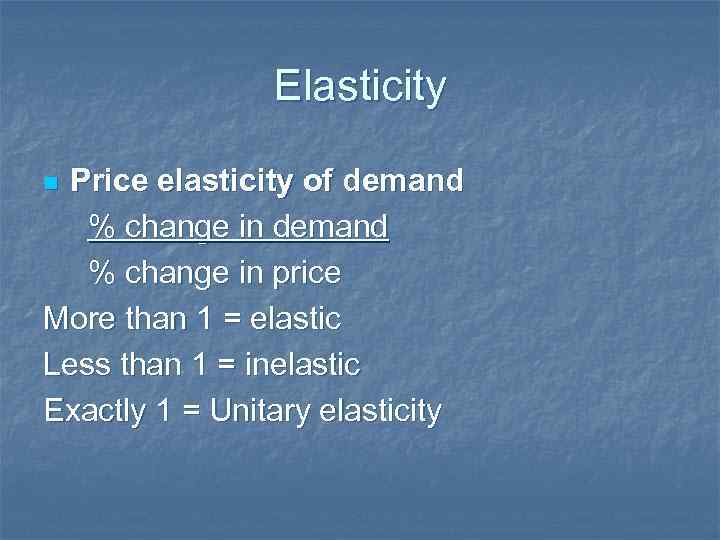
Elasticity Price elasticity of demand % change in price More than 1 = elastic Less than 1 = inelastic Exactly 1 = Unitary elasticity n
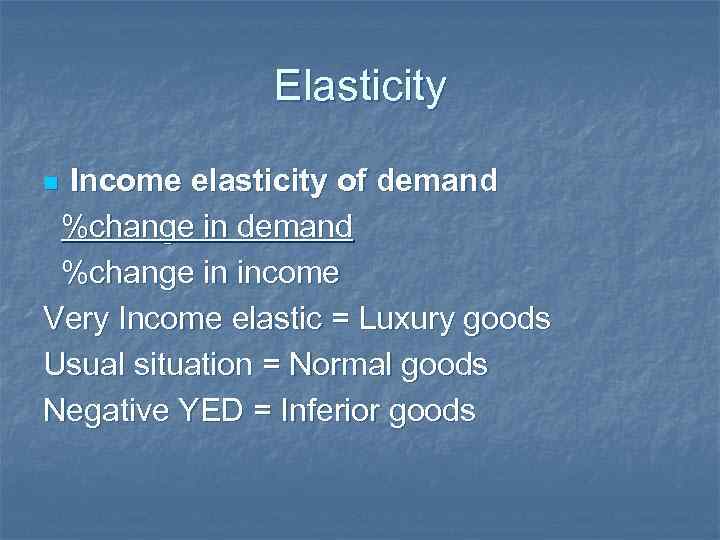
Elasticity Income elasticity of demand %change in income Very Income elastic = Luxury goods Usual situation = Normal goods Negative YED = Inferior goods n
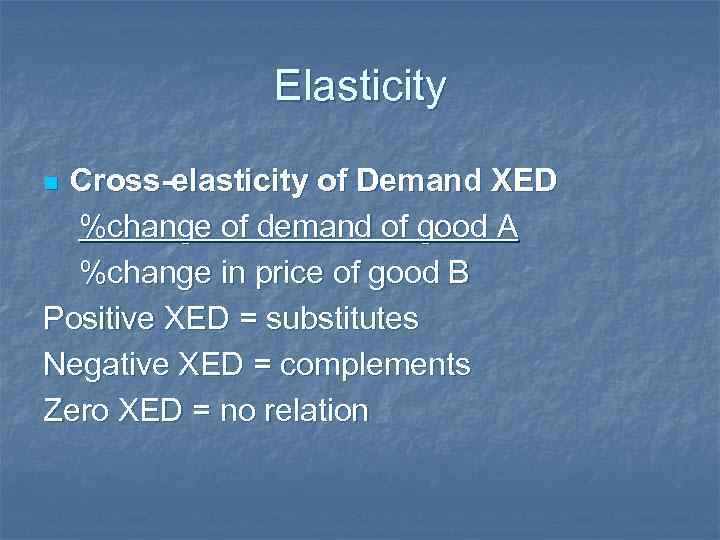
Elasticity Cross-elasticity of Demand XED %change of demand of good A %change in price of good B Positive XED = substitutes Negative XED = complements Zero XED = no relation n
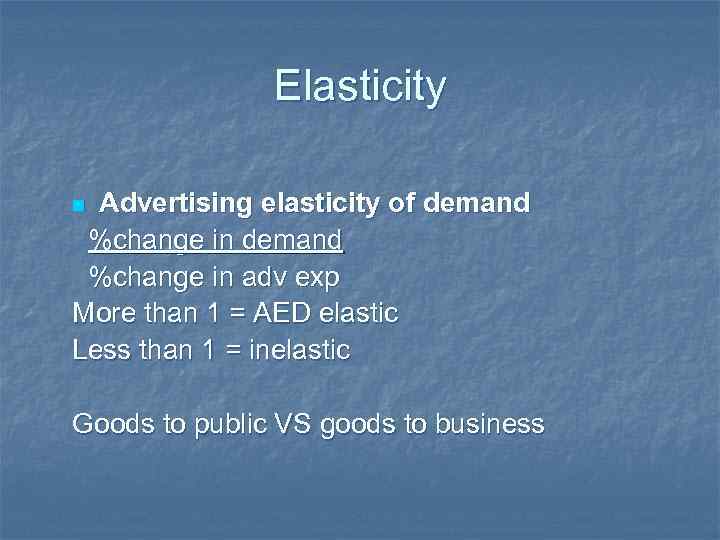
Elasticity Advertising elasticity of demand %change in adv exp More than 1 = AED elastic Less than 1 = inelastic n Goods to public VS goods to business
