 Скачать презентацию PREVENTIVE MEASURES OF NEUROLOGICAL DISEASES Kyzambayeva Assel 548
assel 548 preventive measures.ppt
- Количество слайдов: 20



PREVENTIVE MEASURES OF NEUROLOGICAL DISEASES Kyzambayeva Assel, 548 -GM
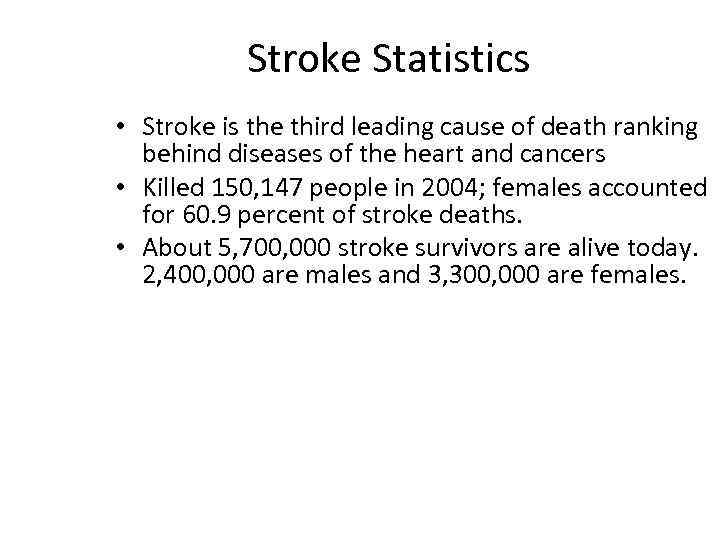
Stroke Statistics • Stroke is the third leading cause of death ranking behind diseases of the heart and cancers • Killed 150, 147 people in 2004; females accounted for 60. 9 percent of stroke deaths. • About 5, 700, 000 stroke survivors are alive today. 2, 400, 000 are males and 3, 300, 000 are females.
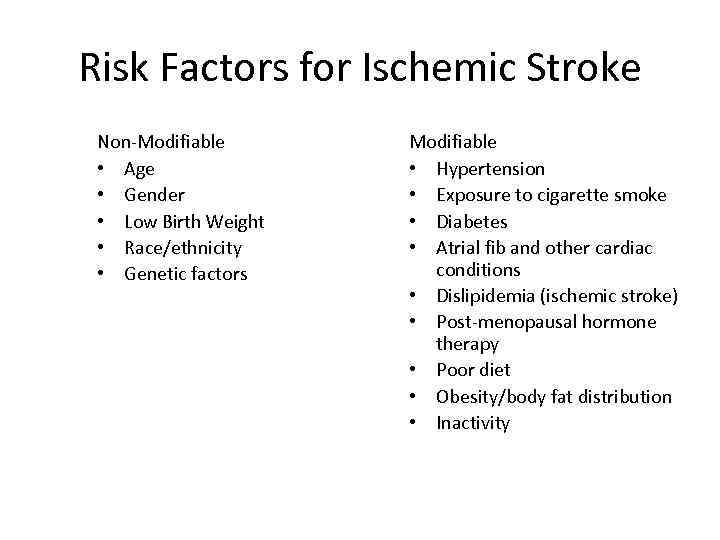
Risk Factors for Ischemic Stroke Non-Modifiable • Age • Gender • Low Birth Weight • Race/ethnicity • Genetic factors Modifiable • Hypertension • Exposure to cigarette smoke • Diabetes • Atrial fib and other cardiac conditions • Dislipidemia (ischemic stroke) • Post-menopausal hormone therapy • Poor diet • Obesity/body fat distribution • Inactivity
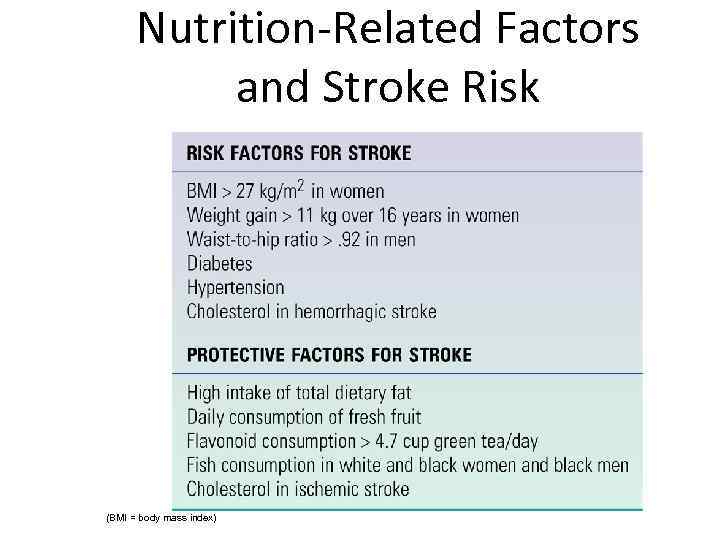
Nutrition-Related Factors and Stroke Risk (BMI = body mass index)
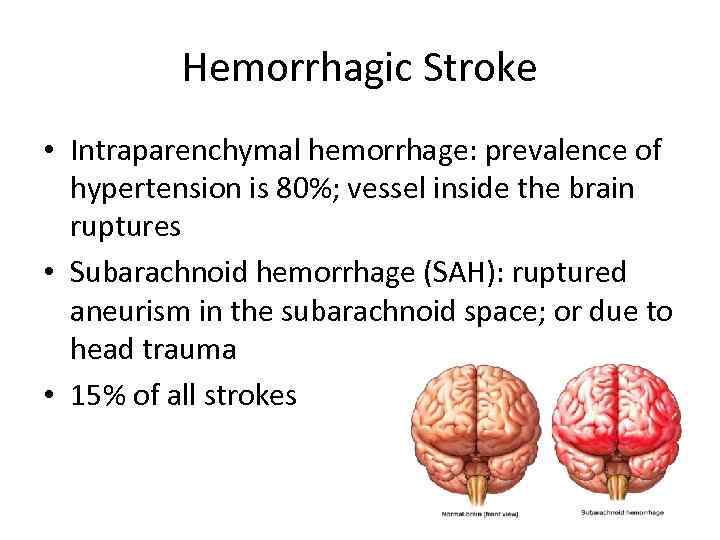
Hemorrhagic Stroke • Intraparenchymal hemorrhage: prevalence of hypertension is 80%; vessel inside the brain ruptures • Subarachnoid hemorrhage (SAH): ruptured aneurism in the subarachnoid space; or due to head trauma • 15% of all strokes
AHA Guidelines for Primary Prevention of CVD and Stroke: 2006 Update • Smoking: complete cessation (Class I, evidence level B • Avoid exposure to environmental tobacco smoke (Class IIA, evidence C) • BP control: goal <140/90 mm. Hg with lower targets in some subgroups (<130/80 in diabetes) Goldstein et al, Primary Prevention of Ischemic Stroke, Stroke 2006; 37: 15831633)
AHA Diet/Lifestyle Guidelines for Primary Prevention of CVD/Stroke: 2006 Update • Reduced intake of sodium and increased intake of potassium to lower blood pressure (Class I, evidence A) • Recommended sodium intake <2. 3 g/day; potassium >4. 7 g/day • DASH diet emphasizing fruits, vegetables, lowfat dairy products is recommended to lower BP (Class I, evidence A) • High fruit and vegetable intake may lower risk of stroke (Evidence C) • Wt reduction is recommended because it lowers BP • Increased physical activity (>30 minutes of moderateintensity activity daily) Pearson et al. (Circulation. 2002; 106: 388 -391. )


Lipids and Stroke • Cholesterol is a very weak risk factor for ischemic stroke, in contrast to CAD • Cholesterol reduction with diet and nonstatin drugs is not effective in stroke prevention, although reductions in levels of cholesterol are modest • Statins produce a statistically significant 25% reduction in the risk of stroke Briel M, et al Am J Med 2004; 117: 596 -606
Alzheimer’s Disease • • Most common form of dementia Increases exponentially after age 40 Prevalence in white males at age 100 is 41. 5% Higher prevalence in women (3 X) due to lower mortality
Symptoms of Alzheimer’s Disease • Forgetfulness: may forget recent events, activities, names of familiar people or things (anomia). • Forget how to do simple tasks, such as brushing teeth, brushing hair • Get lost in familiar surroundings • Repeat words spoken by others (echolalia) • Loss of comprehension (agnosia)
Symptoms of Alzheimer’s Disease (cont) • Motor skills deteriorate: loss of reflexes and shuffling gait • Bowel and bladder control lost • Limb weakness and contractures • Intellectual activity ceases • Vegetative state
Alzheimer’s Disease Risk Factors • Age: risk doubles every five years after age 65 • Family history: early onset strongly hereditary; late onset has a genetic component • Those with a parent or sibling with AD are 2 -3 times more likely to develop AD
Alzheimer’s Disease Risk Factors • • Head injury Down syndrome Low level of education Female gender
Alzheimer’s Disease Prevention: Research Areas • AD risk is associated with CVD, hypertension, diabetes • AD risk associated with exercise, staying mentally active, social engagement • Research ongoing into use of antioxidants (vitamins E and C), ginkgo biloba • Research into estrogen and AD suggests that estrogen treatment in postmenopausal women may risk of dementia
Treatment of Alzheimer’s Disease • No drug can stop or reverse AD • Some drugs may slow progress (tacrine (Cognex®), donepezil (Aricept®), rivastigmine (Exelon®), or galantamine (Razadyne®) • Other medications may treat symptoms such as sleeplessness, agitation, wandering, anxiety, and depression National Institutes on Aging, Alzheimer’s Disease Education and Referral Center http: //www. alzheimers. org/treatment. htm
• Preventing aneurysms • Although not all aneurysms are hereditary, there is some evidence that people are more likely to develop an aneurysm if a family member has had one. Frequent screening tests are recommended if aneurysms have occurred in your family. • Lifestyle changes to maintain healthy blood vessels can help prevent aneurysms, including not smoking, exercising regularly and eating a balanced, low-fat diet.
• • • Preventing carpal tunnel syndrome Avoid repeated stress on the hands. Do hand wrist exercises and stretches periodically. Use proper hand wrist positioning and pay attention to ergonomics. Take breaks during work. Set your computer monitor at eye level, and keep elbows at a 70 - to 90 -degree angle and wrists in a neutral position. Wear splints at night. Use tools and equipment in your daily tasks that are designed to minimize the risk of wrist and hand injury. Use cold treatments (such as ice packs) to reduce inflammation in the hands Treat underlying medical conditions that contribute to the development of carpal tunnel syndrome, such as diabetes, thyroid disease and arthritis.
Скачать презентацию PREVENTIVE MEASURES OF NEUROLOGICAL DISEASES Kyzambayeva Assel 548
assel 548 preventive measures.ppt