


 Скачать презентацию Pressures in UK Healthcare Challenges for the NHS
0457f2f936cdccaa2d8ebf56ef5e929e.ppt
- Количество слайдов: 53
 Pressures in UK Healthcare: Challenges for the NHS Carl Emmerson Chris Frayne Alissa Goodman
 Health spending “We will rebuild the NHS” “We will raise spending on the NHS in real terms every year and put the money towards patient care. ” Labour Party manifesto 1997
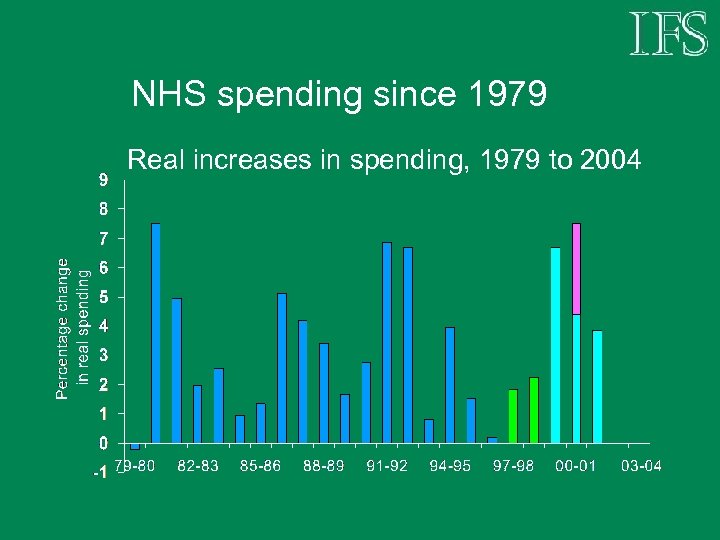
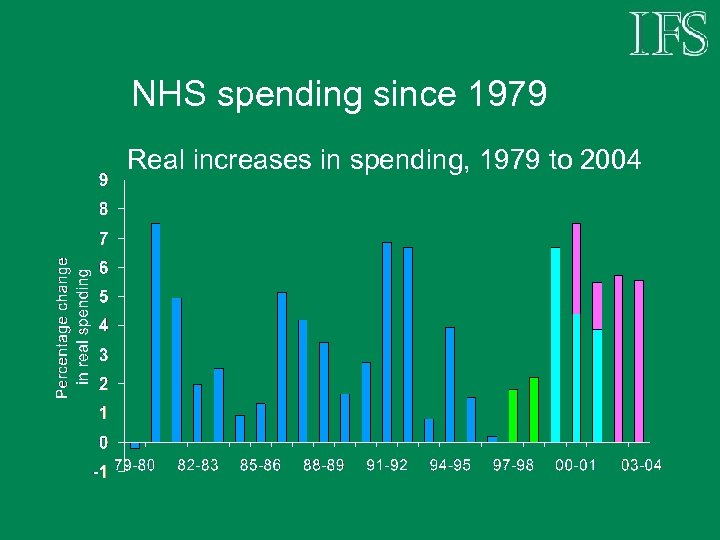
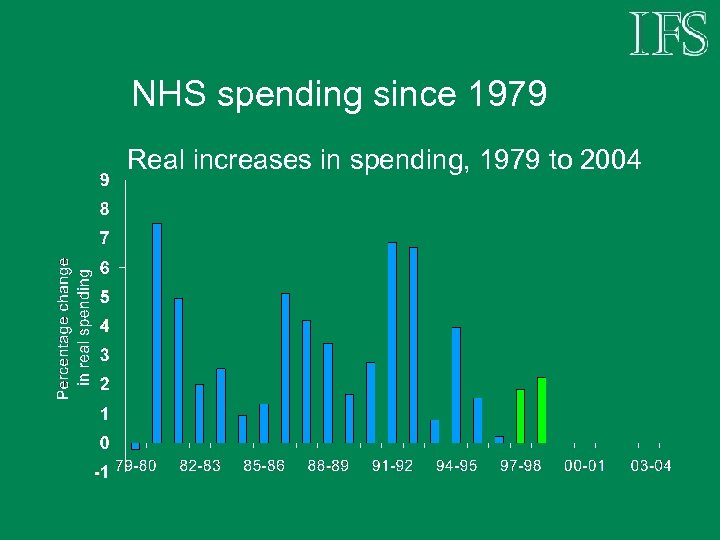 NHS spending since 1979 Real increases in spending, 1979 to 2004
 Increases in NHS spending “The Government will rebuild the NHS and improve the delivery of social services by: . . . increasing NHS funding by an average of 4. 7 per cent a year, above inflation, for three years…” Comprehensive Spending Review, July 1998
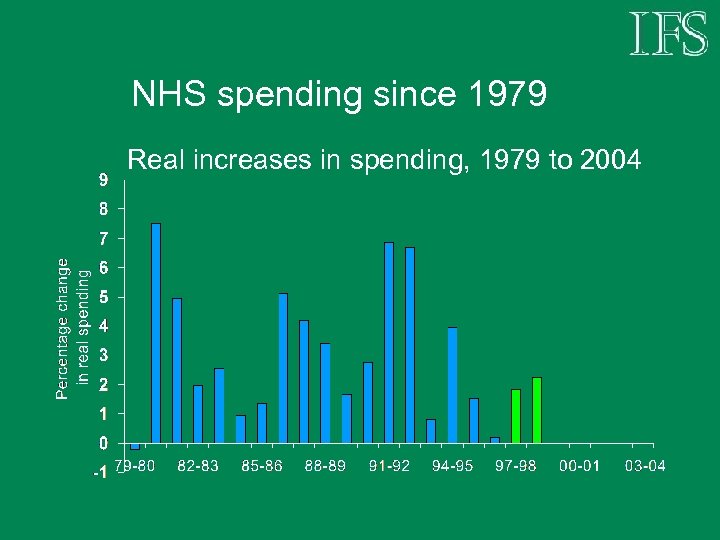 NHS spending since 1979 Real increases in spending, 1979 to 2004
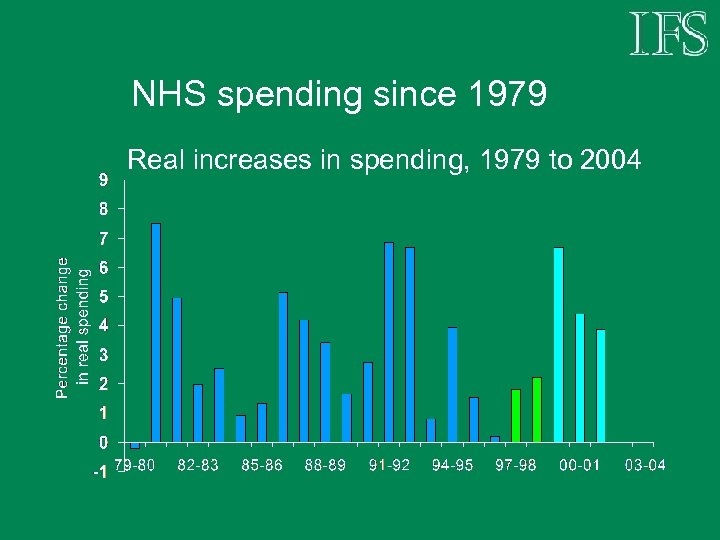 NHS spending since 1979 Real increases in spending, 1979 to 2004
 Further increases in NHS spending In the March 2000 budget, the Chancellor, Gordon Brown announced: “by far the largest sustained increase in NHS funding of any period in its 50 -year history” Budget speech, 21 st March 2000
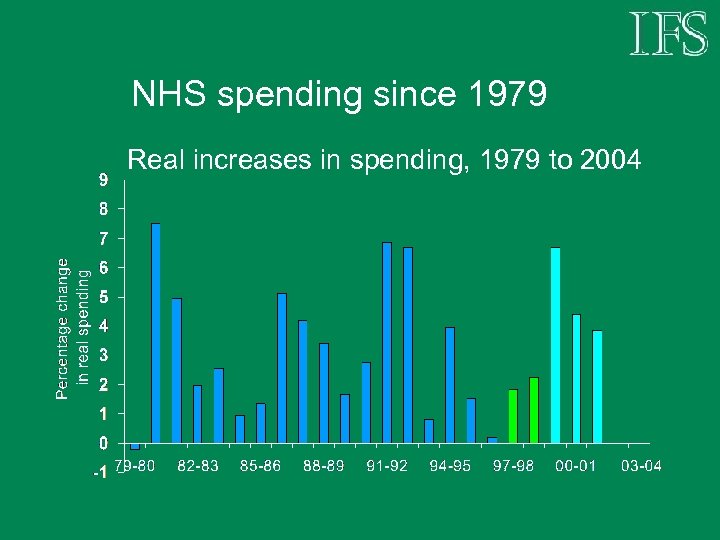 NHS spending since 1979 Real increases in spending, 1979 to 2004
 NHS spending since 1979 Real increases in spending, 1979 to 2004
 NHS spending since 1979 Real increases in spending, 1979 to 2004
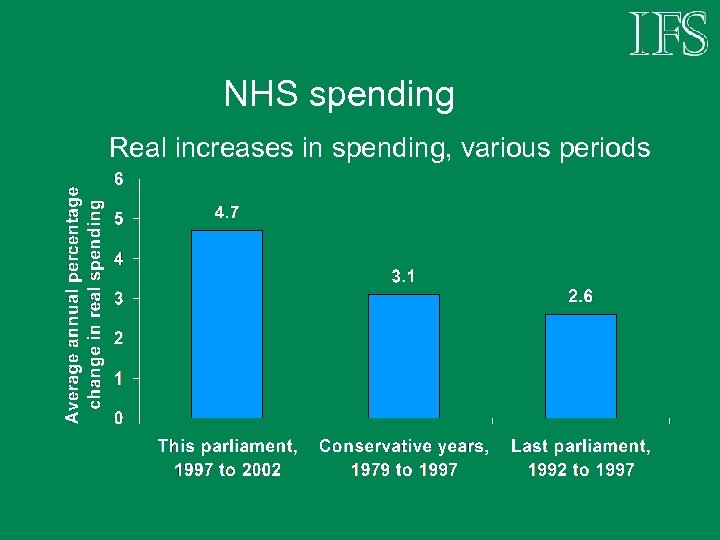 NHS spending Real increases in spending, various periods
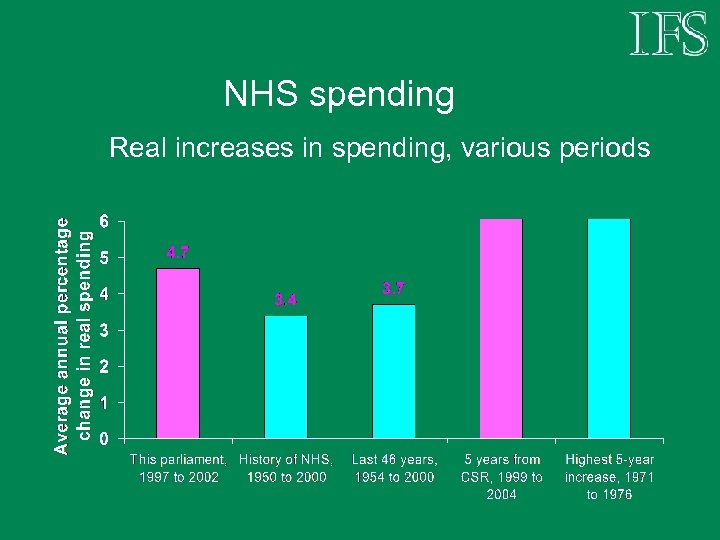 NHS spending Real increases in spending, various periods
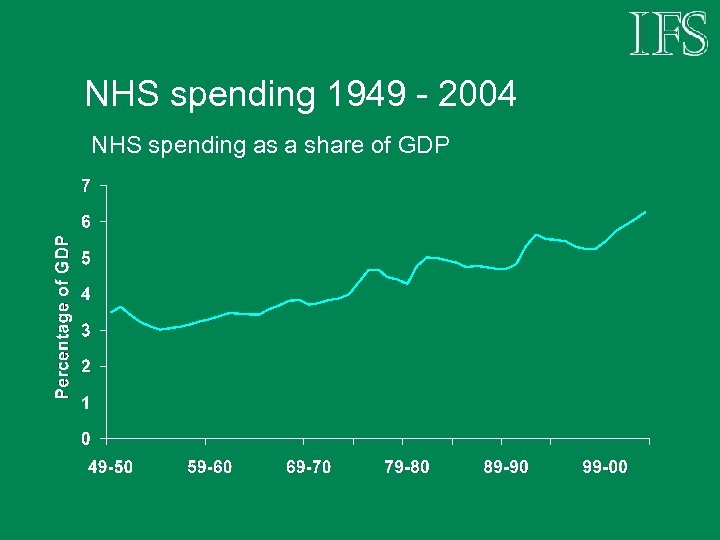 NHS spending 1949 - 2004 NHS spending as a share of GDP
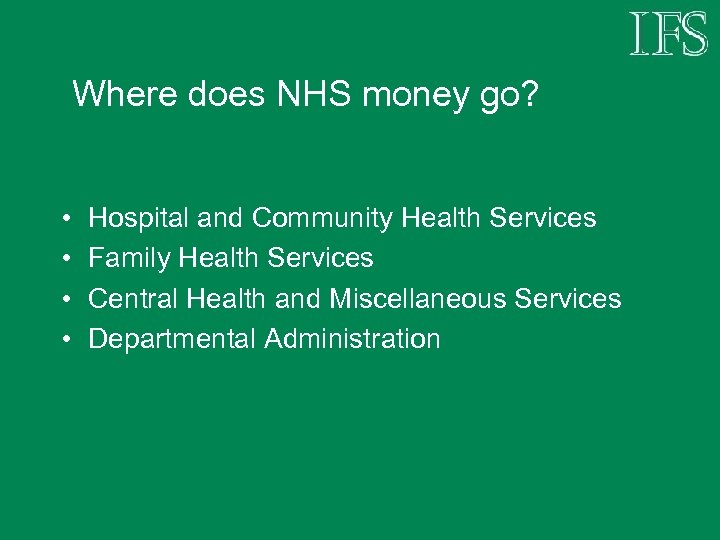 Where does NHS money go? • • Hospital and Community Health Services Family Health Services Central Health and Miscellaneous Services Departmental Administration
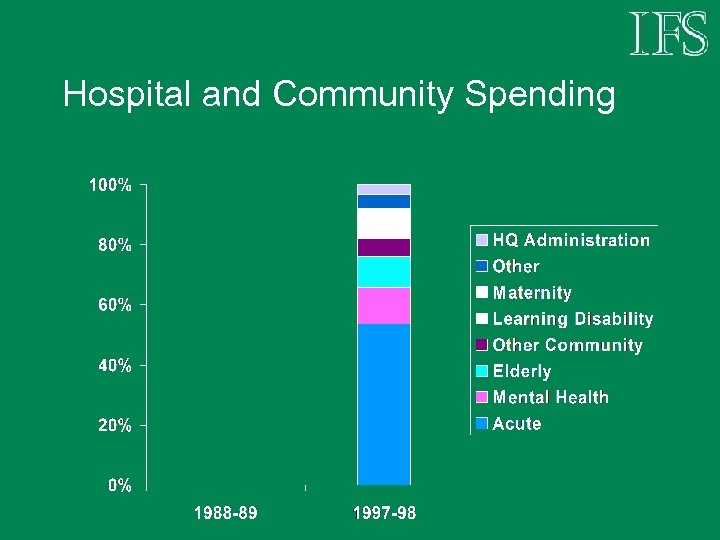 Hospital and Community Spending
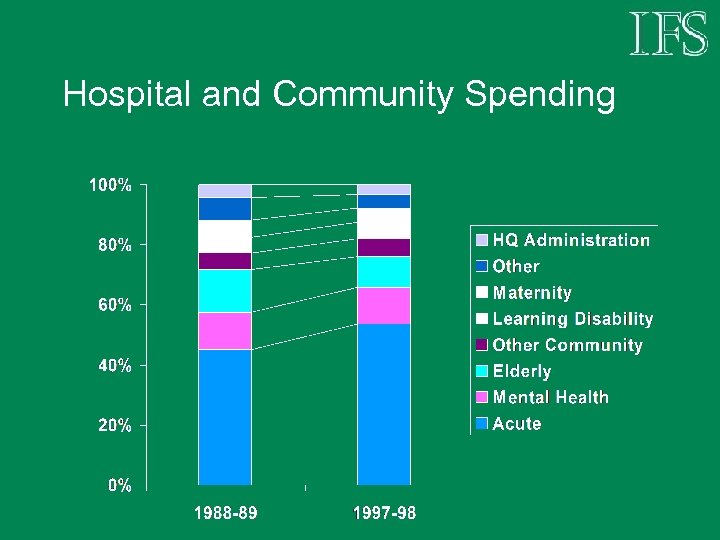 Hospital and Community Spending
 Pressures in UK Healthcare: Challenges for the NHS In the second part of the presentation, we ask what the important issues facing the National Health Service are now and what they will be in the future.
 Economic justifications • Equity arguments • Efficiency arguments • Social returns to health • Lack of consumer information • Problems with insurance markets • What type of intervention does this justify?
 International comparisons • NHS one form of government intervention • Healthcare models vary • Social insurance models in France and Germany • Greater reliance on the private sector in Switzerland the US • Countries also differ in terms of actual spending and on health outcomes
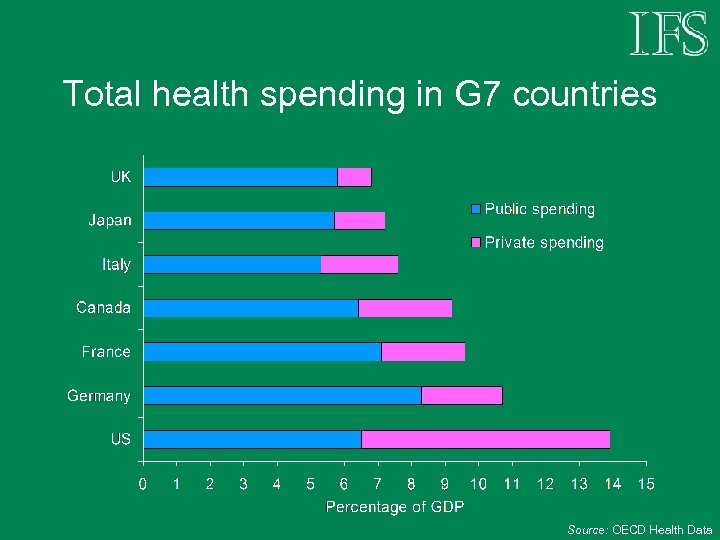 Total health spending in G 7 countries Source: OECD Health Data
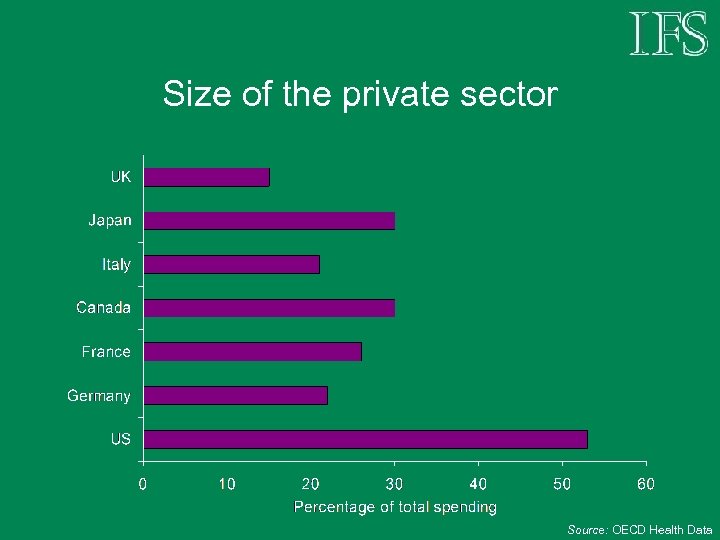 Size of the private sector Source: OECD Health Data
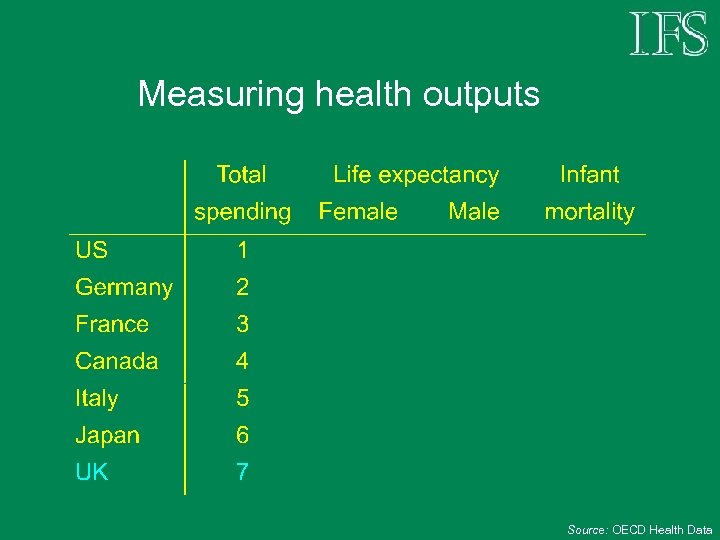 Measuring health outputs Source: OECD Health Data
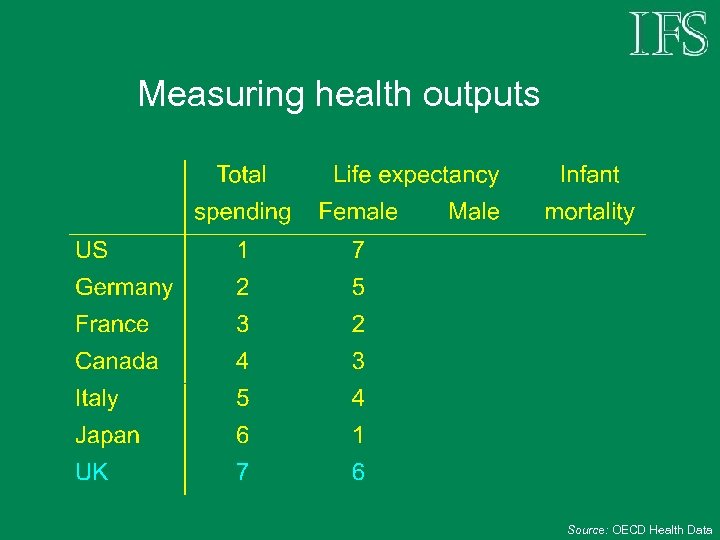 Measuring health outputs Source: OECD Health Data
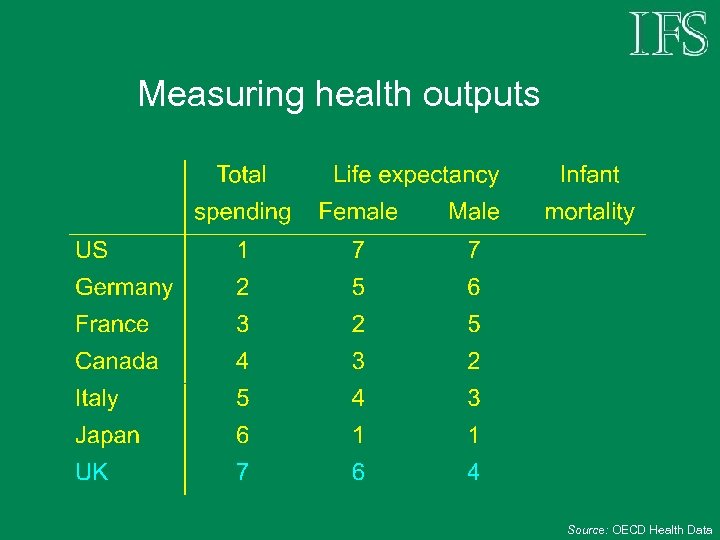 Measuring health outputs Source: OECD Health Data
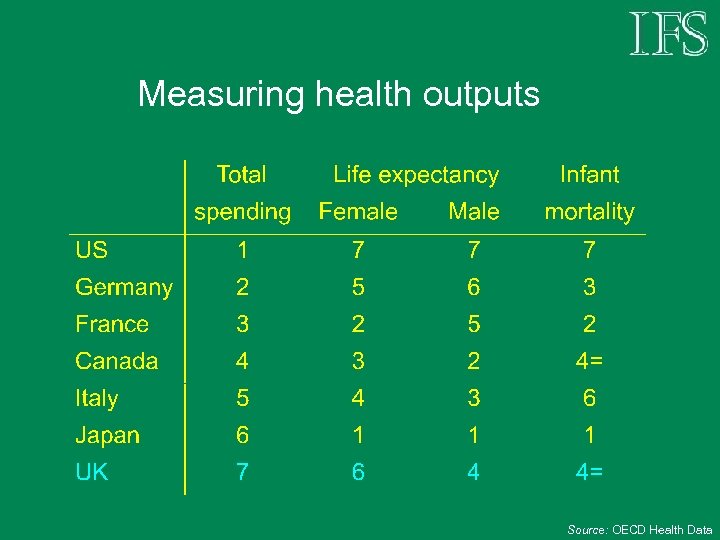 Measuring health outputs Source: OECD Health Data
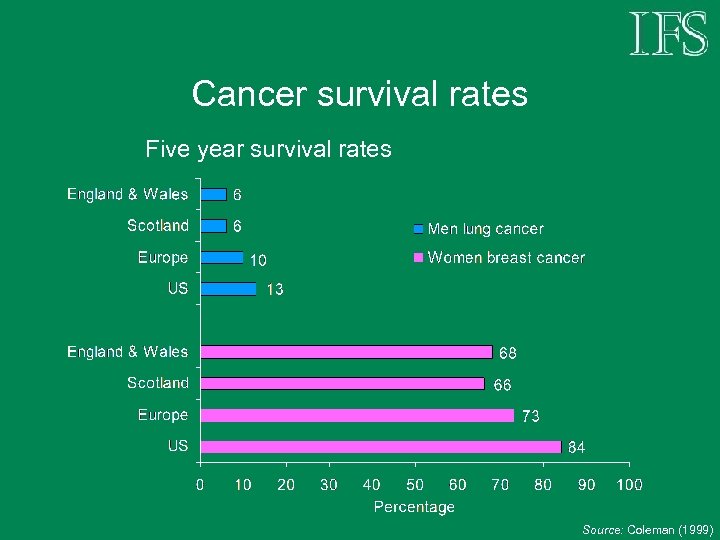 Cancer survival rates Five year survival rates Source: Coleman (1999)
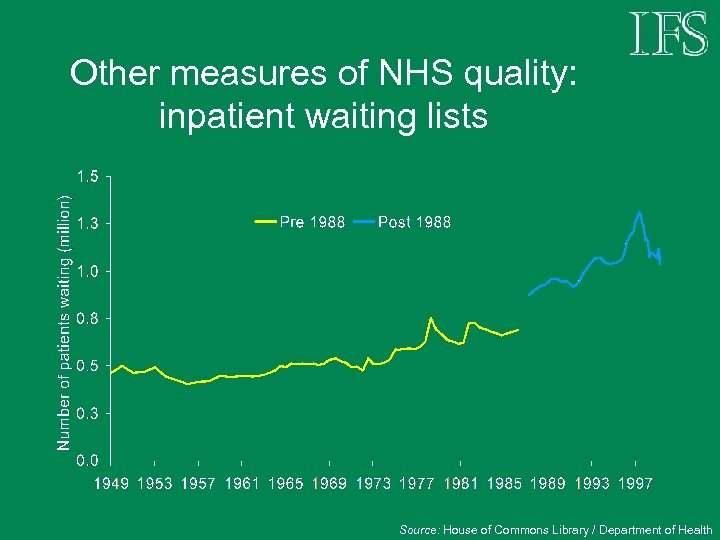 Other measures of NHS quality: inpatient waiting lists Source: House of Commons Library / Department of Health
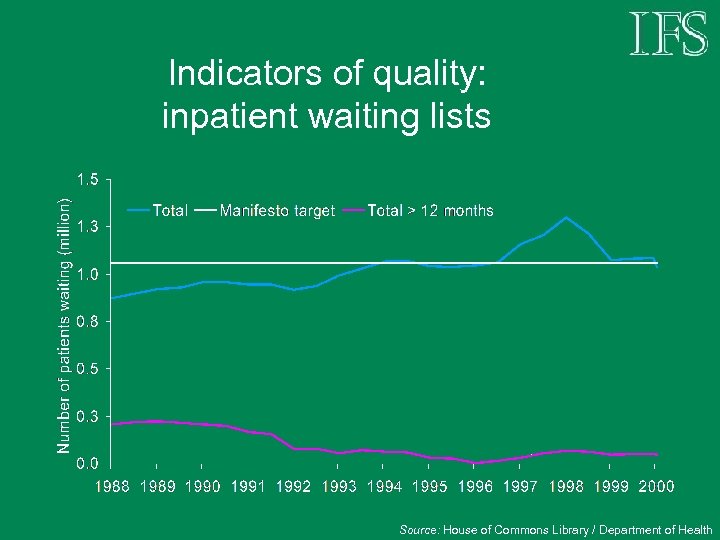 Indicators of quality: inpatient waiting lists Source: House of Commons Library / Department of Health
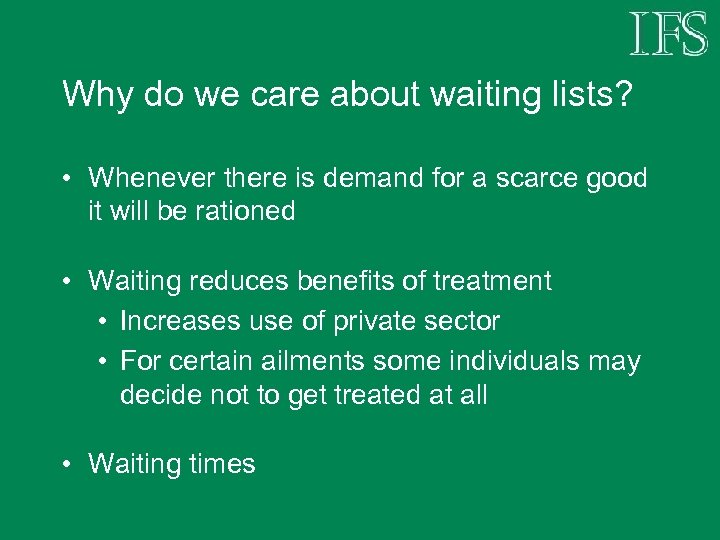 Why do we care about waiting lists? • Whenever there is demand for a scarce good it will be rationed • Waiting reduces benefits of treatment • Increases use of private sector • For certain ailments some individuals may decide not to get treated at all • Waiting times
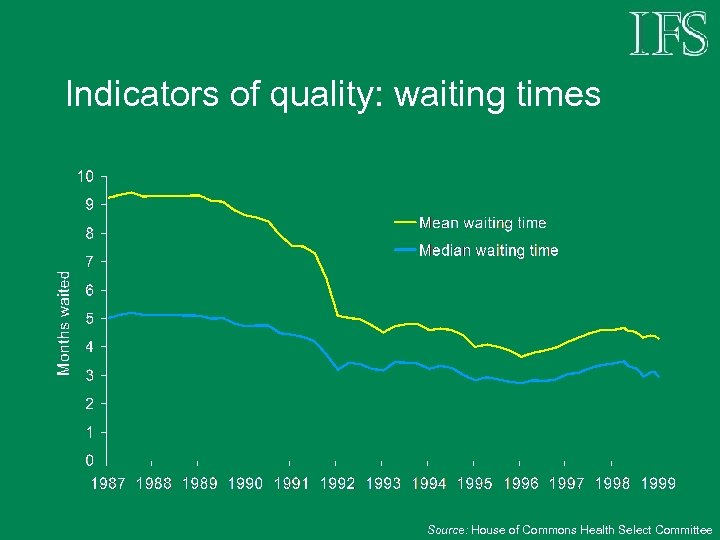 Indicators of quality: waiting times Source: House of Commons Health Select Committee
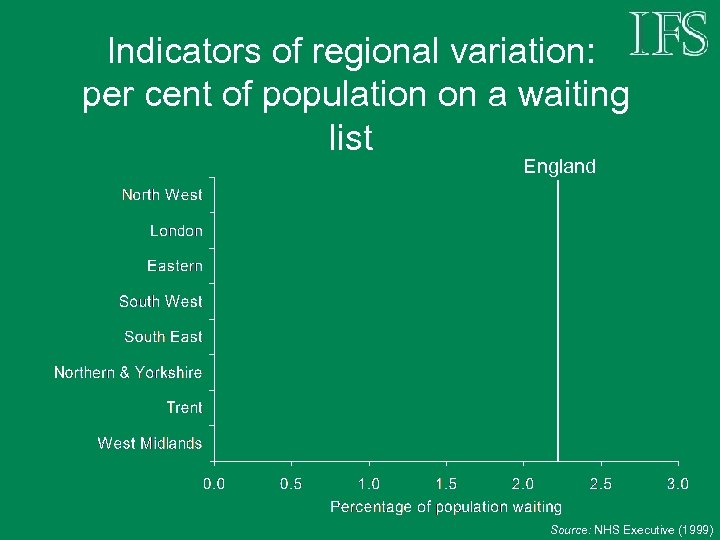 Indicators of regional variation: per cent of population on a waiting list England Source: NHS Executive (1999)
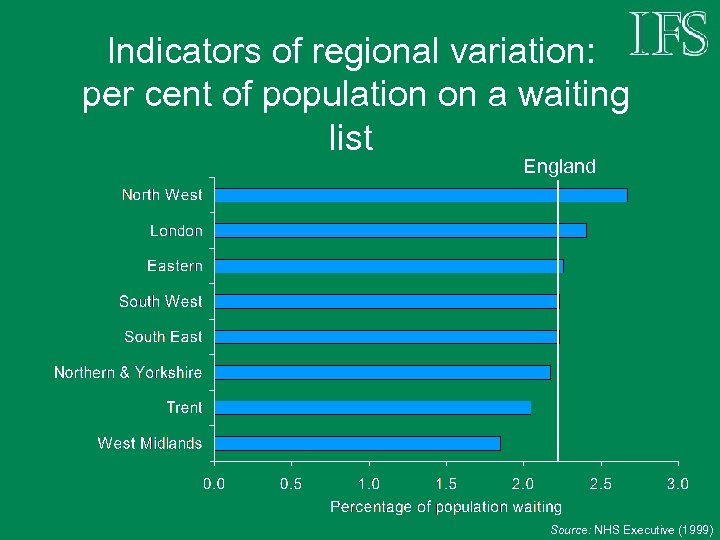 Indicators of regional variation: per cent of population on a waiting list England Source: NHS Executive (1999)
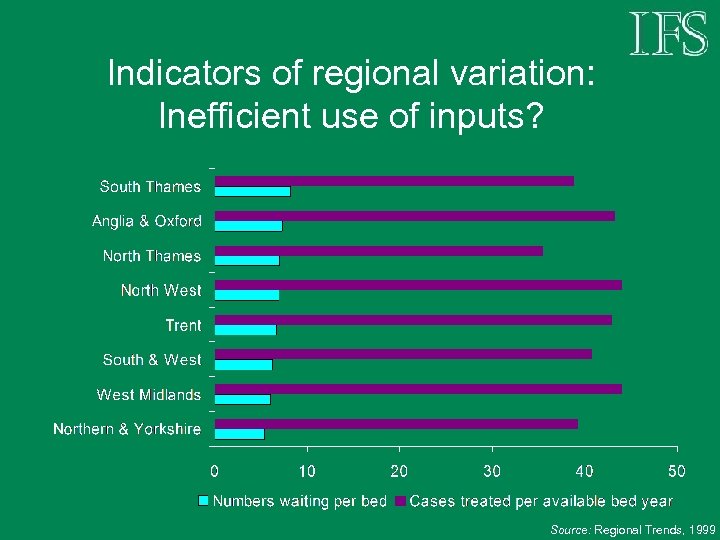 Indicators of regional variation: Inefficient use of inputs? Source: Regional Trends, 1999
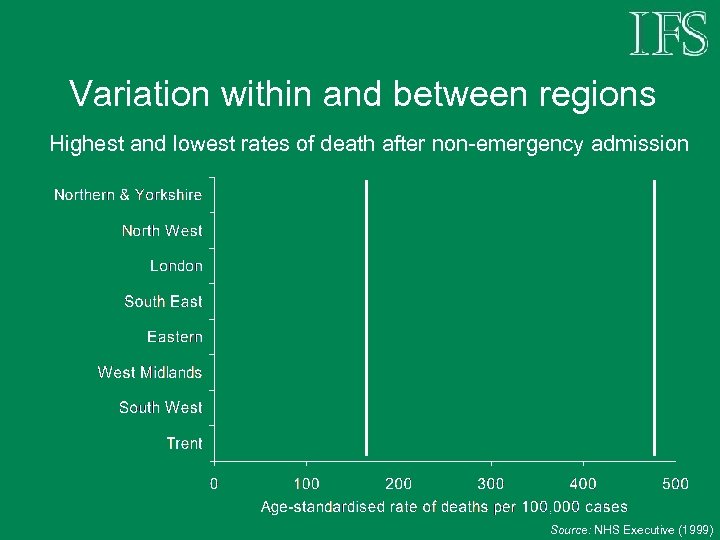 Variation within and between regions Highest and lowest rates of death after non-emergency admission Source: NHS Executive (1999)
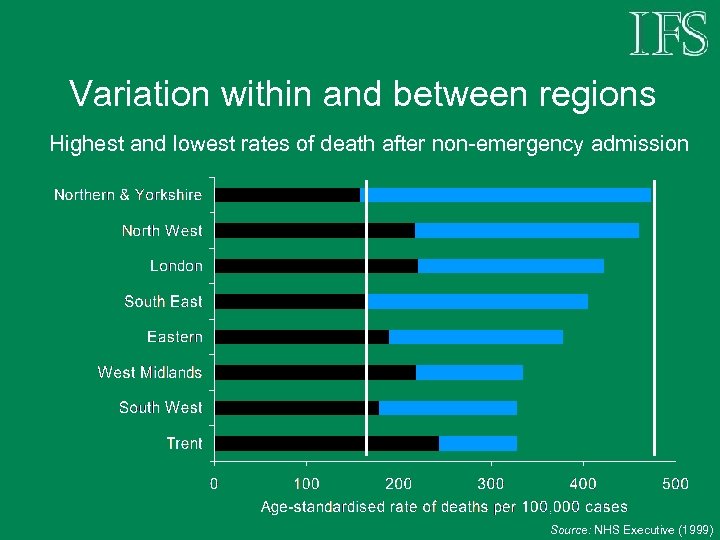 Variation within and between regions Highest and lowest rates of death after non-emergency admission Source: NHS Executive (1999)
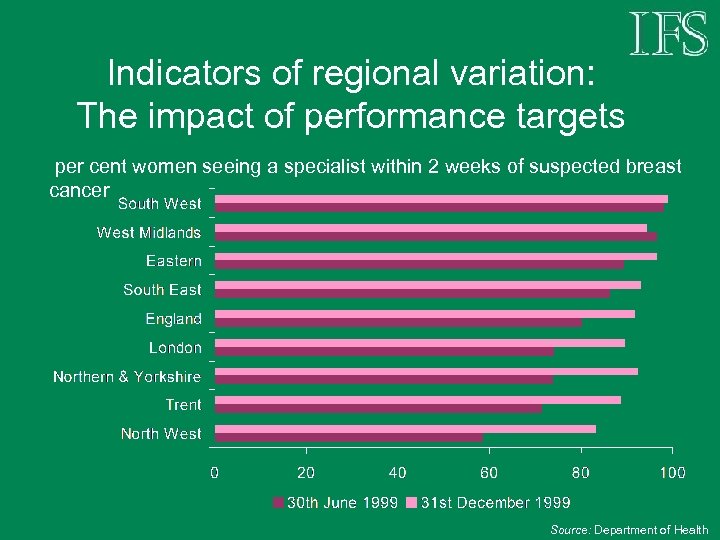 Indicators of regional variation: The impact of performance targets per cent women seeing a specialist within 2 weeks of suspected breast cancer Source: Department of Health
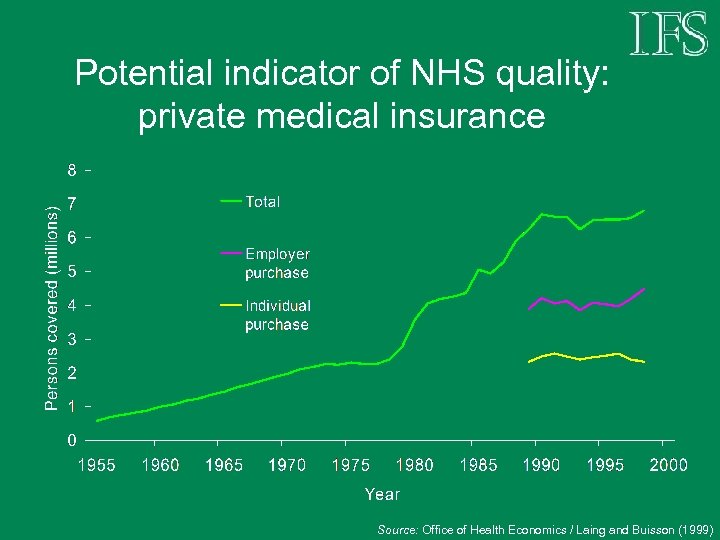 Potential indicator of NHS quality: private medical insurance Source: Office of Health Economics / Laing and Buisson (1999)
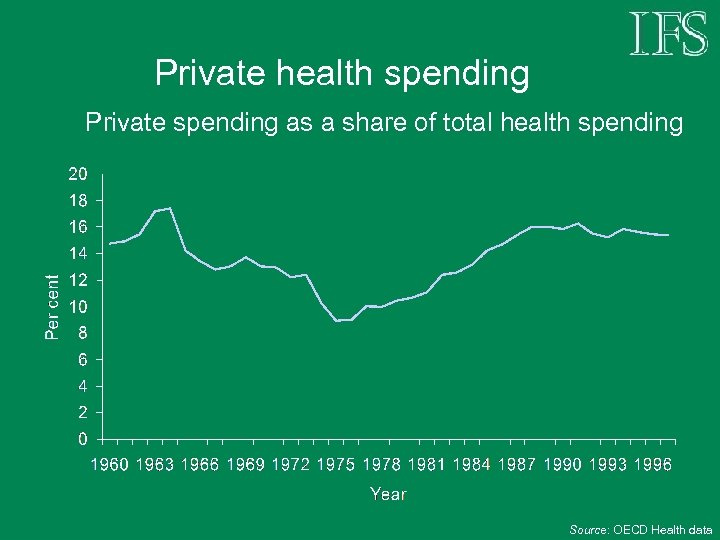 Private health spending Private spending as a share of total health spending Source: OECD Health data
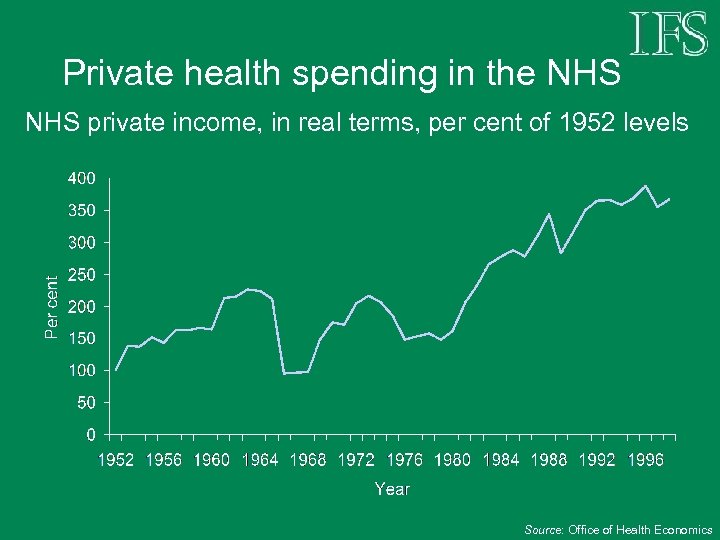 Private health spending in the NHS private income, in real terms, per cent of 1952 levels Source: Office of Health Economics
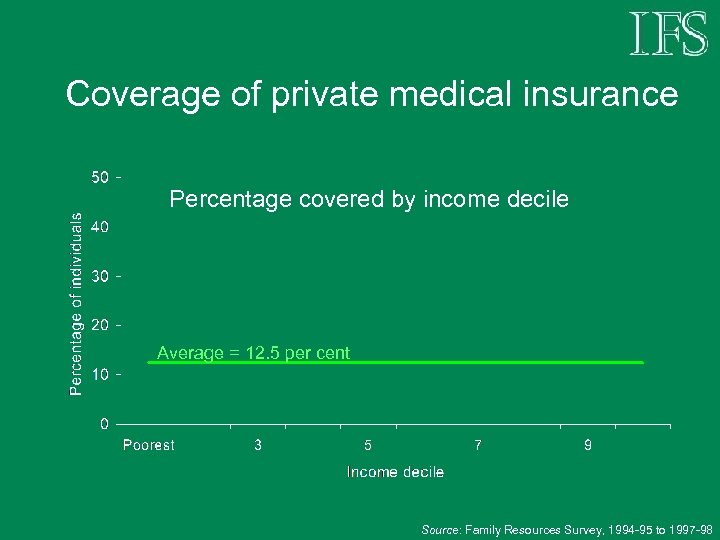 Coverage of private medical insurance Percentage covered by income decile Average = 12. 5 per cent Source: Family Resources Survey, 1994 -95 to 1997 -98
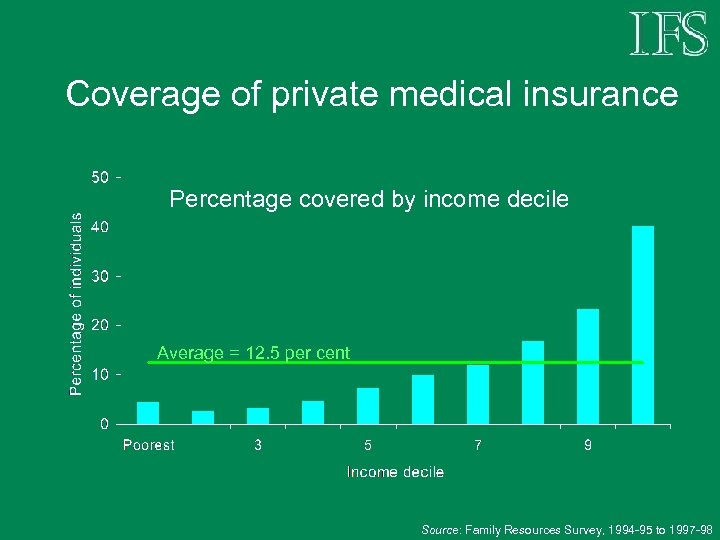 Coverage of private medical insurance Percentage covered by income decile Average = 12. 5 per cent Source: Family Resources Survey, 1994 -95 to 1997 -98
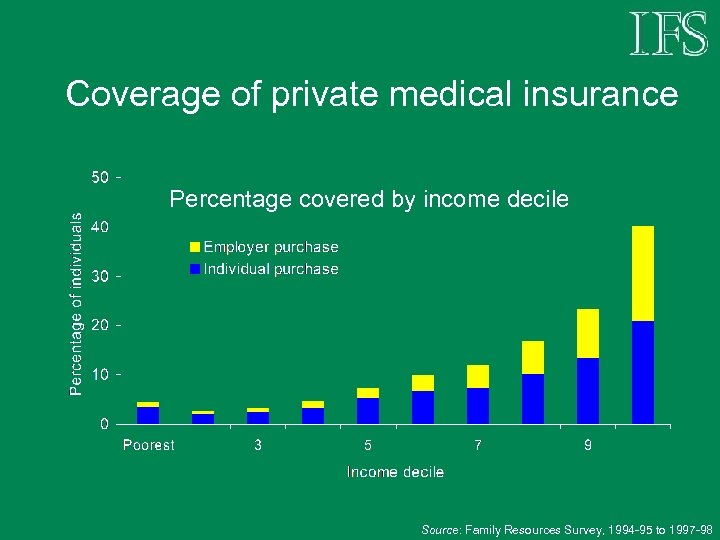 Coverage of private medical insurance Percentage covered by income decile Source: Family Resources Survey, 1994 -95 to 1997 -98
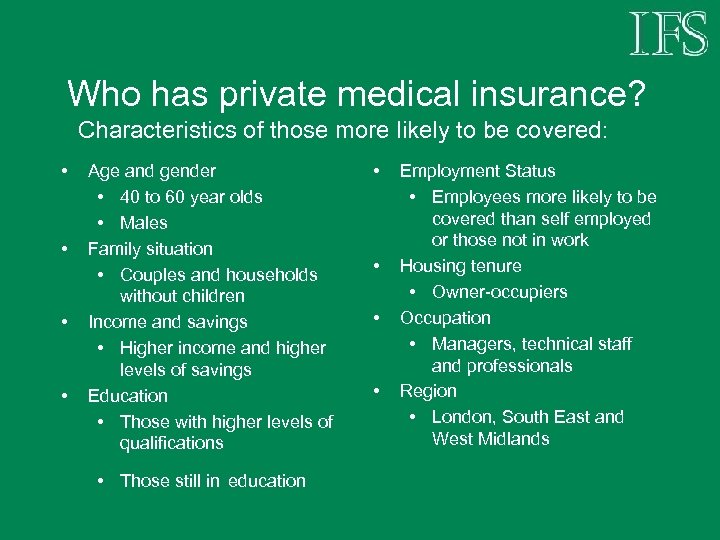 Who has private medical insurance? Characteristics of those more likely to be covered: • • Age and gender • 40 to 60 year olds • Males Family situation • Couples and households without children Income and savings • Higher income and higher levels of savings Education • Those with higher levels of qualifications • Those still in education • • Employment Status • Employees more likely to be covered than self employed or those not in work Housing tenure • Owner-occupiers Occupation • Managers, technical staff and professionals Region • London, South East and West Midlands
 A subsidy for private medical insurance? • Subsidy existed for over 60 s prior to July 1997 • Reduces burden on NHS spending • But subsidy itself would add to public spending • Could a subsidy be self-financing? • Depends on how many additional people take out PMI • Extremely unlikely to pay for itself
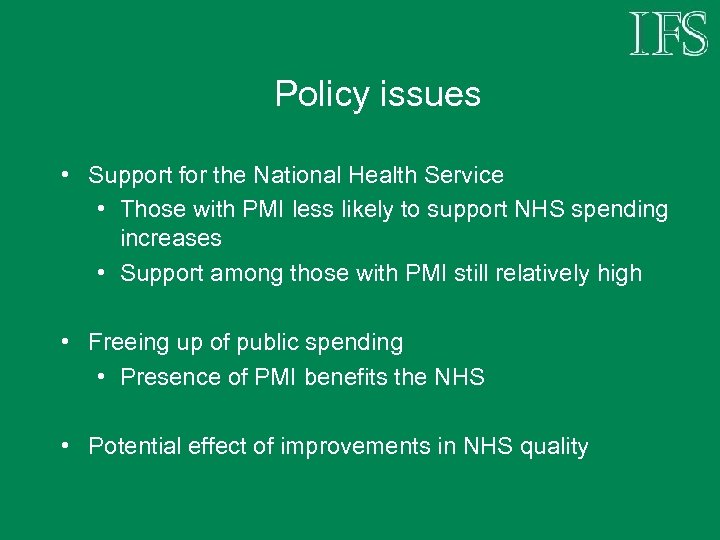 Policy issues • Support for the National Health Service • Those with PMI less likely to support NHS spending increases • Support among those with PMI still relatively high • Freeing up of public spending • Presence of PMI benefits the NHS • Potential effect of improvements in NHS quality
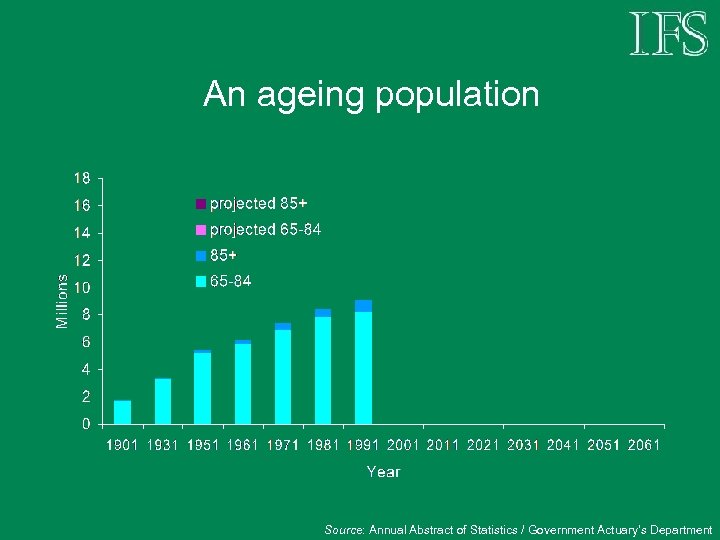 An ageing population Source: Annual Abstract of Statistics / Government Actuary’s Department
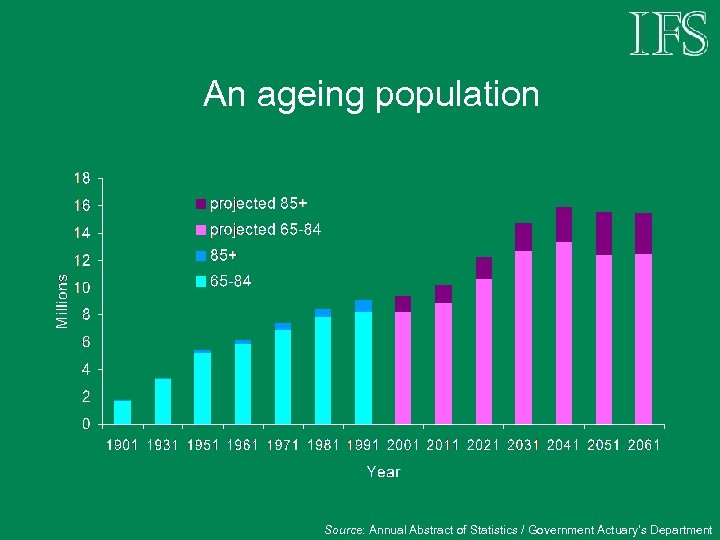 An ageing population Source: Annual Abstract of Statistics / Government Actuary’s Department
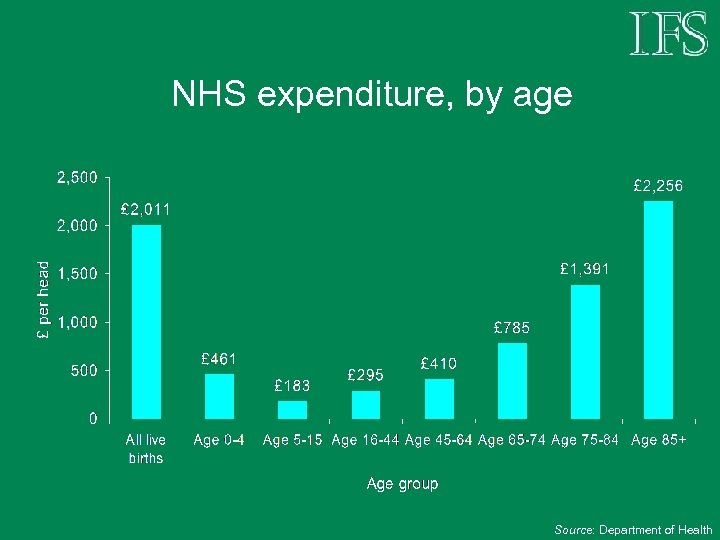 NHS expenditure, by age Source: Department of Health
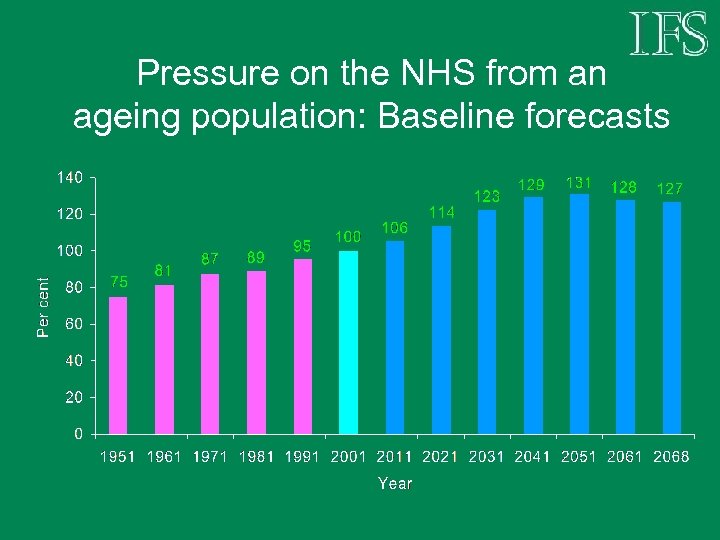 Pressure on the NHS from an ageing population: Baseline forecasts
 What is the actual effect of ageing? • Health spending could relate to lifetime remaining rather than calendar age • Evidence from Scotland (Hanlon et al, 1998), Switzerland (Zweifel et al, 1999) and the US (Cutler and Meara, 1999) • Demographics still matter • Timing of expenditure • Impact of changing birth rates
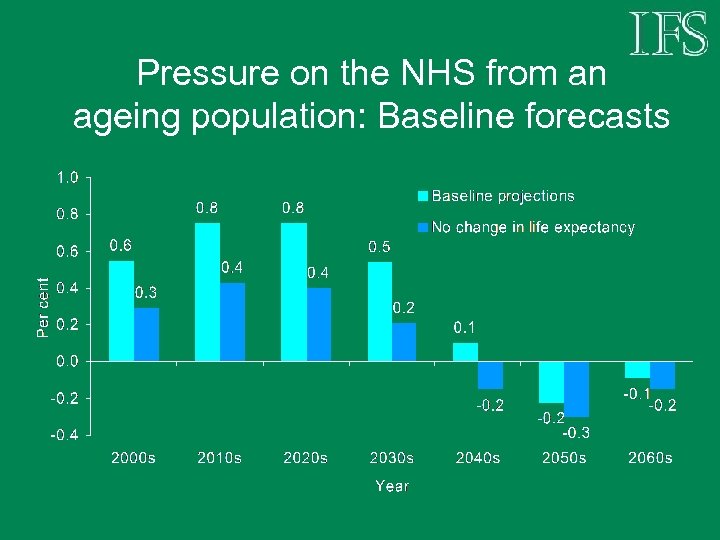 Pressure on the NHS from an ageing population: Baseline forecasts
 Future pressures are manageable? • Future patterns of ill health • Accuracy of population projections • Other pressures on the NHS • Increasing wages in the economy • Increasing public demands fuelled partly by technological advance
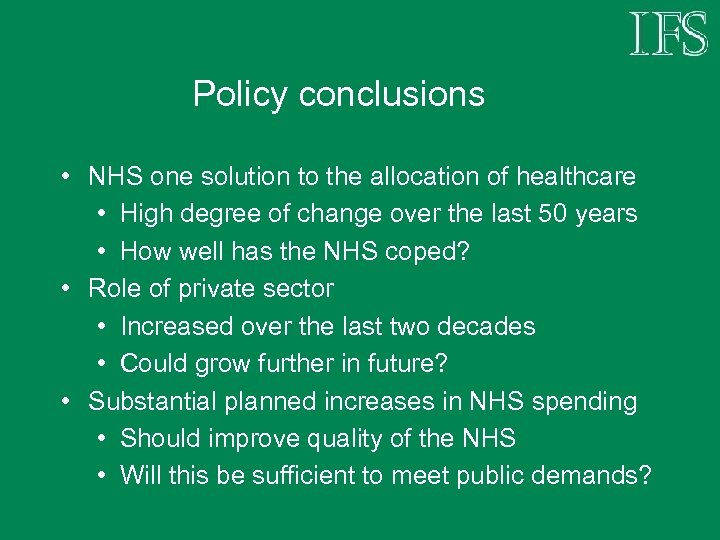 Policy conclusions • NHS one solution to the allocation of healthcare • High degree of change over the last 50 years • How well has the NHS coped? • Role of private sector • Increased over the last two decades • Could grow further in future? • Substantial planned increases in NHS spending • Should improve quality of the NHS • Will this be sufficient to meet public demands?