


 Скачать презентацию PRESSURE DROP IN GAS PIPELINES AND WELLS Jón
0842bca44f7d60d99da22978fc70e55a.ppt
- Количество слайдов: 39
 PRESSURE DROP IN GAS PIPELINES AND WELLS Jón Steinar Guðmundsson February 2013 – – – – Importance of pressure drop and different pipes Pressure drop in pipelines (depends on d 5) Equations for liquid and gas flow North Sea gas pipelines Friction factor and roughness R&D on friction (roughness) and pressure drop Summary
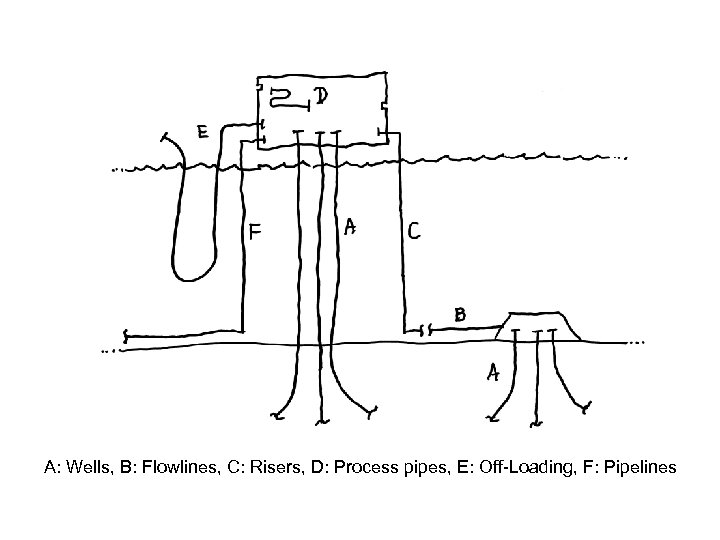 A: Wells, B: Flowlines, C: Risers, D: Process pipes, E: Off-Loading, F: Pipelines
 Importance of pressure drop • Transport capacity, we want to be able to push as much gas as possible through existing pipelines to customers. Norwegian export pipelines >100 BCM annually. • Expensive gas compression (power and emissions) needed to give sufficient inlet pressure to overcome pressure drop. Gas turbines drive large centrifugal compressors offshore. Largest consumption of power offshore. Gas turbines and electrical motors on land. • Export pipelines have epoxy coating to make wall smoother to reduce wall friction and hence greater flow capacity. • Production capacity (subsea-to-beach), we want to maintain wellhead pressure as low as possible to sustain large production rate from gas fields with time. Eventually we need subsea compression. • Large diameter pipelines used to avoid compression platforms along export gas pipelines. On land, compressor stations along pipeline.
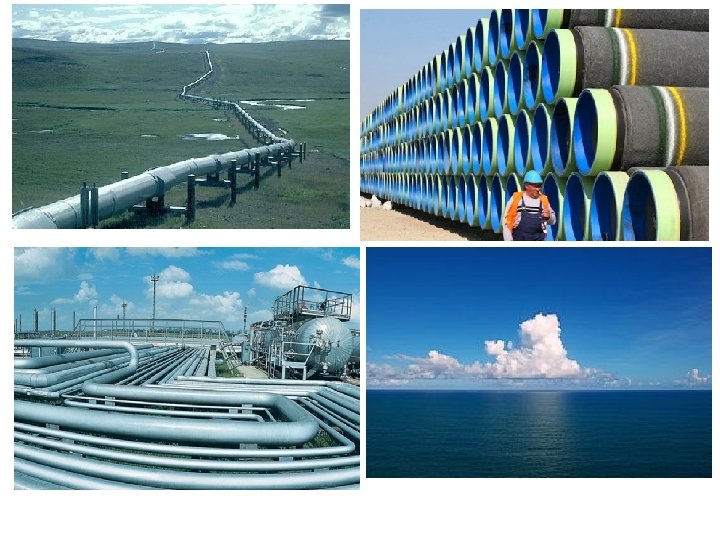
 Natural Gas Pipelines • We have pipelines on land for long-distance transport and regional distribution. • We have buried pipelines for local distribution, to factories, businesses and homes. • We have pipes in processing plants, offshore and onshore. • We have subsea pipelines within field developments (flowlines). • We have large-diameter, long-distance subsea pipelines from natural gas provinces to market. • Pipelines are as important an infrastructure as roads, electricity masts, water pipelines, sewer pipelines etc.
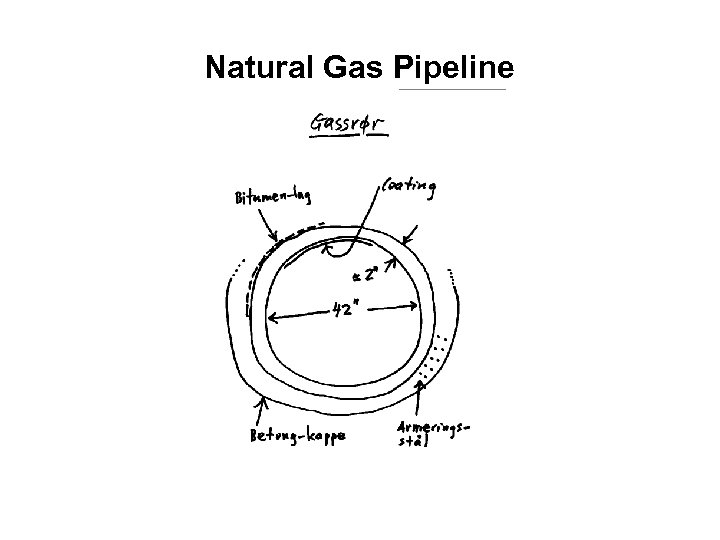 Natural Gas Pipeline
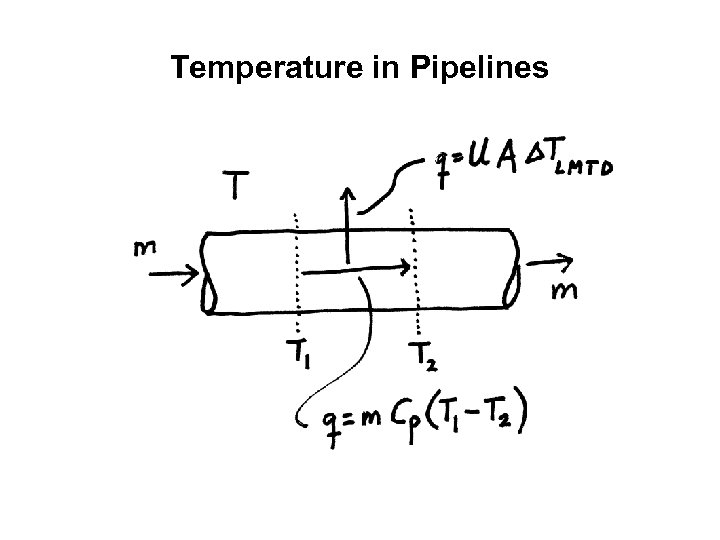 Temperature in Pipelines
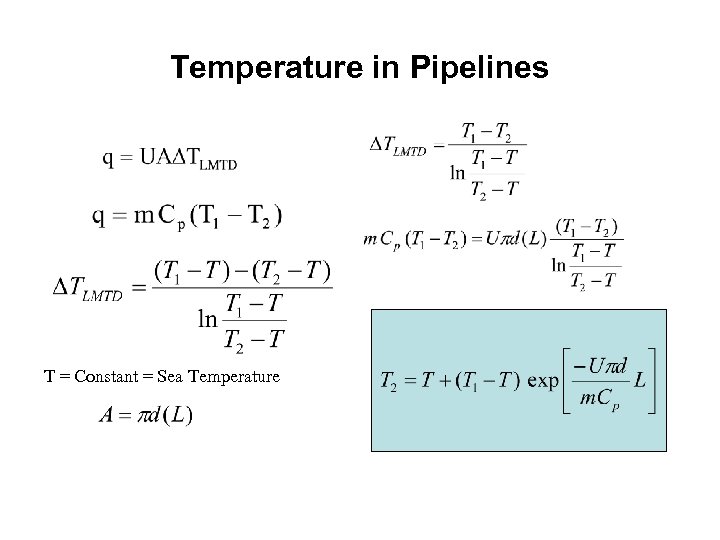 Temperature in Pipelines T = Constant = Sea Temperature
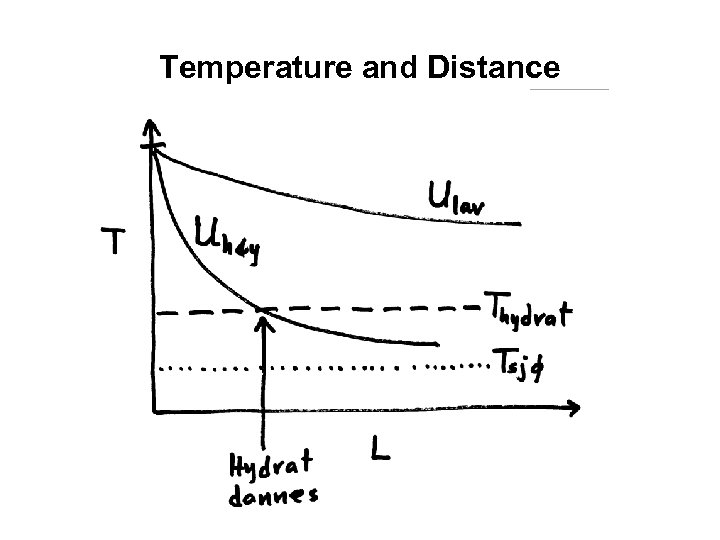 Temperature and Distance
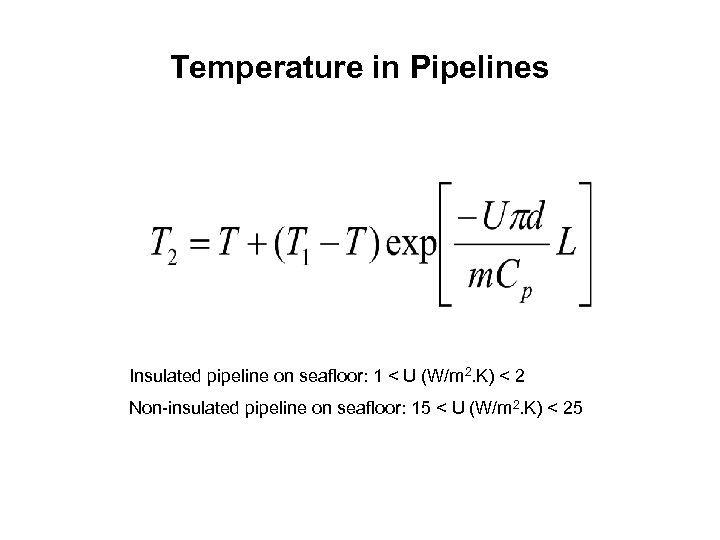 Temperature in Pipelines Insulated pipeline on seafloor: 1 < U (W/m 2. K) < 2 Non-insulated pipeline on seafloor: 15 < U (W/m 2. K) < 25
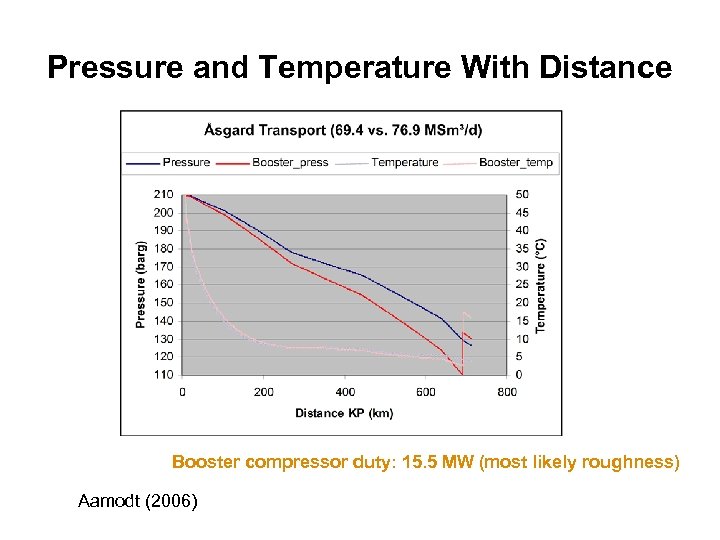 Pressure and Temperature With Distance Booster compressor duty: 15. 5 MW (most likely roughness) Aamodt (2006)
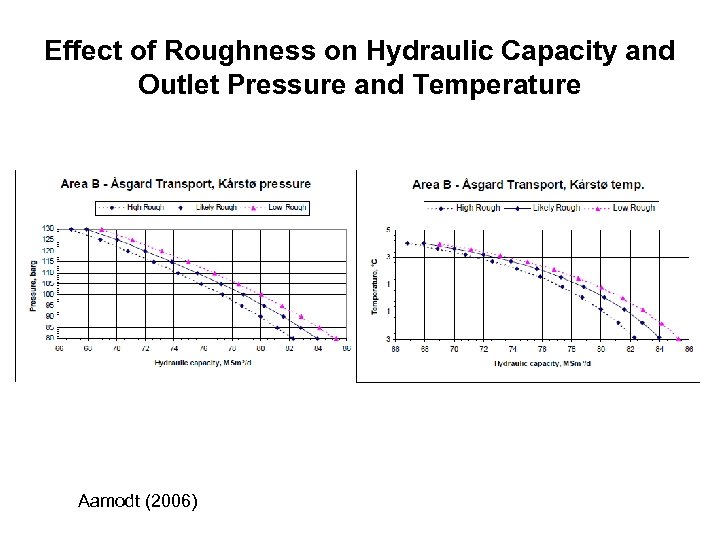 Effect of Roughness on Hydraulic Capacity and Outlet Pressure and Temperature Aamodt (2006)
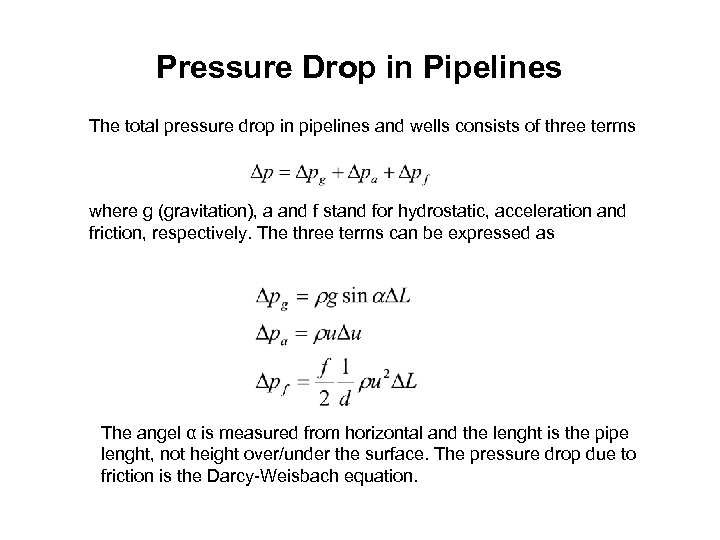 Pressure Drop in Pipelines The total pressure drop in pipelines and wells consists of three terms where g (gravitation), a and f stand for hydrostatic, acceleration and friction, respectively. The three terms can be expressed as The angel α is measured from horizontal and the lenght is the pipe lenght, not height over/under the surface. The pressure drop due to friction is the Darcy-Weisbach equation.
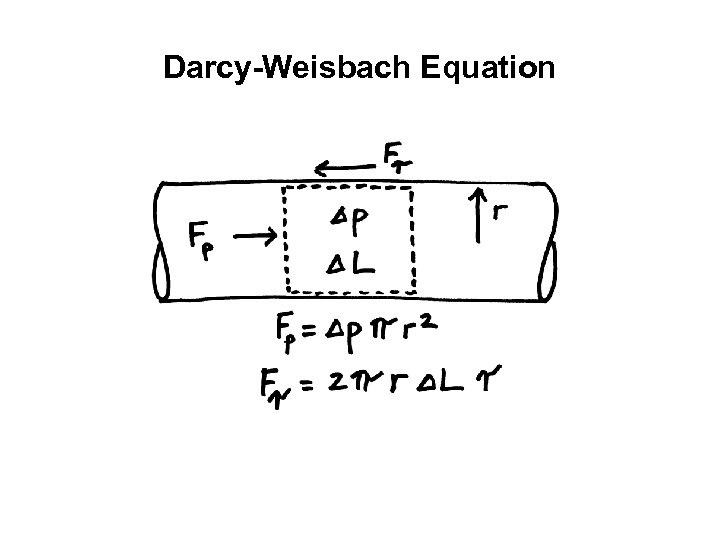 Darcy-Weisbach Equation
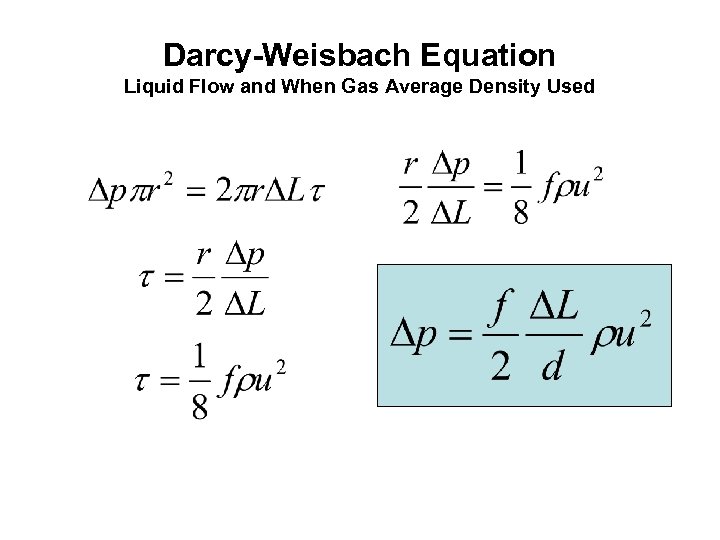 Darcy-Weisbach Equation Liquid Flow and When Gas Average Density Used
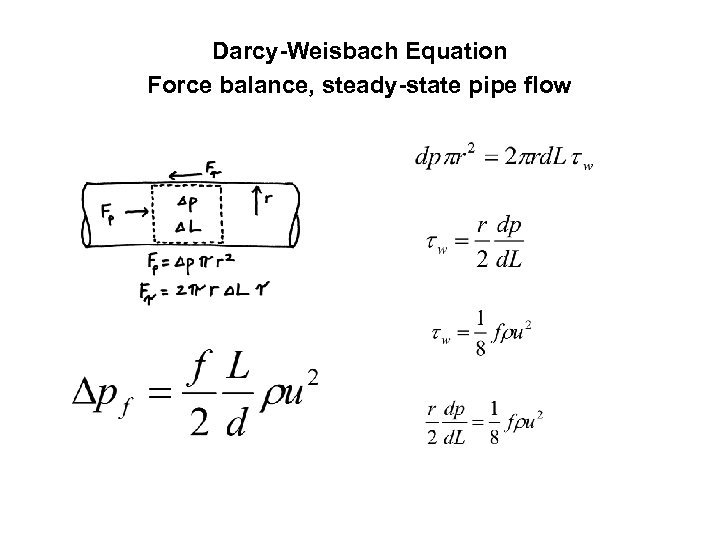 Darcy-Weisbach Equation Force balance, steady-state pipe flow
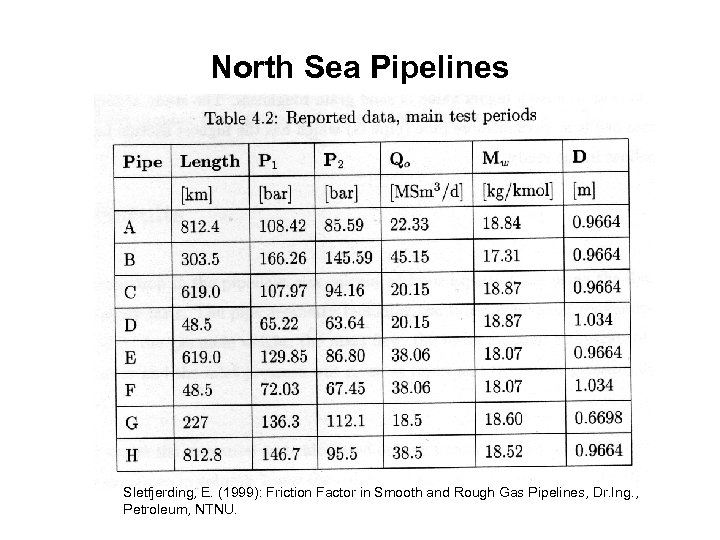 North Sea Pipelines Sletfjerding, E. (1999): Friction Factor in Smooth and Rough Gas Pipelines, Dr. Ing. , Petroleum, NTNU.
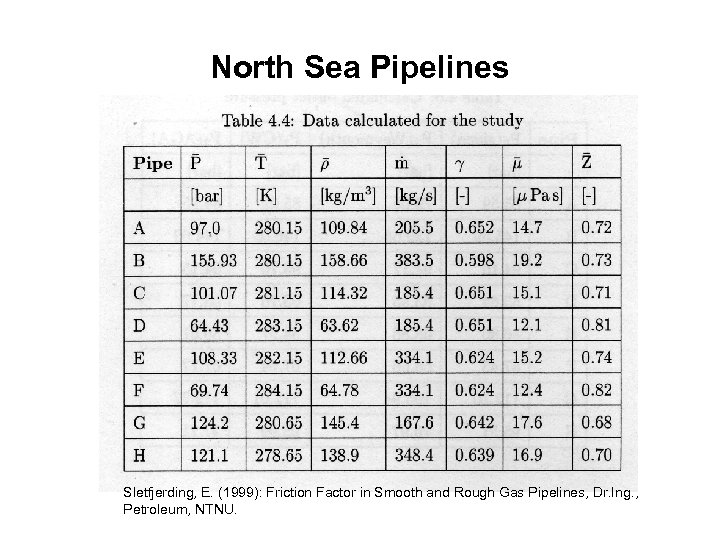 North Sea Pipelines Sletfjerding, E. (1999): Friction Factor in Smooth and Rough Gas Pipelines, Dr. Ing. , Petroleum, NTNU.
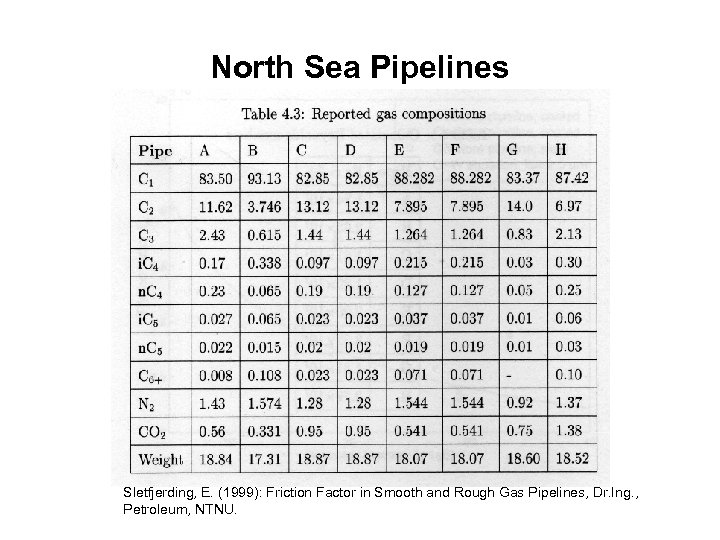 North Sea Pipelines Sletfjerding, E. (1999): Friction Factor in Smooth and Rough Gas Pipelines, Dr. Ing. , Petroleum, NTNU.
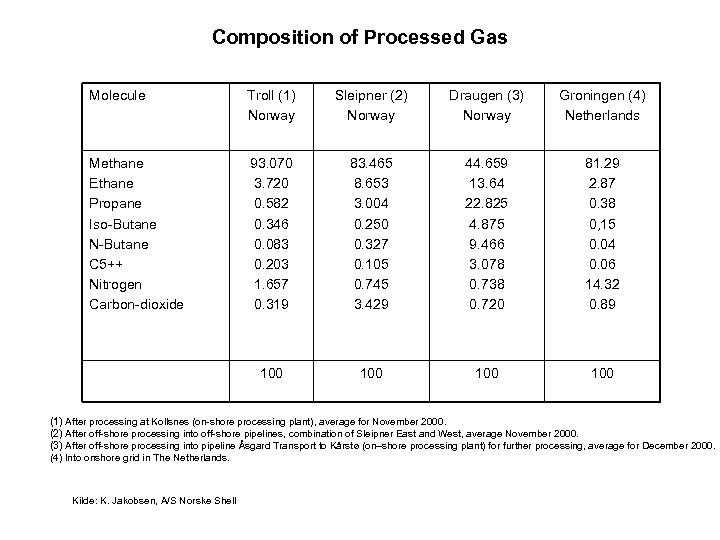 Composition of Processed Gas Molecule Troll (1) Norway Sleipner (2) Norway Draugen (3) Norway Groningen (4) Netherlands Methane Ethane Propane Iso-Butane N-Butane C 5++ Nitrogen Carbon-dioxide 93. 070 3. 720 0. 582 0. 346 0. 083 0. 203 1. 657 0. 319 83. 465 8. 653 3. 004 0. 250 0. 327 0. 105 0. 745 3. 429 44. 659 13. 64 22. 825 4. 875 9. 466 3. 078 0. 738 0. 720 81. 29 2. 87 0. 38 0, 15 0. 04 0. 06 14. 32 0. 89 100 100 (1) After processing at Kollsnes (on-shore processing plant), average for November 2000. (2) After off-shore processing into off-shore pipelines, combination of Sleipner East and West, average November 2000. (3) After off-shore processing into pipeline Åsgard Transport to Kårstø (on–shore processing plant) for further processing, average for December 2000. (4) Into onshore grid in The Netherlands. Kilde: K. Jakobsen, A/S Norske Shell
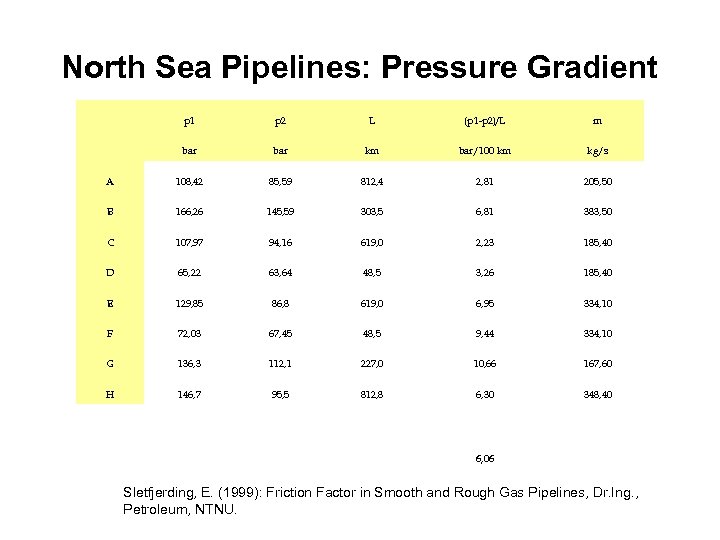 North Sea Pipelines: Pressure Gradient p 1 p 2 L (p 1 -p 2)/L m bar km bar/100 km kg/s A 108, 42 85, 59 812, 4 2, 81 205, 50 B 166, 26 145, 59 303, 5 6, 81 383, 50 C 107, 97 94, 16 619, 0 2, 23 185, 40 D 65, 22 63, 64 48, 5 3, 26 185, 40 E 129, 85 86, 8 619, 0 6, 95 334, 10 F 72, 03 67, 45 48, 5 9, 44 334, 10 G 136, 3 112, 1 227, 0 10, 66 167, 60 H 146, 7 95, 5 812, 8 6, 30 348, 40 6, 06 Sletfjerding, E. (1999): Friction Factor in Smooth and Rough Gas Pipelines, Dr. Ing. , Petroleum, NTNU.
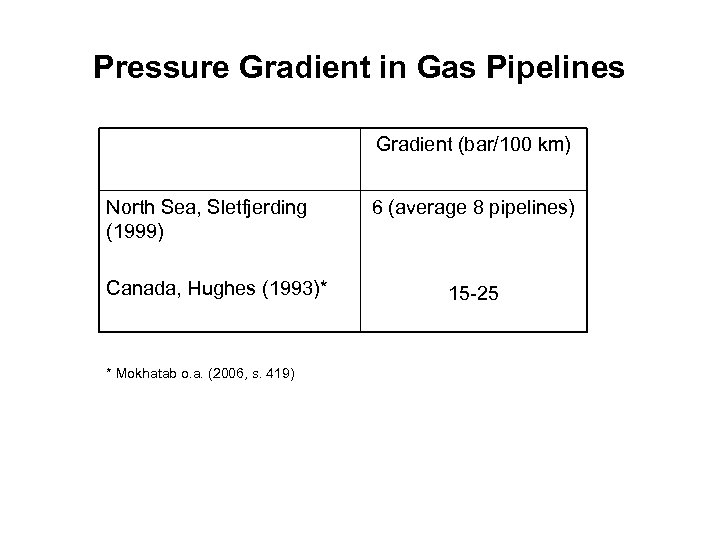 Pressure Gradient in Gas Pipelines Gradient (bar/100 km) North Sea, Sletfjerding (1999) Canada, Hughes (1993)* * Mokhatab o. a. (2006, s. 419) 6 (average 8 pipelines) 15 -25
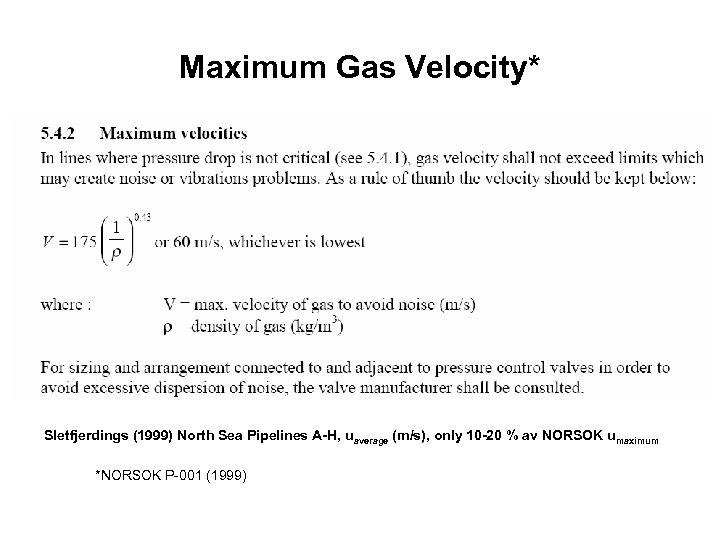 Maximum Gas Velocity* Sletfjerdings (1999) North Sea Pipelines A-H, uaverage (m/s), only 10 -20 % av NORSOK umaximum *NORSOK P-001 (1999)
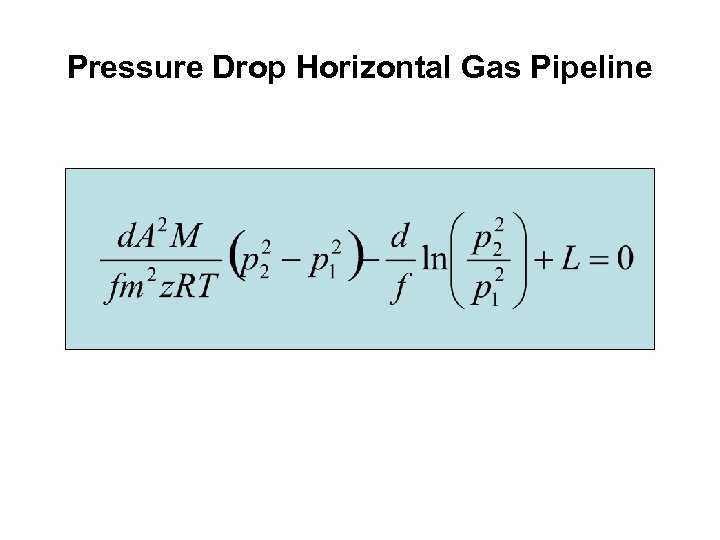 Pressure Drop Horizontal Gas Pipeline
![Variable and Units • • • d = Diameter [m] A = Cross sectional](https://present5.com/presentation/0842bca44f7d60d99da22978fc70e55a/image-25.jpg "Variable and Units • • • d = Diameter [m] A = Cross sectional") Variable and Units • • • d = Diameter [m] A = Cross sectional area [m 2] M = Molecular weight [kg/kmol] f = Friction factor [-] m = Mass flow rate [kg/s] z = Compressibility factor [-] R = Universal gas constant = 8314 [J/kmol. K] T = Temperature [K] p 1 = Inlet pressure [Pa] p 2 = Outlet pressure [Pa] L = Pipeline length [m]
Variable and Units • • • d = Diameter [m] A = Cross sectional area [m 2] M = Molecular weight [kg/kmol] f = Friction factor [-] m = Mass flow rate [kg/s] z = Compressibility factor [-] R = Universal gas constant = 8314 [J/kmol. K] T = Temperature [K] p 1 = Inlet pressure [Pa] p 2 = Outlet pressure [Pa] L = Pipeline length [m]
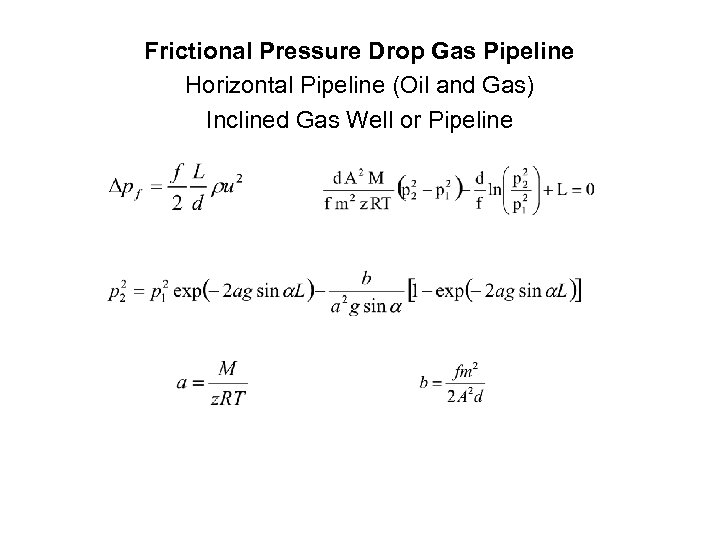 Frictional Pressure Drop Gas Pipeline Horizontal Pipeline (Oil and Gas) Inclined Gas Well or Pipeline
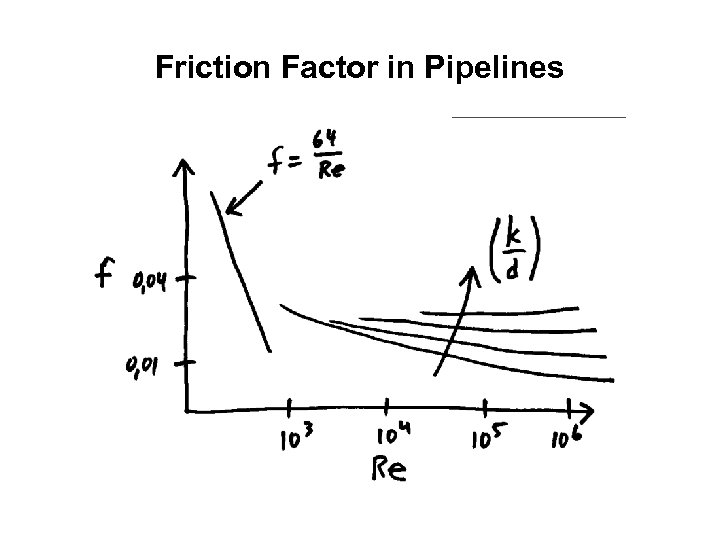 Friction Factor in Pipelines
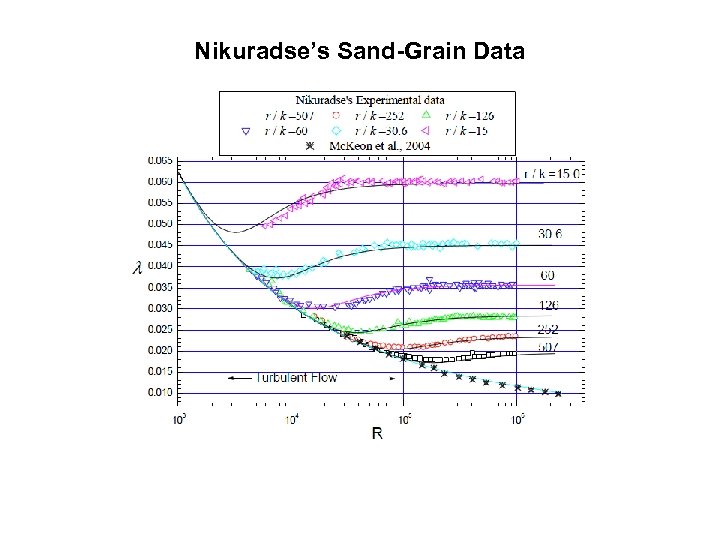 Nikuradse’s Sand-Grain Data
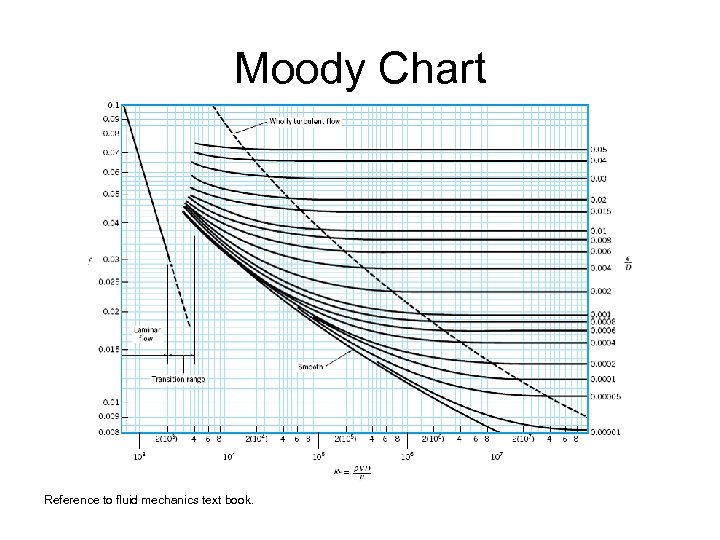 Moody Chart Reference to fluid mechanics text book.
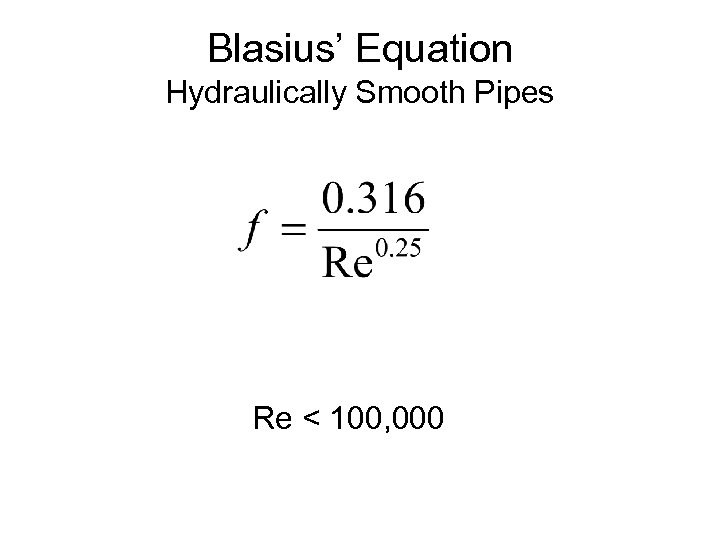 Blasius’ Equation Hydraulically Smooth Pipes Re < 100, 000
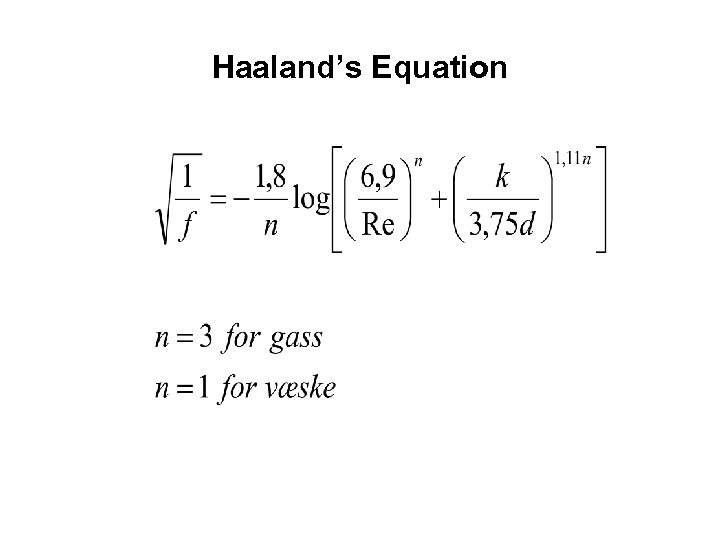 Haaland’s Equation
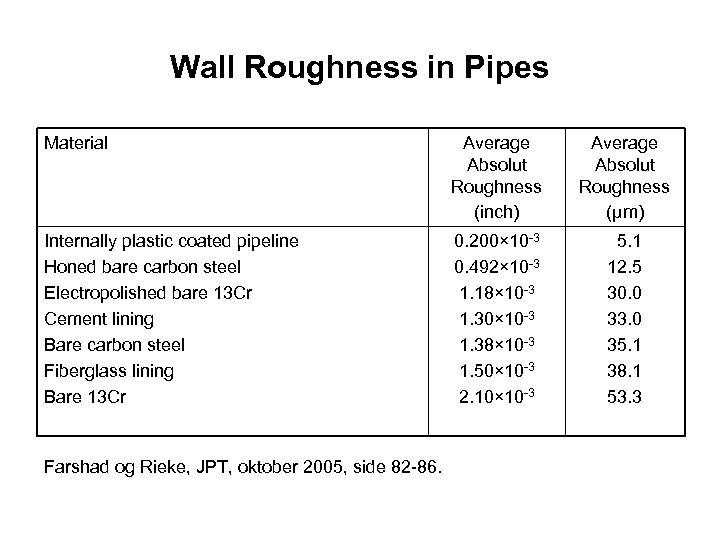 Wall Roughness in Pipes Material Average Absolut Roughness (inch) Average Absolut Roughness (µm) Internally plastic coated pipeline Honed bare carbon steel Electropolished bare 13 Cr Cement lining Bare carbon steel Fiberglass lining Bare 13 Cr 0. 200× 10 -3 0. 492× 10 -3 1. 18× 10 -3 1. 30× 10 -3 1. 38× 10 -3 1. 50× 10 -3 2. 10× 10 -3 5. 1 12. 5 30. 0 33. 0 35. 1 38. 1 53. 3 Farshad og Rieke, JPT, oktober 2005, side 82 -86.
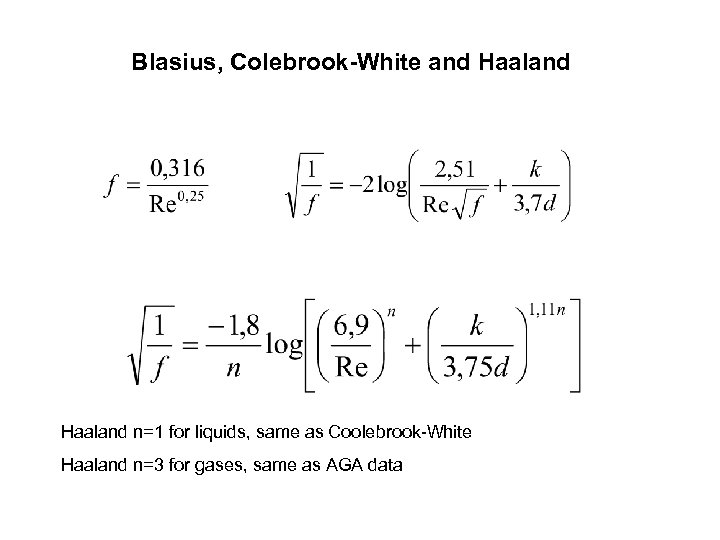 Blasius, Colebrook-White and Haaland n=1 for liquids, same as Coolebrook-White Haaland n=3 for gases, same as AGA data
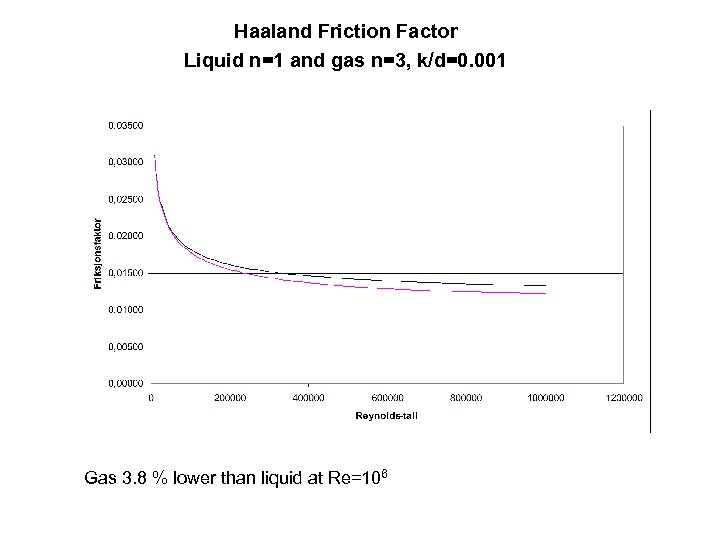 Haaland Friction Factor Liquid n=1 and gas n=3, k/d=0. 001 Gas 3. 8 % lower than liquid at Re=106
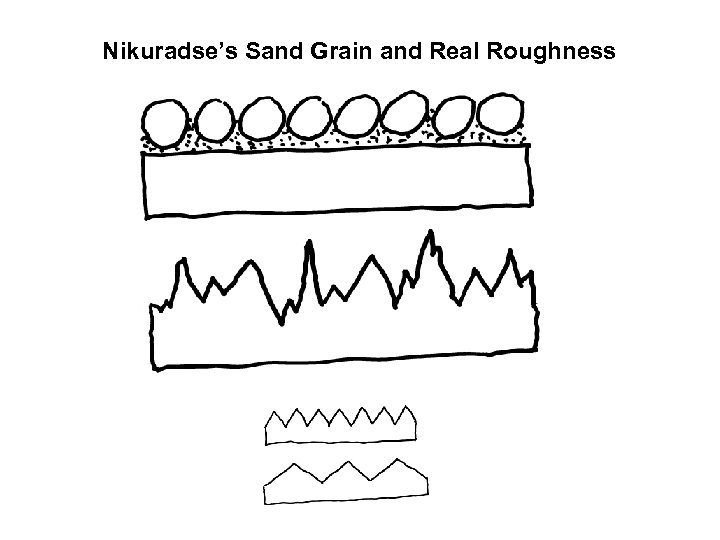 Nikuradse’s Sand Grain and Real Roughness
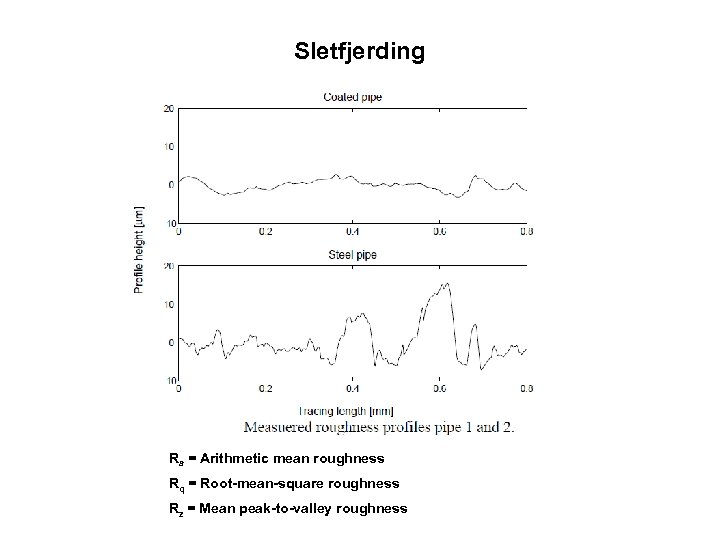 Sletfjerding Ra = Arithmetic mean roughness Rq = Root-mean-square roughness Rz = Mean peak-to-valley roughness
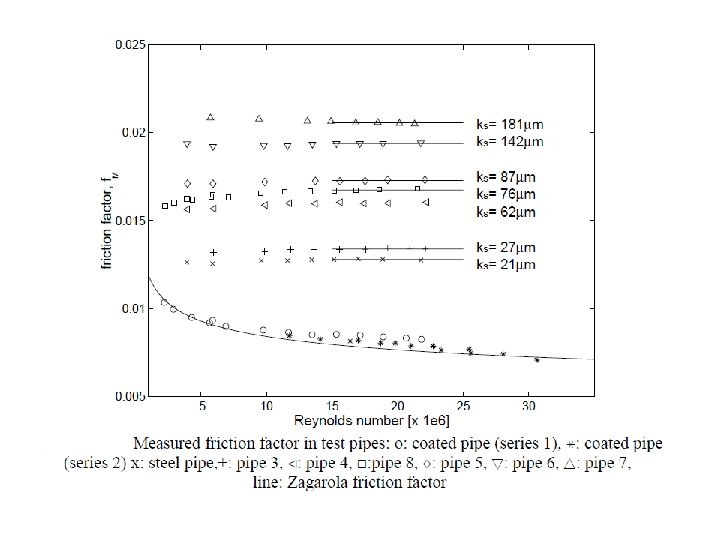
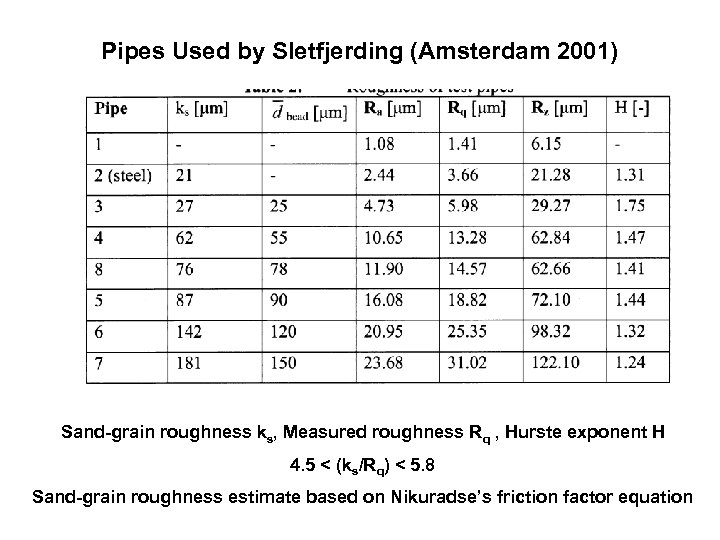 Pipes Used by Sletfjerding (Amsterdam 2001) Sand-grain roughness ks, Measured roughness Rq , Hurste exponent H 4. 5 < (ks/Rq) < 5. 8 Sand-grain roughness estimate based on Nikuradse’s friction factor equation
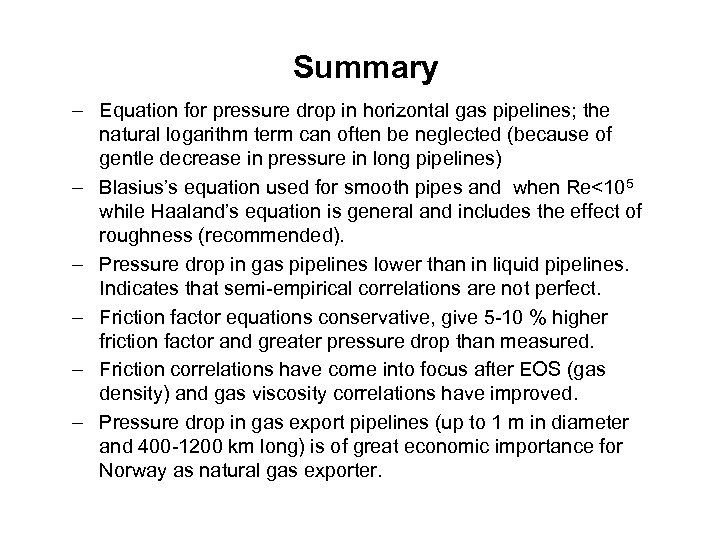 Summary – Equation for pressure drop in horizontal gas pipelines; the natural logarithm term can often be neglected (because of gentle decrease in pressure in long pipelines) – Blasius’s equation used for smooth pipes and when Re<105 while Haaland’s equation is general and includes the effect of roughness (recommended). – Pressure drop in gas pipelines lower than in liquid pipelines. Indicates that semi-empirical correlations are not perfect. – Friction factor equations conservative, give 5 -10 % higher friction factor and greater pressure drop than measured. – Friction correlations have come into focus after EOS (gas density) and gas viscosity correlations have improved. – Pressure drop in gas export pipelines (up to 1 m in diameter and 400 -1200 km long) is of great economic importance for Norway as natural gas exporter.