


 Скачать презентацию Presentation to the Parliament Committee on Finance The
f840ee33de7eff9cf1fc4ea7d2f21979.ppt
- Количество слайдов: 41
 Presentation to the Parliament Committee on Finance The South African economy: recent developments and monetary policy Ben Smit BUREAU FOR ECONOMIC RESEARCH UNIVERSITY OF STELLENBOSCH 28 March 2007
 Outline n Overview of the March 2007 SARB Quarterly Bulletin n The MPC statement of 15 February 2007 n The performance of Monetary Policy
 Overview of the March 2007 SARB Quarterly Bulletin
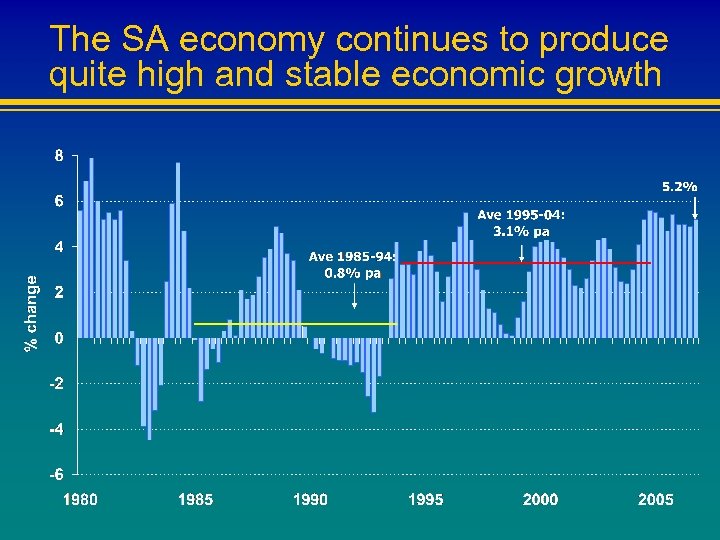 The SA economy continues to produce quite high and stable economic growth
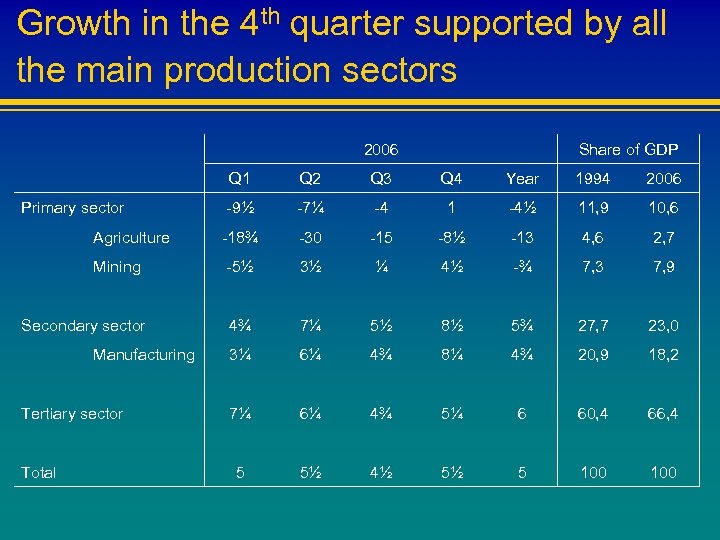 Growth in the 4 th quarter supported by all the main production sectors 2006 Share of GDP Q 1 Q 2 Q 3 Q 4 Year 1994 2006 -9½ -7¼ -4 1 -4½ 11, 9 10, 6 Agriculture -18¾ -30 -15 -8½ -13 4, 6 2, 7 Mining -5½ 3½ ¼ 4½ -¾ 7, 3 7, 9 4¾ 7¼ 5½ 8½ 5¾ 27, 7 23, 0 3¼ 6¼ 4¾ 8¼ 4¾ 20, 9 18, 2 7¼ 6¼ 4¾ 5¼ 6 60, 4 66, 4 5 5½ 4½ 5½ 5 100 Primary sector Secondary sector Manufacturing Tertiary sector Total
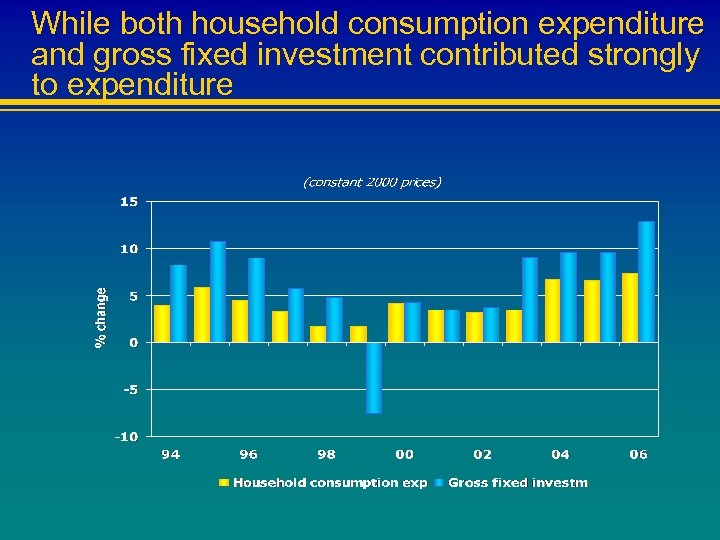 While both household consumption expenditure and gross fixed investment contributed strongly to expenditure
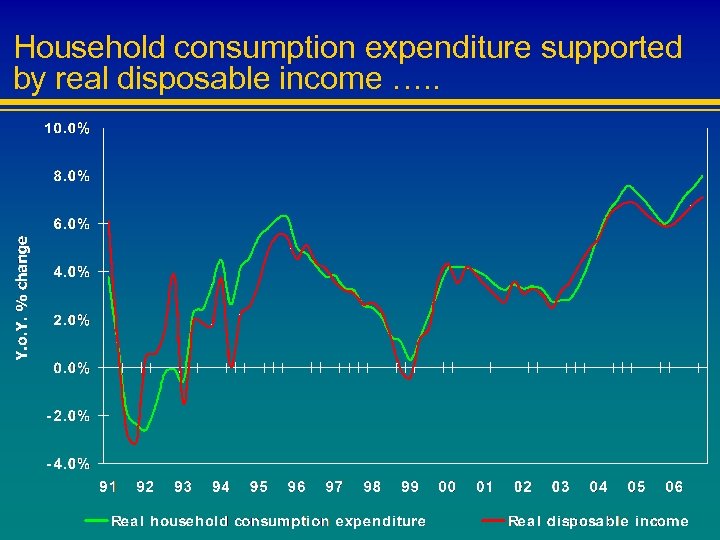 Household consumption expenditure supported by real disposable income …. .
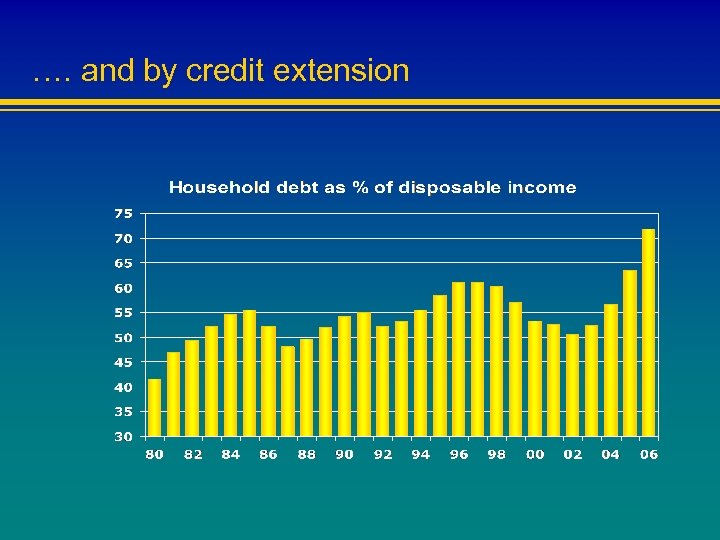 …. and by credit extension
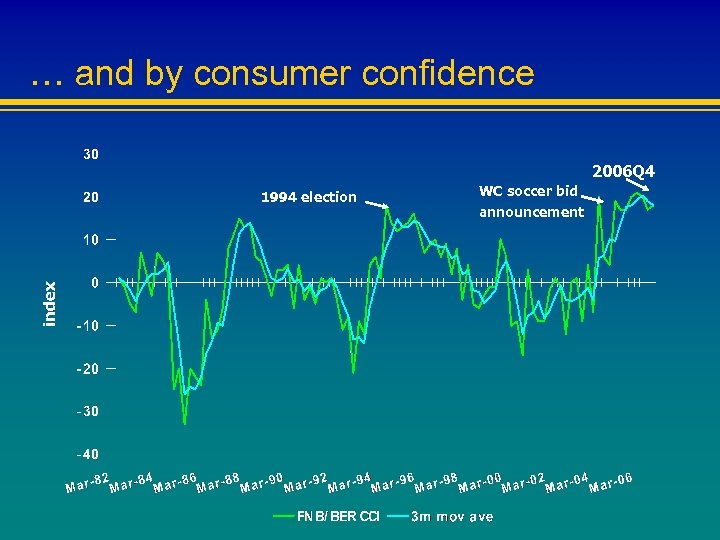 … and by consumer confidence 2006 Q 4 1994 election WC soccer bid announcement
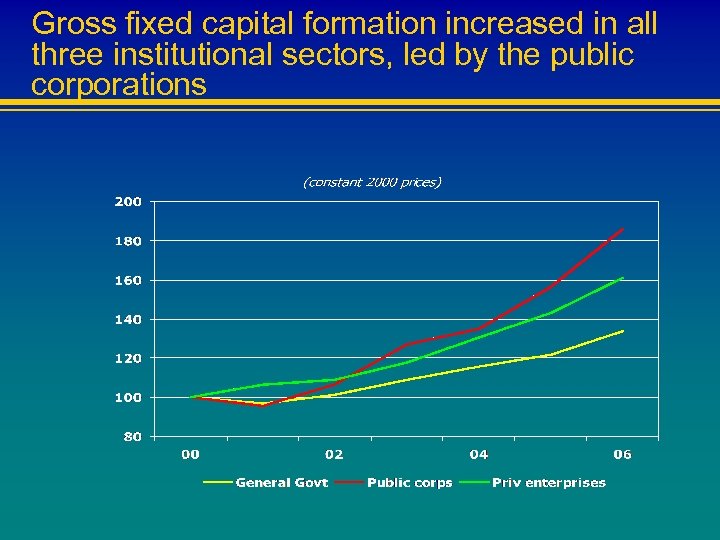 Gross fixed capital formation increased in all three institutional sectors, led by the public corporations
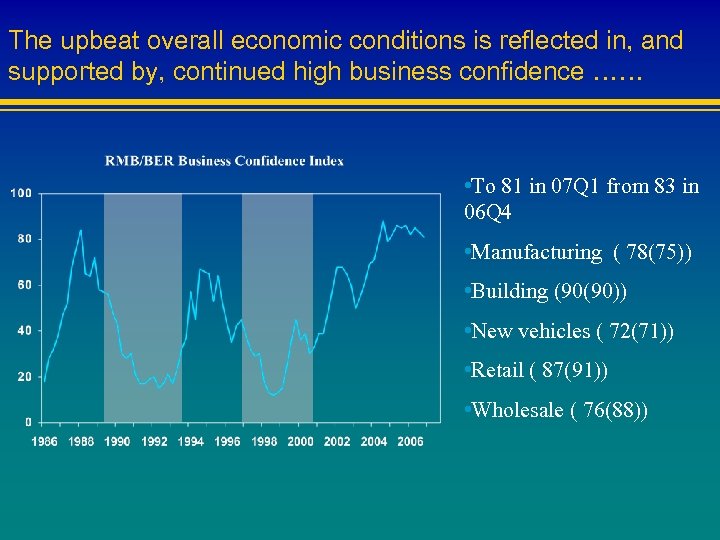 The upbeat overall economic conditions is reflected in, and supported by, continued high business confidence …… • To 81 in 07 Q 1 from 83 in 06 Q 4 • Manufacturing ( 78(75)) • Building (90(90)) • New vehicles ( 72(71)) • Retail ( 87(91)) • Wholesale ( 76(88))
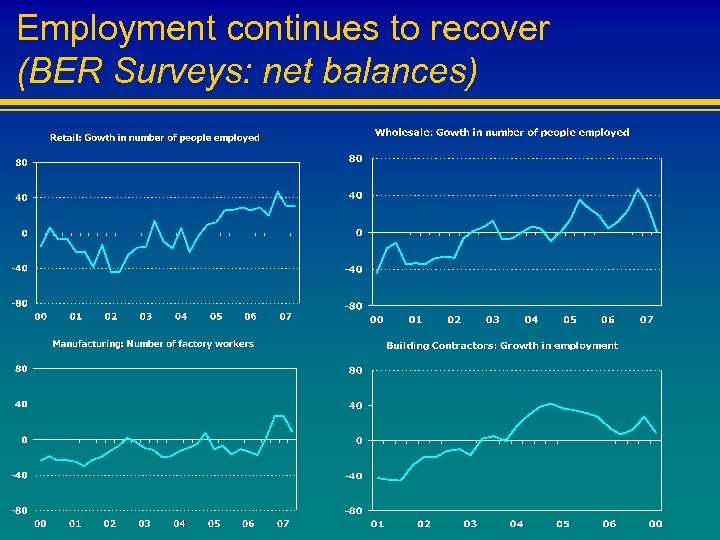 Employment continues to recover (BER Surveys: net balances)
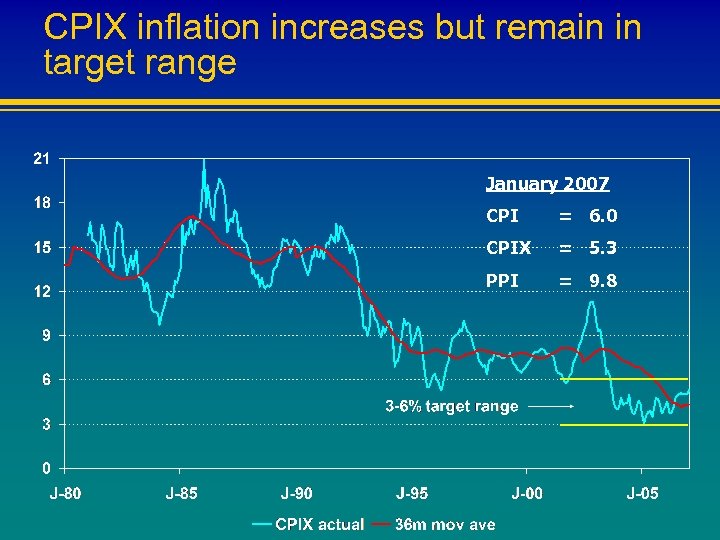 CPIX inflation increases but remain in target range January 2007 CPI = 6. 0 CPIX = 5. 3 PPI = 9. 8
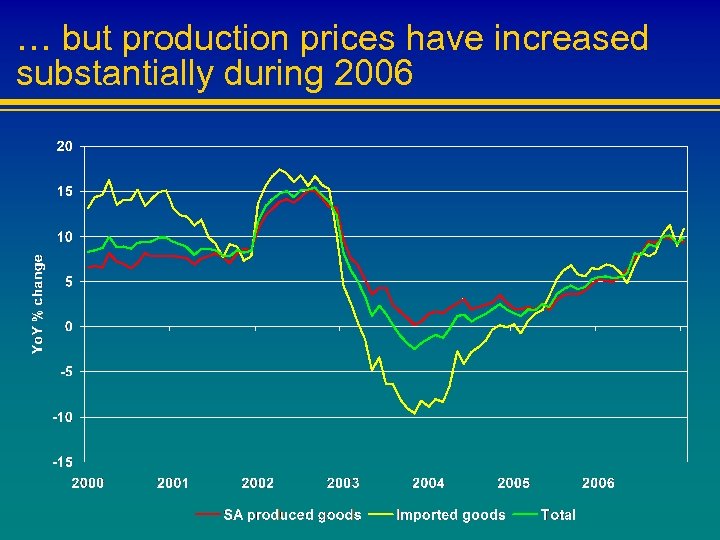 … but production prices have increased substantially during 2006
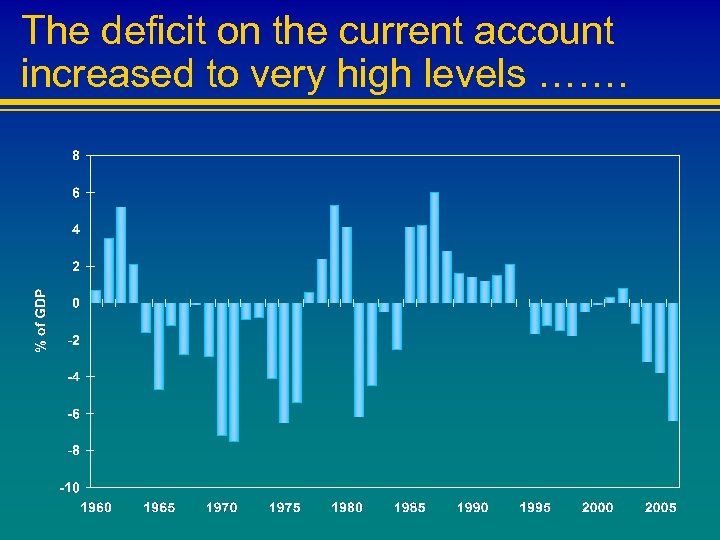 The deficit on the current account increased to very high levels …….
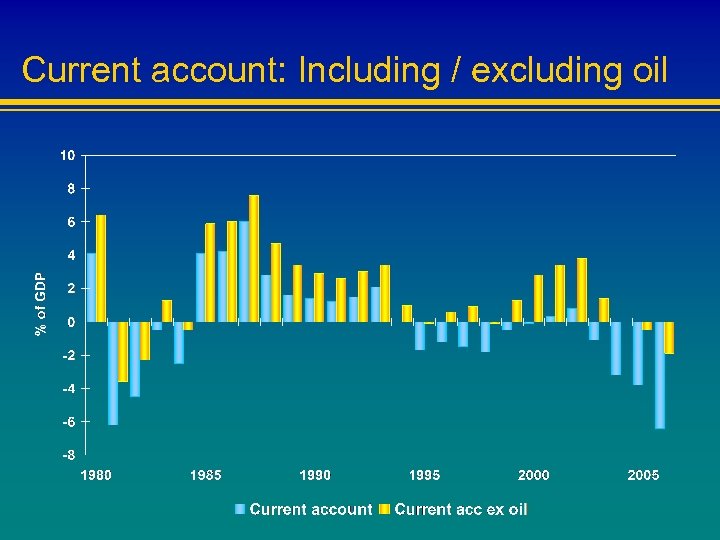 Current account: Including / excluding oil
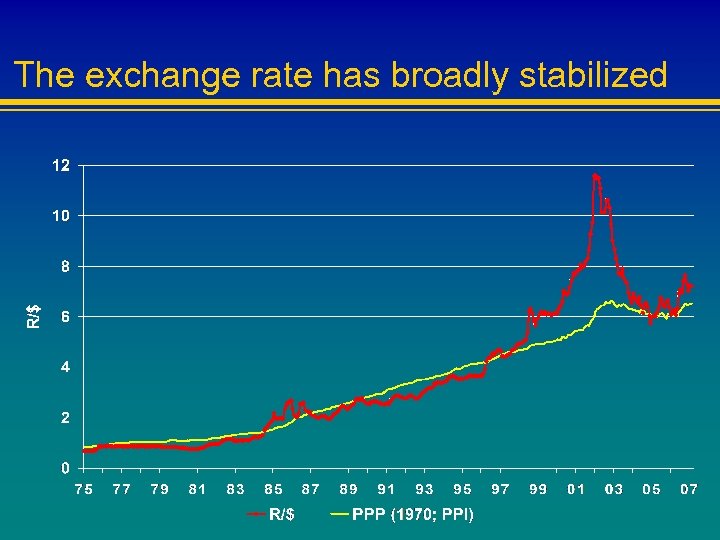 The exchange rate has broadly stabilized
 Monetary Policy Committee Decision 15 February 2007
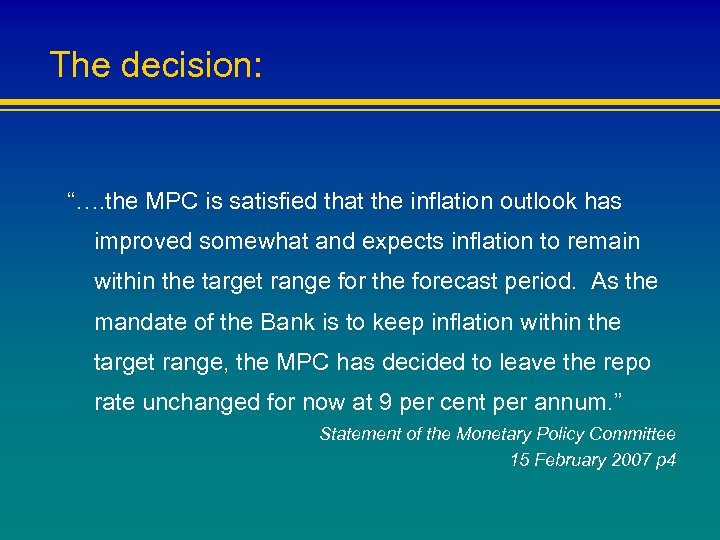 The decision: “…. the MPC is satisfied that the inflation outlook has improved somewhat and expects inflation to remain within the target range for the forecast period. As the mandate of the Bank is to keep inflation within the target range, the MPC has decided to leave the repo rate unchanged for now at 9 per cent per annum. ” Statement of the Monetary Policy Committee 15 February 2007 p 4
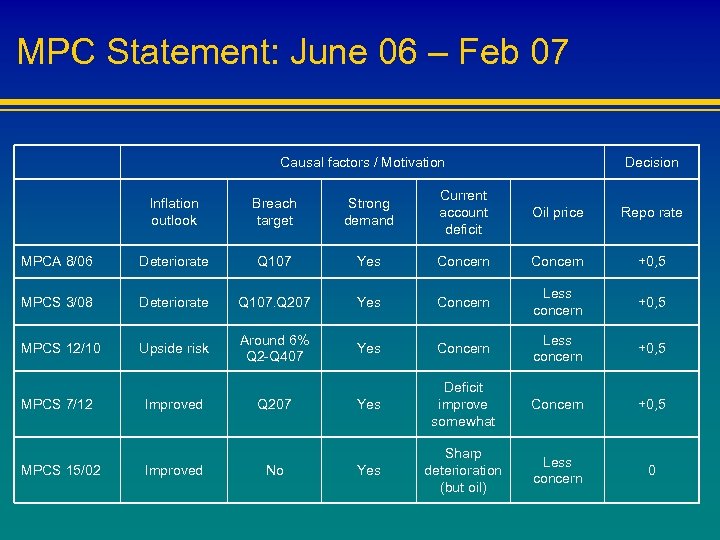 MPC Statement: June 06 – Feb 07 Causal factors / Motivation Decision Inflation outlook Breach target Strong demand Current account deficit Oil price Repo rate MPCA 8/06 Deteriorate Q 107 Yes Concern +0, 5 MPCS 3/08 Deteriorate Q 107. Q 207 Yes Concern Less concern +0, 5 MPCS 12/10 Upside risk Around 6% Q 2 -Q 407 Yes Concern Less concern +0, 5 Yes Deficit improve somewhat Concern +0, 5 Yes Sharp deterioration (but oil) Less concern 0 MPCS 7/12 MPCS 15/02 Improved Q 207 No
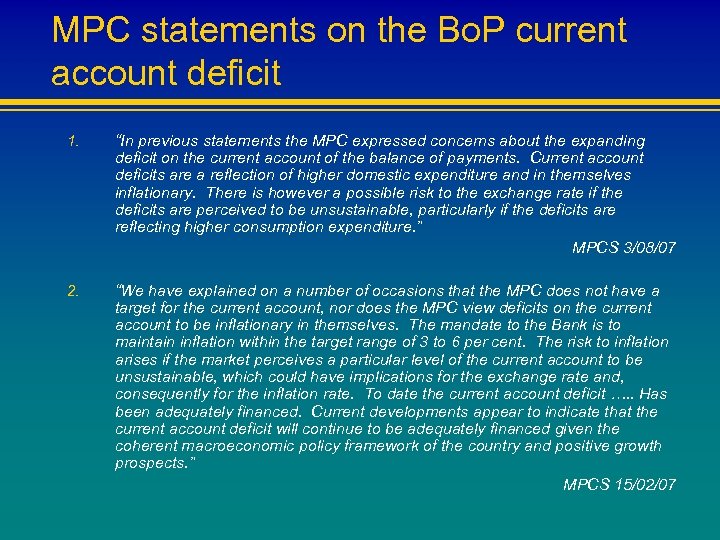 MPC statements on the Bo. P current account deficit 1. “In previous statements the MPC expressed concerns about the expanding deficit on the current account of the balance of payments. Current account deficits are a reflection of higher domestic expenditure and in themselves inflationary. There is however a possible risk to the exchange rate if the deficits are perceived to be unsustainable, particularly if the deficits are reflecting higher consumption expenditure. ” MPCS 3/08/07 2. “We have explained on a number of occasions that the MPC does not have a target for the current account, nor does the MPC view deficits on the current account to be inflationary in themselves. The mandate to the Bank is to maintain inflation within the target range of 3 to 6 per cent. The risk to inflation arises if the market perceives a particular level of the current account to be unsustainable, which could have implications for the exchange rate and, consequently for the inflation rate. To date the current account deficit …. . Has been adequately financed. Current developments appear to indicate that the current account deficit will continue to be adequately financed given the coherent macroeconomic policy framework of the country and positive growth prospects. ” MPCS 15/02/07
 Current account vulnerability
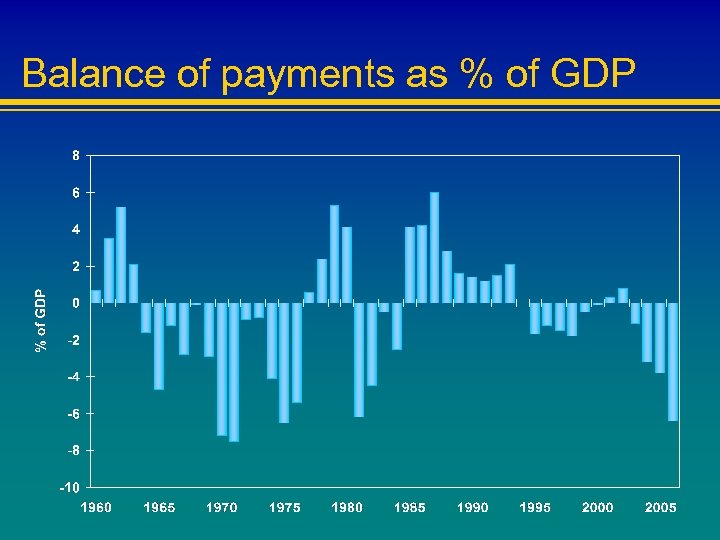 Balance of payments as % of GDP
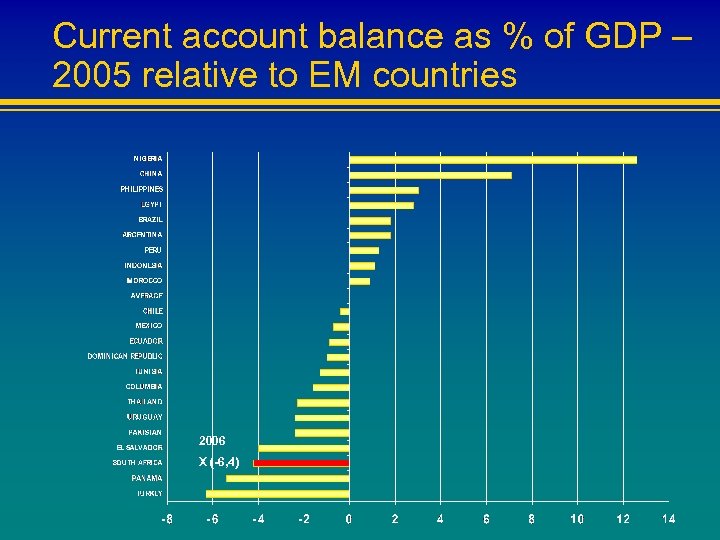 Current account balance as % of GDP – 2005 relative to EM countries 2006 X (-6, 4)
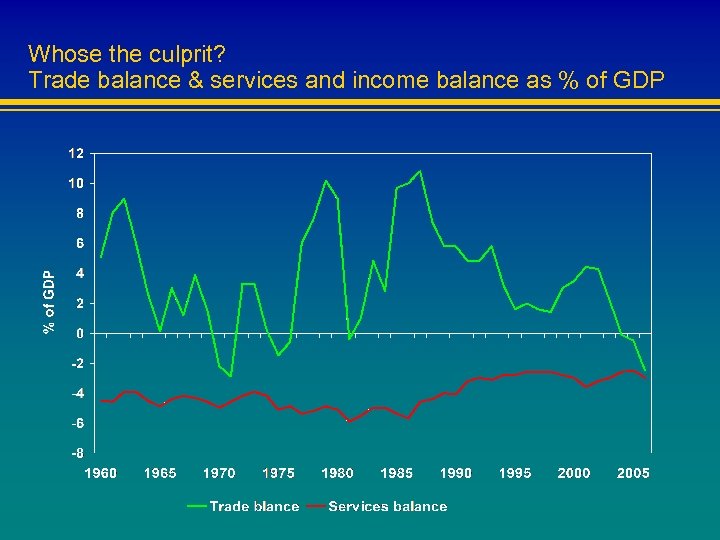 Whose the culprit? Trade balance & services and income balance as % of GDP
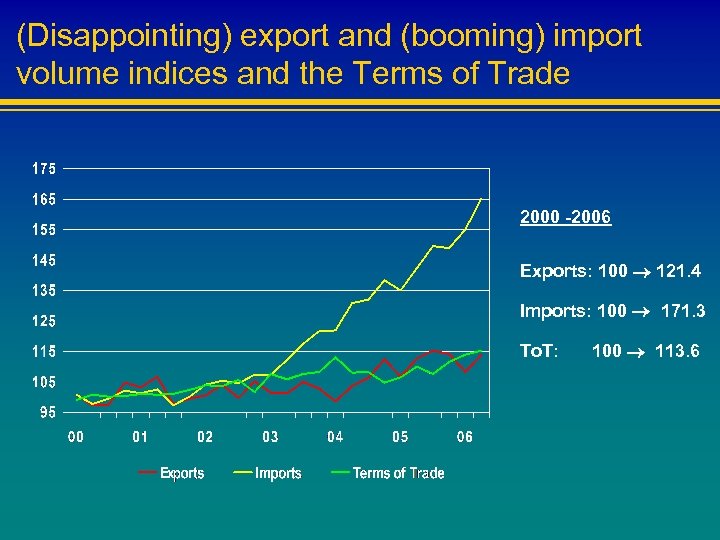 (Disappointing) export and (booming) import volume indices and the Terms of Trade 2000 -2006 Exports: 100 121. 4 Imports: 100 171. 3 To. T: 100 113. 6
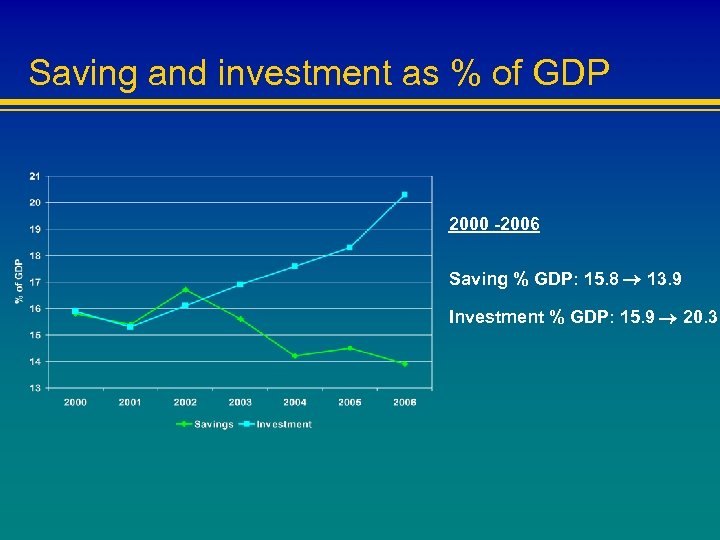 Saving and investment as % of GDP 2000 -2006 Saving % GDP: 15. 8 13. 9 Investment % GDP: 15. 9 20. 3
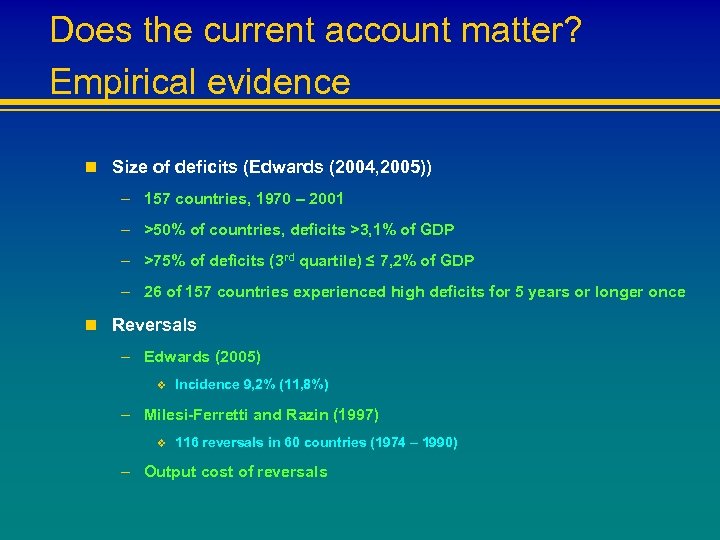 Does the current account matter? Empirical evidence n Size of deficits (Edwards (2004, 2005)) – 157 countries, 1970 – 2001 – >50% of countries, deficits >3, 1% of GDP – >75% of deficits (3 rd quartile) ≤ 7, 2% of GDP – 26 of 157 countries experienced high deficits for 5 years or longer once n Reversals – Edwards (2005) v Incidence 9, 2% (11, 8%) – Milesi-Ferretti and Razin (1997) v 116 reversals in 60 countries (1974 – 1990) – Output cost of reversals
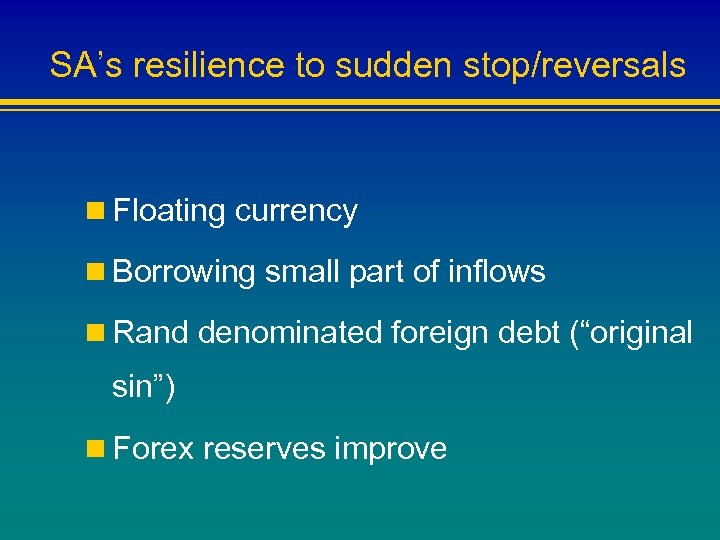 SA’s resilience to sudden stop/reversals n Floating currency n Borrowing small part of inflows n Rand denominated foreign debt (“original sin”) n Forex reserves improve
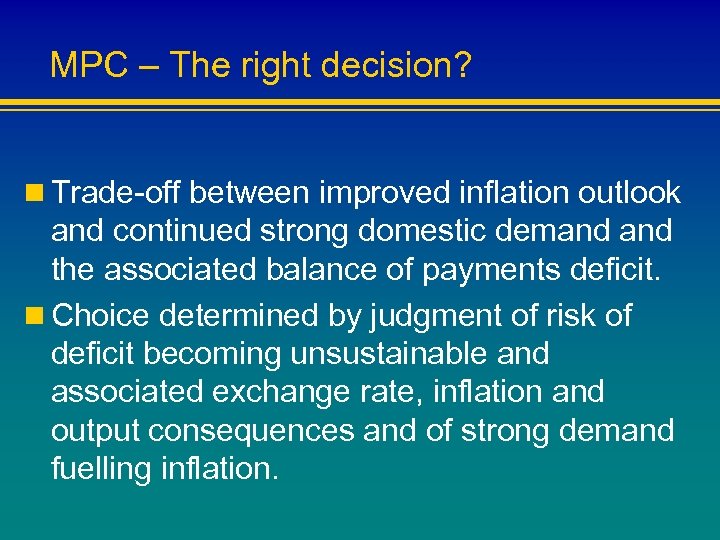 MPC – The right decision? n Trade-off between improved inflation outlook and continued strong domestic demand the associated balance of payments deficit. n Choice determined by judgment of risk of deficit becoming unsustainable and associated exchange rate, inflation and output consequences and of strong demand fuelling inflation.
 Performance of Monetary Policy
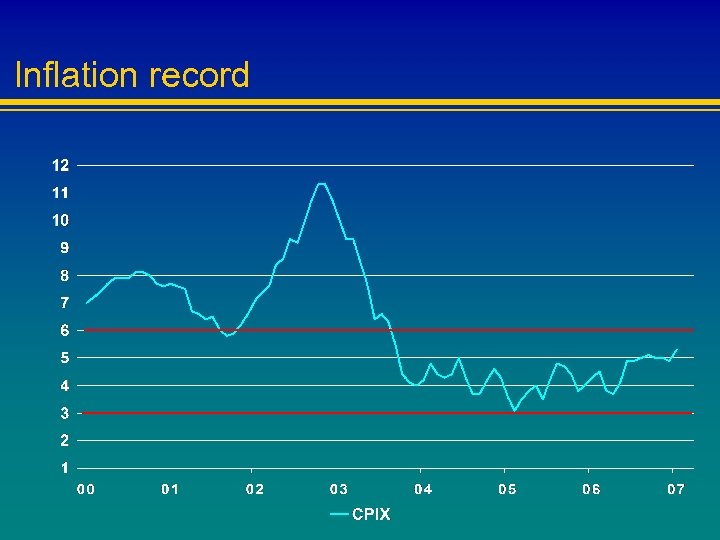 Inflation record
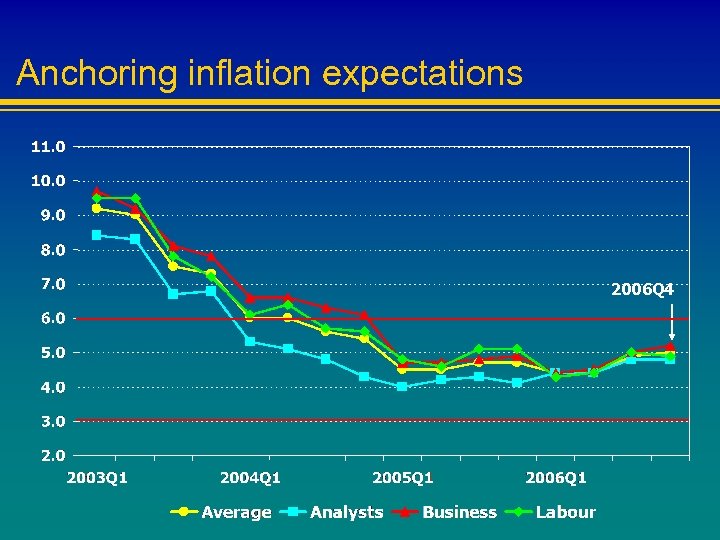 Anchoring inflation expectations 2006 Q 4
 Handling of supply shocks “The response of monetary policy to supply shocks appears to be countercyclical, i. e. dispelling somewhat the idea that monetary policy may have been overly procyclical in response to supply shocks. ” Frankel, Smit & Sturzenegger (March 2007): Macroeconomic challenges after a decade of success, p 68
 Policy transparency “Central bank transparency in South Africa has improved greatly under inflation targeting, from a score of 5 in 1994, to 9 in 2004 (out of a possible 15)” Aaron and Muellbauer (March 2007): Transparency, Credibility and Predictability of Monetary Policy in South Africa, Mimeo, p 5
 Forecast accuracy “… no other forecasting agency consistently produced more accurate inflation forecasts than the Bank in the period May 2003 to December 2005. ” SA Reserve Bank (Nov 2006): Monetary Policy Review, p 31
 Other issues n Contribution to output and price stability n Room for the “pursuit” of other goals such as exchange rates/Bop, growth n Overly conservative / too high interest rates
 Bureau for Economic Research Economic information that works for you Website: www. ber. sun. ac. za E-mail: Tel No: hhman@sun. ac. za 021 -887 2810
 xxxxx n xxxxxxxxxxxxxxx n xxxxxxxxx
 xxxxxx n xxxxxxxxxxxxxxxxx n xxxxxxxxxx
 xxxxx n xxxxxxxxxx n xxxxxxxx