


 Скачать презентацию Presentation to the Health Portfolio Committee NHLS 2012 2013
fe918b7694c623f1f1764cd5c2519f13.ppt
- Количество слайдов: 50
 Presentation to the Health Portfolio Committee NHLS 2012/2013 Annual Report Sagie Pillay (CEO) Prof Algonda Perez (Chair) October 2013 Excellence is in our DNA
 2 Vision To provide public health laboratory services in the country, to restructure and transform the laboratory services in order to make them part of a single national public entity and develop policies that will enable it to provide health laboratory services as the preferred provider for the public health sector. Mission To provide cost-effective and professional laboratory medicine, through competent, qualified professionals and state-of-the-art technology supported by academic and internationally recognised research, training and product development to maximise healthcare delivery to the nation. We Value • Employees United • Service Above Self • Who We Are • Transformation • Caring
 3 NHLS 10 point plan 1. Developing a new service delivery model that is more affordable for the public sector; 2. Determine a best fit service delivery model; 3. Deliver a quality, patient focused service; 4. Align resources, support services and infrastructural development for service delivery; 5. Become laboratory services “Employer of Choice”; 6. Prioritise innovation, teaching and research to be relevant, appropriate and leading edge; 7. Become the health information powerhouse; 8. Drive stakeholder collaboration; 9. Position NHLS as the “Provider of Choice” for NHI; and 10. Protect our community and environment.
 4 2012/13 Another successful year • • Clean audit a below-inflation tariff increase 37% cheaper than Private. Gate keeping - Flattening of volumes Biggest intake of African Registrar NHI pilot sites Reduced cost of the GX
 5 Board Governance and accountability • • • Effective board and committees Excellent strategic direction and oversight Effective systems and controls All reporting requirements adhered to Clear Roles and responsibilities of board and Exec
 6 Cost comparison • This independent study based on Council of Medical Schemes expenditure reports on private pathology services compared to NHLS annual expenditure shows that medical scheme expenditure per capita is 5 times higher. Medical scheme cost per beneficiary is R 456 compared to R 86 per public sector dependant served by the NHLS.
 7 Major achievements • Delivered 81, 123, 491 results and processed 27, 623, 869 test requests. 6, 420 instruments 7, 200 staff; • Gate-keeping tools were rolled out to a further • 19 hospitals; • NHLS successfully deployed 31 newly qualified pathologists to seven cities outside academic centres
 8 Growing the next generation • In pursuit of “growing our own”, the NHLS Learning Academy policy framework was finalised and implemented, and 822 employees were trained • an inaugural Research Summit bringing together faculties of health sciences across the country, the NRF, DST, MRC &NHRC.
 9 Quality • 11 new laboratories gaining SANAS accreditation • a new internal accreditation system –(SLMTA) – to ensure that all other laboratories work towards achieving a 5 -star rating in a system
 10 Teaching and Research • For the first time in the history of the NHLS, over 37 African applicants were attracted to training positions as pathology registrars • produced 472 peer-reviewed articles, 45 policy documents and 9 book chapters. (8% increase • national and international accolades, including the Order of Mapungubwe from the State President, the Research Scholar (SIRS) Award of the Howard Hughes Medical Institute, and the South Africa’s Most Influential Women 2012 award.
 11 African leadership in Lab Medicine • ASLM • Pan African Harmonisation Working party • Reference labs for WHO, CDC and DOH
 12 World Firsts • A groundbreaking research discovery was made by a team led by Professor Lynn Morris and Dr Penny Moore. Published in Nature Medicine • GX roll out
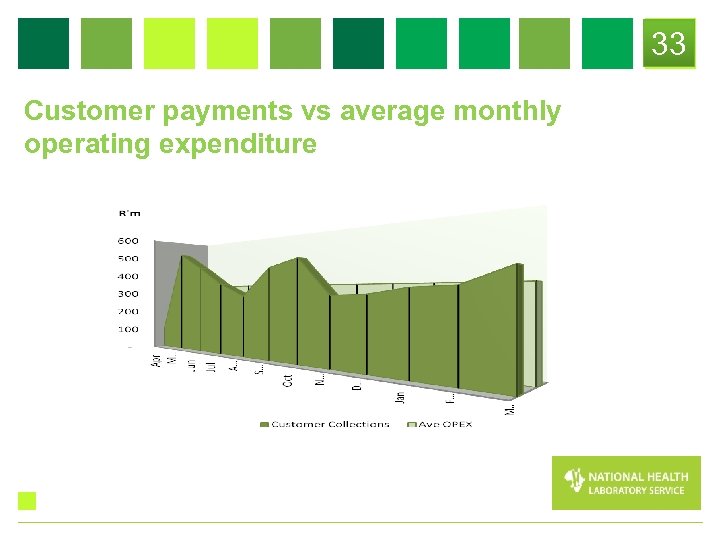
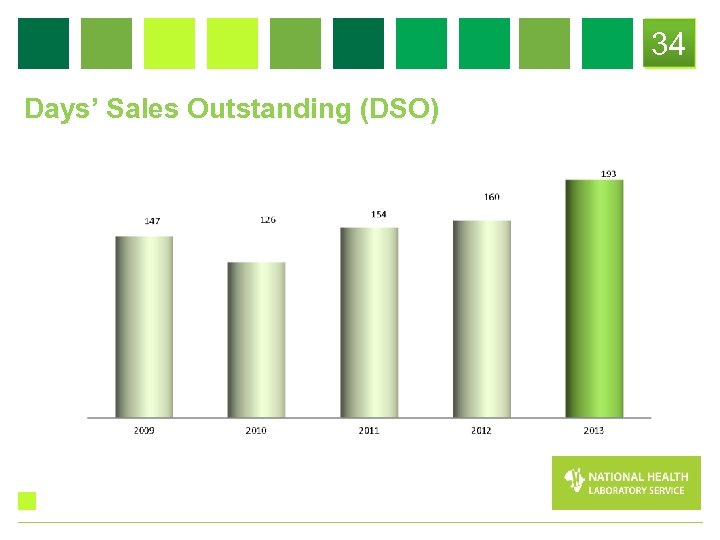
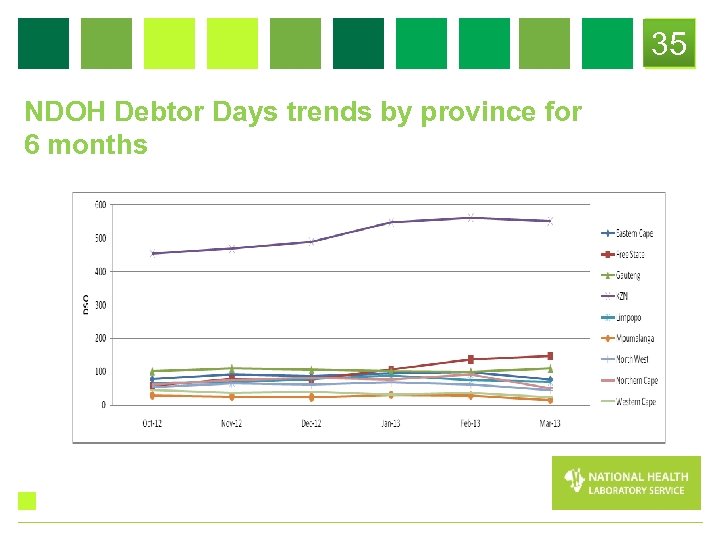
 13 Some challenges • the viability and sustainability of the organisation was seriously threatened, for the second year, with no resolution to the KZN Health Department debt situation. Debt R 2 b.
 14 AUDIT AND CORPORATE GOVERNANCE The new members of the Board, are fortunate to take over the responsibility of steering the NHLS from the previous Board, ably led by the previous Chairperson, Advocate Sesi Baloyi, on a very solid foundation. The Board is working hard to position the NHLS to respond to the policy direction 14 set by government in the form of implementation of the National Health Insurance (NHI) Pilots and other national priority projects. Once again the NHLS has received a clean financial audit. For the last 6 years, the NHLS has obtained an unqualified Audit Report.
 15 Successes and Achievements for 2012/2013 NHLS is focussed on improved patient care through quality service, affordability and cost reduction. The organisation is more responsive to health services; to evaluating the effectiveness of the current laboratory delivery model; and developing service delivery models that are better, faster and more cost efficient. After consultations with stakeholders these models will be implemented to support National Health Insurance (NHI) pilot sites. Time for change A simpler, more transparent, shared risk reimbursement model is being explored. Another key focus area is embedding a culture of joint partnerships to accelerate cost saving measures through appropriate laboratory use and the development of innovative procurement processes that support local manufacturing and lower prices. Together with new service models, a more efficient system that drives productivity is being developed.
 16 Successes and Achievements for 2012/2013 Innovation drives delivery A number of innovations and initiatives have been embarked on to drive efficiencies within the organisation, which will benefit the health sector. NHLS has embarked on an exercise to create visible and optimal management of collecting specimens and returning test results to health facilities. All route optimisations have been completed and implemented in Limpopo, Mpumalanga, North West, Gauteng, Free State, Northern Cape and Kwa. Zulu-Natal, to improve the turnaround times in the collection of specimens from clinic to laboratory and from laboratory to laboratory within our system. To create visibility on the life-cycle of a specimen in the end-to-end value chain, NHLS has developed and implemented an electronic specimen scanning system. This system identifies, resolves, minimises and eliminates bottlenecks in the chain. A “live” management dashboard monitors and provides timeous responses to any challenges in the value chain.
 17 Successes and Achievements for 2012/2013 Innovation drives delivery NHLS in collaboration with the Department of Health (Do. H) developed a tool to manage and justify the use of laboratory service by clinicians and nurses to ensure the continuous affordability of the service. The electronic gate-keeping tool has been implemented in Western Cape, Gauteng and Free State. The recorded savings indicate much potential to streamline health care budgets and reduce duplication of tests. The success is based on a clear understanding and buy-in by clinicians regarding the rational use of diagnostic laboratory services using clinical best practice models for diagnosis. Western Cape and Gauteng have posted an average of 3% and 1% savings respectively, while Free State is in the inception stage of implementation.
 18 Successes and Achievements for 2012/2013 Cutting edge TB testing Do. H together with NHLS have been the global leaders in rolling-out the Gene. Xpert MTB/RIF test, which addresses the high TB incidence rate, frequency of TB/HIV co-infection, and burden of multidrug-resistant TB. South Africa has adopted a phased roll out of the Gene. Xpert MTB/RIF test to replace microscopy as the primary diagnostic test for TB.
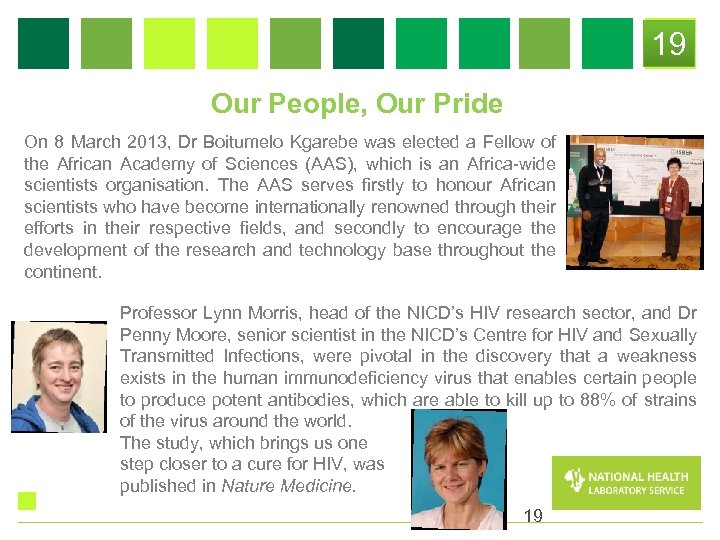 19 Our People, Our Pride On 8 March 2013, Dr Boitumelo Kgarebe was elected a Fellow of the African Academy of Sciences (AAS), which is an Africa-wide scientists organisation. The AAS serves firstly to honour African scientists who have become internationally renowned through their efforts in their respective fields, and secondly to encourage the development of the research and technology base throughout the continent. Professor Lynn Morris, head of the NICD’s HIV research sector, and Dr Penny Moore, senior scientist in the NICD’s Centre for HIV and Sexually Transmitted Infections, were pivotal in the discovery that a weakness exists in the human immunodeficiency virus that enables certain people to produce potent antibodies, which are able to kill up to 88% of strains of the virus around the world. The study, which brings us one step closer to a cure for HIV, was published in Nature Medicine. 19
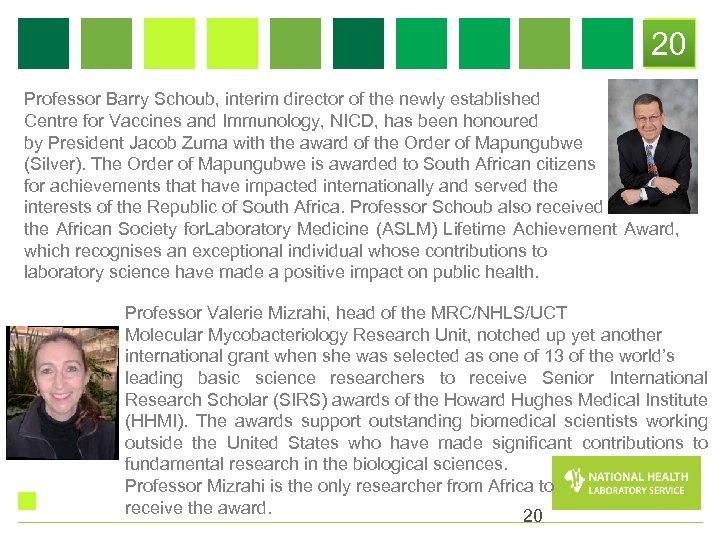 20 Professor Barry Schoub, interim director of the newly established Centre for Vaccines and Immunology, NICD, has been honoured by President Jacob Zuma with the award of the Order of Mapungubwe (Silver). The Order of Mapungubwe is awarded to South African citizens for achievements that have impacted internationally and served the interests of the Republic of South Africa. Professor Schoub also received the African Society for. Laboratory Medicine (ASLM) Lifetime Achievement Award, which recognises an exceptional individual whose contributions to laboratory science have made a positive impact on public health. Professor Valerie Mizrahi, head of the MRC/NHLS/UCT Molecular Mycobacteriology Research Unit, notched up yet another international grant when she was selected as one of 13 of the world’s leading basic science researchers to receive Senior International Research Scholar (SIRS) awards of the Howard Hughes Medical Institute (HHMI). The awards support outstanding biomedical scientists working outside the United States who have made significant contributions to fundamental research in the biological sciences. Professor Mizrahi is the only researcher from Africa to receive the award. 20
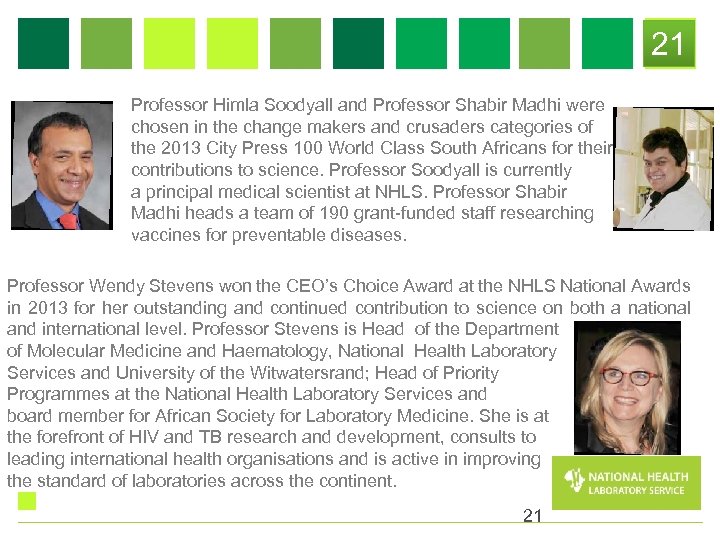 21 Professor Himla Soodyall and Professor Shabir Madhi were chosen in the change makers and crusaders categories of the 2013 City Press 100 World Class South Africans for their contributions to science. Professor Soodyall is currently a principal medical scientist at NHLS. Professor Shabir Madhi heads a team of 190 grant-funded staff researching vaccines for preventable diseases. Professor Wendy Stevens won the CEO’s Choice Award at the NHLS National Awards in 2013 for her outstanding and continued contribution to science on both a national and international level. Professor Stevens is Head of the Department of Molecular Medicine and Haematology, National Health Laboratory Services and University of the Witwatersrand; Head of Priority Programmes at the National Health Laboratory Services and board member for African Society for Laboratory Medicine. She is at the forefront of HIV and TB research and development, consults to leading international health organisations and is active in improving the standard of laboratories across the continent. 21
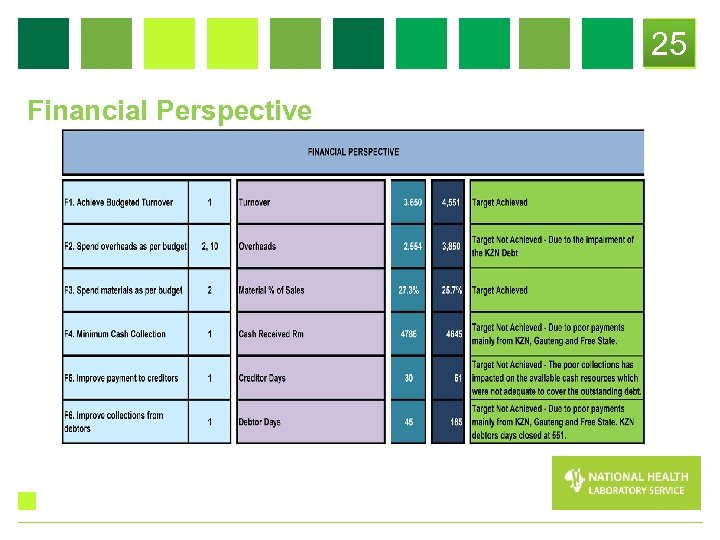
 22 2012 – 2013 Financial Highlights Balanced Score Card • • • Outlines the strategic objectives and KPI Each objective has specific activities with SMART targets quarter by quarter Reviewed by Exco & monitored by CEO monthly. Monitored and approved by Board quarterly Review by Internal auditors quarterly Report quarterly to NDOH and Treasury.
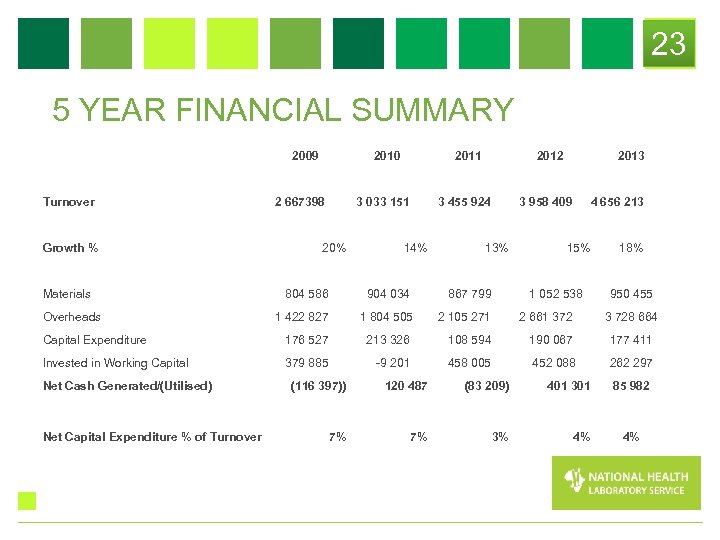 23 5 YEAR FINANCIAL SUMMARY 2009 Turnover Growth % 2010 2 667398 2011 3 033 151 20% 2012 3 455 924 14% 2013 3 958 409 13% 4 656 213 15% 18% Materials 804 586 904 034 867 799 1 052 538 Overheads 1 422 827 1 804 505 2 105 271 2 661 372 3 728 664 Capital Expenditure 176 527 213 326 108 594 190 067 177 411 Invested in Working Capital 379 885 -9 201 458 005 452 088 262 297 Net Cash Generated/(Utilised) Net Capital Expenditure % of Turnover (116 397)) 120 487 (83 209) 401 301 7% 7% 3% 4% 950 455 85 982 4%
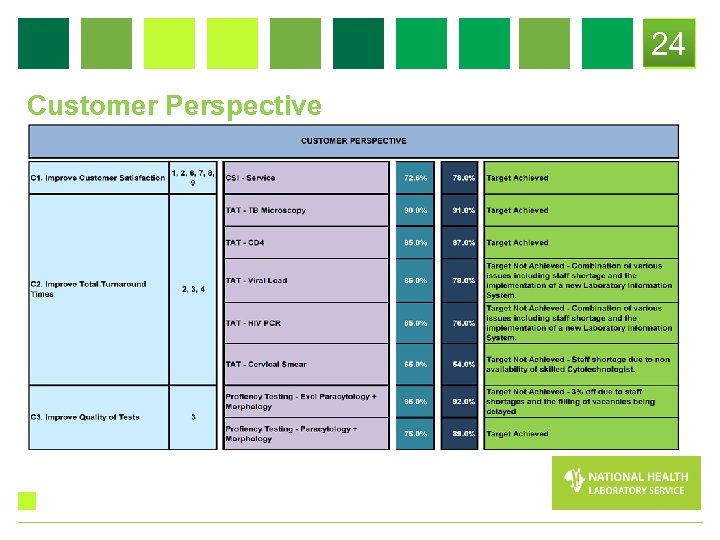 24 Customer Perspective
 25 Financial Perspective
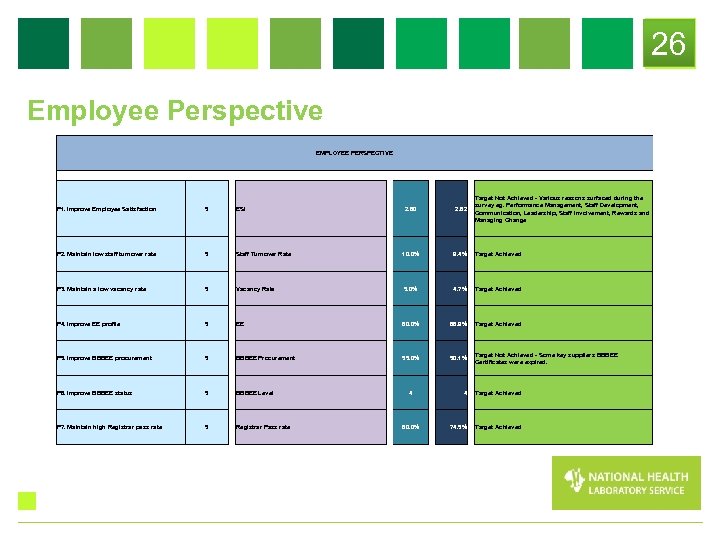 26 Employee Perspective EMPLOYEE PERSPECTIVE P 1. Improve Employee Satisfaction 5 ESI P 2. Maintain low staff turnover rate 5 P 3. Maintain a low vacancy rate Target Not Achieved - Various reasons surfaced during the survey eg. Performance Management, Staff Development, Communication, Leadership, Staff Involvement, Rewards and Managing Change 2. 80 2. 62 Staff Turnover Rate 10. 0% 9. 4% Target Achieved 5 Vacancy Rate 5. 0% 4. 7% Target Achieved P 4. Improve EE profile 5 EE 60. 0% 88. 9% Target Achieved P 5. Improve BBBEE procurement 5 BBBEE Procurement 55. 0% 50. 1% Target Not Achieved - Some key suppliers BBBEE Certificates were expired. P 6. Improve BBBEE status 5 BBBEE Level P 7. Maintain high Registrar pass rate 5 Registrar Pass rate 4 60. 0% 4 Target Achieved 74. 5% Target Achieved
 27 Internal Perspective
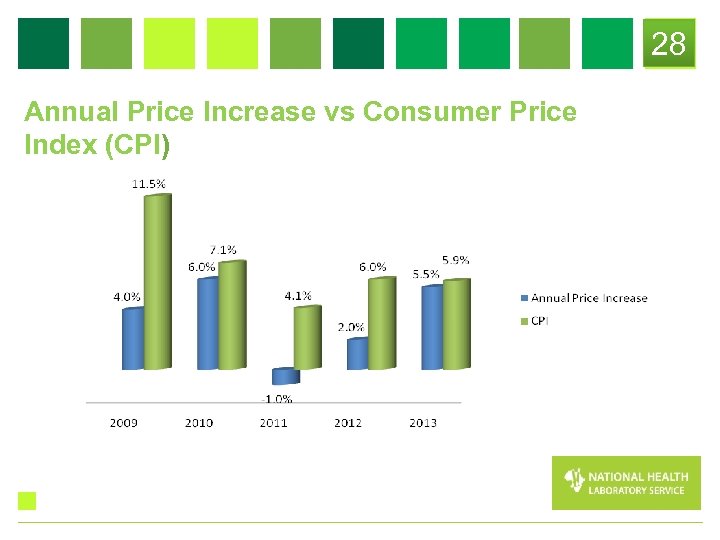 28 Annual Price Increase vs Consumer Price Index (CPI)
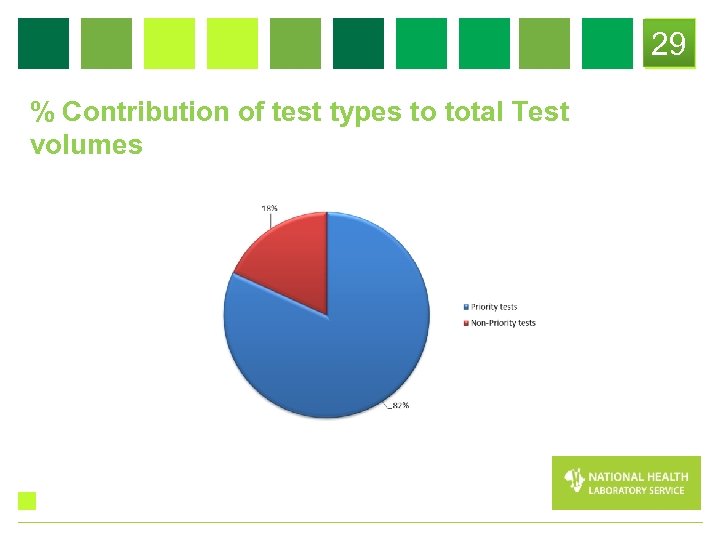 29 % Contribution of test types to total Test volumes
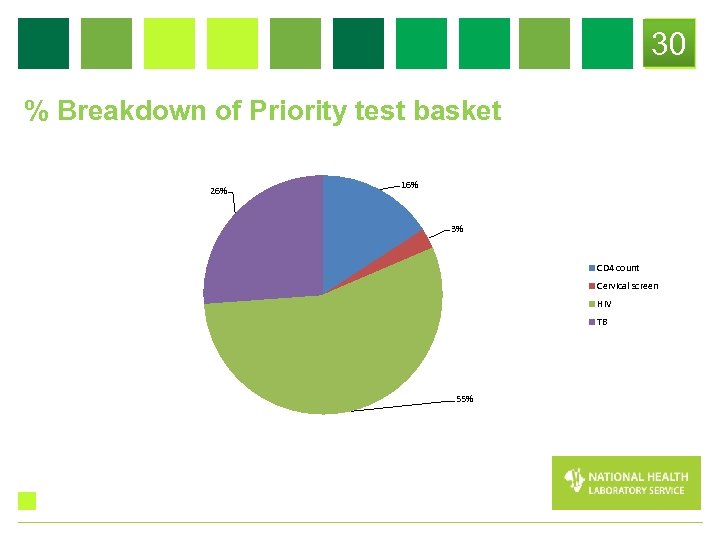 30 % Breakdown of Priority test basket 26% 16% 3% CD 4 count Cervical screen HIV TB 55%
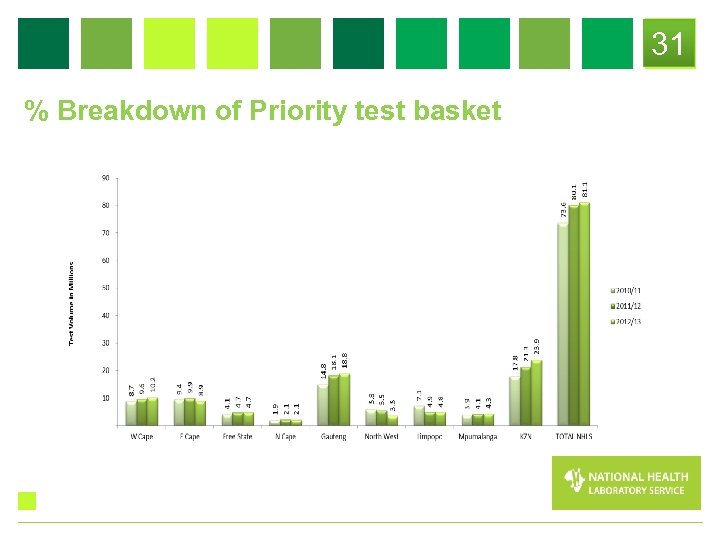 31 % Breakdown of Priority test basket
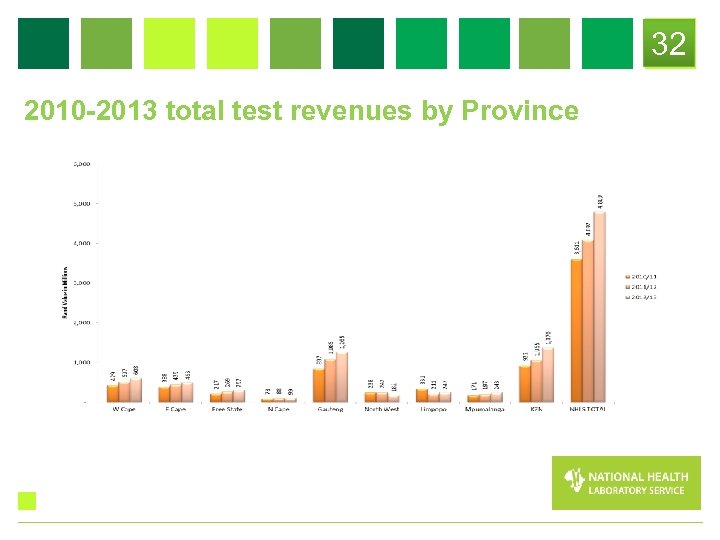 32 2010 -2013 total test revenues by Province
 33 Customer payments vs average monthly operating expenditure
 34 Days’ Sales Outstanding (DSO)
 35 NDOH Debtor Days trends by province for 6 months
 36
36
 37
37
 38
38
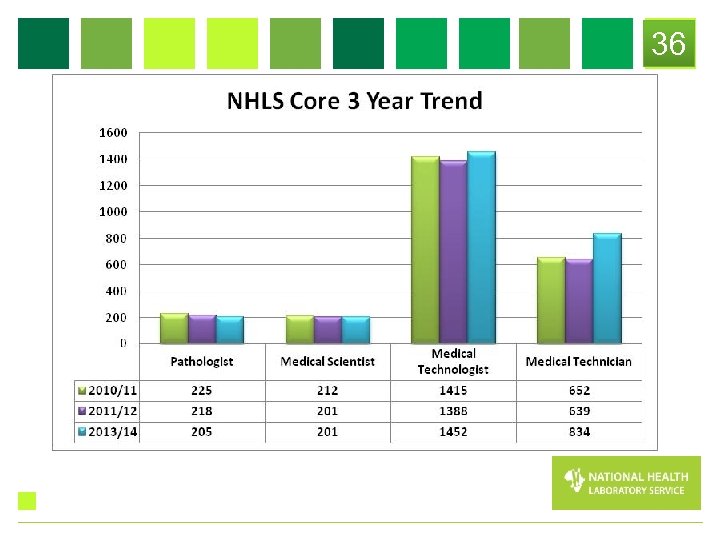
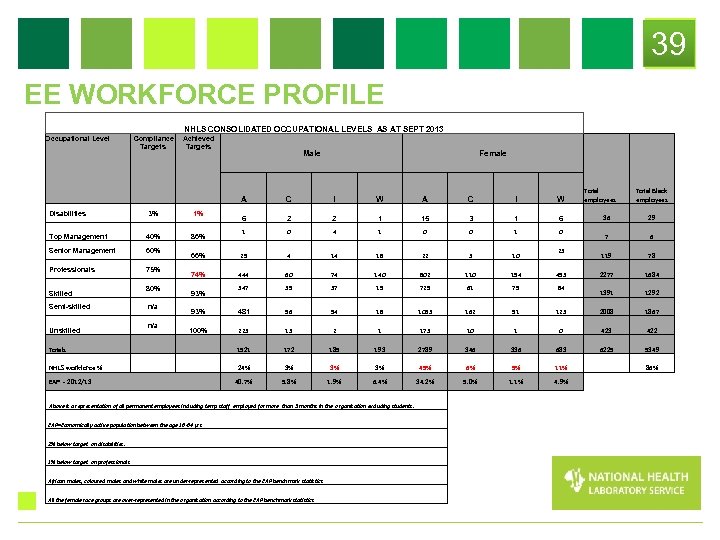 39 EE WORKFORCE PROFILE NHLS CONSOLIDATED OCCUPATIONAL LEVELS AS AT SEPT 2013 Occupational Level Compliance Targets Achieved Targets Male Female Total Black employees 36 29 7 6 119 78 2277 1684 1391 1292 123 2008 1867 1 0 423 422 A Disabilities Top Management W 6 2 2 1 15 3 1 6 1 0 4 1 0 0 1 0 25 4 14 18 22 3 10 444 60 74 140 802 110 194 453 347 39 37 15 729 61 79 84 481 56 54 18 1063 162 51 100% 223 13 2 1 173 10 93% n/a Unskilled I 86% 80% Semi-skilled C 93% 75% Skilled A 74% 60% Professionals W 1% 40% Senior Management I 66% 3% C 23 Total employees Totals 1521 172 185 193 2789 346 336 683 6225 5349 NHLS workforce % 24% 3% 3% 3% 45% 6% 5% 11% 86% 40. 7% 5. 8% 1. 9% 6. 4% 34. 2% 5. 0% 1. 1% 4. 9% EAP - 2012/13 Above is a representation of all permanent employees including temp staff employed for more than 3 months in the organisation excluding students. EAP=Economically active population between the age 16 -64 yrs 2% below target on disabilities. 1% below target on professionals African males, coloured males and white males are under-represented according to the EAP benchmark statistics All the female race groups are over-represented in the organisation according to the EAP benchmark statistics
 40 OVERVIEW ON STUDENT TRAINING CONDUCTED – 2012/13 • Training presented included Ø Ø Ø Ø Learnerships Short learning programmes Conferences and congresses Internships AET (Adult Based Education and Training) Professional programmes PIVOTAL programmes
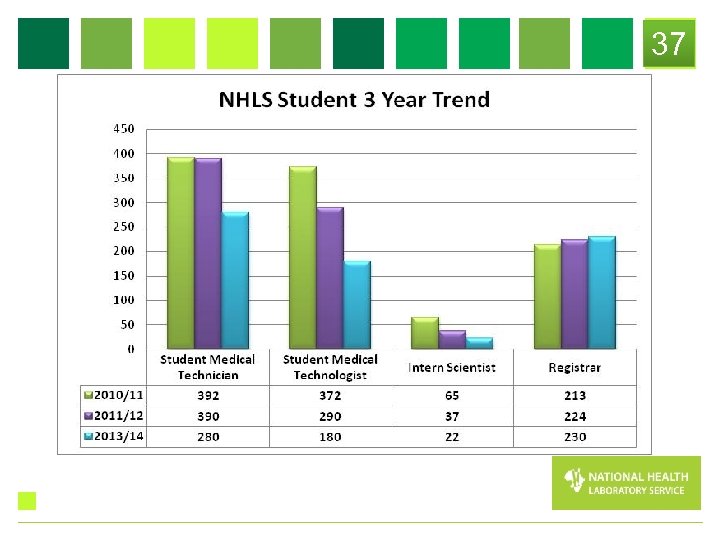
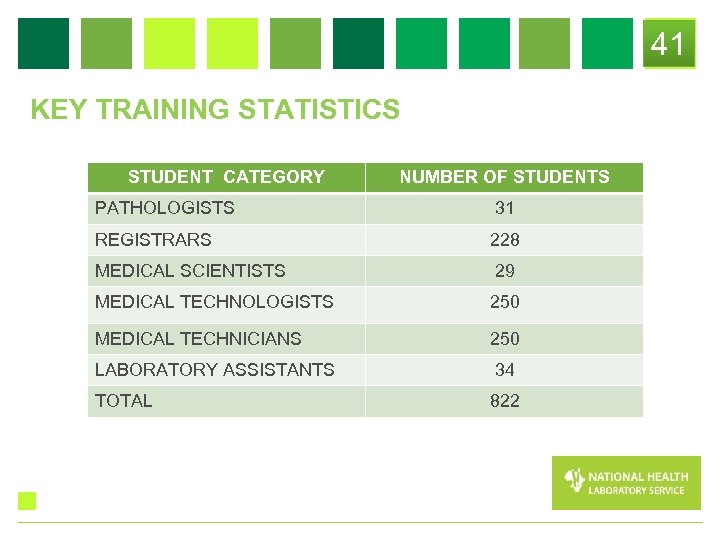 41 KEY TRAINING STATISTICS STUDENT CATEGORY NUMBER OF STUDENTS PATHOLOGISTS 31 REGISTRARS 228 MEDICAL SCIENTISTS 29 MEDICAL TECHNOLOGISTS 250 MEDICAL TECHNICIANS 250 LABORATORY ASSISTANTS 34 TOTAL 822
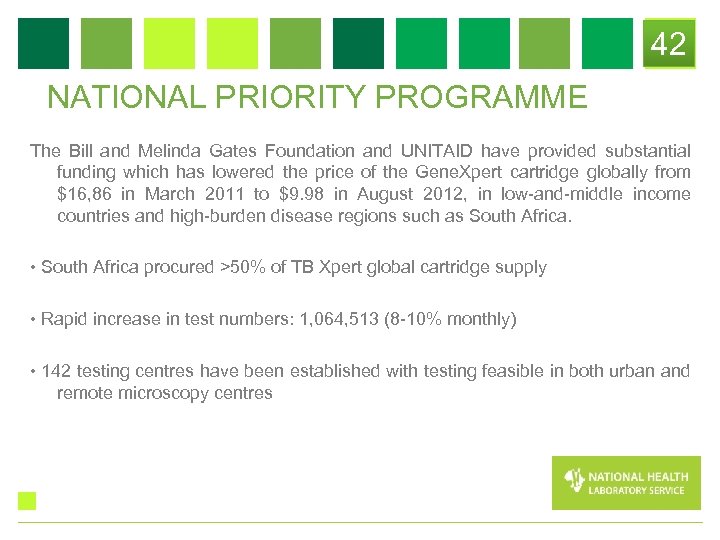 42 NATIONAL PRIORITY PROGRAMME The Bill and Melinda Gates Foundation and UNITAID have provided substantial funding which has lowered the price of the Gene. Xpert cartridge globally from $16, 86 in March 2011 to $9. 98 in August 2012, in low-and-middle income countries and high-burden disease regions such as South Africa. • South Africa procured >50% of TB Xpert global cartridge supply • Rapid increase in test numbers: 1, 064, 513 (8 -10% monthly) • 142 testing centres have been established with testing feasible in both urban and remote microscopy centres
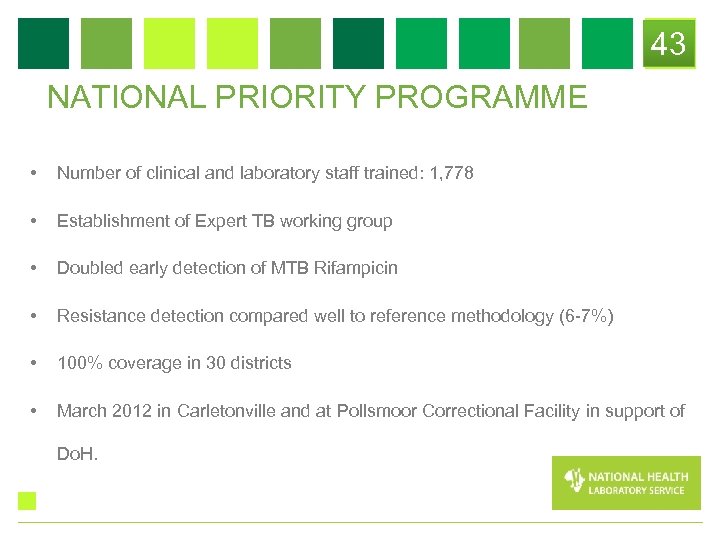 43 NATIONAL PRIORITY PROGRAMME • Number of clinical and laboratory staff trained: 1, 778 • Establishment of Expert TB working group • Doubled early detection of MTB Rifampicin • Resistance detection compared well to reference methodology (6 -7%) • 100% coverage in 30 districts • March 2012 in Carletonville and at Pollsmoor Correctional Facility in support of Do. H.
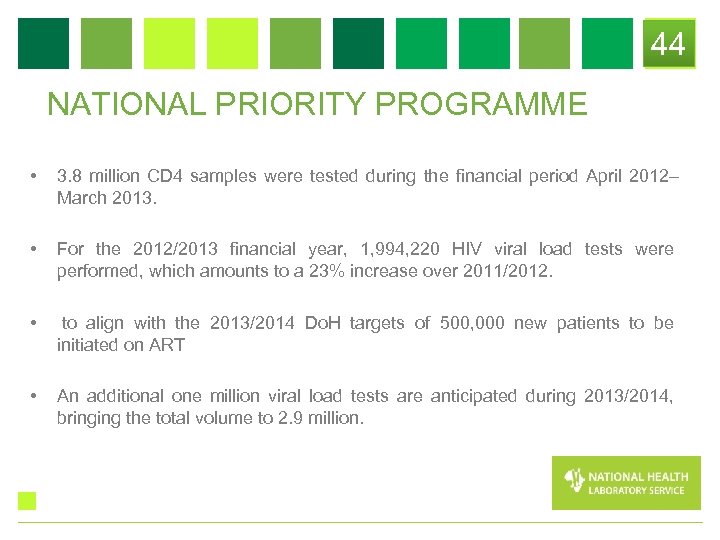 44 NATIONAL PRIORITY PROGRAMME • 3. 8 million CD 4 samples were tested during the financial period April 2012– March 2013. • For the 2012/2013 financial year, 1, 994, 220 HIV viral load tests were performed, which amounts to a 23% increase over 2011/2012. • to align with the 2013/2014 Do. H targets of 500, 000 new patients to be initiated on ART • An additional one million viral load tests are anticipated during 2013/2014, bringing the total volume to 2. 9 million.
 45 NATIONAL PRIORITY PROGRAMME • 321, 339 HIV PCR tests for EID were performed, indicating a 7. 5% increase over 2011/2012. The number of HIV-negative PCR results has risen from 93% to 95%, highlighting an improved prevention of mother-to-child transmission (PMTCT) programme. • To date, 203 Gene. Xpert instruments of varying sizes (GX 4: 65; GX 16: 136; GX 48: 2) have been placed in 142 urban and rural site. From March 2011 to March 2013, the NHLS performed 1, 180, 669 Xpert® MTB/RIF tests in the public sector. Current national coverage of the Gene. Xpert is approximately 76%, with 100% coverage obtained in 41 districts. • Test numbers have increased on average by 8– 10% per month since commencement. The introduction of the Xpert® MTB/RIF assay has increased the average national TB positivity rate among suspects to 14%, compared to 8% using microscopy, indicating Xpert®’s superiority.
 46 Our People - Our Priority A Customer Centric Workforce The annual customer satisfaction survey revealed improvement in satisfaction levels from our key customers. Overall customer satisfaction is currently rated at an average of 3. 6 out of 5. NHLS is particularly proud of this result, given that our 5. staff maintained delivery despite difficult times. NHLS staff remains the most vital element of the service value proposition, as their competence, efficiency, availability and accessibility are viewed by customers as crucially important.
 47 Public health a priority The National Institute for Communicable Diseases (NICD) is responsible for surveillance and research on infectious diseases of major public health relevance. It has established surveillance systems to monitor the effect of vaccines introduced into the public health immunisation programmes to reduce under-5 morbidity and mortality. In particular, NICD has reduced pneumococcal and rotavirus diseases, which are Responsible for about 10% of all under-5 mortalities, since the introduction of the pneumococcal conjugate and rotavirus vaccines. This success supports the decision by Do. H to introduce these expensive vaccines into the immunization programme.
 48 Setting the global agenda The National Institute for Occupational Health (NIOH) is a World Health Organization (WHO) Collaborating Centre (CC) and also has links with the International Labour Organisation. NIOH is one of the seven members of the Advisory Committee of the Global Network of WHO CCs in Occupational Health and helps set the global agenda for occupational health. It contributed extensively to the WHO Global Plan of Action Strategic Plan for 2012– 2017. NIOH is South Africa’s reference centre for occupational health and provides research, education, training and service support to the departments of Health, Labour and Mineral Resources. It has provided substantive inputs on interventions for HIV, TB and Silicosis mitigation and elimination programmes in the mining sector. It has also been involved in assessing the size, shape and scope of the informal sector in South Africa and the implications for social protection and the health and safety of workers in this sector. NIOH is now part of the occupational health cluster within Do. H and provides substantial inputs towards the reorganisation and management of the Compensation Commissioner for Occupational Health and Medical Bureau for Occupational Diseases.
 49 The Road Map • Driving down costs , affordability and aligning to provinces : consolidation of service achieving right result , to the right patient, at the right time and the right price. • Work load/force modelling towards the right people in the right place at the right cost • Alternative reimbursement models towards a simpler more reliable funding mechanism. • Redefining Teaching , Training and Research to support the above.
 50 We extend our great appreciation to the Director-General , Deputy Minister and to the Minister of Health. Their extraordinary efforts to support the NHLS and to provide strong leadership in trying times are appreciated. Thank you to all who have contributed to the success of the NHLS. On behalf of my board our gratitude to the Honourable Chair and Committee Members of the HPC for your guidance and support.