 Скачать презентацию Presentation Theme Source of inaccuracy by registration the
physik iws 2.pptx
- Количество слайдов: 15



Presentation Theme: "Source of inaccuracy by registration the medical indices. " Made by: Erkinova M. G. General Medicine faculty, 131 group Checked by: Kaliyeva Zh. A.
Medical electrical equipment • Founded in 1906, the International Electrotechnical Commission (IEC) has 100 years of experience in preparing International Standards for all fields of electrotechnology. • Various non-electrical converters quantities in electrical firmly taken its place in many areas of human knowledge , and especially in medicine. It is hard to imagine a modern doctor involved in the diagnosis of various diseases and their treatment is not based on a huge number of achievements such sciences as electronics , microelectronics , metrology , materials • Today, the electrical equipment used in clinics and hospitals often involves complex technology. To ensure that regulations are relevant and meaningful, many regulators have come to rely on expertise that is embodied in medical electrical equipment safety standards. The work that the IEC does in this field helps regulators do their job more efficiently.
Safety and performance • Prepared by TC 62, the main publication of the IEC 60601 family is, together with its collateral standards, the essential foundation for standards for medical electrical equipment and systems Most IEC standards for this field cover safety and performance for specific products, such as diagnostic imaging, radiotherapy, nuclear medicine, radiation dosimetry, electromedicine, anaesthesia, critical care, surgery, artificial respiration, paediatrics, hearing aids and medical lasers. Regulators can refer to IEC standards in their legislation as being the benchmark for safety, leaving them free to concentrate on other aspects of their work. That regulators in fact do so is clear from the worldwide acceptance of IEC medical electrical equipment standards in legislation.
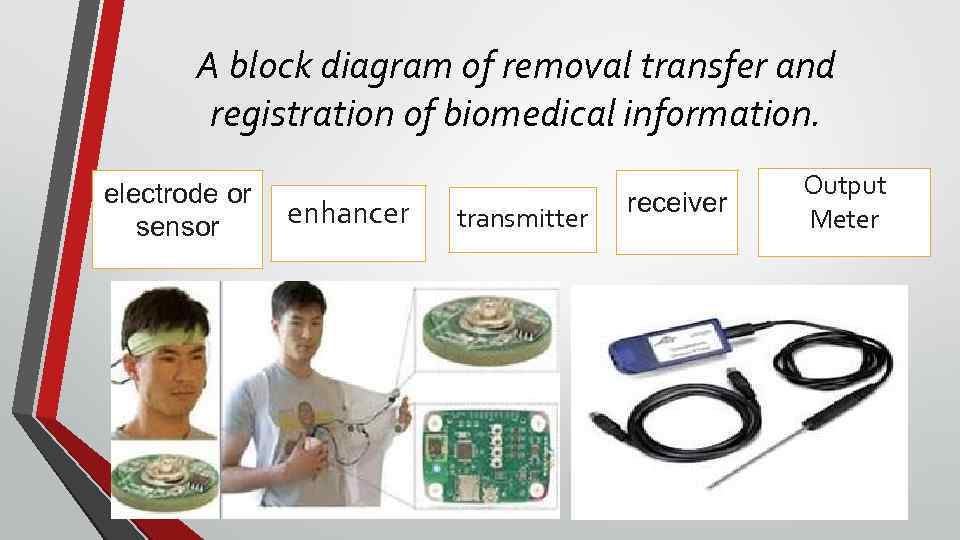
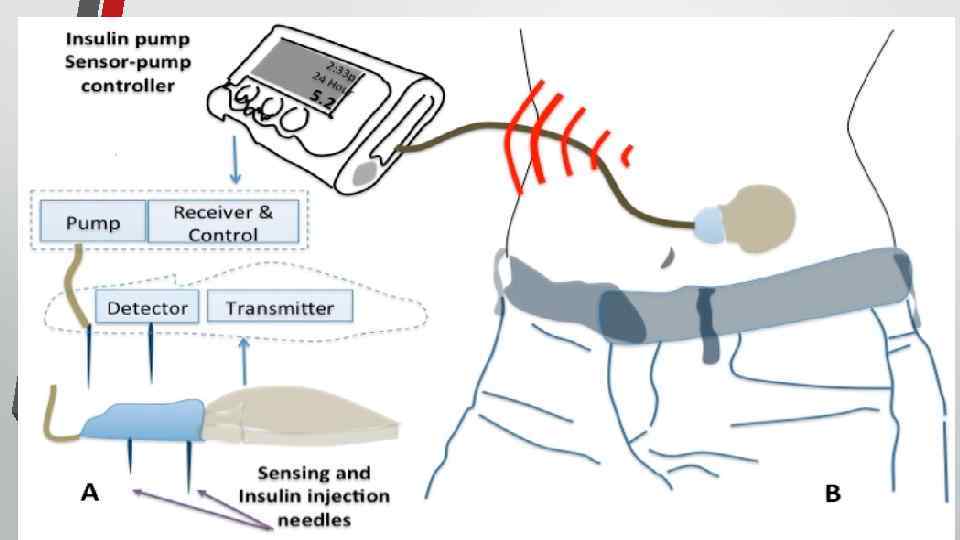
A block diagram of removal transfer and registration of biomedical information. electrode or sensor enhancer transmitter receiver Output Meter
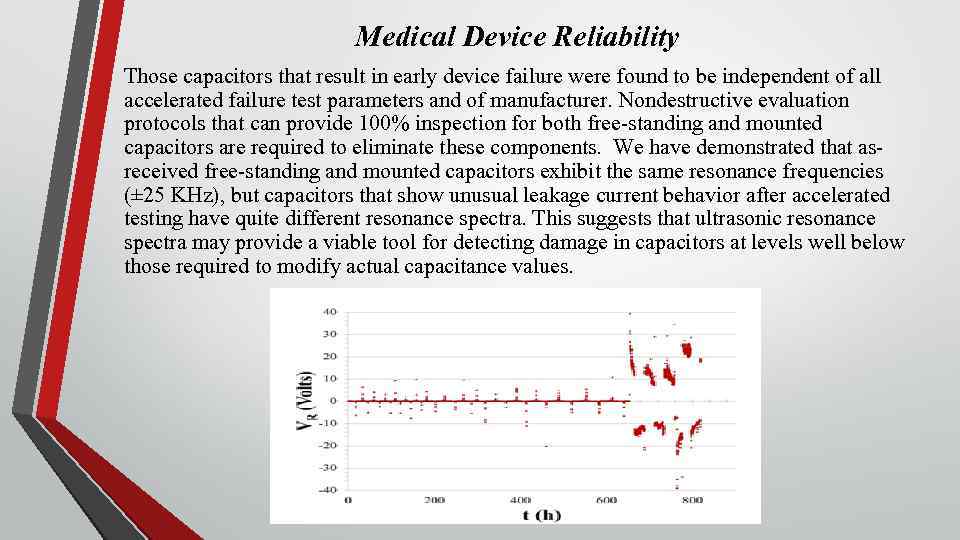
Medical Device Reliability Those capacitors that result in early device failure were found to be independent of all accelerated failure test parameters and of manufacturer. Nondestructive evaluation protocols that can provide 100% inspection for both free-standing and mounted capacitors are required to eliminate these components. We have demonstrated that asreceived free-standing and mounted capacitors exhibit the same resonance frequencies (± 25 KHz), but capacitors that show unusual leakage current behavior after accelerated testing have quite different resonance spectra. This suggests that ultrasonic resonance spectra may provide a viable tool for detecting damage in capacitors at levels well below those required to modify actual capacitance values.
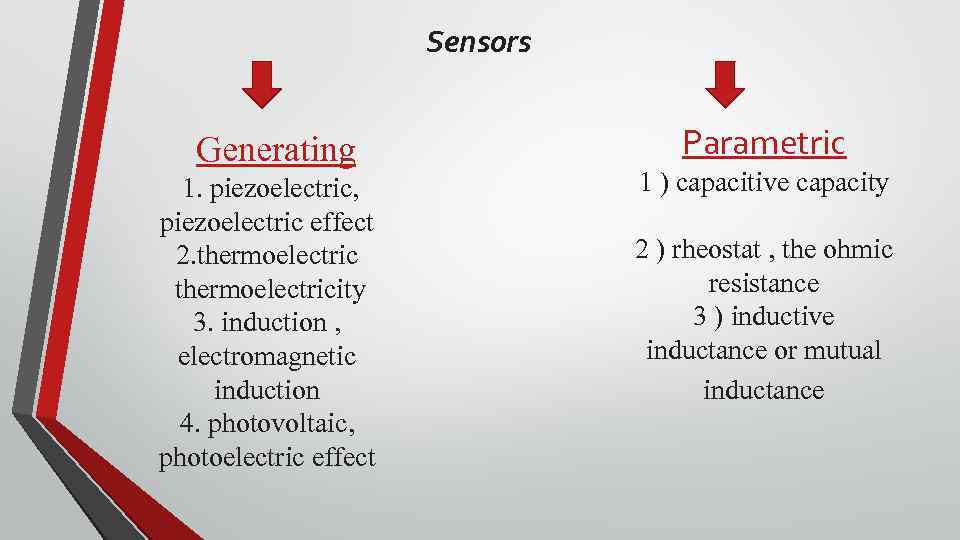
Sensors Generating 1. piezoelectric, piezoelectric effect 2. thermoelectricity 3. induction , electromagnetic induction 4. photovoltaic, photoelectric effect Parametric 1 ) capacitive capacity 2 ) rheostat , the ohmic resistance 3 ) inductive inductance or mutual inductance
Requirements for electrodes The grounding electrode must be as near as practicable, and preferably in the same area where the system bonding jumper is installed and be one of the following: 1) Metal water pipe electrode, within 5 ft of the entry to the building [250. 52(A)(1)]. 2) Metal building frame electrode If the electrodes specified in 250. 30(A)(4) aren’t available, one of the following electrodes can be used • A concrete-encased electrode encased by not less than 2 in. of concrete, located horizontally near the bottom or vertically, and within that portion of concrete foundation or footing that’s in direct contact with the earth. • A ground ring electrode encircling the building/structure, buried not less than 30 in. below grade, consisting of at least 20 ft of bare copper conductor not smaller than 2 AWG. • A ground rod electrode having not less than 8 ft of contact with the soil meeting the requirements of 250. 52(A)(5) and 250. 53(G)].
Requirements for Electrical Transducer Some of the basic requirements of the transducers are given below: 1. Repeatability When the same input signal is applied to the transducer at different times under the same environmental conditions, it should give identical output signals. 2. Linearity The transducers should have linear input-output characteristics. 3. Ruggedness The transducer circuit should have overload protection so that it will withstand overloads. 4. High stability and reliability The transducers output signal should not get affected by environmental variations(disturbances) like temperature, vibration etc. It should give minimum error in measurements. 5. Good dynamic response In real-time applications, the input signal will vary with time ( ie, the input signal is dynamic in nature). The transducer should respond as quick as possible for any change in the input signal. 6. Convenient instrumentation The transducers output signal should be measured either directly or after suitable amplification. 7. Mechanical characteristics When the transducer is subjected to various mechanical strains during working conditions, its performance should not degrade. It should withstand the mechanical strains. •
Galvanizing. • This highly effective method of treatment, is the impact on the human body with medical and prophylactic purposes permanent continuous electrical current of low power (up to 50 m A) and low voltage (30 -80 V) via the contact superimposed on the body of the patient electrodes. Galvanizing. This highly effective method of treatment, is the impact on the human body with medical and prophylactic purposes permanent continuous electrical current of low power (up to 50 m A) and low voltage (30 -80 V) via the contact superimposed on the body of the patient electrodes. The device is intended for galvanizing - Galvanizing the eye. • Administering to a human medicament using galvanization called electrophoresis. The galvanic current improves the assimilation of drugs contributing to their gentle and effective action.
The polarization of electrodes Electrochemical polarization is measured in volts (V) and millivolts (m. V). If the variation is negative, that is, caused by a movement ofelectrons, which should be consumed in reactions, toward the cathode, then the electrochemical polarization is called cathode polarization. When the electrons move in the opposite direction, anode polarization occurs. Generally, the relation between i and the electrochemical polarization is curvilinear, but in the range of deflections ± 10– 15 m. V from Est it as arule is rectilinear. The slope of this segment, that is, the ratio of the increment in the electrochemical polarization to the increase in i has thedimension of resistance per unit surface area (ohms·cm 2) and is called the polarization resistance of the electrode Rp. Electrodes with high. Rp are said to be strongly polarizable, since even at very low i their potentials deviate markedly from Est. Electrodes with low Rp are weaklypolarizable. There exists an inverse relation between Rp and the rate of exchange of electric charges that occurs between the electrode andthe electrolyte at Est.
• Endoscopy method of inspection of some internal organs with an endoscope. In endoscopy endoscope is inserted into the cavity through the natural routes , for example, into the stomach via the mouth and esophagus, bronchi and lungs through the larynx into the bladder through the urethra , and through the puncture or surgical approach flexible endoscope Currently, endoscopic techniques for the study are used as for diagnosis and treatment of various diseases. • Modern endoscopy plays an important role in identifying early stages of many diseases , especially cancer (cancer) of various organs (stomach , bladder , lungs). Most often combined with endoscopy sighting ( under direct vision ) biopsy , therapeutic measures ( drug administration ) , probing.
Specific errors of sensors. • • • - The error that occurs due to the nonlinearity characteristics. The value of the multiplicative component depends on the sensitivity of each specific device, it is also often determines the measuring range and its operation should be subject to mandatory evaluation. - The error due to the temperature regime. This relates to the random error and should be subject to evaluation before the sensor starts to work. The error is due to the fact that certain parameters of the components of the sensor depends on the temperature and quite a severe deviation from the norm in one direction or another, the error can be quite impressive. - The error that arises from the connection cable. Unstable electrical resistance of the cable - this is the cause of the error. It should be appreciated to those sensors which have a low resistance during operation.

Conclusion Having carefully considered the sensors , electrodes and receivers , we can see that medicine and biophysics are closely linked ! One can not imagine a doctor involved in the diagnosis of various diseases and their treatment is not based on a huge number of achievements such sciences as electronics , microelectronics , metrology , materials. Conclusion from this work is that the subject of Medical Biophysics is one of the dominant place in modern health care.
 Скачать презентацию Presentation Theme Source of inaccuracy by registration the
physik iws 2.pptx