


 Скачать презентацию Presentation Skills How to present your ideas
Introduction - без видео.pptx
- Количество слайдов: 24
 Presentation Skills How to present your ideas
 All the materials are displaced on Summer School vk. or may send your task to tppsummerschool 2017@yandex. ru
 Why do you need presentation skills? Ø For language classes Ø For public speaking (seminars, conferences) Ø For final projects (course paper, diploma) Ø For your future job
 General Tips for giving a good academic presentation 1. Think about the aim of your presentation and what you want to achieve. 2. Choose the topic that interests you - involvement and motivation are key to confidence and vigour. 3. Concentrate on your audience - who they are and what they (want to) know; concentrating on the listeners rather than on yourself will soothe your nerves as well. 4. Give your presentation a clear and logical organization so that everyone can follow. 5. Present information visually– this adds interest to your talk and makes it easier to follow 6. Practise giving your presentation until you are familiar with the key points; this way you may discover any potential problems an check the timing. Besides, practice will also make you feel more confident.
 3 Ps 1. PRACTICE 2. PRACTICE 3. PRACTICE
 What do you want to achieve? • • Educate and inform Inspire/interest and persuade Entertain Must grab and hold attention
 Attention Curve
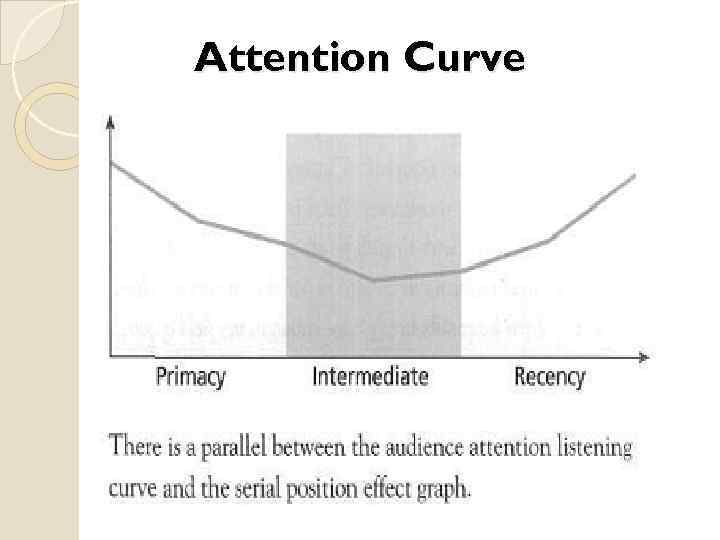 Attention Curve
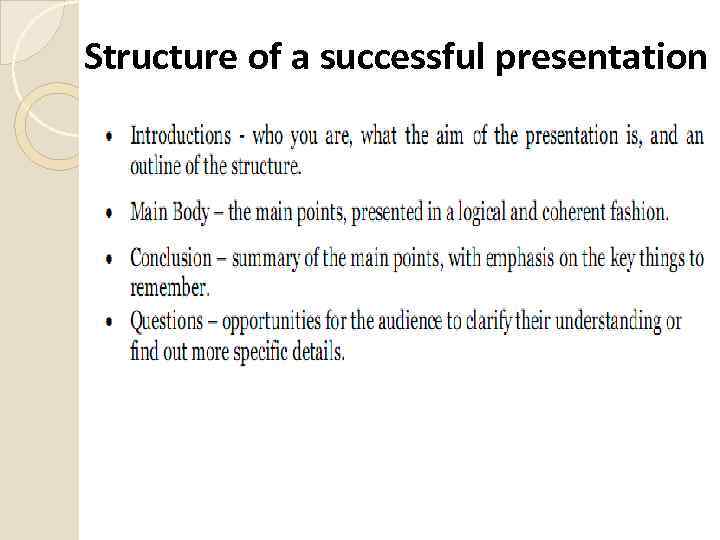 Structure of a successful presentation
 1. Introduction You never get a second chance to make a first impression 90 seconds
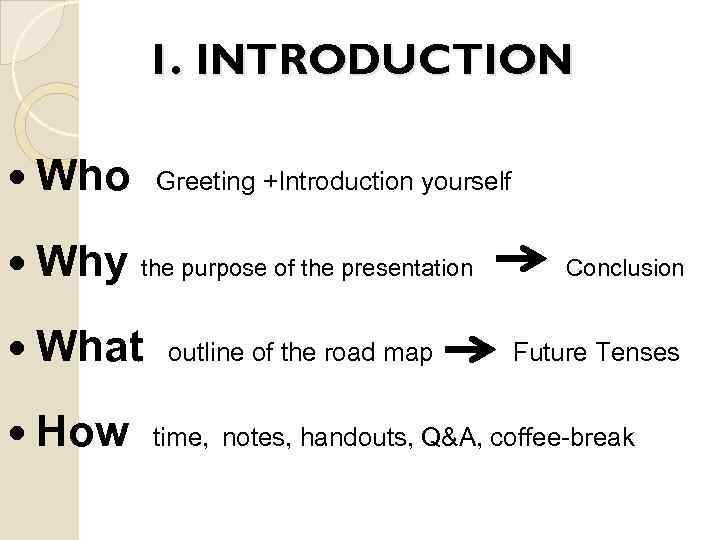 1. INTRODUCTION Who Why Greeting +Introduction yourself the purpose of the presentation What How outline of the road map Conclusion Future Tenses time, notes, handouts, Q&A, coffee-break
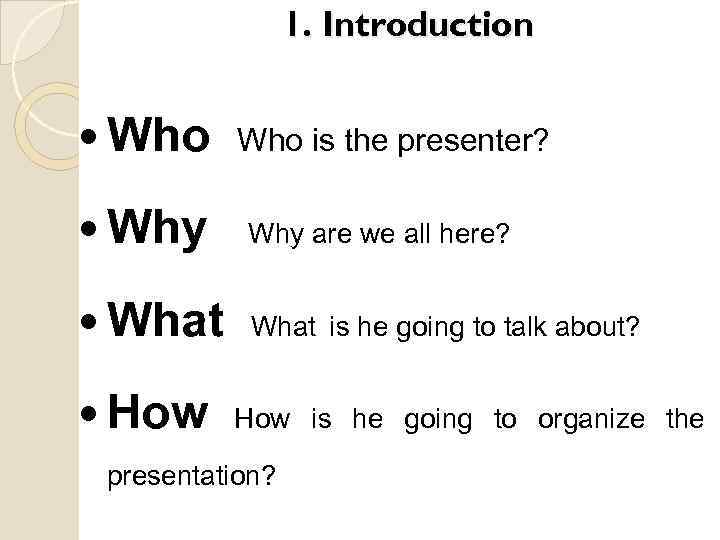 1. Introduction Who is the presenter? Why are we all here? What is he going to talk about? How is he going to organize the presentation?
 Lexis for Introductory part Learn Introductory Phrases in the Task 2 file Summer School vk.
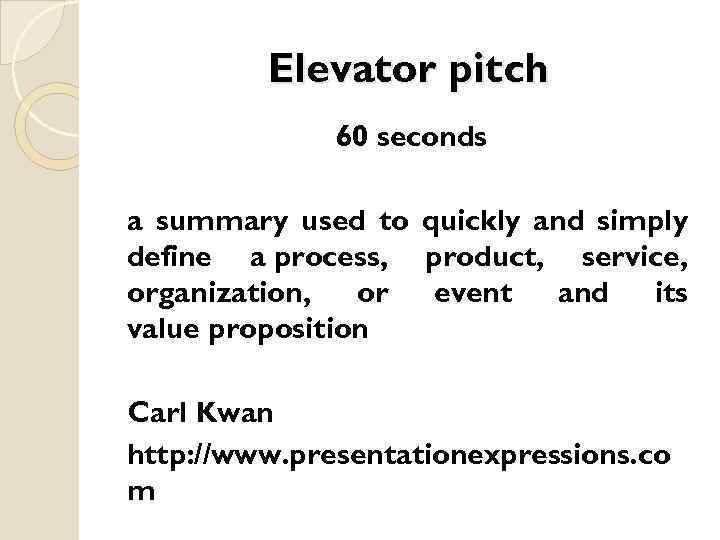 Elevator pitch 60 seconds a summary used to quickly and simply define a process, product, service, organization, or event and its value proposition Carl Kwan http: //www. presentationexpressions. co m
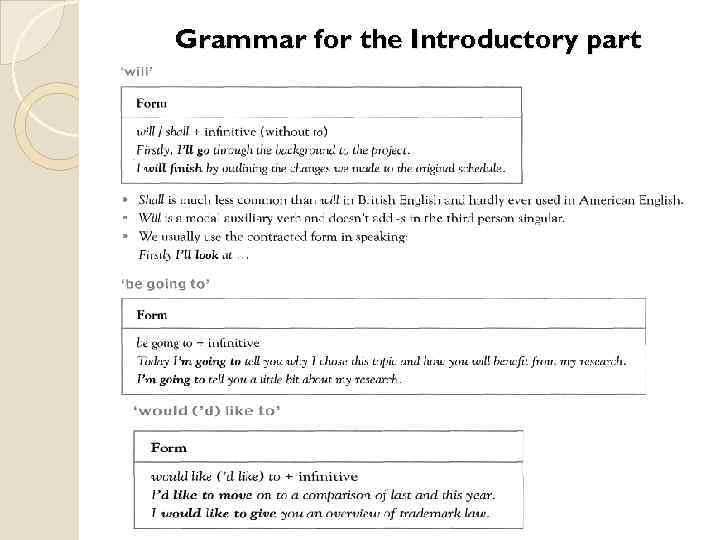 Grammar for the Introductory part
 3. FINISH MAKE YOU FINAL MESSAGE CLEAR
 Lexis for the Final part Learn Phrases for summarizing in the Task 3 file
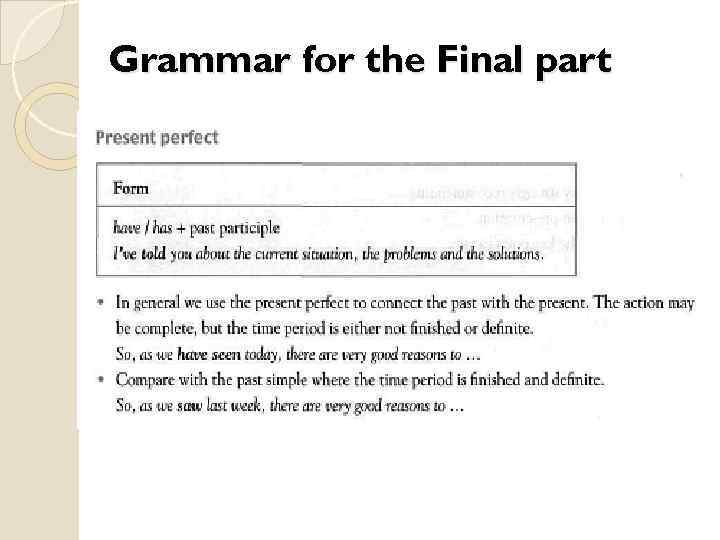 Grammar for the Final part
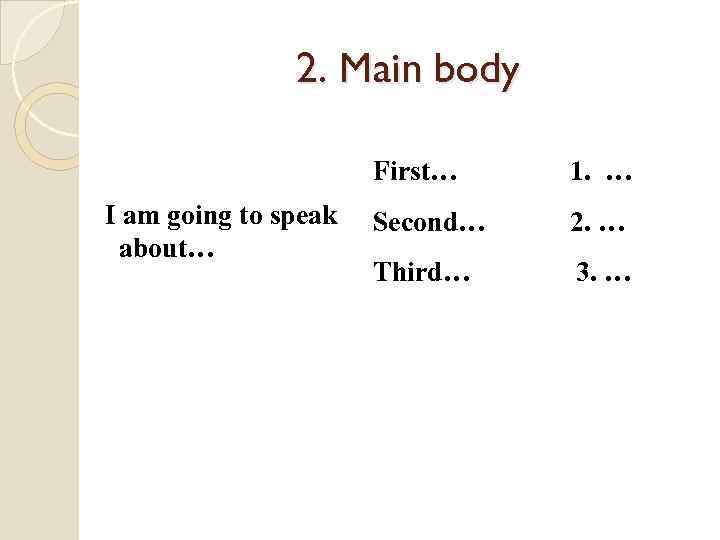 2. Main body First… I am going to speak about… 1. … Second… 2. … Third… 3. …
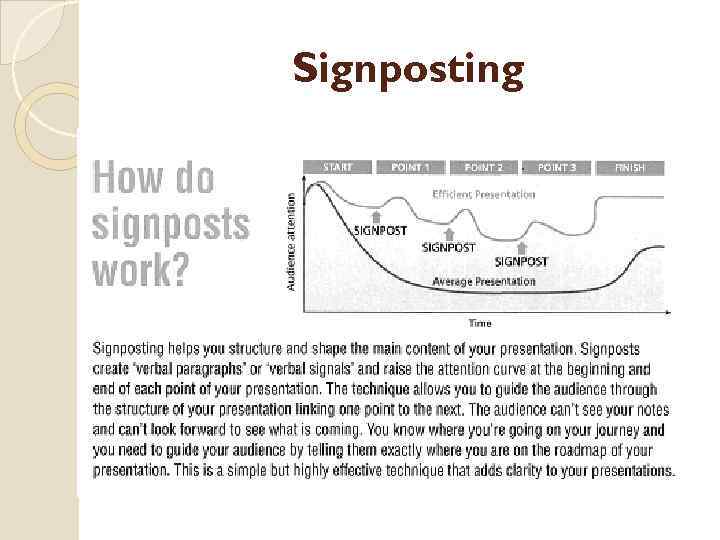 Signposting
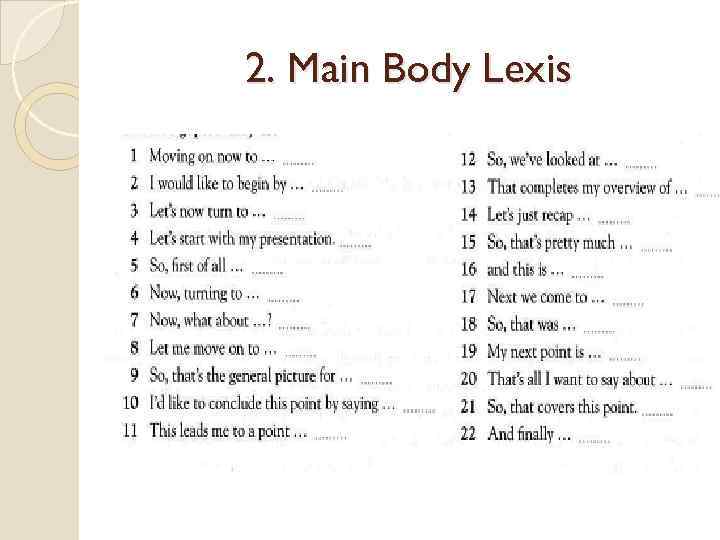 2. Main Body Lexis
 PAUSING Pause before using the signpost to turn to a new point. Count up to 10 in your head and breath deeply. This helps your audience to assimilate the information and Gives you the chance to control your nerves
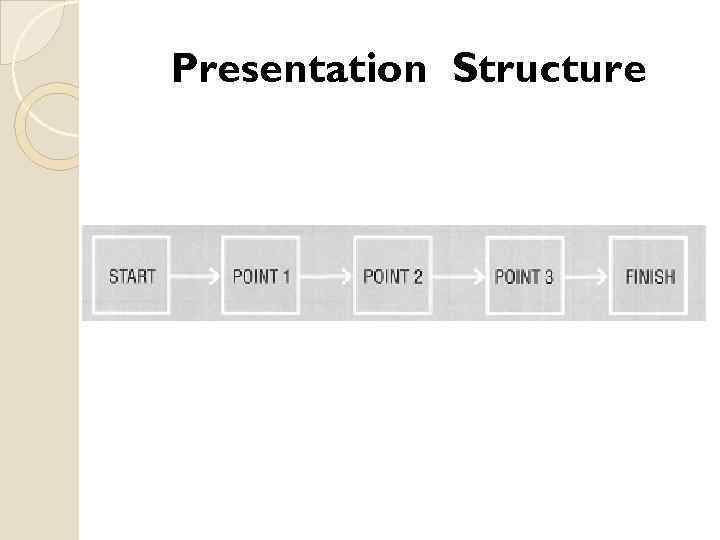 Presentation Structure
 Thank you for attention!