


 Скачать презентацию Presentation Plus United States Government Democracy in Action
b10f7f64090856b4eba035d2904e6581.ppt
- Количество слайдов: 192
 Presentation Plus! United States Government: Democracy in Action Copyright © by The Mc. Graw-Hill Companies, Inc. Send all inquiries to: GLENCOE DIVISION Glencoe/Mc. Graw-Hill 936 Eastwind Drive Westerville, Ohio 43081
 Chapter Focus Section 1 Presidential Powers Section 2 Roles of the President Section 3 Styles of Leadership Chapter Assessment Click on a hyperlink to go to the corresponding content area. Press the ESC (escape) key at any time to exit the presentation.
 Chapter Objectives • Presidential Powers Summarize the historical changes in the powers of the presidency. (Section 1) • Roles of the President Describe the seven major roles of the president. (Section 2) • Styles of Leadership Evaluate the leadership qualities important to the success of a president. (Section 3) Click the mouse button or press the Space Bar to display the information.
 Chapter Concepts • Section 1 Constitutional Interpretations • Section 2 Political Processes • Section 3 Cultural Pluralism Click the mouse button or press the Space Bar to display the information.
 Making It Relevant Transparency The next slide is a political cartoon drawn during the Nixon presidency. Differing opinions between the executive and legislative branches were a source of conflict that led to the War Powers Act in 1973.
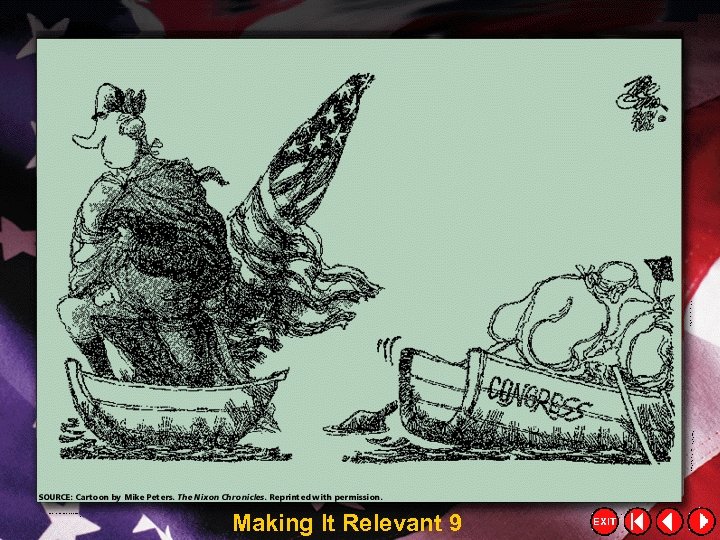 Making It Relevant 9
 End of Chapter Focus Click the mouse button to return to the Contents.
 Presidential Powers Key Terms mandate, forum Find Out • Why do presidential powers tend to grow in times of national emergency? • What are the sources of and limits to the powers of the president? Click the mouse button or press the Space Bar to display the information. Additional lecture notes appear on the following slides.
 Presidential Powers Understanding Concepts Constitutional Interpretations. Within the scope of constitutional limitations and powers, why does each president define the office differently? Section Objective Summarize the historical changes in the powers of the presidency. Click the mouse button or press the Space Bar to display the information. Additional lecture notes appear on the following slides.
 Introduction • Many presidential powers are not specifically mentioned in the Constitution. • Presidential powers have developed over time, reflecting the changing needs of the nation and personalities of the presidents. • The sources and limitations of presidential power have interacted throughout the nation’s history. Click the mouse button or press the Space Bar to display the information.
 Introduction(cont. ) • The immediate needs of the nation, the personal energy and influence of each president, and the mandate, or expressed will of the people, have shaped the office of the presidency into its modern form. Click the mouse button or press the Space Bar to display the information.
 Constitutional Powers • The Founders made the president the head of the executive branch of the new national government. • Having revolted against the hated king of England, the Founders certainly did not want to create their own king. • At the same time, and for two major reasons, they did want a national government with a strong executive. Click the mouse button or press the Space Bar to display the information.
 Need for a Strong Executive • First, the Founders knew that one of the main weaknesses of the Articles of Confederation was its lack of an independent executive to carry out the acts of Congress. • Second, many of the Founders distrusted direct participation by the people in decision making. Click the mouse button or press the Space Bar to display the information.
 Need for a Strong Executive(cont. ) • Consequently, they wanted a strong executive branch that would protect liberty, private property, and businesses and would hold the legislative branch, which the people could influence, in check. Click the mouse button or press the Space Bar to display the information.
 Presidential Powers in Article II • Article II of the Constitution grants the president broad but vaguely described powers. Sections 2 and 3 of Article II define these powers: – As commander in chief of the armed forces, the president is mainly responsible for the nation’s security. – As head of the executive branch, the president appoints–with Senate consent–heads of executive departments and conducts foreign policy. Click the mouse button or press the Space Bar to display the information.
 Presidential Powers in Article II (cont. ) – The president also has judicial powers–to appoint federal court judges, to pardon people convicted of federal crimes, and to reduce sentences. – Working with the legislature, the president ensures that the laws Congress passes are “faithfully executed. ” – The president delivers an annual State of the Union message to Congress, proposes legislation, and may call Congress into special session when necessary. Click the mouse button or press the Space Bar to display the information.
 Informal Sources of Power • The Constitution’s list of presidential powers is brief and simple. • Yet, since Washington’s time, the president’s powers have greatly expanded and come from several sources in addition to the Constitution. Click the mouse button or press the Space Bar to display the information.
 Personal Exercise of Power • Several presidents have enlarged the powers of the presidency by their view and exercise of power. • In 1803 Thomas Jefferson made the decision to purchase the Louisiana Territory from France. • Nothing in the Constitution stated that a president had the power to acquire territory. Jefferson, however, believed Article II implied additional powers for the office. Click the mouse button or press the Space Bar to display the information.
 Personal Exercise of Power(cont. ) • The Senate agreed with Jefferson and ratified the Louisiana Purchase treaty. • Theodore Roosevelt expressed the broad view of presidential power, explaining that it was both the president’s right and duty to “do anything that the needs of the Nation demanded, unless such action was forbidden by the Constitution or by the laws. ” Click the mouse button or press the Space Bar to display the information.
 Immediate Needs of the Nation • During the Civil War Abraham Lincoln took action that caused people to call him a dictator. • For example, he suspended the writ of habeas corpus and jailed opponents of the Union without a trial or legal authority to do so. • Lincoln claimed the Constitution gave him the authority to do what was necessary to preserve the Union. In the end, the nation agreed. Click the mouse button or press the Space Bar to display the information.
 Immediate Needs of the Nation(cont. ) • Franklin D. Roosevelt used the power of the presidency to expand the role of the federal government in the nation’s economy. • At a time of severe economic depression, Roosevelt persuaded Congress to create many new social and economic programs and to set up new federal agencies to run them. Click the mouse button or press the Space Bar to display the information.
 Immediate Needs of the Nation(cont. ) • After Roosevelt’s administration, Americans came to expect the president to take a firm hand in directing the nation’s economic as well as political life. • Most modern presidents have tried to act as strong leaders and have taken a broad view of presidential power. Click the mouse button or press the Space Bar to display the information.
 Mandate of the People • All presidents like to claim that their ideas and policies represent a mandate from the people. • A mandate–strong popular support–is one of the greatest sources of power for a president. • The president’s popularity ratings change almost daily. Most modern presidents have learned, therefore, to use the media to communicate their message to the people and gain popular support. Click the mouse button or press the Space Bar to display the information.
 Mandate of the People (cont. ) • Franklin D. Roosevelt was the first president to realize that radio had great potential for political use. • Roosevelt broadcast “fireside chats” to the American people on the radio. He talked informally about the nation’s problems and his proposed solutions for them. • Today, television gives presidents even greater power to convey their ideas and personalities directly to the American people. Click the mouse button or press the Space Bar to display the information.
 Mandate of the People (cont. ) • People often judge a president’s ideas according to the personal appeal of the president on television, a fact presidents know very well and try to use to their advantage. • Major newspapers and magazines also provide a forum, or medium for discussion, for presidential messages. • These media, in addition to television and radio networks, assign reporters to cover the president full time. Click the mouse button or press the Space Bar to display the information.
 Limits on Presidential Power • The Founders built significant safeguards against the abuse of presidential power into the Constitution. • Both Congress and the courts have powers that limit the president’s authority. • Other factors, not mentioned in the Constitution, also affect the president’s actions. Click the mouse button or press the Space Bar to display the information.
 Limitation by Congress • A congressional override a veto may of limit a president’s effectiveness in carrying out a legislative program or in using executive powers. • In 1973 Congress overrode President Nixon’s veto of the War Powers Act that prevented presidents from committing troops to combat for more than 60 days without congressional approval. • Two other important limitations are the Senate’s confirmation power and Congress’s power of the purse. Click the mouse button or press the Space Bar to display the information.
 Limitation by Congress (cont. ) • Congress also has the power to impeach a president. Impeachment is a drastic measure that has been used only twice in United States history. Click the mouse button or press the Space Bar to display the information.
 Limitation by the Federal Courts • The federal courts have a constitutional power to limit a president. • The case of Marbury v. Madison (1803) established the Supreme Court’s right to review legislative actions. Click the blue hyperlink to explore the Supreme Court case.
 Youngstown Sheet and Tube Company v. Sawyer • In 1952 President Truman, believing a strike by steelworkers could threaten national security, ordered his secretary of commerce to seize and operate most of the nation’s steel mills. • The president reported these events to Congress, but Congress failed to take action. Congress had provided procedures for dealing with similar situations in earlier cases. Click the mouse button or press the Space Bar to display the information.
 Youngstown Sheet and Tube Company v. Sawyer (cont. ) • Opposing the takeover, the steel mill owners sued Secretary Sawyer, and the case eventually reached the Supreme Court as Youngstown Sheet and Tube Company v. Sawyer. • Justice Black, speaking for the majority, said that there was no statute which authorized the president to take possession of the mills. Click the blue hyperlink to explore the Supreme Court case.
 Youngstown Sheet and Tube Company v. Sawyer (cont. ) • The fact that Congress had not exercised its powers to seize the mills did not mean that the president could do so. Click the mouse button or press the Space Bar to display the information.
 Limitation by the Bureaucracy • Bureaucrats can obstruct presidents’ programs unintentionally by… – failing to provide needed information. – misinterpreting instructions. – neglecting to complete a task properly. • At times bureaucratic interpretations may not reflect the president’s priorities either intentionally or unintentionally. Click the mouse button or press the Space Bar to display the information.
 Limitation by Public Opinion • Without favorable public opinion, a president cannot succeed in carrying out a political program. • One of President Clinton’s announced goals in his first administration was to restructure the health-care system. The administration began a major study of health care. • Meanwhile, all the interest groups that would be affected began to raise questions, and public opinion eventually derailed the changes. Click the mouse button or press the Space Bar to display the information.
 Limitation by Public Opinion (cont. ) • The American people expect their presidents to be symbolic leaders of the nation. • They expect presidents to always act with courage and dignity. However, the Founders could not build into the Constitution provisions for regulating the moral character of a president. • Public opinion, especially through the use of mass media, supports the checks and balances that serve to limit the powers of a president. Click the mouse button or press the Space Bar to display the information.
 Why do presidential powers tend to grow in times of national emergency? Congress has often granted a president special powers, especially during emergencies. Click the mouse button or press the Space Bar to display the answer.
 What are the sources of and limits to the powers of the president? Sources: • the Constitution • needs of the nation • influence of each president • mandate of the people Limits: • Congress • federal courts • federal bureaucracy • public opinion Click the mouse button or press the Space Bar to display the answer.
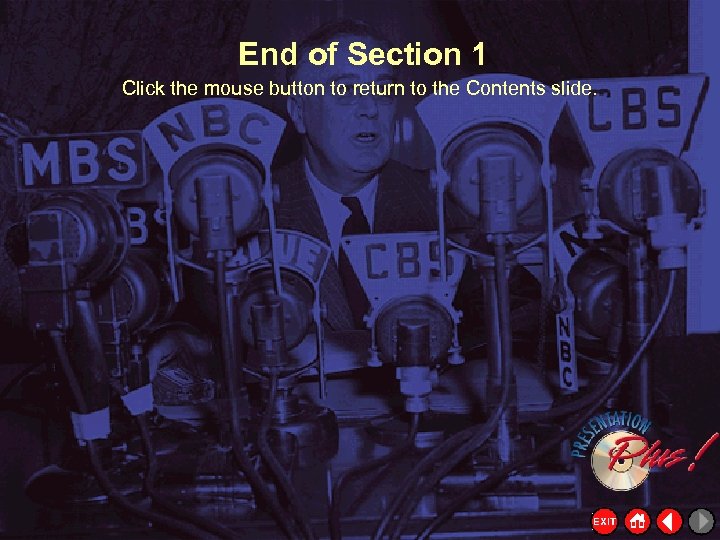 End of Section 1 Click the mouse button to return to the Contents slide.
 Roles of the President Key Terms executive order, impoundment, reprieve, pardon, amnesty, line-item veto, patronage, treaty, executive agreement Find Out • How do the presidential roles of head of state, chief diplomat, and commander in chief work together to provide leadership in foreign relations? • What is the president’s role in the growth and stability of the American economy? Click the mouse button or press the Space Bar to display the information. Additional lecture notes appear on the following slides.
 Roles of the President Understanding Concepts Political Processes How have presidents used their political power to increase their policy-making role? Section Objective Describe the seven major roles of the president. Click the mouse button or press the Space Bar to display the information. Additional lecture notes appear on the following slides.
 Introduction • There are seven key duties of the president, five of which are constitutional. The president serves as: – head of state – chief diplomat – chief executive – commander in chief – chief legislator • Two additional duties of the president– economic planner and political party leader–are not even implied in the Constitution but have developed over time. Click the mouse button or press the Space Bar to display the information.
 Head of State • As head of state, the president represents the nation and performs many ceremonial roles: – serving as host to visiting kings, queens, and heads of governments – lighting the national Christmas tree – giving awards and medals – making public service statements on important issues – meeting public figures – throwing the first pitch of the baseball season Click the mouse button or press the Space Bar to display the information.
 Head of State (cont. ) • To millions around the world and to millions at home, the president is the United States–a living symbol of the nation. Click the mouse button or press the Space Bar to display the information.
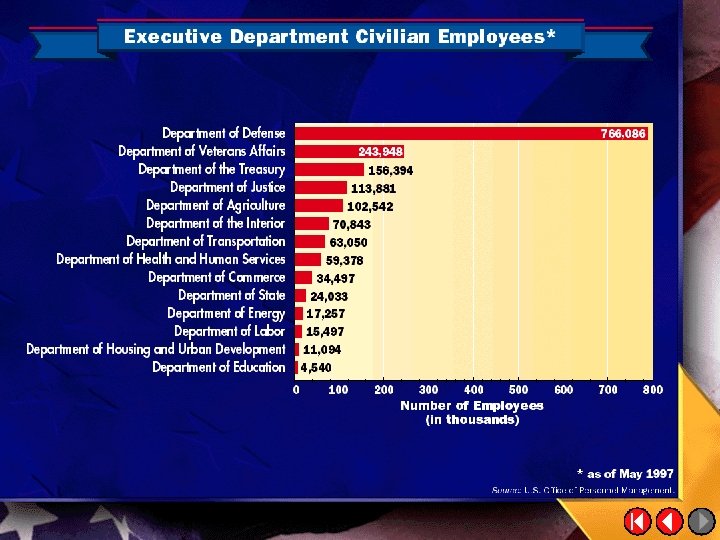
 Chief Executive • As the nation’s chief executive, the president sees that the laws of Congress are carried out. • The executive branch employs more than 2 million people to enforce the many laws and programs Congress establishes. • The president is in charge of these employees and the federal departments and agencies for which they work. Click the mouse button or press the Space Bar to display the information.
 Tools of Influence • One tool presidents have to influence how laws are carried out is an executive order , or a rule that has the force of law. • Presidents issue executive orders to spell out many of the details of policies and programs Congress enacts. • Another tool is making presidential appointments. Besides appointing cabinet members, presidents appoint “with the advice and consent of the Senate” about 2, 200 top-level federal officials. Click the mouse button or press the Space Bar to display the information.
 Tools of Influence(cont. ) • Presidents try to appoint officials who share their political beliefs because they want these officials to carry out their policies. • A third tool that presidents may use is the right to remove officials they have appointed. President Nixon, for example, fired his secretary of the interior for opposing his conduct of the war in Vietnam. Click the mouse button or press the Space Bar to display the information.
 Tools of Influence(cont. ) • A fourth tool, used for a variety of reasons, enables a president to refuse to allow a federal department or agency to spend the money Congress has appropriated for it. • This process is known as impoundment of funds. Impoundmentmeans that the president puts aside, or refuses to spend, the money Congress has appropriated for a certain purpose. • Most impoundments have been for routine matters, and Congress usually agrees. Click the mouse button or press the Space Bar to display the information.
 Tools of Influence(cont. ) • In addition, as chief executive the president appoints, with Senate approval, all federal judges, including the justices of the Supreme Court. Click the mouse button or press the Space Bar to display the information.
 Reprieves and Pardons • As chief executive, the president also can grant “reprieves and pardons for offenses against the United States. ” • A reprieve grants a postponement of legal punishment. • A pardon is a release from legal punishment. Click the mouse button or press the Space Bar to display the information.
 Amnesty • Finally, the president may grant amnesty. Amnesty is a group pardon to people for an offense against the government. • Amnesty usually applies to military personnel. For example, Presidents Ford and Carter granted amnesty to men who fled the draft during the Vietnam War. Click the mouse button or press the Space Bar to display the information.
 Chief Legislator • Congress expects the executive branch to propose legislation it wishes to see enacted. Click the mouse button or press the Space Bar to display the information.
 The President’s Legislative Program • Usually the president describes a legislative program, reflecting the president’s values and political beliefs, in the annual State of the Union message to Congress. • The president has a large staff to help write legislation. This legislation determines much of what Congress will do each year. • The president’s office also presents to Congress a suggested budget and an annual economic report. Click the mouse button or press the Space Bar to display the information.
 The President’s Legislative Program (cont. ) • When the president and the majority of Congress are from different political parties, however, the president must work harder to influence members of Congress to support a particular program. • Presidents may hand out political favors to get congressional support, support the reelection efforts of members of Congress, or start a new federal project that will bring money and jobs to a member of Congress’s home state or district. Click the mouse button or press the Space Bar to display the information.
 The President’s Legislative Program • An important presidential tool in lawmaking is the veto power. (cont. ) • Each bill Congress passes is sent to the president for approval. The president may sign the bill, veto the bill, or lay it aside. • Presidents sometimes use threat of a veto to force Congress to stop a bill or change it to fit presidential wishes. Click the mouse button or press the Space Bar to display the information.
 The Line-Item Veto • For many years governors had the power to veto selected items in a bill. This is sometimes called a line-item veto. • The president, on the other hand, had to accept or reject the whole bill. • In 1996 Congress passed legislation that permitted the president to veto spending items and certain limited tax breaks. • The Supreme Court ruled this legislation unconstitutional in 1998. Click the mouse button or press the Space Bar to display the information.
 Economic Planner • The president’s role as chief economic planner has grown rapidly since Franklin D. Roosevelt’s New Deal. • The Employment Act of 1946 directed the president to submit an annual economic report to Congress and created a Council of Economic Advisers help prepare the to report. Click the mouse button or press the Space Bar to display the information.
 Economic Planner(cont. ) • Since 1946 Congress has continued to pass laws giving presidents more power to deal with economic problems. • The president supervises the preparation of the federal budget and spends many months with budget officials deciding what government programs to support and what programs to cut back. Click the mouse button or press the Space Bar to display the information.
 Party Leader • The president’s political party expects the chief executive to be a party leader. • The president may give speeches to help party members running for office or may attend fund-raising activities to help raise money for the party. • The president also selects the party’s national chairperson and appoints party members to available government jobs. Click the mouse button or press the Space Bar to display the information.
 Party Leader (cont. ) • Political patronage, or appointment to political office, rewards those persons who support the president and the party during an election. • Being a political party leader can be a difficult role for a president because people expect a president, as head of the government, to represent all Americans. • Political parties, however, expect presidents to provide leadership for their own political party. Sometimes these conflicting roles cause problems. Click the mouse button or press the Space Bar to display the information.
 Chief Diplomat • The president directs the foreign policy of the United States, making key decisions about the relations the United States has with other countries in the world. • The Central Intelligence Agency (CIA), the State Department, the Defense Department, and the National Security Council (NSC) constantly give the president the latest information needed to make key foreign-policy decisions. Click the mouse button or press the Space Bar to display the information.
 Chief Diplomat (cont. ) • Skillful presidents use this information to plan and justify actions they want to take, while members of Congress, who lack access to this kind of information, often find it difficult to challenge the president’s decisions. • In addition, the ability to take quick decisive action has greatly added to the power of the presidency in foreign affairs. • In a national emergency involving foreign affairs, the responsibility for action rests with the president. Click the mouse button or press the Space Bar to display the information.
 The Power to Make Treaties • As chief diplomat the president has sole power to negotiate and sign treaties– formal agreements between the governments of two or more countries. • As part of the constitutional system of checks and balances, however, two-thirds of the Senate must approve all treaties before they can go into effect. Click the mouse button or press the Space Bar to display the information.
 The Power to Make Executive Agreements • The president also has the authority to make executive agreements –pacts between the president and the head of a foreign government. • These agreements have the same legal status as treaties, but they do not require Senate consent. • Most executive agreements involve routine matters. Presidents, however, have used executive agreements to conclude more serious arrangements with other countries. Click the mouse button or press the Space Bar to display the information.
 The Power to Make Executive Agreements(cont. ) • Some presidents have kept certain executive agreements secret. • To prevent this, Congress passed a law in 1950 requiring the president to make all executive agreements signed each year public. • Presidents have sometimes ignored this law, however, and kept those agreements they considered important to national security secret. Click the mouse button or press the Space Bar to display the information.
 Recognition of Foreign Governments • As chief diplomat, the president decides whether the United States will recognize governments of other countries. • This power means the president determines whether the government will acknowledge the legal existence of another government and have dealings with that government. Click the mouse button or press the Space Bar to display the information.
 Recognition of Foreign Governments (cont. ) • For example, since 1959, presidents have refused to recognize the Communist government of Cuba, indicating the United States’s displeasure with the policies of the Cuban government. Click the mouse button or press the Space Bar to display the information.
 Commander in Chief • Presidents can back up their foreignpolicy decisions with military force when needed. • The Constitution makes the president commander in chief of the armed forces of the United States. Click the mouse button or press the Space Bar to display the information.
 Power to Make War • The president shares with Congress the power to make war. • President Bush received congressional approval to make war on Iraq before he ordered a massive air strike in January 1991. • His actions prevented a serious constitutional question that could have divided the nation if the president had sent troops without congressional approval as he was prepared to do. Click the mouse button or press the Space Bar to display the information.
 Power to Make War (cont. ) • The issue could become critical in the future if Congress demands withdrawal of troops from an area of actual or threatened combat, and the president refuses to do so. Click the mouse button or press the Space Bar to display the information.
 Military Operations and Strategy • Generals, admirals, and other military leaders run the armed forces on a dayto-day basis. The president, however, is responsible for key military decisions. • Some presidents without extensive military experience have had to become involved in military operations. For example, Presidents Johnson and Nixon made the key military decisions in the Vietnam War. • As commander in chief, the president has the authority to order the use of atomic weapons, a daunting responsibility. Click the mouse button or press the Space Bar to display the information.
 Military Operations and Strategy (cont. ) • President Nixon said, “I can walk into my office, pick up the telephone, and in twenty minutes 70 million people will be dead. ” • During a war the president takes actions at home that will support the war effort, such as price controls, gas and food rationing, and government control of industries needed to produce goods to conduct the war. Click the mouse button or press the Space Bar to display the information.
 Military Operations and Strategy (cont. ) • Presidents have used federal troops to put down rioting in American cities and to distribute supplies in the case of a natural disaster. • The roles as head of state, chief executive, chief legislator, economic planner, party leader, chief diplomat, and commander in chief give the president broad powers. • Today, the president of the United States is the most powerful single individual in the world. Click the mouse button or press the Space Bar to display the information.
 How do the presidential roles of head of state, chief diplomat, and commander in chief work together to provide leadership in foreign relations? As head of state, the president represents the nation. As chief diplomat, the president directs foreign policy. As commander in chief, the president backs up foreign-policy decisions with military force when necessary. Click the mouse button or press the Space Bar to display the answer.
 What is the president’s role in the growth and stability of the American economy? The president must prepare the budget and submit an annual economic report to Congress and has the power to control prices and wages. Click the mouse button or press the Space Bar to display the answer.
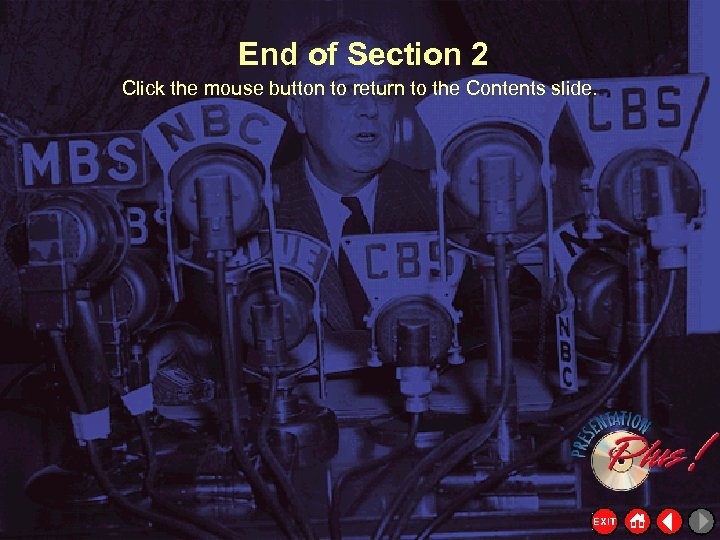 End of Section 2 Click the mouse button to return to the Contents slide.
 Styles of Leadership Key Terms de facto, covert Find Out • Why are communication skills so important to being an effective president? • What leadership quality do you think is most important to the success of a president? Explain why. Click the mouse button or press the Space Bar to display the information. Additional lecture notes appear on the following slides.
 Styles of Leadership Understanding Concepts Cultural Pluralism Why is it important for the president to be accessible to all of the diverse groups in the country? Section Objective Evaluate the leadership qualities important to the success of a president. Click the mouse button or press the Space Bar to display the information. Additional lecture notes appear on the following slides.
 Introduction • Every president has a unique style of leadership. • For example, President Reagan focused on what his aides called the “big picture. ” • He let others in the cabinet, the EOP, and the White House Office work out the details of his policies. Click the mouse button or press the Space Bar to display the information.
 Introduction(cont. ) • President Carter, Reagan’s predecessor, took a different approach. • He spent many hours studying the complex details of policies and often became directly involved with his assistants in handling those details. • Both presidents had the same tools of power available to them, but each chose to use those tools differently in exercising their leadership responsibilities. Click the mouse button or press the Space Bar to display the information.
 Increased Responsibilities • When the Founders wrote the Constitution, they anticipated that Congress, not the president, would lead the nation. • The president was to be the nation’s chief administrator and, in time of war, its commander in chief. • Instead, over the years the powers and duties of the president have grown steadily. Click the mouse button or press the Space Bar to display the information.
 Increased Responsibilities (cont. ) • Public opinion surveys clearly show that Americans look to the president to exercise strong leadership, to keep the peace, and to solve economic and social problems. Click the mouse button or press the Space Bar to display the information.
 Leadership Qualities and Skills • Several specific leadership qualities common to all good administrators are necessary for a president to exercise leadership. • Many presidents generally exhibit more than one of these qualities and skills. • Several great presidents have had all. Click the mouse button or press the Space Bar to display the information. them
 Understanding the Public • The most successful presidents have had a genuine feel for the hopes, fears, and moods of the nation they seek to lead. • Public support, in turn, can give a president real leverage in influencing lawmakers. • As a representative body, Congress is very sensitive to the amount of public support a president can generate. Click the mouse button or press the Space Bar to display the information.
 Understanding the Public (cont. ) • When a president is popular, presidential proposals and policies are better received by Congress than when the public holds a president in low regard. • Failure to understand the public mood can bring disaster to a president. • President Herbert Hoover’s failure to understand the mood and fears of the people cost him the 1932 presidential election. He lost to Franklin D. Roosevelt in a landslide. Click the mouse button or press the Space Bar to display the information.
 Ability to Communicate • Successful presidents must be able to communicate effectively–to explain their policies clearly and to present their ideas in a way that inspires public support. • A president who cannot communicate effectively may have difficulty exercising leadership. • President Carter, for example, had problems in winning public support for his policies. Click the mouse button or press the Space Bar to display the information.
 Ability to Communicate (cont. ) • President Reagan, on the other hand, was dubbed “the Great Communicator” by the press because of his ability to sell his ideas to the public. Click the mouse button or press the Space Bar to display the information.
 Sense of Timing • A successful president must know when the time is right to introduce a new policy or to make a key decision as well as when to delay doing so. • Skillful presidents often use their assistants or cabinet secretaries to test a position on a controversial issue. One way is to deliberately leak information to the press. • Another device is to have a cabinet secretary or an aide make a statement about the issue or give a speech about it. Click the mouse button or press the Space Bar to display the information.
 Sense of Timing (cont. ) • If public and congressional responses are favorable, the president then supports the position and may implement the policy. • If reaction is unfavorable, the idea may be quietly dropped, or the president may begin a campaign to shape public opinion on the issue. Click the mouse button or press the Space Bar to display the information.
 Openness to New Ideas • Good leadership also requires the capacity to be flexible and open to new ideas. • Presidents who are flexible are willing to engage in informal give-and-take sessions with their advisers. • Presidents Franklin Roosevelt and John Kennedy liked to hear their staffs argue differing positions. • In contrast, President Ronald Reagan did not tolerate serious dissension among his staff. Click the mouse button or press the Space Bar to display the information.
 Ability to Compromise • The nature of politics is such that even the president must often be willing to give up something in order to get something in return. • Presidents who will not compromise risk accomplishing nothing at all. Click the mouse button or press the Space Bar to display the information.
 Political Courage • To be great leaders, presidents must at times have the courage to make decisions they know will be unpopular with the voters. • President Lincoln made the greatest of such decisions during the Civil War. • The early years of the war went very badly for the North–the casualty list was horrendous, and the war’s end seemed nowhere in sight. Click the mouse button or press the Space Bar to display the information.
 Political Courage(cont. ) • As time passed, the war became increasingly unpopular, and the president came under intense public and political pressure to negotiate a peace with the South. • Despite his belief that his decision would cause him to be defeated for reelection in 1864, Lincoln decided to continue the war and to preserve the Union. Click the mouse button or press the Space Bar to display the information.
 Presidential Isolation • Information and realistic advice are key ingredients for successful decision making. • As presidents have become more dependent on the White House staff, however, the danger that they may become isolated from the information and advice they need has increased. Click the mouse button or press the Space Bar to display the information.
 Special Treatment • Modern presidents get very special treatment. • In such an atmosphere, it is easy for presidents to see themselves as deserving only praise and to consider their ideas as above criticism. Click the mouse button or press the Space Bar to display the information.
 Voicing Opinions • Presidents may discourage staff members from disagreeing with them or giving them unpleasant advice. • No matter how well they know the president as a person, the office of president awes almost all staff advisers. • A close adviser and friend of President Kennedy put the feeling this way: – “I saw no halo, I observed no mystery. And yet I found that my own personal, highly informal relationship with him changed as soon as he entered the Oval Office. ” Click the mouse button or press the Space Bar to display the information.
 Voicing Opinions(cont. ) • Such feelings can make it difficult for staff to present unpleasant news or voice criticism, which may mean that the president sometimes receives one-sided views of an issue. Click the mouse button or press the Space Bar to display the information.
 Access to the President • A veteran political observer once noted that “power in Washington is measured in access to the president. ” • Top members of the White House staff are closer to the president than any other government officials. • Presidents have different styles of managing staff. Franklin Roosevelt liked having competitive staff full of differing ideas, but Lyndon Johnson was less open to different ideas or dissent. Click the mouse button or press the Space Bar to display the information.
 The Dangers of Isolation • Not only do top staffers have easy access to the president, but they also use their closeness to control others’ access. • President Reagan at first depended heavily on several top advisers. • During his second term, however, his new chief of staff, Donald Regan, severely restricted access to the president. Click the mouse button or press the Space Bar to display the information.
 The Dangers of Isolation(cont. ) • One Reagan staffer called Regan the de facto president, meaning that although Regan did not legally hold the office, he exercised power as though he was president. • Like Nixon before Watergate, President Reagan became increasingly isolated. • This isolation may explain why the president apparently was unaware of the covert, or secret, activities his National Security Council staff in the Iran-contra affair were conducting. Click the mouse button or press the Space Bar to display the information.
 Staying in Touch • Most political observers caution that despite a president’s best intentions, power will inevitably drift toward the White House. • Keeping in direct touch with the public can be very difficult, if not impossible, for a modern president. • The need for cabinet members to protect the interests of their departments and the constituent groups they serve always influences the advice they give. Click the mouse button or press the Space Bar to display the information.
 The Use of Executive Privilege • Presidents do not want the information from their advisers to become public knowledge. • To keep White House discussions and policy making confidential, modern presidents have sometimes used executive privilege. • Executive privilegeis the right of the president and other high-ranking executive officers, with the president’s consent, to refuse to provide information to Congress or a court. Click the mouse button or press the Space Bar to display the information.
 The Use of Executive Privilege(cont. ) • Although the Constitution does not mention executive privilege, the concept rests on the principle of separation of powers. • Congress has disputed executive privilege, claiming that its oversight powers give it the right to obtain necessary information from the executive branch. Click the mouse button or press the Space Bar to display the information.
 Limits of Executive Privilege • Presidents have long claimed that executive privilege also protects their communication with other members of the executive branch. • They argue that executive privilege is necessary if they are to get frank opinions and advice from their assistants. • Until recently, neither Congress nor the courts had much need to question members of the White House staff. These presidential aides traditionally had little to do with making policy. Click the mouse button or press the Space Bar to display the information.
 Limits of Executive Privilege (cont. ) • The various cabinet departments made key policy decisions, and Congress could call department heads to testify as part of its oversight function. • Because more policy making has been taking place in the Executive Office of the President, however, the constitutionality and limits of executive privilege have become an important question. Click the mouse button or press the Space Bar to display the information.
 United States v. Nixon • In 1974 the Supreme Court issued a major decision on executive privilege. • President Nixon had secretly tape-recorded his conversations with key aides about the Watergate cover-up. • In United States v. Nixon, the Court unanimously ruled that the president had to surrender the tapes to the special prosecutor investigating the scandal. The Court also ruled, however, that executive privilege was constitutionally based. Click the blue hyperlink to explore the Supreme Court case.
 United States v. Nixon (cont. ) • Some argue that by defending the constitutional basis of executive privilege, the Court has opened the way for even more secrecy in the White House. • They fear that the privilege may enable presidents to possibly hide misdeeds. As yet, this fear has not been realized. • Although the president’s right of executive privilege is legally recognized, the question of how far it extends to presidential advisers remains unanswered. Click the mouse button or press the Space Bar to display the information.
 Why are communication skills so important to being an effective president? Communication skills are needed to explain policies clearly and to inspire public support. Click the mouse button or press the Space Bar to display the answer.
 What leadership quality do you think is most important to the success of a president? Explain why. Several leadership qualities are important, including understanding the public, the ability to communicate, a sense of timing, openness to new ideas, the ability to compromise, and political courage. Click the mouse button or press the Space Bar to display the answer.
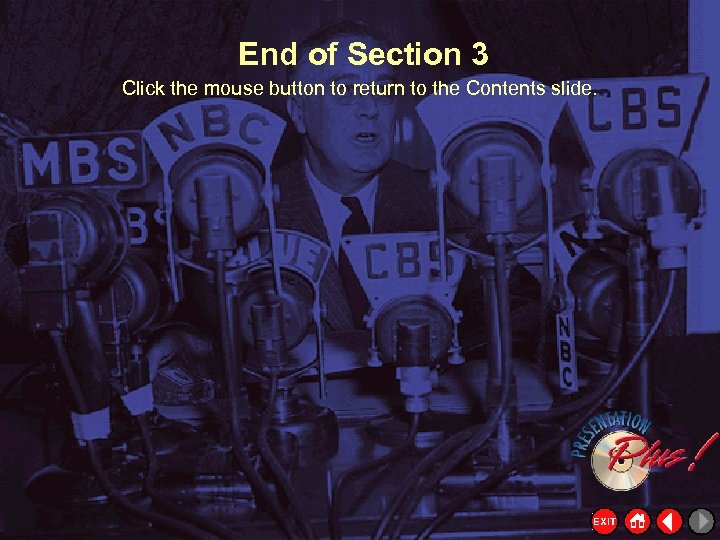 End of Section 3 Click the mouse button to return to the Contents slide.
 Identify the five constitutional roles or duties of the president. 1. head of state: represents the nation and performs many ceremonial roles 2. chief executive sees that the laws of : Congress are carried out 3. chief legislator proposes a legislative program : for the nation 4. chief diplomat directs the foreign policy : 5. commander in chief directs the armed forces : Click the mouse button or press the Space Bar to display the answer.
 How does receiving a mandate affect a president’s policy making? Presidents elected to office by a large majority have greater ease initiating policies through Congress than do those elected by a slim margin. Click the mouse button or press the Space Bar to display the answer.
 What are four limits on presidential power? 1. 2. 3. 4. limitations by Congress federal courts federal bureaucracy public opinion Click the mouse button or press the Space Bar to display the answer.
 Identify two duties of the president that affect the economy of the nation. The president prepares an annual economic report to Congress that leads Congress to give the president power to deal with economic problems and an annual budget that determines where monies will be allocated. Click the mouse button or press the Space Bar to display the answer.
 What is the president’s role as party leader? The president helps party members who are running for office, helps to raise funds for the party, selects the national chairperson, and helps plan election strategies. Click the mouse button or press the Space Bar to display the answer.
 What three powers does a president have in the role of chief diplomat? 1. the power to make treaties 2. the power to make executive agreements 3. the power to recognize the governments of other countries Click the mouse button or press the Space Bar to display the answer.
 Why can failing to understand the public’s mood weaken a president’s power? The president may lose public support. Without the leverage of public support, relations with Congress will be difficult and the president’s effectiveness will diminish. Click the mouse button or press the Space Bar to display the answer.
 How do presidents become isolated? Most information comes through close aides who screen out what they do not want the president to hear. Thus, the flow of information and ideas to the president may be severely limited. Also, presidents may isolate themselves by discouraging opposing opinions or unwanted advice. Click the mouse button or press the Space Bar to display the answer.
 How could Congress have prevented President Jefferson from purchasing the Louisiana Territory? Congress could have prevented Jefferson’s purchase by refusing to ratify the treaty or refusing to raise the money for the purchase of the Louisiana Territory. Click the mouse button or press the Space Bar to display the answer.
 Chapter Bonus Question Which president holds the record for writing the most executive orders? Franklin D. Roosevelt, who also served the longest as president, holds the record by writing 3, 522 executive orders. Click the mouse button or press the Space Bar to display the answer.
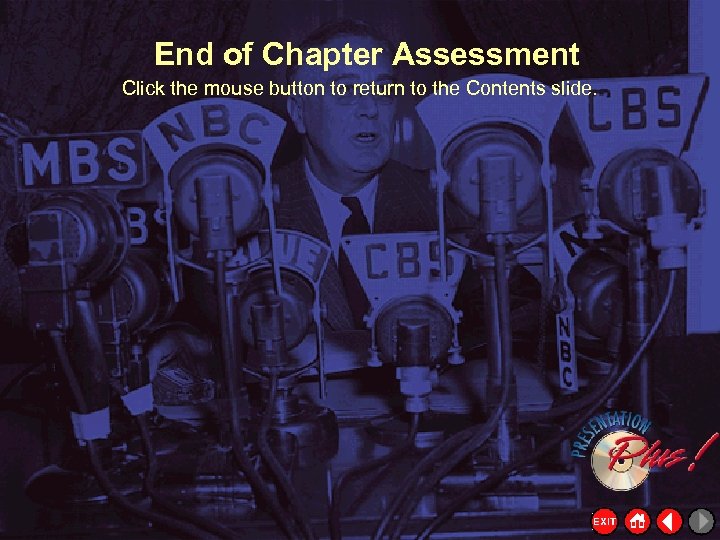 End of Chapter Assessment Click the mouse button to return to the Contents slide.

 Use the Mind. Jogger videoquiz as a preview, or both. Click the Videodisc button to play the Mind. Jogger video if you have a videodisc player attached to your computer. Disc 2 Side 1 Chapter 9 If you experience difficulties, check the Troubleshooting section in the Help system. Click the Videodisc button to play the Mind. Jogger video if you have a videodisc player attached to your computer.
 Powers of the President Constitution and the President Powers of the Congress Trial of Impeachments Click a blue hyperlink to select an ABCNews Interactive video segment.
 Powers of the President Constitution and the President This segment explores the basic duties of the president, explained by Jimmy Carter. Click the Videodisc button to play the ABCNews Inter. Active™ video if you have a videodisc player attached to your computer. If you experience difficulties, check the Troubleshooting section in the Help system. Side 1 Chapter 3 Click the Videodisc button to play the video if you have a videodisc player attached to your computer.
 Powers of the Congress Trial of Impeachments This segment explores the role of the Senate in the impeachment process. Click the Videodisc button to play the ABCNews Inter. Active™ video if you have a videodisc player attached to your computer. If you experience difficulties, check the Troubleshooting section in the Help system. Side 1 Chapter 42 Click the Videodisc button to play the video if you have a videodisc player attached to your computer.
 Powers of the President Constitutional Roles of the President Powers of the President Roles of the President Click a blue hyperlink to select an ABCNews Interactive video segment.
 Powers of the President Constitutional Roles of the President This segment explores the various constitutional roles of the president. Click the Videodisc button to play the ABCNews Inter. Active™ video if you have a videodisc player attached to your computer. If you experience difficulties, check the Troubleshooting section in the Help system. Side 1 Chapter 16 Click the Videodisc button to play the video if you have a videodisc player attached to your computer.
 Powers of the President Roles of the President This segment explores the extra-constitutional roles of the president, explained by former President Jimmy Carter. Click the Videodisc button to play the ABCNews Inter. Active™ video if you have a videodisc player attached to your computer. If you experience difficulties, check the Troubleshooting section in the Help system. Side 2 Chapter 6 Click the Videodisc button to play the video if you have a videodisc player attached to your computer.
 Big Decisions The president of the United States is the most powerful person on earth. The president can determine where our armed forces are sent and who gets pardoned from federal crimes. Presidential appointments in the executive and judicial branches affect our lives every day. The Chapter 9 video lesson Presidential Leadership will show you how the president makes important decisions and leads our nation. Click the forward button or press the space bar to access the Democracy In Action preview and activities.
 Presidential Leadership Disc 1 Side 1 Chapter 9 Click the Videodisc button anytime throughout this section to play the complete video if you have a videodisc player attached to your computer. Click inside this box to play the preview. Click the Forward button to view the discussion questions and other related slides.
 Presidential Leadership Objectives Disc 1 Side 1 Chapter 9 • Identify key characteristics of effective presidents. • Recognize key events associated with exemplary presidents. • Realize that a president’s effectiveness is not always recognized during his or her time in office. Click the mouse button or press the Space Bar to display the information.
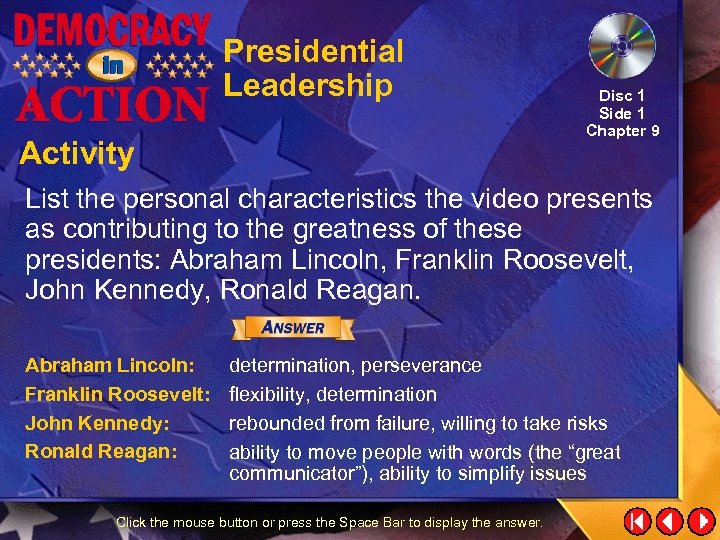 Presidential Leadership Activity Disc 1 Side 1 Chapter 9 List the personal characteristics the video presents as contributing to the greatness of these presidents: Abraham Lincoln, Franklin Roosevelt, John Kennedy, Ronald Reagan. Abraham Lincoln: Franklin Roosevelt: John Kennedy: Ronald Reagan: determination, perseverance flexibility, determination rebounded from failure, willing to take risks ability to move people with words (the “great communicator”), ability to simplify issues Click the mouse button or press the Space Bar to display the answer.
 Presidential Leadership Activity What three problems did John Kennedy have to overcome as president? 1. a narrow electoral margin 2. suspect as a Roman Catholic 3. youth Click the mouse button or press the Space Bar to display the answer. Disc 1 Side 1 Chapter 9
 End of Why It’s Important Click the mouse button to return to the Contents.
 Explore o-nline information about the topics introduced in this chapter. Click on the Connect button to launch your browser and go to the Presentation Plus! Web site. At this site, you will find a complete list of Web sites correlated with the chapters in the United States Government: Democracy in Action textbook. When you finish exploring, exit the browser program to return to this presentation. If you experience difficulty connecting to the Web site, manually launch your Web browser and go to http: //www. glencoe. com/government/ cyberlinks
 Explore on-line news resources to find out what is currently happening in the United States and around the world. Click on the Connect button to launch your browser and go to the Glencoe Current Events Web site. At this site, you will find numerous links to different news agencies. When you finish exploring, exit the browser program to return to this presentation. If you experience difficulty connecting to the Web site, manually launch your Web browser and go to http: //www. glencoe. com/sec/ socialstudies /currentevents
 United States Maps: United States (full) Regional Maps: North America Central America The Caribbean South America Africa Europe The Middle East Northern Asia South Pacific and Australia • CT, DC, DE, MA, MD, ME, NH, NJ, NY, PA, RI, VT • AL, FL, GA, NC, SC, TN, VA • IL, IN, KY, MI, OH, WV • IA, NE, MN, ND, SD, WI • AR, KS, LA, MO, MS, OK, TX • AZ, CA, CO, NM, NV, UT • ID, MT, OR, WA, WY • AK, HI Special Purpose Maps: World Land Use World Climates The Hemispheres Click on a hyperlink to display the corresponding map.
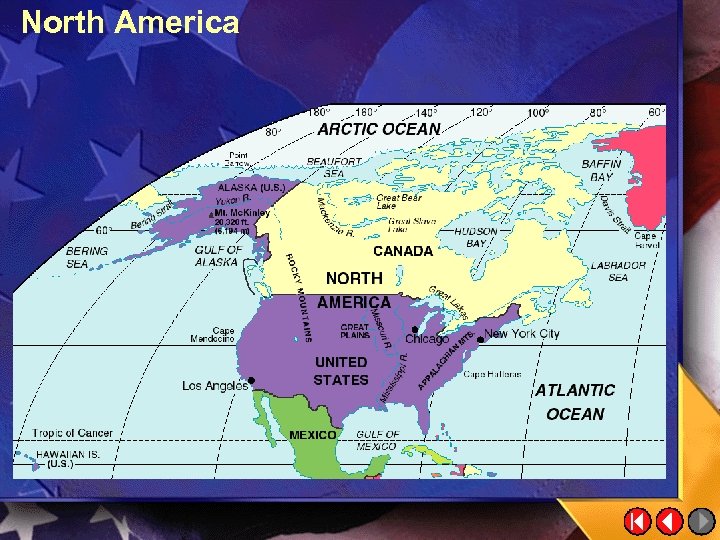 North America
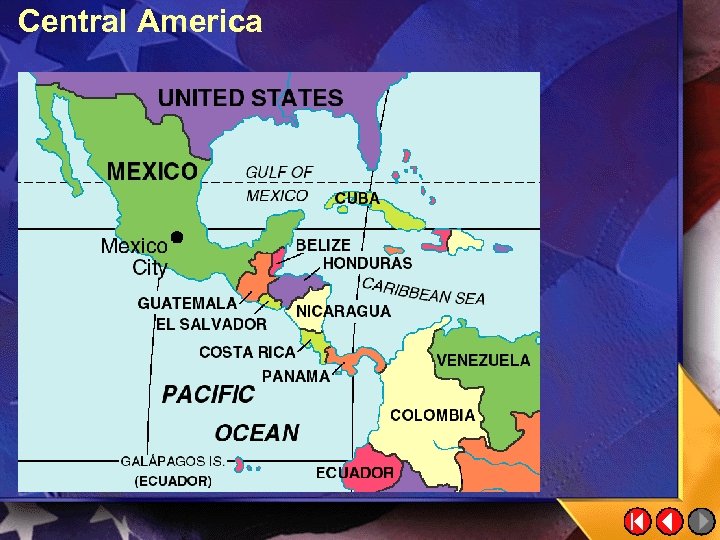 Central America
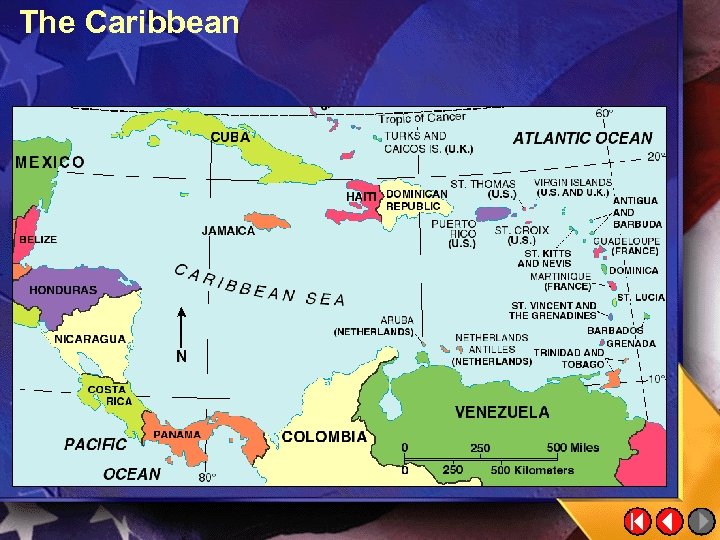 The Caribbean
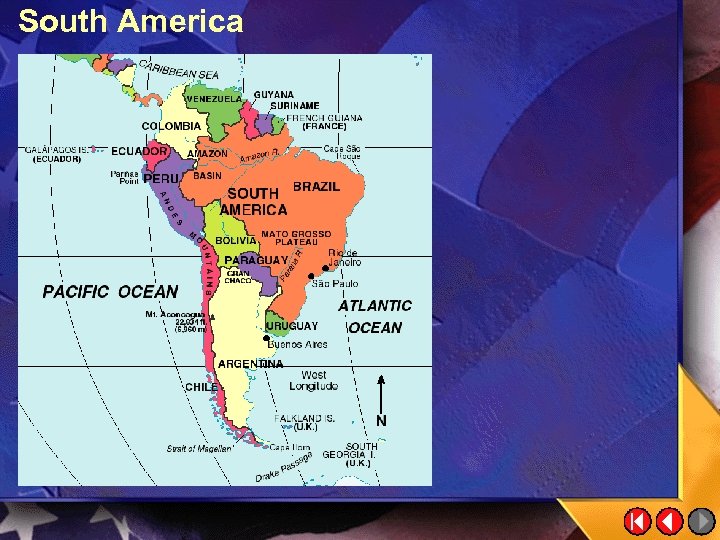 South America
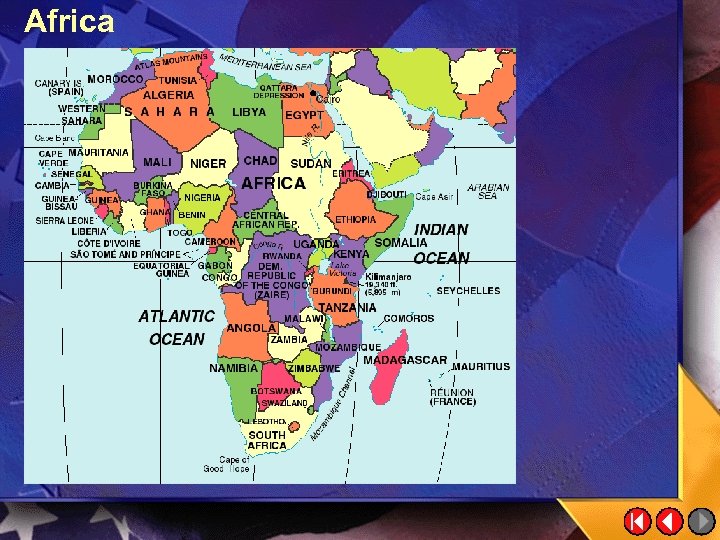 Africa
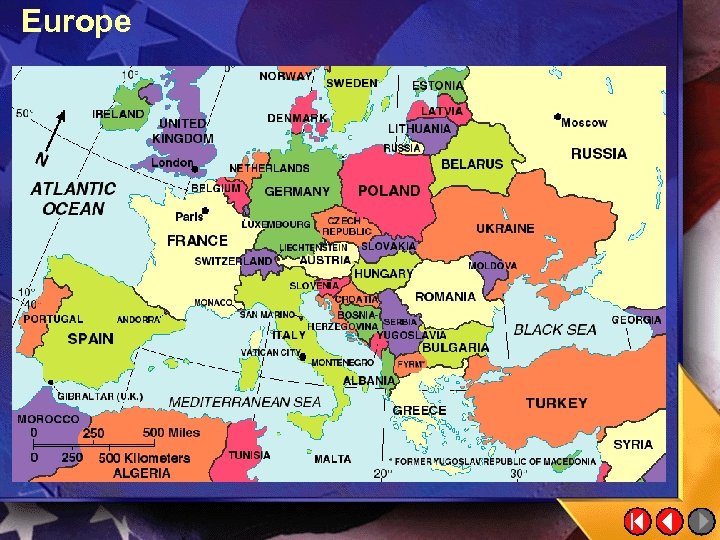 Europe
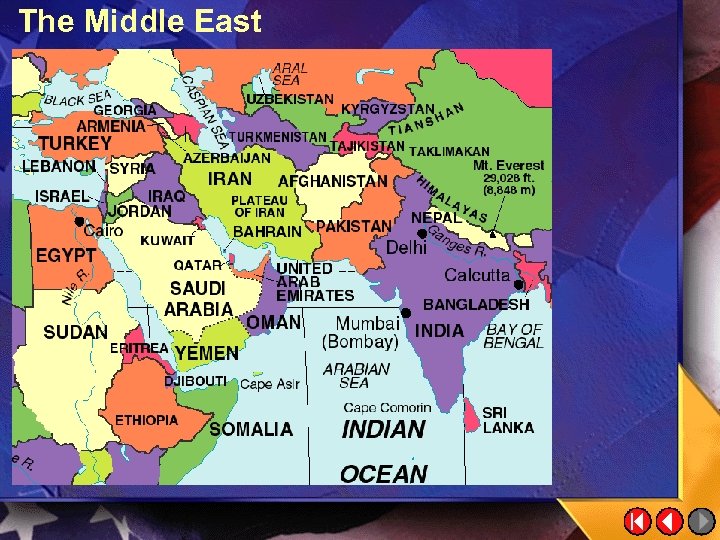 The Middle East
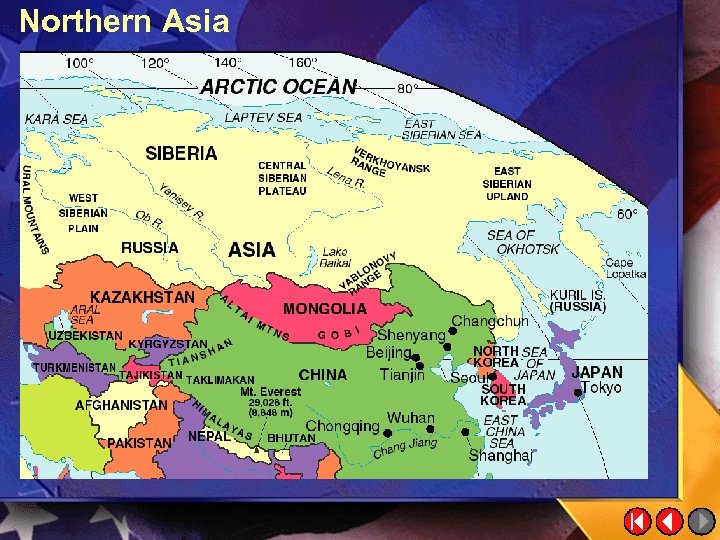 Northern Asia
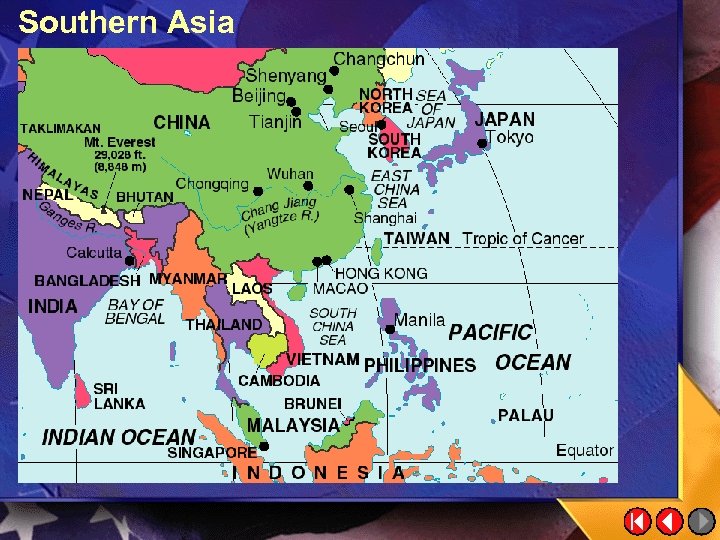 Southern Asia
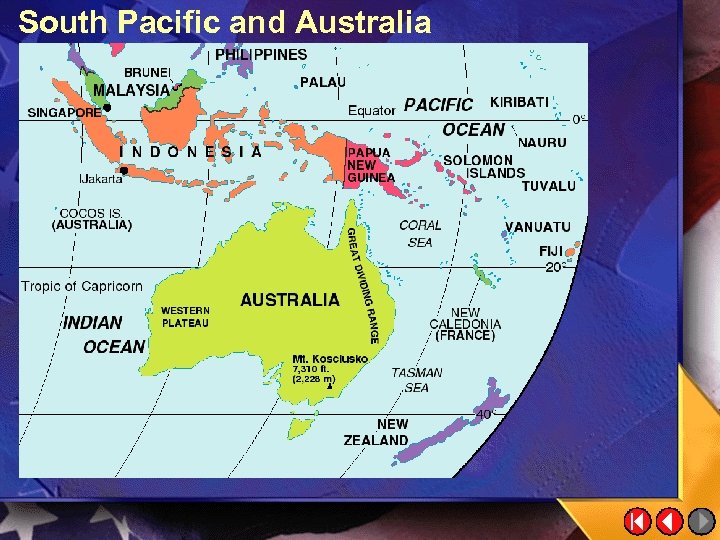 South Pacific and Australia
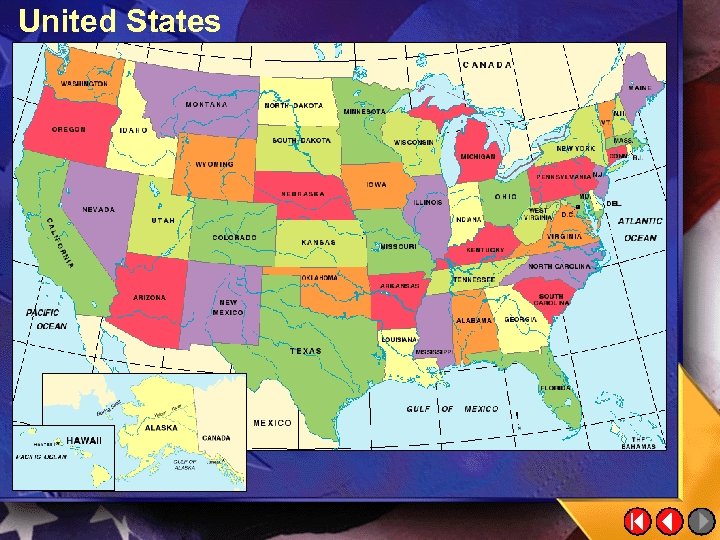 United States
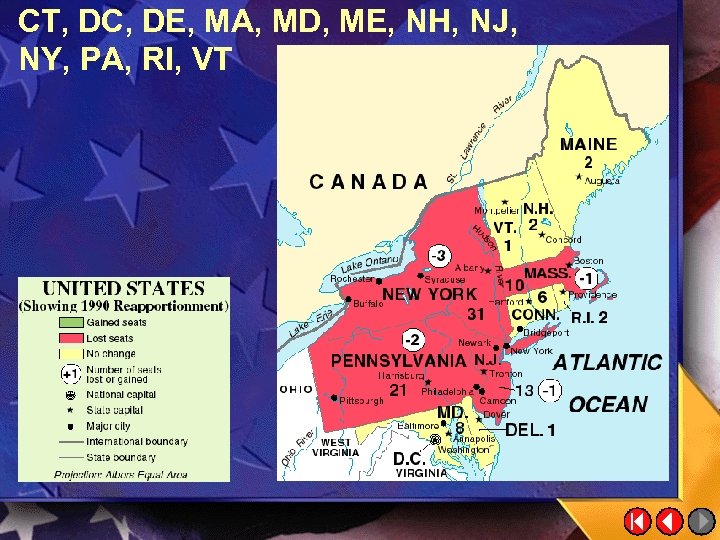 CT, DC, DE, MA, MD, ME, NH, NJ, NY, PA, RI, VT
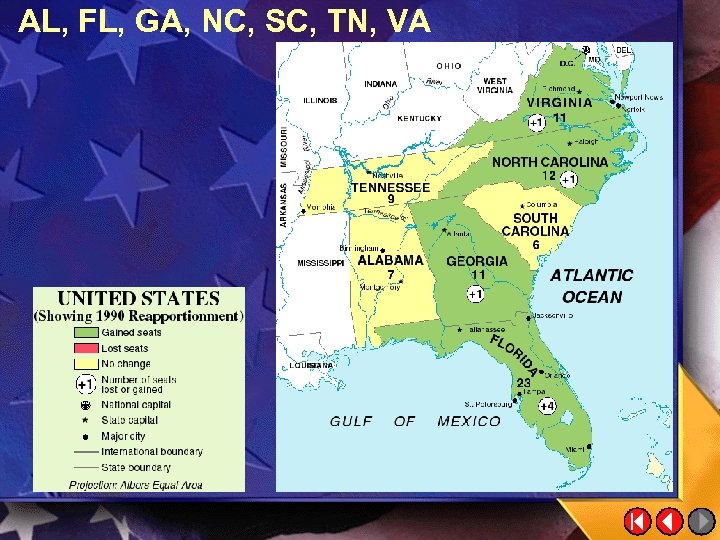 AL, FL, GA, NC, SC, TN, VA
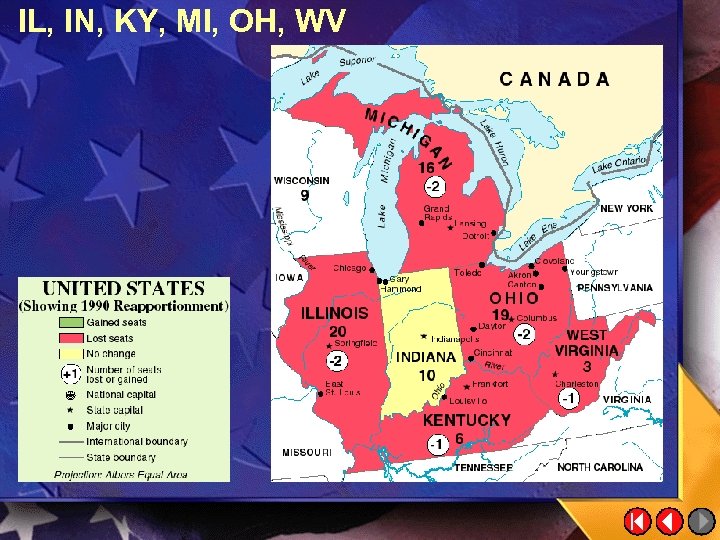 IL, IN, KY, MI, OH, WV
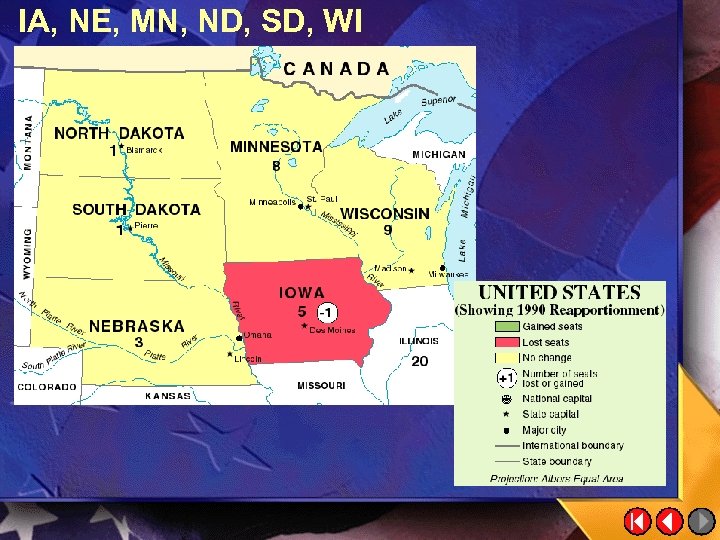 IA, NE, MN, ND, SD, WI
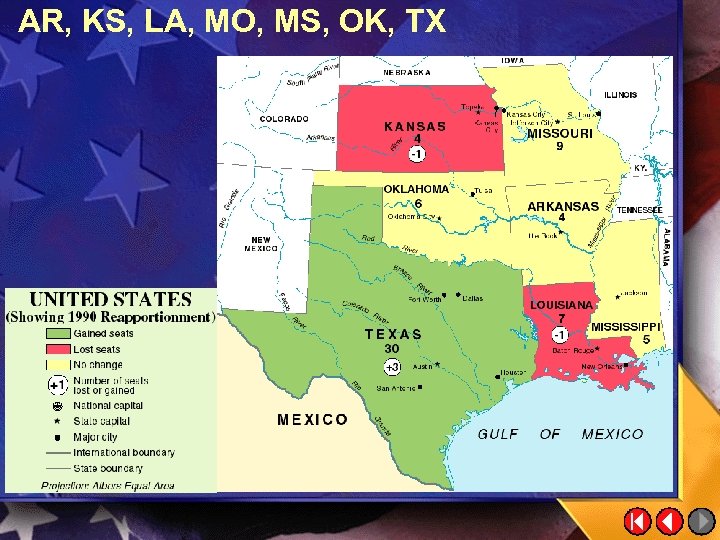 AR, KS, LA, MO, MS, OK, TX
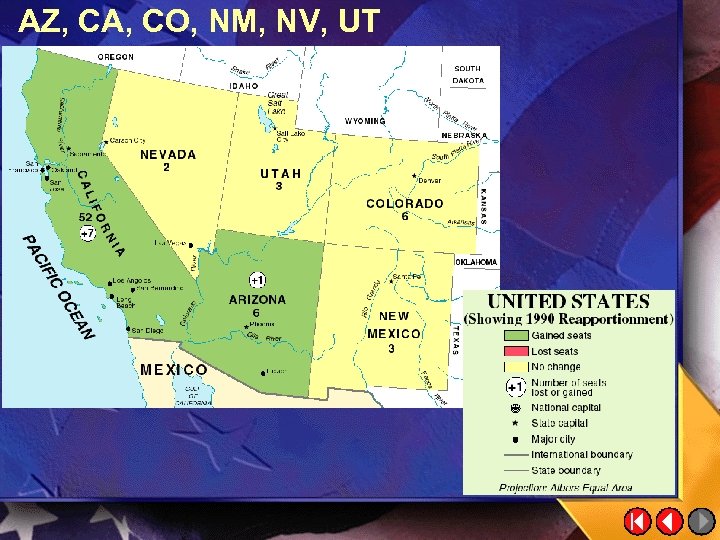 AZ, CA, CO, NM, NV, UT
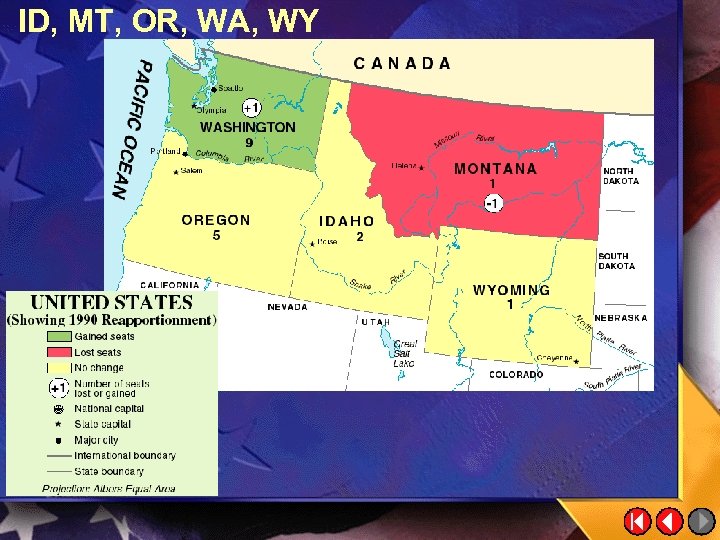 ID, MT, OR, WA, WY
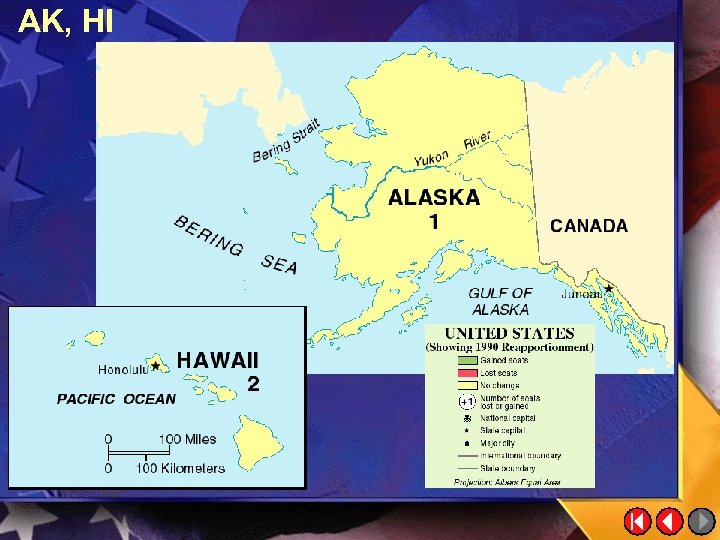 AK, HI
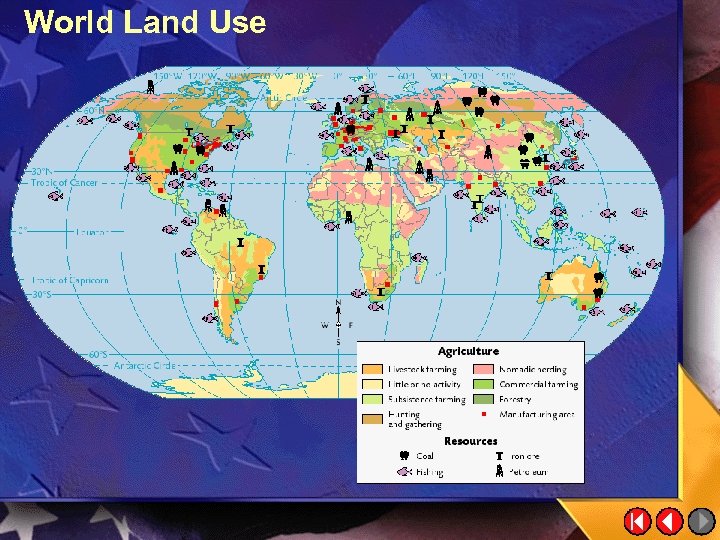 World Land Use
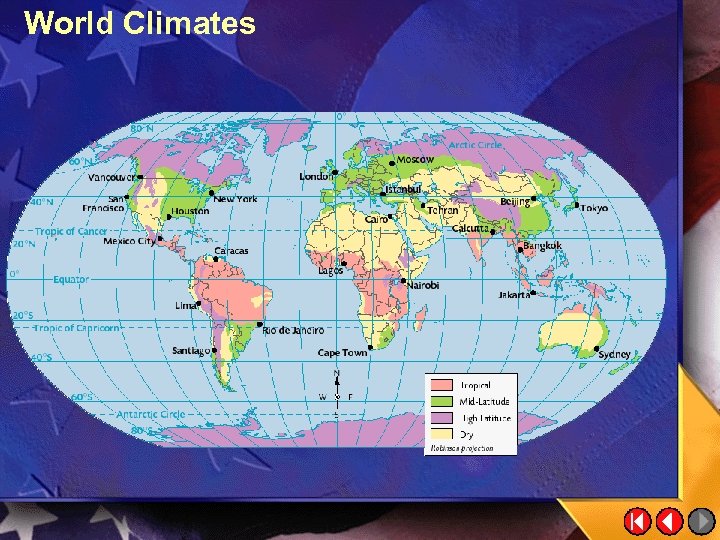 World Climates
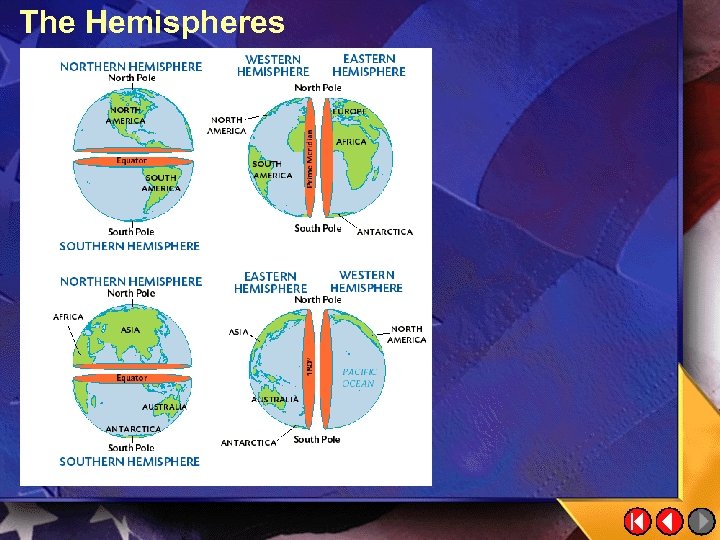 The Hemispheres
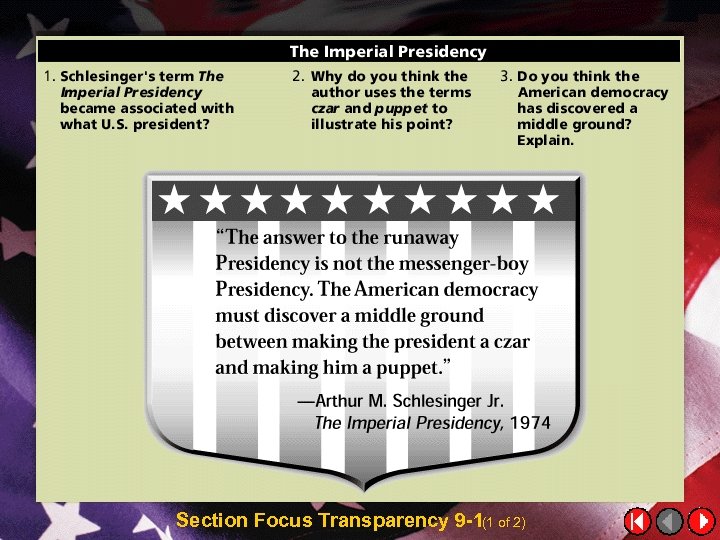 Section Focus Transparency 9 -1(1 of 2)
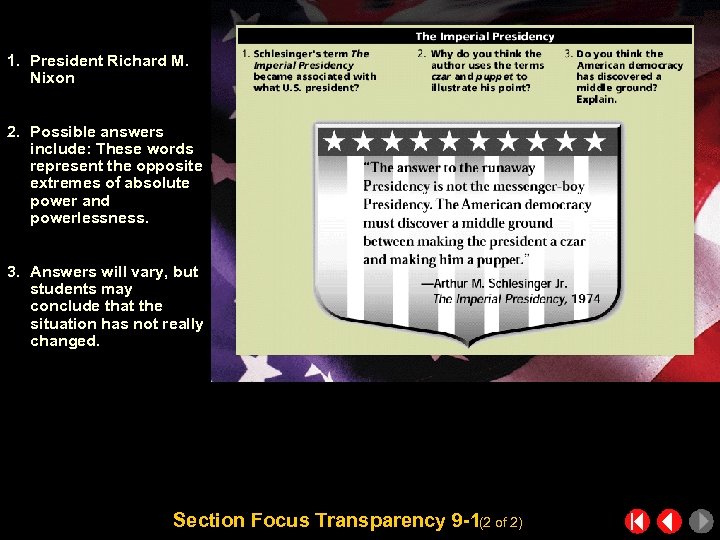 1. President Richard M. Nixon 2. Possible answers include: These words represent the opposite extremes of absolute power and powerlessness. 3. Answers will vary, but students may conclude that the situation has not really changed. Section Focus Transparency 9 -1(2 of 2)
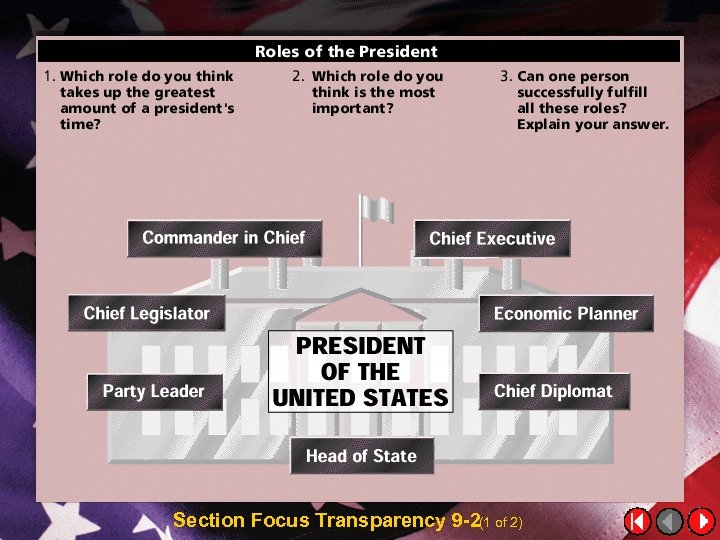 Section Focus Transparency 9 -2(1 of 2)
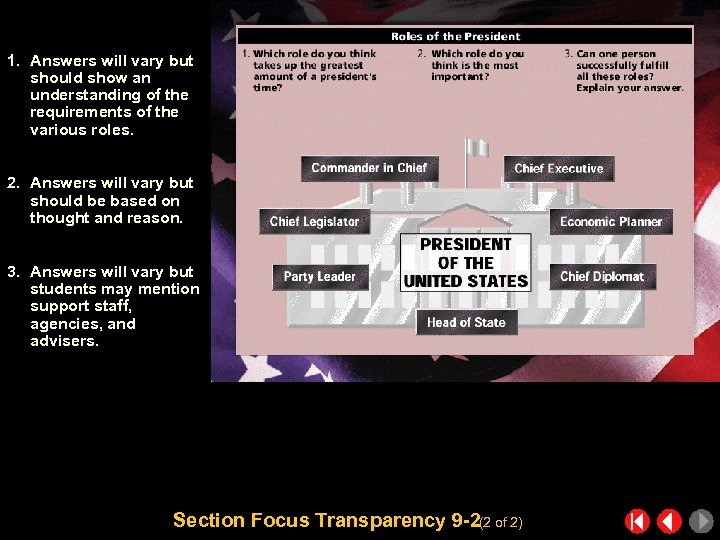 1. Answers will vary but should show an understanding of the requirements of the various roles. 2. Answers will vary but should be based on thought and reason. 3. Answers will vary but students may mention support staff, agencies, and advisers. Section Focus Transparency 9 -2(2 of 2)
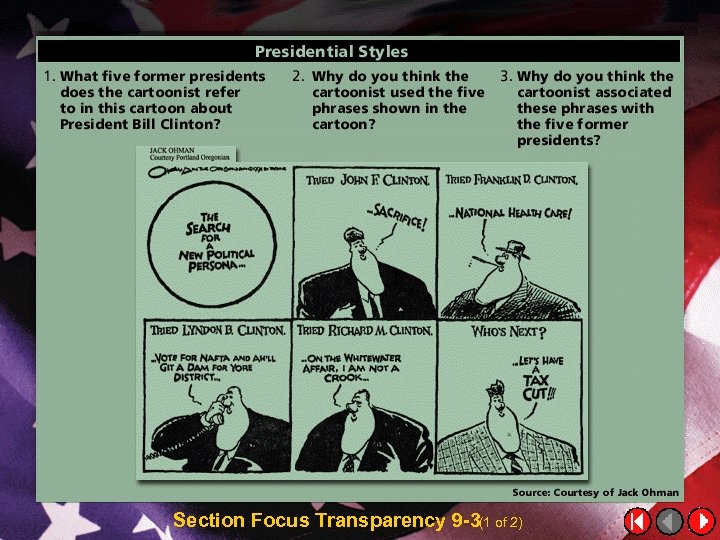 Section Focus Transparency 9 -3(1 of 2)
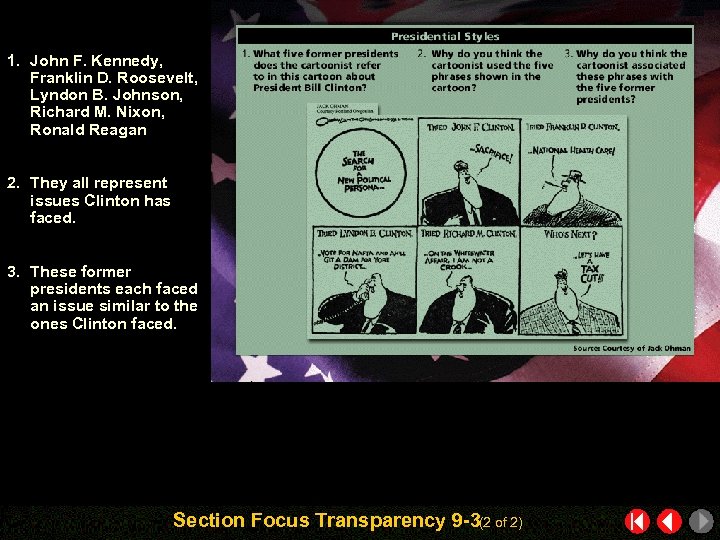 1. John F. Kennedy, Franklin D. Roosevelt, Lyndon B. Johnson, Richard M. Nixon, Ronald Reagan 2. They all represent issues Clinton has faced. 3. These former presidents each faced an issue similar to the ones Clinton faced. Section Focus Transparency 9 -3(2 of 2)
 Hail to the Chief When physically unimpressive President James K. Polk entered a room, he sometimes went unnoticed. His wife, Sarah, decided to ensure him of a president’s welcome by requesting the marine band to play “Hail to the Chief, ” an old Scottish anthem, when he arrived. The tradition of playing the tune upon arrival of the president has lasted to this day.
 Psychologists often use five significant characteristics– neuroticism, extroversion, openness to experience, agreeableness, and conscientiousness–to classify personality types. Using the characteristics to measure presidents, some psychologists ranked Theodore and Franklin Roosevelt first and second respectively in extroversion, with Bill Clinton as third. The ranked Richard Nixon as the most neurotic, Thomas Jefferson as the most open to experience, and James Madison and Abraham Lincoln as the most agreeable. George Washington was rated the most conscientious.
 Births and Birthplaces Virginia is the birthplace of eight presidents, more than any other state. Born there were George Washington, Thomas Jefferson, James Madison, James Monroe, William Henry Harrison, John Tyler, Zachary Taylor, and Woodrow Wilson. Ohio is second with seven presidents: Ulysses S. Grant, Rutherford B. Hayes, James A. Garfield, Benjamin Harrison, William Mc. Kinley, William Howard Taft, and Warren G. Harding. New York and Massachusetts each have had four presidents. New York claims Martin Van Buren, Millard Fillmore, and Theodore and Franklin Roosevelt. Massachusetts was home to John Adams, John Quincy Adams, John F. Kennedy, and George Bush.
 Marbury v. Madison (1803) This case established one of the most significant principles of American constitutional law. In this case, the Supreme Court held that it is the Court itself that has the final say on what the Constitution means. It is also the Supreme Court that has the final say in whether or not an act of government–legislative or executive at the federal, state, or local level–violates the Constitution.
 Youngstown Sheet and Tube Company v. Sawyer (1952) This case arose when a nationwide strike of steelworkers threatened to shut down the industry at the height of the Korean War. (Steel production was essential to the war effort. ) To avert the strike, President Truman ordered the secretary of commerce to take over the steel mills and keep them running. The Supreme Court held that the president must relinquish control of the mills because he had exceeded his constitutional authority. The Court specifically held that the president’s authority as commander in chief did not justify his action. (Continued)
 Youngstown Sheet and Tube Company v. Sawyer (cont. ) The Court explained that only Congress could “nationalize” an industry; if Congress did so, the president, who is constitutionally required to execute the law, would be authorized to seize and operate the mills.
 United States v. Nixon (1974) This case made it clear that the president is not above the law. In the early 1970 s, President Nixon was named as an unindicted coconspirator in the criminal investigation that arose in the aftermath of a break-in at the offices of the Democratic Party in Washington, D. C. A federal judge had ordered President Nixon to turn over tapes of conversations he had with his advisers; Nixon resisted the order, claiming that the conversations were entitled to absolute confidentiality by Article II of the Constitution. (Continued)
 United States v. Nixon (cont. ) The Supreme Court disagreed and held that only those presidential conversations and communications that relate to performing the duties of the office of president are confidential and protected from a judicial order of disclosure.
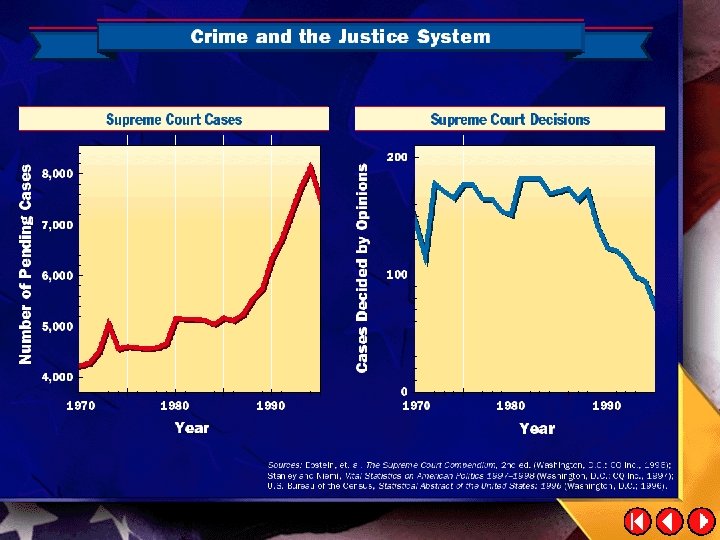
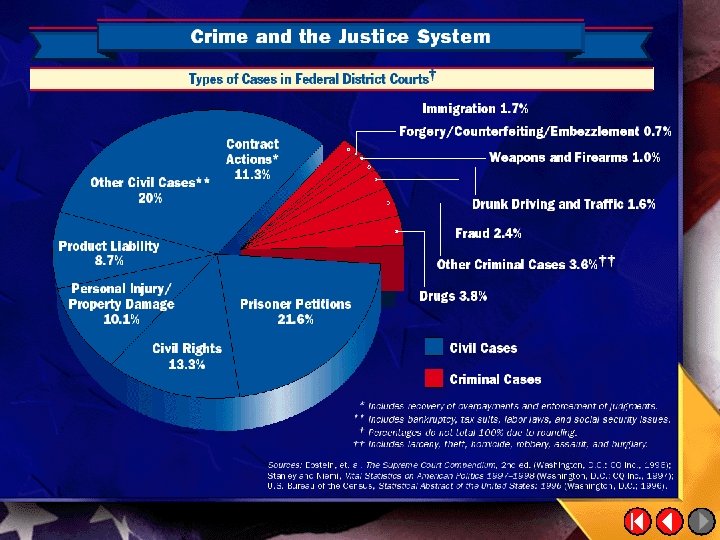
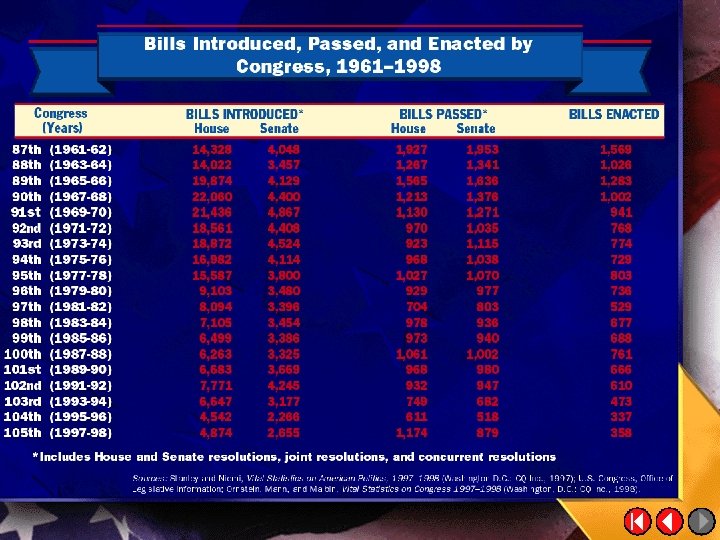
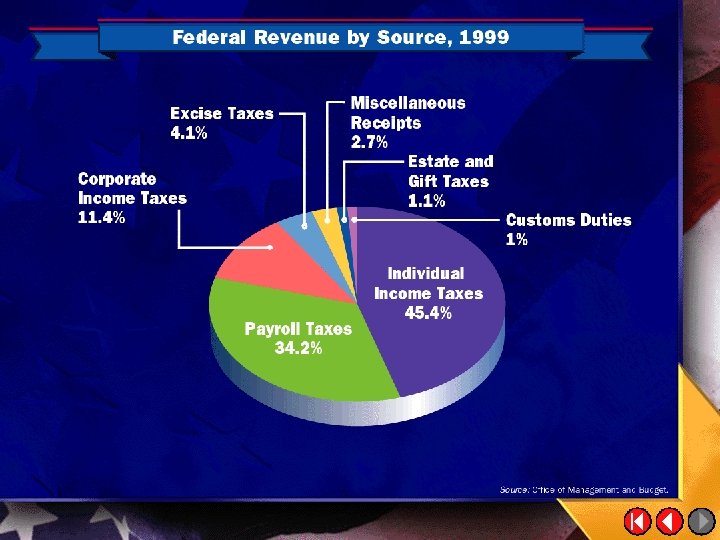
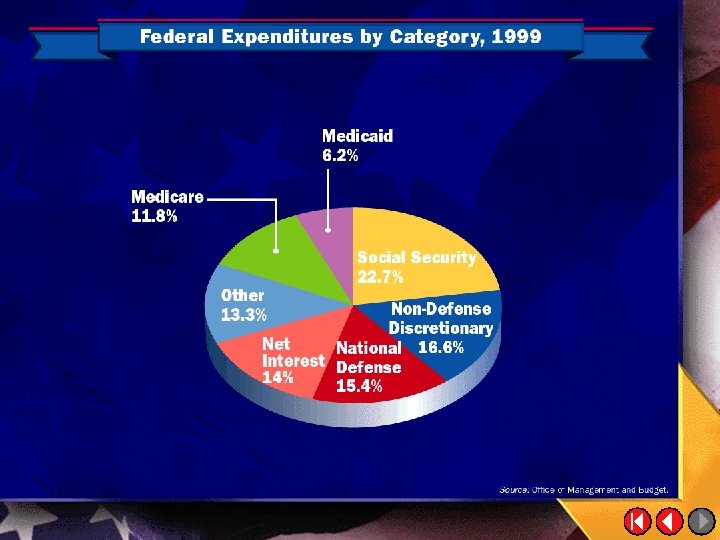
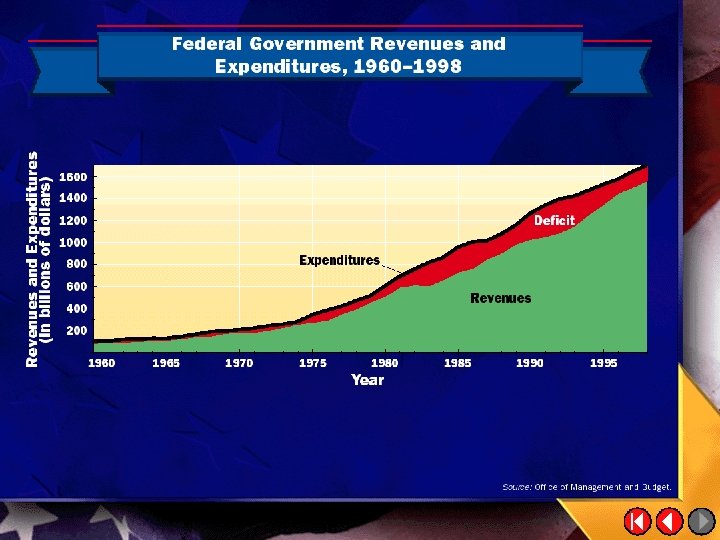
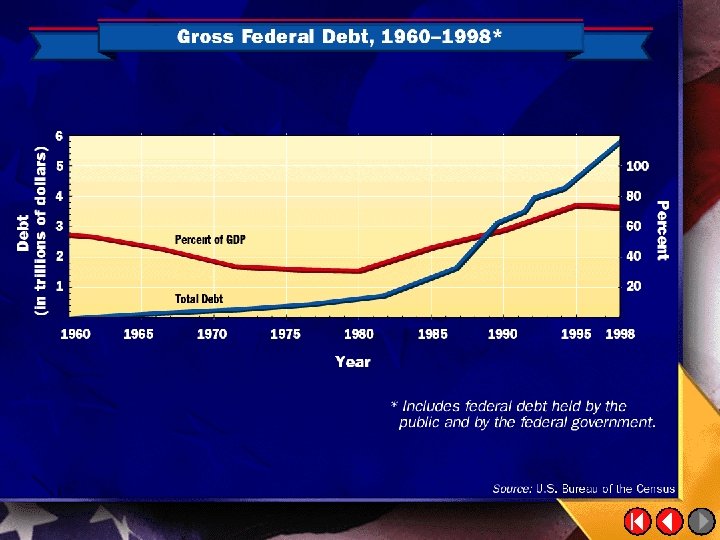
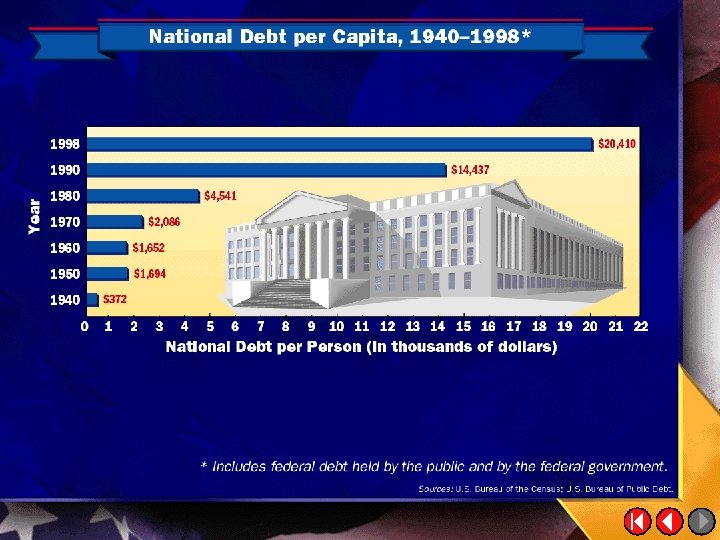
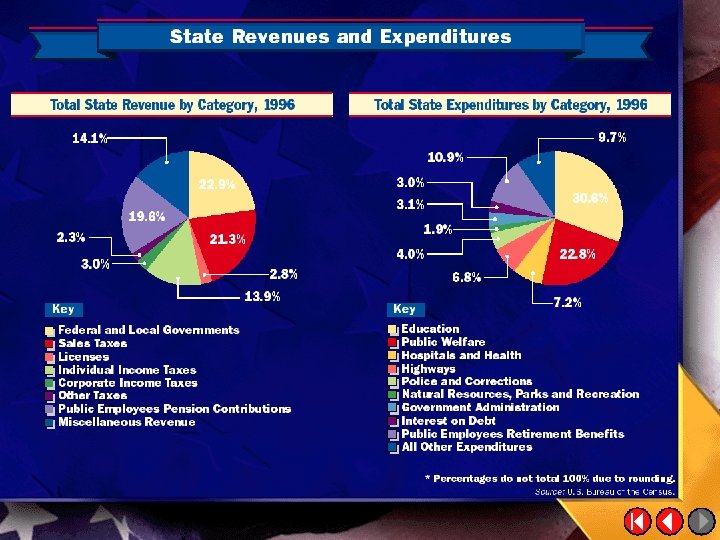
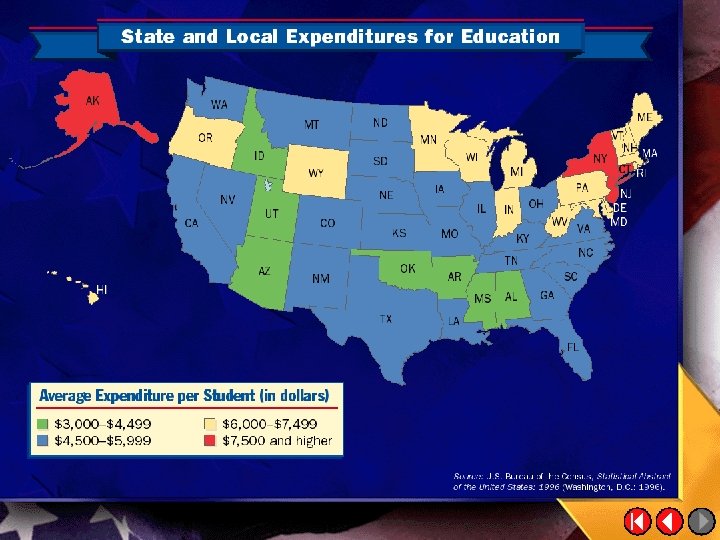
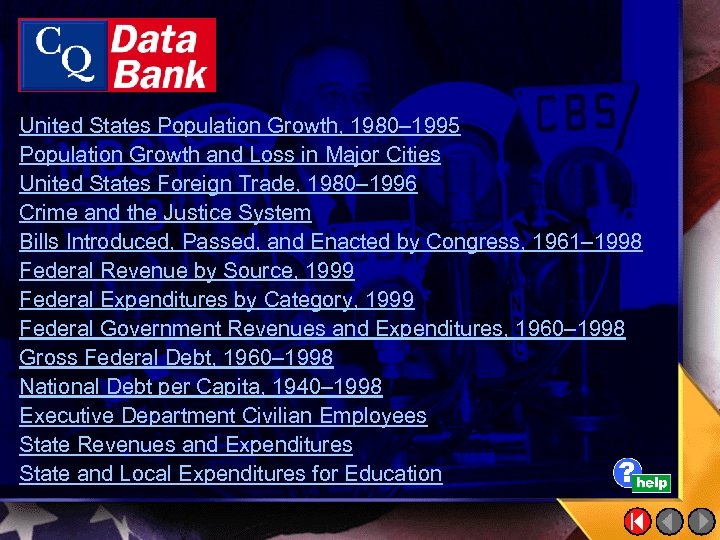 United States Population Growth, 1980– 1995 Population Growth and Loss in Major Cities United States Foreign Trade, 1980– 1996 Crime and the Justice System Bills Introduced, Passed, and Enacted by Congress, 1961– 1998 Federal Revenue by Source, 1999 Federal Expenditures by Category, 1999 Federal Government Revenues and Expenditures, 1960– 1998 Gross Federal Debt, 1960– 1998 National Debt per Capita, 1940– 1998 Executive Department Civilian Employees State Revenues and Expenditures State and Local Expenditures for Education
 End of Custom Shows WARNING! Do Not Remove This slide is intentionally blank and is set to auto-advance to end custom shows and return to the main presentation.
 End of the Slide Show Click the mouse button to return to the Contents slide.