


 Скачать презентацию PRESENTATION ON THE WORKING AND PERFORMANCE OF AIOU
98408362a9dbe90a16b250786a58c9ab.ppt
- Количество слайдов: 41

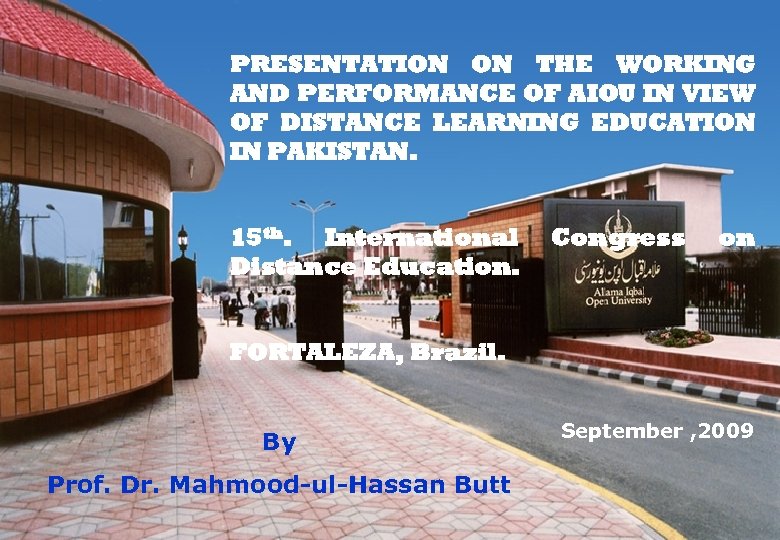 PRESENTATION ON THE WORKING AND PERFORMANCE OF AIOU IN VIEW OF DISTANCE LEARNING EDUCATION IN PAKISTAN. 15 th. International Distance Education. Congress on FORTALEZA, Brazil. By Prof. Dr. Mahmood-ul-Hassan Butt September , 2009
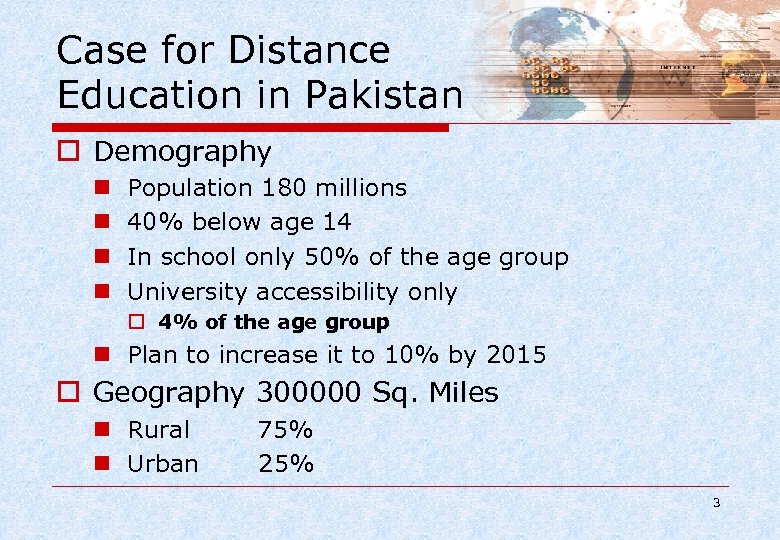 Case for Distance Education in Pakistan o Demography n n Population 180 millions 40% below age 14 In school only 50% of the age group University accessibility only o 4% of the age group n Plan to increase it to 10% by 2015 o Geography 300000 Sq. Miles n Rural 75% n Urban 25% 3
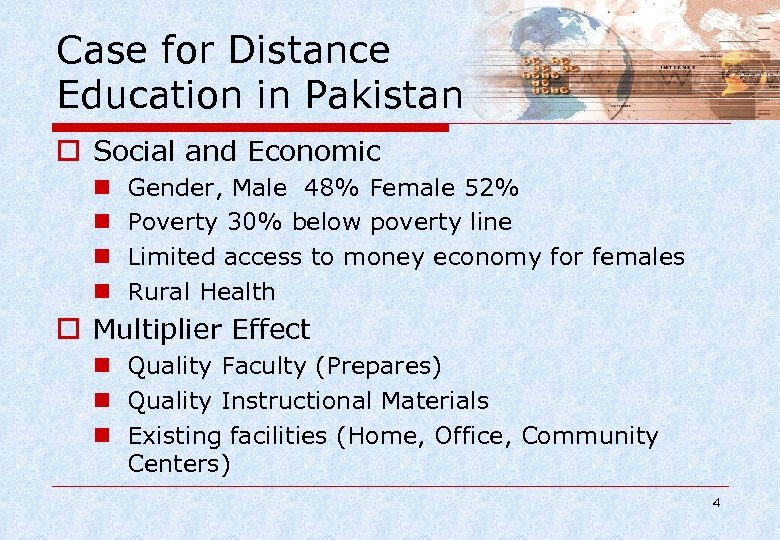 Case for Distance Education in Pakistan o Social and Economic n n Gender, Male 48% Female 52% Poverty 30% below poverty line Limited access to money economy for females Rural Health o Multiplier Effect n Quality Faculty (Prepares) n Quality Instructional Materials n Existing facilities (Home, Office, Community Centers) 4
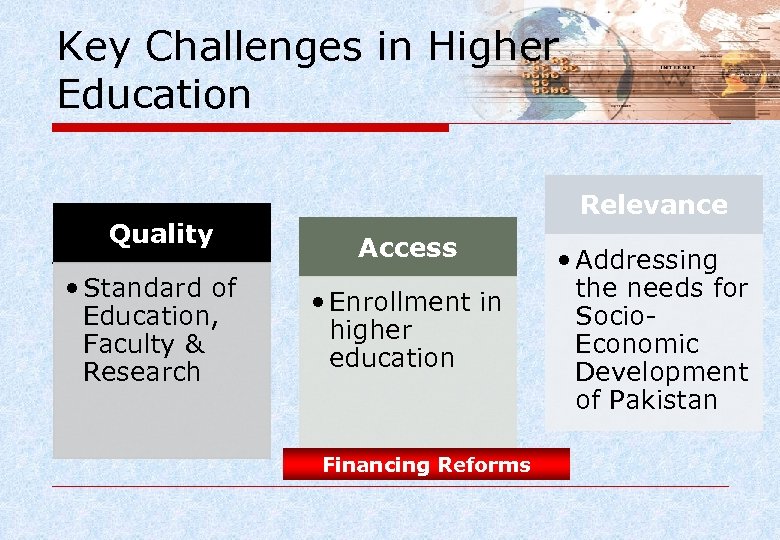 Key Challenges in Higher Education Quality • Standard of Education, Faculty & Research Relevance Access • Enrollment in higher education Financing Reforms • Addressing the needs for Socio. Economic Development of Pakistan
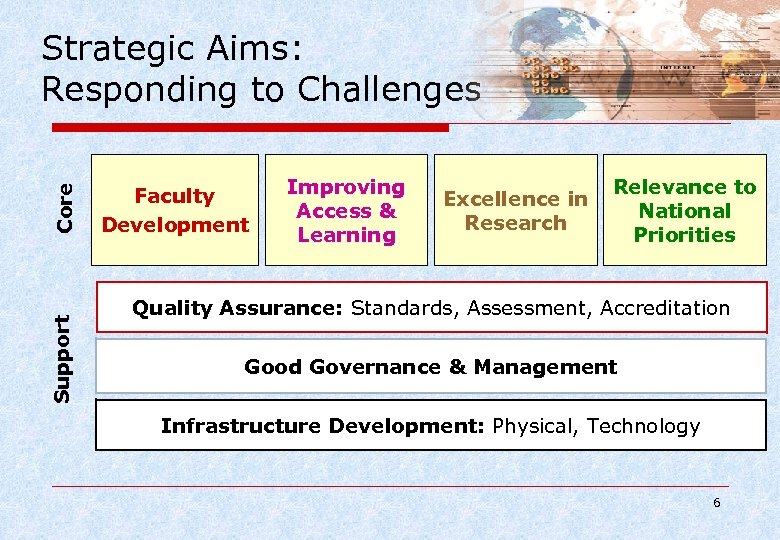 Support Core Strategic Aims: Responding to Challenges Faculty Development Improving Access & Learning Excellence in Research Relevance to National Priorities Quality Assurance: Standards, Assessment, Accreditation Good Governance & Management Infrastructure Development: Physical, Technology 6
 ESTABLISHMENT Allama Iqbal Open University The AIOU was established in 1974 under the name of “People’s Open University” using the Open Distance Learning Model. It was later renamed as “Allama Iqbal Open University” in 1977 on the eve of first centenary of the National Poet and Philosopher, Allama Muhammad Iqbal. 7
 MISSION OF AIOU will transform lives and serve society by providing affordable and accessible education through technology supported distance learning to disseminate and discover useful knowledge, develop professional skills, ethical dispositions and commitment to excellence. 8
 RATIONALE 9
 OBJECTIVES • To provide affordable and accessible educational facilities to people who cannot leave their homes and jobs. • To provide facilities to the masses for their educational uplift. • To provide instruction in diverse disciplines of knowledge including technology and vocations. 10
 OBJECTIVES Ø To provide facilities for the training of teachers. Ø To make provision for research and for the advancement and dissemination of knowledge. Ø To hold examinations and to award and confer degrees and other academic distinctions 11
 VISION ( Aspirations) OF AIOU Ø Deliberately plan a qualitatively brighter future to build on AIOU’s extraordinary achievements of quantitative growth as a mega ODL University. Ø Through collective strategic thinking develop and implement innovative and creative systems and solutions to enable students, faculty and staff to thrive and serve the nation. 12 Cont.
 Ø Expand improve the quality of services provided through its regional campuses and centers. Ø Foster High quality research by students and faculty to meet current and anticipated development needs of the country Ø Selectively develop for ODL delivery graduate programs of teaching, research and service commensurate with the mission of the University. Cont. 13
 Ø Play a leading role to extend the open distance education system to other universities to cover private candidates. Ø Graduate culturally enlightened, technologically knowledgeable & skilled and academically competent, progressive and productive leaders. 14
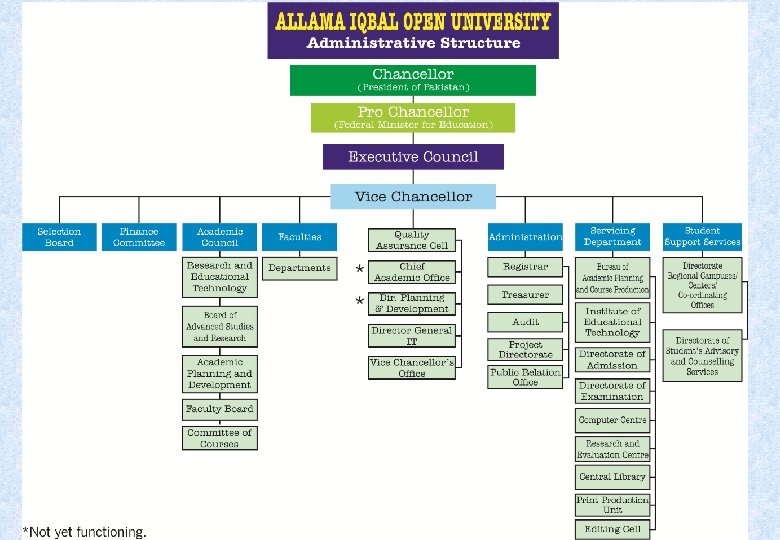
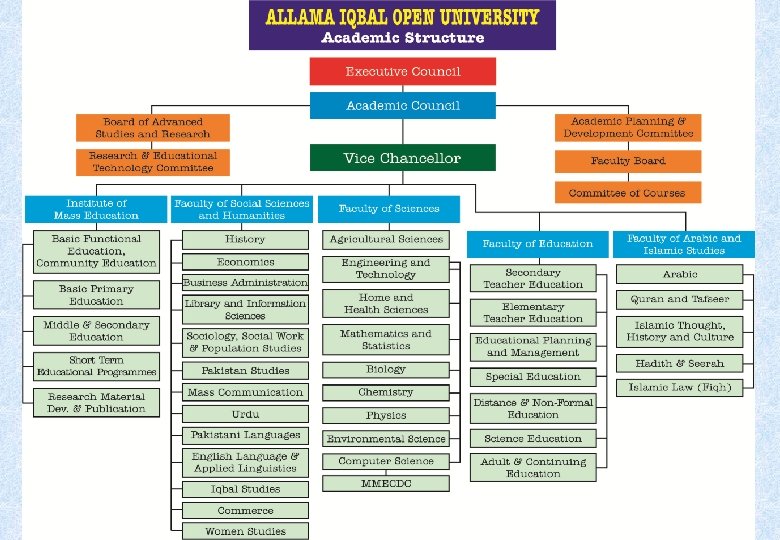
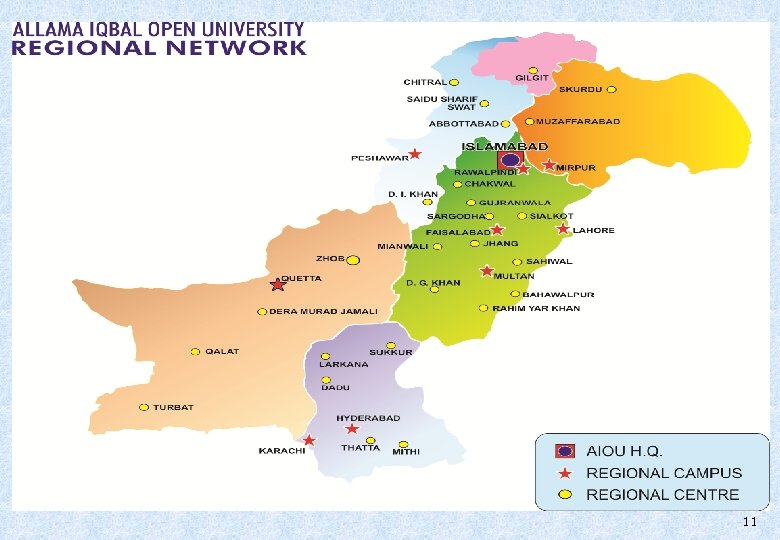
 ORGANIZATION Administrative Structure Academic Structure Regional Network 15
 11
11
 THE AIOU SYSTEM Admission Instructional Media Conventional Face To Face Education 19
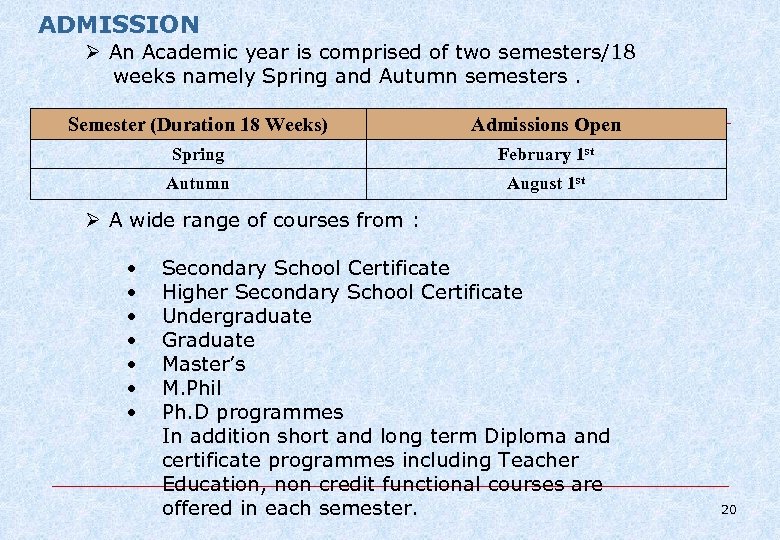 ADMISSION Ø An Academic year is comprised of two semesters/18 weeks namely Spring and Autumn semesters. Semester (Duration 18 Weeks) Admissions Open Spring February 1 st Autumn August 1 st Ø A wide range of courses from : • • Secondary School Certificate Higher Secondary School Certificate Undergraduate Graduate Master’s M. Phil Ph. D programmes In addition short and long term Diploma and certificate programmes including Teacher Education, non credit functional courses are offered in each semester. 20
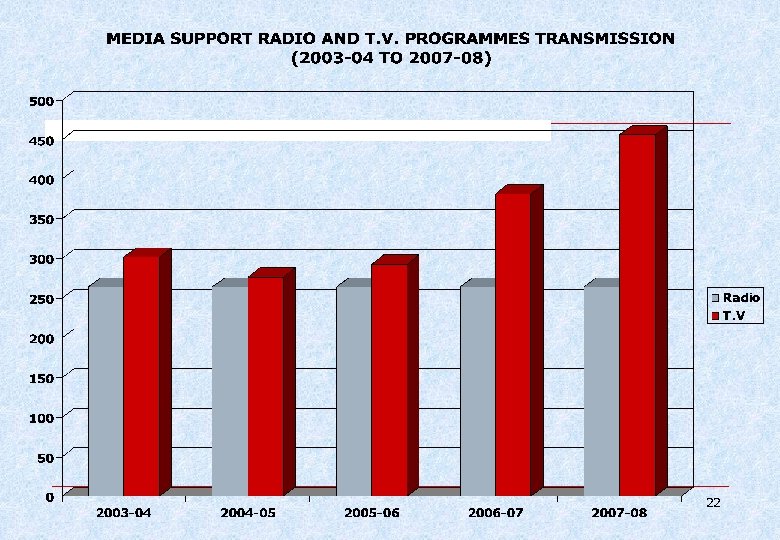
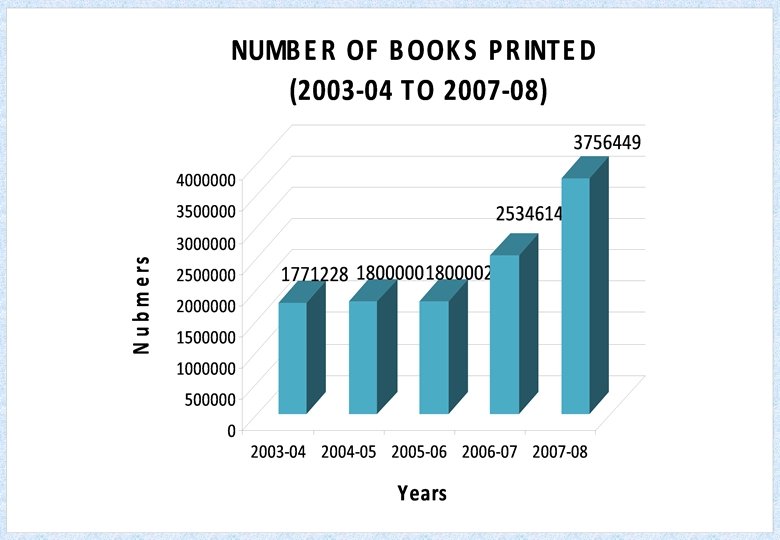
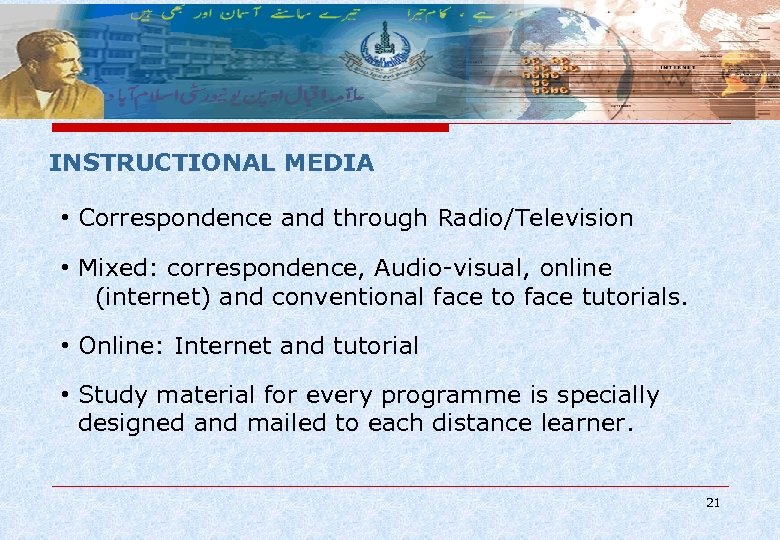 INSTRUCTIONAL MEDIA • Correspondence and through Radio/Television • Mixed: correspondence, Audio-visual, online (internet) and conventional face to face tutorials. • Online: Internet and tutorial • Study material for every programme is specially designed and mailed to each distance learner. 21
 22
22
 23
23
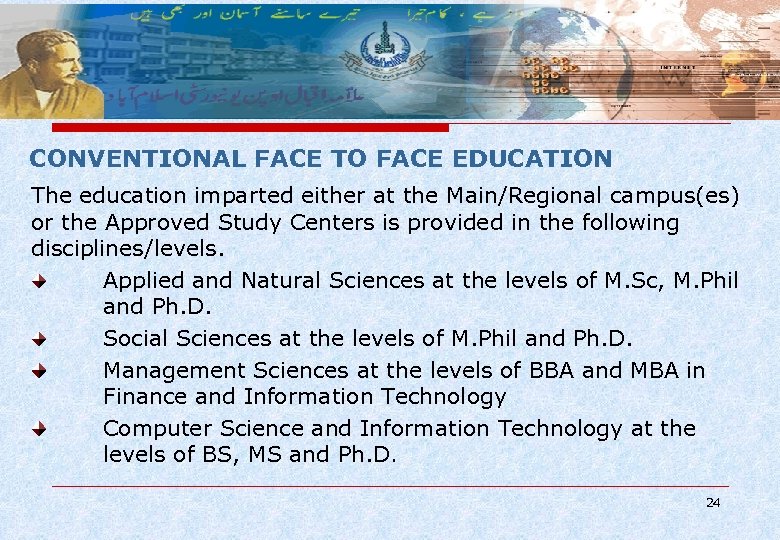 CONVENTIONAL FACE TO FACE EDUCATION The education imparted either at the Main/Regional campus(es) or the Approved Study Centers is provided in the following disciplines/levels. Applied and Natural Sciences at the levels of M. Sc, M. Phil and Ph. D. Social Sciences at the levels of M. Phil and Ph. D. Management Sciences at the levels of BBA and MBA in Finance and Information Technology Computer Science and Information Technology at the levels of BS, MS and Ph. D. 24
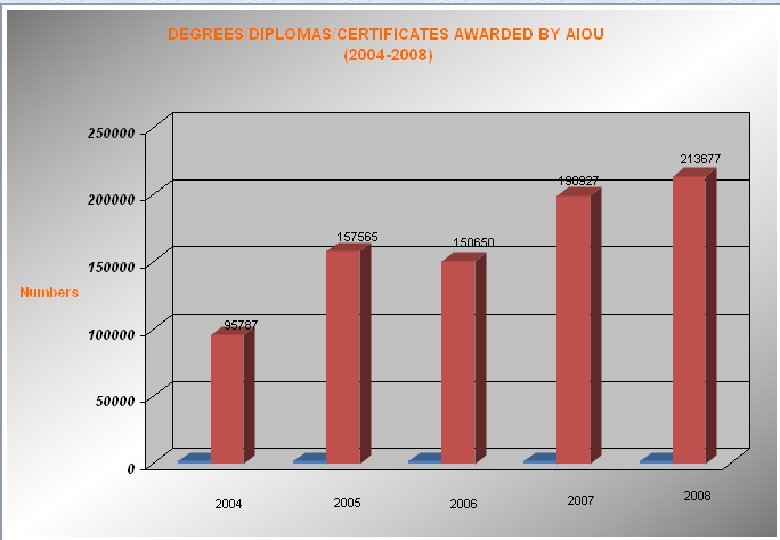
 SALIENT FEATURES Course offering trends Student Enrolment Trend Gender Ratio Provincial Breakup Degrees/Diplomas/Certificates Awarded 25
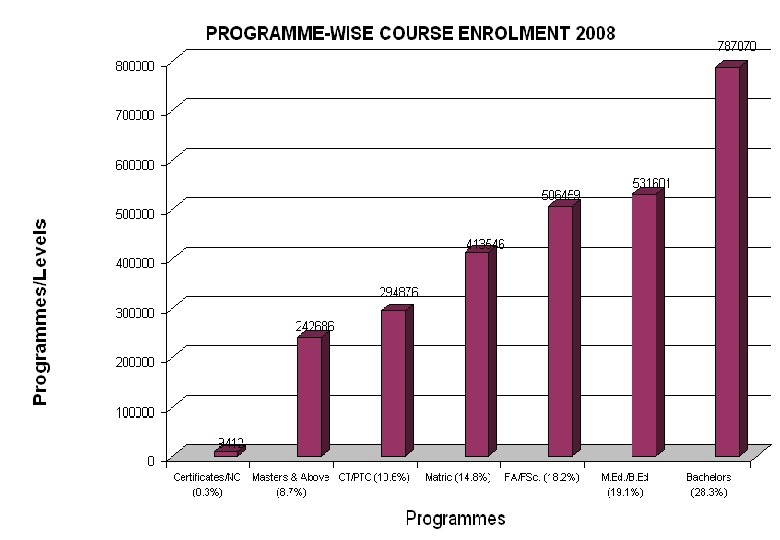 26
26
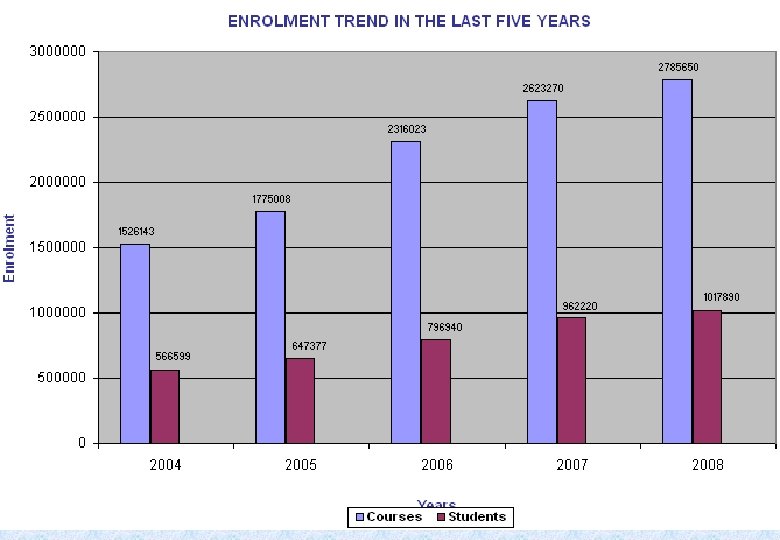 27
27
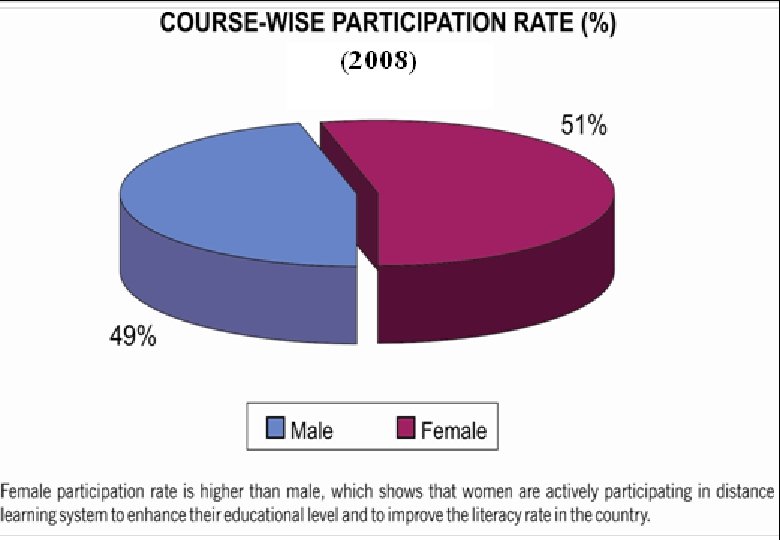 4. 2 GENDER RATIO 28
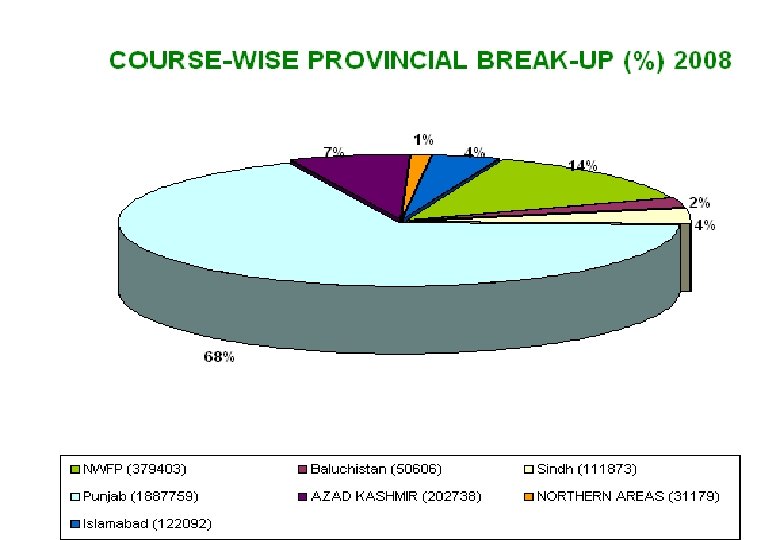 29
29
 30
30
 STANDARDIZATION OF EDUCATION Curriculum Tutorial Support Enhanced Support Services through Website 31
 CURRICULUM Model Curricular Schemes of Ministry of Education/ HEC for all AIOU programmes are followed. This imparts an essential equivalence to AIOU degrees / certificates. Admission and Evaluation criteria of HEC are followed for all Postgraduate Programmes. 32
 TUTORIAL SUPPORT Tutors provide guidance and evaluate the assignments. Part-Time Tutors Study Centres Approved Study Centres (for face to face component) 37000 1350 97 Controlled by Regional Campuses and Centers who provide a venue for Interactive Instructions. 33
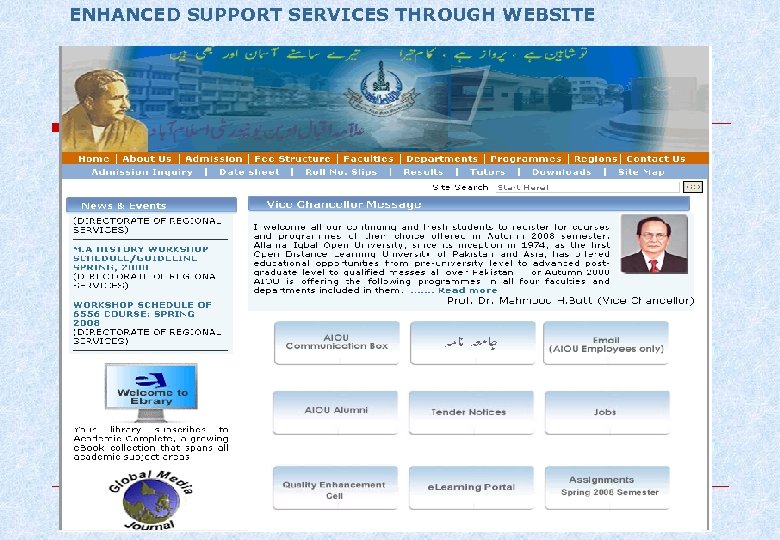 ENHANCED SUPPORT SERVICES THROUGH WEBSITE
 SENSE OF ATTACHMENT Sharing of Scholarly Activities Institute of Mass Education 35
 Sharing of Scholarly Activities Research Journals • Pakistan Journal of Education (PJE) (Bi-annual) • Journal of Social Science & Humanities (Bi – annual) • Ilm Ki Roshni (Bi-annual) • Maaref-e-Islami (Bi-annual) Newsletters • Jamia Nama (Monthly) • Sehan Ujala (Bi-annual) • Weekly Radio Programme for students (Jamia Nama) • AIOU Magazine – monthly TV programme) 36
 Institute of Mass Education The key programs of IME are: • • • Basic Education, Functinal Literacy Basic and Primary Education Middle Level Education Secondary Level Education Short Term Educational Programs Balochistan (Turbat): • Women Middle Education Program through non-formal education method in eight villages of Mund area ta Turbat (Pilot based). Punjab (Kharian): • • Women Middle Education Program through non-formal education method in nine villages of Kharian (Pilot based). Basic Education Functional Literacy Program for women in ten villages of Kharian (Pilot based) 37
 AGENDA FOR THE FUTURE AIOU Action PLAN Quality Open Distance Education of 21 st Century Academic Cultural Change 38
 Quality Open Distance Education of 21 st Century Information and Communication Tools and Technologies. Satellite based Interactive TV broadcast through PAKSAT-1 (2 - 4 channels). FM Radio National Frequency. Online Courses using World Wide Web. PERN Connectivity. Digital Libraries for research. Video Conferencing. Provide PC to students through buy/lease program. 39
 Academic Cultural Change Tenure Track System for faculty hiring , retention and promotion (May 2006). Provision of research facilities and opportunities for faculty and post graduate students. 900 new positions for faculty and technology smart support staff. Governance System: replace current VCR model with Chiefs for Academics (CAO), Business and Finance (CFO), Planning and Development (CPDO) and Manager IT Services. Action research in Educational Leadership and Teaching. National Center for Curriculum Development. 40
 THANK YOU