


 Скачать презентацию Presentation on Jaipur Terminal Fire of 29 10
297883ffb1ed491d282cffde8e5c1864.ppt
- Количество слайдов: 82
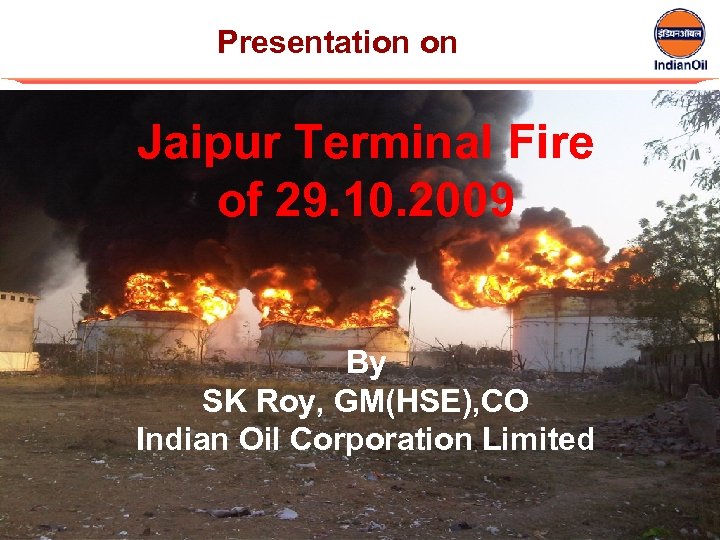 Presentation on Jaipur Terminal Fire of 29. 10. 2009 By SK Roy, GM(HSE), CO Indian Oil Corporation Limited 1
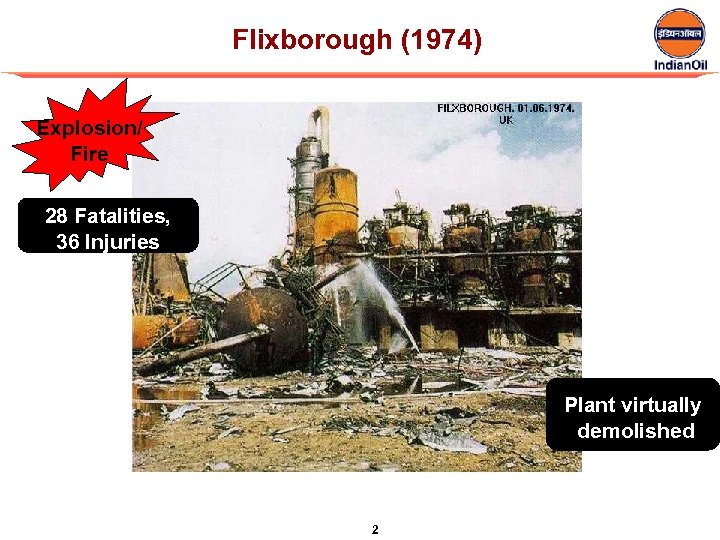 Flixborough (1974) Explosion/ Fire 28 Fatalities, 36 Injuries Plant virtually demolished 2
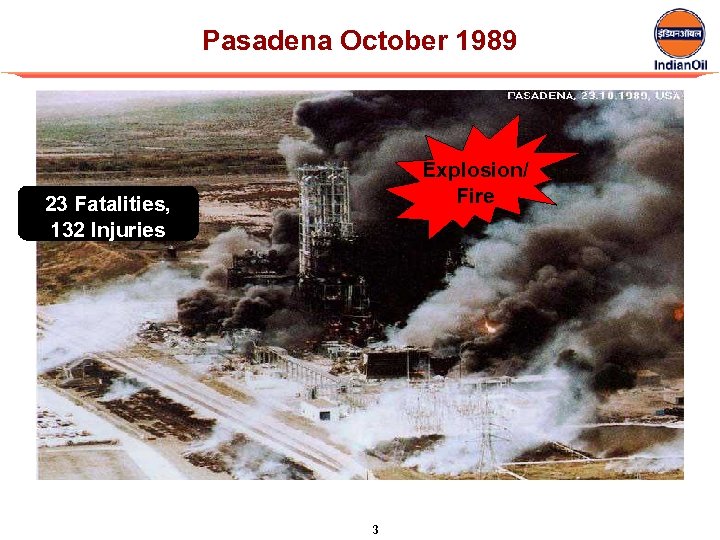 Pasadena October 1989 Explosion/ Fire 23 Fatalities, 132 Injuries 3
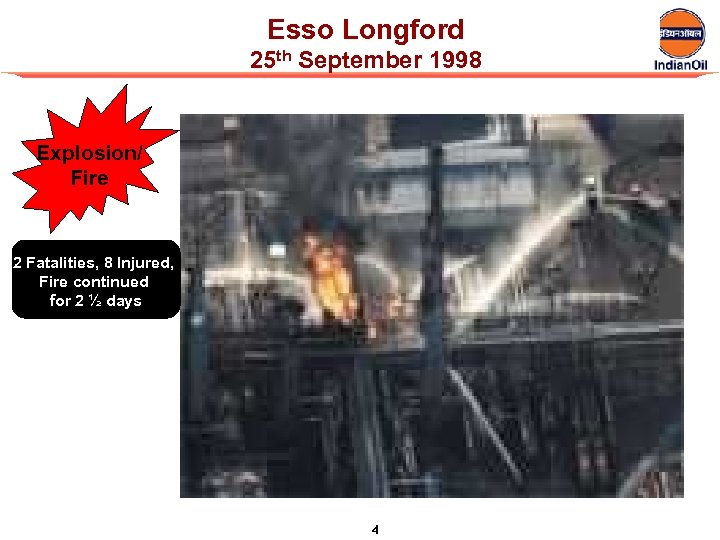 Esso Longford 25 th September 1998 Explosion/ Fire 2 Fatalities, 8 Injured, Fire continued for 2 ½ days 4
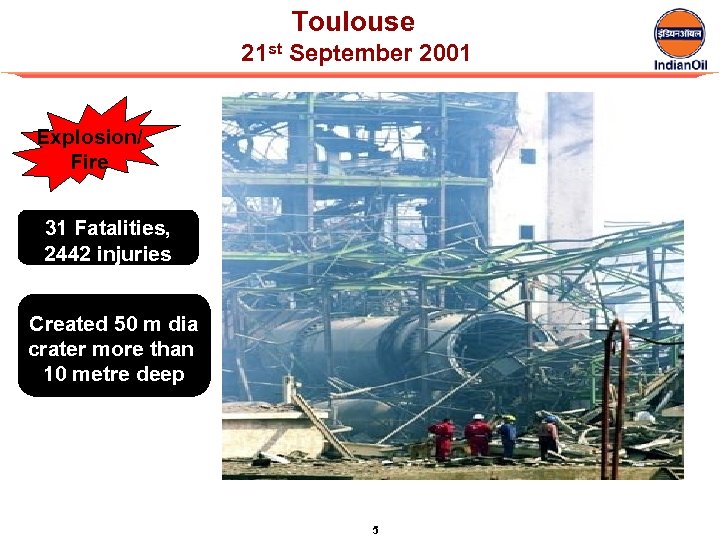 Toulouse 21 st September 2001 Explosion/ Fire 31 Fatalities, 2442 injuries Created 50 m dia crater more than 10 metre deep 5
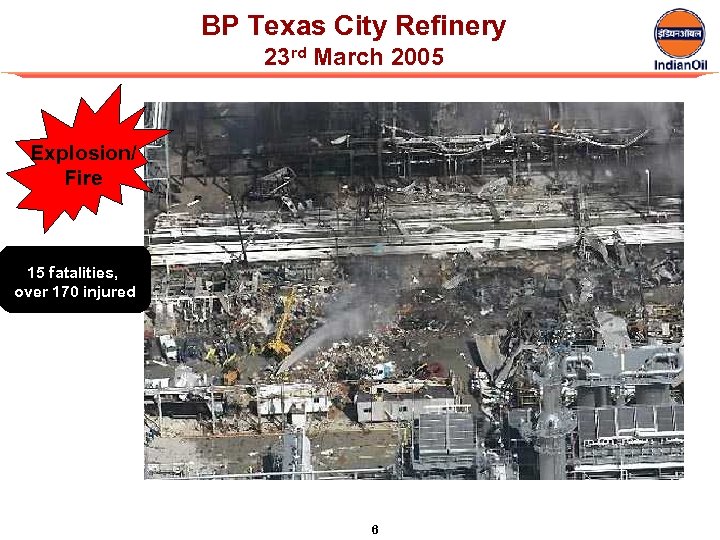 BP Texas City Refinery 23 rd March 2005 Explosion/ Fire 15 fatalities, over 170 injured 6
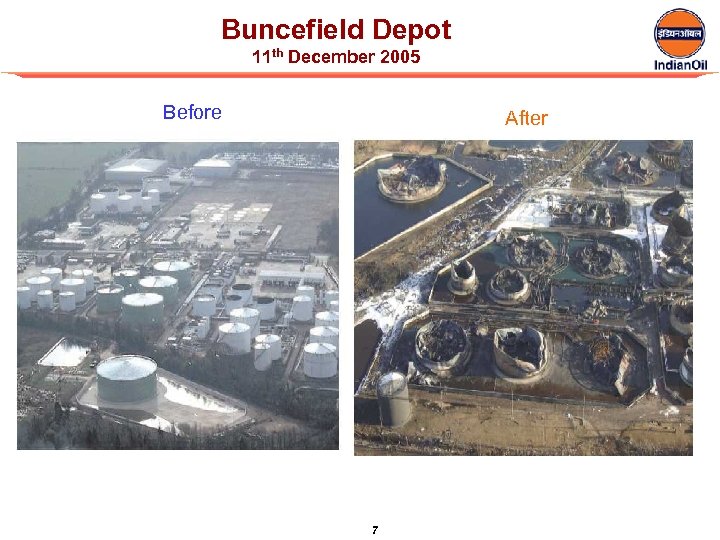 Buncefield Depot 11 th December 2005 Before After 7
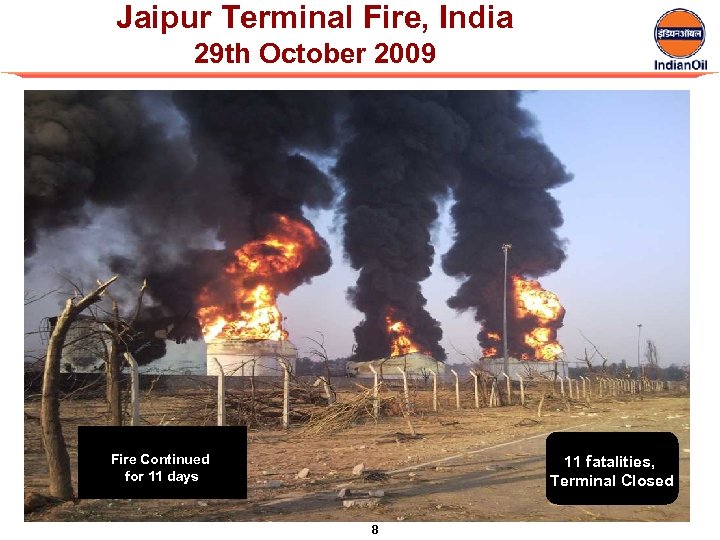 Jaipur Terminal Fire, India 29 th October 2009 Fire Continued for 11 days 11 fatalities, Terminal Closed 8
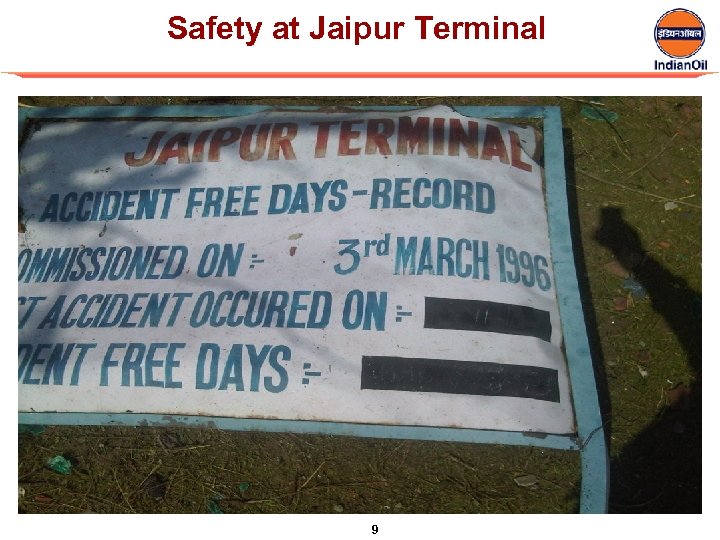 Safety at Jaipur Terminal 9
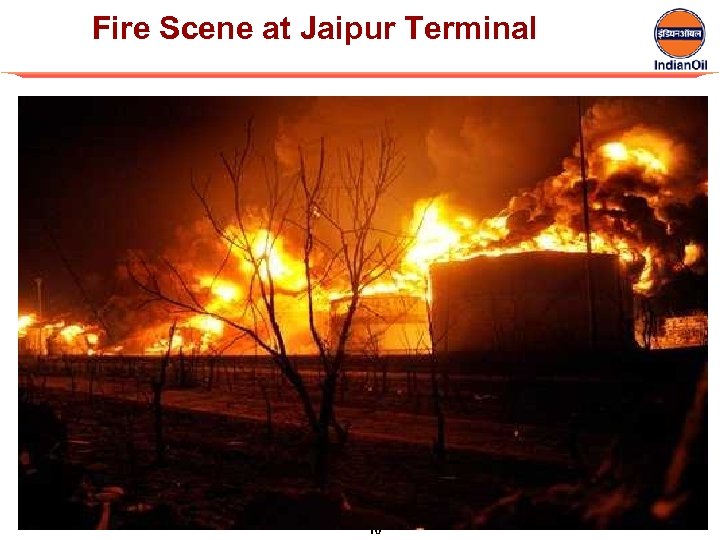 Fire Scene at Jaipur Terminal 10
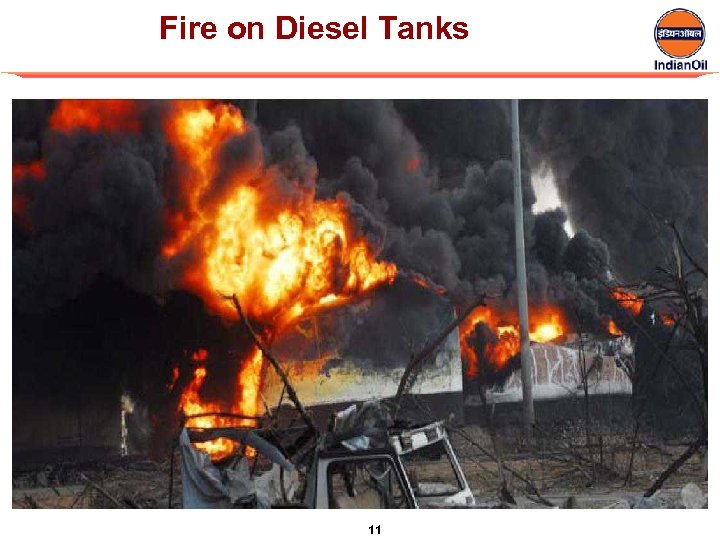 Fire on Diesel Tanks 11
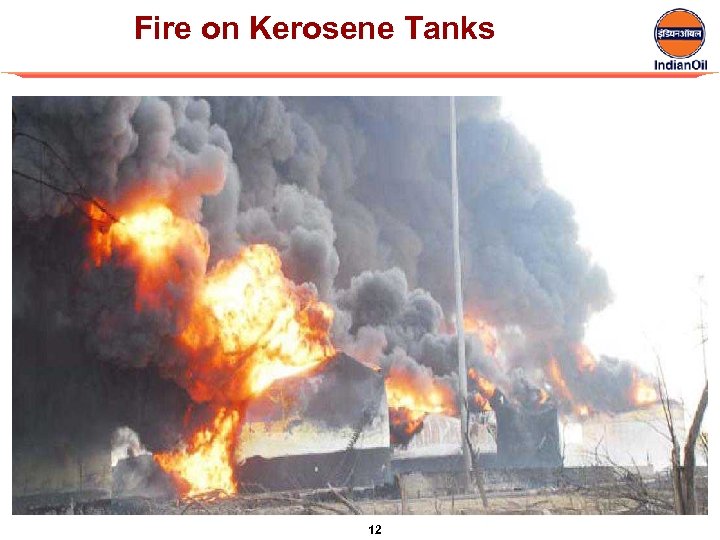 Fire on Kerosene Tanks 12
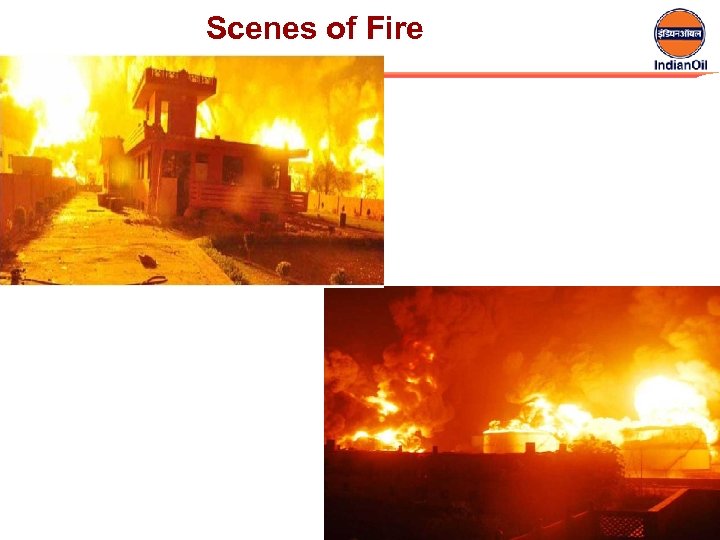 Scenes of Fire 13
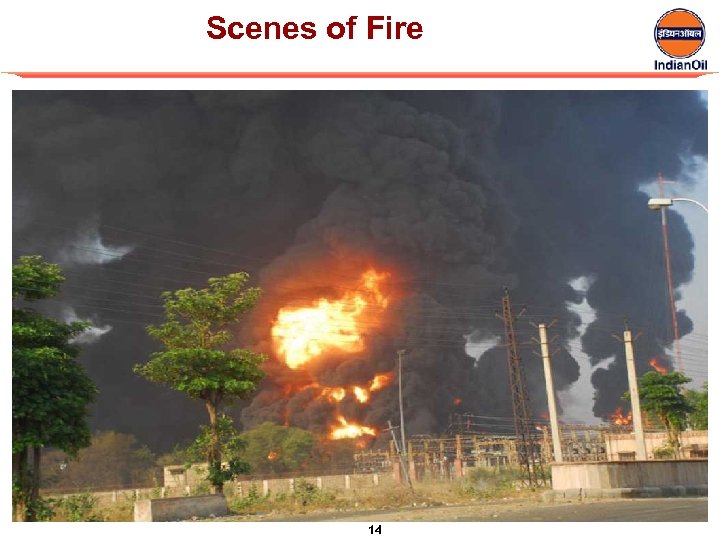 Scenes of Fire 14
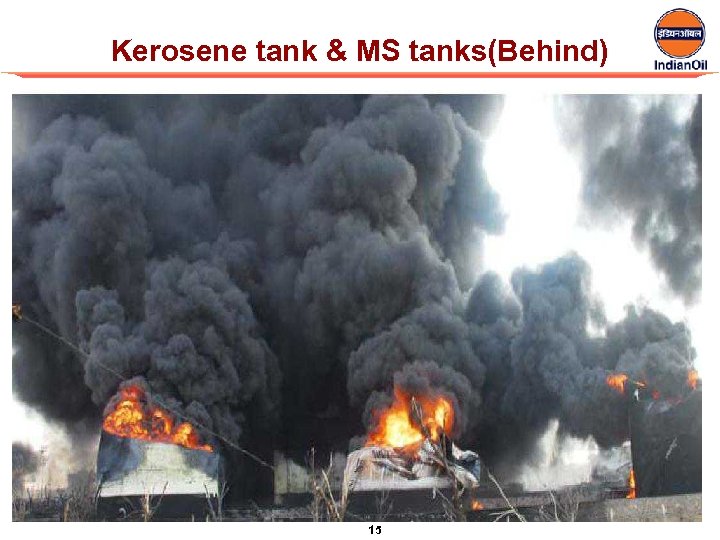 Kerosene tank & MS tanks(Behind) 15
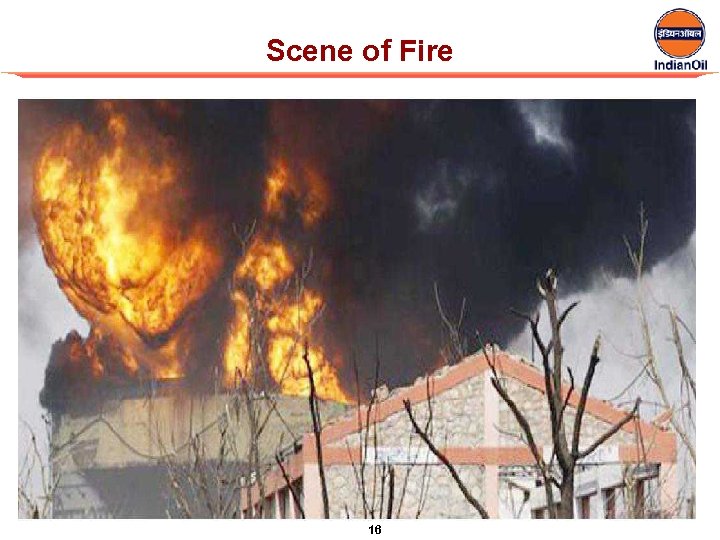 Scene of Fire 16
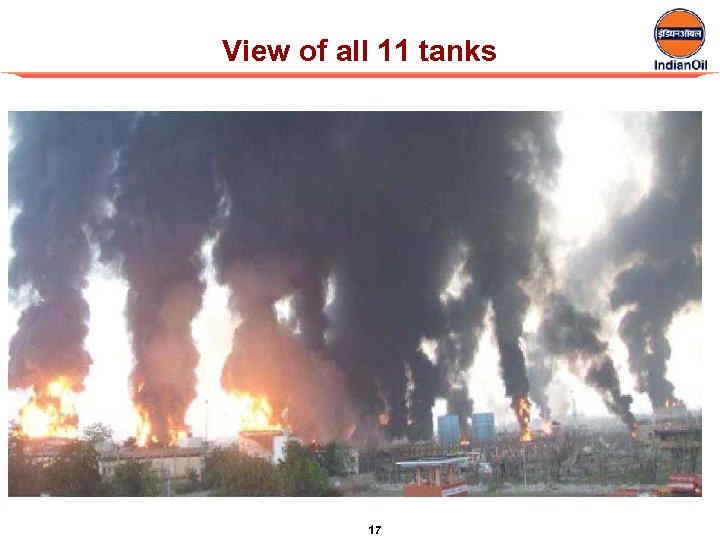 View of all 11 tanks 17
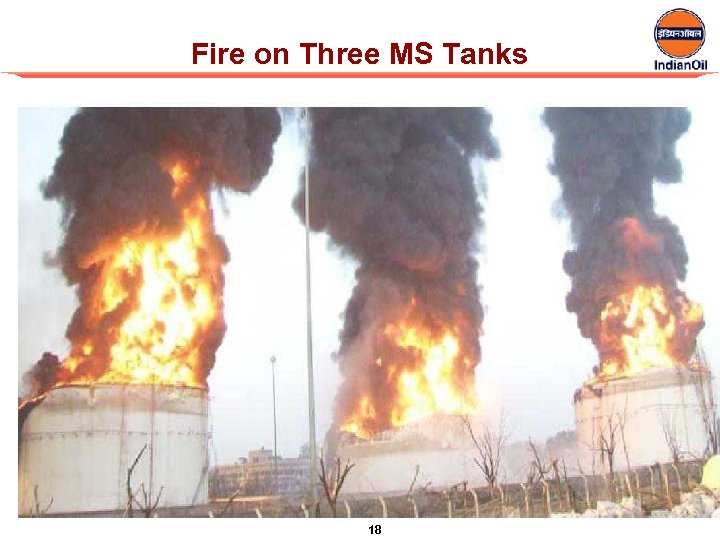 Fire on Three MS Tanks 18
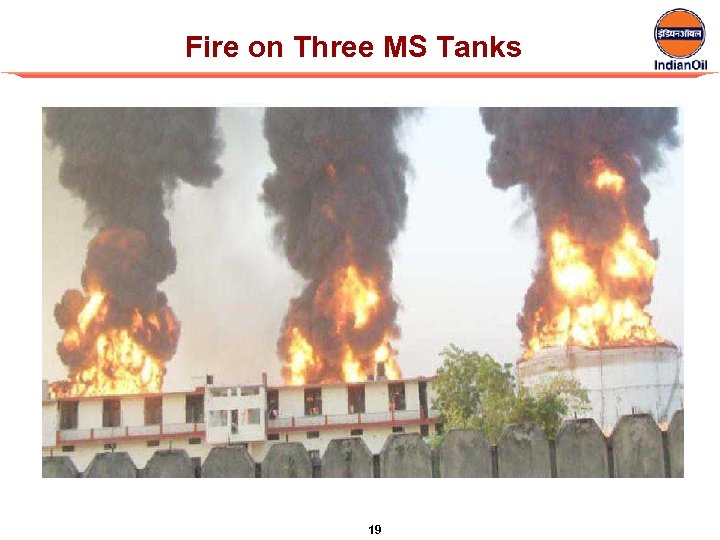 Fire on Three MS Tanks 19
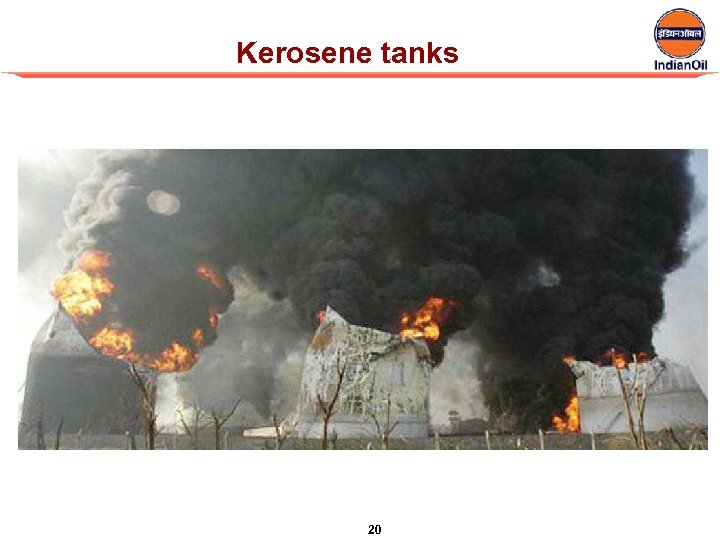 Kerosene tanks 20
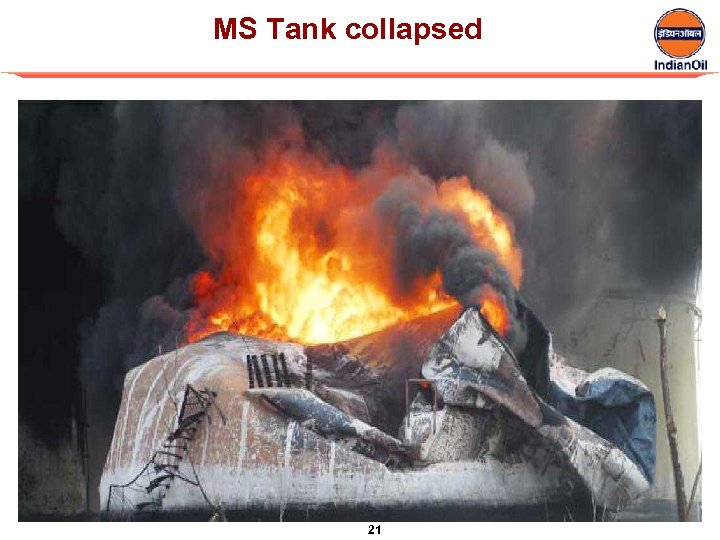 MS Tank collapsed 21
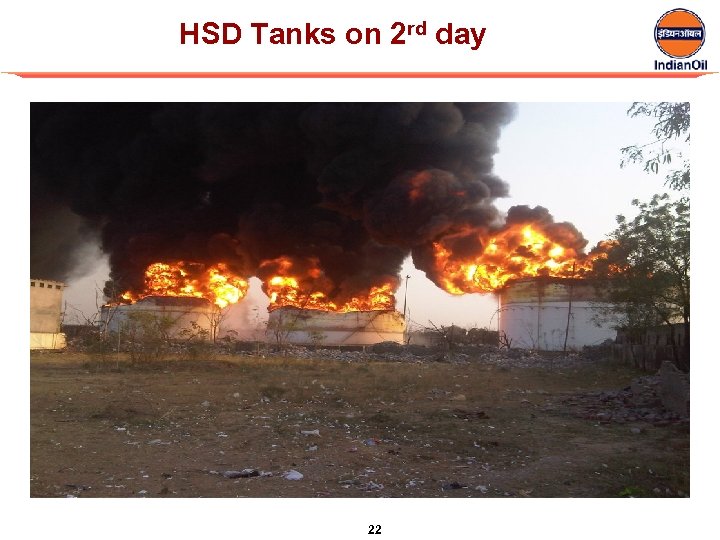 HSD Tanks on 2 rd day 22
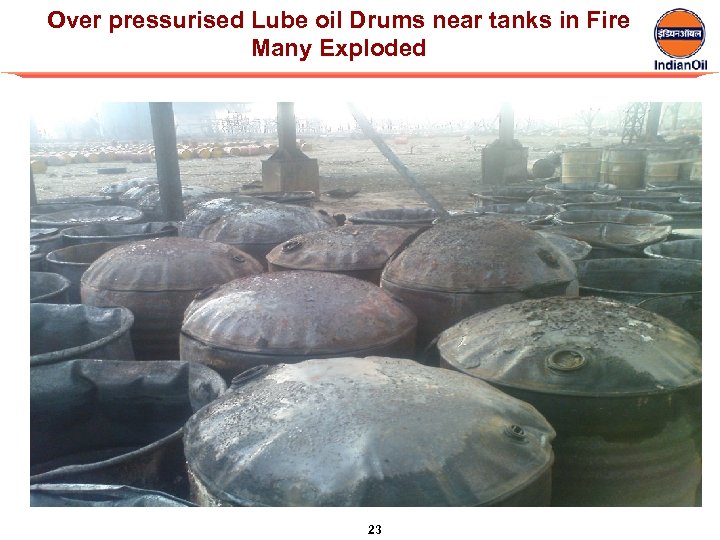 Over pressurised Lube oil Drums near tanks in Fire Many Exploded 23
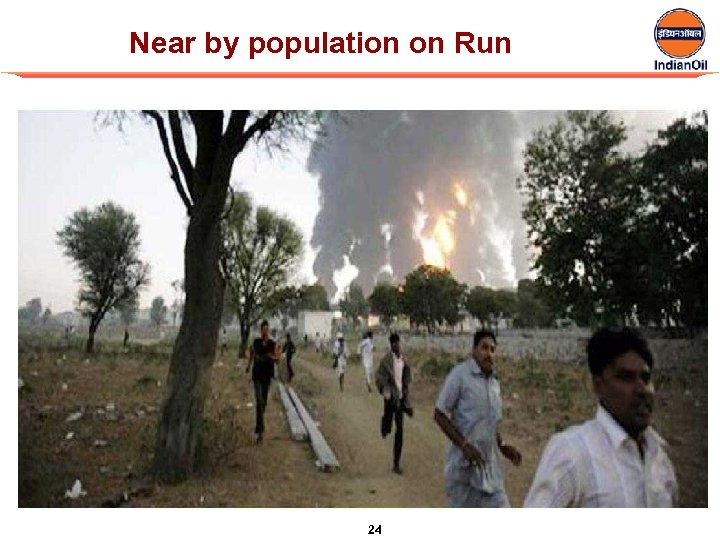 Near by population on Run 24
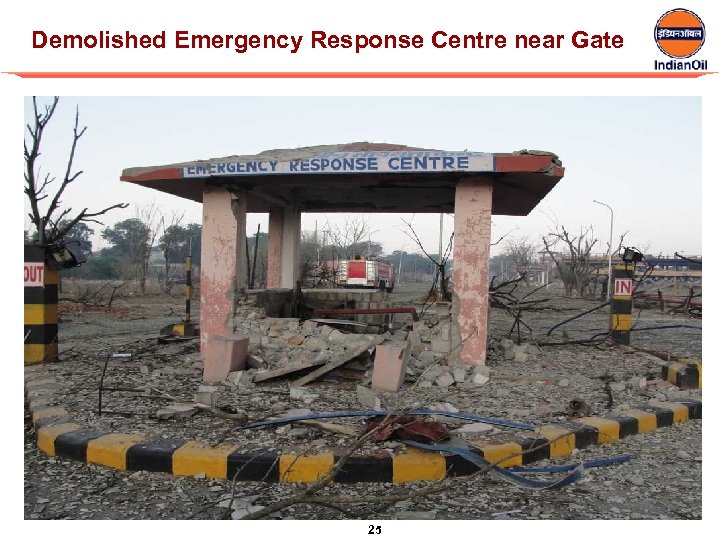 Demolished Emergency Response Centre near Gate 25
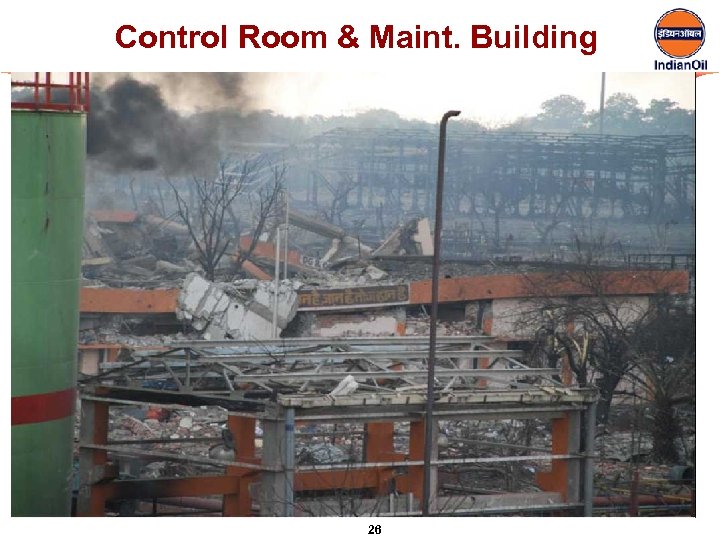 Control Room & Maint. Building 26
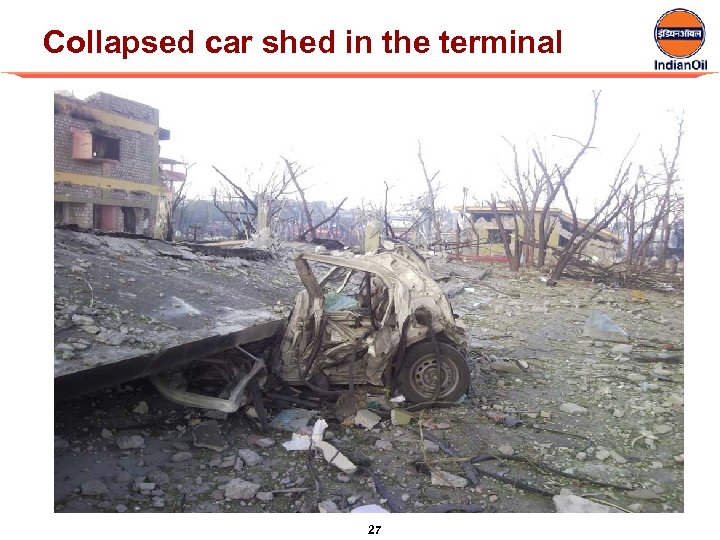 Collapsed car shed in the terminal 27
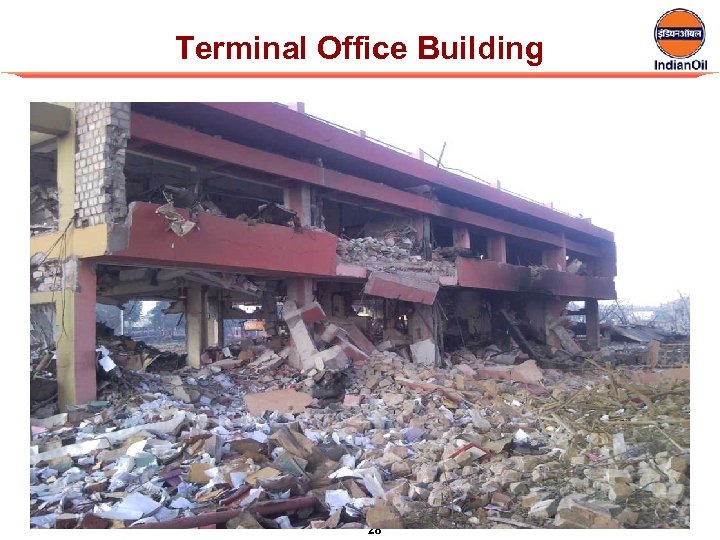 Terminal Office Building 28
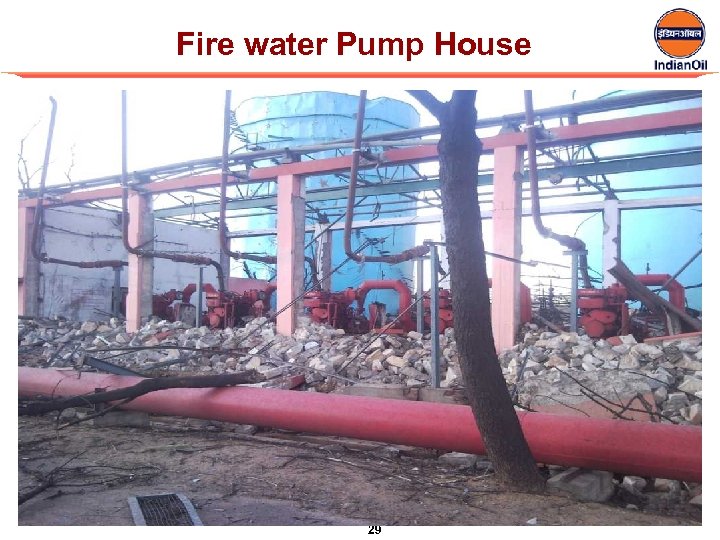 Fire water Pump House 29
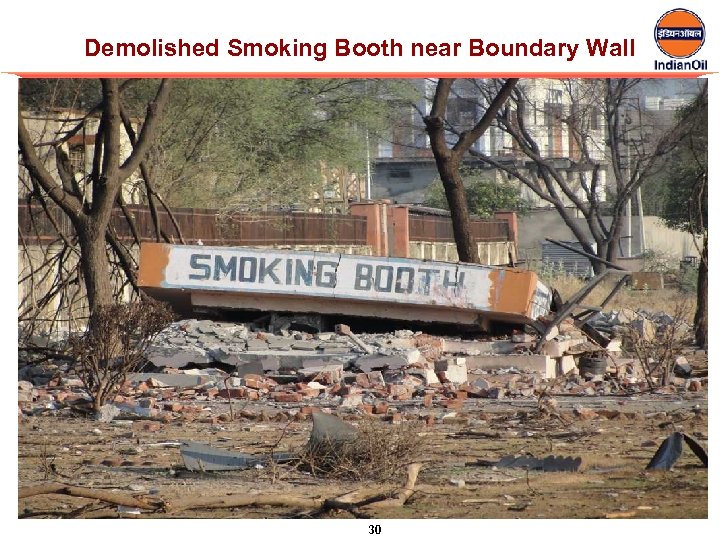 Demolished Smoking Booth near Boundary Wall 30
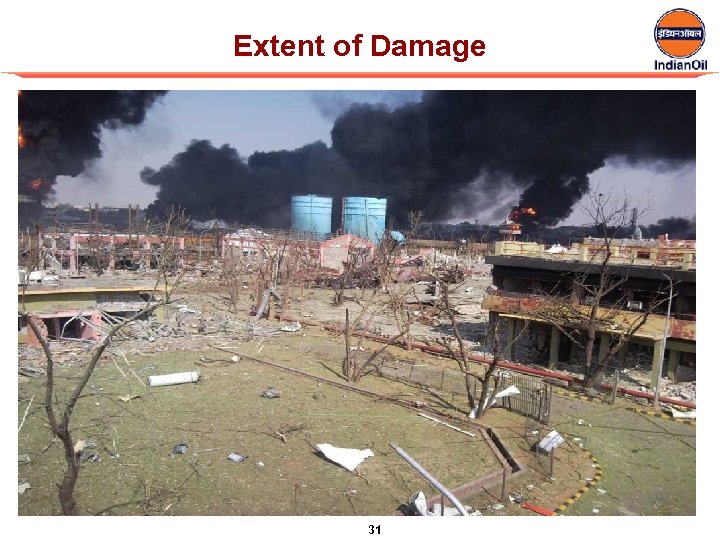 Extent of Damage 31
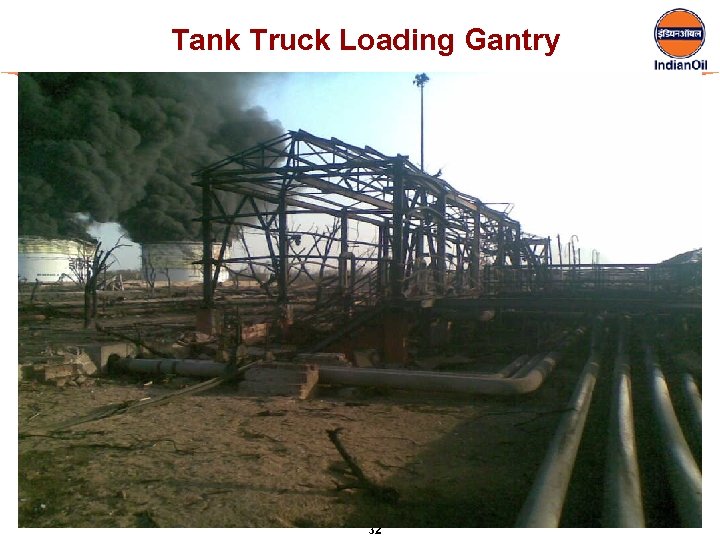 Tank Truck Loading Gantry 32
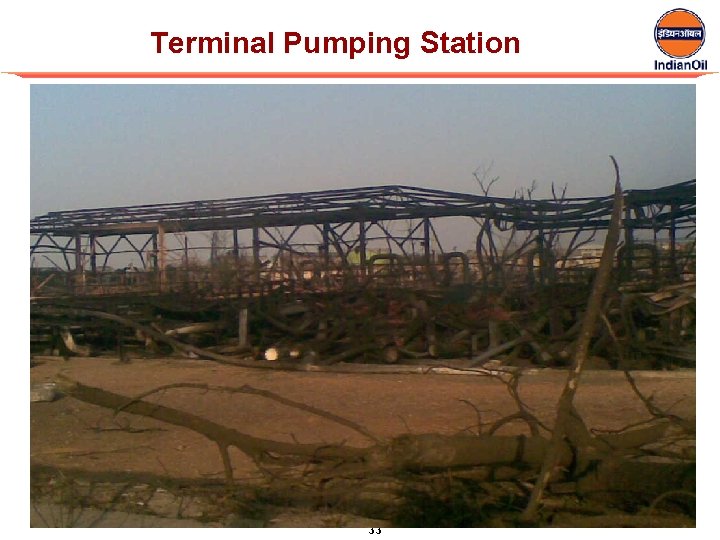 Terminal Pumping Station 33
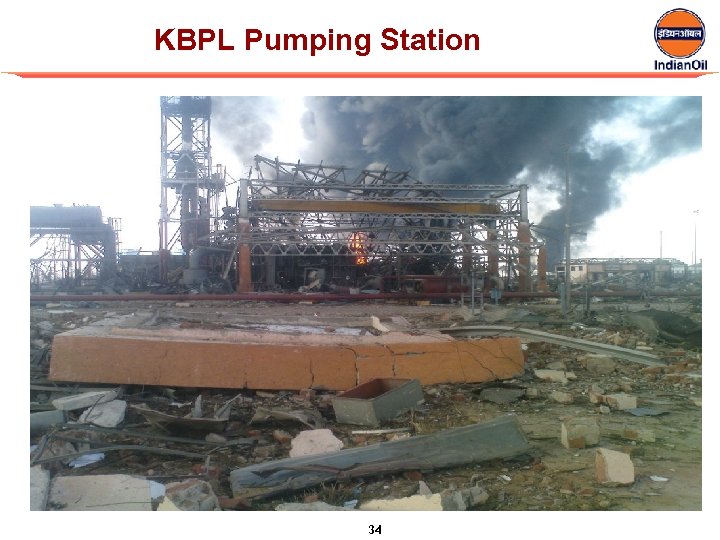 KBPL Pumping Station 34
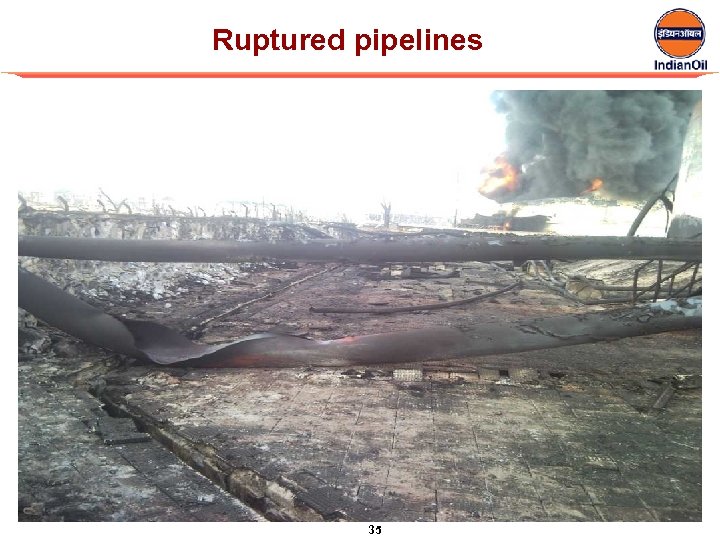 Ruptured pipelines 35
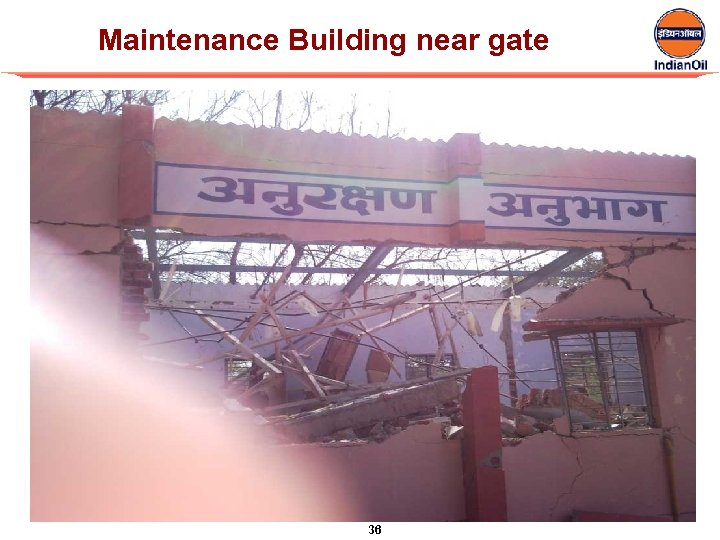 Maintenance Building near gate 36
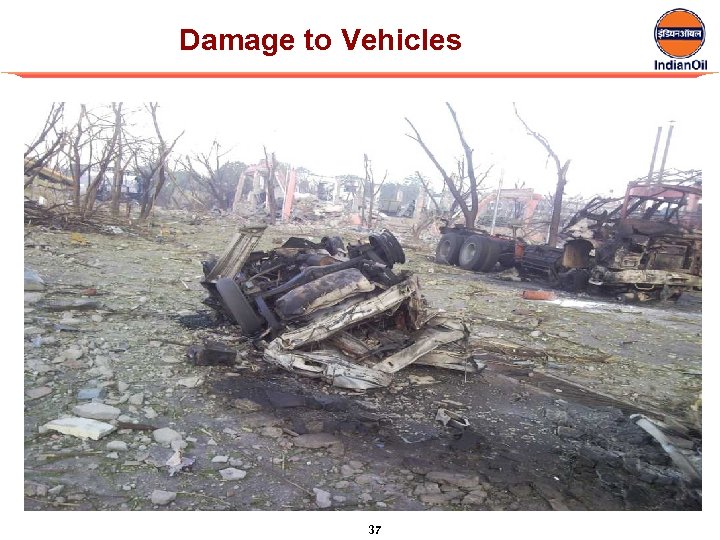 Damage to Vehicles 37
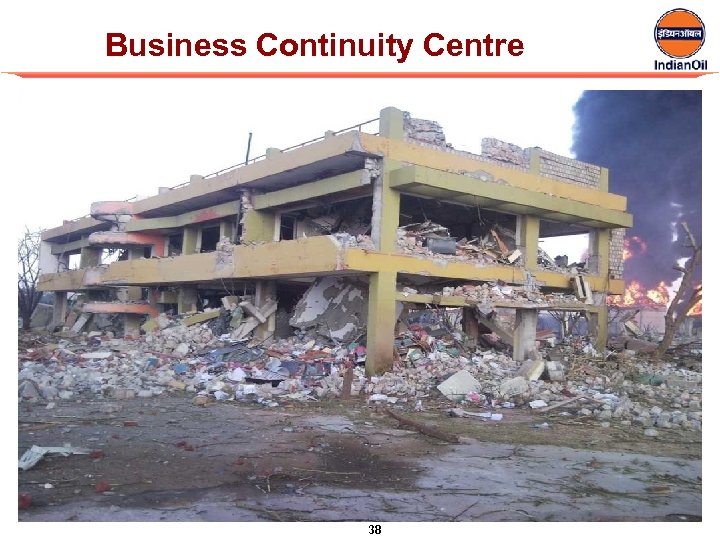 Business Continuity Centre 38
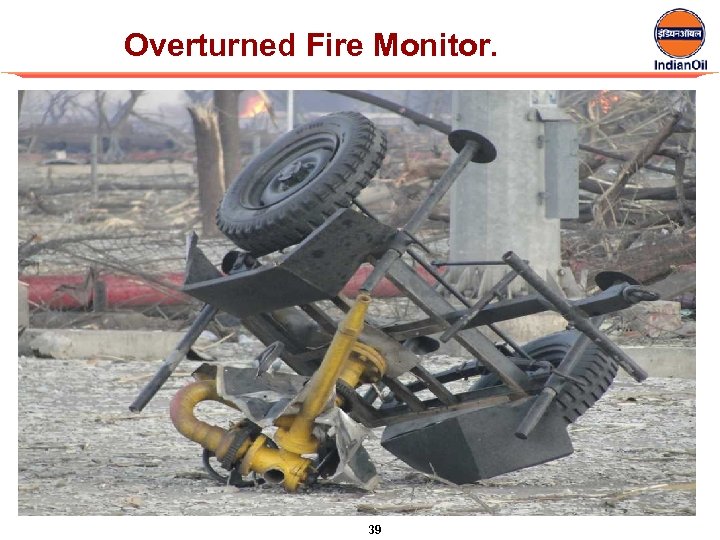 Overturned Fire Monitor. 39
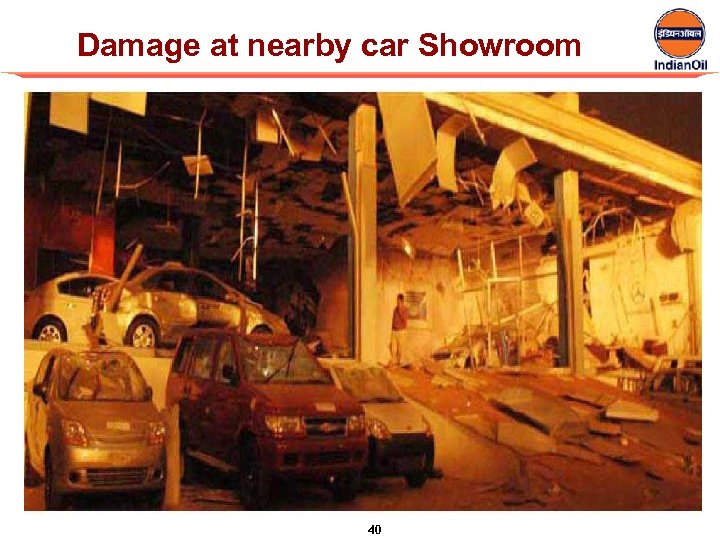 Damage at nearby car Showroom 40
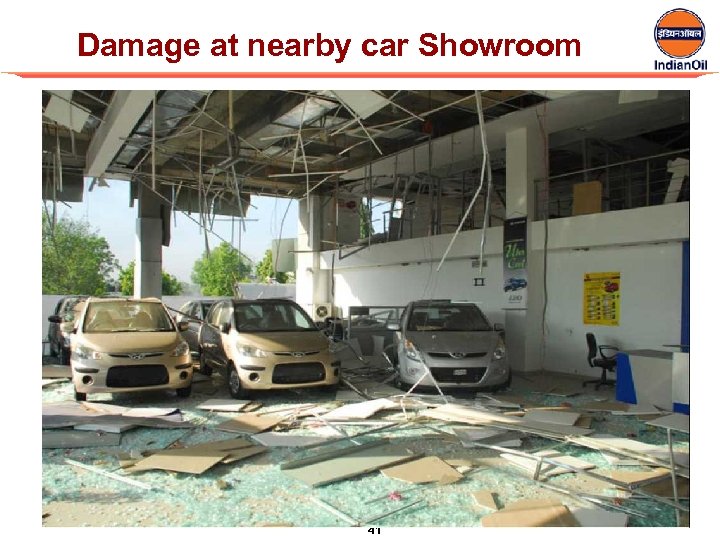 Damage at nearby car Showroom 41
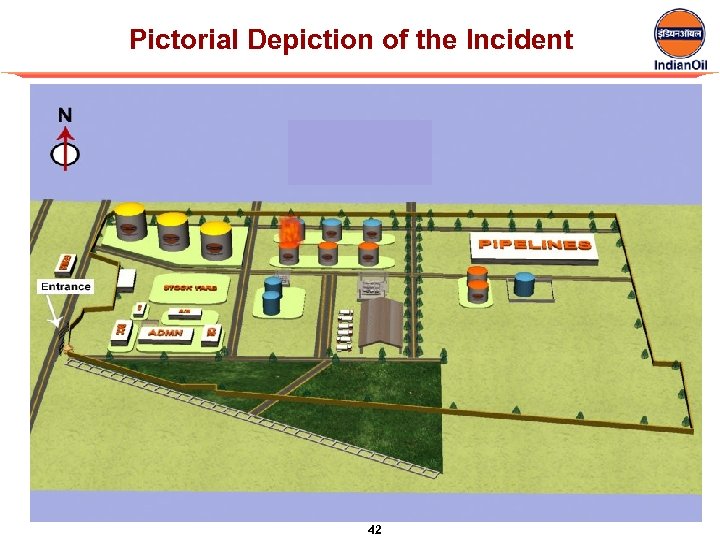 Pictorial Depiction of the Incident 42
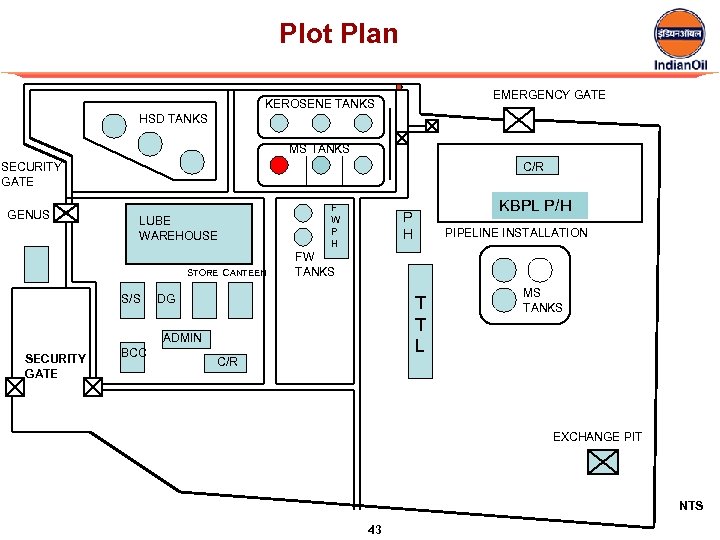 Plot Plan EMERGENCY GATE KEROSENE TANKS HSD TANKS MS TANKS SECURITY GATE GENUS C/R LUBE WAREHOUSE STORE CANTEEN S/S F W P H BCC PIPELINE INSTALLATION FW TANKS DG T T L ADMIN SECURITY GATE KBPL P/H P H C/R MS TANKS EXCHANGE PIT NTS 43
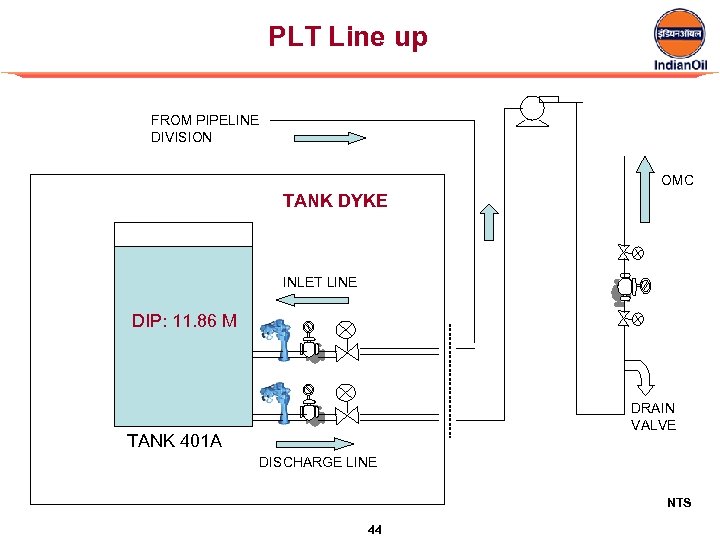 PLT Line up FROM PIPELINE DIVISION OMC TANK DYKE INLET LINE DIP: 11. 86 M DRAIN VALVE TANK 401 A DISCHARGE LINE NTS 44
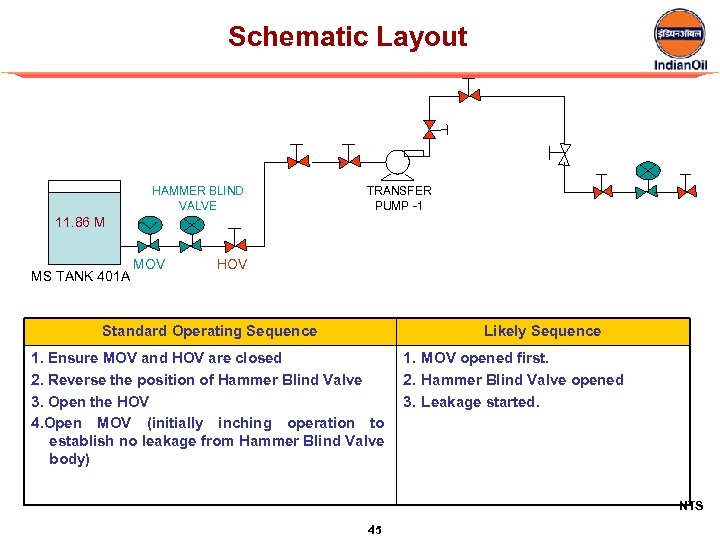 Schematic Layout HAMMER BLIND VALVE TRANSFER PUMP -1 11. 86 M MS TANK 401 A MOV HOV Standard Operating Sequence Likely Sequence 1. Ensure MOV and HOV are closed 2. Reverse the position of Hammer Blind Valve 3. Open the HOV 4. Open MOV (initially inching operation to establish no leakage from Hammer Blind Valve body) 1. MOV opened first. 2. Hammer Blind Valve opened 3. Leakage started. NTS 45
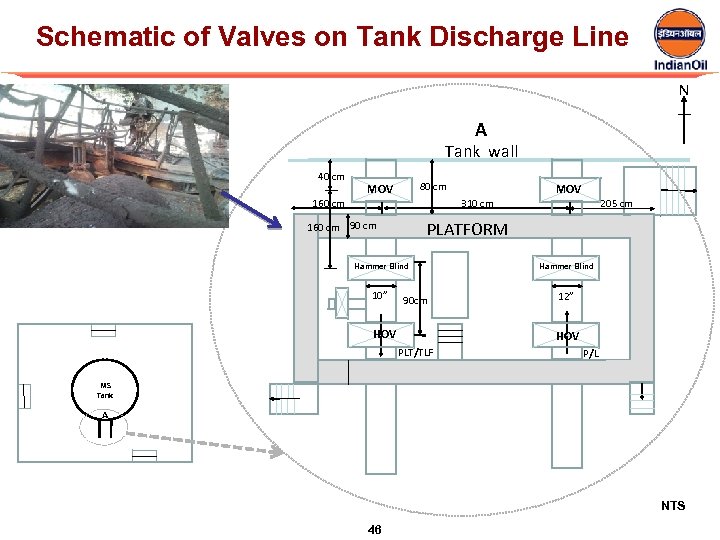 Schematic of Valves on Tank Discharge Line N A Tank wall 40 cm 80 cm MOV 310 cm 160 cm MOV 205 cm PLATFORM 160 cm 90 cm Hammer Blind 10” 12” 90 cm HOV PLT/TLF P/L MS Tank A NTS 46
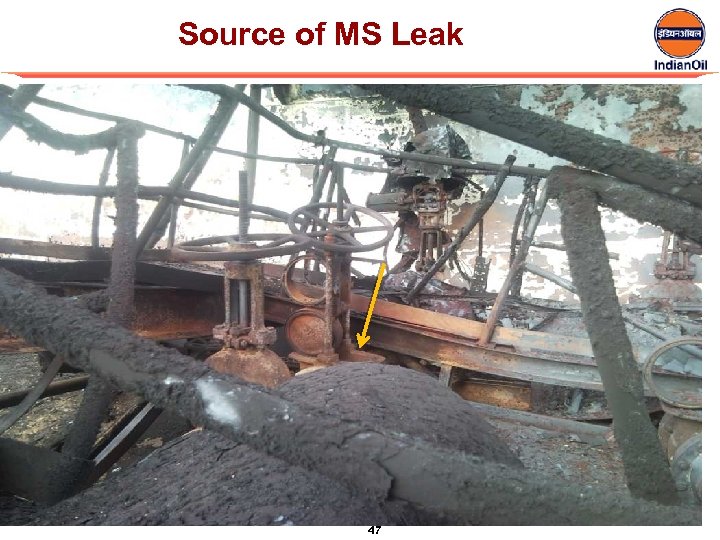 Source of MS Leak 47
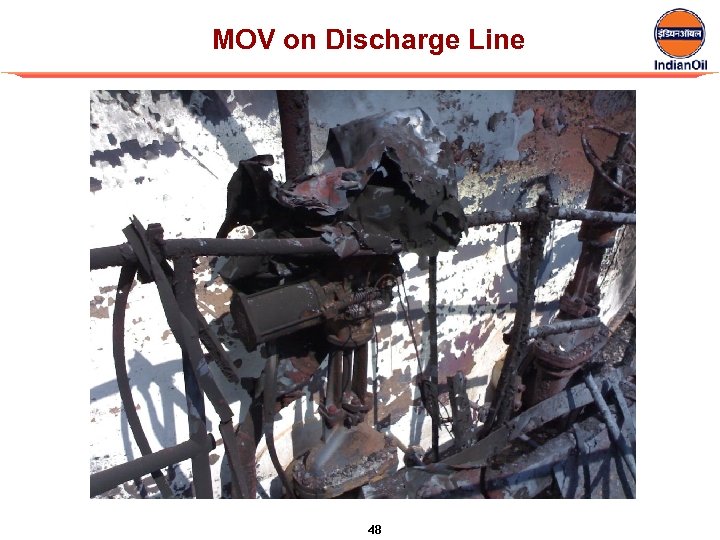 MOV on Discharge Line 48
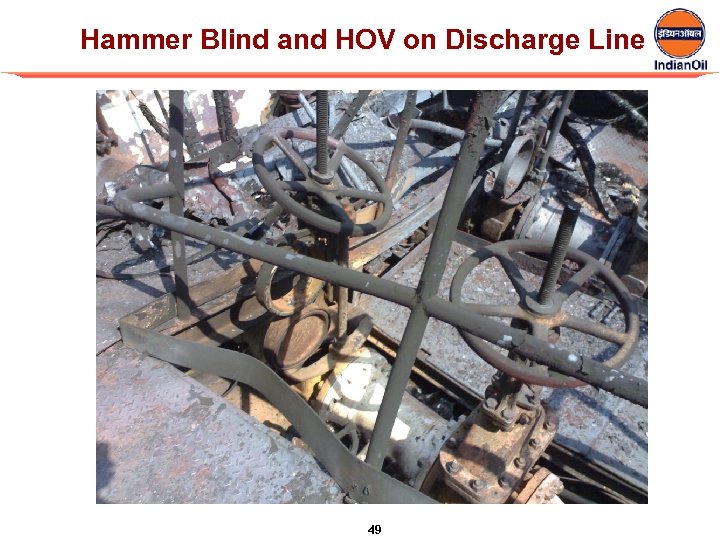 Hammer Blind and HOV on Discharge Line 49
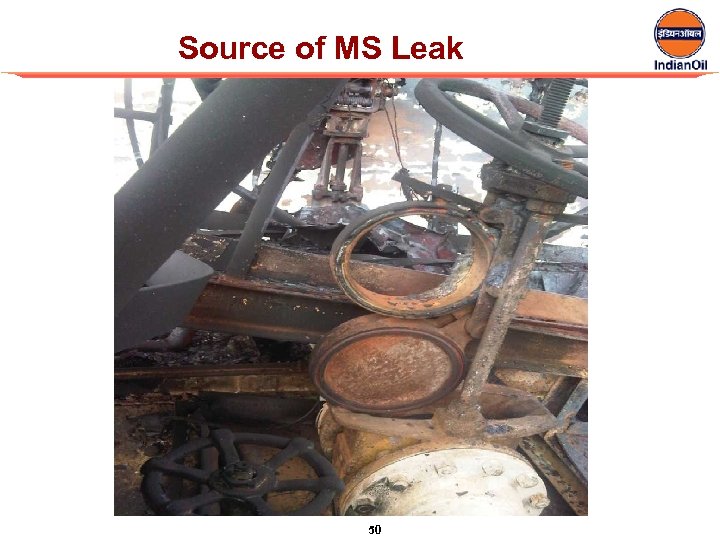 Source of MS Leak 50
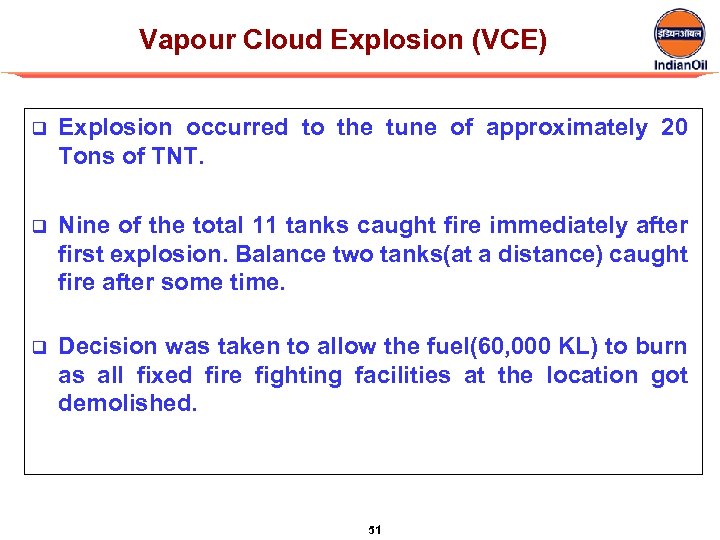 Vapour Cloud Explosion (VCE) q Explosion occurred to the tune of approximately 20 Tons of TNT. q Nine of the total 11 tanks caught fire immediately after first explosion. Balance two tanks(at a distance) caught fire after some time. q Decision was taken to allow the fuel(60, 000 KL) to burn as all fixed fire fighting facilities at the location got demolished. 51
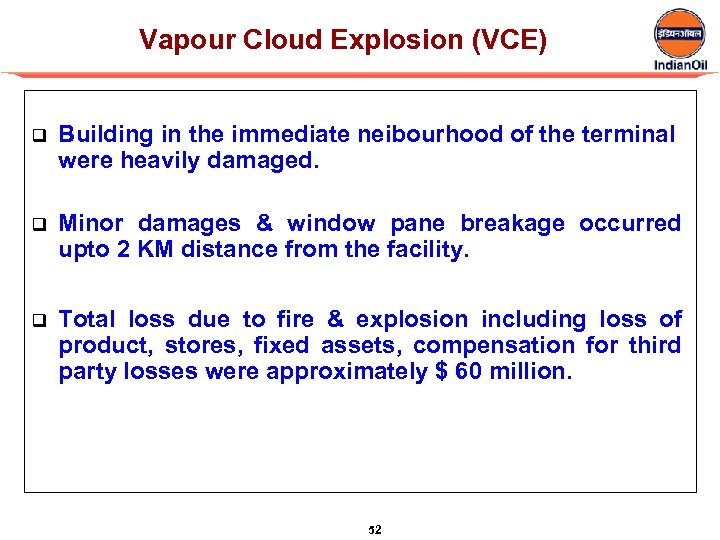 Vapour Cloud Explosion (VCE) q Building in the immediate neibourhood of the terminal were heavily damaged. q Minor damages & window pane breakage occurred upto 2 KM distance from the facility. q Total loss due to fire & explosion including loss of product, stores, fixed assets, compensation for third party losses were approximately $ 60 million. 52
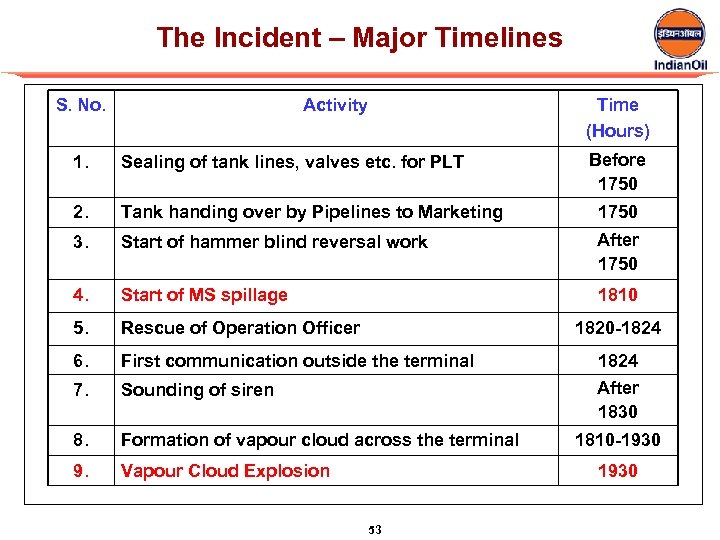 The Incident – Major Timelines S. No. Activity Time (Hours) Before 1750 1. Sealing of tank lines, valves etc. for PLT 2. Tank handing over by Pipelines to Marketing 1750 3. Start of hammer blind reversal work After 1750 4. Start of MS spillage 1810 5. Rescue of Operation Officer 6. First communication outside the terminal 1824 7. Sounding of siren After 1830 8. Formation of vapour cloud across the terminal 9. Vapour Cloud Explosion 1820 -1824 1810 -1930 53
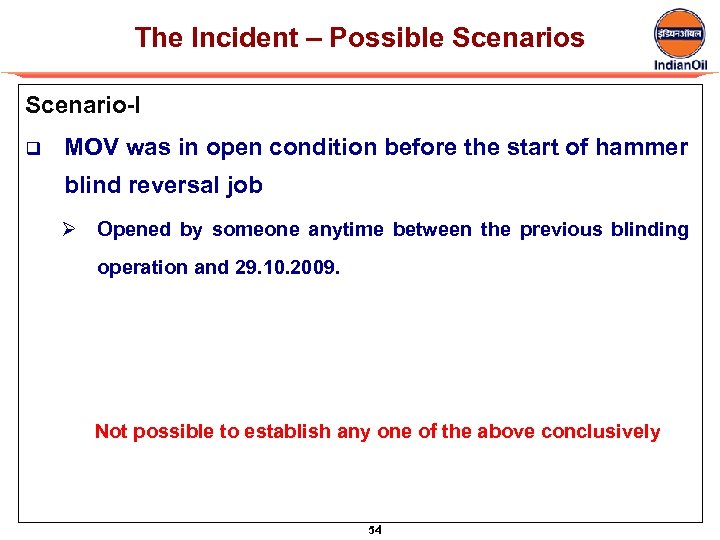 The Incident – Possible Scenarios Scenario-I q MOV was in open condition before the start of hammer blind reversal job Ø Opened by someone anytime between the previous blinding operation and 29. 10. 2009. Not possible to establish any one of the above conclusively 54
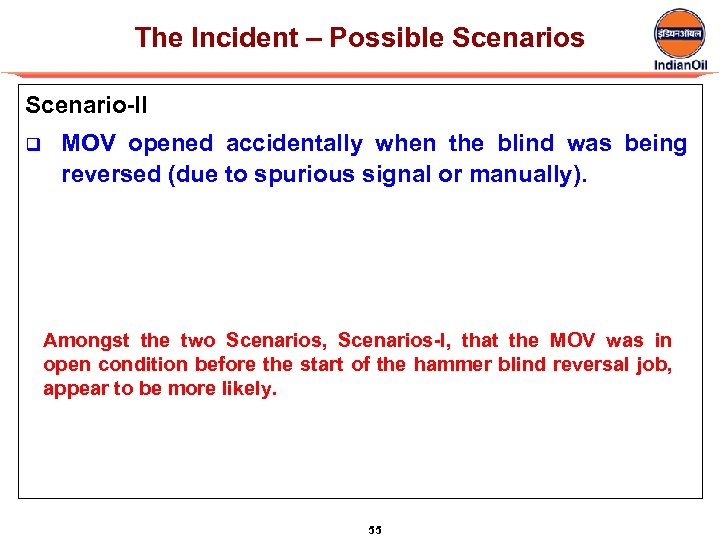 The Incident – Possible Scenarios Scenario-II q MOV opened accidentally when the blind was being reversed (due to spurious signal or manually). Amongst the two Scenarios, Scenarios-I, that the MOV was in open condition before the start of the hammer blind reversal job, appear to be more likely. 55
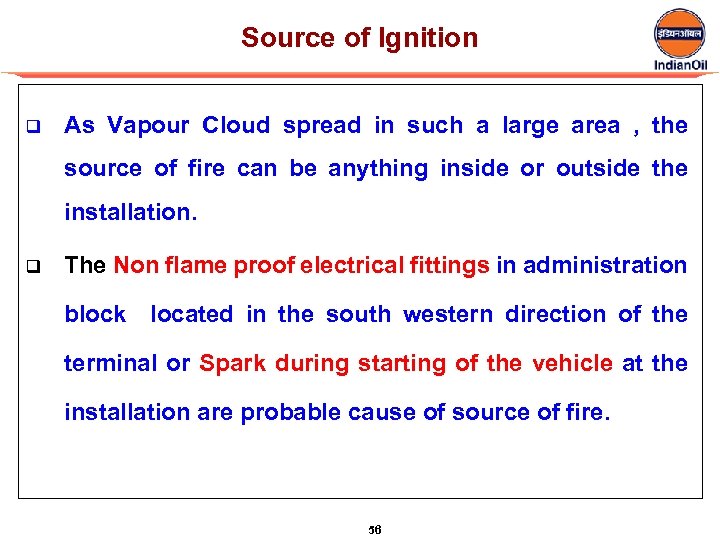 Source of Ignition q As Vapour Cloud spread in such a large area , the source of fire can be anything inside or outside the installation. q The Non flame proof electrical fittings in administration block located in the south western direction of the terminal or Spark during starting of the vehicle at the installation are probable cause of source of fire. 56
 The Incident – Contributing Factors q Non-availability of one of the shift workman, who was supposed to be on duty. q Control room remaining unmanned due to above. q Absence of specific written-down procedures for the works to be undertaken and, therefore, reliance on practices. 57
 The Incident – Contributing Factors q Opening of the HOV before completion of hammer blind reversal operation. q Not checking the MOV for its open/close status and not locking it in Closed position. q Not using proper protective attempting rescue work. 58 equipment while
 The Incident – Contributing Factors q Initiation of the critical activity after normal working hours, leading to delay in response to the situation. q Non-availability of second alternate emergency exit. q Proximity of industries, institutes, complexes etc. close to the boundary wall. 59 residential
 Accident Investigation q Ministry of Petroleum & Natural Gas, Govt. of India constituted an independent seven member committee headed by Sh. MB Lal , Ex. Chairman, HPCL to enquire into the Incident. q MB Lal committee submitted their report on 29. 01. 2009 & made following observation: “The Jaipur incident was first of its kind in India & the third one reported globally. ” 60
 Accident Investigation q MB Lal committee made following conclusions on cause: Ø The Loss of containment in terms of time & quantity was never considered a credible event and accordingly not taken into hazard identification. Ø Basic operating procedures for hammer blind opening was not followed. Ø Accident could have been managed if safety measures provided in control room were not made defunct. Ø Backup for emergency shutdown from Control room not available. Ø There was delay in emergency response for long period. 61
 Accident Recommendations q MB Lal committee made 118 recommendation to be implemented at Oil installations. q Mo. P&NG constituted a Joint Implementation Committee (JIC) comprising of : a) Head of Corporate HSE of IOCL, BPCL & HPCL. b) ED(O), IOCL; ED(O&D), HPCL & ED(logistics), BPCL b) Director (M), OISD ED(HSE), IOCL was made convener of the JIC. 62
 Accident Recommendations JIC segregated 118 recommendations into various categories for ease of implementation viz : q - Engineering related - Operation related - Procurement related - Training related - Policy related - OISD related - Ministry related 63
 Recommendations- Engineering Related q Only a closed system design should be adopted. All Hammer Blind valves should be replaced with Pressure Balancing type Plug Valves / Ball Valves. q The first body valve on the tank should be Remote Operated Shut Off Valve (ROSOV) on the tank nozzle inside the dyke with Remote Operation from outside the dyke as well as from the control room. ROSOV should be fail safe and fire safe. 64
 Recommendations- Engineering Related q Adequate lighting should be provided in operating areas. Minimum Lighting lux level should be as: Tank farm area/Roads – 20 Main operating area/pipe racks - 60 Pump house/sheds/switches – 100 q For floating roof tanks, roof drain to be of more robust design to prevent oil coming out when roof drain is open for water draining operation. 65
 Recommendations- Engineering Related q Piping design inside tank dyke area should ensure easy accessibility for any operations inside dyke in the tank farm. q Tank Dyke Valves should be provided with position indicator (open or close) in control room and necessary hardware and instrumentation should be provided for this. 66
 Recommendations- Engineering Related q Wherever Pipeline transfers take place, Mass Flow Meter with Integrator should be provided on delivery pipelines. q The Tank Farm Management system(TFMS) should be upgraded and integrated with SAP and provision for recording of all critical events in SAP as well as TFMS (such as critical valves position, start/stop of pumps, levels in tanks, alarms etc). 67
 Recommendations- Engineering Related q High level alarm from the radar gauge and high level alarm from a separate tap off should be provided. q Buildings not related including canteen to terminal operation should be located outside the plant area. 68
 Recommendations- Engineering Related q Locate buildings and structures in the upwind direction (for the majority of the year) as far as practicable. q Control Room, Fire water tank and fire water pump house should be located far away from potential leak sources/tankage area. 69
 Recommendations- Engineering Related q Automation of sophisticated Tankfarms and terminals with systems both in hardware and software. q The emergency exit gate should be away from the main gate and always be available for use for personnel evacuation during emergency. 70
 Recommendations- Operation Related q Site specific, Standard Operating Procedures (SOPs) should be prepared which not only give what the procedures are, but also why they are needed. q The critical operating steps should be displayed on the board near the location where applicable. 71
 Recommendations- Operation Related q Management of change procedure should be immediately implemented. q Mock drill whenever conducted should include the full shutdown system activation also. 72
 Recommendations- Operation Related q Emergency procedures should be written and available to all personnel in the installation outlining the actions to be taken by each during a major incident. q Carry out HAZOP Study and Quantitative Risk Assessment (QRA) on large sized installations through well qualified agency. 73
 Recommendations- Operation Related q All personnel working at the terminal should be given simulated live fire fighting training through reputed training institutes. q Shift manning should always be maintained 74
 Recommendations- Fire Protection Related q Remote operated long range foam monitors (1000 GPM and above) to fight tank fires shall be provided which should be of variable flow. q The Rim Seal fire detection and protection system shall be installed in all Class ‘A’ products in the terminal. q Medium expansion foam generators shall be provided to arrest vapour cloud formation from spilled volatile hydrocarbons. 75
 Recommendations- Fire Protection Related q The fire water requirement for terminals shall be based on two fire contingencies simultaneously as is the case in Refineries. q An emergency kit consisting of safety items viz. fire suites, various leak plugging gadgets, oil dispersants and oil adsorbents, lifting jacks (for rescue of trapped workers), high intensity intrinsically safe search lights for hazardous area, etc. and should be readily available at the terminals. 76
 Recommendations- Fire Protection Related q Wherever there is a cluster of terminals of different companies, an emergency response centre equipped with advanced firefighting equipment viz. fire tenders and trained manpower shall be considered on cost sharing basis. 77
 Recommendations- Fire Prevention Related q CCTV’s should be installed covering tank farm areas and other critical areas. The CCTV should be provided with an alarm to provide warning in case of deviation from any normal situation. q Hydrocarbon (HC) detectors should be installed near all potential leak sources of class ‘A’ petroleum products e. g. tank dykes, tank manifolds etc. q VHF(Wireless Hand sets) handsets should be provided to each of the operating crew. 78
 Recommendations- Policy Related q Corporate HSE department should be strengthened & should directly report to CEO. q Performance evaluation of Company employees should have Minimum 20% weight-age towards safety. q Annual safety audits should be done by a qualified third party agency. 79
 Recommendations- Present status Total Recommnendations : 113 Recommendations implemented : 33 (30%) Pending Recommendations : • Recommendation under review • Engineering related • Operations Related • Procurement related • Training Related • General/ Policy related • OISD Related 80 : : : : 01 (01%) 19 (17%) 06 (05%) 08(07%) 06(05%) 24(21%) 16(14%)
 Any Question ? 81
 Thank You 82