 Скачать презентацию Presentation By the second — year student of
Лена - Colosseum.ppt
- Количество слайдов: 14




Presentation By the second - year student of the department of Tourism, Khablieva Elena 1 Supervisor- Blieva J. M
• • Keywords Introduction Amphitheatre Architecture Events Conclusion List of references 2
Keywords • • • The Colosseum Rome Emperor Arena Gladiators 3
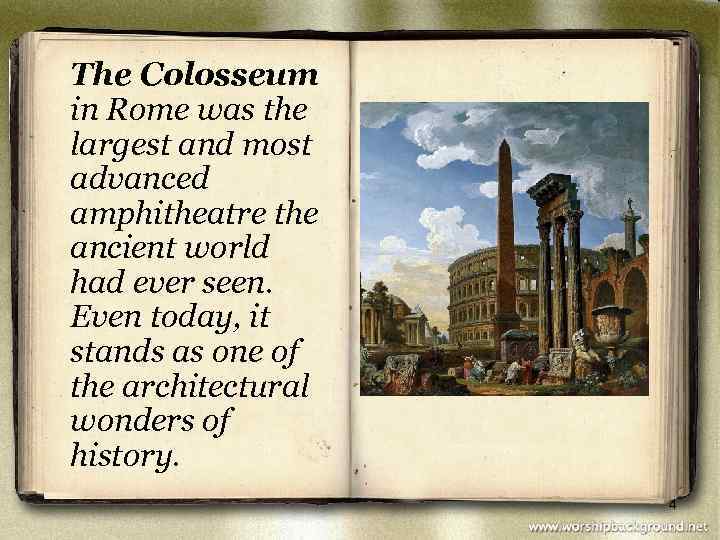
The Colosseum in Rome was the largest and most advanced amphitheatre the ancient world had ever seen. Even today, it stands as one of the architectural wonders of history. 4
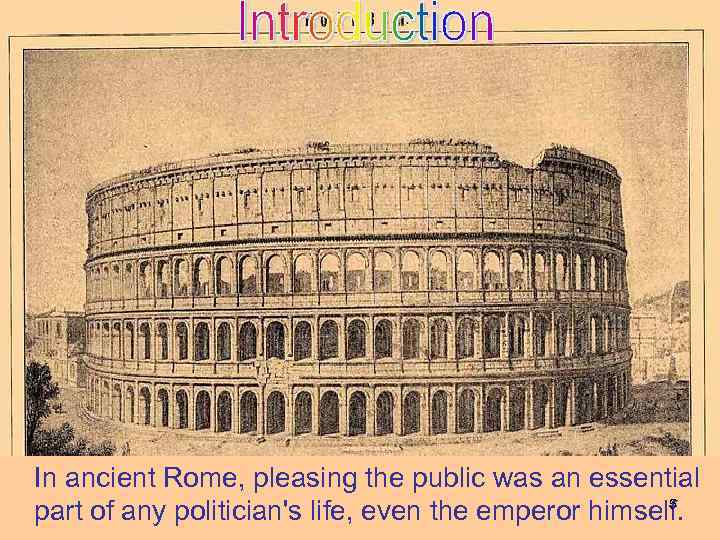
In ancient Rome, pleasing the public was an essential 5 part of any politician's life, even the emperor himself.

Emperor Titus Flavius Vespasian's play to gain the favo of the masses gave history its greatest amphitheatre, the Colosseum. Because Vespasian came from a line o emperors known as the Flavian dynasty, the original name of the Colosseum was the Flavian. 6
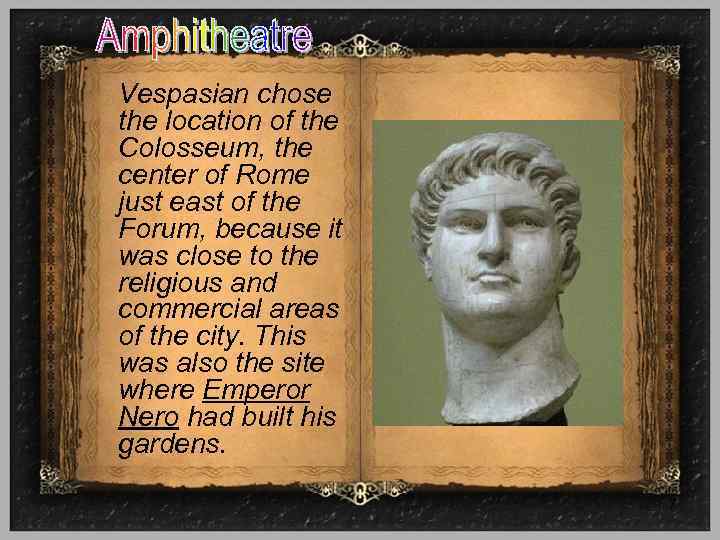
Vespasian chose the location of the Colosseum, the center of Rome just east of the Forum, because it was close to the religious and commercial areas of the city. This was also the site where Emperor Nero had built his gardens. 7

The only monument left from Nero's rule was a large bronze statue of the emperor. This was left on the grounds, but the inscription that identified it as Nero was removed and it was rededicated as a sun god. It is believed that the name Colosseum was derived from this statue, also known as the 'Colossus of Nero. ' 8
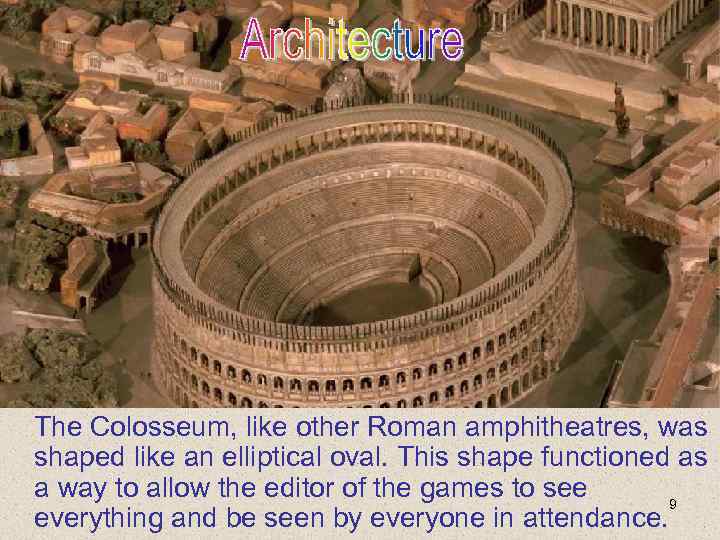
The Colosseum, like other Roman amphitheatres, was shaped like an elliptical oval. This shape functioned as a way to allow the editor of the games to see 9 everything and be seen by everyone in attendance.
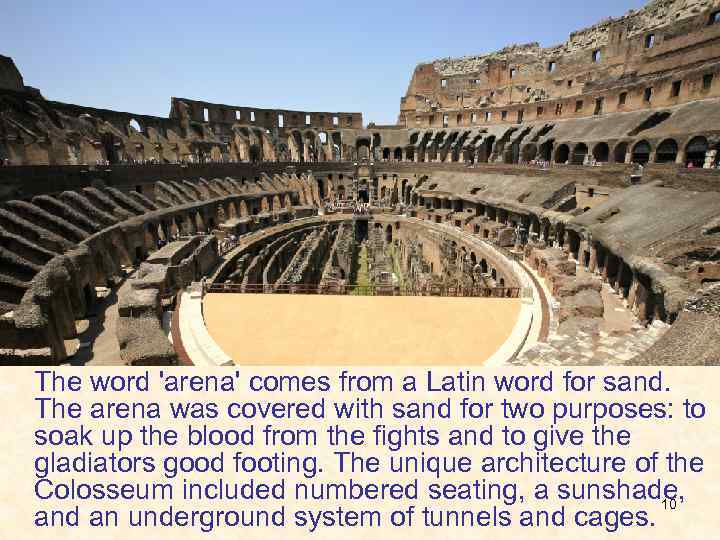
The word 'arena' comes from a Latin word for sand. The arena was covered with sand for two purposes: to soak up the blood from the fights and to give the gladiators good footing. The unique architecture of the Colosseum included numbered seating, a sunshade, 10 and an underground system of tunnels and cages.
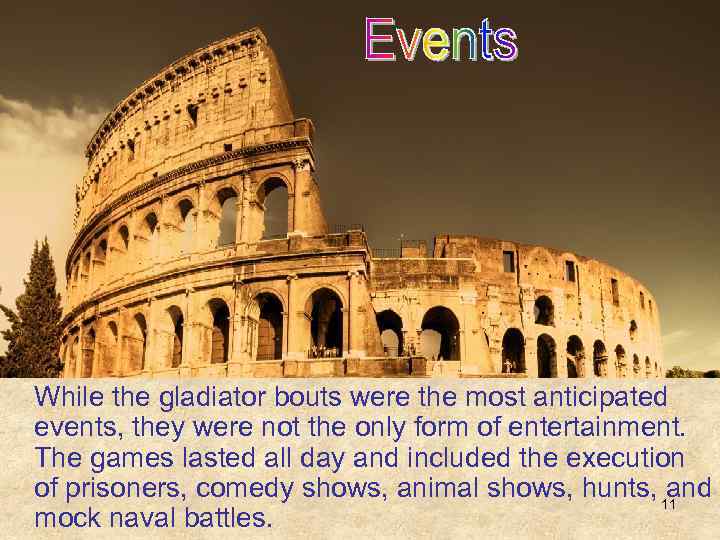
While the gladiator bouts were the most anticipated events, they were not the only form of entertainment. The games lasted all day and included the execution of prisoners, comedy shows, animal shows, hunts, and 11 mock naval battles.
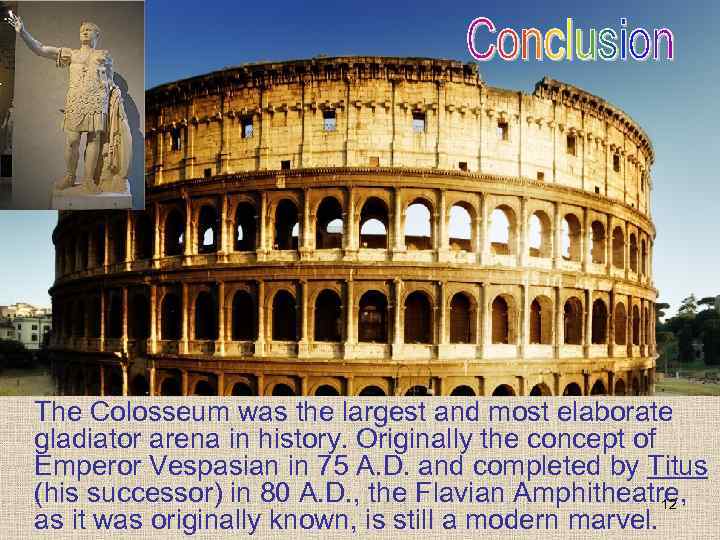
The Colosseum was the largest and most elaborate gladiator arena in history. Originally the concept of Emperor Vespasian in 75 A. D. and completed by Titus (his successor) in 80 A. D. , the Flavian Amphitheatre, 12 as it was originally known, is still a modern marvel.
List of references • http: //educationportal. com/academy/lesson/th e-roman-colosseum-historyfacts-quiz. html#lesson • http: //en. wikipedia. org/wiki/Col osseum 13
Thank you for your attention 14
Скачать презентацию Presentation By the second — year student of
Лена - Colosseum.ppt