Скачать презентацию Present Simple Tense Настоящее простое время The
Present Simple Tense.pptx
- Количество слайдов: 14
 Present Simple Tense Настоящее простое время
 The usage of the tense Обычное, повторяющееся, свойственное действие. Every day, often, usually, seldom, occasionally, always, never, daily, sometimes, etc. показывают, что действие повторяется. The Browns go to the seaside every summer.
 The usage of the tense Действия и состояния, характеризующие данного человека. She has many accomplishments: she sings and plays the piano beautifully.
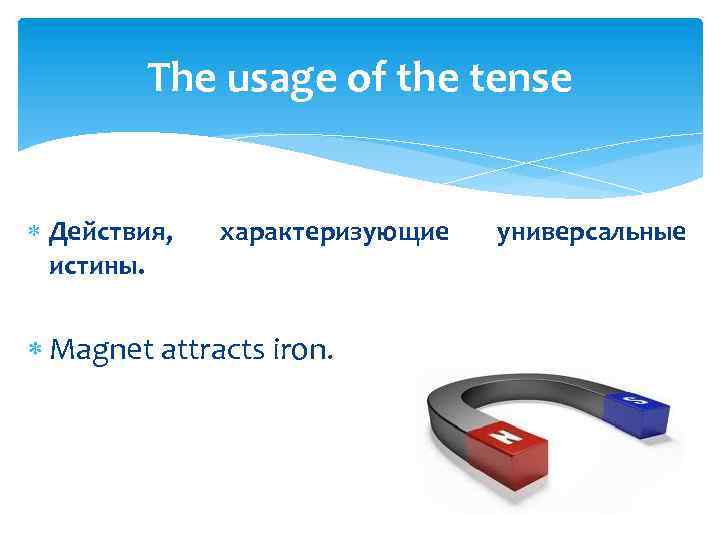 The usage of the tense Действия, истины. характеризующие Magnet attracts iron. универсальные
 The usage of the tense Действия, происходящие в момент речи с глаголами, не употребляющимися во временах группы Continuous: глаголы чувственного восприятия и умственного состояния: I see George in the street. Tell him to come in.
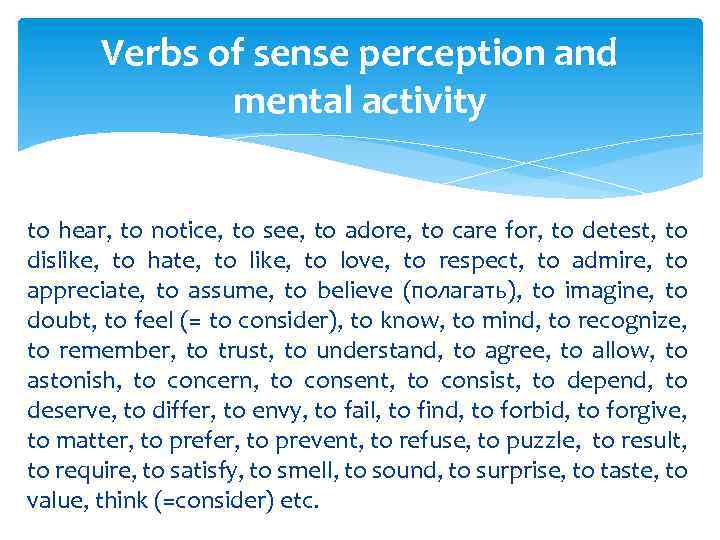 Verbs of sense perception and mental activity to hear, to notice, to see, to adore, to care for, to detest, to dislike, to hate, to like, to love, to respect, to admire, to appreciate, to assume, to believe (полагать), to imagine, to doubt, to feel (= to consider), to know, to mind, to recognize, to remember, to trust, to understand, to agree, to allow, to astonish, to concern, to consent, to consist, to depend, to deserve, to differ, to envy, to fail, to find, to forbid, to forgive, to matter, to prefer, to prevent, to refuse, to puzzle, to result, to require, to satisfy, to smell, to sound, to surprise, to taste, to value, think (=consider) etc.
 The usage of the tense Действие, обозначающее будущее: a) действие в обстоятельственных придаточных предложениях условия и времени, которые вводятся союзами: if, unless, when, until, till, as soon as, as long as, before … Robert, will you mend me a pen or two before you go?
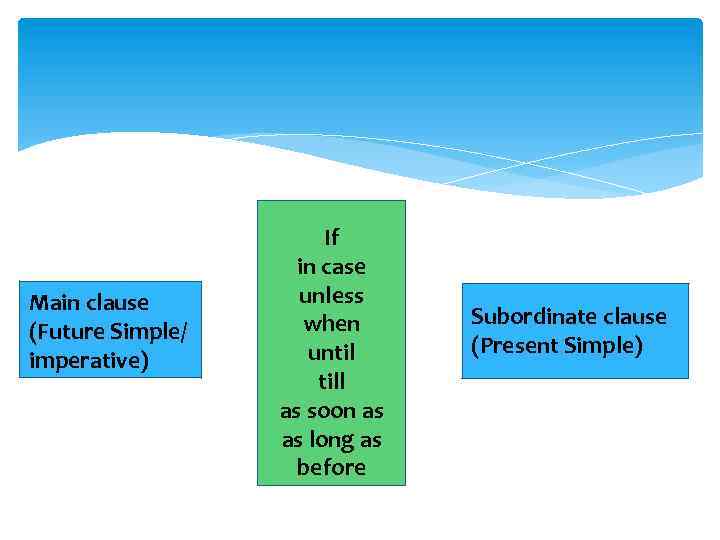 Main clause (Future Simple/ imperative) If in case unless when until till as soon as as long as before Subordinate clause (Present Simple)
 The usage of the tense 5. Действие, обозначающее будущее: b) с глаголами движения: to go, to come, to leave, arrive, depart. The train leaves at 10 tomorrow.
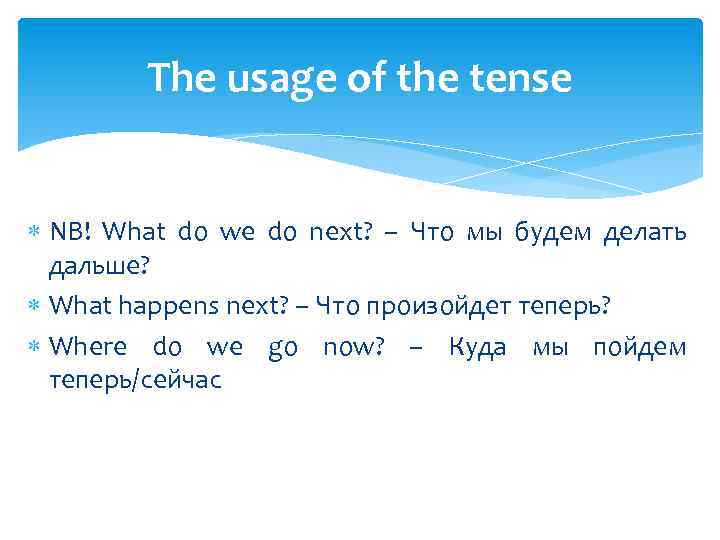 The usage of the tense NB! What do we do next? – Что мы будем делать дальше? What happens next? – Что произойдет теперь? Where do we go now? – Куда мы пойдем теперь/сейчас
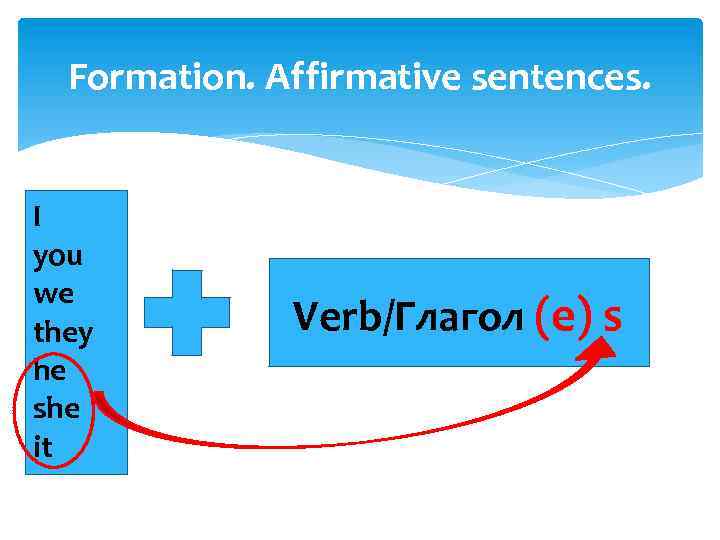 Formation. Affirmative sentences. I you we they he she it Verb/Глагол (e) s
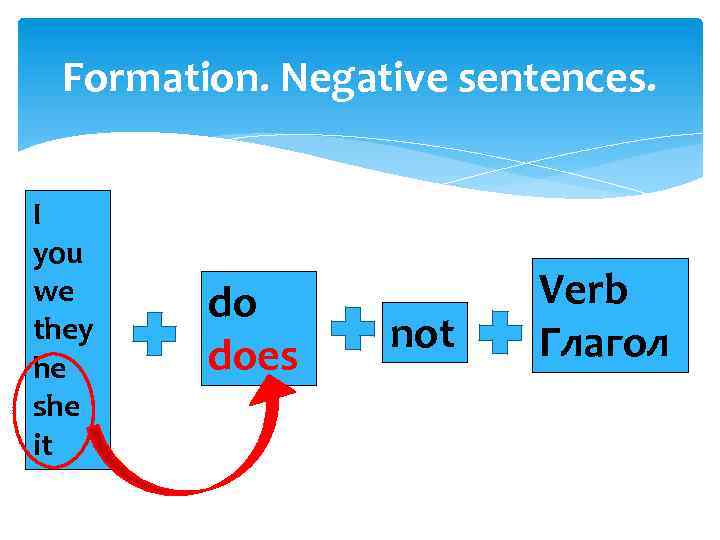 Formation. Negative sentences. I you we they he she it do does not Verb Глагол
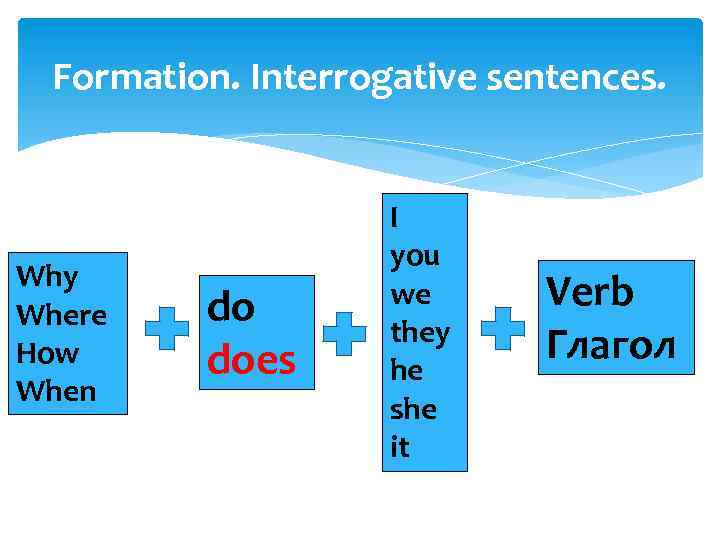 Formation. Interrogative sentences. Why Where How When do does I you we they he she it Verb Глагол