


 Скачать презентацию PRESENT PERFECT TENSE When can something happen
present-perfect-tense.ppt
- Количество слайдов: 11
 PRESENT PERFECT TENSE
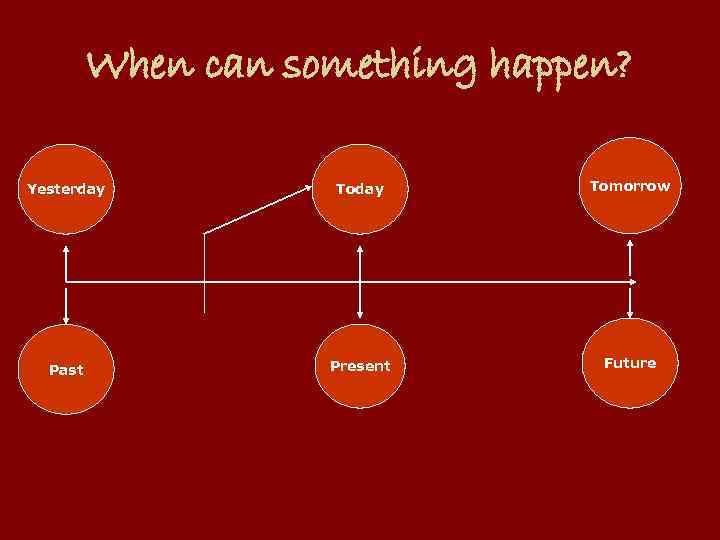 When can something happen? Yesterday Tomorrow Past Present Future
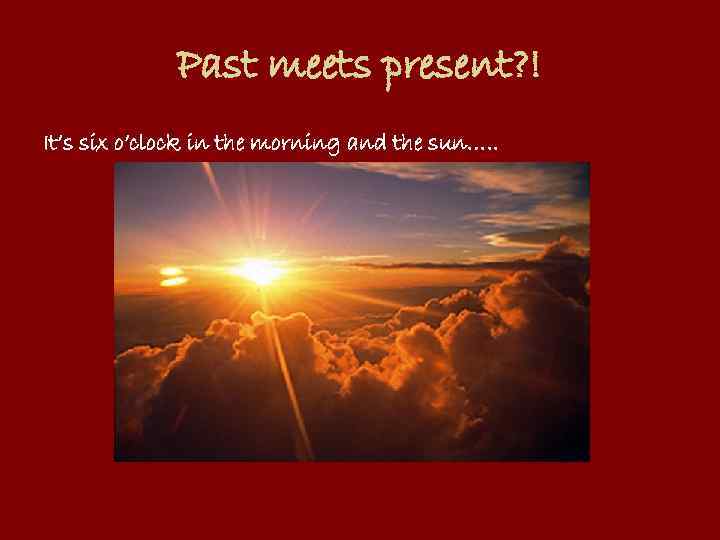 Past meets present? ! It’s six o’clock in the morning and the sun…. .
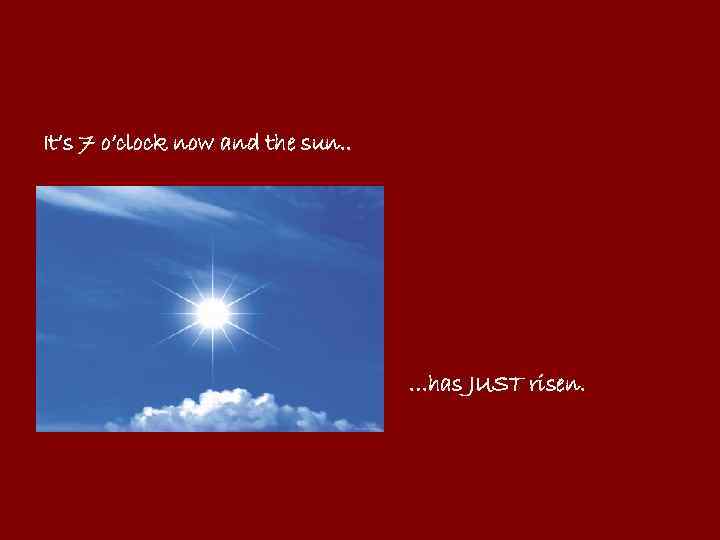 It’s 7 o’clock now and the sun. . …has JUST risen.
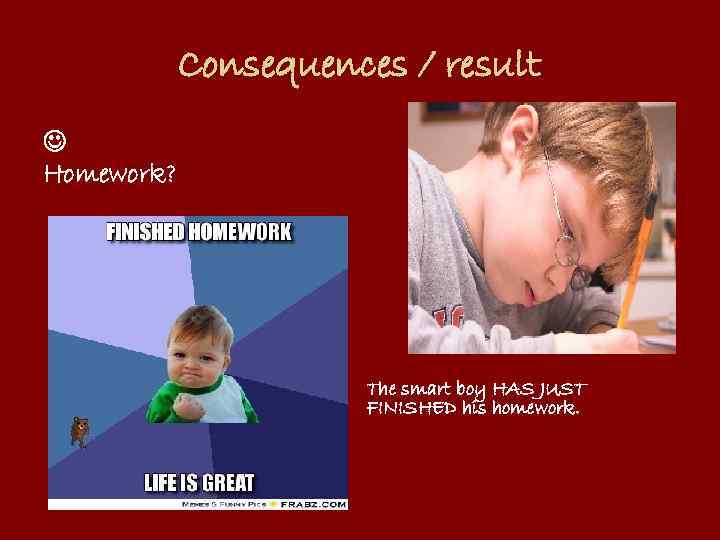 Consequences / result Homework? The smart boy HAS JUST FINISHED his homework.
 Present Perfect Tense - tense used to describe actions that started in the past ( started doing homework) and has just finished with consequences on the present (finished homework). PAST ACTION + PRESENT RESULT = PRESENT PERFECT
 PRESENT PERFECT TENSE The sun has just risen. The smart boy has just finished his homework. The parents have just eaten. - This tense is formed : HAVE/HAS + PAST PARTCIPLE present past
 PAST PARTICIPLE play +ed= played climb +ed=climbed be=been know=known take=taken It is formed by adding –ED to regular verbs or we use 3 rd column of the irregular verbs.
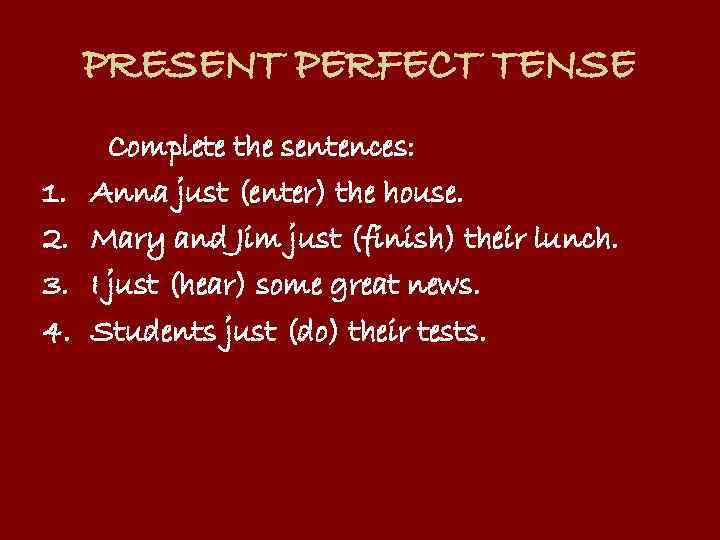 PRESENT PERFECT TENSE 1. 2. 3. 4. Complete the sentences: Anna just (enter) the house. Mary and Jim just (finish) their lunch. I just (hear) some great news. Students just (do) their tests.
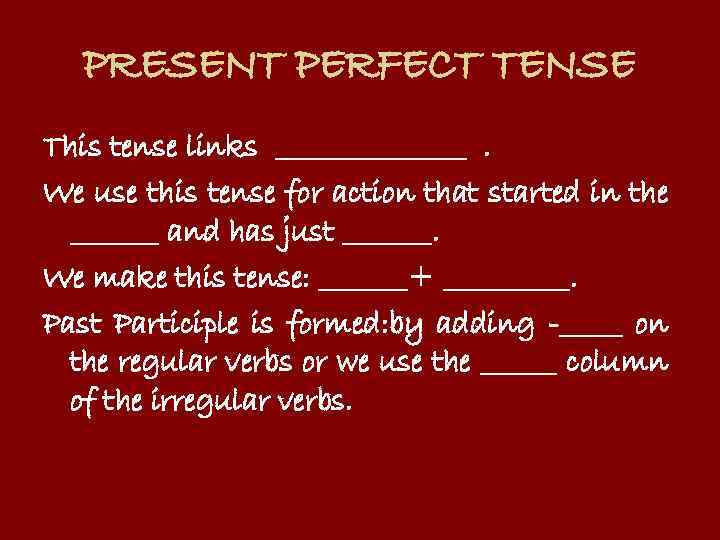 PRESENT PERFECT TENSE This tense links ________. We use this tense for action that started in the _______ and has just _______. We make this tense: _______+ _____. Past Participle is formed: by adding -_____ on the regular verbs or we use the ______ column of the irregular verbs.
 PRESENT PERFECT TENSE THE END