


 Скачать презентацию PRESENT PERFECT PRETÉRITO PERFECTO PRESENT PERFECT FORM
7edeb416ab7bae4f9d8841acf710ee31.ppt
- Количество слайдов: 74
 PRESENT PERFECT (PRETÉRITO PERFECTO)
 PRESENT PERFECT FORM HAVE / HAS + PAST PARTICIPLE
 AFFIRMATIVE have / has + past participle I have / ‘ve studied He / She / It has / ‘s come We / You / They have / ‘ve written a letter
 NEGATIVE haven’t / hasn’t + past participle I haven’t studied He / She / It hasn’t come We / You / They haven’t written a letter
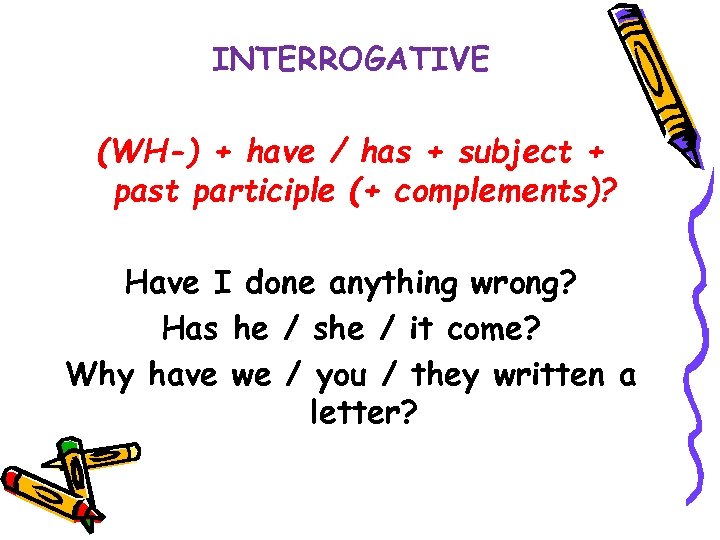 INTERROGATIVE (WH-) + have / has + subject + past participle (+ complements)? Have I done anything wrong? Has he / she / it come? Why have we / you / they written a letter?
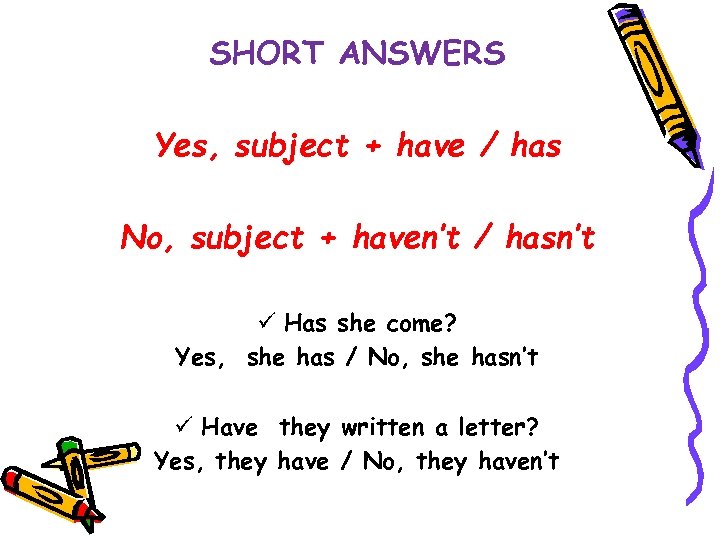 SHORT ANSWERS Yes, subject + have / has No, subject + haven’t / hasn’t ü Has she come? Yes, she has / No, she hasn’t ü Have they written a letter? Yes, they have / No, they haven’t
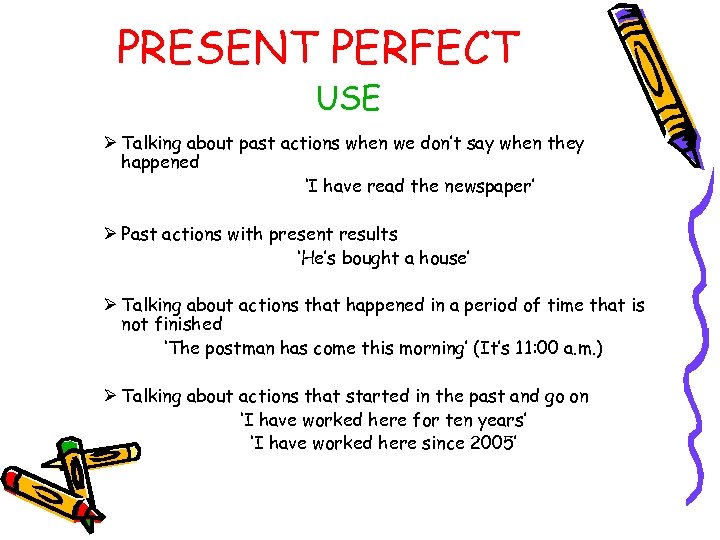 PRESENT PERFECT USE Ø Talking about past actions when we don’t say when they happened ‘I have read the newspaper’ Ø Past actions with present results ‘He’s bought a house’ Ø Talking about actions that happened in a period of time that is not finished ‘The postman has come this morning’ (It’s 11: 00 a. m. ) Ø Talking about actions that started in the past and go on ‘I have worked here for ten years’ ‘I have worked here since 2005’
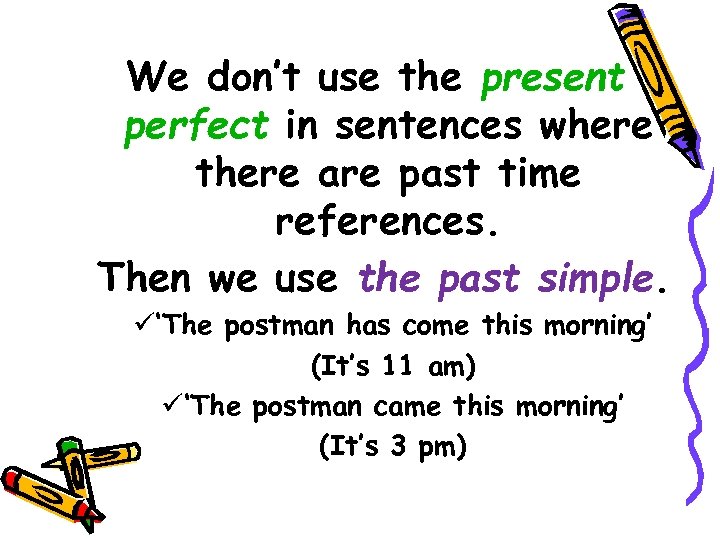 We don’t use the present perfect in sentences where there are past time references. Then we use the past simple. ü‘The postman has come this morning’ (It’s 11 am) ü‘The postman came this morning’ (It’s 3 pm)
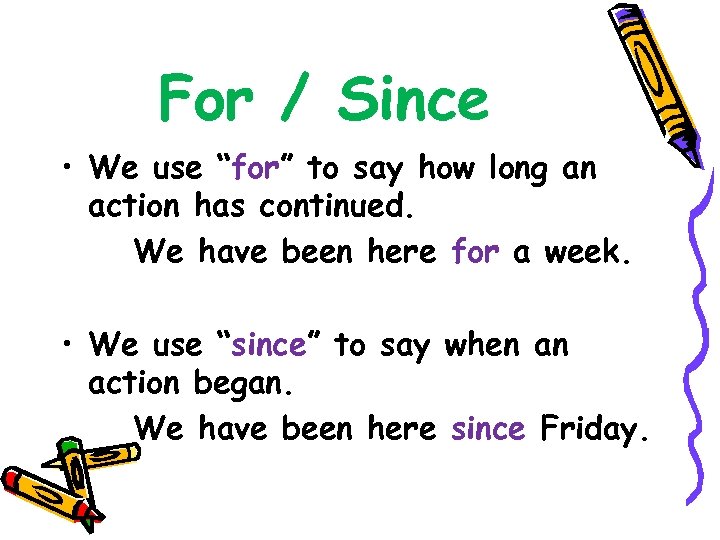 For / Since • We use “for” to say how long an action has continued. We have been here for a week. • We use “since” to say when an action began. We have been here since Friday.
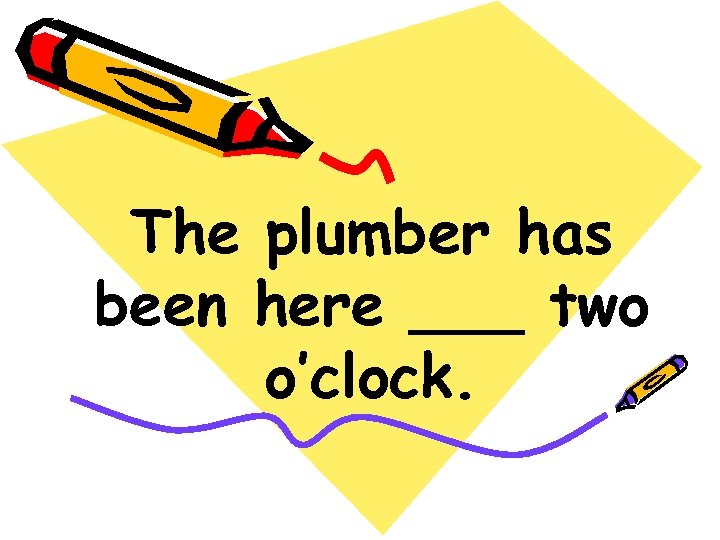 The plumber has been here ___ two o’clock.
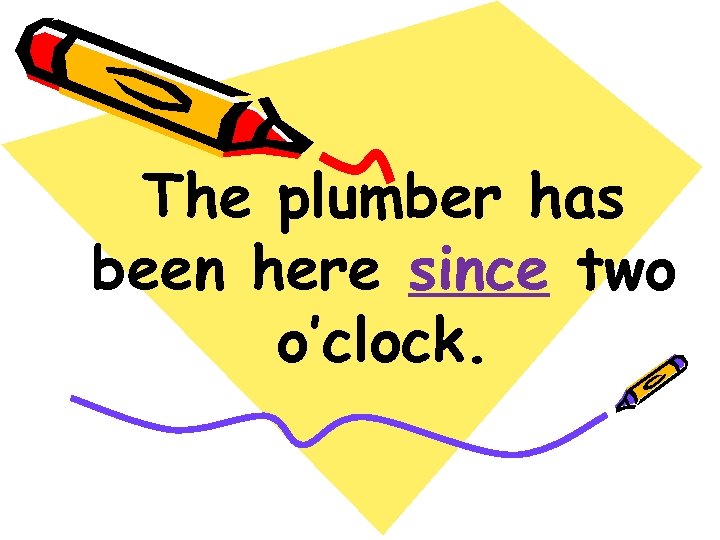 The plumber has been here since two o’clock.
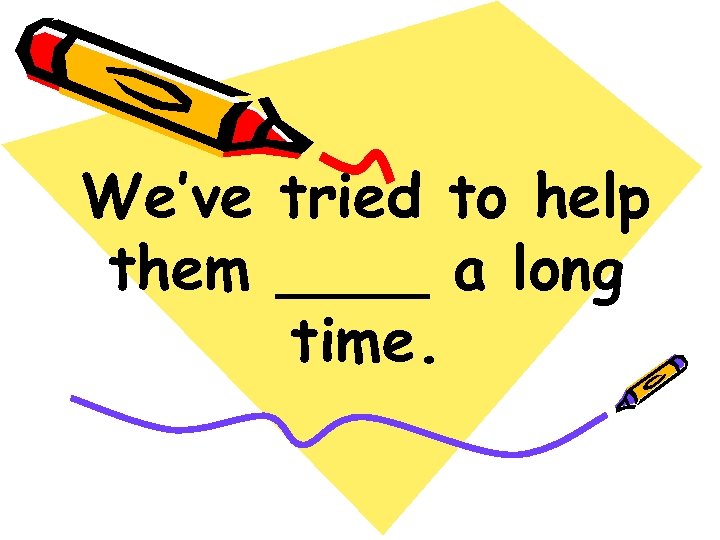 We’ve tried to help them ____ a long time.
 We’ve tried to help them for a long time.
 I haven’t slept ____ I heard about the oil spill.
 I haven’t slept since I heard about the oil spill.
 Have you been to Italy ____ last year?
 Have you been to Italy since last year?
 ____ early this morning, we’ve picked up hundreds of broken bottles.
 Since early this morning, we’ve picked up hundreds of broken bottles.
 We’ve been near the lake ____ six hours now.
 We’ve been near the lake for six hours now.
 Real fur coats haven’t been fashionable ____ years.
 Real fur coats haven’t been fashionable for years.
 Fish haven’t lived there ____ the oil spill.
 Fish haven’t lived there since the oil spill.
 He hasn’t played football ____ he hurt his foot last week.
 He hasn’t played football since he hurt his foot last week.
 We haven’t spoken ____ Monday.
 We haven’t spoken since Monday.
 Kevin has worked with animals ____ 2002.
 Kevin has worked with animals since 2002.
 We haven’t seen Sally ____ months.
 We haven’t seen Sally for months.
 I haven’t seen any good films ____ the summer.
 I haven’t seen any good films since the summer.
 Have you eaten ice creams ____ you began your diet?
 Have you eaten ice creams since you began your diet?
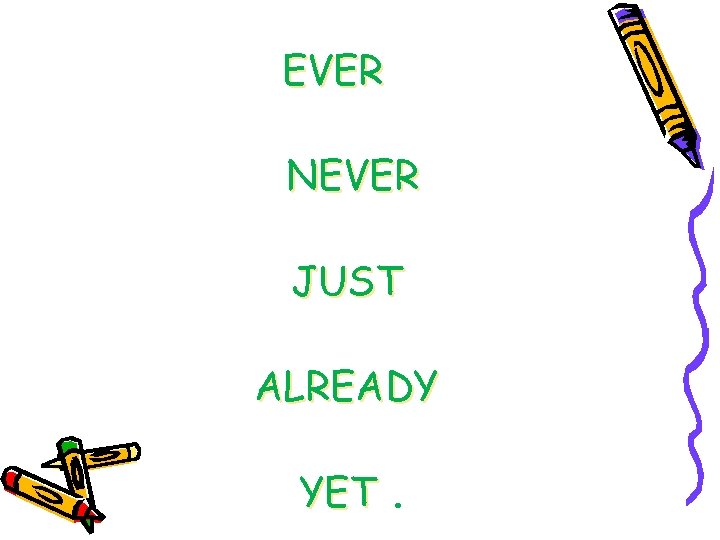 EVER NEVER JUST ALREADY YET.
 • “Yet” appears at the end of the sentence. • The others are placed between “have” or “has” and the past participle.
 Ever In interrogative sentences: “alguna vez”. • Have you ever seen a shark?
 • In negative sentences: “nunca”, “jamás”. • Carol hasn’t ever been to that disco.
 Never • In affirmative sentences: “nunca”. • I have never been to Russia.
 Just • In affirmative sentences: “acabar de”. The bus has just left.
 Already • In affirmative sentences: “ya”. • They have already arrived.
 Yet • In negative sentences: “aún”, “todavía”. He hasn’t arrived yet.
 • In interrogative sentences: “ya”. Have you finished yet?
 Ever -Never - Just - Already Yet • They haven’t bought a car _____.
 Ever -Never - Just - Already - Yet • They haven’t bought a car yet.
 Ever -Never - Just - Already - Yet • We have _____ heard about the tornado.
 Ever -Never - Just - Already - Yet • We have just heard about the tornado.
 Ever -Never - Just - Already - Yet • Have you _____ been to Alaska?
 Ever -Never - Just - Already - Yet • Have you ever been to Alaska?
 Ever -Never - Just - Already - Yet • We have _____ slept in a tent. Is it fun?
 Ever -Never - Just - Already - Yet • We have never slept in a tent. Is it fun?
 Ever -Never - Just - Already - Yet • I’ve _____ washed all the dishes.
 Ever -Never - Just - Already - Yet • I’ve already washed all the dishes.
 Ever -Never - Just - Already - Yet • He has _____ left. He’s probably outside the door.
 Ever -Never - Just - Already - Yet • He has just left. He’s probably outside the door.
 Ever -Never - Just - Already - Yet • I haven’t finished my homework _____.
 Ever -Never - Just - Already - Yet • I haven’t finished my homework yet.
 Ever -Never - Just - Already - Yet • Mary has _____ put on her make-up and now she’s ready to go.
 Ever -Never - Just - Already - Yet • Mary has just put on her make-up and now she’s ready to go.
 Ever -Never - Just - Already - Yet • Have you _____ found money in the street? Yes, I have.
 Ever -Never - Just - Already - Yet • Have you ever found money in the street? Yes, I have.
 Ever -Never - Just - Already - Yet • Betty has _____ finished her project.
 Ever -Never - Just - Already - Yet • Betty has already finished her project.
 Ever -Never - Just - Already - Yet • I have _____ slept in a forest.
 Ever -Never - Just - Already - Yet • I have never slept in a forest.
 Ever -Never - Just - Already - Yet • I haven’t flown to the USA _____.
 Ever -Never - Just - Already - Yet • I haven’t flown to the USA yet.
 Ever -Never - Just - Already - Yet • Have your friends _____ eaten frog’s legs? No, they haven’t.
 Ever -Never - Just - Already - Yet • Have your friends ever eaten frog’s legs? No, they haven’t.
 PRESENT PERFECT CONTINUOUS FORM HAVE / HAS + BEEN + -ING USE Ø To express the duration of a recent action Ø To express the duration of an unfinished action
 THE END