


 Скачать презентацию Present and future of Early Hearing Detection and
0463698ac010f2927f0c1c17317af374.ppt
- Количество слайдов: 32
 Present and future of Early Hearing Detection and Intervention Systems in the European Area Ferdinando Grandori National Res. Council - Institute of Biomedical Engineering Association for Research on Infant Hearing (non-profit) 1
 A QUESTION OF TERMINOLOGY < 2000 UNHS = Universal Newborn Hearing Screening ~ 2002 EHDI = Early Hearing Detection and Intervention ~ 2005 HDI = Hearing Detection and Intervention 2
 Summary _________________________________ Ø Penetration of EHDI systems Ø Protocols and Recommendations (i. e. genetic testing) Ø Int’l Group on Childhood Hearing 3
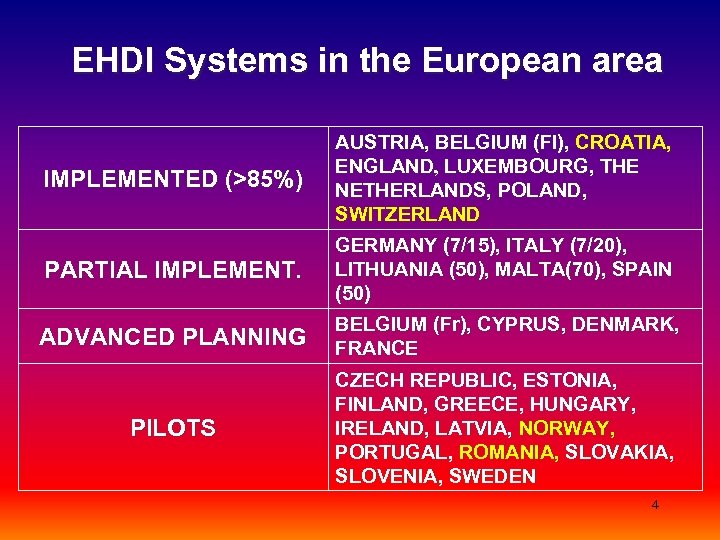 EHDI Systems in the European area IMPLEMENTED (>85%) AUSTRIA, BELGIUM (Fl), CROATIA, ENGLAND, LUXEMBOURG, THE NETHERLANDS, POLAND, SWITZERLAND PARTIAL IMPLEMENT. GERMANY (7/15), ITALY (7/20), LITHUANIA (50), MALTA(70), SPAIN (50) ADVANCED PLANNING BELGIUM (Fr), CYPRUS, DENMARK, FRANCE PILOTS CZECH REPUBLIC, ESTONIA, FINLAND, GREECE, HUNGARY, IRELAND, LATVIA, NORWAY, PORTUGAL, ROMANIA, SLOVAKIA, SLOVENIA, SWEDEN 4
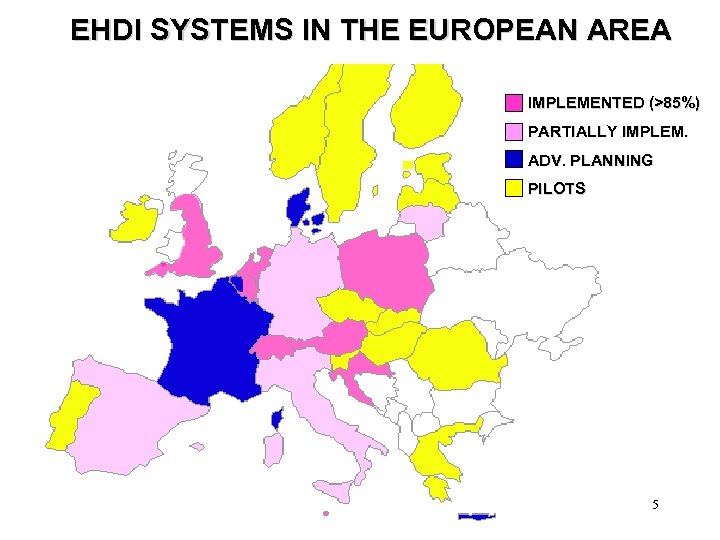 EHDI SYSTEMS IN THE EUROPEAN AREA IMPLEMENTED (>85%) PARTIALLY IMPLEM. ADV. PLANNING PILOTS 5
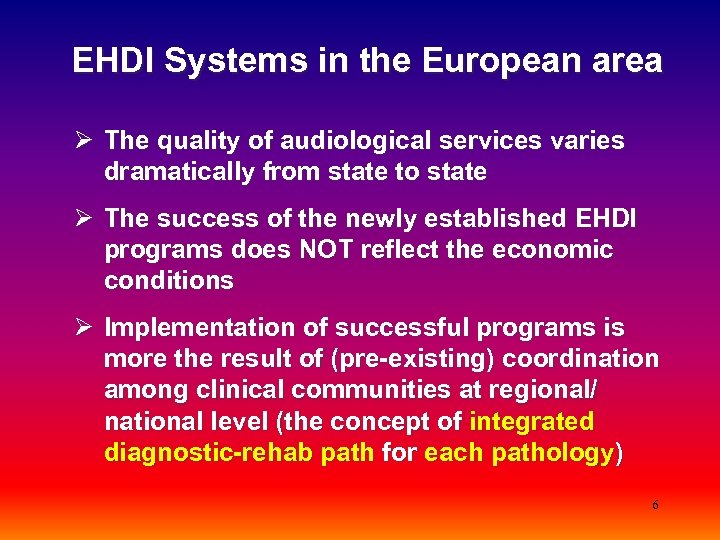 EHDI Systems in the European area Ø The quality of audiological services varies dramatically from state to state Ø The success of the newly established EHDI programs does NOT reflect the economic conditions Ø Implementation of successful programs is more the result of (pre-existing) coordination among clinical communities at regional/ national level (the concept of integrated diagnostic-rehab path for each pathology) 6
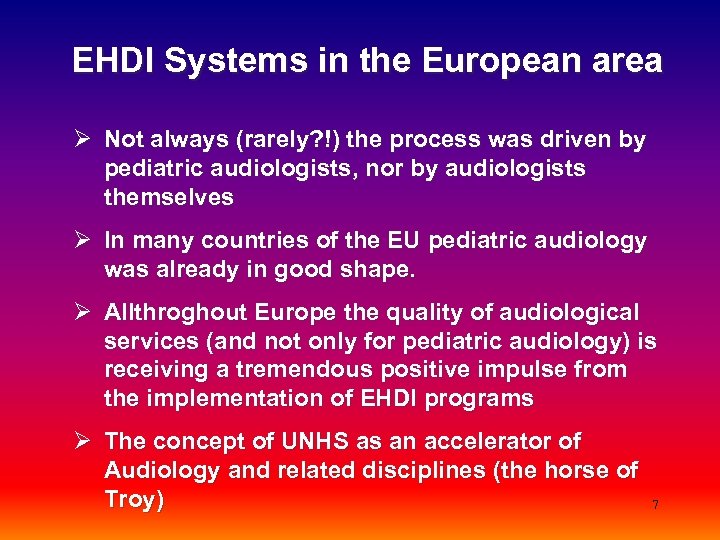 EHDI Systems in the European area Ø Not always (rarely? !) the process was driven by pediatric audiologists, nor by audiologists themselves Ø In many countries of the EU pediatric audiology was already in good shape. Ø Allthroghout Europe the quality of audiological services (and not only for pediatric audiology) is receiving a tremendous positive impulse from the implementation of EHDI programs Ø The concept of UNHS as an accelerator of Audiology and related disciplines (the horse of Troy) 7
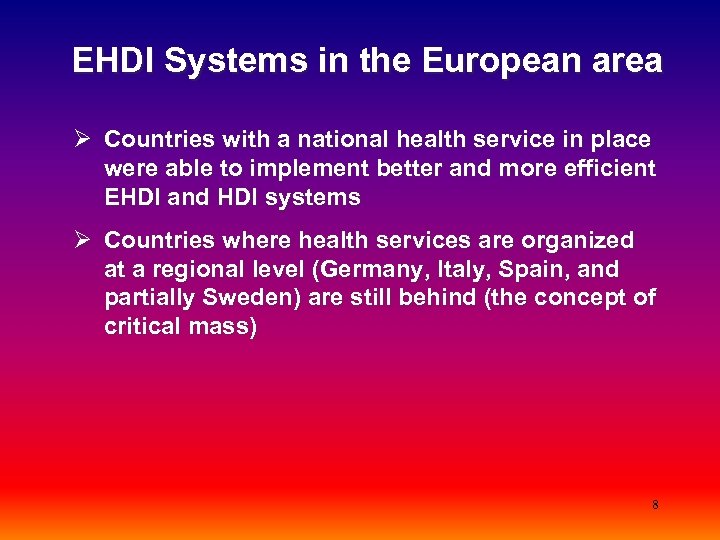 EHDI Systems in the European area Ø Countries with a national health service in place were able to implement better and more efficient EHDI and HDI systems Ø Countries where health services are organized at a regional level (Germany, Italy, Spain, and partially Sweden) are still behind (the concept of critical mass) 8
 _________________________________ • Penetration of EHDI systems • About protocols and Recommendations (i. e. genetic testing) • Int’l Group on Childhood Hearing 9
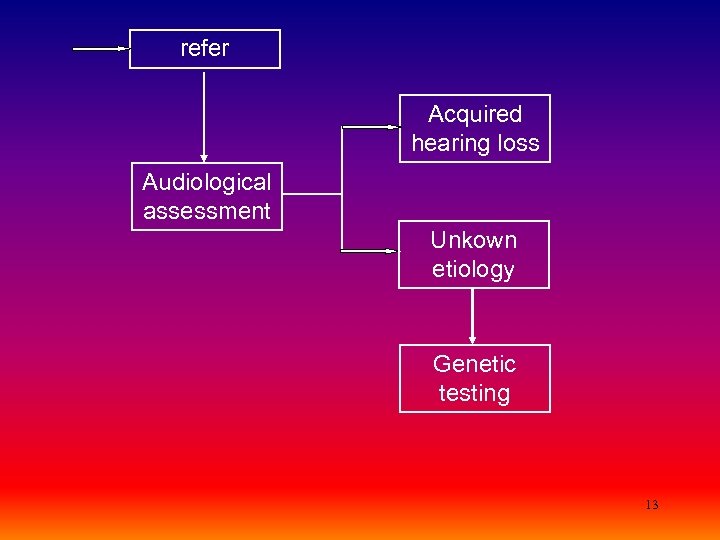
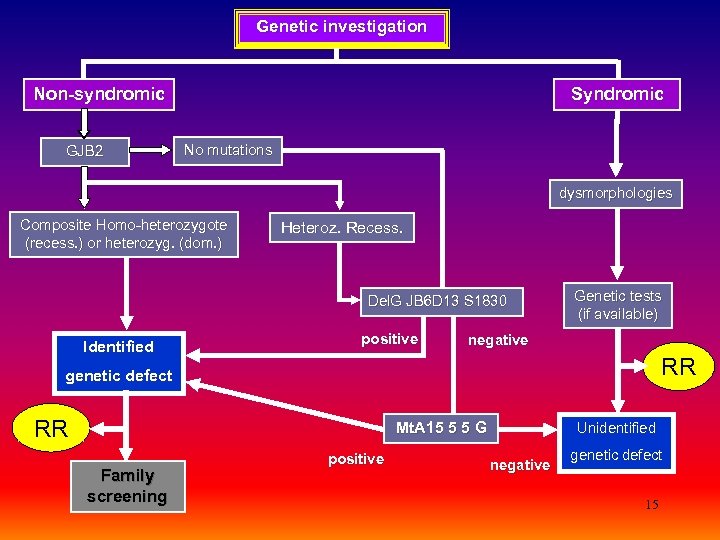
 Genetic testing Ø Genetic defects produce more than 60% of the congenital hearing losses Ø About 30% of these are syndromic Ø The remaining 70% are due to non-syndromic mendelian hereditary or mytocondrial defects: v Recessive (~80%) v Dominants (~20%) v X-linked (~1%) v Mytocondrial (~1%) 10
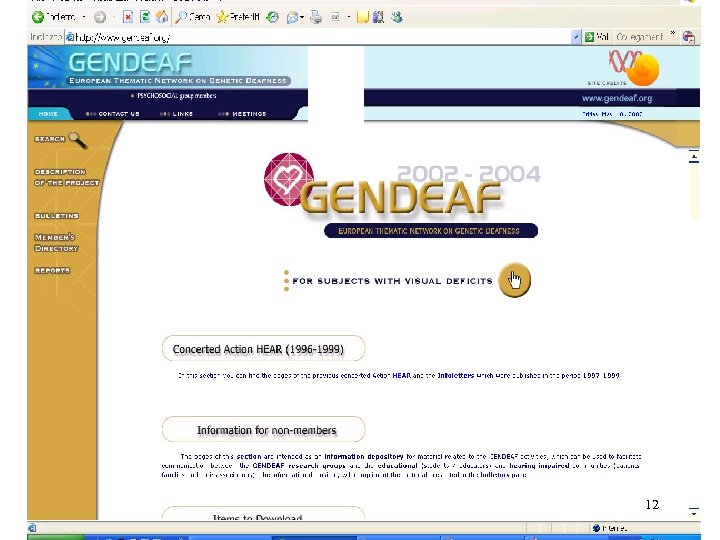
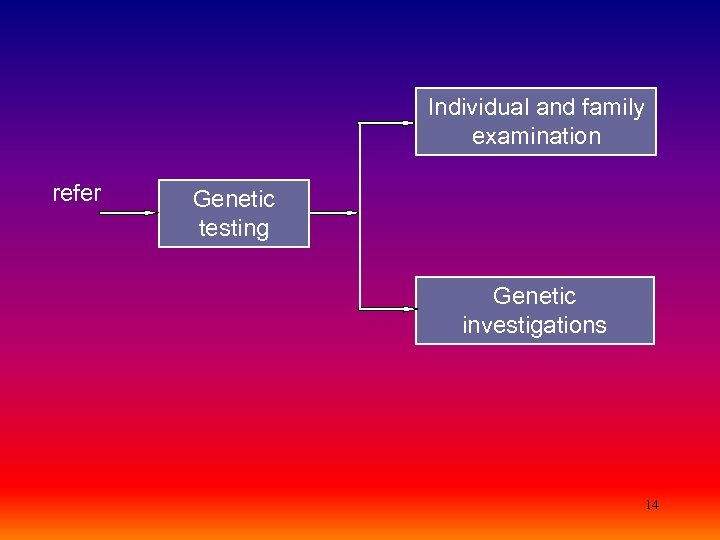
 Genetic testing The need for recommendations Ø Though recommendations may be tailored to local specific population-based studies, some general guidelines on genetic testing are needed Ø A few studies are coming out Ø An example of guidelines: a proposal coming from a working group on genetic deafness www. gendeaf. org 11
 12
12
 refer Acquired hearing loss Audiological assessment Unkown etiology Genetic testing 13
 Individual and family examination refer Genetic testing Genetic investigations 14
 Genetic investigation Non-syndromic GJB 2 Syndromic No mutations dysmorphologies Composite Homo-heterozygote (recess. ) or heterozyg. (dom. ) Heteroz. Recess. Del. G JB 6 D 13 S 1830 Identified positive Genetic tests (if available) negative RR genetic defect RR Mt. A 15 5 5 G Family screening positive Unidentified negative genetic defect 15
 SCREENING PROTOCOLS Towards a two-track protocol Ø At-risk (NICU): AABR-based (+OAE, for AN screening) Ø Well-babies: v 1 - or 2 -stage AOAE+AABR v 1 -stage AABR 16
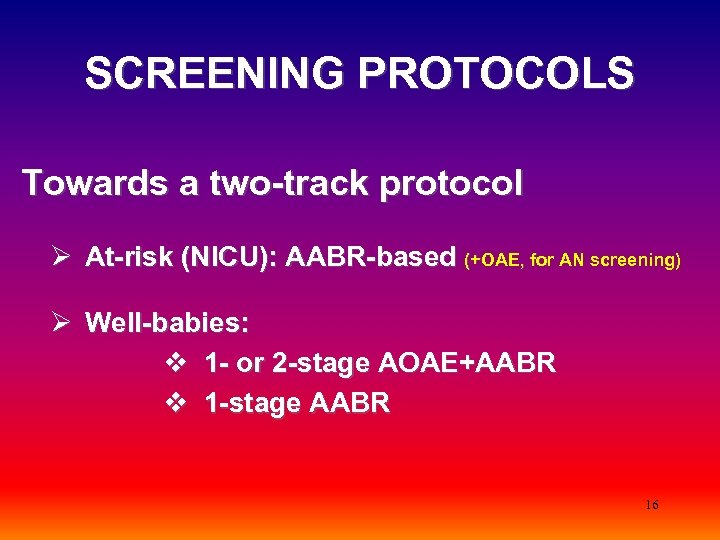
 SCREENING PROTOCOLS v Several large scale national/ regional programs have adopted the two-track protocol (e. g. England, Denmark, regions of Spain, most of the Swiss programs) v Overall, the AOAE+AABR model is predominant (>80% of the local screening programs) 17
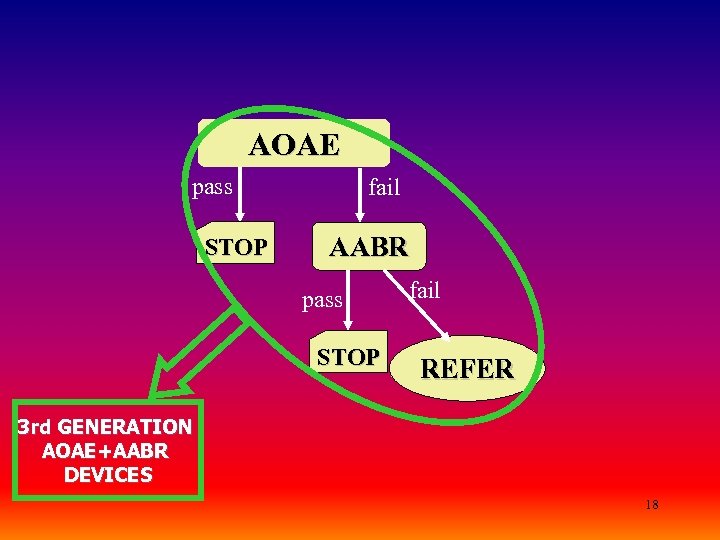 AOAE pass STOP fail AABR pass STOP fail REFER 3 rd GENERATION AOAE+AABR DEVICES 18
 COMBINED AOAE+AABR v Intracanal calibration for OAE and ABR v Lower refers and false-positive cases v Great flexibility to cope with the variety of screening conditions: nursery, NICU…. v Minimal parental anxiety (no more a real problem) v Fewer diagnostic tests v Less infants lost to follow-up v Quicker & more appropriate management v Screening for auditory neuropathy in just 1 session 19
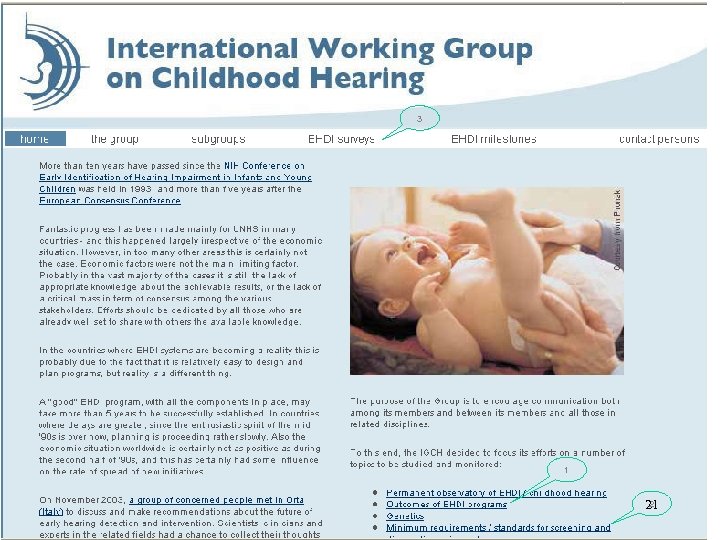
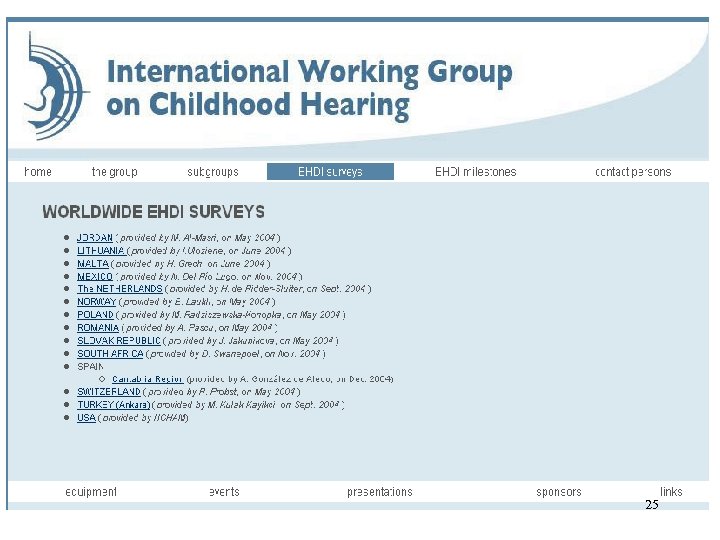
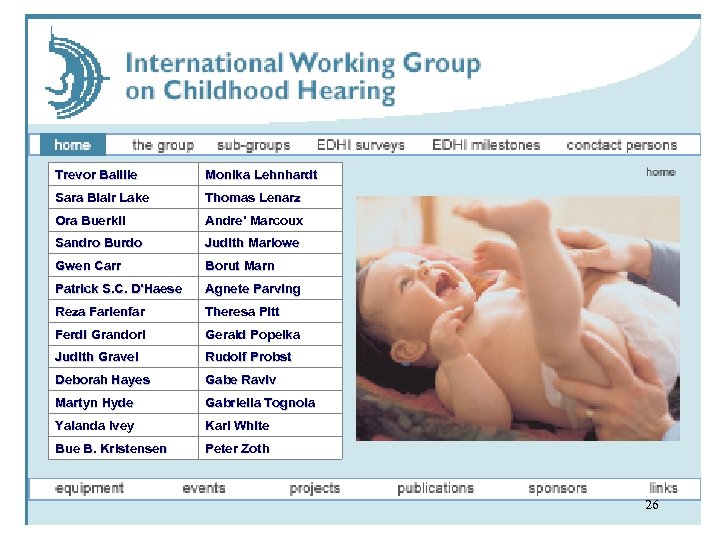
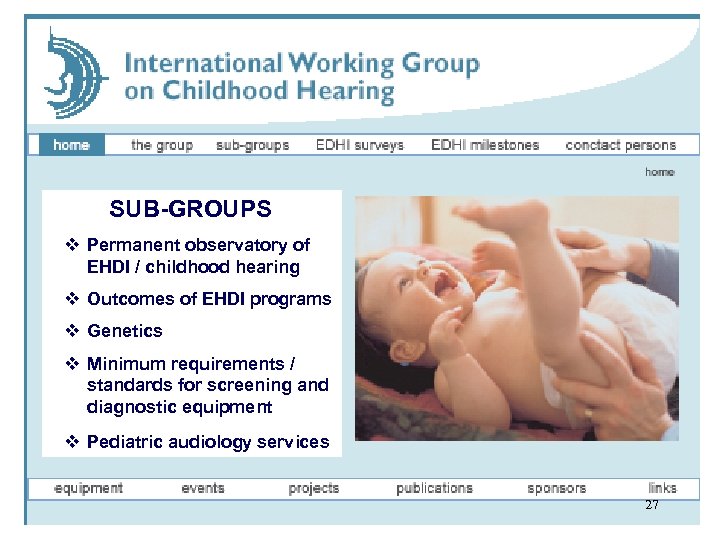
 _________________________________ • Penetration of EHDI systems • About protocols and recommendations (i. e. genetic testing) • International Working Group on Childhood Hearing 20
 3 1 2 21
 22
22
 23
23
 24
24
 25
25
 Trevor Baillie Monika Lehnhardt Sara Blair Lake Thomas Lenarz Ora Buerkli Andre' Marcoux Sandro Burdo Judith Marlowe Gwen Carr Borut Marn Patrick S. C. D'Haese Agnete Parving Reza Farienfar Theresa Pitt Ferdi Grandori Gerald Popelka Judith Gravel Rudolf Probst Deborah Hayes Gabe Raviv Martyn Hyde Gabriella Tognola Yalanda Ivey Karl White Bue B. Kristensen Peter Zoth 26
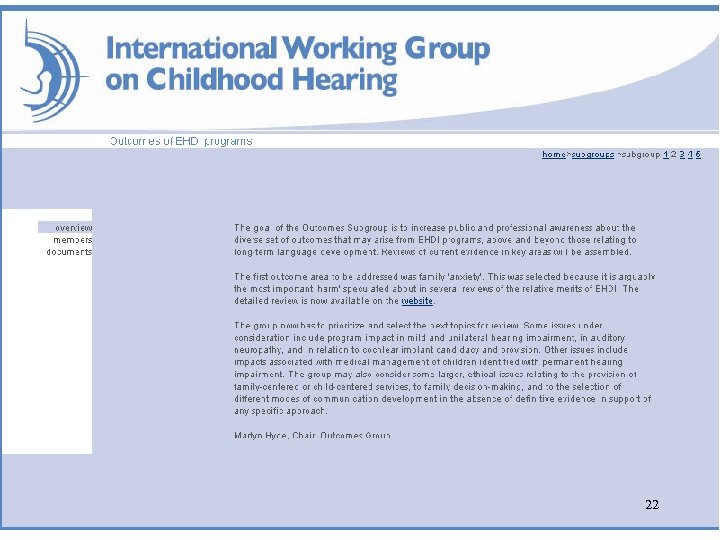
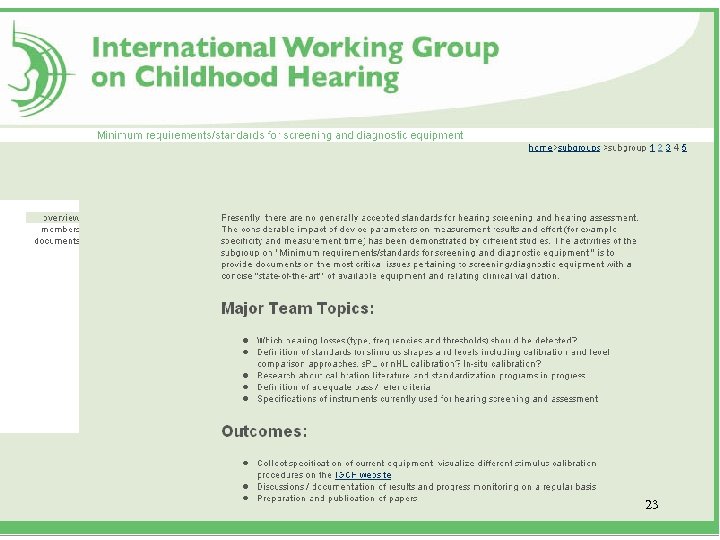
 SUB-GROUPS v Permanent observatory of EHDI / childhood hearing v Outcomes of EHDI programs v Genetics v Minimum requirements / standards for screening and diagnostic equipment v Pediatric audiology services 27
 CHILDHOODHEARING. ISIB. CNR. IT 28
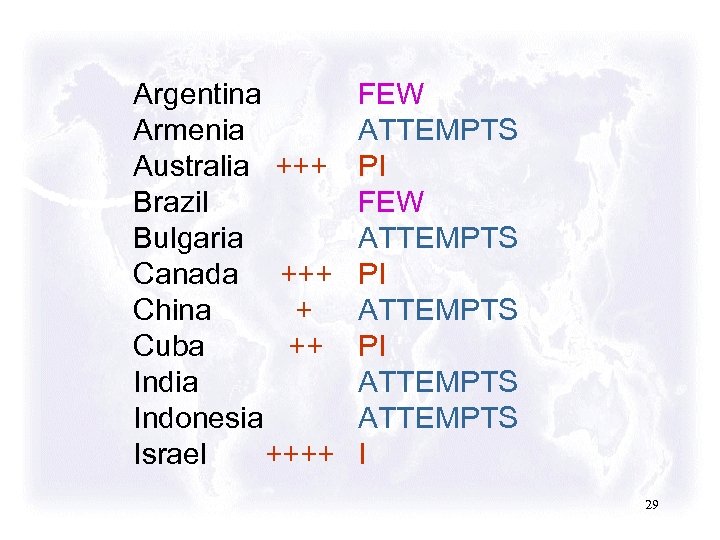 Argentina FEW Armenia ATTEMPTS Australia +++ PI Brazil FEW Bulgaria ATTEMPTS Canada +++ PI China + ATTEMPTS Cuba ++ PI India ATTEMPTS Indonesia ATTEMPTS Israel ++++ I 29
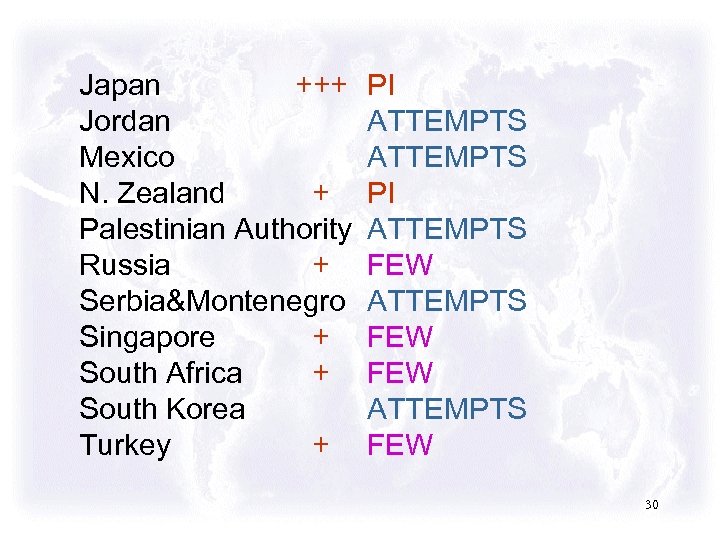 Japan +++ PI Jordan ATTEMPTS Mexico ATTEMPTS N. Zealand + PI Palestinian Authority ATTEMPTS Russia + FEW Serbia&Montenegro ATTEMPTS Singapore + FEW South Africa + FEW ATTEMPTS South Korea Turkey + FEW 30
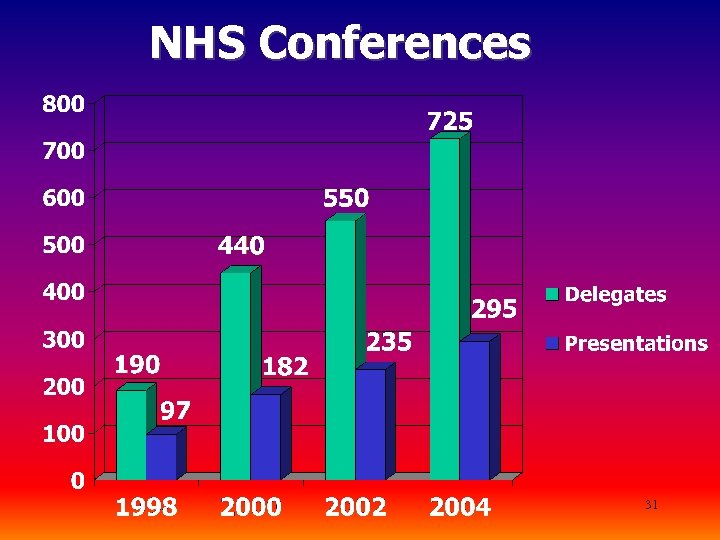 NHS Conferences 31
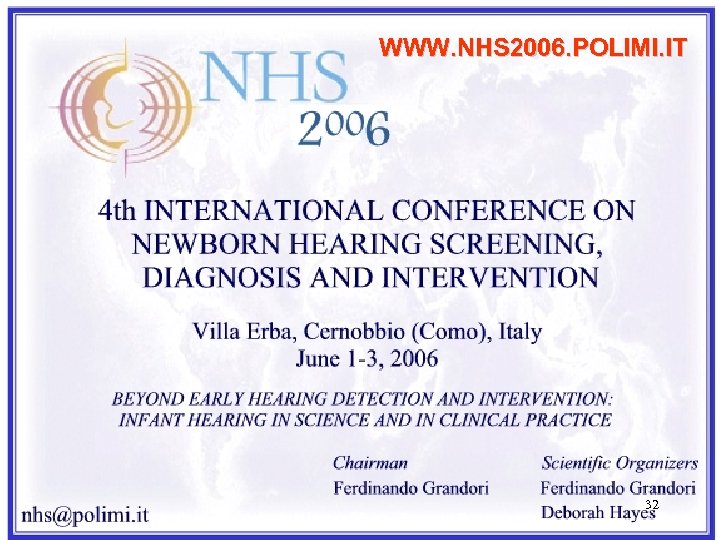 WWW. NHS 2006. POLIMI. IT 32