 Скачать презентацию Preparing for Post-Carbon Mobility How to Make the
42fe127b5743196517b36bbe5a28fa4e.ppt
- Количество слайдов: 52



Preparing for Post-Carbon Mobility: How to Make the Most of Canada’s Coming Transport Revolutions Anthony Perl aperl@sfu. ca
Why will we launch a major redesign of our transport systems within 10 years ?
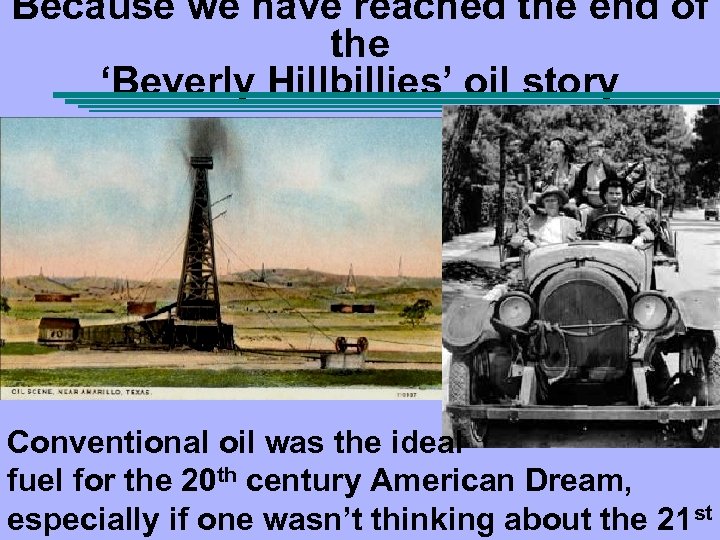
Because we have reached the end of the ‘Beverly Hillbillies’ oil story Conventional oil was the ideal fuel for the 20 th century American Dream, especially if one wasn’t thinking about the 21 st
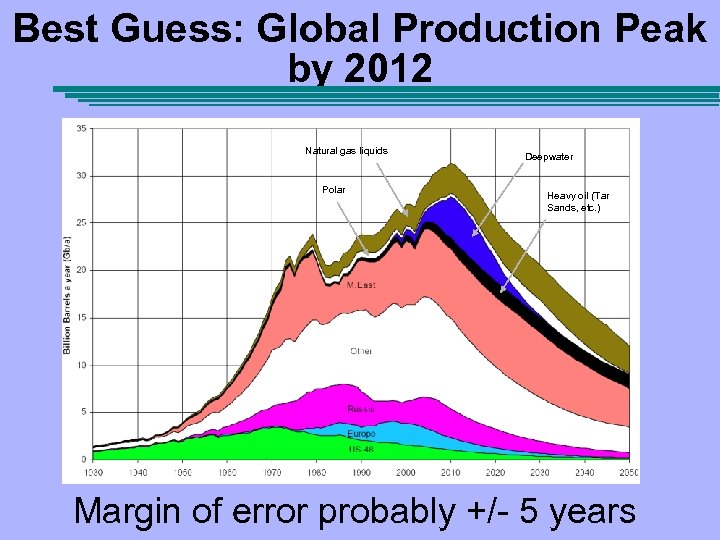
Best Guess: Global Production Peak by 2012 Natural gas liquids Polar Deepwater Heavy oil (Tar Sands, etc. ) Margin of error probably +/- 5 years
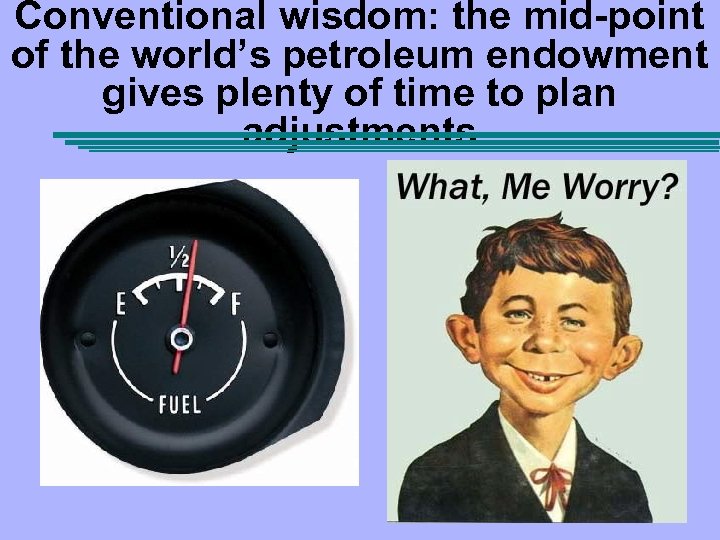
Conventional wisdom: the mid-point of the world’s petroleum endowment gives plenty of time to plan adjustments
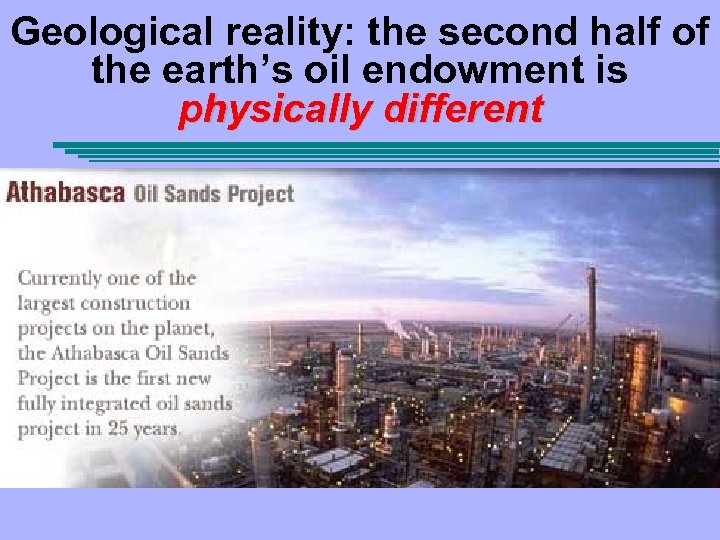
Geological reality: the second half of the earth’s oil endowment is physically different
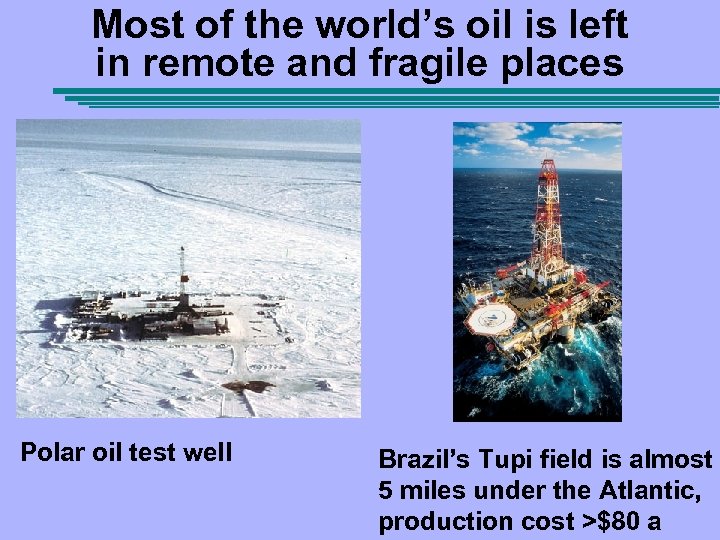
Most of the world’s oil is left in remote and fragile places Polar oil test well Brazil’s Tupi field is almost 5 miles under the Atlantic, production cost >$80 a
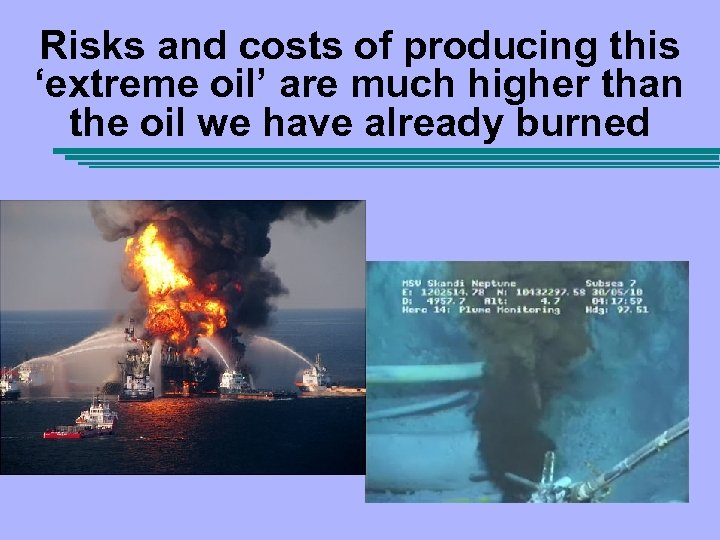
Risks and costs of producing this ‘extreme oil’ are much higher than the oil we have already burned
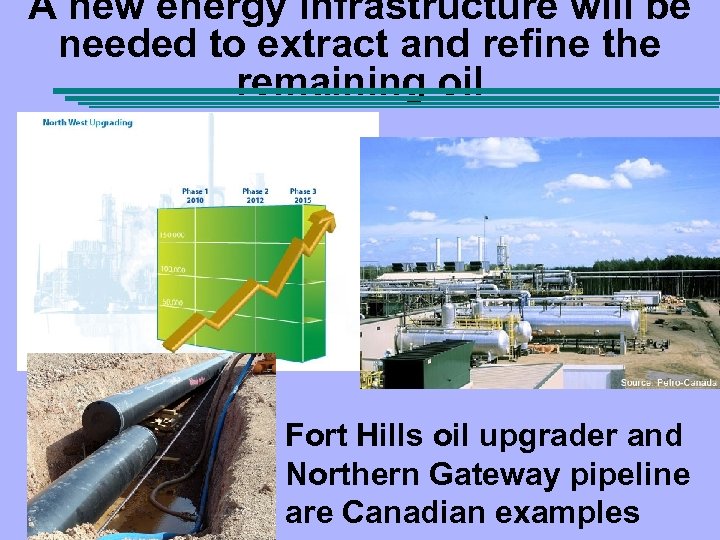
A new energy infrastructure will be needed to extract and refine the remaining oil Fort Hills oil upgrader and Northern Gateway pipeline are Canadian examples
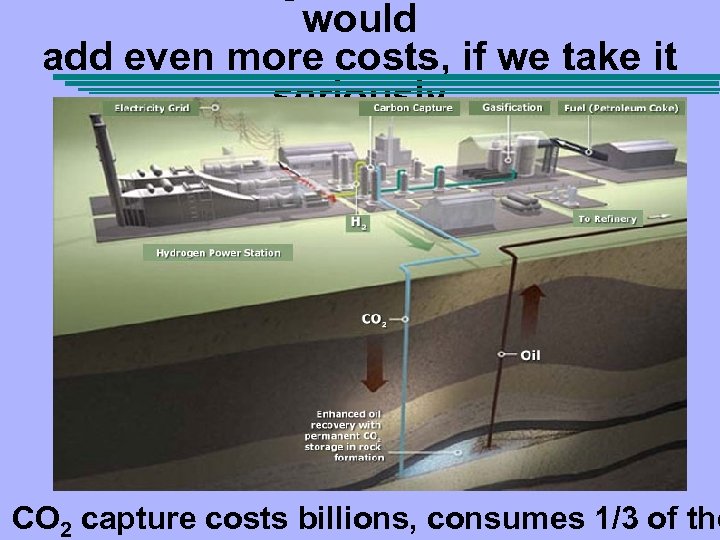
would add even more costs, if we take it seriously CO 2 capture costs billions, consumes 1/3 of the
What if we could avoid pouring trillions into new oil production facilities, by investing in infrastructure that avoids the need for oil?
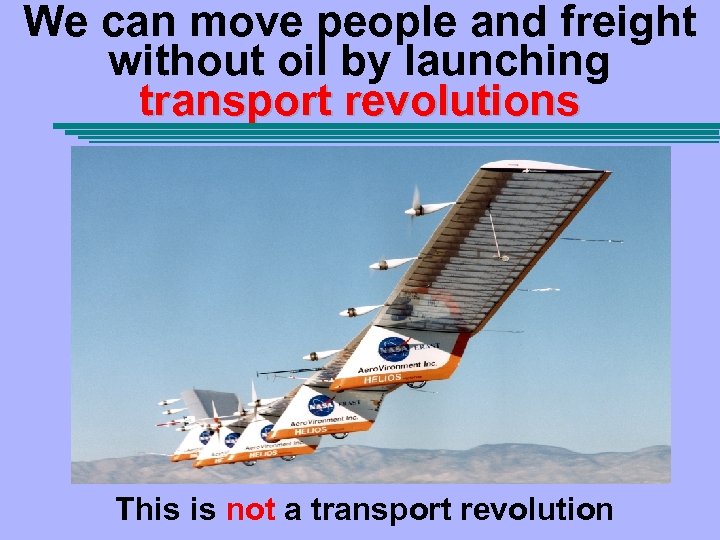
We can move people and freight without oil by launching transport revolutions This is not a transport revolution
What is a transport revolution? § A substantial change in a society’s transport activity —moving people or moving freight, or both — that occurs in less than 25 years § Substantial change means a 50% increase or decrease in transport activity or use of a new means of transport becomes part of the lives of 10% of the society’s population.
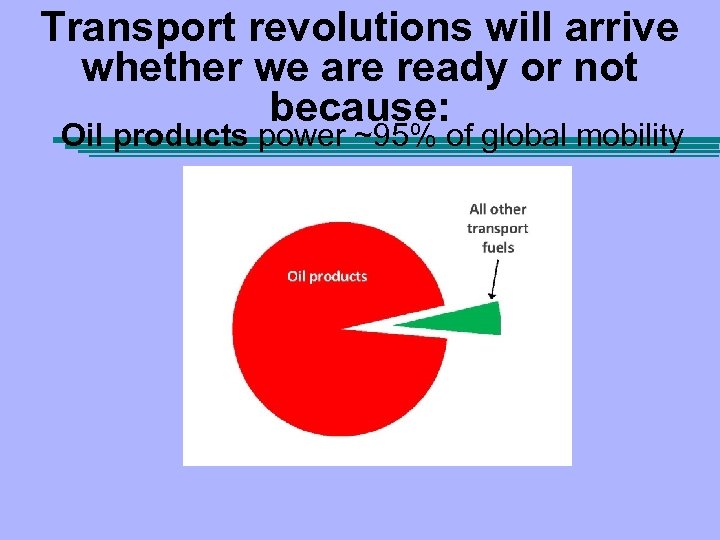
Transport revolutions will arrive whether we are ready or not because: Oil products power ~95% of global mobility
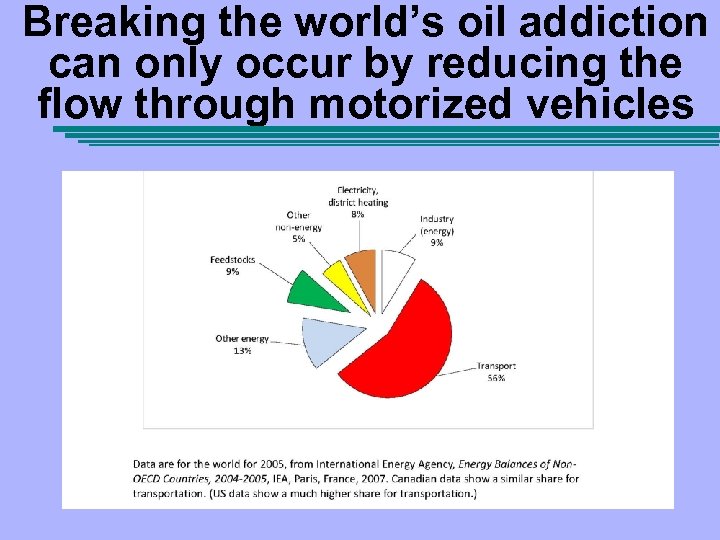
Breaking the world’s oil addiction can only occur by reducing the flow through motorized vehicles
The most positive transport revolution outcomes would draw on three proven paths to a postcarbon future: § GREATER use of electric motors, replacing internal combustion engines § GREATER use of rail and water, replacing road and air § GREATER use of collectively managed, replacing personally managed transport
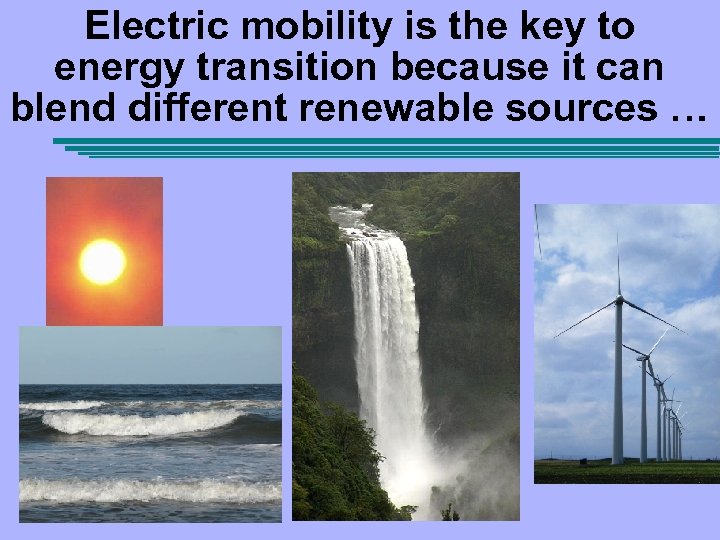
Electric mobility is the key to energy transition because it can blend different renewable sources …
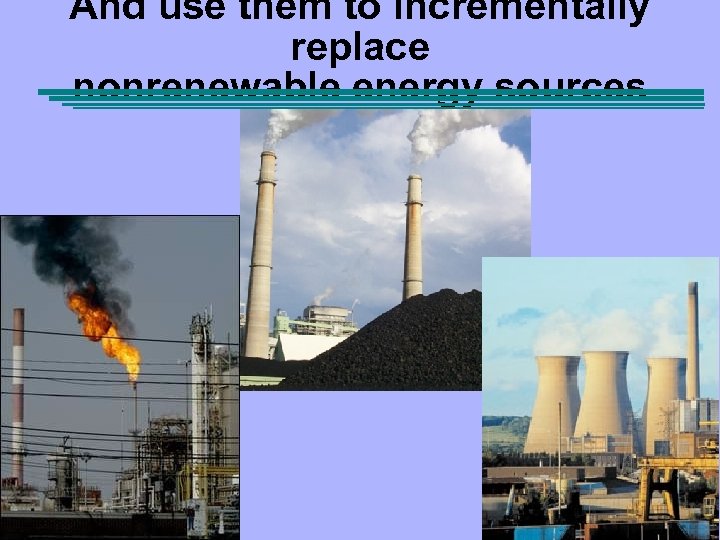
And use them to incrementally replace nonrenewable energy sources
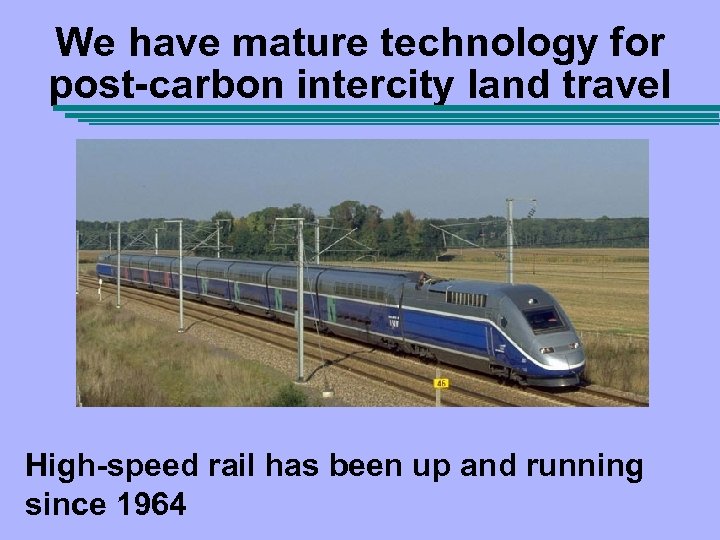
We have mature technology for post-carbon intercity land travel High-speed rail has been up and running since 1964
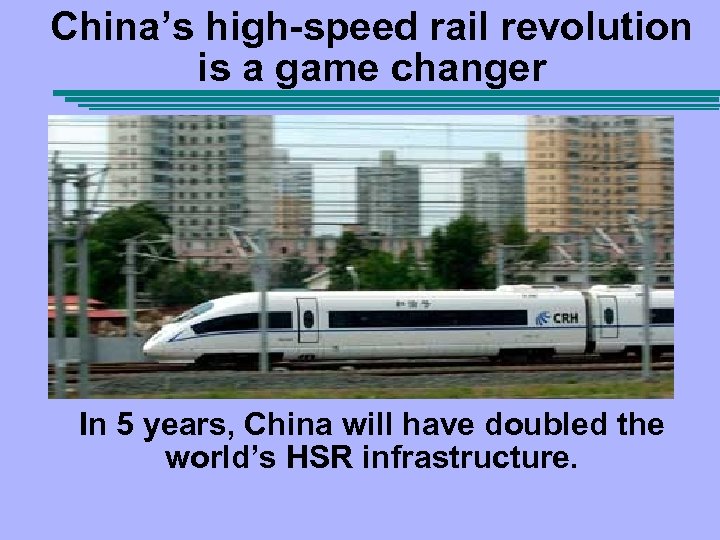
China’s high-speed rail revolution is a game changer In 5 years, China will have doubled the world’s HSR infrastructure.
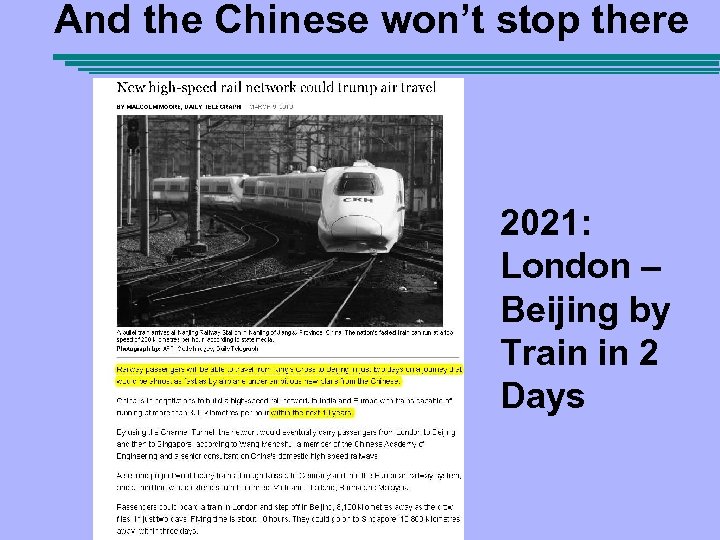
And the Chinese won’t stop there 2021: London – Beijing by Train in 2 Days
China’s HSR manufacturing capacity will cut bullet train costs by 50% or more.
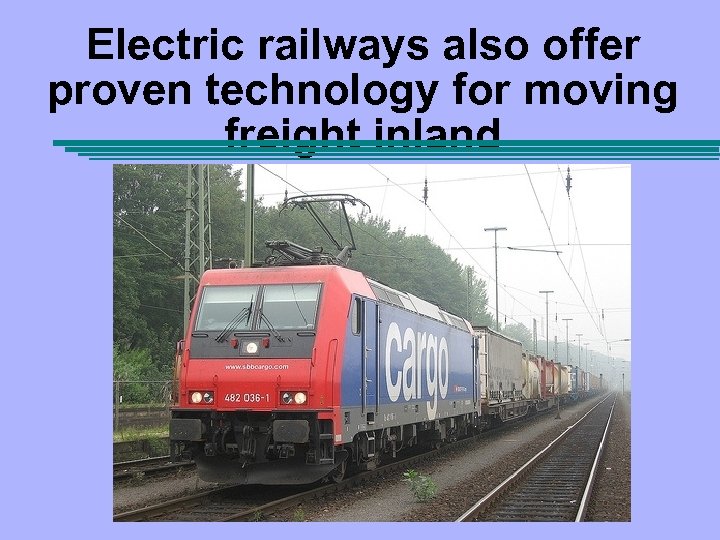
Electric railways also offer proven technology for moving freight inland
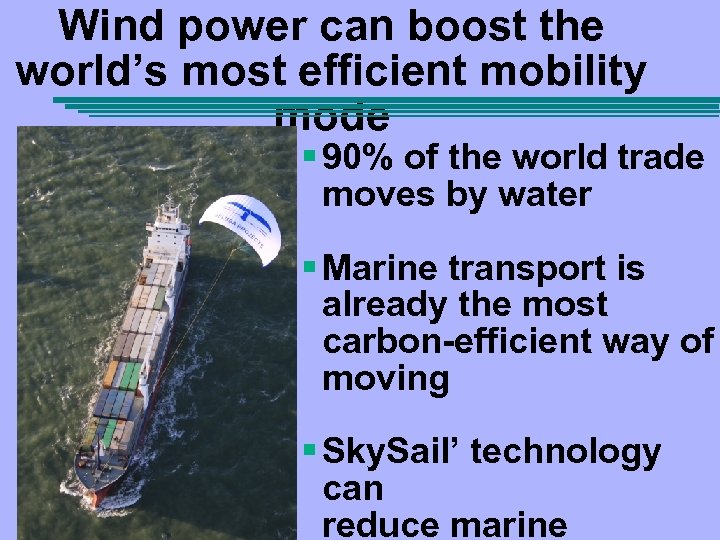
Wind power can boost the world’s most efficient mobility mode § 90% of the world trade moves by water § Marine transport is already the most carbon-efficient way of moving § Sky. Sail’ technology can reduce marine
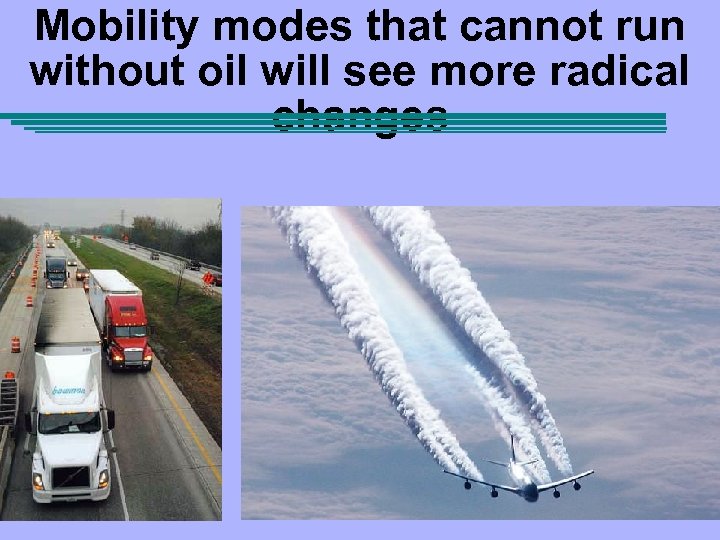
Mobility modes that cannot run without oil will see more radical changes
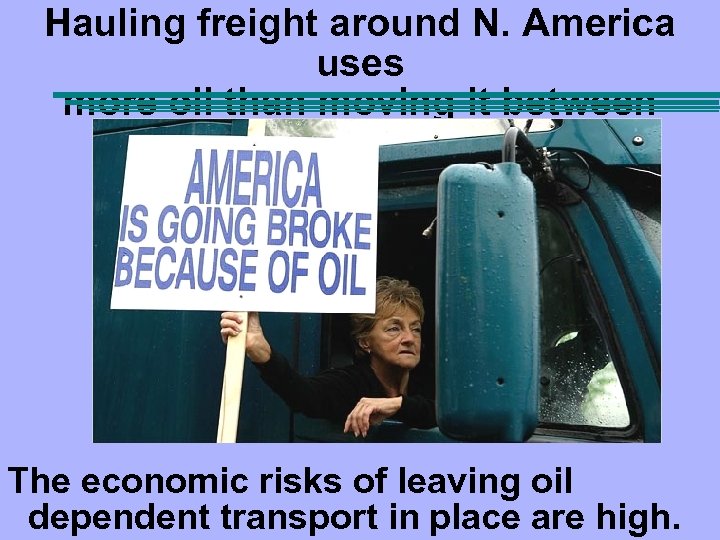
Hauling freight around N. America uses more oil than moving it between continents The economic risks of leaving oil dependent transport in place are high.
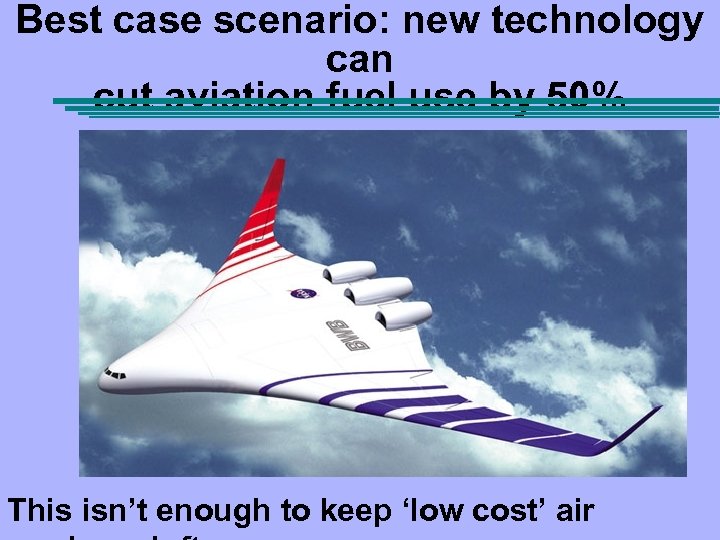
Best case scenario: new technology can cut aviation fuel use by 50% This isn’t enough to keep ‘low cost’ air
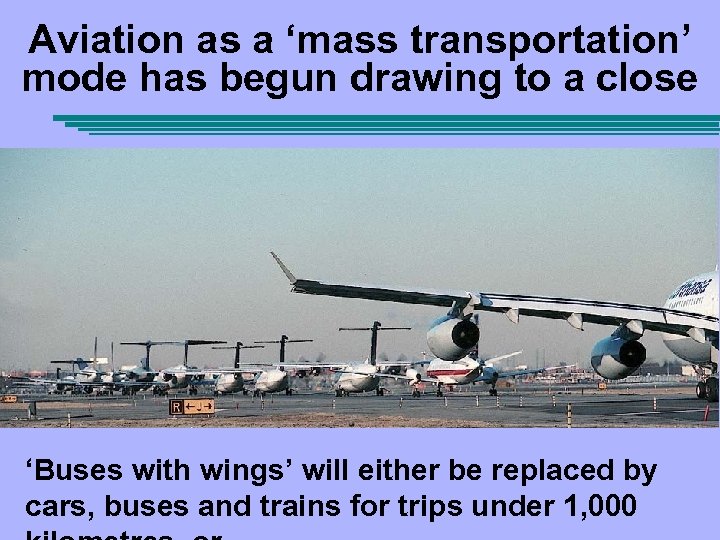
Aviation as a ‘mass transportation’ mode has begun drawing to a close ‘Buses with wings’ will either be replaced by cars, buses and trains for trips under 1, 000
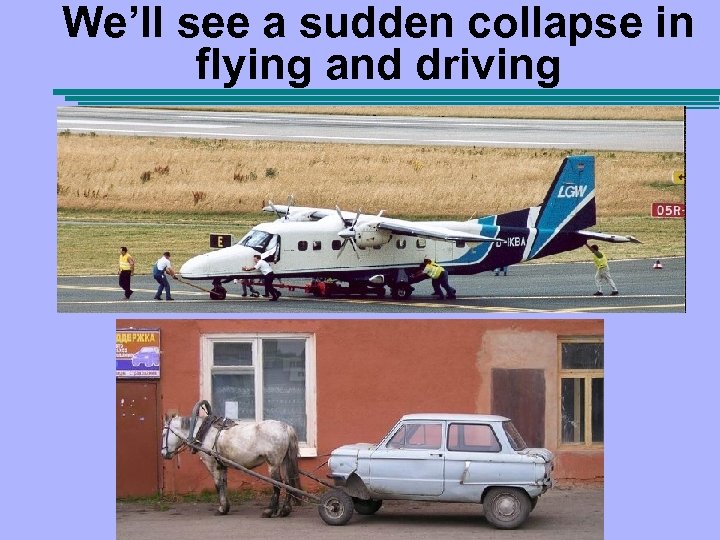
We’ll see a sudden collapse in flying and driving
How do we gear up for post carbon mobility? ü New plans ü New policy tools ü New leadership
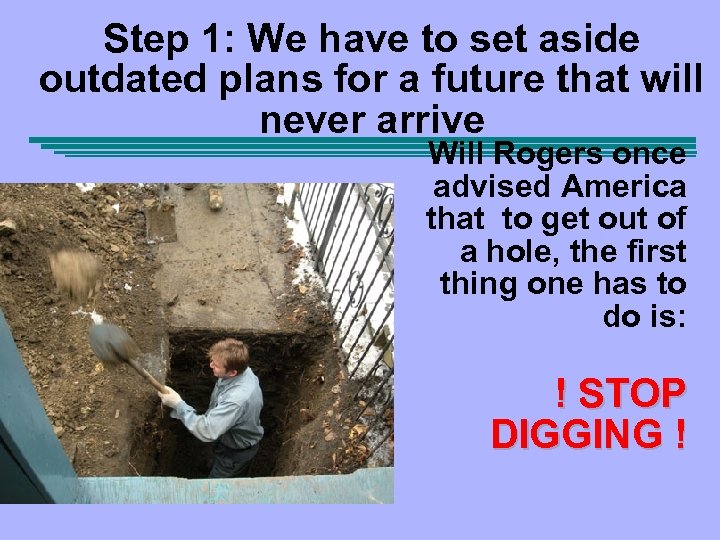
Step 1: We have to set aside outdated plans for a future that will never arrive Will Rogers once advised America that to get out of a hole, the first thing one has to do is: ! STOP DIGGING !
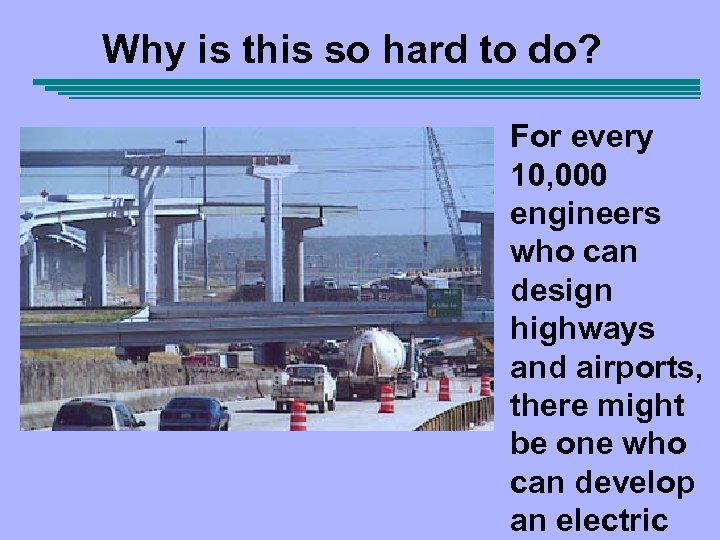
Why is this so hard to do? For every 10, 000 engineers who can design highways and airports, there might be one who can develop an electric
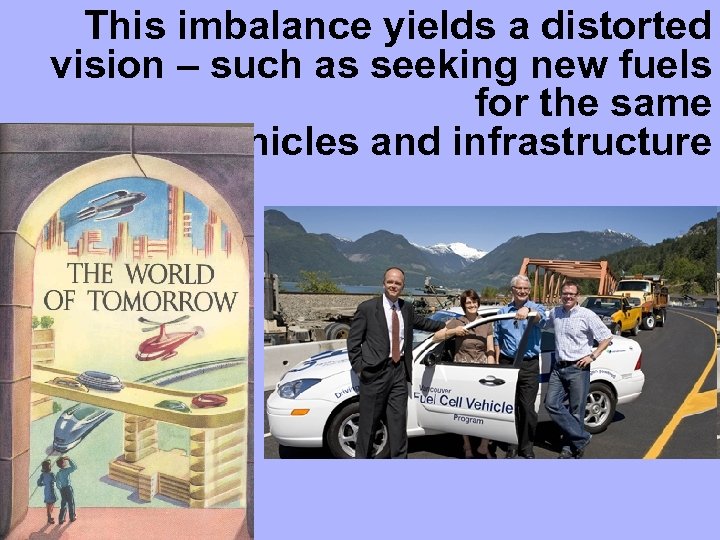
This imbalance yields a distorted vision – such as seeking new fuels for the same vehicles and infrastructure
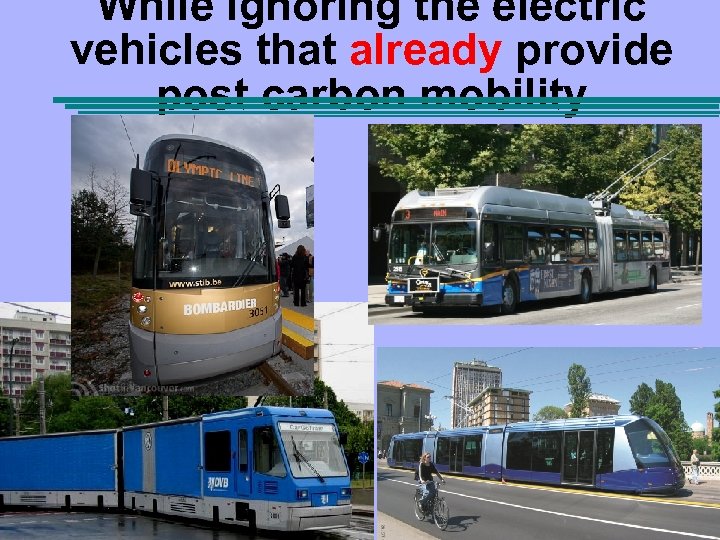
While ignoring the electric vehicles that already provide post carbon mobility
Step 2: Launch a planning process for sustainable transportation will help us use the remaining oil wisely 1. Set the key parameter - how much to reduce liquid petroleum fuel use in transport between start and end of the plan. 2. Estimate current transport activity and energy use. 3. Anticipate future available modes and energy use. 4. Develop a plausible balance of future modes that reflects desired activity levels and energy use.
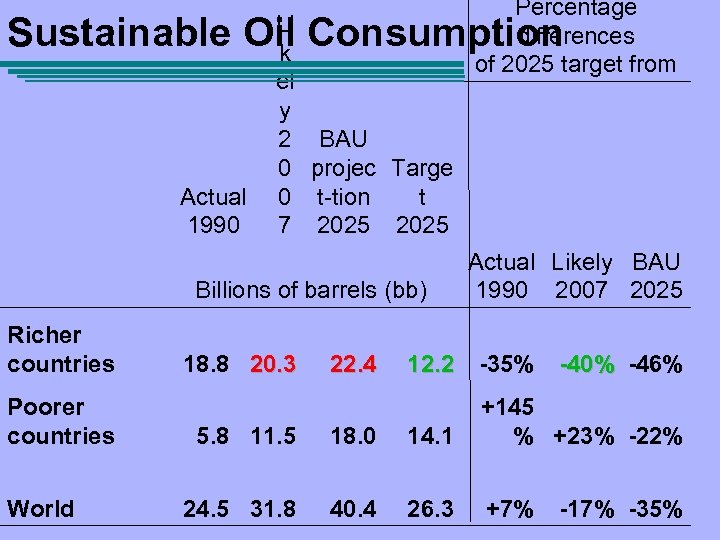
Percentage differences of 2025 target from Sustainable Oil Consumption Actual 1990 Li k el y 2 BAU 0 projec Targe 0 t-tion t 7 2025 Billions of barrels (bb) Richer countries Poorer countries World 18. 8 20. 3 22. 4 Actual Likely BAU 1990 2007 2025 12. 2 -35% -40% -46% 5. 8 11. 5 18. 0 14. 1 +145 % +23% -22% 24. 5 31. 8 40. 4 26. 3 +7% -17% -35%
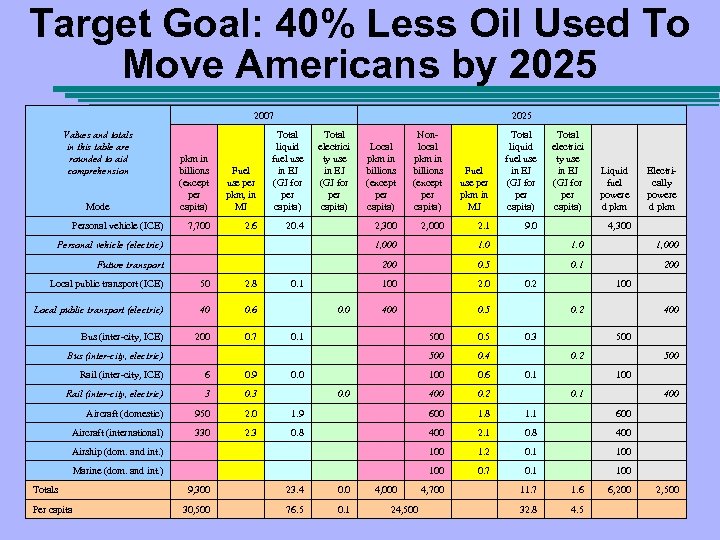
Target Goal: 40% Less Oil Used To Move Americans by 2025 2007 2025 pkm in billions (except per capita) Fuel use per pkm, in MJ Total liquid fuel use in EJ (GJ for per capita) Personal vehicle (ICE) 7, 700 2. 6 20. 4 2, 300 2, 000 2. 1 9. 0 4, 300 Personal vehicle (electric) 1, 000 1. 0 1, 000 Future transport 200 0. 5 0. 1 200 Local public transport (ICE) 50 2. 8 0. 1 100 2. 0 0. 2 100 Local public transport (electric) 40 0. 6 0. 0 400 0. 5 0. 2 400 Bus (inter-city, ICE) 200 0. 7 0. 1 500 0. 5 0. 3 500 Bus (inter-city, electric) 500 0. 4 0. 2 500 Rail (inter-city, ICE) 6 0. 9 0. 0 100 0. 6 0. 1 100 Rail (inter-city, electric) 3 0. 0 400 0. 2 0. 1 400 Aircraft (domestic) 950 2. 0 1. 9 600 1. 8 1. 1 600 Aircraft (international) 330 2. 3 0. 8 400 2. 1 0. 8 400 Airship (dom. and int. ) 100 1. 2 0. 1 100 Marine (dom. and int. ) 100 0. 7 0. 1 100 9, 300 23. 4 0. 0 4, 000 4, 700 11. 7 1. 6 6, 200 2, 500 30, 500 76. 5 0. 1 32. 8 4. 5 Values and totals in this table are rounded to aid comprehension Mode Totals Per capita Total electrici ty use in EJ (GJ for per capita) Local pkm in billions (except per capita) Nonlocal pkm in billions (except per capita) 24, 500 Fuel use per pkm in MJ Total liquid fuel use in EJ (GJ for per capita) Total electrici ty use in EJ (GJ for per capita) Liquid fuel powere d pkm Electrically powere d pkm
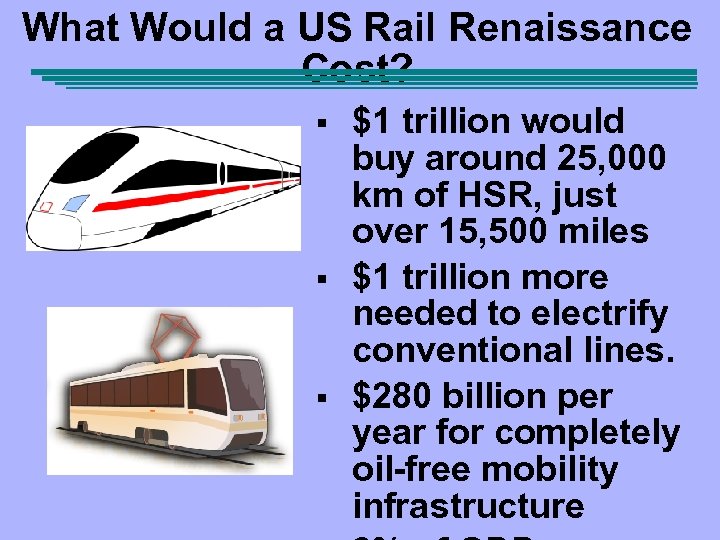
What Would a US Rail Renaissance Cost? § § § $1 trillion would buy around 25, 000 km of HSR, just over 15, 500 miles $1 trillion more needed to electrify conventional lines. $280 billion per year for completely oil-free mobility infrastructure
Step 3: Draw up the policy tools for implementing post-carbon mobility and use them § Introduce fiscal options that move beyond ‘road socialism’ § Enable public-private partnerships through infrastructure condominiums § Encourage carbon sunsets through
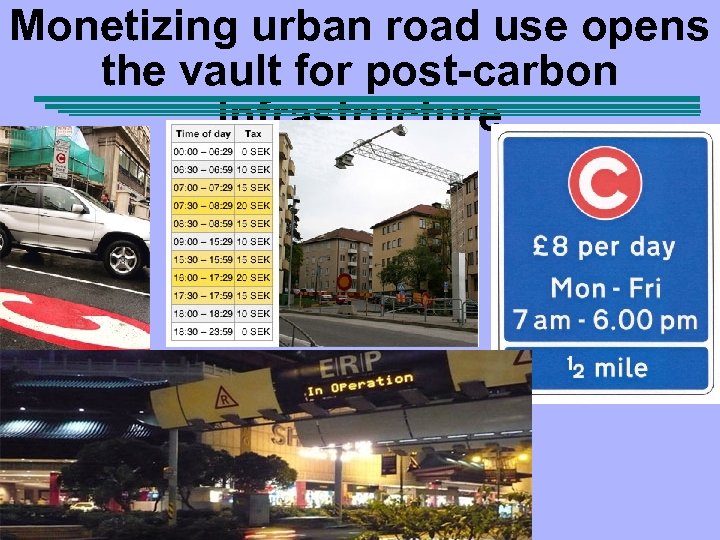
Monetizing urban road use opens the vault for post-carbon infrastructure
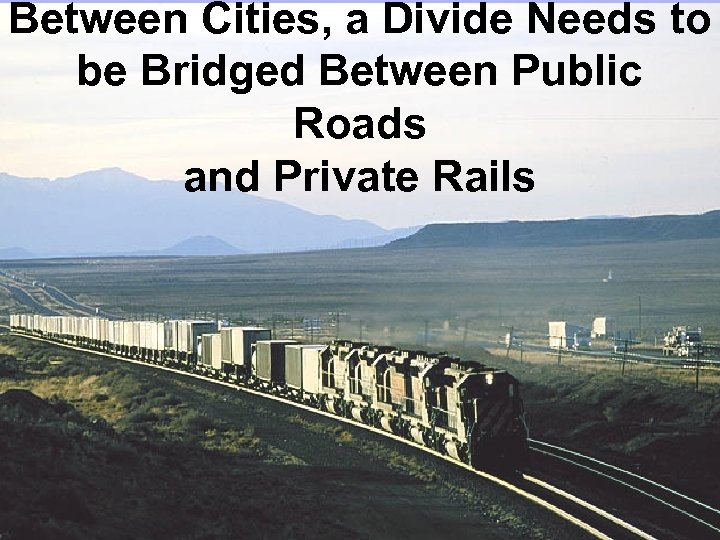
Between Cities, a Divide Needs to be Bridged Between Public Roads and Private Rails
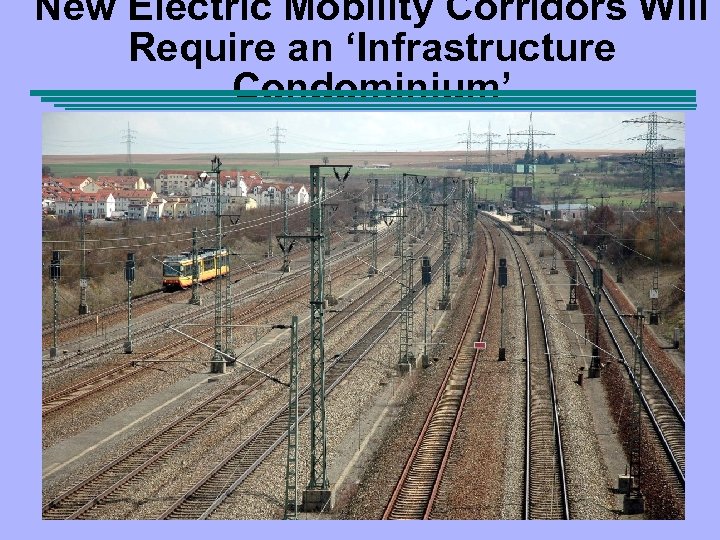
New Electric Mobility Corridors Will Require an ‘Infrastructure Condominium’
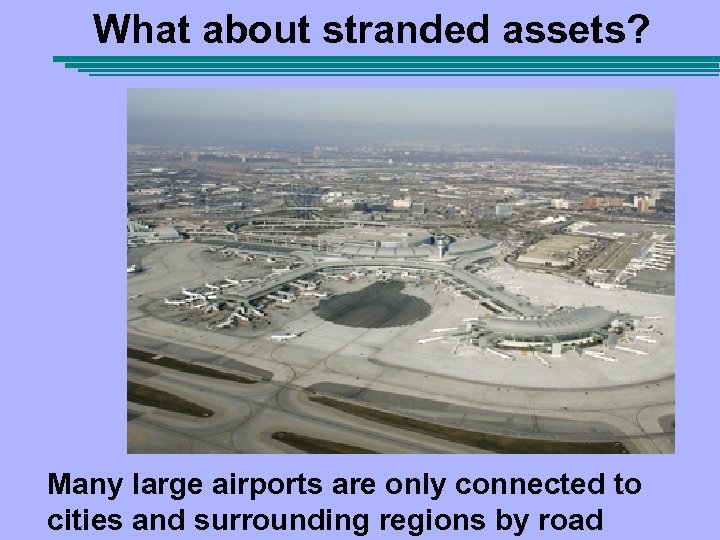
What about stranded assets? Many large airports are only connected to cities and surrounding regions by road
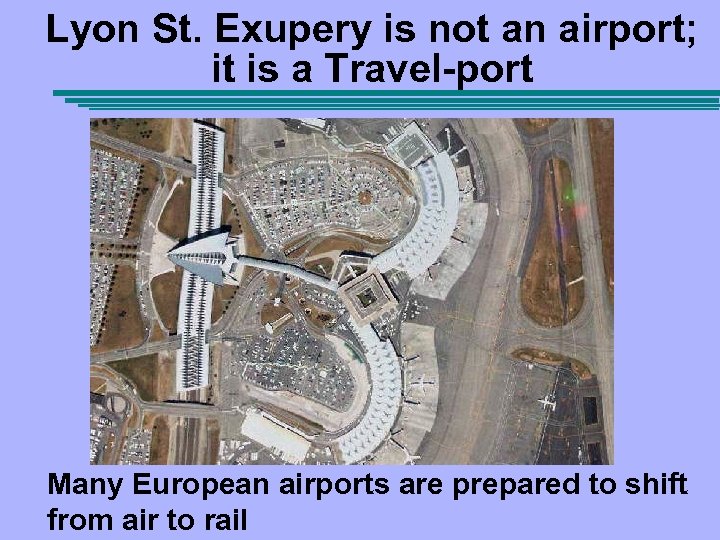
Lyon St. Exupery is not an airport; it is a Travel-port Many European airports are prepared to shift from air to rail
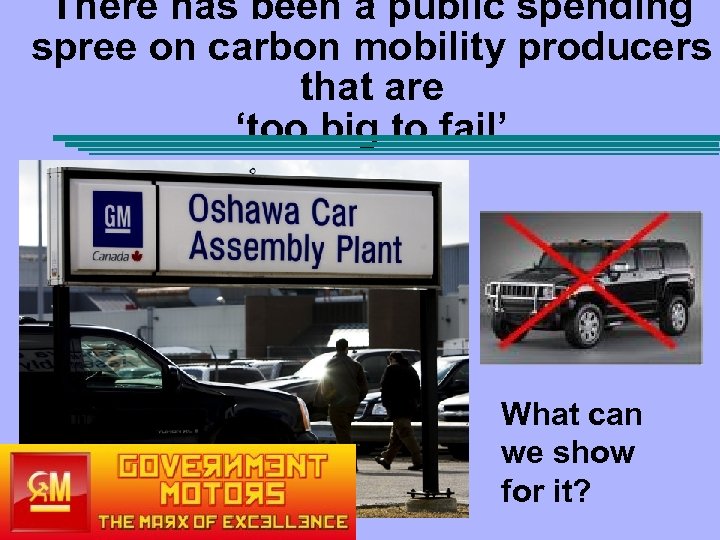
There has been a public spending spree on carbon mobility producers that are ‘too big to fail’ What can we show for it?
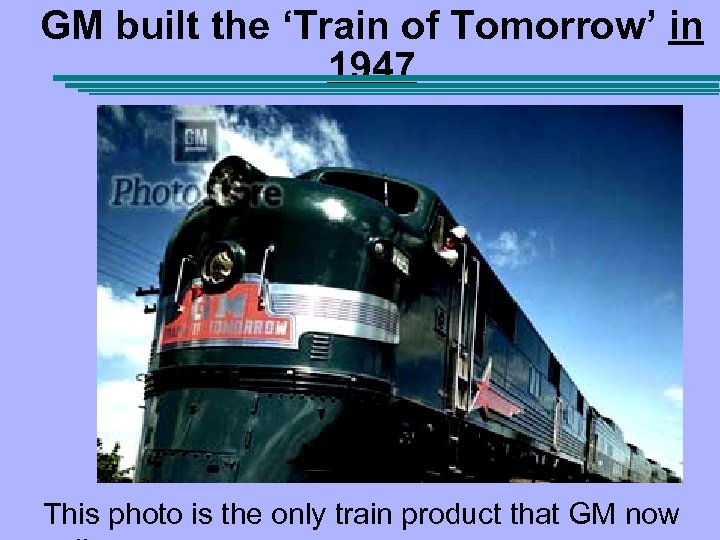
GM built the ‘Train of Tomorrow’ in 1947 This photo is the only train product that GM now
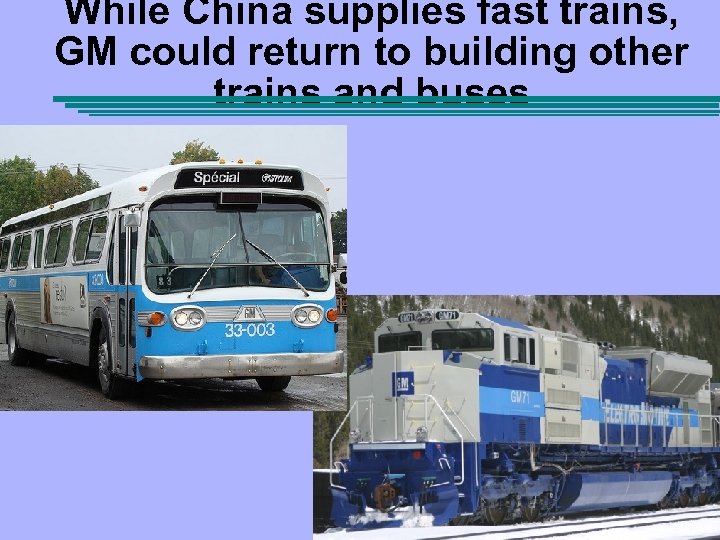
While China supplies fast trains, GM could return to building other trains and buses
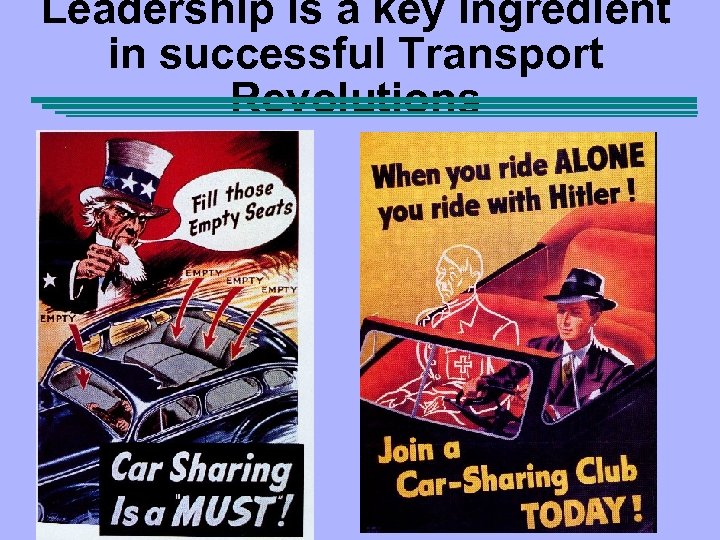
Leadership is a key ingredient in successful Transport Revolutions
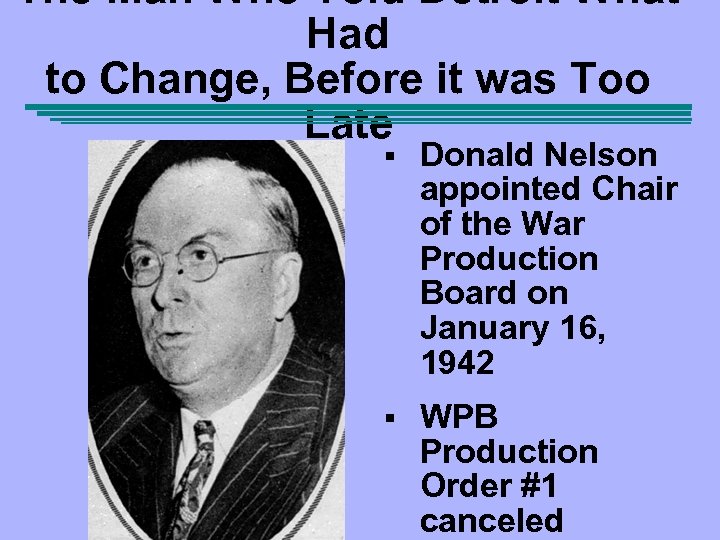
The Man Who Told Detroit What Had to Change, Before it was Too Late § Donald Nelson appointed Chair of the War Production Board on January 16, 1942 § WPB Production Order #1 canceled
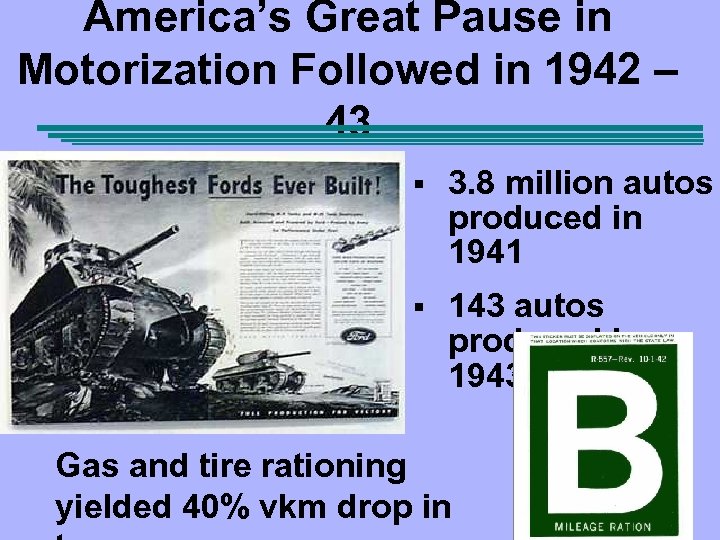
America’s Great Pause in Motorization Followed in 1942 – 43 § 3. 8 million autos produced in 1941 § 143 autos produced in 1943 Gas and tire rationing yielded 40% vkm drop in
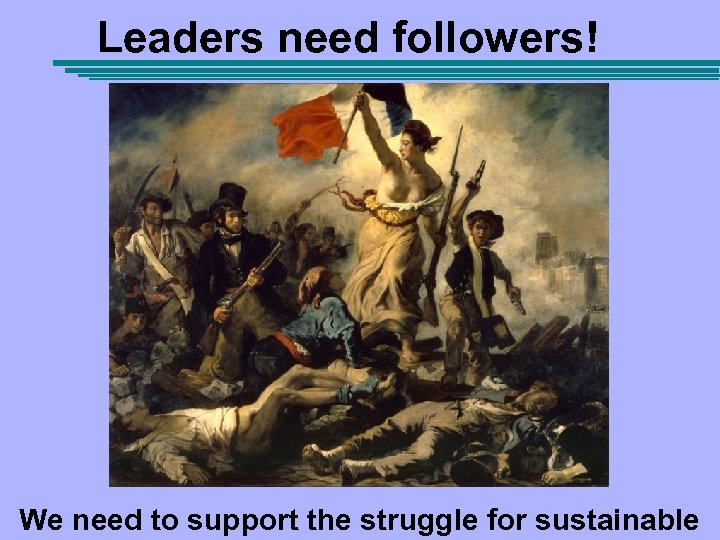
Leaders need followers! We need to support the struggle for sustainable
To find out more : For further information on post-carbon mobility, visit: www. transportrevolution s. info
Скачать презентацию Preparing for Post-Carbon Mobility How to Make the
42fe127b5743196517b36bbe5a28fa4e.ppt