


 Скачать презентацию Prepared Svetlana Shurko Karina Matusevich Julia Mekto
хвостик 3.pptx
- Количество слайдов: 18
 Prepared : Svetlana Shurko Karina Matusevich Julia Mekto
 A tag question is a special construction in English. It is a • A tag question is a special construction in English. It is a statement followed by a ministatement followed question. whole sentence question. The whole sentence is is a a "tag question", and the mini"tag question", the end is called a question at and the mini"question tag". question at the end is called a "question tag".
 A "tag" is something small that we add to something larger. For example, the little piece of cloth added to a shirt showing size or washing instructions is a tag. We use tag questions at the end of statements to ask for confirmation. They mean something like: "Am I right? " or "Do you agree? " They are very common in English.
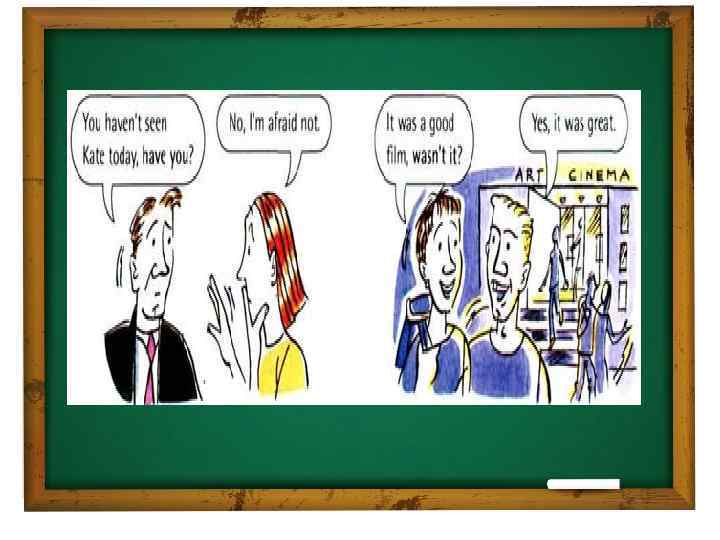
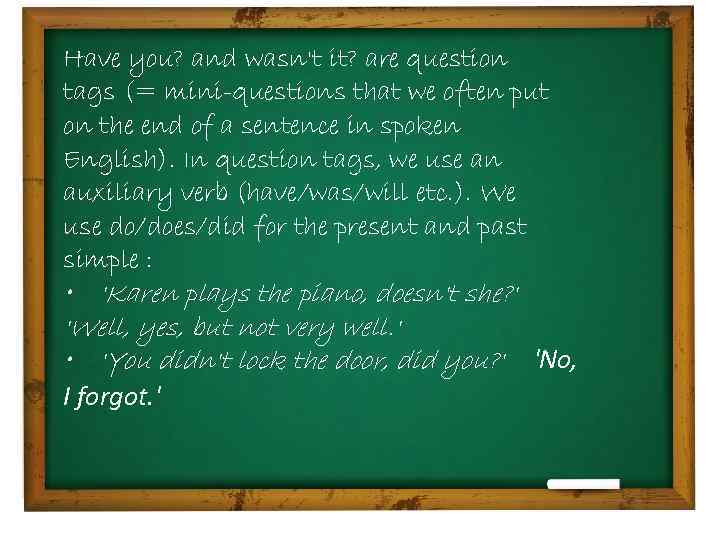 Have you? and wasn't it? are question tags (= mini-questions that we often put on the end of a sentence in spoken English). In question tags, we use an auxiliary verb (have/was/will etc. ). We use do/does/did for the present and past simple : • 'Karen plays the piano, doesn't she? ' 'Well, yes, but not very well. ' • 'You didn't lock the door, did you? ' 'No, I forgot. '
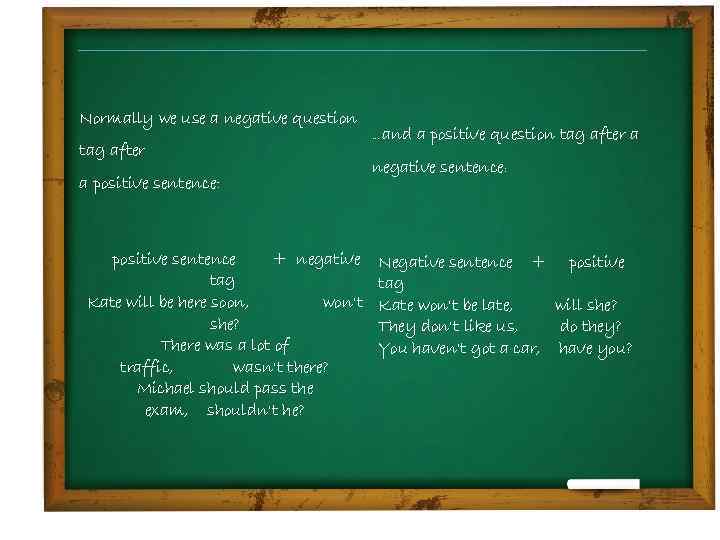 Normally we use a negative question tag after a positive sentence: positive sentence + negative tag Kate will be here soon, won't she? There was a lot of traffic, wasn't there? Michael should pass the exam, shouldn't he? . . . and a positive question tag after a negative sentence: Negative sentence + positive tag Kate won't be late, will she? They don't like us, do they? You haven't got a car, have you?
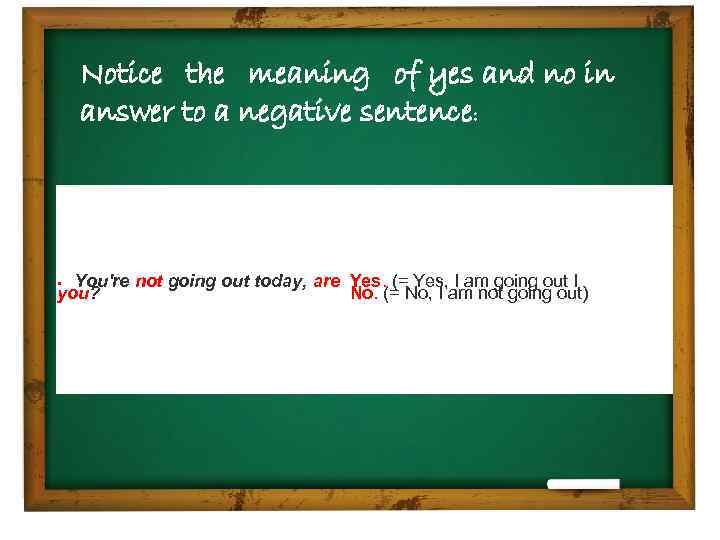 Notice the meaning of yes and no in answer to a negative sentence: You're not going out today, are Yes. (= Yes, I am going out I you? No. (= No, I am not going out) •
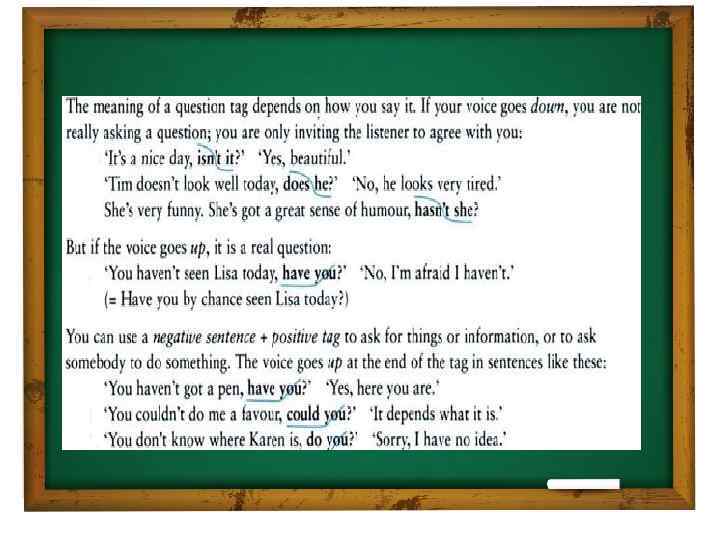
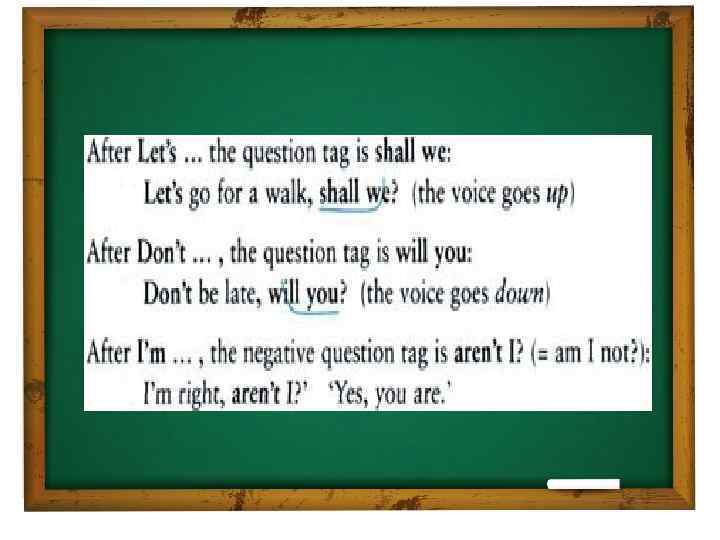
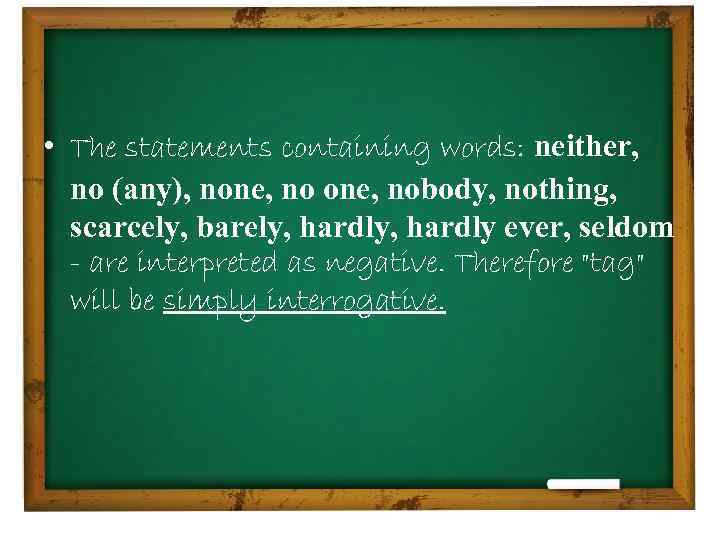 • The statements containing words: neither, no (any), none, nobody, nothing, scarcely, barely, hardly ever, seldom - are interpreted as negative. Therefore "tag" will be simply interrogative.
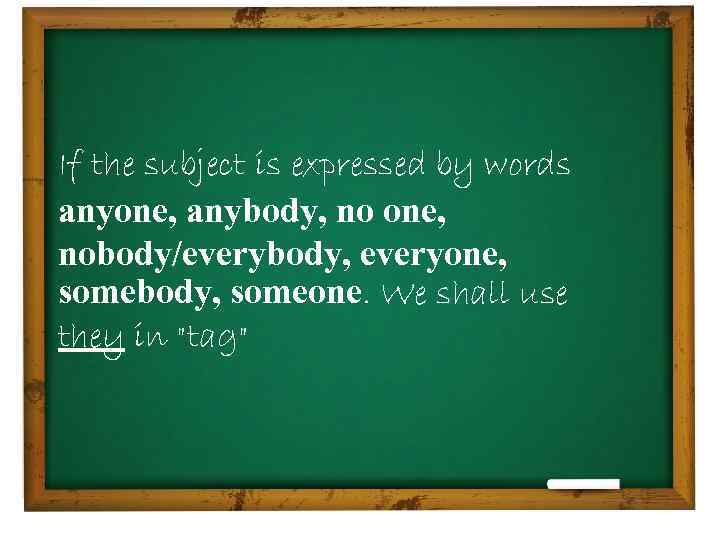 If the subject is expressed by words anyone, anybody, no one, nobody/everybody, everyone, somebody, someone. We shall use they in "tag"
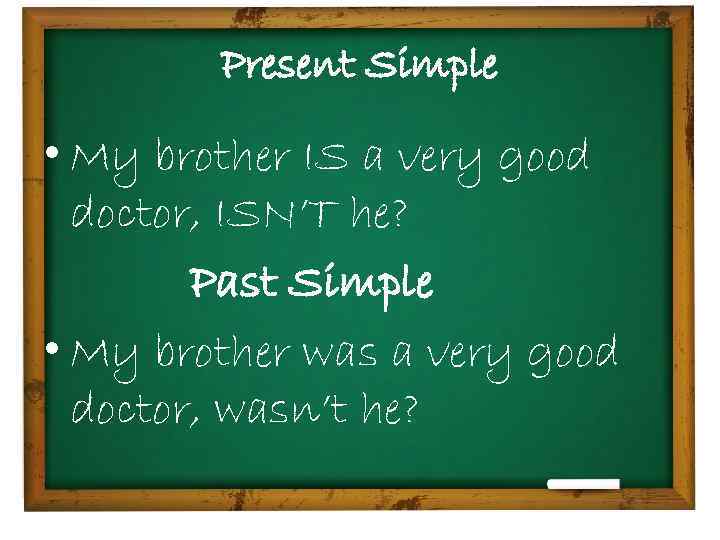 Present Simple • My brother IS a very good doctor, ISN’T he? Past Simple • My brother was a very good doctor, wasn’t he?
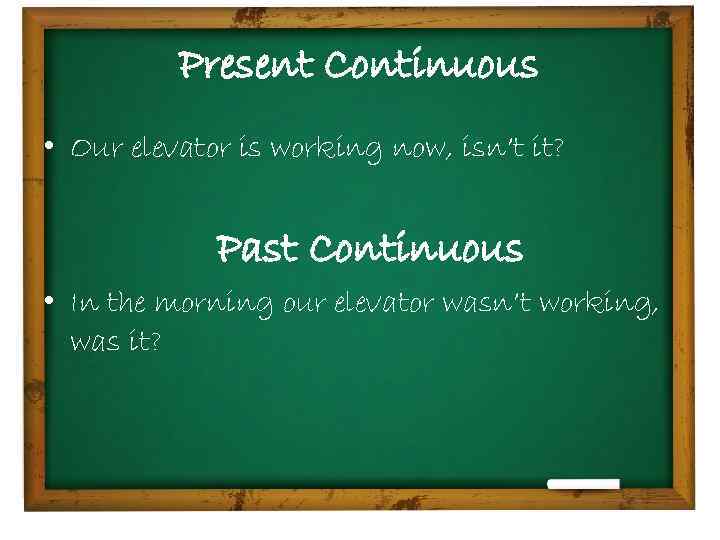 Present Continuous • Our elevator is working now, isn’t it? Past Continuous • In the morning our elevator wasn’t working, was it?
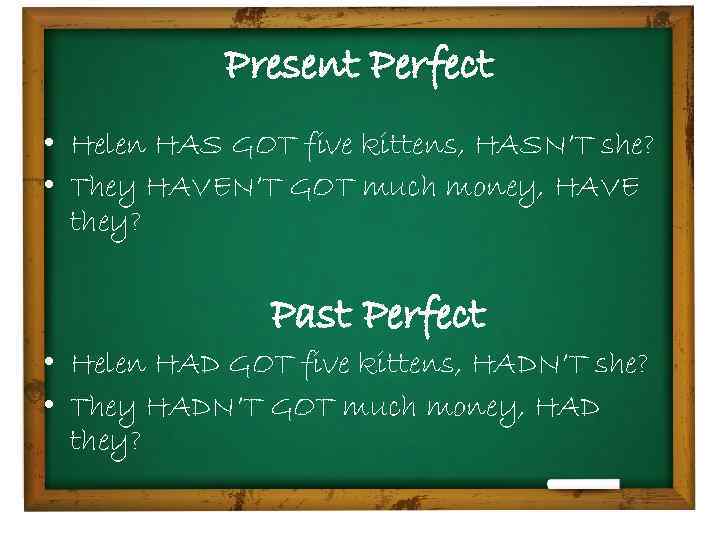 Present Perfect • Helen HAS GOT five kittens, HASN’T she? • They HAVEN’T GOT much money, HAVE they? Past Perfect • Helen HAD GOT five kittens, HADN’T she? • They HADN’T GOT much money, HAD they?
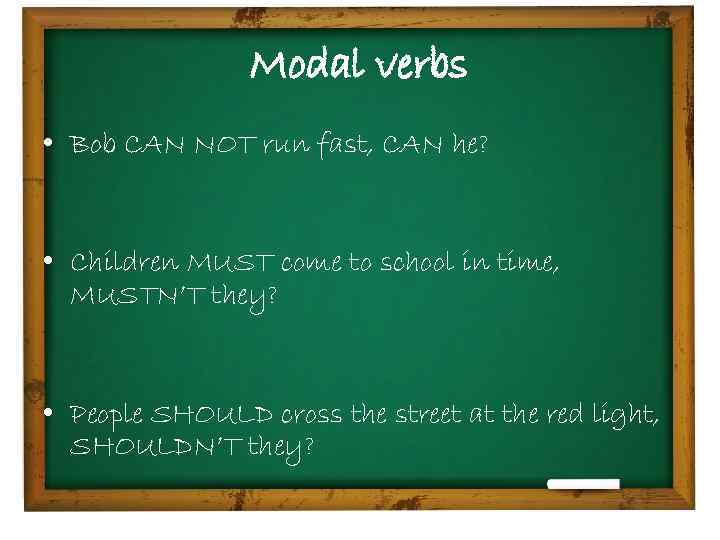 Modal verbs • Bob CAN NOT run fast, CAN he? • Children MUST come to school in time, MUSTN’T they? • People SHOULD cross the street at the red light, SHOULDN’T they?
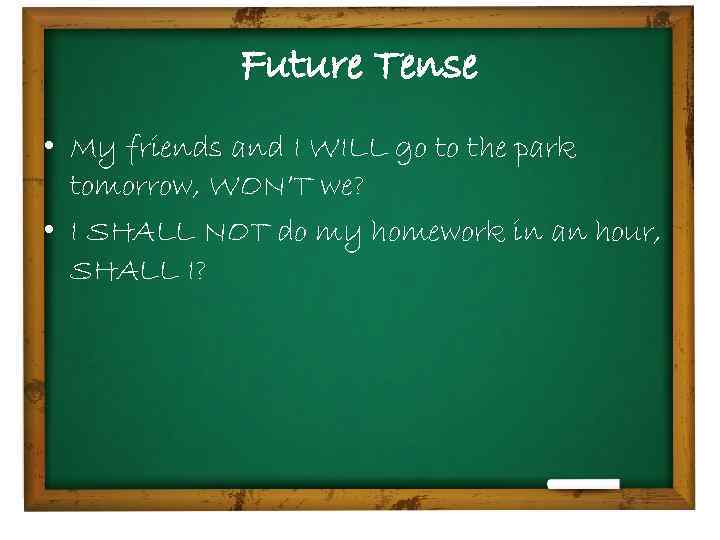 Future Tense • My friends and I WILL go to the park tomorrow, WON’T we? • I SHALL NOT do my homework in an hour, SHALL I?
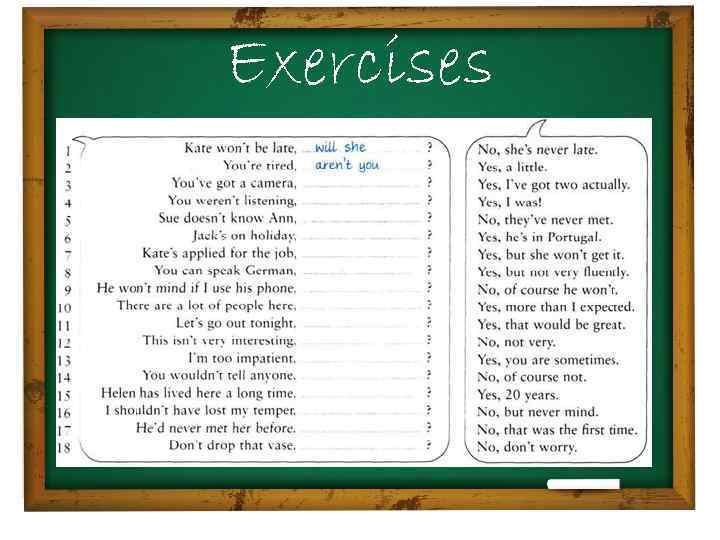 Exercises
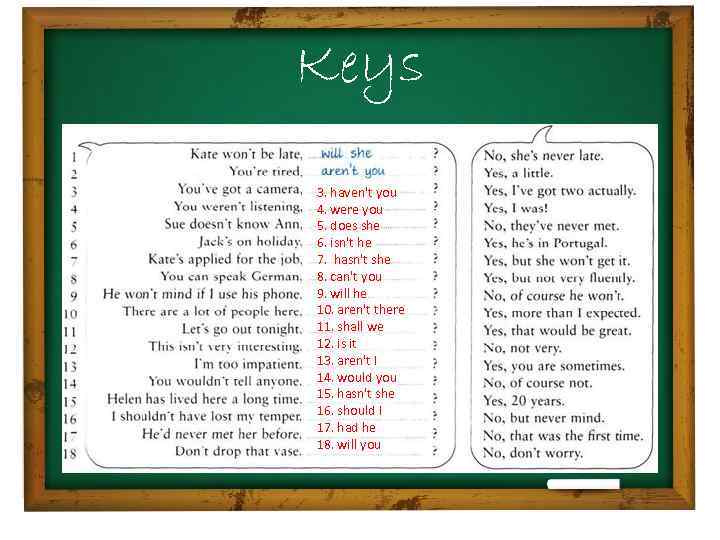 Keys 3. haven't you 4. were you 5. does she 6. isn't he 7. hasn't she 8. can't you 9. will he 10. aren't there 11. shall we 12. is it 13. aren't I 14. would you 15. hasn't she 16. should I 17. had he 18. will you