


 Скачать презентацию Preparation for Jesus Messiah Son of God 1
f6ceb8b81cecdd80063fb033acfbaf22.ppt
- Количество слайдов: 18
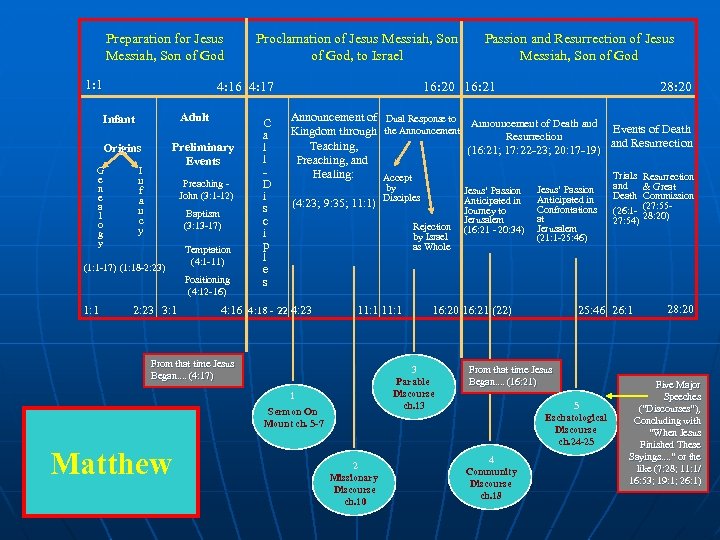 Preparation for Jesus Messiah, Son of God 1: 1 4: 16 4: 17 Adult Infant Preliminary Events Origins G e n e a l o g y I n f a n c y Preaching John (3: 1 -12) Baptism (3: 13 -17) (1: 18 -2: 23) Temptation (4: 1 -11) Positioning (4: 12 -16) 1: 1 Proclamation of Jesus Messiah, Son of God, to Israel 2: 23 3: 1 C a l l D i s c i p l e s 16: 20 16: 21 28: 20 Announcement of Dual Response to Announcement of Death and Events of Death Kingdom through the Announcement Resurrection and Resurrection Teaching, (16: 21; 17: 22 -23; 20: 17 -19) Preaching, and Healing: Trials Resurrection Accept (4: 23; 9: 35; 11: 1) by Disciples Rejection by Israel as Whole 4: 16 4: 18 - 22 4: 23 11: 1 From that time Jesus Began. . (4: 17) Sermon On Mount ch. 5 -7 2 Missionary Discourse ch. 10 Jesus’ Passion Anticipated in Journey to Jerusalem (16: 21 - 20: 34) Jesus’ Passion Anticipated in Confrontations at Jerusalem (21: 1 -25: 46) 16: 20 16: 21 (22) 3 Parable Discourse ch. 13 1 Matthew Passion and Resurrection of Jesus Messiah, Son of God 25: 46 26: 1 From that time Jesus Began. . (16: 21) 5 Eschatological Discourse ch. 24 -25 4 Community Discourse ch. 18 and & Great Death Commission (27: 55(26: 1 - 28: 20) 27: 54) 28: 20 Five Major Speeches (“Discourses”), Concluding with “When Jesus Finished These Sayings. . ” or the like (7: 28; 11: 1/ 16: 53; 19: 1; 26: 1)
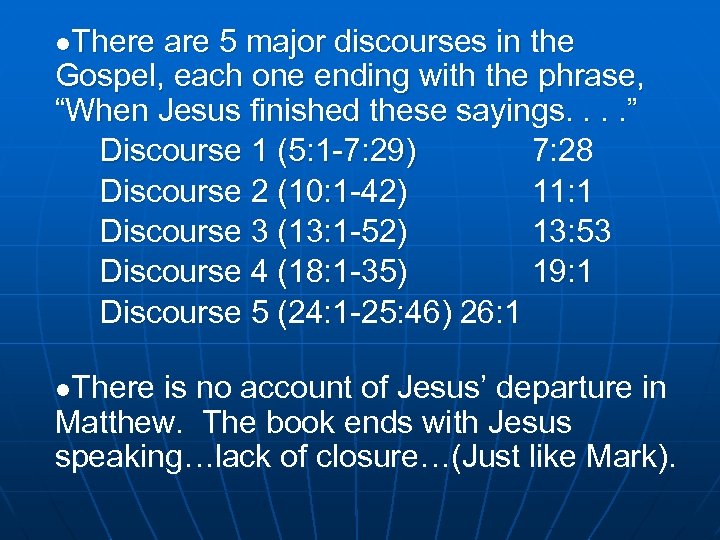 ●There are 5 major discourses in the Gospel, each one ending with the phrase, “When Jesus finished these sayings. . ” Discourse 1 (5: 1 -7: 29) 7: 28 Discourse 2 (10: 1 -42) 11: 1 Discourse 3 (13: 1 -52) 13: 53 Discourse 4 (18: 1 -35) 19: 1 Discourse 5 (24: 1 -25: 46) 26: 1 ●There is no account of Jesus’ departure in Matthew. The book ends with Jesus speaking…lack of closure…(Just like Mark).
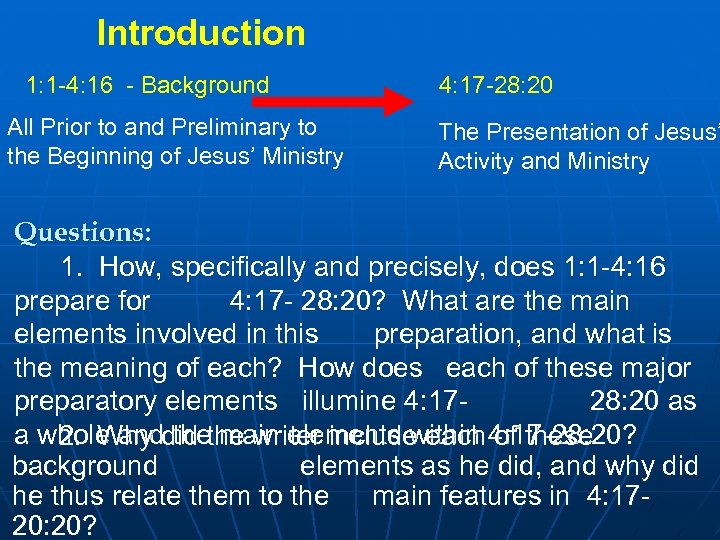 Introduction 1: 1 -4: 16 - Background All Prior to and Preliminary to the Beginning of Jesus’ Ministry 4: 17 -28: 20 The Presentation of Jesus’ Activity and Ministry Questions: 1. How, specifically and precisely, does 1: 1 -4: 16 prepare for 4: 17 - 28: 20? What are the main elements involved in this preparation, and what is the meaning of each? How does each of these major preparatory elements illumine 4: 1728: 20 as a whole anddid the writer include each 4: 17 -28: 20? 2. Why the main elements within of these background elements as he did, and why did he thus relate them to the main features in 4: 1720: 20?
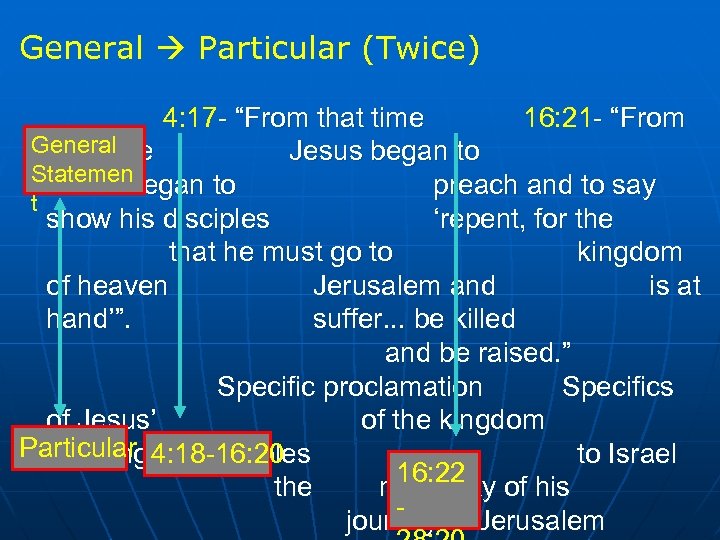 General Particular (Twice) 4: 17 - “From that time 16: 21 - “From General that time Jesus began to Statemen Jesus began to preach and to say t show his disciples ‘repent, for the that he must go to kingdom of heaven Jerusalem and is at hand’”. suffer. . . be killed and be raised. ” Specific proclamation Specifics of Jesus’ of the kingdom Particular 4: 18 -16: 20 showing the disciples to Israel 16: 22 the necessity of his journey to Jerusalem
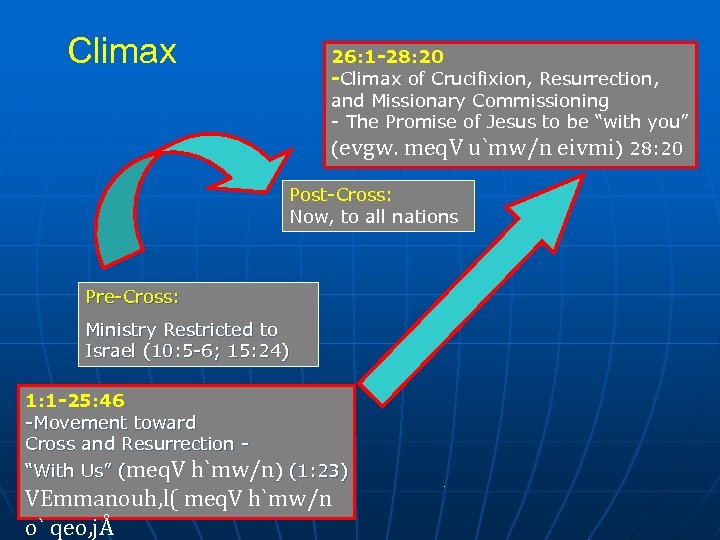 Climax 26: 1 -28: 20 -Climax of Crucifixion, Resurrection, and Missionary Commissioning - The Promise of Jesus to be “with you” (evgw. meq. V u`mw/n eivmi) 28: 20 Post-Cross: Now, to all nations Pre-Cross: Ministry Restricted to Israel (10: 5 -6; 15: 24) 1: 1 -25: 46 -Movement toward Cross and Resurrection “With Us” (meq. V h`mw/n) (1: 23) VEmmanouh, l( meq. V h`mw/n o` qeo, jÅ
 Questions: 1. In what specific ways does Matthew reach its climax in Chs. 26 -28? How does this climactic development (including the ultimate climax: the missionary commissioning) illumine both the passion/resurrection narrative and the Gospel as a whole? What is the meaning of this climactic bracketing around them of “with-ness? ” What is the meaning of the movement from restrictive ministry to Israel throughout the Gospel to the climactic breaking out of this restriction toward all-inclusive, word-wide mission? 2. Why did Matthew develop the story in this way toward this kind of climax in the cross, resurrection, and missionary commissioning? Why this bracketing around them of “with-ness? ” Why did he thus link
 Recurring Words/Themes 1. king, kingdom (1: 6; 2: 2, 9; 3: 2; 4: 23; 5: 19 -20; 6: 10, 33; 7: 21; 8: 11; 9: 35; 11: 11, 12; 12: 25, 26, 28; 13: 17, 19, 24, 31, 33, 38, 41, 43 -45, 47, 52; 16: 19, 28; 17: 25; 18: 1, 3 -4, 23; 19: 12, 14, 23 -24; 20: 1, 21; 21: 31, 43; 22: 2; 23: 13; 24: 14; 25: 1, 40; 26: 29; 27: 11, 29, 37, 42) 2. fulfil, fulfillment (1: 22; 2: 15, 17, 23; 3: 15; 4: 14; 5: 17; 8: 17; 12: 17; 13: 35, 48; 21: 4; 23: 32; 26: 54, 56; 27: 9) 3. Son of David (1: 1, 4, 17, 20; 9: 27; 12: 23; 15: 22; 20: 30 -31; 21: 9, 15; 22: 42, 45) 4. Son of Man (8: 20; 9: 6; 10: 23; 11: 19; 12: 8, 32, 40; 13: 37, 41; 16: 13, 27 -28; 17: 9, 12, 22; 18: 11; 19: 28; 20: 18, 28; 24: 27, 30, 37, 39, 44; 25: 31; 26: 2,
 Matthew Comparison Jesus Expectations for the disciples This recurring comparison involves several elements: 1. Comparison between the mission of Jesus and the mission of the disciples: a. Geographical sphere of ministry. The geographical sphere of ministry both for Jesus (3: 13; 4: 12, 23) and for the disciples (28: 16) is Galilee.
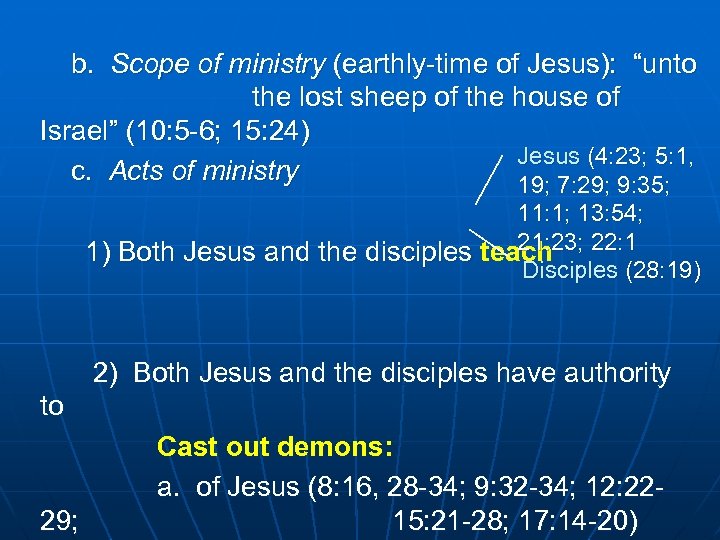 b. Scope of ministry (earthly-time of Jesus): “unto the lost sheep of the house of Israel” (10: 5 -6; 15: 24) Jesus (4: 23; 5: 1, c. Acts of ministry 19; 7: 29; 9: 35; 11: 1; 13: 54; 21: 23; 1) Both Jesus and the disciples teach 22: 1 Disciples (28: 19) 2) Both Jesus and the disciples have authority to 29; Cast out demons: a. of Jesus (8: 16, 28 -34; 9: 32 -34; 12: 2215: 21 -28; 17: 14 -20)
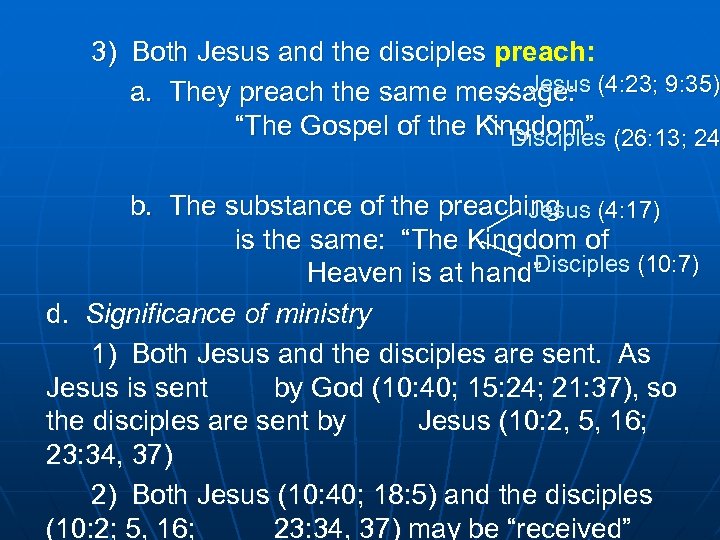 3) Both Jesus and the disciples preach: Jesus a. They preach the same message: (4: 23; 9: 35) “The Gospel of the Kingdom” (26: 13; 24 Disciples b. The substance of the preaching (4: 17) Jesus is the same: “The Kingdom of Disciples (10: 7) Heaven is at hand” d. Significance of ministry 1) Both Jesus and the disciples are sent. As Jesus is sent by God (10: 40; 15: 24; 21: 37), so the disciples are sent by Jesus (10: 2, 5, 16; 23: 34, 37) 2) Both Jesus (10: 40; 18: 5) and the disciples (10: 2; 5, 16; 23: 34, 37) may be “received”
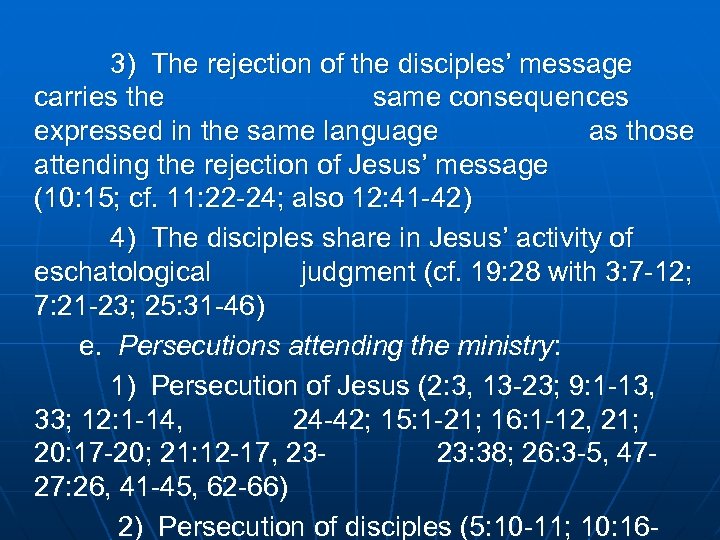 3) The rejection of the disciples’ message carries the same consequences expressed in the same language as those attending the rejection of Jesus’ message (10: 15; cf. 11: 22 -24; also 12: 41 -42) 4) The disciples share in Jesus’ activity of eschatological judgment (cf. 19: 28 with 3: 7 -12; 7: 21 -23; 25: 31 -46) e. Persecutions attending the ministry: 1) Persecution of Jesus (2: 3, 13 -23; 9: 1 -13, 33; 12: 1 -14, 24 -42; 15: 1 -21; 16: 1 -12, 21; 20: 17 -20; 21: 12 -17, 2323: 38; 26: 3 -5, 4727: 26, 41 -45, 62 -66) 2) Persecution of disciples (5: 10 -11; 10: 16 -
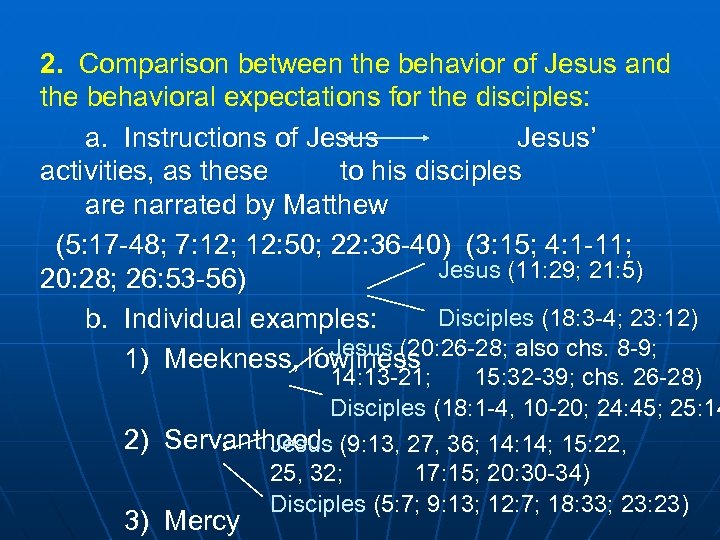 2. Comparison between the behavior of Jesus and the behavioral expectations for the disciples: a. Instructions of Jesus’ activities, as these to his disciples are narrated by Matthew (5: 17 -48; 7: 12; 12: 50; 22: 36 -40) (3: 15; 4: 1 -11; Jesus (11: 29; 21: 5) 20: 28; 26: 53 -56) Disciples (18: 3 -4; 23: 12) b. Individual examples: Jesus (20: 26 -28; also chs. 8 -9; 1) Meekness, lowliness 14: 13 -21; 15: 32 -39; chs. 26 -28) Disciples (18: 1 -4, 10 -20; 24: 45; 25: 14 2) Servanthood (9: 13, 27, 36; 14: 14; 15: 22, Jesus 25, 32; 17: 15; 20: 30 -34) Disciples (5: 7; 9: 13; 12: 7; 18: 33; 23: 23) 3) Mercy
 Questions: 1. What is the meaning of each of these points of similarity between Jesus and the disciples? How do these points of similarity relate to one another and illumine one another? What is the meaning of this recurrence of comparison, i. e. , how do the individual occurrences illumine one another and mark development throughout the book? 2. Why did the writer wish to present and emphasize, as he has, these similarities between Jesus and the expectations for the disciples? 3. Implications?
 Jewish Audience a. Several references to the fulfillment of O. T. prophecy (1: 22 -23; 2: 5, 6, 15, 18; 3: 3; 4: 15; 8: 17; 11: 10; 12: 17 -21; 13: 14 -15, 35; 15: 7 -9; 21: 4 -5, 16; 21: 42; 26: 54) b. Repeated references to O. T. Characters (1: 117, 20; 2: 17; 3: 9; 8: 4, 11, 17; 9: 27; 11: 14; 12: 3, 15, 23, 40, 41, 42; 13: 14; 15: 7, 22; 16: 4, 14; 17: 3 -4, 10 -11; 19: 7 -8; 20: 30 -31; 21: 9, 15; 22: 23, 32, 45; 23: 2, 35) c. Concern with Genealogy (1: 1 -17)
 Use of Son-ship language in the comparison between Jesus and the disciples. Both Jesus and the disciples are “sons” of God and “know” God as Father. Although the Matthean Jesus consistently differentiates between “my father” and “your father”, the fact remains that both Jesus and the disciples are identified, respectively, as “son” and “sons” of “the father”. a. of Jesus: 1) References to Jesus as “Son” (of God) (1: 21, 23, 25; 2: 15; 3: 17; 4: 3, 6; 8: 29; 11: 27; [13: 55]; 14: 33; 16: 16; 17: 5; 21: 37 -38; 22: 2, [42], 24: 36; 25: 63; 27: 40, 43, 54; 28: 19)
 2) References to God as Jesus’ “Father” (7: 21; 10: 32 -33; 11: 25 -27; 12: 50; 15: 13; 16: 17, 27; 18: 10, 14, 19, 35; 20: 23; 24: 36; 25: 34, 41; 26: 29, 39, 42, 53; 28: 19) b. of disciples: 1) References to disciples as “sons” (of God) (5: 9, 45; 7: 9; 9: 15; 13: 38; 17: 25 -26) 2)References to God as the disciples’ “father” (5: 16, 45, 48; 6: 1, 4, 6, 8 -9, 14, 18, 26, 32; 7: 11; 10: 20, 29; 13: 43; [21: 31]; 23: 9)
 The book is characterized by the atmosphere of majesty Everywhere the focus is on Jesus as the royal Son of God, whose origin is in God himself (1: 18 -25), and whose throne is the cross(27: 32 -54). There is an emphasis upon Jesus’ authority (e. g. 11: 25 -36), especially the authority of the exalted Christ which extends throughout the entire realm of reality (28: 16 -20). D. Each of the three major divisions may reach a climax with the declaration that Jesus is Son of God (3: 17, 16: 16, 27: 54/28: 19).
 Questions: 1. How are 4: 17 and 16: 21 particularized, or spelled out, in the material that follows in each case? How are the general headings of 4: 17 and 16: 21 related to each other, and how do they illumine one another? 2. Why did the writer include these general headings, and develop them as he did? Why did he relate 4: 17 and 16: 21 as did? 3. Implications?